
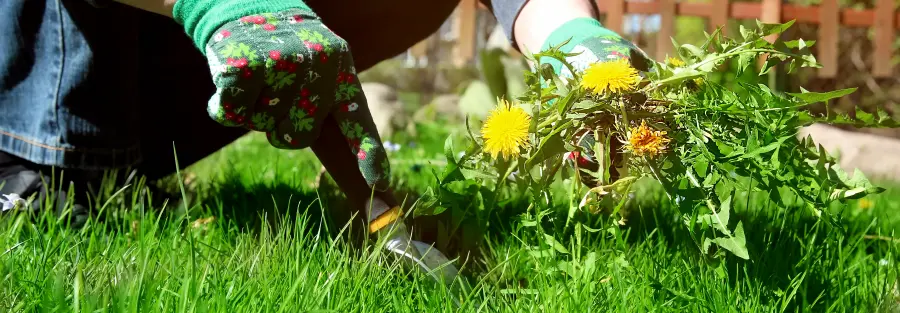
A lawn that looked fine in April can be dotted with dandelions by June, and a vegetable bed that was clear at planting time can be overrun with chickweed and purslane within a few weeks of warm weather. This is not bad luck. Weeds are opportunists. They colonize bare soil, thin turf, and disturbed ground faster than almost anything a homeowner plants on purpose, and every property has a reserve of weed seeds sitting in the soil waiting for the right combination of light, moisture, and warmth to germinate.
Chemical herbicides can control weeds quickly, but a growing number of homeowners want to avoid synthetic products around children, pets, food crops, pollinators, or nearby water sources. The good news is that natural weed control works — but it works differently than spraying a herbicide. It relies less on a single fast kill and more on understanding why weeds are growing in a particular spot, removing them correctly, and then closing the opportunity that let them in. This guide walks through that process in the order a homeowner actually needs it: identifying the weed problem, choosing a removal method that fits the situation, and then building conditions that make it harder for new weeds to establish.
Why Weeds Show Up Where They Do
Weeds are rarely random. They tend to follow patterns tied to soil condition, light, and disturbance.
Compacted soil favors weeds like plantain, prostrate knotweed, and crabgrass because these species tolerate low oxygen and poor drainage far better than turfgrass or most garden plants do. A worn path across a lawn, the area around a gate, or a spot where a vehicle regularly parks will often grow these species specifically because the ground has been compressed.
Bare or thin patches are the second major trigger. Grass seed and vegetable transplants take time to establish a root system and canopy dense enough to block light from reaching the soil surface. Weed seeds germinate the moment sunlight and moisture become available, so any bare patch — from foot traffic, disease, drought stress, or a newly dug bed — is essentially an open invitation.
Disturbed soil brings buried weed seeds to the surface. Tilling a garden bed, digging a new planting hole, or even aggressive raking can expose seeds that have been dormant for years. Many common weed seeds remain viable in soil for a decade or longer, and some, like curly dock, can persist for several decades under the right conditions.
Understanding which of these is driving the problem in a specific area changes the plan. A compacted spot needs aeration and traffic management as much as it needs weeding. A bare patch needs to be reseeded or replanted quickly after weeds are pulled, or the same weeds — or new ones — will simply refill the space.
Identify the Weed Before Choosing a Method
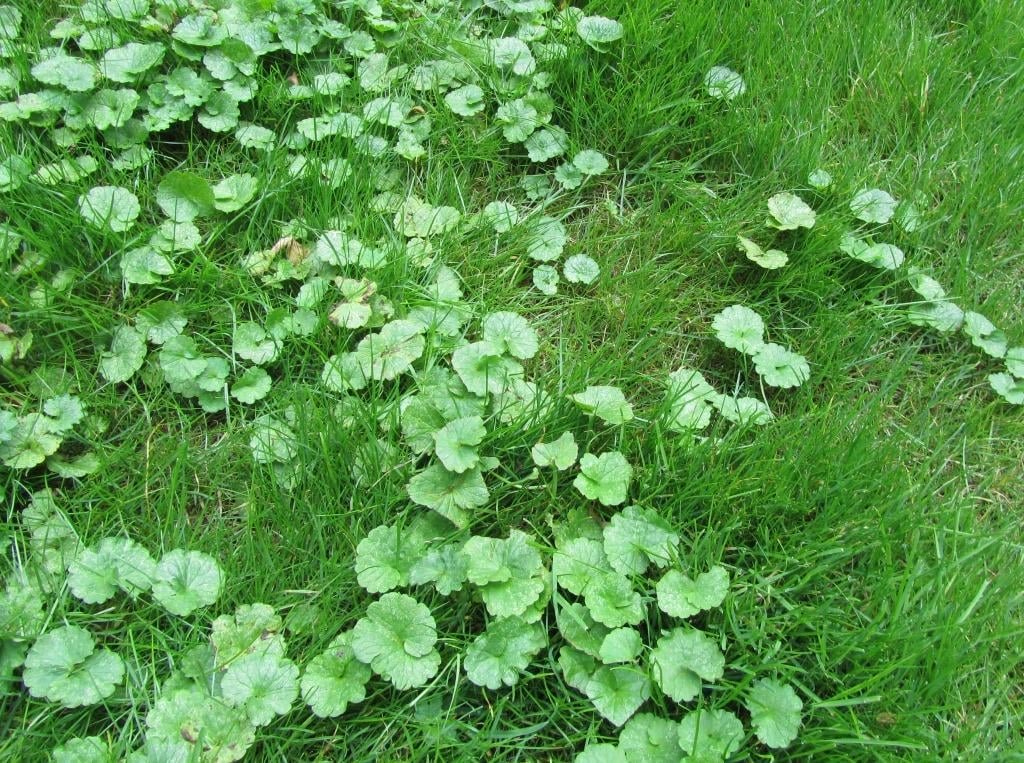
Not all weeds respond to the same removal strategy, and this is one of the most commonly skipped steps. Broadly, weeds fall into three growth patterns that matter for control:
- Annual weeds — crabgrass, chickweed, purslane, annual bluegrass — complete their life cycle in one season and reproduce almost entirely by seed. The priority with annuals is preventing seed set, because a single crabgrass plant can produce tens of thousands of seeds before frost.
- Perennial weeds with taproots — dandelion, dock, plantain — regrow from root fragments left in the soil. Hand-pulling only works well on these if most of the taproot comes out intact, which is easiest when the soil is moist and the plant is young.
- Perennial weeds that spread by rhizome or stolon — bindweed, Canada thistle, ground ivy, quackgrass — travel underground or along the soil surface and can regenerate from small root or stem fragments. Tilling or hand-pulling these without removing the entire root network can actually multiply the problem, since each cut fragment may sprout into a new plant.
A weed that keeps returning after repeated pulling is usually a rhizomatous species, not a failure of effort. That distinction determines whether hand tools, smothering, or a longer-term suppression strategy is the right next step.
Hand-Pulling and Manual Tools: When They Actually Work
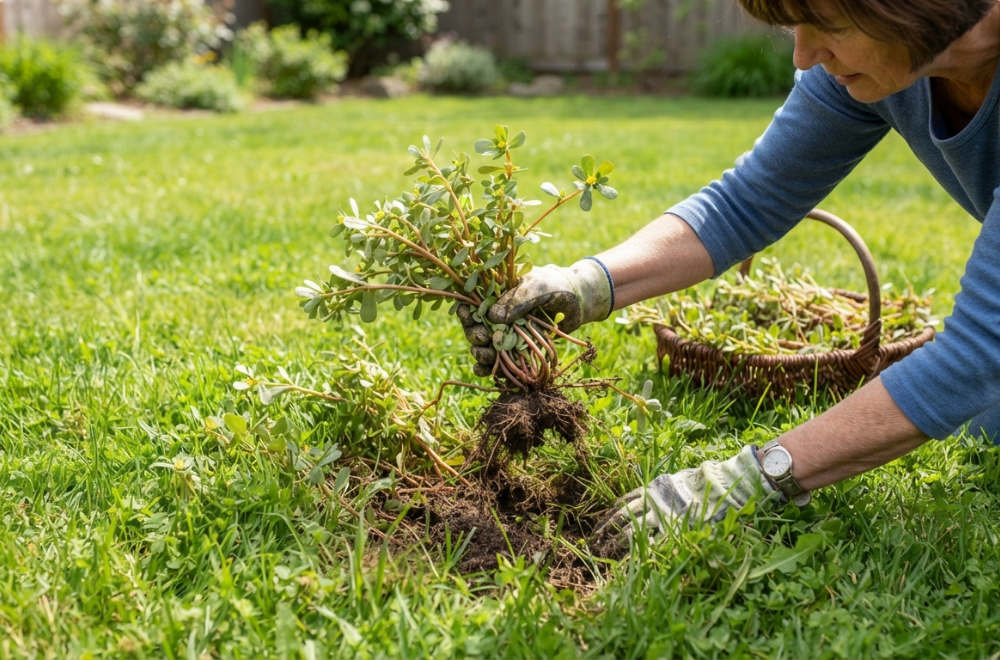
Hand-pulling is the most direct natural weed control method, and it is genuinely effective — but only under the right conditions.
Soil moisture matters more than most people expect. Pulling a dandelion or plantain from dry, compacted soil almost always snaps the taproot, leaving enough root behind for the plant to regrow within a few weeks. Pulling the same weed an hour after rain or irrigation, when the soil has loosened, is far more likely to bring the entire root out cleanly. If rain isn’t in the forecast, watering the area the evening before weeding accomplishes the same thing.
For taprooted perennials, a dedicated tool outperforms bare hands. A long-handled weeder with a forked or notched tip can be driven down alongside the root and used as a lever to lift the plant with minimal disturbance to surrounding turf. This matters in lawns especially, since digging a wide hole to chase a root leaves a bare patch that new weeds — or the same species from a nearby seed — will quickly occupy.
For garden beds, a stirrup hoe (also called a hula hoe) is useful for a different reason: it is designed to sever young annual weeds just below the soil surface with a push-pull motion, which is fast and disturbs the soil far less than pulling by hand. This works well on seedlings but does nothing for an established perennial with a deep root system.
Timing also matters. Weeding a lawn or bed in the early morning after dew or light rain, rather than in the middle of a hot, dry afternoon, generally produces cleaner removal and less stress on surrounding plants.
Where hand-pulling falls short: it is not practical for a large infestation of rhizomatous weeds like bindweed across a wide area, and it will not solve a recurring problem if the underlying cause — compacted soil, thin turf, bare ground — is never addressed.
Smothering and Mulching: Cutting Off Light Instead of Fighting Roots
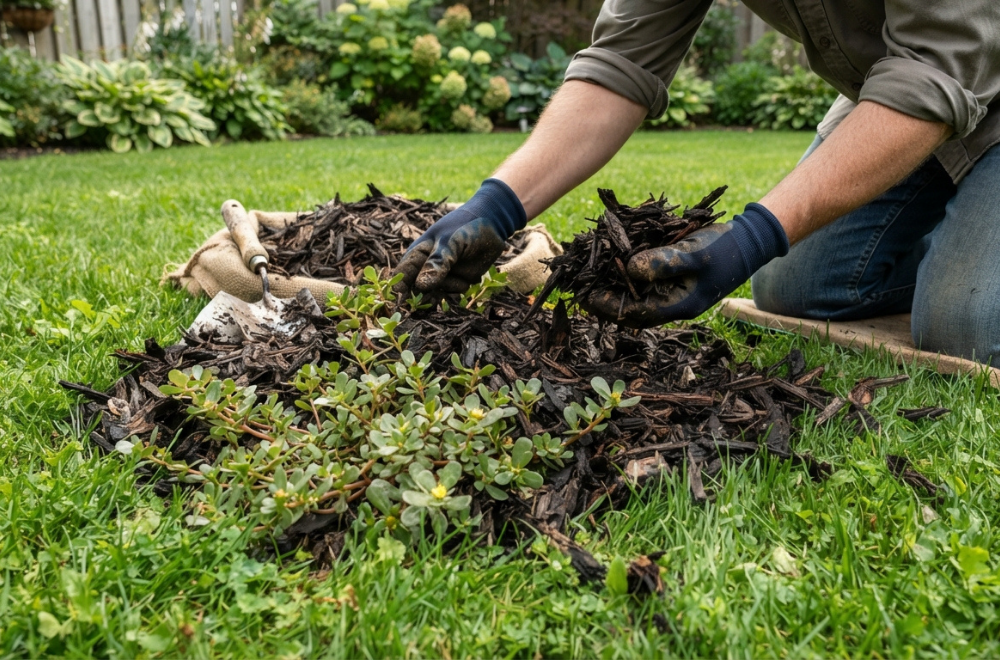
Mulch works as a weed control method by blocking the light young weed seedlings need to survive, not by killing existing weeds outright. This is why timing and depth both matter.
For garden beds, a mulch layer of 2 to 3 inches — using shredded bark, straw, wood chips, or compost — is generally enough to suppress most annual weed germination. Less than 2 inches often isn’t dense enough to block light consistently, especially once it settles and compacts over a season. More than 3 to 4 inches can start to interfere with water and oxygen reaching plant roots, particularly around shrubs and trees where mulch piled against the trunk (sometimes called a “mulch volcano”) can encourage rot and pest problems.
Mulch is applied over soil that has already been cleared of existing weeds, not as a substitute for weeding. Spreading mulch over an established patch of quackgrass or bindweed will not stop it — these species can push through several inches of loose mulch, and some can even grow through certain landscape fabrics over time.
Cardboard or newspaper sheet mulching is a stronger option for reclaiming a heavily weedy bed before planting. Overlapping plain cardboard (tape and glossy print removed) or several layers of newspaper directly over the weeds, then covering with 2–3 inches of mulch or compost on top, blocks light completely and smothers most annual and many perennial weeds over 6 to 12 weeks. This method is slower than spraying but avoids herbicides entirely and improves soil as the cardboard breaks down.
Landscape fabric is a common but often misunderstood tool. It works reasonably well under gravel paths, patios, or mulch in ornamental beds with established shrubs, but it is a poor choice in vegetable gardens or areas that are replanted seasonally, since it has to be cut and disturbed repeatedly, which defeats its purpose. Over time, soil and organic debris accumulate on top of the fabric, allowing new weeds to root in that layer regardless of the barrier underneath.
Why Boiling Water, Vinegar, and Salt Are Not the Simple Fix They Sound Like
These three “natural” methods get repeated often online, and each has real limitations that are worth understanding before relying on them.
Boiling water kills the above-ground portion of a plant on contact by scalding the leaf and stem tissue. It works well on weeds growing in cracks in a driveway or patio where there is no desirable plant nearby to protect. It is far less reliable on established perennials with deep roots, since the water cools before it penetrates far into the soil, and most perennial weeds will resprout from the root within a few weeks. Boiling water also poses a genuine burn risk when carried and poured outdoors, and it will kill grass, garden plants, or soil organisms it contacts — it has no selectivity.
Household vinegar (typically 5% acetic acid) can brown the leaves of young, soft-tissued annual weeds on a sunny day, but it rarely kills the root system of an established perennial. Horticultural vinegar products sold at higher concentrations (20% and above) are more effective at killing top growth but are also considerably more hazardous to handle — they can cause skin and eye burns and require gloves, eye protection, and careful application away from wind drift. Neither concentration is selective; vinegar will damage any green plant tissue it touches, including grass and garden plants.
Salt is sometimes suggested as a weed killer, but it should generally be avoided in garden and lawn settings. Salt does not break down or wash away quickly — it accumulates in the soil, disrupts the soil’s ability to hold water for plant roots, and can make an area inhospitable to grass, vegetables, and ornamentals for a long time afterward. It is also difficult to keep contained to just the weed being targeted, since rain and irrigation can carry it into surrounding soil. Salt is really only appropriate for permanent no-grow zones like gravel driveways or the gaps in a patio — never near lawn edges, garden beds, or anywhere runoff could reach desirable plants.
The common thread across all three: they act on contact and have no lasting effect once the treated plant tissue dries up and washes away. None of them address why the weed grew there in the first place, so without a follow-up prevention step, new weeds fill the same spot.
Corn Gluten Meal: A Natural Pre-Emergent, With a Narrow Timing Window
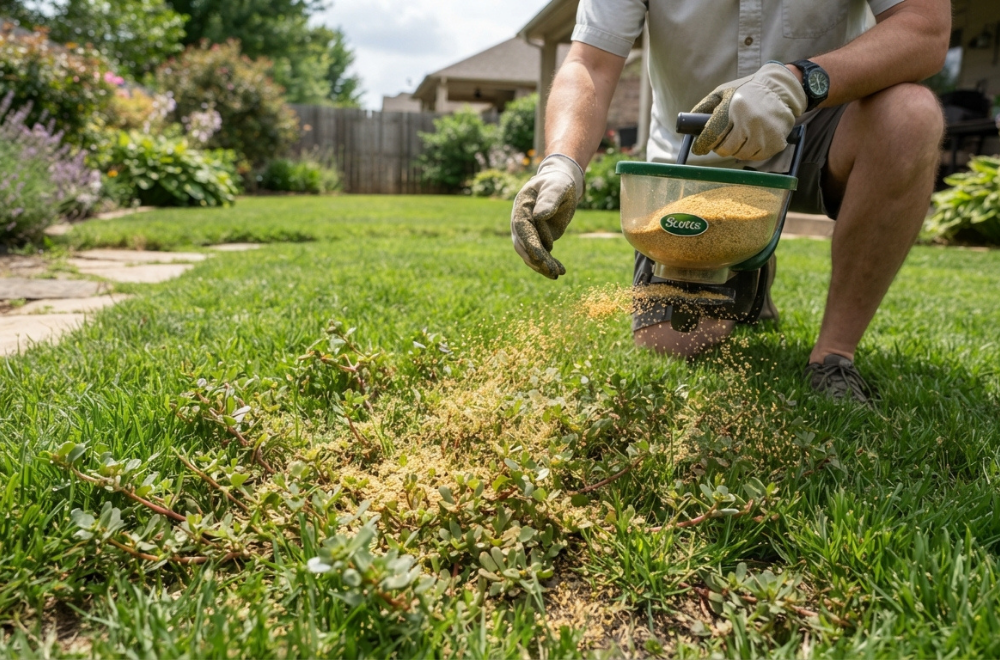
Corn gluten meal is a byproduct of corn processing that has a documented pre-emergent effect — it inhibits root formation in newly germinating seeds, which prevents many weed seedlings from establishing. Because it works on the germination process rather than on established plants, it has to be applied before weed seeds sprout, not after weeds are already visible.
For crabgrass and other warm-season annual weeds, this generally means applying corn gluten meal in early spring, around the same time forsythia blooms in many temperate regions, well before soil temperatures warm enough for germination. Applying it after weeds have already emerged does nothing, since the product has no effect on established roots.
An important limitation: corn gluten meal doesn’t distinguish between weed seed and grass seed. It will also inhibit the germination of newly seeded lawn grass, so it should not be applied within about a month of overseeding a lawn. It is also not effective against perennial weeds that regrow from existing roots rather than from seed each year.
Flame Weeding: Effective, but Not a Casual Backyard Habit
Propane weed torches kill weeds by rupturing plant cell walls with brief, intense heat, rather than by burning the plant to ash. A quick pass is usually enough to wilt and kill young annual weeds within a day or two.
This method carries real fire risk, particularly in dry conditions, near mulch, dry grass, wooden structures, or during any local burn restriction. It is not appropriate near a home’s foundation, wooden fencing, or dry lawn in summer heat, and many municipalities restrict or regulate open-flame tools during fire season. Anyone considering flame weeding should check local fire regulations first and keep a hose or extinguisher within reach during use. It also isn’t selective — it will damage or kill any nearby plant it contacts, including grass.
Natural Weed Control Specifically for Lawns
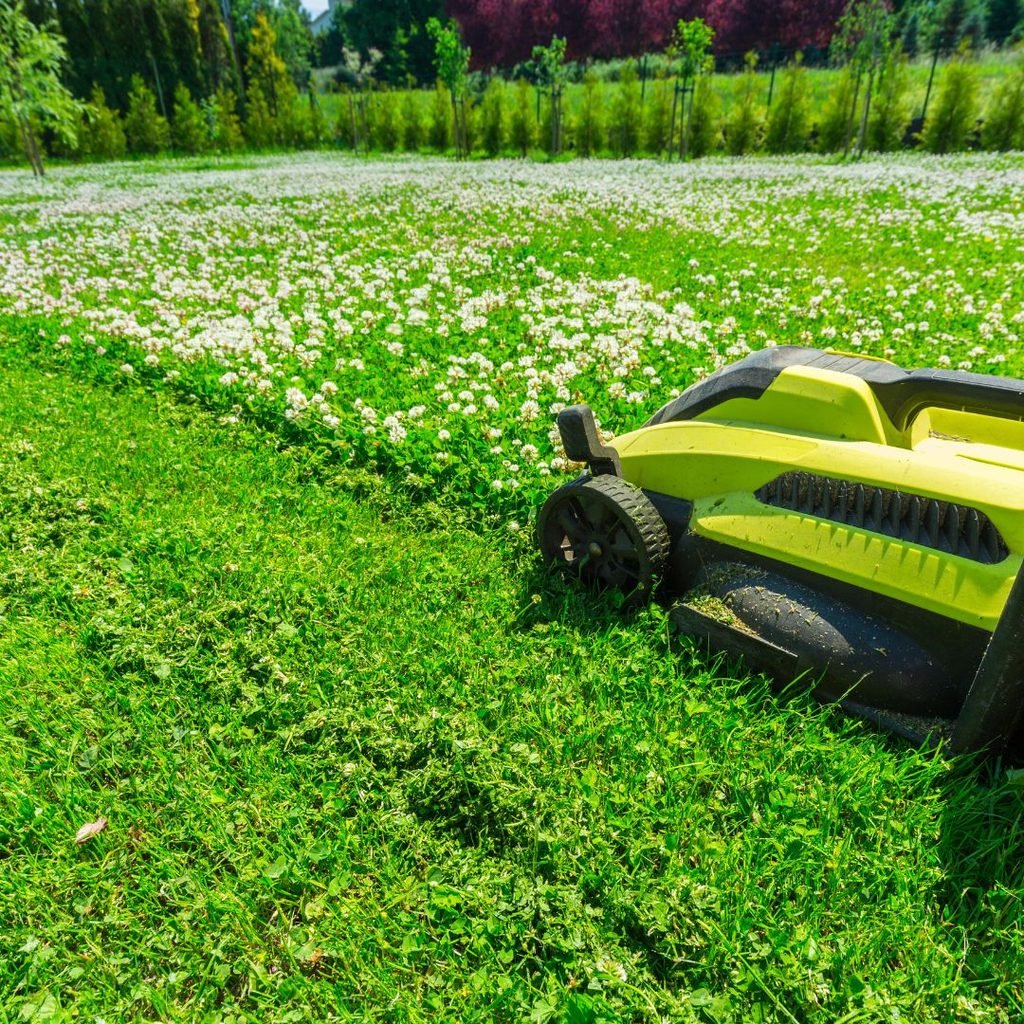
Lawn weeds usually signal that the grass itself is thin, stressed, or poorly suited to the site — weeds fill in wherever turf can’t compete. This makes lawn weed control less about attacking individual weeds and more about strengthening the grass so there’s less bare soil available to colonize.
- Mowing height has a bigger effect on weed pressure than most homeowners expect. Mowing cool-season grasses like fescue or bluegrass at 3 to 3.5 inches, rather than scalping them down to 1.5–2 inches, shades the soil surface and suppresses germination of light-dependent weed seeds like crabgrass. Cutting too short also stresses the grass itself, weakening its ability to outcompete weeds for water and nutrients.
- Overseeding thin or bare patches in early fall (for cool-season lawns) or late spring (for warm-season lawns) closes the gaps weeds would otherwise fill. This is often more effective at reducing weeds long-term than any direct weed removal, because it removes the opportunity rather than reacting to the symptom.
- Core aeration, typically done once a year in fall for cool-season lawns, relieves the soil compaction that favors weeds like plantain and knotweed while also improving the turf’s access to water and nutrients. Compacted lawns that never get aerated tend to develop the same weed problems repeatedly, no matter how often the weeds themselves are pulled.
- Watering deeply and infrequently — generally about 1 inch of water per week, applied in one or two sessions rather than daily light watering — encourages grass roots to grow deeper and become more drought-resilient. Frequent shallow watering, by contrast, favors shallow-rooted weeds like crabgrass, which germinate readily in consistently moist surface soil.
None of these steps kill an existing weed. They reduce how often new ones establish, which is the more sustainable half of natural lawn weed control.
Natural Weed Control for Garden Beds
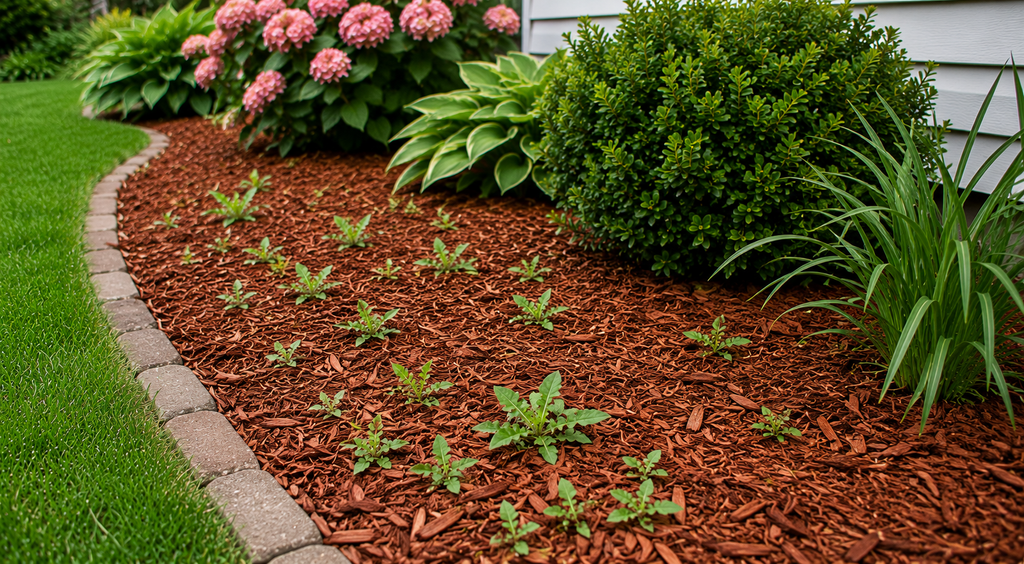
Vegetable and ornamental beds have different pressures than lawns, mainly because the soil is disturbed more often through planting, and because desirable plants are often young and vulnerable when weeds are most aggressive.
Dense planting — spacing vegetables and ornamentals so their mature canopy overlaps slightly — shades the soil surface much the way turf does in a lawn, reducing light available to weed seeds. This is one reason intensively planted beds (like square-foot gardening layouts) tend to have fewer weed problems than widely spaced rows with bare soil between plants.
Cover crops, such as winter rye or clover, planted in a bed during its off-season, occupy the space and outcompete weeds for light, water, and nutrients over winter or between plantings. They’re typically cut down and either left as mulch or turned into the soil a few weeks before the next planting, adding organic matter in the process.
Solarization is a slower but thorough option for a bed with a severe, established weed problem, including some perennial weeds and even some weed seeds in the top layer of soil. Clear plastic sheeting is laid tightly over moist, tilled soil and left in place for 4 to 6 weeks during the hottest part of summer, trapping heat that can reach temperatures lethal to weed seeds, roots, and some soil pathogens in the top few inches of soil. It requires giving up use of that bed for over a month during peak growing season, which makes it more practical for a bed being prepped ahead of fall planting than one in active summer use. It also affects beneficial soil organisms in the treated layer, so it’s a method best reserved for genuinely problematic areas rather than routine annual use.
Compost quality deserves a mention here, since it’s an overlooked source of new weeds. Compost that hasn’t reached a sustained internal temperature high enough to kill weed seeds — generally requiring an active hot compost pile maintained around 130–150°F for a period of weeks — can reintroduce viable weed seeds directly into a garden bed. Homemade cold compost piles are especially prone to this. Bagged commercial compost that specifies it’s been processed to reduce viable weed seed is a safer bet for beds with a known weed problem.
Common Mistakes That Undo Natural Weed Control Efforts
- Pulling weeds and leaving the roots behind. With taprooted perennials, any significant fragment of root left in dry soil is often enough for the plant to regenerate. If the ground is too dry to remove the full root, it’s usually better to wait for rain or water the area first than to pull and repeat the process weeks later.
- Treating symptoms without changing conditions. Removing weeds from a compacted, thin, or bare area without aerating, overseeding, or mulching afterward means the same conditions that allowed the first weed to grow are still in place for the next one.
- Letting weeds go to seed before removal. A single mature dandelion or crabgrass plant left too long can drop thousands of seeds into the surrounding soil, undoing months of otherwise good control. Timing matters more than most people assume — pulling or cutting weeds before they flower and set seed prevents this multiplying effect.
- Tilling an area with rhizomatous weeds. Running a tiller through soil infested with bindweed, quackgrass, or Canada thistle chops the root network into fragments, and many of those fragments are capable of sprouting into new, separate plants. This can turn a contained patch into a spread-out infestation.
- Applying corn gluten meal after weeds have already sprouted, expecting it to act like an herbicide. Its window of effectiveness is narrow and entirely pre-emergent.
When a Natural Approach Isn’t Enough on Its Own
Natural weed control methods are genuinely effective for most residential lawn and garden situations, but there are cases where they have real limits. Extensive infestations of aggressive rhizomatous species like Canada thistle or bindweed across a large area can take multiple seasons of consistent smothering, cutting, or solarization to bring under control, and some homeowners reasonably decide that’s more time and labor than they want to commit. Certain regionally regulated invasive plants may also fall under local or state noxious weed ordinances that require specific removal or reporting steps — checking with a local extension office is worthwhile if an unfamiliar, aggressively spreading plant shows up. In those situations, consulting a local extension service or a licensed landscaping professional for guidance on options is a reasonable next step, rather than a sign that natural methods have failed outright.
Frequently Asked Questions
Does pouring boiling water on weeds harm nearby soil or plants? Yes, boiling water has no selectivity and will damage or kill grass, garden plants, and soil organisms it touches, along with the target weed. It’s best reserved for isolated weeds in pavement cracks or gravel where nothing else is growing nearby.
How long does it take for natural weed control methods to show results? It depends on the method. Contact methods like boiling water or vinegar show visible wilting within a day or two, though regrowth from roots is common with perennials. Smothering methods like cardboard mulching typically take 6 to 12 weeks. Prevention-focused approaches like overseeding or aeration usually take a full growing season to noticeably reduce weed pressure, since they work by closing bare soil over time.
Can I use vinegar and dish soap together as a homemade weed killer? This is a widely repeated home mixture, and the soap is generally added as a surfactant to help the vinegar stick to and penetrate waxy leaf surfaces rather than beading off. It can improve the effectiveness of vinegar on young annual weed foliage, but it carries the same limitations as vinegar alone — no real effect on established roots, and no selectivity toward nearby desirable plants.
Is it safe to compost weeds I’ve pulled? Annual weeds without seed heads can typically go into a home compost pile without issue. Weeds that have already flowered and set seed, or perennial weeds with root or rhizome fragments attached, are safer to dispose of separately (such as in yard waste collection) unless the compost pile reliably reaches and sustains temperatures high enough to kill seeds and root fragments, which most passive backyard piles do not.
The Practical Takeaway
Natural weed control isn’t a single product or trick that replaces herbicide with something equally fast. It’s a sequence: identify what kind of weed is growing and why that spot let it in, remove it with a method suited to its root type, and then close the opening — through mulch, denser planting, healthier turf, or better soil structure — so the next weed seed that lands there doesn’t get the same chance. Skipping that last step is the most common reason natural methods get written off as ineffective, when the removal worked fine and the underlying conditions were simply never addressed.

About Syprose Kiche
Syprose Kiche is the creator and writer behind My Besuited Home, a practical home and garden website covering DIY projects, gardening, lawn care, landscaping, home improvement, and outdoor living. She focuses on turning everyday homeowner questions into clear, practical guides backed by careful research and useful real-world considerations.