
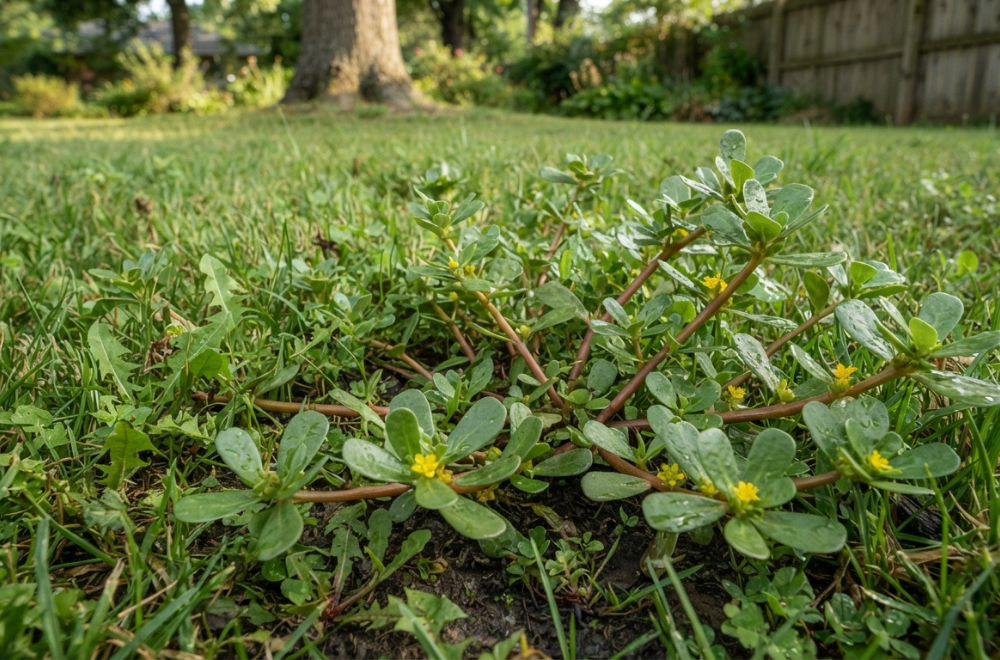
A single purslane plant left alone through July can cover a square foot of bare soil by August, and if you pull it and toss the pieces onto a nearby path, some of those pieces will root right where they land. That’s the part most people don’t expect. Purslane isn’t just a fast-growing weed — it’s a weed that can survive being removed.
If you’re staring at a patch of thick, reddish-stemmed succulent leaves spreading between your vegetable rows or through cracks in a patio, you’re probably dealing with common purslane (Portulaca oleracea). It’s edible, it’s nutritious, and it’s also one of the more persistent weeds a home gardener will encounter, mostly because of how it reproduces and how easily people mishandle removal.
Here’s what actually works, what doesn’t, and why the usual advice — “just pull it” — often makes the problem worse instead of better.
What You’re Actually Looking At
Purslane has smooth, paddle-shaped, fleshy leaves that grow in small clusters, reddish or purplish stems that lie flat and radiate outward from a central point, and small yellow flowers that open only in direct sun, usually in the morning. It grows low and wide rather than tall, which is part of why it’s easy to miss when it’s young and hard to ignore once it’s established.
Two other weeds get confused with it constantly.
Spotted spurge looks similar from a few feet away — low-growing, reddish stems — but its leaves are smaller, narrower, and often have a dark red spot in the center. Spurge also produces a milky white sap when you break a stem; purslane’s sap is clear. This distinction matters because spurge and purslane don’t respond identically to every method described below, and a few readers spend a season treating one weed while thinking it’s the other.
Prostrate knotweed, which shows up in compacted paths and driveway cracks, has thin wiry stems and small papery leaves rather than the thick, water-storing leaves purslane uses. If you snap a stem and it’s dry and fibrous, it’s not purslane.
If you’re unsure, break a leaf. Purslane leaves are noticeably succulent — almost rubbery, with visible moisture inside, similar to a small jade plant leaf. That trait alone identifies it.
Why It Spreads Faster Than It Looks Like It Should
A mature purslane plant can produce a very large number of seeds over a single growing season, and those seeds don’t need to sprout right away. They can remain viable in soil for years, which means a purslane problem you “solved” two summers ago can reappear from seed that was sitting dormant the whole time, waiting for the right combination of warmth, light, and disturbed soil.
The seed bank is only half the story. Purslane is also capable of vegetative reproduction — regrowing from stem or leaf fragments left in contact with moist soil, even after the plant has been pulled. This is a trait it shares with a small number of other succulent weeds, and it’s the reason pulling purslane and leaving the pieces on the ground is one of the most common mistakes people make. The plant doesn’t need roots to survive for a while. A cut stem lying on damp soil can root within days.
That combination — a large seed reserve already in the ground, new seed being added constantly through summer, and the ability to resprout from cuttings — is why purslane control is less about finding one effective method and more about being consistent about how you remove it, not just that you remove it.
Hand-Pulling: When It Works and When It Backfires
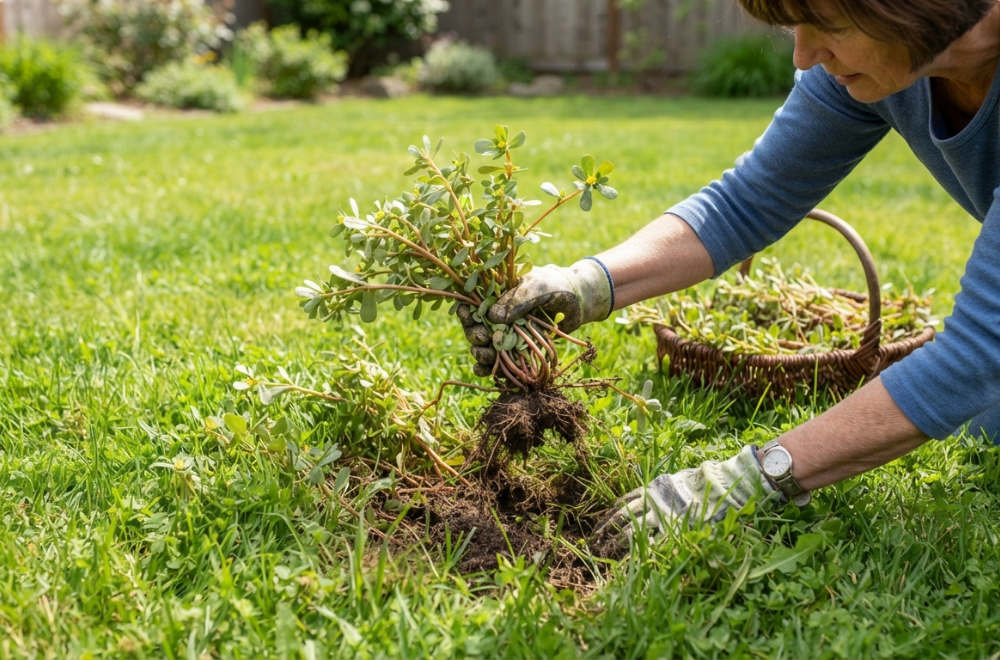
Hand-pulling is still one of the more effective non-chemical methods for purslane, but only if it’s done correctly.
Pull when the soil is moist, ideally the morning after rain or watering. Purslane has a shallow taproot, and in loose, damp soil the whole plant — root included — usually comes up in one motion. In dry, compacted soil, the stem is more likely to snap at ground level, leaving the root behind to resprout and leaving stem fragments on the surface, which brings back the regrowth problem.
The part that actually matters: do not leave pulled purslane on the soil, even in a pile, even for a day. Its succulent leaves store enough moisture for the plant to keep growing and even flower and set seed after being uprooted, if conditions are humid enough. Bag it, or lay it out somewhere fully dry and sun-exposed — a driveway or paved surface works — until it’s visibly desiccated, then compost or discard it. Never add fresh purslane to a compost pile that doesn’t reach a sustained high internal temperature, since home compost piles frequently don’t get hot enough to kill the seeds or stop fragment regrowth.
Pull before flowering whenever possible. Once the yellow flowers appear, the plant can set viable seed within a matter of days, sometimes even after being pulled, if it was already flowering when removed.
Why Timing Changes the Outcome More Than the Method You Choose
Purslane germinates when soil temperatures warm up in late spring, and it keeps germinating in flushes through the warmest part of summer, which is why a garden bed can look “clean” in June and be full of purslane again by late July. This staggered germination is the main reason a single round of any method — pulling, mulching, or a natural herbicide spray — rarely finishes the job.
Two things matter more than which method you pick:
Catching new seedlings early, before they develop the thick taproot and lateral roots that make removal harder, and repeating whatever method you choose on a schedule through the growing season rather than treating it as a one-time task.
A homeowner who hand-pulls thoroughly once in June and never checks again will likely see purslane return by August. A homeowner who does a five-minute check every week or two through summer will generally keep it under control with far less total effort.
Smothering With Mulch, Cardboard, or Landscape Fabric
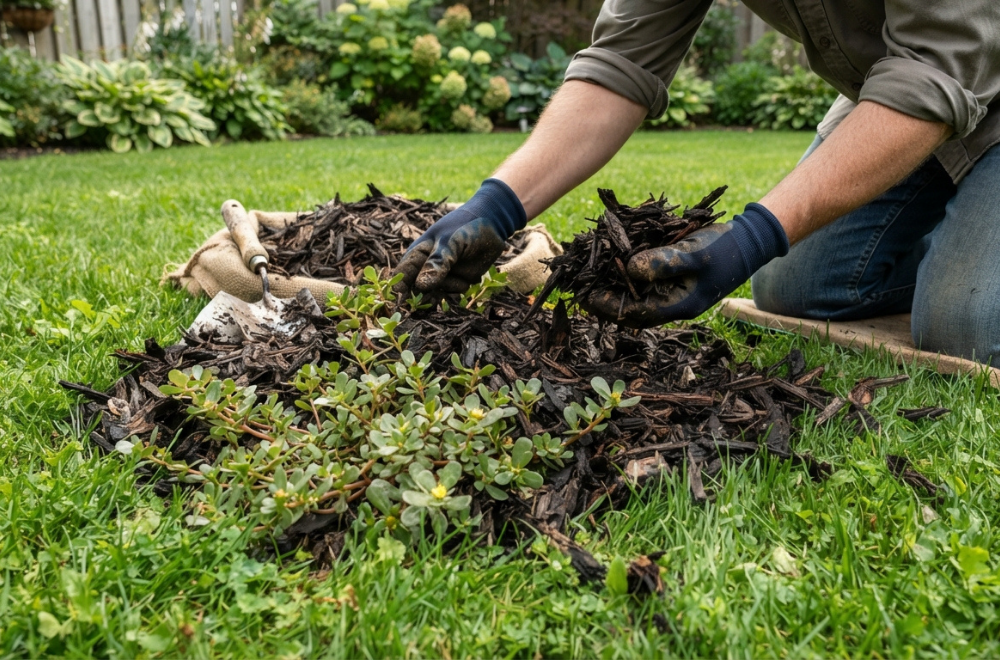
Purslane needs light to germinate, and a physical barrier that blocks light is genuinely effective against new seedlings, though it won’t do much for an area already thick with mature plants.
For garden beds, a layer of organic mulch — wood chips, shredded bark, or straw — applied at roughly 2 to 3 inches deep will block most light reaching the soil surface and prevent new purslane seeds from germinating. It won’t stop seeds that are already established from a previous flush, so mulching works best as a follow-up after you’ve cleared existing plants, not as a first response to an already-infested bed.
For a heavier infestation, cardboard or several layers of newspaper laid directly on the soil and covered with mulch creates a more complete light barrier. Leave it down for the rest of the growing season if possible. This method is slower than pulling but requires far less ongoing labor, which makes it a reasonable choice for a bed you don’t want to deal with weekly.
One caveat: mulch that’s too thin, or that’s disturbed by foot traffic or watering, stops working as a light barrier almost immediately. Purslane seedlings that manage to reach light through a gap will grow through mulch without much trouble.
Solarization for Badly Infested Beds
If a bed has been overrun for more than one season and hand-pulling feels endless, solarization is worth considering, particularly during the hottest stretch of summer.
The process involves clearing the bed, watering the soil thoroughly, and covering it tightly with clear plastic sheeting, sealed at the edges with soil or bricks so heat can’t escape. Over four to six weeks of strong, direct sun, soil temperatures under the plastic can rise high enough to kill weed seeds and existing roots in the top several inches of soil. Clear plastic works better than black plastic for this purpose because it lets more heat build up underneath rather than absorbing it at the surface.
The obvious downside is that solarization takes the bed out of use for over a month during the growing season, and it isn’t selective — it will also kill or damage anything else growing there, along with beneficial soil organisms near the surface, which typically recover once the plastic is removed and the soil is reworked. It’s a good fit for a dedicated problem bed, not for a lawn or a space you need to use continuously.
What Actually Happens When People Use Boiling Water, Vinegar, or Salt
These three methods come up constantly in “natural weed killer” advice, and they deserve a more honest explanation than most articles give them.
- Boiling water kills the top growth of a purslane plant on contact but usually doesn’t penetrate deep enough to kill the root system, especially once the plant has been established for a few weeks. It works reasonably well on very young seedlings in cracks or gravel paths, less well on anything with a developed taproot. It also kills any nearby plant roots it reaches, including grass, so it’s not a method for use near desirable plants or turf.
- Horticultural vinegar (typically sold at 20% acetic acid, far stronger than the 5% vinegar in a kitchen cabinet) burns foliage on contact and can kill young purslane if it’s sprayed thoroughly and repeatedly. Because purslane’s succulent leaves have a waxy coating that resists absorption, and because the plant can regrow from surviving root tissue, one application is rarely enough — most sources suggest it takes several repeat treatments to fully exhaust an established plant, and even then regrowth from surviving roots is common. Horticultural-strength vinegar is also not something to handle casually: it can cause skin and eye irritation and shouldn’t be sprayed on windy days or near desirable plants, since it isn’t selective about what it burns.
- Salt is generally not a good choice for garden beds or lawns, even though it will kill purslane. Salt doesn’t break down or wash away the way vinegar does — it accumulates in soil and can make an area inhospitable to future plantings for a long time. It’s more appropriate for permanent no-grow zones like gravel driveways than for anywhere you intend to plant again.
None of these three methods address the seed bank already in the soil. They kill what’s visible; they don’t prevent the next flush from germinating a few weeks later.
Corn Gluten Meal as a Preventive Measure
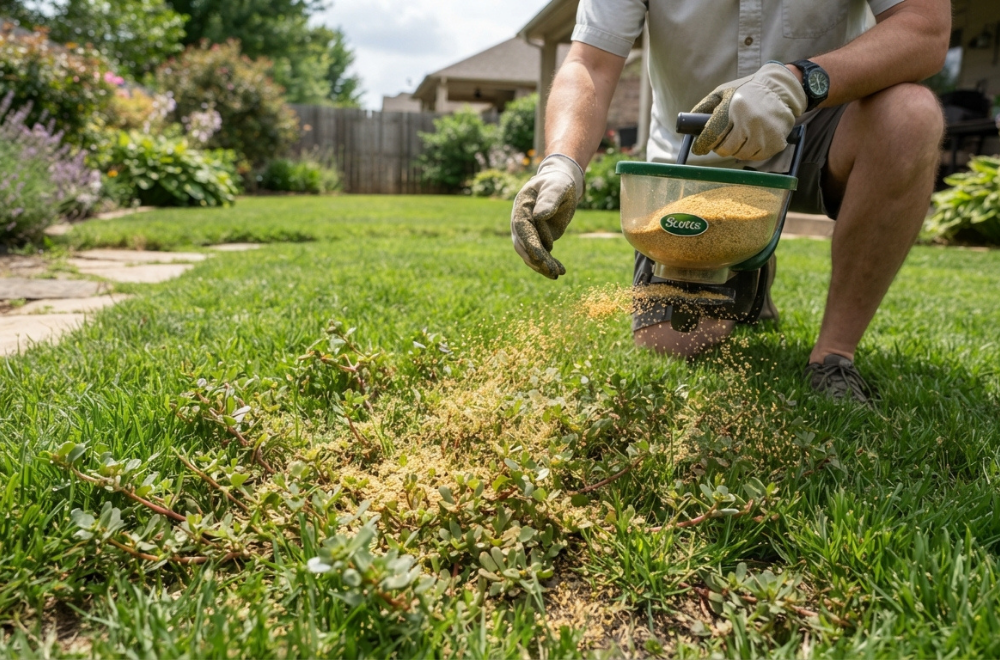
Corn gluten meal is a natural pre-emergent that interferes with root development in newly germinating seeds. Research from Iowa State University, where much of the original work on corn gluten meal as an herbicide was done, found it can meaningfully reduce weed seed germination when applied correctly — but “correctly” is specific and easy to get wrong.
It has to go down before purslane germinates, which in most regions means applying it as soil temperatures start warming in spring, not after seedlings are already visible. Applying it to an area with existing purslane does nothing to the plants already growing — it only affects seeds that haven’t sprouted yet. It also needs a dry period of several days after application to be effective, since watering it in too soon can wash away its pre-emergent effect before it takes hold.
Corn gluten meal also adds nitrogen to soil as it breaks down, which is worth knowing if you’re using it in a vegetable bed where you’re already managing fertility, or in a lawn where you don’t want to over-fertilize alongside a separate feeding program.
Making the Soil Less Hospitable to Purslane in the First Place
Purslane has a strong preference for disturbed, compacted, or bare soil, which is why it shows up so reliably in newly tilled vegetable beds, along driveway edges, and in thin patches of lawn. Improving the conditions that favor it is one of the more overlooked long-term strategies.
In lawns, purslane is far less able to compete in dense, healthy turf. Bare or thinning patches — often caused by compacted soil, mower scalping, or drought stress — are where it gets a foothold. Overseeding thin areas, aerating compacted soil, and mowing at a height appropriate for your grass type (generally taller rather than shorter, since taller grass shades the soil surface) all reduce the open ground purslane needs to establish.
In vegetable beds, keeping soil covered — with mulch, a cover crop, or closely spaced plantings — accomplishes the same thing. Bare soil between rows is essentially an open invitation.
Common Mistakes That Make a Purslane Problem Worse
- Tilling an infested bed. Tilling brings buried seed up to the surface where it can finally get the light it needs to germinate, and it also chops up existing purslane into multiple fragments capable of rerooting. A bed with a moderate purslane problem can look dramatically worse two weeks after tilling.
- Composting pulled plants in a cool, low-activity pile. As mentioned above, home compost that doesn’t reach a sustained internal temperature high enough to kill seeds and plant tissue will often just relocate your purslane problem to wherever you spread that compost later.
- Watering on a fixed schedule regardless of need. Frequent light watering keeps the soil surface consistently moist, which favors purslane germination. Watering more deeply and less frequently, appropriate to what’s actually growing there, tends to favor established plants and grass over shallow-rooted weed seedlings.
- Treating it as a one-time job. Given the seed bank purslane leaves behind, a single thorough cleanup without any follow-up through the rest of the season is rarely the end of it.
When Professional Help Might Be Worth Considering
For most home gardens and lawns, the combination of manual removal, mulching, and improved soil or turf health described above is enough. Professional help becomes more worth considering if purslane has spread across a large area of lawn or landscape bed over multiple seasons despite consistent effort, if it’s competing seriously with food crops in a way that’s affecting yield, or if the underlying soil compaction or drainage issue is significant enough that DIY aeration and overseeding aren’t resolving it. A lawn care service or local extension office can also help confirm identification if you’re dealing with a weed that doesn’t clearly match purslane, spurge, or knotweed, since treatment that works for one doesn’t necessarily work for the others.
Frequently Asked Questions
Will one round of hand-pulling get rid of purslane for good? Not usually. Because purslane seed can remain viable in soil for years and continues germinating in flushes through the warm months, one pass typically removes what’s visible without addressing what’s still dormant underground. Expect to check the area every week or two through the growing season.
Is purslane actually harmful to have in a garden? Purslane itself isn’t toxic and is edible, but it competes with vegetables and ornamentals for water, light, and nutrients, and a thick patch can smother young seedlings. The main reason to remove it is competition, not danger.
Can I just leave purslane alone if it’s not bothering my plants? You can, but keep in mind how much seed a mature, flowering purslane plant can add to the soil in a single season. Leaving it unchecked in one area often means dealing with a much larger seed bank there in future years, even in beds where you eventually want to grow something else.
Does mowing kill purslane in a lawn? Rarely, since purslane grows low to the ground and largely escapes the mower blade. Mowing height and frequency matter more for the health of the surrounding grass — which then competes with purslane — than for direct control of the weed itself.
The Practical Takeaway
Purslane isn’t a weed you eliminate in an afternoon. It’s a weed you manage down over a season by combining early, careful removal — root and all, with the debris actually disposed of rather than left on the soil — with a barrier method like mulch to stop the next flush of seed from germinating. Pick one removal method and one prevention method that fit the size of the area you’re dealing with, and check back on it regularly rather than waiting for it to become obvious again.

About Syprose Kiche
Syprose Kiche is the creator and writer behind My Besuited Home, a practical home and garden website covering DIY projects, gardening, lawn care, landscaping, home improvement, and outdoor living. She focuses on turning everyday homeowner questions into clear, practical guides backed by careful research and useful real-world considerations.