
You walk outside on a crisp October morning, coffee in hand, ready to admire your fall mums and your arborvitae. Instead, you find nubs where your hostas used to be and a rabbit sitting smugly in the exact spot your lettuce used to grow. Sound familiar?
Fall is prime munching season for deer and rabbits. The good stuff in the woods is drying up, so your yard turns into the neighborhood buffet. I’ve gardened through enough autumns to know the frustration of watching a season’s worth of work disappear in one overnight raid. My neighbor once lost twelve arborvitae in a single week to a herd that treated her front yard like a salad bar with valet parking.
Here’s what actually works, what’s a waste of your Saturday, and how to protect your shrubs and garden beds without turning your yard into Fort Knox.
Why Deer and Rabbits Target Gardens in Fall
Deer and rabbit damage spikes in autumn for a simple reason: food gets scarce. Natural browse like acorns, clover, and wild grasses thin out, and your tender shrubs start looking like dessert. Arborvitae, yews, hostas, and young fruit trees are basically deer candy this time of year.
Rabbits go after low-growing stuff — think tulip bulbs, strawberry plants, and the bark of young trees. That bark-stripping habit is the one that really stings, because a rabbit can girdle a young tree overnight and kill it by spring.
Understanding this seasonal shift matters because it changes your strategy. Spring deer deterrents that rely on strong-smelling blooming plants won’t help much in October when those plants have died back. You need a fall-specific game plan.
Natural Deer Repellents That Actually Work
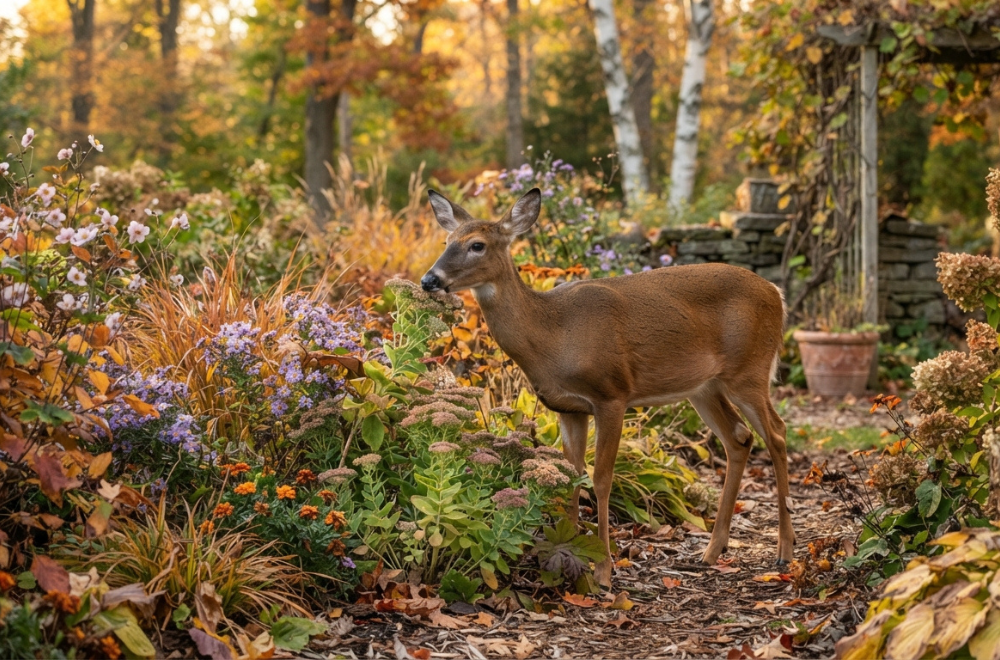
I’ve tried just about every deer repellent on the market, homemade and store-bought. Some are genuinely worth your time. Others are Pinterest-famous and useless in real life.
1. Egg-Based Homemade Deer Spray
This is my go-to, and it’s ridiculously cheap. Mix two raw eggs with a gallon of water, add a tablespoon of dish soap, and let it sit for a day or two so it starts to smell rotten. Strain it into a spray bottle and coat your shrubs, especially new growth.
Deer have an incredible sense of smell, and the sulfur compounds in rotting eggs mimic the scent of predator activity. It sounds gross, but it works because deer associate that smell with danger, not because it’s “spicy” or unpleasant to them the way it is to us.
Reapply after rain, and definitely reapply every two to three weeks even without rain, since the smell fades. I spray mine right before bed since the smell dissipates for humans by morning but lingers just enough for deer.
2. Human Hair and Soap Shavings
My grandfather swore by hanging bars of strong soap — Irish Spring is the classic pick — in mesh bags from shrub branches. I was skeptical until I actually tried it during the fall my crabapple sapling kept getting nibbled to a stick. It worked, but only within about a three-foot radius of each bag.
Human hair works on a similar principle. Ask your local barbershop for sweepings (most will happily hand over a bag for free) and scatter it around the base of vulnerable plants. Both methods rely on scent-marking territory that smells “occupied” to a deer’s nose.
The catch: you need a LOT of soap bars or hair to cover more than a small bed. This is a great solution for a few prized shrubs, not a whole property line.
3. Predator Urine Granules
Coyote and fox urine granules are sold at most garden centers, and I’ll be honest, I was doubtful the first time I bought a bag. But after using it around my raised beds for two seasons, I noticed a real drop in deer traffic, especially early in fall before the herd gets desperate enough to ignore the smell.
Sprinkle the granules in a perimeter around your garden beds and shrub lines, focusing on entry points like gaps in fencing or well-worn trail paths. Reapply every three to four weeks, and always right after heavy rain washes the scent away.
One thing worth knowing: this method loses effectiveness once deer get hungry enough or used to the scent. Rotate it with another repellent method so they don’t catch on.
4. Motion-Activated Sprinklers
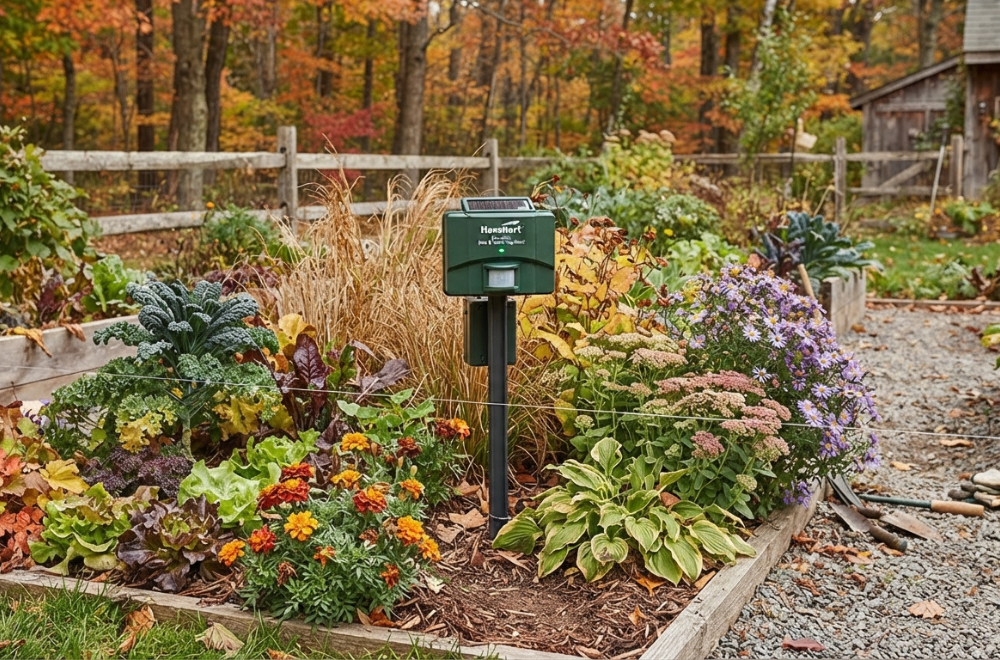
This is the one piece of tech I actually recommend, because it doesn’t rely on smell fading in the rain. A motion-activated sprinkler blasts a burst of water the second it detects movement, and deer hate the surprise enough to avoid the area entirely after a few soakings.
I put one at the edge of my property line where deer typically entered from the tree line, and within a week their path shifted to my neighbor’s yard instead (sorry, Dave). These units run anywhere from $40 to $90, and they’re reusable year after year, so the cost evens out fast compared to buying spray every few weeks.
The downside is you’ll need multiple units to cover a large property, and you’ll want to move them every so often since deer are smart enough to eventually map out where the “water monster” lives.
Rabbit Deterrent Methods for Fall Gardens
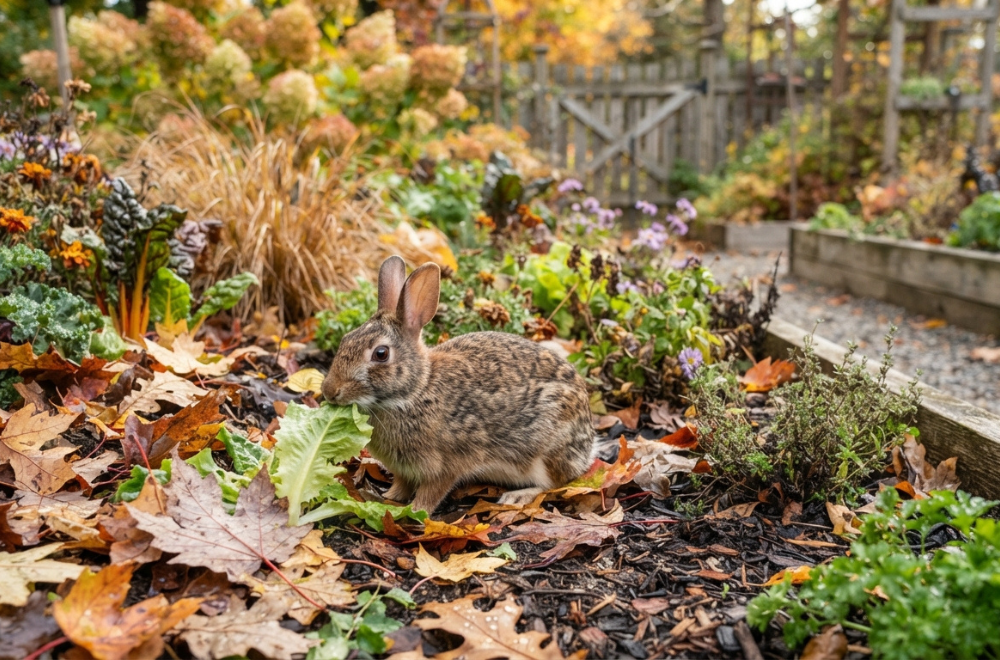
Rabbits are a different beast entirely. They’re low to the ground, breed like, well, rabbits, and they go after different plants than deer do.
Chicken Wire Barriers Around Young Trees and Shrubs
This is the single most reliable rabbit solution I’ve found, and it costs almost nothing. Wrap a cylinder of chicken wire or hardware cloth around the base of young trees and shrubs, extending it about 18 to 24 inches up the trunk and a couple inches into the soil so rabbits can’t burrow underneath.
I lost a young apple tree my second year gardening because I assumed it was “too big” for rabbits to bother with. I was wrong, and that tree died from bark girdling by February. Now every young tree on my property gets wrapped before Halloween, no exceptions.
This method blocks physical access rather than relying on smell or taste, which means it works regardless of weather, hunger levels, or how bold a particular rabbit happens to be. It’s not glamorous, but it’s the closest thing to a guarantee you’ll get.
Cayenne Pepper and Garlic Spray
Mix a tablespoon of cayenne pepper, a few crushed garlic cloves, and a squirt of dish soap into a gallon of water, then spray it directly on plant foliage. Rabbits taste-test a plant before committing to a meal, and one bite of this stuff sends them looking elsewhere fast.
I use this on my strawberry patch every fall since that’s where rabbits do the most damage in my yard. It needs reapplication after every rain, which gets tedious, but it’s genuinely effective on plants you can’t easily fence off.
Just don’t spray this on anything you plan to eat without washing thoroughly first, and skip it entirely near beehives or anywhere pollinators are still active.
Plants Deer and Rabbits Tend to Avoid
Planting things they don’t like is a long game, but it pays off. Deer and rabbits both tend to steer clear of strongly scented or fuzzy-leafed plants.
For deer resistance, lean on lavender, Russian sage, boxwood, and ornamental grasses. Rabbits usually leave alone anything with a strong scent too, like marigolds, alliums, and most herbs in the mint family.
I’ve found that mixing resistant plants directly into your shrub line works better than clustering them all in one bed. Deer and rabbits are creatures of habit and route memory, so breaking up a clear path of tasty plants with something they dislike can redirect them before they ever reach your prized hydrangeas.
None of this is bulletproof, by the way. “Deer resistant” does not mean “deer proof.” A hungry enough deer in a hard enough winter will eat almost anything, including plants labeled as resistant on every gardening blog you’ll find.
Real Talk: What’s Not Worth Your Time (and What Can Go Wrong)
I want to be straight with you here, because a lot of “natural remedy” articles skip this part.
Ultrasonic deer repellent devices are a total waste of money, even though they look sleek and high-tech in the catalog photos. I bought two of these my third year gardening, convinced by the marketing, and deer walked right past them without a second glance. Save your $60.
Dryer sheets tied to branches are another one I see recommended constantly, and in my experience they do almost nothing beyond making your shrubs smell like a laundromat. Maybe it works for the first week while the scent is strong, but it fades fast and deer figure out quickly that the smell isn’t attached to any real threat.
Homemade sprays wash off. Every single one. If you’re not committed to reapplying after every rainstorm, you’re going to be disappointed by week three. This is the number one reason people give up on natural repellents and go buy an expensive fence instead — they expected a one-and-done solution, and gardening rarely offers those.
Fencing is genuinely the most effective option against both deer and rabbits, but it’s also the most expensive and the least “natural.” An 8-foot fence is generally needed to keep deer out completely, since they can clear anything shorter with room to spare. If your budget and yard aesthetic allow for it, a fence solves 90% of the problem permanently. I know that’s not the answer people want when they’re searching for “natural” solutions, but I’d be lying if I said otherwise.
Also worth noting: nothing works forever. Deer and rabbits adapt. Rotate your methods every few weeks, especially scent-based ones, so the animals don’t get comfortable enough to ignore them.
Quick side note: if you have a dog, let it patrol the yard regularly, especially at dawn and dusk when deer and rabbits are most active. Scent marking from a resident dog does more to keep animals away long-term than most sprays combined, and it costs you nothing beyond a few extra walks around the property.
Final Thoughts
No single trick keeps deer and rabbits out of your garden forever. The gardeners I know who actually win this fight combine two or three methods, rotate them regularly, and accept that a little bit of nibbling is just part of having a yard that backs up to nature. Protect your favorites, fence your young trees, and don’t waste money on gadgets that only work in the commercial.
What’s been raiding your garden this fall, deer, rabbits, or something else entirely? Drop a comment below and let me know what you’ve tried. I read every one, and I’m always looking for new tricks to add to my own arsenal.