
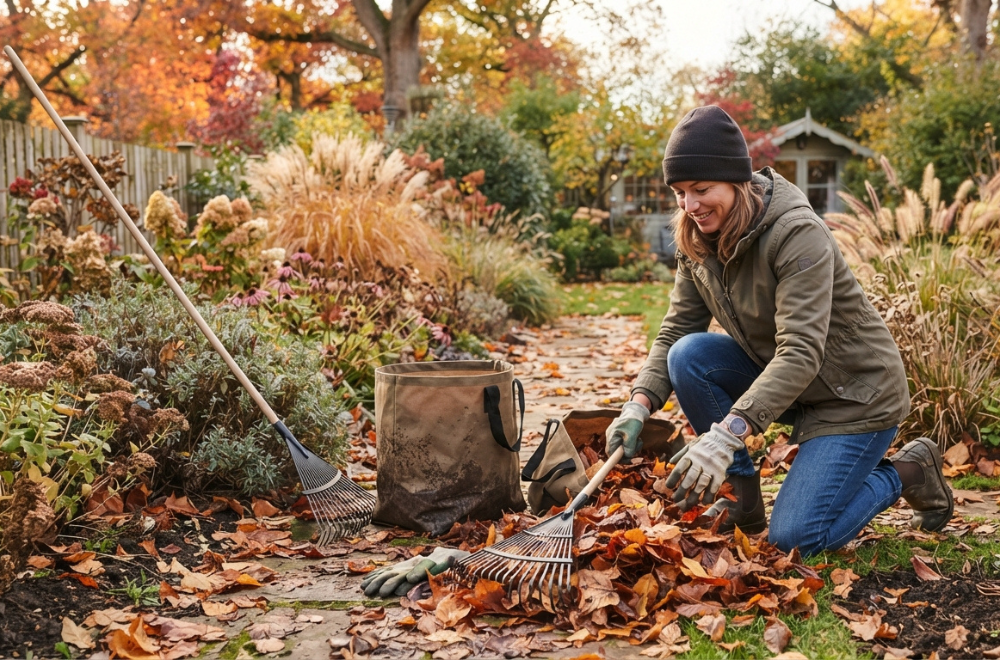
You raked, you bagged, you hauled six trash cans of leaves to the curb, and you patted yourself on the back for a job well done. Then April rolls around and your hostas are lace, your tomato seedlings have aphids before they even hit six inches, and there’s a vole tunnel running straight through what used to be your prize dahlia bed.
Sound familiar? I’ve had that exact spring more than once. The frustrating part is that most of us think “cleanup” automatically means “pest prevention.” It doesn’t. In fact, some of the most common fall cleanup habits practically roll out the red carpet for the bugs, grubs, and rodents you’re trying to avoid.
I’ve spent more falls than I’d like to admit undoing my own mistakes, and I’ve picked up a few from neighbors who called me over to look at their “mystery” pest problem that started, without fail, the previous October. Let’s go through what actually works, what backfires, and how to close your garden down for winter without handing pests a welcome mat.
Why Fall Cleanup Timing Matters for Pest Control
Here’s the thing nobody tells you at the garden center: timing matters more than effort. You can work yourself ragged in the yard all weekend and still set yourself up for a pest-heavy spring if you do it at the wrong moment.
Most overwintering insects are looking for three things once temperatures drop: shelter, moisture, and undisturbed soil. Fall cleanup either removes those conditions or creates them, depending on how and when you do it.
Squash bugs, cucumber beetles, and stink bugs tuck themselves into leaf litter and garden debris right as the first frost hits. If you clean up too early, before pests have finished feeding and moved into their overwintering spots, you haven’t actually removed anything, you’ve just interrupted them mid-meal and they’ll relocate to your mulch pile instead. Clean up too late, after a hard freeze, and you’re basically shoveling out a bug hotel that’s already fully booked.
The sweet spot is usually two to three weeks after your first hard frost. By then, most pest insects have settled into their winter hiding spots, and removing plant debris actually takes them with it instead of just scattering them.
Mistake #1: Leaving “A Few” Diseased Leaves Under Your Shrubs
I get it. Raking every single leaf out from under a dense rose bush or a viburnum feels like it’s not worth the scraped knuckles. I used to leave the ones tucked close to the trunk, telling myself they’d just break down into free mulch.
That was a mistake I paid for the following June, when my roses came down with black spot so bad I had to cut half the canes back to nothing.
Diseased leaves, especially from roses, fruit trees, and anything that had powdery mildew, rust, or leaf spot this season, are basically a storage container for fungal spores and overwintering insect eggs. Leaving them at the base of the plant means you’re reinfecting that same plant the moment conditions warm up in spring.
The fix isn’t complicated, but it does need to be thorough:
- Rake out every leaf from under affected plants, not just the obvious pile.
- Bag diseased leaves separately and either trash them or hot-compost them if your pile regularly hits 140°F or higher.
- Never leave diseased leaves in a cold compost pile. Most home setups don’t get hot enough to kill fungal spores, and you’ll just spread the problem to next year’s compost-amended beds.
- Clear a few extra inches of soil around the drip line too, since spores can cling there as well.
If you’ve got healthy leaves from trees that didn’t show disease this year, those are genuinely fine to leave as mulch or shred for the compost pile. I’m not telling you to strip your yard bare. I’m telling you to be selective about what stays.
Mistake #2: Cutting Back Perennials at the Wrong Time
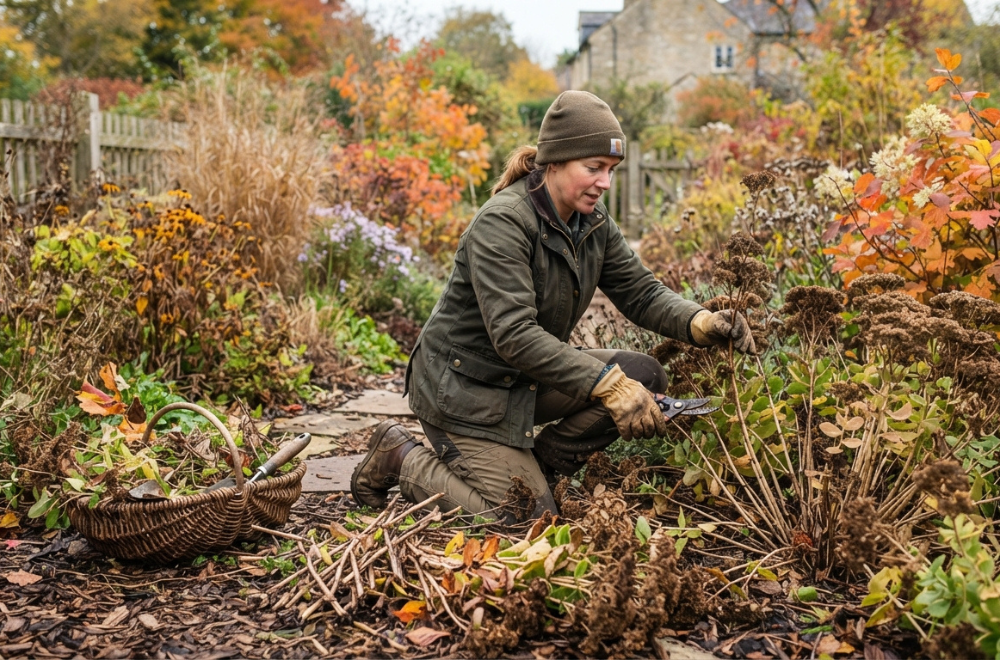
This one splits gardeners into two camps, and I’ve been guilty of overcorrecting in both directions.
Camp one cuts everything down to the ground the second the first leaf turns brown. Camp two leaves every stem standing all winter because “the birds need the seed heads.” Both approaches, taken to the extreme, create pest problems.
Cutting perennials too early, while they’re still actively growing or just starting to go dormant, stresses the plant and opens fresh wounds right as insects are hunting for a place to lay eggs or burrow in for winter. Borers in particular love a freshly cut, hollow stem.
Leaving everything standing all winter isn’t automatically better, either. Iris borers, for example, overwinter as eggs on old iris foliage, and leaving that foliage in place practically guarantees an infestation next season. Same goes for peonies with a history of botrytis blight. The old stems hold the fungus right where it can reinfect new growth in spring.
Here’s how I sort it out now:
- Cut back and remove: Iris, peonies with any history of blight, daylilies, hostas that had slug damage, and anything with visible powdery mildew this season.
- Leave standing: Coneflowers, black-eyed Susans, ornamental grasses, sedum, and other seed-head perennials that don’t have a history of pest or disease issues. These provide winter interest and genuinely do feed birds.
- Quick side note: if you’re not sure which category a plant falls into, err on the side of cutting it back if it had any pest or disease issues this year. You can always leave the “good” plants standing and reassess in spring.
Mistake #3: Piling Mulch Against Trunks and Foundations
Every fall I see the same thing driving through my neighborhood: fresh mulch mounded up in a cone around the base of a tree, sometimes six or eight inches deep, right against the bark. It’s called mulch volcanoes, and it’s one of those trends that looks tidy but causes real damage.
Piling mulch against a trunk keeps that bark constantly damp, which invites bark beetles, borers, and rot. It also gives mice and voles a cozy, hidden highway straight to the trunk, where they’ll happily gnaw on bark all winter. I lost a young crabapple tree to vole damage one winter because I’d mulched it like a volcano without thinking twice.
The same problem shows up along house foundations. A thick layer of mulch pushed right up against your siding is basically an invitation for termites, carpenter ants, and other wood-destroying insects to travel from soil to structure without ever being exposed.
What actually works:
- Keep mulch pulled back at least three to four inches from tree trunks and structural foundations.
- Aim for a mulch depth of two to three inches, not the six-inch volcanoes you see at big box stores.
- Use a flat, doughnut-shaped ring of mulch around trees instead of a cone.
- Check foundation mulch beds for gaps or cracks in the siding while you’re at it. That’s a separate problem, but fall is when you’ll actually notice it.
Mistake #4: Ignoring Fallen Fruit and Nuts
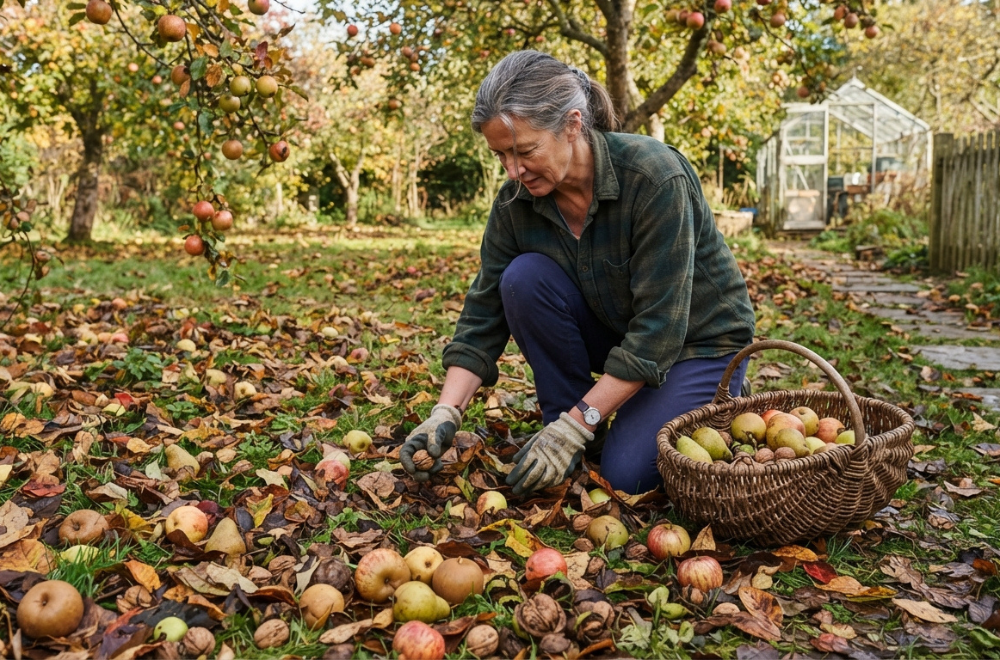
If you’ve got a fruit tree, a nut tree, or even just a crabapple that drops its fruit and gets forgotten, this is probably your biggest pest magnet, and most people don’t even think of it as part of “cleanup.”
Rotting fruit on the ground attracts yellow jackets, fruit flies, and eventually rodents looking for an easy meal before winter. Worse, a lot of common fruit pests, like apple maggots and plum curculio, spend the winter as larvae or pupae in the soil right underneath the tree where the fruit fell. Leave that fruit there, and you’re basically running a breeding program for next year’s infestation.
I used to let windfall apples sit under my tree because picking them up felt like a chore with no payoff. Then I had a yellow jacket problem so bad I couldn’t sit on my own patio in September, and I traced it straight back to the rotting drops I’d been ignoring for weeks.
Get in the habit of walking your fruit and nut trees every few days in fall:
- Pick up all dropped fruit and nuts, even the ones that are too far gone to eat or preserve.
- Don’t compost diseased or pest-infested drops in a cold pile. Bag them for trash pickup instead.
- Rake underneath the canopy, not just directly under the trunk, since fruit can roll or bounce surprisingly far.
- If you had a heavy pest year, consider raking and removing the top layer of soil under the tree too, since that’s where a lot of overwintering larvae are hiding.
Mistake #5: Skipping the Gutters and Downspouts
This one’s not technically a “garden” task, but it belongs on this list because it causes more pest problems than people realize. Clogged gutters full of wet leaves are basically a standing water feature attached to your roofline, and mosquitoes, along with carpenter ants and even mice, will absolutely take advantage.
I skipped my gutters one fall because I was focused on the beds and figured it could wait until spring. By the time I got up there in March, I found an ant colony that had moved into the soggy fascia board behind the gutter, and I ended up needing a contractor to fix wood rot that could’ve been avoided with an hour on a ladder.
Clear your gutters after most of the leaves have dropped, not before, or you’ll just be doing it twice. While you’re up there, check that downspouts are directing water at least a few feet away from your foundation. Standing water near the house is one of the most reliable ways to attract pests looking for a winter water source.
Mistake #6: Tossing Diseased Debris Straight Into Your Compost Pile
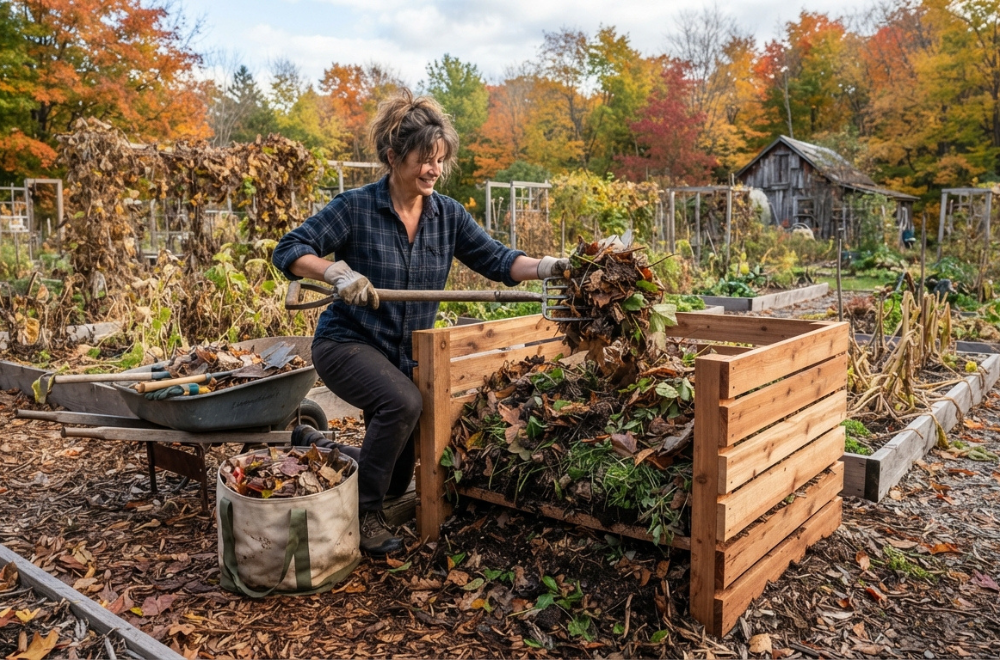
I already touched on this with leaves and fallen fruit, but it’s a big enough problem on its own that it deserves its own section, because compost piles are where I see people undo an entire season of good cleanup habits in one wheelbarrow trip.
A home compost pile feels like the responsible, eco-friendly choice, and most of the time it is. The problem shows up when people treat it as a catch-all for every scrap of plant material, including the squash vines that had powdery mildew, the tomato plants that came down with blight, and the bean leaves that were covered in Japanese beetles right before frost.
Backyard compost piles, unless you’re actively managing them with a thermometer and turning them on a schedule, rarely get hot enough all the way through to kill fungal spores, bacterial pathogens, or insect eggs. Most home piles hover in the 90 to 110°F range in the center and barely get warm at all around the edges. That’s nowhere near hot enough to sterilize diseased material. What actually happens is you spend all winter “composting” the problem, then spread it right back onto your garden beds in spring like a pest and disease delivery service.
I made this mistake with a batch of blighted tomato vines a few years back. I figured the compost pile would break it all down over winter. Instead, I top-dressed my raised beds with that compost the following April, and by July I had blight showing up on plants in a completely different part of the yard that had never had the problem before.
The rule I follow now is simple: if a plant had a disease or a heavy pest infestation this season, it doesn’t go in my compost pile, full stop. It goes in the trash, or if my municipality offers it, a yard waste pickup that’s processed at a commercial facility hot enough to actually kill pathogens. Healthy plant material, grass clippings, and disease-free leaves are still fair game for the pile.
Where Pests Actually Hide Once the Cold Sets In
It helps to actually know what you’re looking for, because “clean up the garden” is vague advice until you understand where pests are hiding in the first place.
Squash bugs and stink bugs tuck themselves under bark, in wood piles, and inside garden structures like trellises and raised bed frames. Slugs and their eggs hide in damp mulch and under any flat object left sitting on soil, including that decorative stepping stone you forgot about. Grubs, which turn into Japanese beetles, sit just a few inches under your lawn and garden soil, feeding on roots until the ground freezes solid. Aphid eggs overwinter directly on the stems of woody plants like roses, waiting for the first warm days of spring to hatch.
Once you know where to look, cleanup stops feeling like a vague chore and starts feeling like actual pest control. I walk my beds in late fall with this list in my head, checking bark, mulch, and the base of anything woody, instead of just raking whatever’s visible on the surface.
Real Talk: What’s Not Worth the Effort (and What Can Backfire)
Not every piece of fall cleanup advice you’ll find online is worth your weekend, and some of it can actually make things worse.
- Chemical soil treatments as a blanket fix. I know it’s tempting to just dump a broad-spectrum insecticide on your beds in fall and call it done. Don’t. Broad treatments kill beneficial insects and soil organisms right along with the pests, and you’ll often end up with worse problems next year because you’ve wiped out the natural predators that would’ve kept things in check. Save chemical treatments for a specific, identified problem, not a preventative blanket dose.
- Tilling your entire garden bed “to expose pests to the cold.” This one gets repeated a lot, and it does have some truth to it for certain grubs, but tilling also destroys the overwintering habitat of beneficial insects like ground beetles and native bees, and it disrupts soil structure you’ve spent years building. I’ve stopped doing a full till and instead just lightly disturb the top inch or two in spots where I know I had a specific pest problem.
- Stripping every bed completely bare. I mentioned this above, but it’s worth repeating: an obsessively clean garden isn’t actually a healthier one. Some leaf litter and standing stems support overwintering pollinators, ladybugs, and other beneficial insects that you want coming back in spring. The goal is targeted removal of problem material, not scorched earth.
- Wrapping tree trunks in plastic tree wrap and forgetting about it. This is a small one, but I’ve seen it cause real damage. Plastic wrap left on too long traps moisture against the bark and creates the exact damp, dark conditions that invite borers and rot. If you use trunk protection for rodents or sunscald, use a breathable material and take it off by early spring, not “whenever I remember.”
Final Thoughts
Fall cleanup isn’t about making your yard look like a magazine spread before the first snow. It’s about being strategic: remove what’s diseased or infested, leave what’s genuinely beneficial, and pay attention to the spots people usually skip, like gutters and fallen fruit.
The gardeners with the fewest spring pest problems aren’t the ones who worked the hardest in October. They’re the ones who worked smart, in the right order, at the right time.
What’s your biggest fall cleanup headache? Have you dealt with a pest problem that traced back to something in your yard cleanup? Drop it in the comments below. I read every one, and there’s a decent chance your mistake is one I’ve made too.

About Syprose Kiche
Syprose Kiche is the creator and writer behind My Besuited Home, a practical home and garden website covering DIY projects, gardening, lawn care, landscaping, home improvement, and outdoor living. She focuses on turning everyday homeowner questions into clear, practical guides backed by careful research and useful real-world considerations.