
By late September, the south and west sides of a house often turn into a landing strip. Stink bugs and boxelder bugs collect on warm siding, cluster around window frames, and squeeze into gaps around soffits and utility lines. Homeowners usually notice the problem the first time they see a dozen or more insects sunning themselves on a wall in the middle of the afternoon, and the number only grows as the weeks go on. Understanding why this happens is the first step toward doing something about it that actually works.
Why These Bugs Suddenly Show Up on the Siding
Both brown marmorated stink bugs and boxelder bugs are looking for a place to spend the winter, not a place to feed. As outdoor temperatures drop and daylight hours shorten, these insects shift from feeding on plants and seeds to searching for sheltered, dry spaces where they can go dormant. This is called overwintering behavior, and it’s driven by instinct rather than anything specific to a particular house.
Houses become attractive for a simple reason: they radiate heat. A wall that has absorbed sunlight all day stays a few degrees warmer than the surrounding air well into the evening, and insects seeking shelter are drawn to that residual warmth. South- and west-facing walls, which get the most direct afternoon sun, tend to see the heaviest activity. Light-colored siding can also reflect more visible light, which some research on stink bug behavior suggests may play a role in initial attraction, though the effect is smaller than the influence of warmth and available entry points.
Boxelder bugs have an added reason to congregate near a particular house: they need a host tree nearby. Boxelder, maple, and ash trees are the primary food source for boxelder bug nymphs, and adult boxelder bugs rarely travel far from these trees when looking for winter shelter. A house situated close to a female boxelder tree (the trees produce the seeds boxelder bugs feed on) will almost always have a worse problem than a similar house a few hundred feet away with no boxelder trees nearby.
Stink bugs are less tied to a single host plant. Brown marmorated stink bugs feed on a wide range of fruit trees, vegetables, and ornamental plants throughout the growing season, then disperse toward buildings in fall regardless of what’s growing nearby. That means a stink bug problem can appear even in a yard with minimal landscaping, which surprises a lot of homeowners who assume the insects must be coming from something specific in the garden.
Telling the Two Apart Matters More Than It Seems
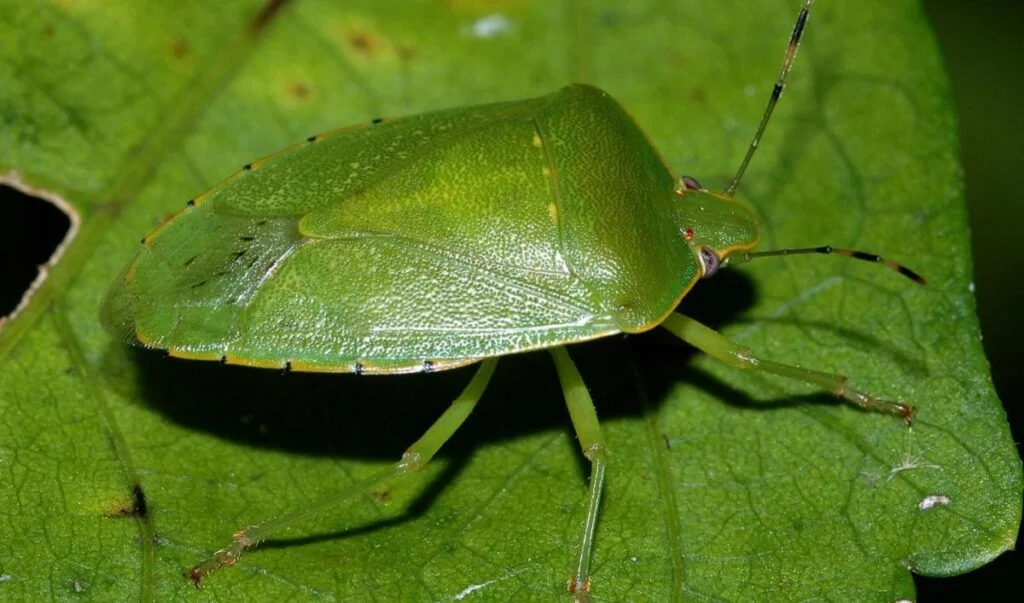
Stink bugs and boxelder bugs are often lumped together because they show up at the same time of year and behave similarly, clustering on sunny walls and slipping indoors through the same gaps. But they look different and react differently to different deterrents, so identification is worth thirty seconds before choosing a treatment.
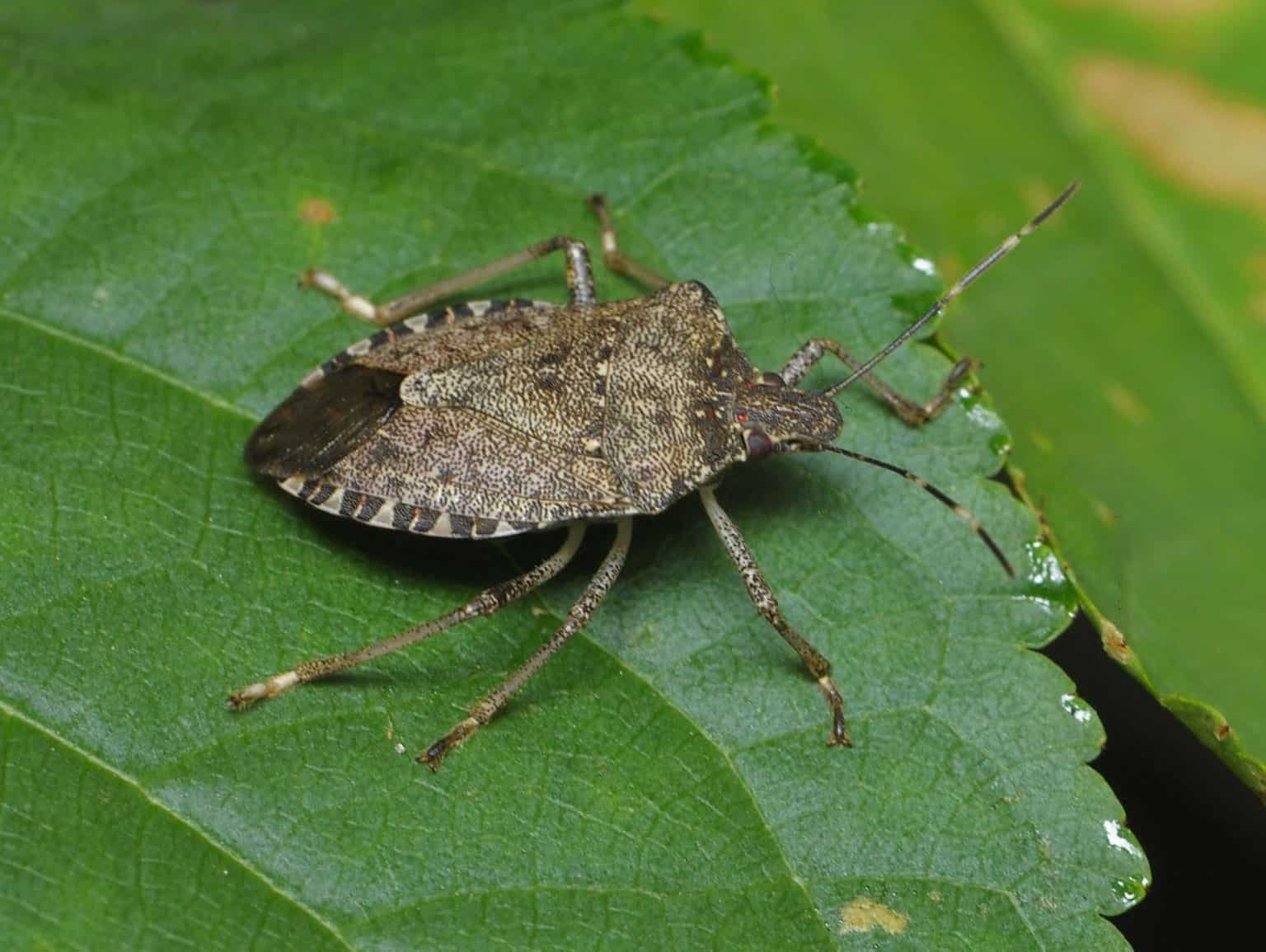
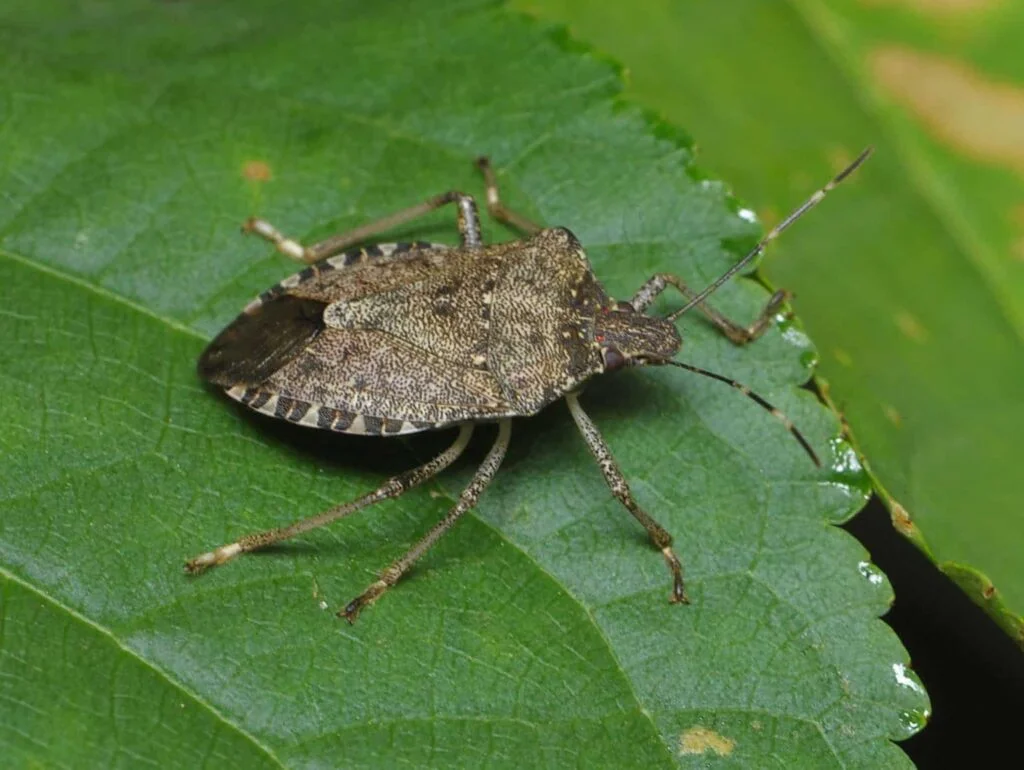
Brown marmorated stink bugs are shield-shaped, roughly the size of a fingernail, mottled brown, with alternating light and dark bands on the antennae and the edge of the abdomen. They release a distinct, sharp odor when crushed or disturbed, which is where the name comes from.
Boxelder bugs are narrower and more elongated, black with reddish-orange markings along the edges of their wings, and roughly half an inch long. They don’t have the same strong defensive odor as stink bugs, though they can still stain fabric and surfaces with a reddish excretion if crushed.
The distinction matters because boxelder bugs are somewhat more responsive to contact insecticidal soap and to physical exclusion, while stink bugs are more resistant to many home remedies and rely almost entirely on sealing and repellents for meaningful control. If a natural spray seems to work on one insect but not the other, this is usually why.
What “Natural” Actually Means Here, and What It Doesn’t Promise
It’s worth being direct about something before going further: no natural spray, oil, or barrier eliminates a stink bug or boxelder bug population. These insects are mobile, they arrive in waves over several weeks, and even licensed pest control treatments using synthetic pyrethroids don’t offer permanent protection — they reduce numbers and buy time. Natural and DIY approaches work by making a surface less attractive or more irritating to walk across, which reduces how many bugs land, linger, and find their way inside. That’s a legitimate and often sufficient goal for most homes, but it’s different from extermination.
This distinction shapes expectations. A well-executed natural barrier combined with sealing can meaningfully cut down indoor sightings and outdoor clustering. It will not produce a bug-free wall in a year with a heavy regional population, particularly if there’s a mature boxelder tree on the property or the house sits at the edge of a wooded area, both common conditions in regions with heavy stink bug pressure.
Essential Oils With Some Evidence Behind Them
A handful of essential oils show measurable repellent or irritant effects against stink bugs and boxelder bugs in university and extension trials, though the effect is generally short-lived and works better as a deterrent for landing and lingering than as a way to drive away bugs that are already established somewhere.
Peppermint oil is the most commonly cited option, and for good reason: several studies on brown marmorated stink bugs have found that peppermint oil and its primary compound, menthol, act as contact irritants and mild repellents. It doesn’t kill the insects, and its effect tends to fade within a day or two outdoors, especially after rain or heavy dew, which means reapplication is part of the deal rather than an occasional touch-up.
Clove oil contains eugenol, a compound with documented insecticidal and repellent properties against a range of soft-bodied insects. It has a strong, persistent scent, which some people find useful and others find overwhelming when used near doors and windows.
Spearmint and eucalyptus oil show similar but generally weaker effects than peppermint in available trials. They’re reasonable substitutes for people sensitive to the smell of peppermint, but shouldn’t be expected to outperform it.
Citronella and lemongrass oil are marketed heavily for stink bug control, largely because they’re associated with mosquito repellency, but the evidence specific to stink bugs and boxelder bugs is thinner. They may have a mild effect but shouldn’t be relied on as a primary ingredient.
None of these oils should be treated as a substitute for sealing entry points, and none of them are registered pesticides — they’re being used off-label as home deterrents. That’s legal for personal, non-commercial use on your own property, but it also means there’s no standardized concentration or application rate backed by regulatory testing. Anyone with asthma, essential oil sensitivities, cats (whose metabolism handles many essential oils poorly), or young children in the home should use diluted concentrations and avoid concentrated application near air intakes, pet bedding, or areas pets can lick.
A DIY Bug Barrier Spray for Siding
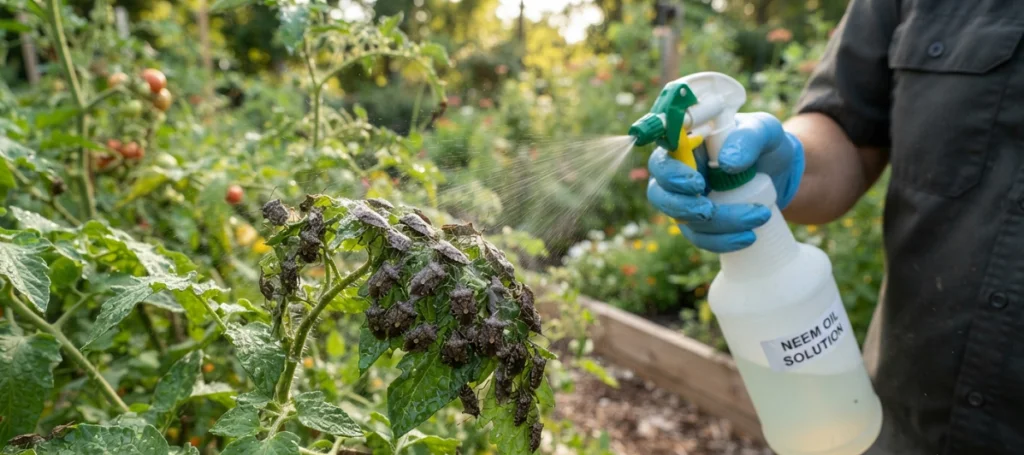
The most common version of a homemade repellent spray combines a carrier liquid, a surfactant to help it stick to smooth siding, and one or more essential oils. A reasonable starting recipe:
- 2 cups water
- 10–15 drops peppermint essential oil
- 5–10 drops clove essential oil
- 1 teaspoon unscented liquid dish soap (acts as a surfactant so the spray adheres to vinyl or painted surfaces instead of beading off)
Combine the ingredients in a spray bottle, shake well before each use since the oils will separate from the water, and apply to the lower few feet of siding, around window and door frames, along soffits, and around any visible gaps or utility penetrations. Avoid spraying directly onto painted trim with unknown paint composition without testing a small hidden area first, since concentrated essential oils can occasionally affect certain finishes over repeated applications.
A few practical notes make a real difference in how well this performs:
- Reapply after rain. The spray isn’t water-resistant, and a single fall shower will wash most of it away. Weekly reapplication during peak activity (typically September through the first hard frost, depending on region) is a realistic baseline; some homeowners in heavy-pressure areas reapply every three to four days.
- Apply in late afternoon. Bugs tend to arrive on sun-warmed walls in the hours before sunset, so applying the spray in the morning gives it several hours to dissipate before the insects show up. Late afternoon application, closer to when the bugs actually arrive, tends to be more effective.
- Concentrate on the sunniest walls first, rather than treating the whole house equally. If south and west exposures are consistently worse, that’s where the spray and other measures will have the most impact per hour spent.
- Don’t oversaturate. More oil isn’t proportionally more effective, and very concentrated mixtures increase the odds of residue or discoloration on certain siding materials, particularly vinyl in direct sun, where heat can sometimes interact with oil residue.
Diatomaceous Earth as a Dry, Physical Barrier
Food-grade diatomaceous earth (DE) works differently from essential oils. It’s a fine powder made from the fossilized remains of diatoms, and it kills soft-bodied insects mechanically, by abrading their exoskeletons and causing them to dehydrate, rather than through any chemical toxicity. It’s a legitimate option for use along foundation lines, under siding edges, and in cracks, but it comes with real limitations that are worth knowing before relying on it.
DE loses its effectiveness completely when wet, and it needs to stay dry to work at all, which makes it a poor choice for exposed vertical siding in a region with regular fall rain. It’s much better suited to dry, protected areas: along the base of a foundation under an overhang, inside a window well, in a crawlspace vent, or dusted into cracks that don’t get direct rain exposure. Reapplication after any moisture exposure is necessary.
It should also be handled with a basic dust mask when applying it, since the fine particles that make it effective against insects can also irritate human lungs with repeated exposure. Keep it away from areas pets frequent directly, since inhaling the dust isn’t good for them either, even though the ingestion toxicity of food-grade DE is very low.
Sealing the House Is the Part Most People Skip
Repellent sprays and barriers reduce how many bugs land and linger, but they don’t stop the insects that are determined to get through an existing gap. Every year, a meaningful share of the indoor stink bug and boxelder bug problem traces back to entry points that were never addressed, and sealing them is usually more effective, per hour invested, than any spray.
Common entry points include:
- Gaps around window and door frames, especially older wood-frame windows where caulk has cracked or shrunk
- Openings where utility lines, cable, or dryer vents pass through the siding
- Gaps under fascia boards and behind loose soffit panels
- Unscreened attic, ridge, or gable vents
- Cracks in foundation walls, particularly where the sill plate meets the foundation
- Gaps around chimney flashing
A weatherstripping check on exterior doors, fresh caulk (exterior-grade, paintable silicone or polyurethane caulk holds up better than cheap acrylic caulk in temperature swings) around window frames, and fine mesh screening over vents address the majority of entry points on most houses. This work is best done before the bugs start actively seeking shelter, ideally in late summer, because sealing a house that already has insects clustered at a gap is less effective than sealing a house before the insects arrive. Once fall arrives, sealing still helps but functions more as damage limitation than full prevention for that season.

Plants and Landscaping Choices That Influence Pressure
Because boxelder bugs are tied closely to boxelder, maple, and ash trees, landscaping decisions have a real, measurable effect on boxelder bug pressure that essential oil sprays can’t match. A female boxelder tree within a short distance of the house is one of the strongest predictors of a heavy seasonal boxelder bug problem. Removing or replacing a boxelder tree isn’t always practical or desirable, especially if it’s mature and provides shade, but it’s worth knowing that this single factor often outweighs every spray-based intervention combined.
For stink bugs, the plant relationship is less direct, since they feed on so many different host plants throughout the season. Some gardeners plant strong-smelling herbs like mint, lavender, marigold, and garlic near foundation beds on the theory that the scent deters stink bugs from approaching the house. The evidence for this is mostly anecdotal rather than rigorously tested, and any effect is likely modest and localized to the immediate area around the plants rather than the whole exterior. It’s a reasonable low-cost addition to a broader strategy, not a standalone solution.
Where Popular Advice Falls Short
A few pieces of commonly repeated advice deserve a closer look, because they oversell what they can realistically deliver.
- “Just seal the house and you’re done.” Sealing addresses entry into the interior, but it does nothing about bugs clustering on exterior walls, which is often the part homeowners find most bothersome, especially with stink bugs congregating visibly near entry doors and porches.
- “Essential oil sprays will keep bugs off the house.” They reduce landing and lingering to some degree, but their effect is short-lived and weather-dependent. Treating a spray application as a one-time fix rather than a maintenance task is the most common reason people conclude natural repellents “don’t work” — the spray itself may be working as intended, it’s just not being reapplied often enough to matter.
- “Vacuuming up bugs indoors solves the outdoor problem.” Removing bugs that have already gotten inside is reasonable pest management for the interior, but it has no effect on the population outside continuing to seek entry, and using a regular vacuum releases the defensive odor from crushed stink bugs into the bag or canister, which can linger. A shop vac with water in the canister, or a dedicated bug vacuum, avoids this.
- “One treatment in fall handles the whole season.” Both insects arrive in waves tied to weather patterns — typically increasing after the first cool nights and continuing through several temperature drops into November in many regions — rather than all at once. A single early-October spray application won’t cover bugs still arriving in late October.
Common Mistakes That Undercut Natural Barriers
A few patterns show up repeatedly in how homeowners apply these methods, and each one reduces effectiveness in a predictable way.
Spraying only the areas where bugs are currently visible, rather than the full sun-exposed wall, tends to just push activity a few feet over rather than reducing it. Bugs that find one section of wall unpleasant will often simply land on the untreated section next to it.
Using essential oils at very low, “just in case” concentrations to avoid any odor produces a spray too weak to have a meaningful irritant effect. If the goal is to stay well below a level that could affect people or pets, a barrier that relies on placement (like diatomaceous earth in protected areas) or on sealing may be a better fit than an essential oil spray diluted past the point of usefulness.
Treating window screens the same way as siding is another frequent misstep. Screens need a lighter touch, since oversaturating fine mesh with an oil-and-soap mixture can clog it and reduce airflow, and repeated soap residue can degrade some screen materials over a season.
Finally, ignoring interior gaps around window air conditioning units, mail slots, and dryer vents while focusing entirely on exterior treatment leaves an obvious route indoors untouched. These are consistently among the top entry points reported by pest management professionals dealing with fall invaders.
When Natural Methods Aren’t Enough
For most homes, a combination of sealing, targeted spraying on sun-exposed walls, and some landscaping awareness keeps the problem to a manageable, if imperfect, level. There are situations where it’s reasonable to bring in professional pest control instead of continuing to rely solely on natural methods:
- A house adjacent to a wooded lot or agricultural field with heavy regional stink bug pressure, where hundreds of insects may appear regardless of barrier efforts
- Repeated indoor infestations despite sealing and exterior treatment, which may indicate an entry point that hasn’t been identified
- A mature boxelder tree too large or valuable to remove, combined with a boxelder bug population large enough to be a genuine nuisance rather than an occasional annoyance
- Households where an existing perimeter pesticide treatment (typically a synthetic pyrethroid applied by a licensed applicator in early fall, before insects arrive) would be more cost-effective than ongoing DIY maintenance
A licensed pest control provider can also apply longer-lasting exterior treatments that aren’t available in over-the-counter or homemade form, which may make sense for a severe, recurring problem even for homeowners who prefer to avoid synthetic chemicals for most of the yard.
Frequently Asked Questions
Do stink bugs and boxelder bugs cause structural damage to a house? No. Neither insect chews through wood, wiring, or structural materials, and neither reproduces indoors under normal household conditions. The problem is purely one of nuisance, odor (in the case of stink bugs), and occasional staining from boxelder bug excretions on light-colored surfaces.
Will planting mint around the foundation actually keep stink bugs away? It may have a modest, localized effect right around the plants themselves, based on the same repellent compounds found in peppermint essential oil, but it won’t create a meaningful barrier across an entire wall or foundation on its own. It works best as one part of a broader approach rather than a standalone solution.
Is it safe to use essential oil sprays around pets that go in and out of the yard? Diluted essential oil sprays applied to siding, away from areas pets can lick or rub against directly, are generally considered low-risk, but cats in particular metabolize some essential oil compounds poorly, and direct, concentrated exposure should be avoided. Keeping application away from pet doors, bedding areas, and low surfaces pets frequently touch reduces this risk.
Why do bugs seem to disappear for a few days and then come back? Activity is closely tied to temperature. A stretch of unusually warm days can slow the search for winter shelter, since the insects have less urgency to find dormancy sites, while a sharp temperature drop typically triggers a new wave of activity. This is a normal part of the fall pattern rather than a sign that a treatment has failed or suddenly stopped working.
The Realistic Takeaway
No spray or barrier will make a house invisible to stink bugs and boxelder bugs once the fall search for shelter begins in earnest. The combination that actually moves the needle is sealing obvious entry points before the season ramps up, treating sun-exposed walls with a natural spray on a real reapplication schedule rather than as a one-time application, and being honest about which factors — like a nearby boxelder tree — are outside what any spray can fix. Start with sealing, since it has the most durable effect, and treat the essential oil spray as ongoing maintenance rather than a cure.

About Syprose Kiche
Syprose Kiche is the creator and writer behind My Besuited Home, a practical home and garden website covering DIY projects, gardening, lawn care, landscaping, home improvement, and outdoor living. She focuses on turning everyday homeowner questions into clear, practical guides backed by careful research and useful real-world considerations.