
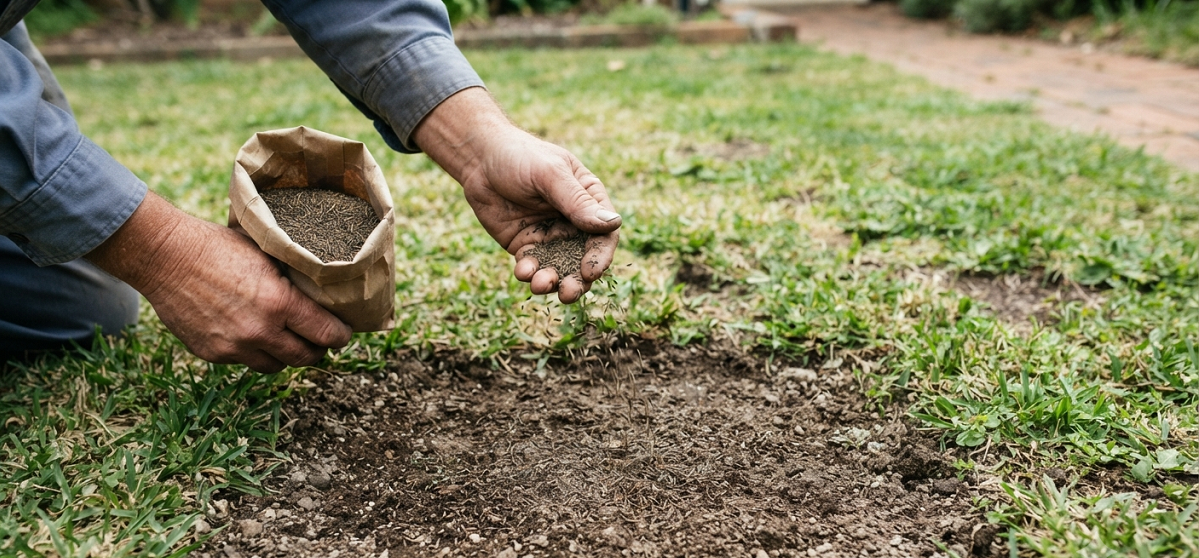
You know that feeling when you walk outside with your morning coffee and your neighbor’s lawn looks like a golf course, but yours has these weird bald spots that make it look like a bad haircut? Yeah. I get it. Patchy lawns are one of those problems that seem simple until you actually try to fix them, and then suddenly you’re standing in the grass seed aisle at 8 PM staring at twelve bags that all claim to be “the best.”
I’ve reseeded more bare patches than I care to admit. Some years it was grubs, some years it was my dog Biscuit’s favorite napping spot, and one particularly rough summer it was a sprinkler head that decided to spray sideways for three weeks straight. Whatever caused your patches, the fix usually comes down to picking the right seed for your specific situation, not just grabbing whatever bag has the prettiest photo of a lawn on the front.
This guide breaks down the seven grass seed options I actually trust for filling in bare and thin spots, plus the mistakes that’ll waste your money and your weekend.
What Causes Patchy Grass in the First Place
Before you buy anything, figure out why your grass is patchy. Seed alone won’t fix a drainage problem or a grub infestation.
Common culprits include:
- Compacted soil from foot traffic or old construction debris
- Grub damage (you’ll notice the grass pulls up like a loose carpet)
- Too much shade for the grass type you originally planted
- Pet urine spots, which show up as bright green rings around dead centers
- Poor watering habits, either too much or too little
- Wrong grass type for your climate zone
If you skip this step and just toss seed on top of a compacted, grub-infested patch, you’re basically throwing money into the wind. I made that mistake my second year as a homeowner and reseeded the same 3-foot patch four separate times before I finally aerated the soil and treated for grubs.
A quick way to check for grubs: grab a shovel, dig up a one-square-foot section near the edge of the dead patch, and count how many white, C-shaped grubs turn up. More than five or six per square foot usually means grubs are your real problem, and no amount of seed fixes that until you treat the soil first. I keep a small hand trowel by my back door specifically for this test now, because guessing wastes an entire growing season.
It’s also worth testing your soil pH if patches keep reappearing in the same general spot year after year. Most turf grasses want a pH between 6.0 and 7.0. A cheap soil test kit from the hardware store tells you in about ten minutes whether you’re dealing with soil that’s too acidic or too alkaline for grass to establish, regardless of which seed you pick.
1. Kentucky Bluegrass Seed Blends for Cool-Season Repair
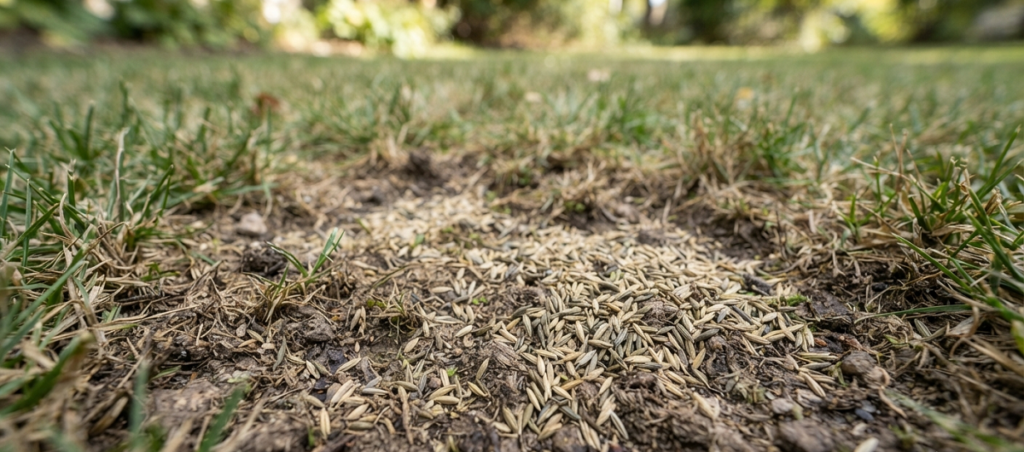
If you live somewhere with real winters, Kentucky bluegrass is probably already part of your lawn, and it’s one of the best choices for patching bare spots because it spreads on its own through underground stems called rhizomes.
That self-spreading trait is the big selling point here. Unlike bunch-type grasses that stay exactly where you planted them, bluegrass will slowly creep sideways and knit those patches together over a season or two. I overseeded a rough patch near my mailbox with a bluegrass blend three years ago, and by the following spring it had filled in edges I hadn’t even touched with seed.
The catch is patience. Bluegrass is slow to germinate, usually 14 to 30 days, so you can’t expect instant results. If you’re the type who wants a green patch by next weekend, this isn’t your seed.
Search terms people use for this include “best grass seed for cool season lawns” and “self-repairing grass seed,” and bluegrass blends show up in both categories for good reason. Pair it with regular watering for the first month, and don’t mow until the new grass is at least 3 inches tall.
2. Tall Fescue for High-Traffic Patch Repair
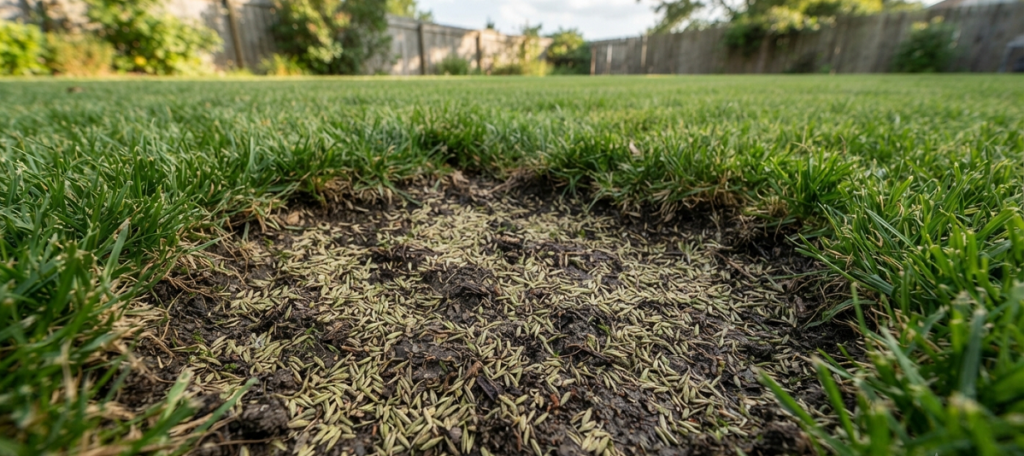
Tall fescue is my go-to recommendation for anyone dealing with patches from kids, dogs, or that one uncle who insists on parking his truck partially on the lawn during family gatherings. This stuff has deep roots and handles foot traffic better than almost anything else on this list.
Modern turf-type tall fescue varieties germinate faster than bluegrass, usually within 7 to 14 days, which makes it a solid pick if you’re impatient like me. It also tolerates drought and partial shade better than a lot of other cool-season grasses, so it’s forgiving if your watering schedule isn’t perfect.
One thing worth knowing: tall fescue is a bunch-type grass, meaning it doesn’t spread through rhizomes like bluegrass. Each seed grows its own clump. That means you need to seed a bit more densely to avoid clumpy, uneven texture down the line.
I’ve used tall fescue blends for patches along my side fence where the dog runs laps every single day, and three seasons later that area still holds up better than the rest of my lawn. If your patches keep coming back because of activity rather than soil issues, tall fescue is worth the extra seed density.
3. Perennial Ryegrass for Fast-Germinating Spot Repair
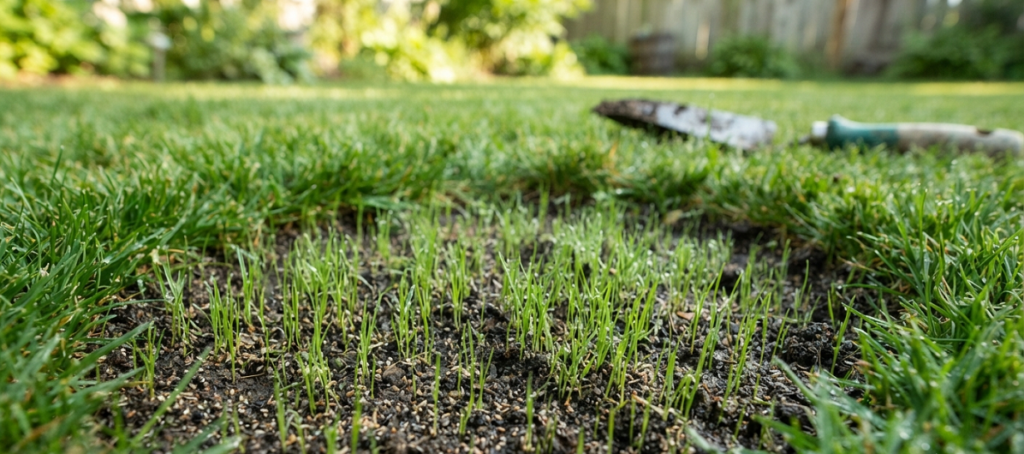
When you need green grass fast, perennial ryegrass is the answer. It germinates in as little as 5 to 10 days, which is basically lightning speed in the grass seed world.
This makes ryegrass a favorite for quick patch jobs, especially before hosting an event or just because you’re tired of staring at dirt. It also has a fine, attractive texture that blends nicely with bluegrass and fescue if your existing lawn is a mix.
The downside is durability. Perennial ryegrass doesn’t handle extreme heat or heavy drought as well as tall fescue, and it can thin out in the peak of summer if you’re not staying on top of watering. I planted a ryegrass patch mix before my daughter’s birthday party one year, and it looked fantastic for the event, but by August the heat had thinned it noticeably.
My honest opinion: use ryegrass mixed into a blend rather than as a standalone seed unless you’re in a mild climate. On its own, it’s a short-term fix. Blended with fescue or bluegrass, it gives you fast visible results while the slower grasses catch up underneath.
4. Bermuda Grass Seed for Warm-Season Patch Filling
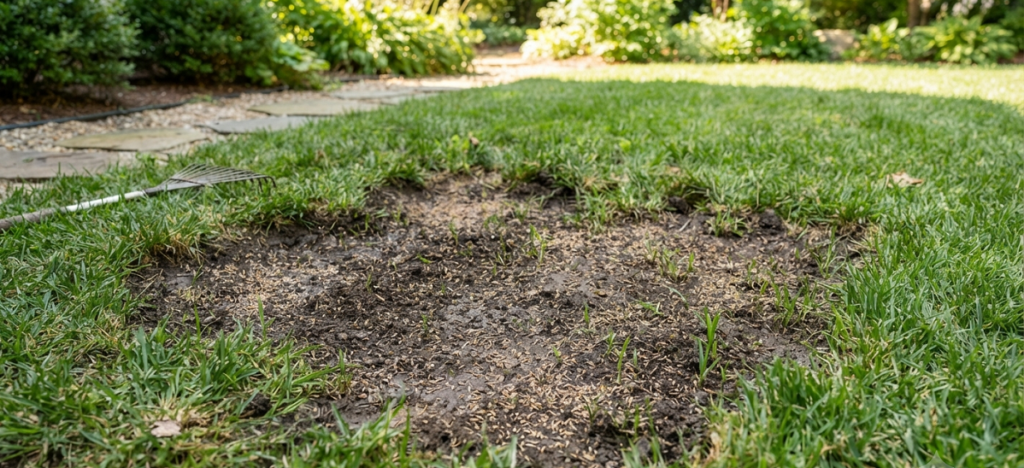
If you’re in the South or anywhere with hot, humid summers, Bermuda grass is probably your best bet for patchy warm-season lawns. It spreads aggressively through both rhizomes and above-ground runners called stolons, which means it fills in bare patches faster than nearly anything on this list once it gets going.
Bermuda loves full sun and heat, and it bounces back from drought and heavy foot traffic like it barely noticed. That’s exactly why golf courses and sports fields lean on it so heavily.
Here’s the tradeoff though. Bermuda grass goes dormant and turns brown in cold weather, so if you get real winters, this isn’t the right choice. It also spreads so aggressively that it can creep into flower beds and sidewalk cracks if you don’t edge regularly. I’ve heard from readers in warmer climates who planted Bermuda near a vegetable garden and spent the next two summers pulling runners out of their tomato beds.
Common searches for this type include “warm season grass seed for bare spots” and “fast spreading grass seed for hot climates,” and Bermuda consistently tops both lists for a reason.
5. Zoysia Grass Seed for Dense, Low-Maintenance Patches
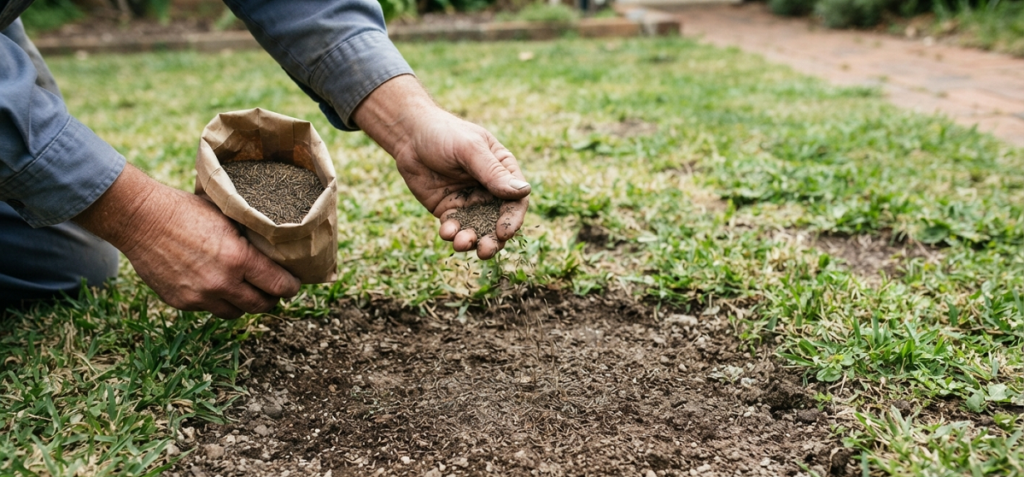
Zoysia is the grass I recommend to people who are sick of dealing with their lawn every weekend. It grows dense enough to choke out most weeds on its own, and once it’s established, it needs less mowing and less water than a lot of other warm-season options.
The dense growth habit is what makes it great for patch repair. Zoysia spreads slowly but thickly, filling gaps with a carpet-like texture that resists future bare spots from light foot traffic.
I’ll be straight with you: zoysia seed germination is notoriously slow and can be inconsistent, sometimes taking 3 to 4 weeks or longer, and coverage can look thin the first year no matter what you do. A lot of homeowners get frustrated and think the seed failed when really it just needs another full season to really fill in. If you go this route, plant in late spring when soil temperatures are consistently warm, and don’t judge the results until year two.
6. Fine Fescue for Shady Patch Repair
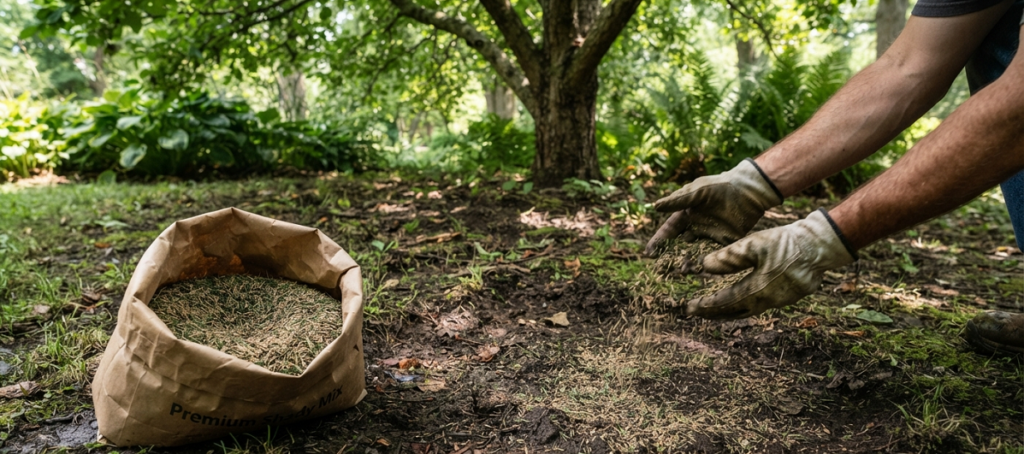
Every lawn has that one spot under a tree or along the north side of the house where grass just refuses to grow thick. Fine fescue is the seed I reach for every time I’m dealing with shade-related patches, because most other grass types simply give up when sunlight drops below four hours a day.
Fine fescue includes several sub-varieties like creeping red fescue and chewings fescue, both of which tolerate low light and poor, dry soil better than bluegrass or ryegrass. It has a fine texture and a nice blue-green color that looks great mixed into shade seed blends.
It’s not indestructible, though. Fine fescue struggles with heavy foot traffic and doesn’t love extreme heat, so it’s not the right choice for a shady patch that also happens to be your kids’ shortcut to the trampoline. Match the seed to the actual conditions of the patch, not just the general vibe of your yard.
For search purposes, people usually look this up as “grass seed for shady bare spots” or “grass that grows under trees,” and fine fescue blends dominate those results consistently.
7. Sun and Shade Mix Blends for Mixed-Condition Yards
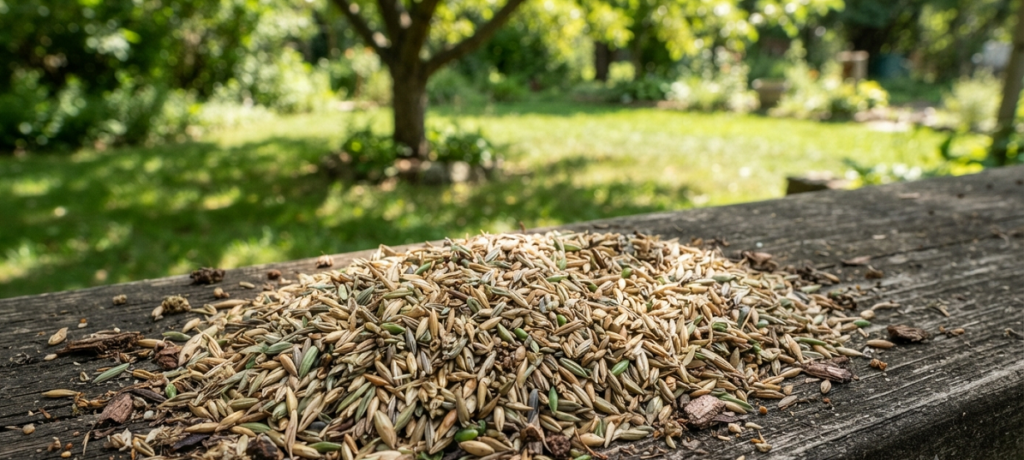
Most yards aren’t entirely sunny or entirely shady. They’re a patchwork of both, which is honestly the whole reason patchy lawns happen in the first place. A sun and shade blend combines several grass types, usually a mix of fescues, bluegrass, and sometimes ryegrass, so different sections of your yard get a seed variety suited to their specific light conditions.
I like these blends for anyone patching multiple spots around the yard at once instead of tackling one bare area at a time. Rather than buying three different seed bags, you grab one blend and let the seed sort itself out based on sunlight.
The performance can be a little uneven since you’re relying on several grass types to establish at different rates, but for general-purpose patch repair across a mixed yard, these blends save time and money compared to buying specialty seed for every single spot.
Quick side note: if you’re patching a lawn with more than three or four different light conditions across the yard, it’s sometimes worth doing spot treatments with individual seed types instead of one blanket blend. I did this at my previous house, where half the yard sat in full sun and the other half sat under two massive oak trees, and mixing individual seed types for each zone gave noticeably better results than the all-purpose blend I tried first.
How to Actually Patch a Bare Spot, Step by Step
Picking the right seed only gets you halfway there. The actual planting process matters just as much, and this is the part most people rush through.
- Clear the dead grass and debris. Rake out any dead patches, sticks, or old thatch so the seed can actually reach soil instead of sitting on top of dry plant matter.
- Loosen the top inch or two of soil. A hand cultivator or the edge of a rake works fine for small patches. For bigger areas, a core aerator saves your back and improves water absorption.
- Mix in a thin layer of compost or topsoil. This gives new seedlings something nutrient-rich to root into, especially if your existing soil is compacted or sandy.
- Spread the seed evenly. Overlap your passes slightly so you don’t end up with thin stripes. For small patches, I just scatter by hand and eyeball even coverage.
- Press the seed into the soil. Walk over it, tamp it down with the back of a rake, or use a lawn roller for larger areas. Good seed-to-soil contact is non-negotiable.
- Add a light layer of mulch or straw. This holds moisture in and keeps birds from picking off your seed before it germinates.
- Water lightly and consistently. Keep the top half-inch of soil moist, not soggy, until you see consistent green growth, usually two to three weeks depending on the seed type.
Skip any one of these steps and you’ll likely end up back at the seed aisle in a month, wondering why nothing took.
Real Talk: What Actually Goes Wrong With Patch Seeding
Here’s where I get honest with you, because most articles skip this part.
- Seed-to-soil contact matters more than the seed itself. You can buy the most expensive premium seed on the shelf, but if you just scatter it on top of hard, compacted dirt, most of it will wash away or get eaten by birds before it ever germinates. Rake the area first, loosen the top inch of soil, and press the seed in lightly.
- Watering inconsistency kills more new grass than bad seed does. New seed needs light, frequent watering, sometimes twice a day, for the first couple weeks. Skip a few days in hot weather and you can lose the whole patch. I’ve done this. It’s frustrating and completely avoidable.
- Overseeding into existing weeds is a losing battle. If your patch is full of crabgrass or weeds, pull them or treat them before seeding. New grass seedlings can’t compete with established weeds for water and nutrients.
- Some blends aren’t worth the premium price. I’ve tried a few of those “as seen on TV” super-blends promising instant thick lawns, and honestly, a solid regional seed blend from a local nursery has outperformed them every time for a fraction of the cost. Fancy packaging doesn’t grow better grass.
- Timing is everything and gets ignored constantly. Cool-season grasses like bluegrass and fescue do best seeded in early fall or spring. Warm-season grasses like Bermuda and zoysia want late spring or early summer soil temperatures. Seeding at the wrong time of year is one of the most common reasons patch repairs fail completely.
Wrapping Up: Match the Seed to the Problem
If there’s one thing I want you to take from all this, it’s that there’s no single “best” grass seed for every patchy lawn. The right choice depends on your climate, your sunlight, and what’s actually causing the bare spots in the first place. Figure that part out first, then pick your seed, and don’t skip the soil prep no matter how tempting it is to just toss seed down and hope for the best.
My patchy mailbox spot from a few years back is now the thickest part of my entire lawn, and it happened because I matched the grass type to the actual growing conditions instead of grabbing whatever bag was on sale.
What’s causing the patches in your yard? Drop a comment below and let me know what you’re working with. I read every single one, and I’m always happy to help troubleshoot a stubborn bare spot.

About Syprose Kiche
Syprose Kiche is the creator and writer behind My Besuited Home, a practical home and garden website covering DIY projects, gardening, lawn care, landscaping, home improvement, and outdoor living. She focuses on turning everyday homeowner questions into clear, practical guides backed by careful research and useful real-world considerations.