
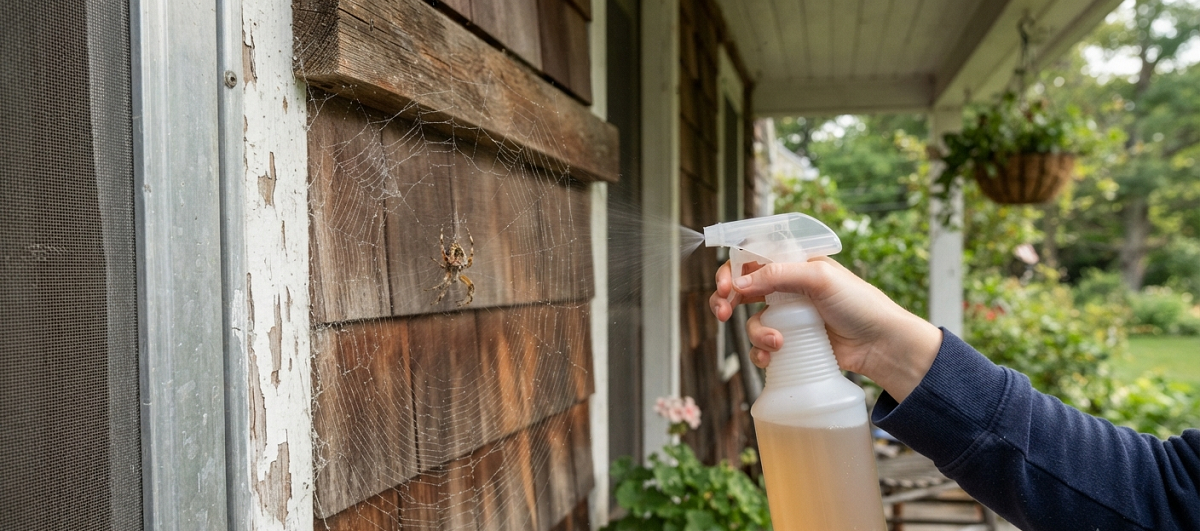
You flip on the porch light, step outside for your morning coffee, and walk face-first into a web the size of a bedsheet. Or maybe it’s worse — you go to grab the mail and spot eight legs tucked into the corner of your railing, right at eye level. Either way, your porch has turned into spider real estate, and you didn’t sign the lease.
I get it. My front porch used to look like the set of a low-budget horror movie every September. Webs strung between the porch posts, egg sacs tucked under the eaves, and one particularly bold wolf spider that I swear recognized my footsteps. I tried the spray-everything-in-sight approach for a while, and honestly, it barely worked and made my dog sneeze for a week straight.
What actually worked was a mix of smart housekeeping, a few plants spiders hate, and some cheap natural repellents I mix up in my kitchen. None of it involves toxic chemicals, and none of it will hurt your kids, pets, or the bees you’re probably also trying to attract to your garden. Here’s exactly what I do, step by step, to keep spiders off my porch without turning it into a chemical war zone.
Why Spiders Are Drawn to Your Porch in the First Place
Before you start attacking the problem, it helps to understand why spiders picked your porch out of every other spot on the block.
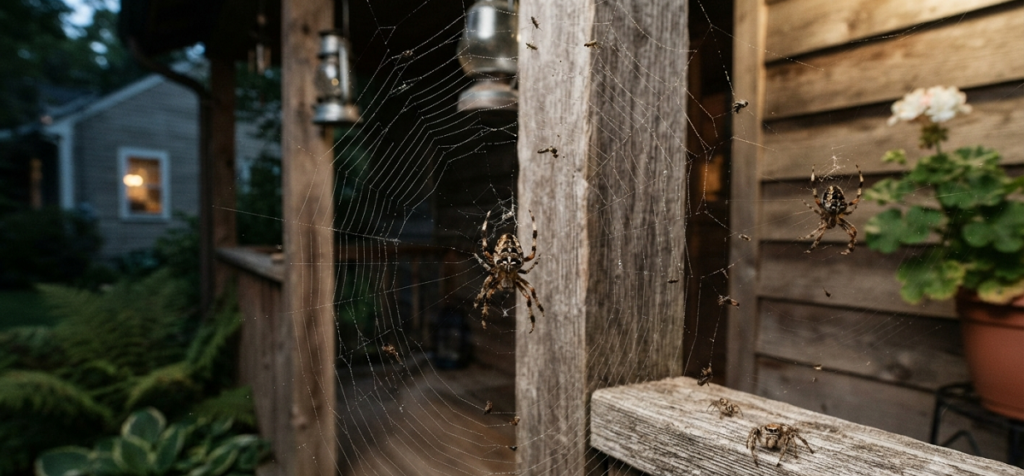
Spiders aren’t hanging around your porch because they hate you. They’re there because your porch is basically a five-star hotel for bugs, and bugs are dinner. Porch lights attract moths, gnats, and other flying insects at night, and spiders know exactly where the buffet line forms. If your porch light stays on all night, you’re essentially ringing the dinner bell for every spider in a two-block radius.
Clutter is the other big draw. Stacked firewood, leaf piles, unused flower pots, and boxes left by the door create cozy, undisturbed hiding spots. Spiders like dark, quiet corners where they won’t be bothered, and a cluttered porch gives them dozens of options.
Humidity plays a role too. Spiders need moisture to survive, so a porch near a leaky gutter, a dripping AC unit, or a shady, damp corner is going to be more attractive than a dry, sun-baked one. If your porch stays humid because of poor drainage or overgrown plants blocking airflow, you’re creating the exact environment spiders want.
Once you understand the “why,” the “how to fix it” part gets a lot easier. You’re not fighting spiders directly — you’re making your porch a less appealing place for them and their food source to hang out.
Switch Your Porch Light to Change the Bug (and Spider) Traffic
This one sounds too simple to work, but it’s the single biggest change I made, and it cut my spider population by more than half within a couple of weeks.
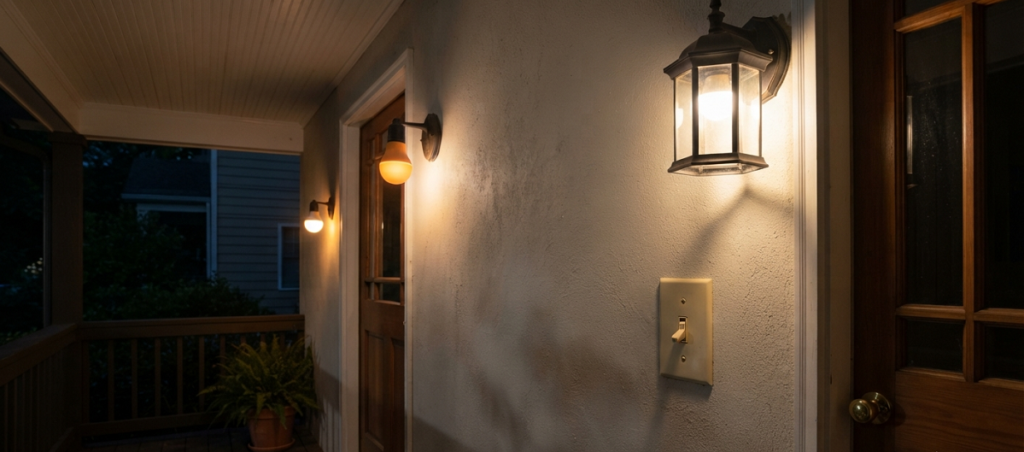
Standard white or blue-toned LED bulbs attract insects like crazy. Bugs are drawn to the UV light these bulbs give off, even if you can’t see it. Swap your porch bulb for a yellow “bug light” bulb, or better yet, a warm-toned LED in the 2200K to 3000K range. These emit far less UV light, so fewer moths and gnats show up, which means less food for spiders.
I switched my porch bulb on a whim after reading about it, expecting basically nothing. Within two weeks I noticed way fewer moths swarming the light at night, and the webs that used to reappear every single morning stopped showing up as often. It’s a five-dollar fix that takes two minutes.
If you want to go a step further, install a motion-sensor light instead of leaving your porch light on all night. Bugs are drawn to constant light sources, so a light that’s only on when you need it gives insects (and spiders) far less reason to gather there.
You can also just turn your porch light off entirely when you’re not using it, and rely on a flashlight or your phone for the walk to your car. It’s not glamorous, but it works.
Clean Up the Clutter Spiders Are Hiding In
Spiders love a messy porch. Every stack of boxes, pile of firewood, or forgotten flower pot is basically a spider apartment complex.
Start by clearing anything you don’t need off the porch entirely. That includes old planters, decorative junk, unused furniture, and anything stacked in corners. If you’re keeping firewood on the porch, move it at least 20 feet from the house and off the ground on a rack. Firewood piles are one of the worst offenders because they stay dark, cool, and undisturbed for weeks at a time.
Sweep your porch regularly, and I mean the corners and under the furniture, not just the middle where people walk. Webs and egg sacs love to form in spots that don’t get disturbed often. I sweep mine once a week during spider season (late summer into fall), and it makes a noticeable difference in how many webs reappear.
Pay close attention to the gaps and crevices too. Spiders tuck egg sacs into cracks in the porch railing, under window sills, behind shutters, and in the corners where the ceiling meets the wall. A stiff broom or a shop vac with a hose attachment works great for knocking down webs and sucking up egg sacs before they hatch. Don’t just brush webs away and leave the egg sac behind — that’s basically guaranteeing a second wave of spiders a few weeks later.
Quick side note: if you’ve got a wood pile that you genuinely can’t move, at least rotate it every couple of weeks. Just shifting the logs around disturbs any spiders that have settled in and makes it a less stable home.
Natural Spider Repellent Plants to Add Around Your Porch
This is my favorite fix because it doubles as decorating. A handful of common plants naturally repel spiders, and most of them also smell great or look good in pots.
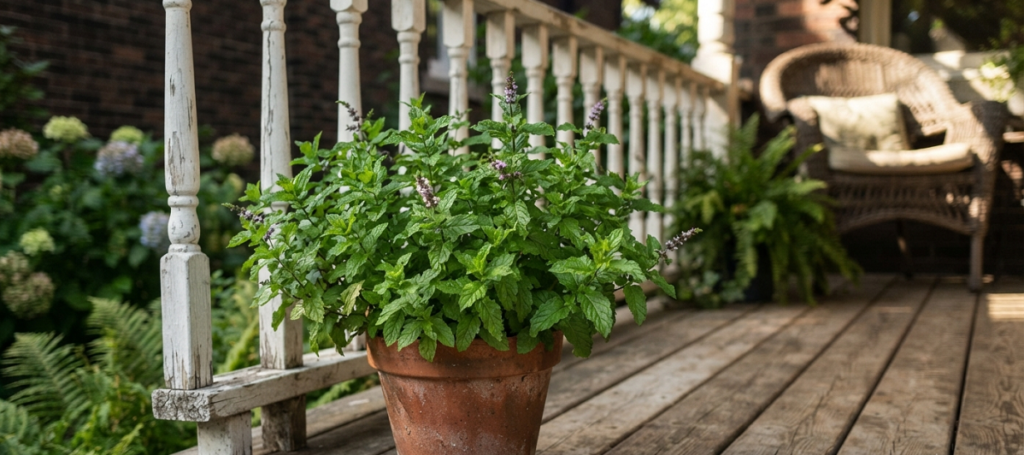
- Peppermint is probably the most effective one I’ve used. Spiders hate the strong scent, and it’s genuinely unpleasant to their sensory hairs. I keep two big pots of peppermint flanking my front steps, and it’s done more work than any spray I’ve tried. Bonus: it’s great for tea and it keeps ants away too.
- Lavender is another strong option, and it’s a personal favorite because it smells incredible in the evening. Spiders avoid the strong floral scent, and as an added perk, lavender also repels mosquitoes and flies. Plant it in a sunny spot near your entryway for the best coverage.
- Citronella does double duty by keeping mosquitoes and spiders at bay. It’s the same plant used in a lot of candles, but growing the actual plant in a pot near your seating area gives you continuous protection instead of just a few hours from a candle.
- Eucalyptus has a sharp, medicinal scent that spiders steer clear of. It grows tall fast, so it works well planted in the ground a few feet from the porch rather than crammed into a small pot.
- Mums (chrysanthemums) are worth a mention too, mostly because they contain pyrethrum, a natural compound that’s toxic to a wide range of insects, including the ones spiders like to eat. Fewer bugs means fewer spiders sticking around.
I’ll be honest, some people also recommend marigolds for spider control, and I’ve found that one’s mostly overhyped. Marigolds are great for keeping certain garden pests off your vegetables, but I haven’t noticed them making much of a dent in spider traffic specifically. Don’t waste your whole budget on marigolds if spiders are your main target.
DIY Natural Spider Sprays That Actually Work
You don’t need to buy an expensive commercial spider repellent. I’ve been mixing my own for years, and it costs pennies compared to store-bought stuff.
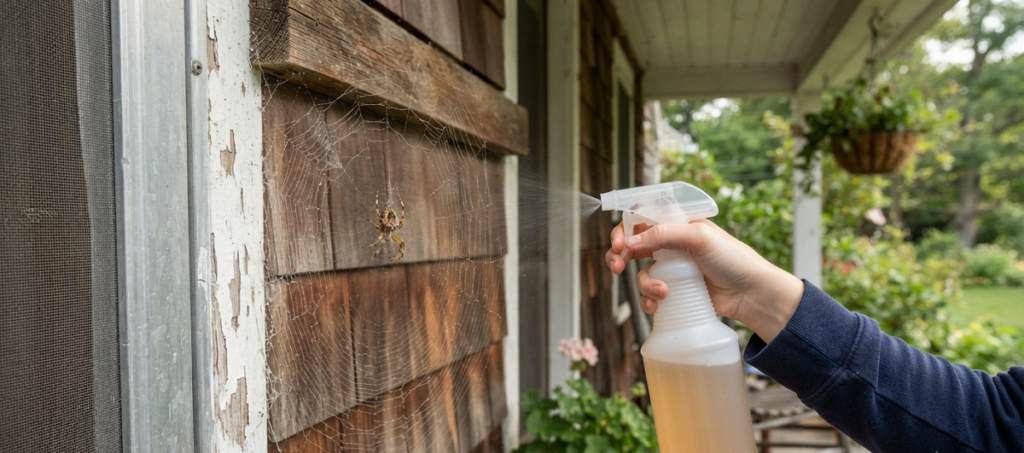
- Peppermint oil spray is my go-to. Mix 15 to 20 drops of peppermint essential oil with two cups of water and a small squirt of dish soap (the soap helps the oil bind with the water so it doesn’t just float on top). Shake it up in a spray bottle and mist it around your door frames, window sills, porch railings, and any corners where you’ve spotted webs before. Reapply every few days, and definitely after it rains.
- Vinegar spray works well too, though it smells stronger and fades faster. White vinegar mixed 50/50 with water and sprayed in cracks and crevices disrupts the spider’s sense of smell and taste, which they rely on to navigate and hunt. It’s not as pleasant-smelling as the peppermint mix, so I usually save this one for spots I don’t sit near often, like under the porch steps.
- Citrus spray is another one I like, mostly because it’s a great way to use up lemon or orange peels instead of tossing them. Boil the peels in water for about 10 minutes, let the mixture cool completely, strain out the solids, and pour the liquid into a spray bottle. Spiders dislike the citrus oils in the peel, and it leaves your porch smelling fresh instead of like a science experiment.
- Diatomaceous earth isn’t a spray, but it’s worth mentioning here because it’s one of the most effective natural options I’ve used. It’s a fine powder made from fossilized algae, and it works by damaging the outer shell of insects and spiders, which dries them out. Sprinkle a thin layer around the base of your porch, in corners, and near door thresholds. Just make sure you get food-grade diatomaceous earth, not the pool-filter kind, and reapply after rain since it loses effectiveness when wet.
Seal the Entry Points Spiders Are Using to Get In
A lot of the “spiders on my porch” problem is actually a “spiders getting into my house through the porch” problem. If you’re finding spiders inside near your front door, this step matters even more.
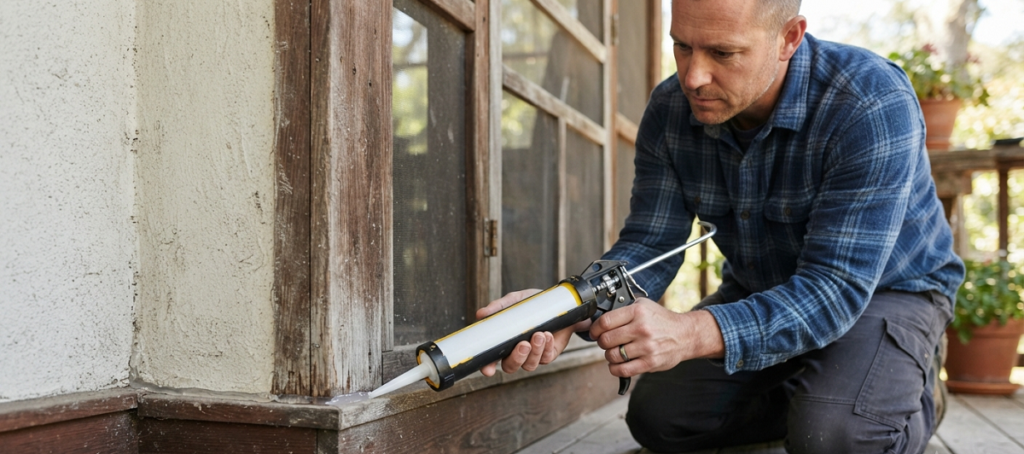
Walk around your porch and check for gaps around windows, door frames, and where pipes or wires enter the house. Spiders can squeeze through surprisingly small cracks, especially the smaller house spider varieties. A tube of caulk and an afternoon can close off most of these entry points for good.
Check your window screens for tears or gaps too. A screen with a hole the size of a pencil eraser is more than enough room for a spider to slip through. Patch small tears with a screen repair kit, or replace the screen entirely if it’s in bad shape.
Door sweeps are an easy win here as well. If there’s a visible gap under your front door, spiders (and plenty of other bugs) can walk right in. A cheap door sweep from the hardware store solves this in about ten minutes with a screwdriver.
Timing Matters: When to Start Your Spider Prevention Routine
Most people wait until they’re already staring at a web-covered porch before doing anything about it, and by then you’re playing catch-up. I’ve found the best results come from starting early, before spider season really ramps up.
Late spring, around April or May depending on where you live, is when spider populations start building. Insects are becoming more active as the weather warms, which means more food is available, and spiders start setting up shop wherever the food supply looks reliable. If you get your peppermint and lavender planted in early spring, they’ll be established and putting off a strong scent right when spiders start scouting for territory.
Late summer into fall is peak spider season in most climates. This is when you’ll see the biggest webs and the most activity, partly because many spider species are reaching adulthood and partly because they’re stocking up before cooler weather hits. This is also when my weekly sweeping routine becomes twice-weekly, because the webs come back faster than you’d think.
Winter is your reset period. In colder climates, spider activity drops off significantly, which makes it a good time to do a deep clean of your porch, patch up any gaps you spotted over the summer, and get your entry-point sealing done without fighting an active spider population the whole time.
A Few Extra Habits That Help More Than You’d Expect
Beyond the big fixes, there are a handful of small habits that add up over time.
Keep your gutters clean. Clogged gutters hold standing water, which attracts the bugs spiders feed on and creates the humid conditions spiders prefer. I clean mine twice a year, and it’s made a noticeable difference in how damp my porch corners stay.
Trim back any plants, vines, or tree branches touching your house. Spiders use these as bridges to get from your yard onto your porch and eventually your walls. A few feet of clearance between greenery and your siding cuts down on this traffic significantly.
Consider a bat house or encouraging birds into your yard if you’re dealing with a serious insect problem feeding your spider population. Bats and birds eat huge quantities of the flying insects spiders rely on, and reducing the food source is always more effective long-term than attacking spiders directly.
Real Talk: What’s Not Worth Your Time (and What Can Go Wrong)
Here’s where I’ll save you some wasted weekends, because I’ve made most of these mistakes myself.
Don’t expect natural methods to make your porch spider-free overnight, or honestly, ever completely. Spiders are everywhere outdoors, and a totally spider-free porch isn’t a realistic goal unless you’re willing to use heavy pesticides, which come with their own downsides for pets, kids, and beneficial insects like bees. Natural methods reduce spider traffic significantly, but they won’t eliminate it entirely, and I think that’s a fair trade-off.
Essential oil sprays fade fast, especially in direct sun or after rain. If you spray once and expect it to last all season, you’ll be disappointed. I reapply my peppermint spray about twice a week during the worst of spider season, which is more effort than a lot of blog posts let on.
Be careful with essential oils around cats specifically. Some oils, including tea tree and certain citrus concentrates, can be toxic to cats even in small amounts. Peppermint and lavender are generally considered safer, but if you have an outdoor cat or one that likes to lounge on the porch railing, do a little research on the specific oil before spraying it everywhere.
Diatomaceous earth can irritate your lungs if you breathe in a cloud of it while applying, so wear a dust mask when you’re sprinkling it, especially on a windy day. It’s natural, but that doesn’t mean it’s harmless to inhale.
And one thing that genuinely isn’t worth the effort: those ultrasonic spider-repellent plug-in devices you see advertised online. I bought one years ago hoping for a low-effort fix, and the spiders on my porch didn’t care one bit. Save your money and put it toward peppermint plants instead.
Final Thoughts
Keeping spiders off your porch naturally isn’t about one magic trick. It’s a combination of small changes — a warmer light bulb, a tidier porch, a few strategically placed plants, and a spray bottle you refill every few days. Stack enough of these habits together and your porch stops looking like a spider convention and starts looking like, well, a porch again.
I’d love to hear what’s worked for you. Have you tried any of these methods, or do you have a natural spider trick passed down from a grandparent that I haven’t mentioned here? Drop it in the comments below — I’m always looking to add new tricks to my own porch routine.

About Syprose Kiche
Syprose Kiche is the creator and writer behind My Besuited Home, a practical home and garden website covering DIY projects, gardening, lawn care, landscaping, home improvement, and outdoor living. She focuses on turning everyday homeowner questions into clear, practical guides backed by careful research and useful real-world considerations.