
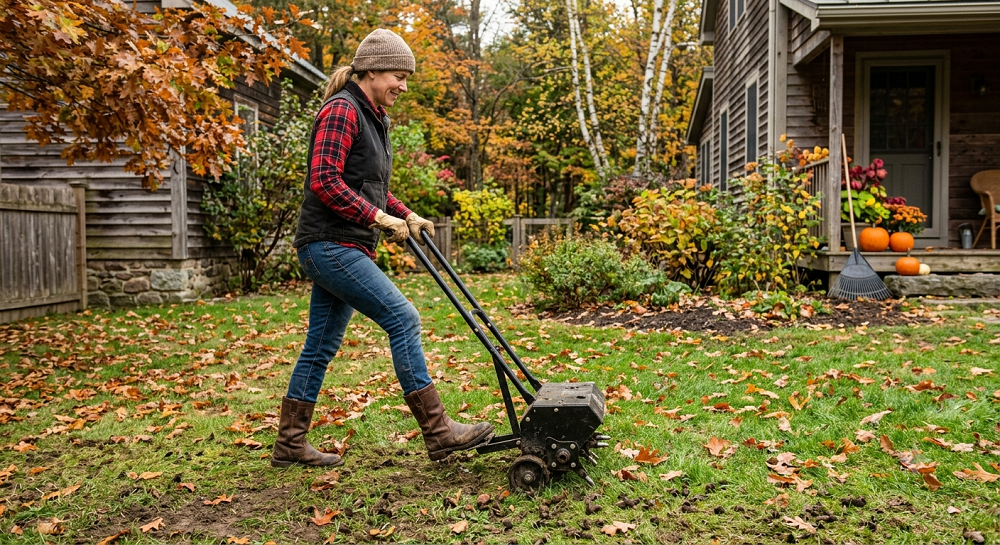
My neighbor Dave and I have had the same fight every April for six years. He drags out his rented aerator the second the snow melts, punches holes in his lawn, and by July his grass looks like it lost a fight with a lawnmower. Meanwhile, I wait until September, do the same thing, and my yard looks like a golf course by October.
He still thinks I’m just lucky. I’m not lucky. I’m right.
If you’ve ever stood in your yard wondering why your lawn feels like walking on a parking lot, or why water just sits there in puddles instead of soaking in, aeration is probably the answer. But timing it wrong can waste your money and your weekend. So let’s talk about why fall is the season that actually works, and why spring aeration is mostly a myth that garden centers love because it sells more bags of seed.
What Lawn Aeration Actually Does (And Why Your Soil Needs It)
Before we get into timing, let’s make sure we’re on the same page about what core aeration even does.
When you walk on your lawn, drive on it, or let your dog do laps around the yard, you’re compacting the soil. Compacted soil is basically concrete for grass roots. Water can’t soak in, oxygen can’t reach the roots, and nutrients just sit on top doing nothing.
Aeration pulls small plugs of soil out of your lawn. This creates pockets where air, water, and fertilizer can actually reach the root zone instead of running off into the street or evaporating uselessly on the surface.
I learned this the hard way my second year as a homeowner. I had a section of lawn near the driveway that always looked sad, no matter how much I watered it. Turns out that’s where the moving truck parked for two days. The soil was so compacted that nothing could get through it. One aeration pass fixed what three months of watering couldn’t.
Why Fall Aeration Wins: The Soil Temperature Argument
Here’s the thing nobody explains clearly enough: grass has two growing seasons, not one. Cool-season grasses like Kentucky bluegrass, fescue, and ryegrass actually grow most aggressively in spring and fall, but fall is when the real magic happens underground.
In fall, soil temperatures are still warm from summer, but air temperatures have cooled down. That combination tells your grass to stop putting energy into growing tall blades and start putting energy into growing roots. This is called root establishment, and it’s exactly what you want happening right after you aerate.
When you aerate in fall, those holes you punched fill in with new root growth before winter even arrives. The grass has weeks of mild weather to recover and strengthen before it goes dormant.
Spring aeration fights against the calendar. Right when you open up the soil, the grass is trying to put energy into leaf growth, not roots, because it’s racing to recover before summer heat hits. You’re basically asking your lawn to do two jobs at once with limited time. It rarely does either job well.
Fall Aeration and Overseeding: A Combo That Actually Works
This is the part that convinced me to switch seasons permanently.
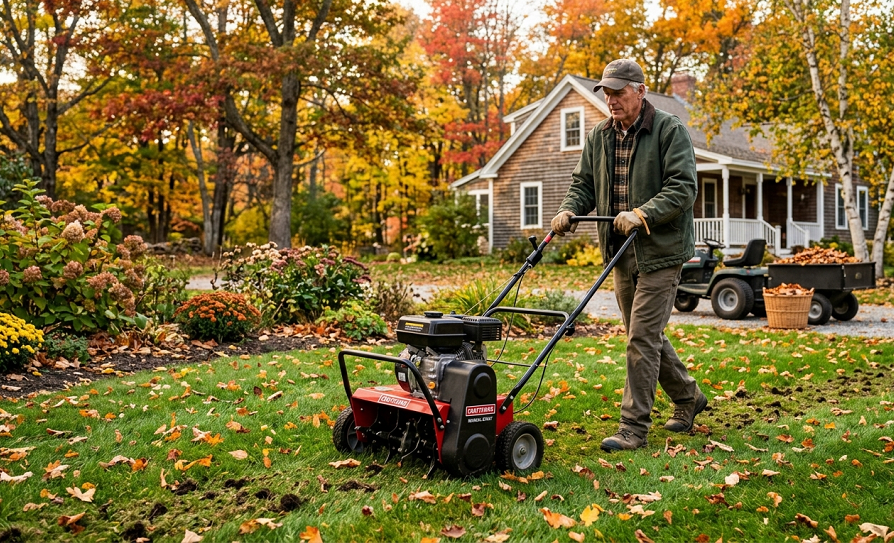
Fall is the best time to overseed a thin or patchy lawn, and aeration makes overseeding dramatically more effective. Those holes you create become little nurseries for grass seed. The seed falls into the holes, gets protected from birds and wind, and has direct contact with soil instead of sitting on top getting baked by the sun.
I overseeded my backyard for three years straight in spring with mediocre results. Seed would wash away in spring rains or get smothered by crabgrass before it could establish. The year I switched to fall aeration plus overseeding, my germination rate looked completely different. New grass had the entire fall season to grow in with less competition from weeds, since most weed seeds need warmer soil to germinate.
If you’re dealing with bare patches, dog spots, or a lawn that just looks thin no matter what you do, fall aeration paired with overseeding is genuinely one of the highest-impact things you can do for your yard all year.
The Weed Problem Spring Aeration Creates
Nobody talks about this enough, and it drives me a little crazy.
When you aerate in spring, you’re opening up little pockets of bare soil right when crabgrass, dandelion, and other warm-season weed seeds are waking up and looking for a place to germinate. You’re basically rolling out the welcome mat for weeds.
I made this mistake my first year. Aerated in April, didn’t think much of it, and by June I had crabgrass colonizing every single hole I’d created. It looked like someone had played connect-the-dots with weeds across my entire front yard.
Fall aeration avoids this almost entirely. Most problem weeds aren’t germinating in September and October, so those open soil pockets fill in with grass roots instead of weeds. You’re working with the season instead of accidentally sabotaging yourself.
Quick Side Note: Don’t Confuse This With Warm-Season Grass
Quick gut check before you go schedule anything: everything above applies to cool-season grasses. If you’re growing Bermuda, zoysia, or St. Augustine grass, you’re playing a different game entirely. Warm-season grasses go dormant in fall and actively grow in late spring through summer, so late spring is actually the better aeration window for those lawns.
I get emails from people in Texas and Florida confused about why their lawn looks worse after fall aeration, and it’s almost always this. Know your grass type before you follow any aeration advice, including mine.
Fall Aeration Helps Your Lawn Survive Winter
This part surprised me when I first read about it years ago, but it makes total sense once you think it through.
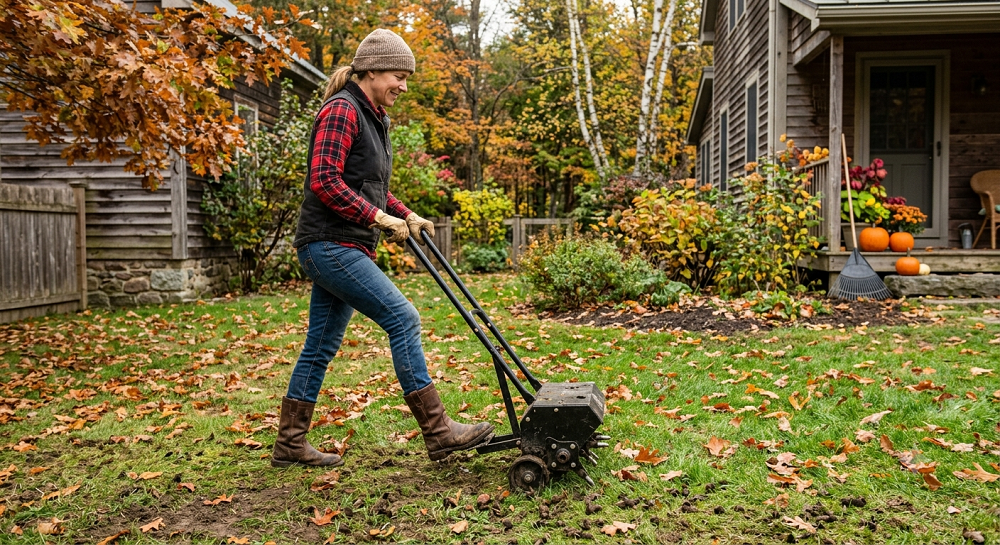
Compacted soil holds water poorly and drains poorly. That’s bad any time of year, but it’s especially bad heading into winter when freeze-thaw cycles can stress already-weak root systems. A lawn with strong roots and well-aerated soil handles winter stress so much better than one struggling with compaction.
Aerating in fall essentially preps your lawn’s foundation before the hard months hit. Combined with a fall fertilizer application, which I’ll get into, you’re setting your grass up to come out of winter strong instead of patchy and stressed.
The Best Time for Fall Fertilizer Pairs Perfectly With Aeration
Here’s a tip that took me embarrassingly long to figure out: aerate first, then fertilize.
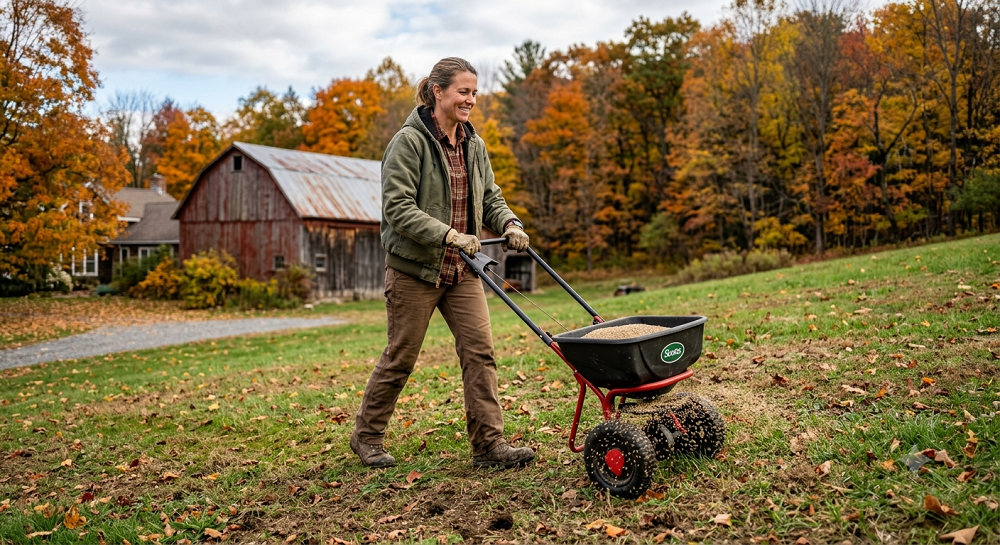
Fall fertilizer, especially one higher in potassium, helps grass build root strength and store energy for winter. When you apply it right after aerating, the fertilizer actually gets down into those holes and reaches the root zone instead of sitting on the surface where half of it evaporates or gets eaten by birds.
I used to fertilize and aerate as two totally separate weekend projects, weeks apart. Once I started doing them back-to-back, the difference in how thick my lawn looked the following spring was honestly kind of dramatic. Less guesswork, more results.
Real Talk: What Can Go Wrong With Aeration (Spring or Fall)
Okay, time for some honesty. Aeration isn’t magic, and there are ways to mess this up no matter what season you pick.
Aerating dry, hard soil does almost nothing. If your ground is bone dry, the aerator just bounces around without pulling proper plugs. Water your lawn a day or two before aerating so the soil has enough moisture to actually let the tines do their job.
Renting an aerator and not knowing how to use it is a real risk. I once watched a guy in my neighborhood aerate his lawn in tight little circles instead of overlapping rows, and he basically only treated 40% of his yard. Walk in straight, overlapping passes like you’re mowing.
Doing it too late in fall backfires. If you aerate right before the first hard frost, the grass doesn’t have time to recover or root into those holes before winter shuts everything down. You want at least four to six weeks of decent growing weather after aerating, which usually means getting it done by mid-October in most regions.
Aerating every single year isn’t always necessary. If you don’t have heavy foot traffic, pets, or clay-heavy soil, aerating every other year might be plenty. I aerate my front yard every year because my kids treat it like a soccer field, but my side yard gets a pass most years.
It won’t fix everything. Aeration helps with compaction and thin grass, but it’s not going to magically solve a lawn with serious drainage problems, heavy shade issues, or a grass type that’s just wrong for your climate. I see people expect aeration to be a cure-all, and it’s just one tool, not a miracle fix.
How Often Should You Aerate Your Lawn?
This gets asked a lot, so here’s my honest answer based on what’s actually worked for different yards I’ve dealt with over the years.
Clay-heavy soil, high foot traffic, or a lawn that always feels hard and compacted? Aerate every fall, no question.
Sandy or loamy soil with light use? Every other fall is usually fine.
New sod or a lawn installed in the last year or two? Skip aeration for at least one full growing season to let roots establish first.
Parting Wisdom
Dave still aerates in spring. I’ve basically given up trying to convince him, and honestly, watching his lawn struggle every July while mine looks great has become a little bit of a hobby for me at this point.
If you take one thing from all this, let it be this: timing matters as much as the task itself. Fall aeration works with your grass’s natural growth cycle instead of against it, and that’s the whole secret. It’s not complicated. It’s just patience and picking the right month.
So tell me, what season have you been aerating in, and how’s your lawn looking right now? Drop your questions or your own lawn horror stories in the comments below. I read every one, and I promise I won’t judge you for the spring aeration thing. Much.

About Syprose Kiche
Syprose Kiche is the creator and writer behind My Besuited Home, a practical home and garden website covering DIY projects, gardening, lawn care, landscaping, home improvement, and outdoor living. She focuses on turning everyday homeowner questions into clear, practical guides backed by careful research and useful real-world considerations.