
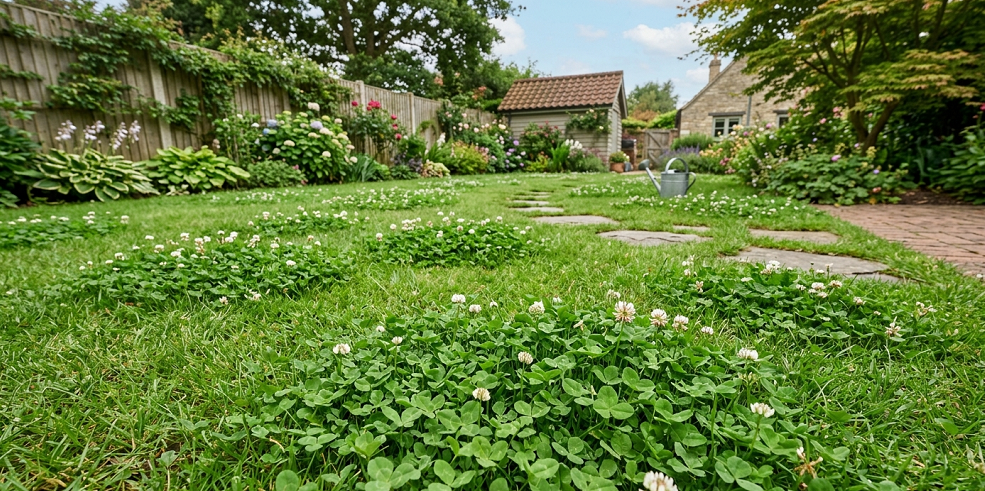
My neighbor Gary used to mow his lawn every single Saturday like it was a religious obligation. Rain, heat wave, didn’t matter. Then one July his mower died mid-stripe, he got lazy for three weeks, and the only patch of his yard that still looked decent was the corner where clover had snuck in from my yard. He texted me a photo and just wrote “what is THIS and why is it still green.”
That’s clover. It’s the plant that keeps looking good while everything else on your lawn is begging for mercy. If you’re tired of dragging the mower out twice a week, fighting brown patches every August, and dumping money into fertilizer just to keep your grass from looking like straw, clover patches might be the laziest-but-smartest fix you’ve never tried.
I’ve been messing with lawns, mostly my own and occasionally my in-laws’ against their wishes, for over a decade now. I’ve killed grass on purpose, killed it on accident, and eventually landed on clover as my go-to low-maintenance lawn fix. Here’s everything I wish someone had told me before I started.
Why Clover Lawns Are Having a Moment
Search “low maintenance lawn alternatives” and you’ll get a flood of articles about clover, and for good reason. Clover lawns and microclover lawns have become the go-to answer for people who want a yard that still looks like a yard, but without the constant upkeep of a traditional turf grass lawn.
Here’s the short version of why it works. Clover is a legume, not a grass. That one fact changes everything. Legumes pull nitrogen out of the air and fix it into the soil through little nodules on their roots. Translation: clover feeds itself. You don’t need to fertilize a clover lawn the way you’d fertilize a fescue or bluegrass lawn, because it’s basically running its own compost factory underground.
It also grows low to the ground, usually topping out around four to eight inches depending on the variety, which means you mow it way less often, if at all. Add in the fact that clover stays green through droughts that would turn regular grass into kindling, and you can see why so many homeowners are quietly tearing up sections of lawn and tossing clover seed down instead.
I’m not saying ditch your whole lawn overnight. I’m saying clover patches, whether you’re doing a full clover lawn conversion or just overseeding the rough spots, can cut your mowing, watering, and fertilizing by a huge margin. My own water bill dropped noticeably the summer I converted about a third of my backyard.
Best Clover Types for Lawns (And Which One I’d Actually Plant)
Not all clover is created equal, and this is where a lot of people mess up their first attempt.
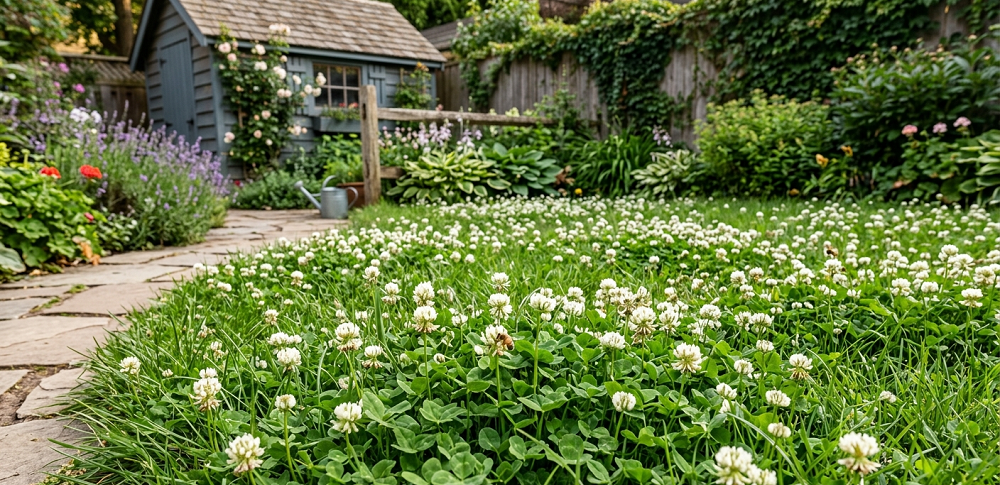
Dutch White Clover (Trifolium repens) is the classic. It’s the clover you probably picture, with the little white pom-pom flowers that bees go nuts for. It’s tough, cheap, and grows almost anywhere. The downside is it can get a little leggy and the flower stems shoot up taller than people expect, which means more mowing than the marketing suggests if you want it looking tidy.
Microclover is the variety I actually recommend to most people now, and it’s the one I use in my own front yard. It’s a smaller-leafed cultivar bred specifically to blend with turf grass and stay short and dense. It flowers less, which means fewer bees buzzing around your kids’ soccer ball, and it mows down nicely if you do want to run a mower over it occasionally.
Strawberry Clover is more obscure but worth mentioning if your soil is on the salty or alkaline side, since regular white clover can sulk in those conditions. It’s more tolerant and handles compacted, poorly drained soil better than the other two.
My honest opinion: skip the strawberry clover unless you’ve got a specific soil problem, and skip straight Dutch white if you care about a manicured look. Microclover blended into your existing lawn is the sweet spot for most homeowners searching “best clover for lawn alternative.” It gives you the low-maintenance perks without looking like an overgrown meadow.
How to Overseed Your Lawn With Clover Step by Step
This is the part everyone wants, so here it is, no fluff.
- Mow your existing lawn short. Scalp it down lower than you normally would, around 1 to 1.5 inches. This lets sunlight actually reach the soil so the clover seed can germinate instead of getting smothered by existing grass blades.
- Rake the area hard. You want to expose bare soil, not just clear surface debris. I use a metal leaf rake and go at it like I’m mad at the lawn. Seed-to-soil contact is everything with clover; toss seed onto thick thatch and most of it will just sit there and rot.
- Spread your clover seed. For overseeding an existing lawn, you’re looking at roughly 2 to 4 ounces of clover seed per 1,000 square feet, mixed with sand or a carrier so you don’t dump it all in one spot. A handheld broadcast spreader works fine for small patches.
- Water it daily, lightly, for two weeks. Not a deep soak, just enough to keep the top layer of soil consistently damp. This is the step people skip and then wonder why nothing came up. Clover seed needs consistent moisture to germinate, usually 7 to 14 days depending on your weather.
- Hold off on mowing for at least three weeks. Let the seedlings establish a root system before you run anything over them. I know it’s tempting to tidy up, but patience here pays off later.
- Skip the herbicide for a full season. This sounds obvious, but I’ve gotten emails from people who overseeded with clover and then sprayed broadleaf weed killer two months later, which kills clover just as dead as it kills dandelions. Clover is technically a broadleaf plant, so most “weed and feed” lawn products will wipe it out.
That last point trips up more people than anything else on this list.
Establishing Full Clover Patches Without Killing Your Grass
If you want dedicated clover patches rather than a clover-grass blend, the approach shifts a bit.
Pick your patch locations strategically. The best spots are areas where grass already struggles, like shady corners under trees, slopes that dry out fast, or that one patch by the downspout that’s either a swamp or a desert depending on the week. Clover handles partial shade and inconsistent moisture far better than most turf grass varieties, so you’re basically putting the right plant in the right place instead of fighting nature.
For a true patch, you’ll want to remove the existing grass rather than overseed on top of it. I usually solarize small areas by covering them with black plastic for two to three weeks in the heat of summer, which kills off the grass and weed seeds without chemicals. You can also just dig it up if you’re impatient like me and don’t mind the workout.
Once the area is bare, loosen the top inch or two of soil, spread your clover seed at a slightly higher rate than overseeding (think 4 to 8 ounces per 1,000 square feet since you’re starting from scratch), and follow the same watering routine I mentioned above.
One thing I learned the hard way: don’t make your patches too small and scattered. I tried a polka-dot pattern of tiny clover circles my second year doing this, and it looked less like an intentional design and more like my lawn had a skin condition. Bigger, more deliberate patches read as a choice. Tiny scattered ones read as neglect.
Clover Lawn Maintenance: What Actually Changes
This is the whole point, so let’s get into what your maintenance routine looks like once the clover is established.
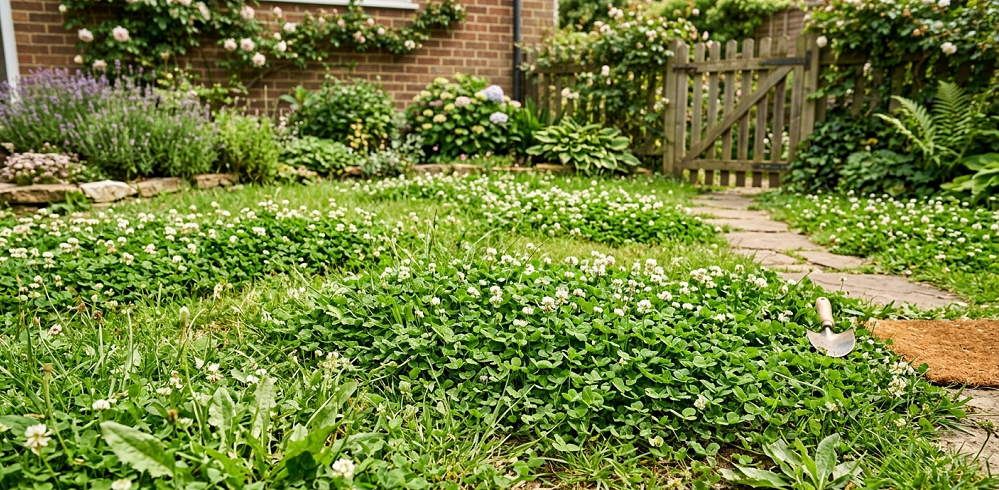
Mowing drops dramatically. Microclover rarely needs mowing more than once a month, and some people skip it almost entirely except for a tidy-up before company comes over. Dutch white clover needs a bit more attention if you don’t want the flower stalks getting tall and floppy, but you’re still looking at maybe half the mowing frequency of a standard grass lawn.
Watering goes way down too. Clover’s root system reaches deeper than most turf grass, which is why it stays green through dry spells that turn regular lawns brown. I stopped running my sprinklers on a regular schedule the second summer after converting patches and only watered during genuine drought stretches.
Fertilizing basically disappears. Remember, clover fixes its own nitrogen. Not only does it not need feeding, dumping nitrogen-heavy fertilizer on a clover patch can actually encourage grass to outcompete it, which defeats the purpose. If you’ve got a blended lawn, this also means the grass around your clover gets a free nitrogen boost from its neighbor, which is a nice bonus nobody really advertises.
You will still want to handle actual weeds by hand-pulling rather than spraying, at least in clover zones, since broadleaf herbicides don’t discriminate between dandelions and your clover investment.
Real Talk: Where Clover Patches Can Go Wrong
I’d be lying if I said this was a perfect, no-downside solution, so here’s the stuff the glossy gardening blogs gloss over.
Bees. A lot of bees. If anyone in your household has a bee allergy, or you’ve got toddlers who run around barefoot, a flowering clover lawn is genuinely a consideration to think through. Microclover flowers less and helps here, but it’s not zero. I got stung on my front yard’s clover patch exactly once and now I mow before the flowers really take off, every single time.
Foot traffic tolerance varies a lot by variety and climate. Clover handles moderate traffic fine, but if you’ve got a backyard that doubles as a football field for the neighborhood kids every weekend, it can thin out faster than tougher turf grass varieties like Bermuda or zoysia. It bounces back, but it’s not bulletproof.
Winter color is a real letdown in colder climates. Clover tends to go dormant and brownish in harsh winters, sometimes more noticeably than the grass around it, which can leave a patchy, uneven look from December through February depending on where you live.
HOA and neighbor opinions are a wildcard. I genuinely think clover lawns look great, but I’ve found that some people equate any non-grass plant with “the neighbors gave up.” If you’re in an HOA, check the rules before you convert half your front yard, because some associations still have outdated language that technically prohibits “weeds,” and clover can get lumped in there even though it’s not actually a weed.
And honestly, full clover lawns in very high-traffic commercial or sports-field type situations just aren’t worth the effort. That’s one application where I’d stick with tough turf grass and not bother fighting the climate and traffic patterns clover doesn’t love.
Quick side note: if you’ve got pets that dig constantly, newly seeded clover patches are basically a buffet sign for them. Fence off fresh patches for the first month if your dog treats freshly turned soil as a personal invitation.
Final Thoughts on Cutting Lawn Work With Clover
Clover patches aren’t magic, but they’re about as close as lawn care gets to a genuine shortcut that doesn’t sacrifice how your yard actually looks. Less mowing, less watering, less fertilizing, and a lawn that stays green when everyone else’s is crispy and brown. That’s a trade worth making in most yards I’ve worked on, including my own.
Start small if you’re nervous. Pick one rough patch, the shady spot or the slope that never grows right, and convert that first before you commit your whole front yard to it. You’ll know within a season whether you’re a clover convert or not.
Have you tried overseeding with clover, or are you team “all grass, no compromise”? Drop your questions or your own clover horror stories in the comments below. I read every one, and I promise I won’t judge you for the polka-dot patch mistake. I already made it for both of us.

About Syprose Kiche
Syprose Kiche is the creator and writer behind My Besuited Home, a practical home and garden website covering DIY projects, gardening, lawn care, landscaping, home improvement, and outdoor living. She focuses on turning everyday homeowner questions into clear, practical guides backed by careful research and useful real-world considerations.