
Those tiny, whining terrors have ruined more sunset dinners than I care to count. There is nothing worse than searing a perfect steak or setting out a beautiful summer spread, only to spend the entire evening slapping your own shins. I remember one Fourth of July when I tried to host a backyard barbecue; within twenty minutes, my guests were literally fleeing to their cars because the mosquitoes were staging an all-out invasion. I ended up eating a burger by myself in the kitchen while swatting at the air.
Over the last decade, I have experimented with every candle, coil, and chemical spray on the market. Most of them either smell like a gas station or do absolutely nothing but give me a headache. I’ve learned that the secret to keeping your dining area peaceful isn’t a spray-on repellent full of unpronounceable ingredients—it is about creating layers of scent and protection using plants and oils that mosquitoes actually hate. Here is how you can reclaim your patio.
Best Herbs to Grow for Natural Mosquito Control

If you want to keep mosquitoes away from your dining table, start by planting them right where you eat. My patio is basically a fortress of aromatic herbs. I have learned that if you stick to plants that release their scent when brushed against or disturbed, you get a natural forcefield.
Planting citronella grass is the gold standard for a reason, but skip the tiny pots you find at the hardware store. Those are usually wimpy and won’t do much. You need to get them in the ground or in large, heavy-duty pots where they can actually get some size on them. I’ve found that a single citronella plant in a small container is about as useful as an umbrella in a hurricane; you need volume to actually mask the CO2 you’re exhaling.
Lemon balm is another absolute favorite of mine, though be warned: it acts like a weed. If you put it in the ground, it will take over your entire yard before you can blink. I keep mine strictly in container gardens. When you’re setting the table for an evening meal, just run your hand through the leaves to bruise them slightly. This releases the essential oils into the air right when you need them most.
Then there is peppermint. Most people think it’s just for tea, but mosquitoes loathe the stuff. I have a row of mint in pots surrounding my dining space. It smells fresh and clean, unlike those artificial citronella candles that make your food taste like kerosene. I’ve also found that growing rosemary works wonders, especially the woody, upright varieties. It’s tough, it thrives in the heat, and mosquitoes avoid the strong, resinous scent.
Pro-Tip: Don’t just plant these in a corner. Put them in decorative pots that you can physically move closer to the table right before dinner starts.
Essential Oil Sprays That Actually Work
Sometimes you need an immediate fix, and that’s where essential oil sprays come in. I spent years buying those overpriced, “all-natural” sprays that vanished into thin air five minutes after I applied them. It was a total waste of money. I eventually started making my own, and honestly, the difference is night and day.
The secret is using a high-quality carrier. If you just mix oil and water, it separates immediately, and you end up spraying mostly water. You need a mix of distilled water, a splash of high-proof witch hazel or rubbing alcohol, and a heavy dose of pure lemon eucalyptus oil. Research consistently shows this is one of the only natural ingredients that actually holds its own against commercial stuff.
For the mixture, I usually go with about 30 drops of lemon eucalyptus oil to every 4 ounces of water. Add a tablespoon of witch hazel to help the oils emulsify and stick better. I keep a glass spray bottle right on my patio table. Before we sit down to eat, I give the perimeter of the dining area a quick mist. It creates a subtle, lemony barrier that really does help keep the pests at bay.
One thing I’ve noticed is that you have to be consistent with the application. If you only spray once at noon for an 8 PM dinner, you are wasting your time. Essential oils are volatile—that’s why they smell strong—which means they evaporate quickly. I make a habit of refreshing the mist about ten minutes before I bring the food out. It’s just part of the ritual now, like lighting the candles.
Quick Side Note: Never spray this directly onto your nice outdoor furniture fabric without testing it first. Some oils can leave spots on certain types of upholstery or delicate wood finishes.
Creating a DIY Citronella Mason Jar Lantern
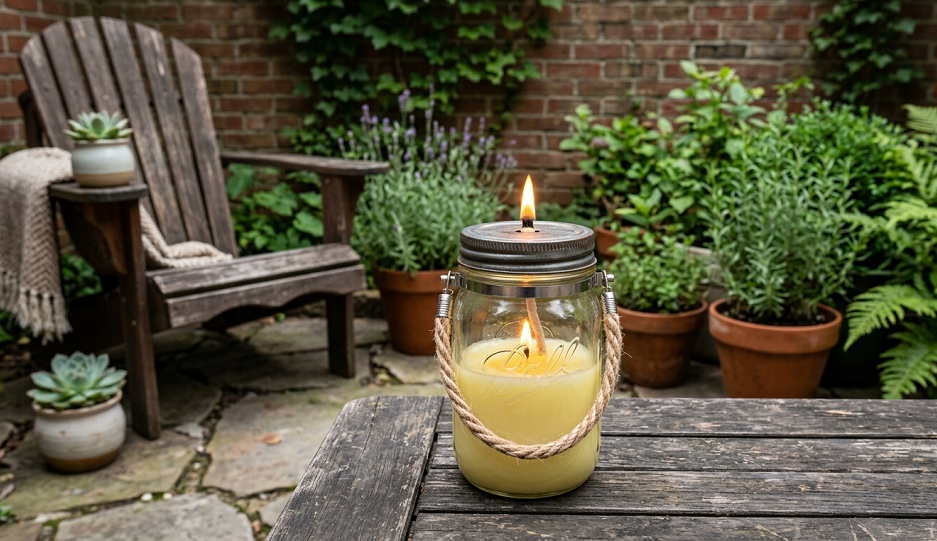
I’ve seen those store-bought tiki torches that leak oil all over your deck, and I’ve seen the cheap citronella candles that burn for an hour and then die. They are frustrating and honestly pretty ugly. I started making my own “lanterns” using wide-mouth mason jars, and they are not only functional but actually look like something you’d want on your table.
First, fill a large mason jar with water, lemon slices, lime slices, and fresh sprigs of rosemary. The water keeps the herbs hydrated so they look nice, and the fruit acts as a natural scent disperser. Then, add about 15 to 20 drops of citronella oil and 10 drops of cedarwood oil. The combination of the fresh herbs and the concentrated oils creates a nice, subtle scent throw that isn’t overpowering when you’re trying to enjoy a meal.
The magic happens when you place a floating candle on top. As the candle burns, it gently warms the water and the oil mixture, releasing the repellent vapors into the air right around your dining area. I usually make three or four of these and place them in the center of the table. They look classy, they don’t produce that nasty black soot, and they actually work to keep the area clear.
Maintenance is key here, though. Don’t leave these sitting out in the sun all day or the water will start to smell swampy. I assemble these about an hour before guests arrive. When the night is over, I dump the water in the garden and rinse the jars. It takes five minutes, and it keeps my outdoor dining setup looking crisp and smelling like a citrus grove instead of a chemical plant.
Why Most “Natural” Repellents Fail
Let’s be honest: there is a lot of garbage advice out there. I have tried the “hang dryer sheets from your fence” trick, and it did absolutely nothing but make my yard look like a laundromat exploded. It’s a total myth. If you’re serious about keeping mosquitoes away, you have to target the things that attract them in the first place.
Another thing I’ve learned is that stagnant water is the enemy. You can have the best essential oils on the planet, but if you have a clogged gutter or a saucer under a plant pot that has been sitting full of water for a week, you are literally breeding the mosquitoes you are trying to fight. I do a “patio patrol” every Saturday morning to dump any standing water. It’s the single most effective step you can take.
Also, be wary of “ultrasonic” devices. I bought a set of those plug-in sound wave repellers once, thinking they would be a high-tech solution. They were a complete waste of money. I literally watched a mosquito land on one while it was plugged in and humming away. Don’t fall for the marketing hype; stick to physical barriers, fans, and natural aromatic deterrents that actually interfere with the insects’ receptors.
Finally, consider the power of a simple fan. It sounds too simple to work, but mosquitoes are terrible flyers. If you set up a standard oscillating floor fan on your patio and point it at the dining table on a low setting, you’ll find that the vast majority of mosquitoes simply cannot navigate the breeze to land on you. I keep a fan running all summer long; it’s more effective than any candle I’ve ever bought.
Parting Wisdom
After all the trial and error, I’ve found that the best approach is layered. Use the plants to create a perimeter, use the essential oil sprays for targeted protection, and use a fan to keep the air moving. It’s not about finding one “magic bullet”—it’s about making your space just a little less hospitable for the pests and a lot more enjoyable for you and your family.
Don’t let the fear of a few bites keep you indoors on a beautiful evening. Experiment with these methods and see what works for your specific climate and yard.
What is the most effective thing you’ve tried for keeping mosquitoes away from your patio? Do you have any secret herb combinations that have saved your summer dinners? Let me know your thoughts or questions in the comment section below!

About Syprose Kiche
Syprose Kiche is the creator and writer behind My Besuited Home, a practical home and garden website covering DIY projects, gardening, lawn care, landscaping, home improvement, and outdoor living. She focuses on turning everyday homeowner questions into clear, practical guides backed by careful research and useful real-world considerations.