
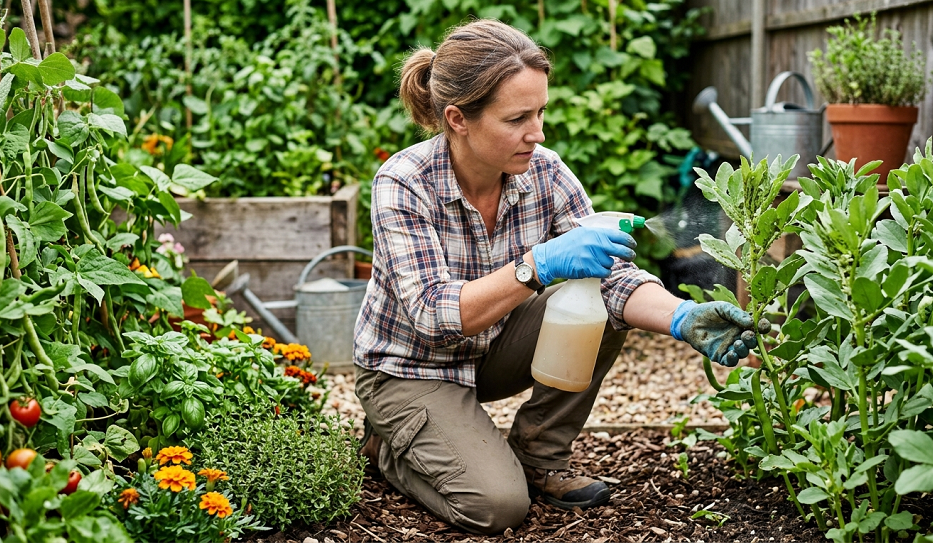
Every gardener knows the gut-drop moment. You’re out there checking on your tomatoes, feeling smug about your perfect little garden, and then you flip over a leaf. There they are — hundreds of tiny, pear-shaped, nightmare creatures clustered on your stems like they paid rent. Aphids. And if you’ve had them once, you already know: they don’t come alone, they don’t leave politely, and they can flatten a thriving vegetable garden faster than a hailstorm.
My first aphid infestation wiped out an entire row of pepper plants. I didn’t even know what I was looking at until the leaves were already curling and yellowing. By the time I figured it out and drove to the hardware store for a chemical spray, I’d poisoned my soil, spooked every beneficial insect in a 50-foot radius, and killed plants I could have saved with a five-dollar spray bottle and some dish soap. That was a painful, expensive lesson.
Since then, I’ve spent years testing every natural aphid remedy I could find — some brilliant, some useless, and a few that are so overhyped I actually feel embarrassed I tried them. Here’s what genuinely works, ranked by how often I actually reach for each method.
1. Blast Them Off with a Strong Spray of Water (Yes, Really)
This is the one people always skip because it sounds too simple to work. I almost skipped it myself. But a hard stream of water from your garden hose is genuinely one of the most effective first-response tools you have against aphids, and it costs absolutely nothing.
The key is pressure and consistency. You’re not just misting plants here — you need a focused, firm stream aimed directly at the undersides of leaves, along stems, and at any clustered colonies you can see. Aphids have weak grip, and once they’re knocked to the ground, they rarely make it back up. Most of them will dehydrate or get eaten before they can climb again.
Do this in the morning so your plants dry out before nightfall and you don’t invite fungal problems. For moderate infestations, I hit my plants every day for a week straight. It sounds tedious, but it takes maybe three minutes once you get into a rhythm. I actually enjoy it now — there’s something deeply satisfying about watching aphids rain off your kale.
One honest limitation: this doesn’t work great for low-growing plants or dense crops where you can’t get good aim on leaf undersides. And if you have a serious infestation, water alone won’t cut it. Use this as your opening move and combine it with one of the other methods below.
2. Homemade Neem Oil Spray for Aphids — The Workhorse of Natural Pest Control
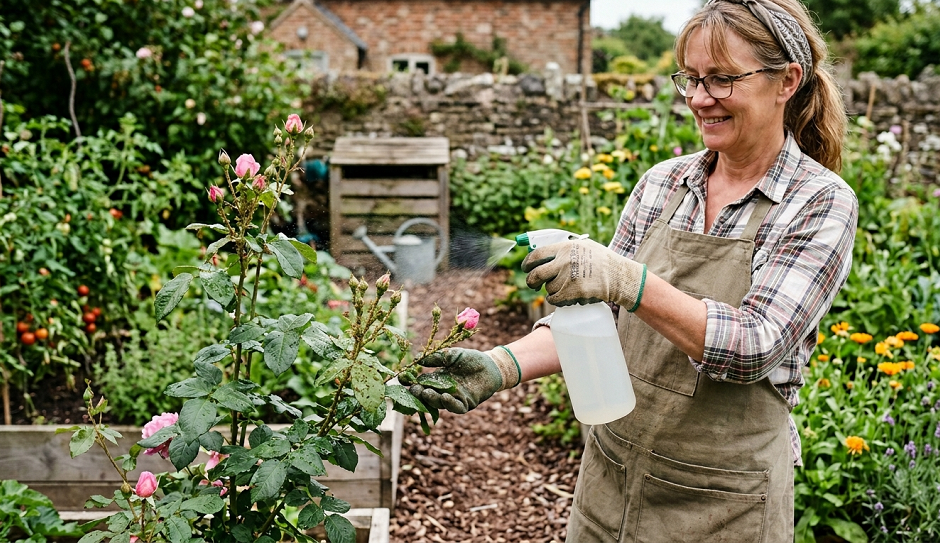
If I had to pick just one product for my entire natural pest control arsenal, it would be neem oil. I’ve used it for years and it still impresses me. It disrupts the aphid life cycle, repels new arrivals, and is safe for your vegetables, your soil, and most beneficial insects when used correctly.
Here’s my go-to recipe: mix 2 teaspoons of cold-pressed neem oil with 1 teaspoon of pure castile soap and 1 quart of warm water. Shake it well and apply with a spray bottle, making sure to coat the undersides of leaves where aphids hide. The soap helps the oil emulsify and stick to the plant surface. Apply in early morning or evening — never in full midday sun, or you’ll risk burning your leaves.
The castile soap in this mix is doing double duty. On its own, a diluted soap spray (1–2 teaspoons per quart of water) will kill aphids on contact by disrupting their protective outer coating. But unlike harsh insecticidal soaps, diluted castile soap is gentle enough for regular use without damaging most vegetables.
Reapply every 5–7 days and always after rain. Consistency matters more than a single heavy dose. The summer I finally got serious about a weekly neem oil routine, my aphid problems dropped by at least 80%. That’s not a guess — I tracked it because I’m that kind of gardener.
3. Plant Companion Plants That Repel Aphids Naturally
This is the long game, but it’s my favorite method because it works while you’re not even paying attention. Certain plants produce scents and chemical compounds that aphids genuinely hate, and when you tuck them in among your vegetables, they act as a kind of botanical force field.
Catnip is, in my experience, the single most effective aphid-repelling companion plant you can grow. Studies back this up — the compound nepetalactone in catnip is more repellent to aphids than many commercial products. Plant it around the borders of your garden beds or intersperse it near your most aphid-prone crops like peppers, tomatoes, and brassicas. Fair warning: your neighborhood cats will be very interested in your garden. This is either a delightful bonus or an irritating problem, depending on your feelings about cats.
Garlic, onions, and chives also do a great job of confusing and repelling aphids with their sulfurous compounds. I grow a ring of chives around every pepper plant I own. Marigolds (specifically French marigolds, not the big African ones) are another reliable option — they repel aphids and a dozen other pests while also looking great.
Fennel and dill are a bit of a double-edged sword. They attract beneficial predatory insects that eat aphids, but they’ll also self-seed everywhere if you’re not careful. The summer my dill took over a 4×8 bed was a real learning experience. Plant them where you can manage the spread.
4. Attract and Protect Beneficial Insects That Eat Aphids
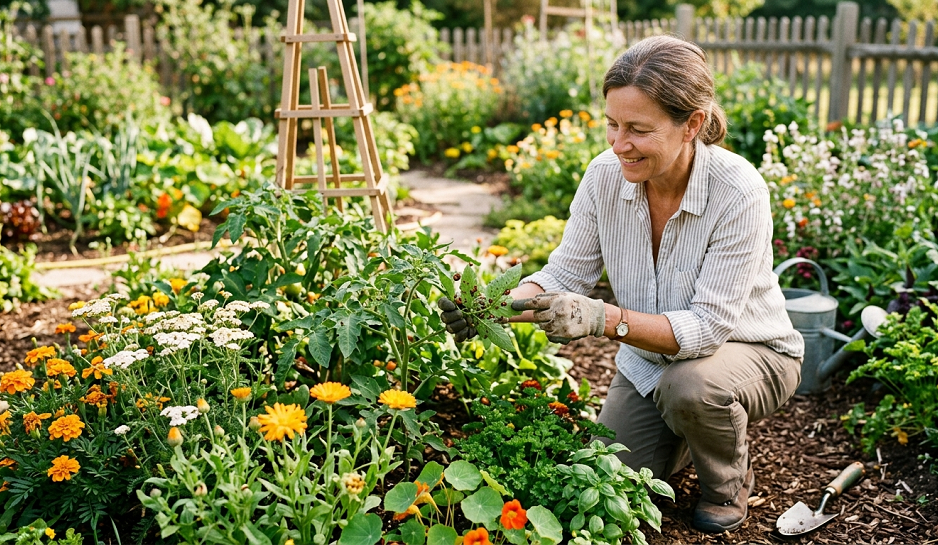
The most sustainable aphid control isn’t something you spray — it’s something you cultivate. A healthy garden ecosystem has natural aphid predators built right in, and your job is to invite them and then not accidentally kill them.
Ladybugs (ladybirds, if you’re outside the US) are the rock stars of aphid control. A single adult ladybug can eat 50 to 100 aphids per day. Their larvae eat even more. If you see ladybug larvae — orange-and-black, spiky-looking things that people often mistake for pests — do not squish them. They are your allies. I made that mistake once and I still feel bad about it.
Lacewings are equally valuable and even more voracious as larvae. To attract them, let some of your flowering herbs like cilantro, dill, and fennel go to flower — lacewings are drawn to those flat-topped flower clusters. You can also buy lacewing eggs online and release them near infested plants. I’ve done this twice and found it genuinely effective.
The most important thing you can do to protect beneficial insects is to stop using broad-spectrum pesticides, even “natural” ones. Pyrethrin sprays, for example, are derived from chrysanthemums and technically organic — but they will kill ladybugs, lacewings, and bees just as effectively as chemical pesticides. I’ve found pyrethrin to be a total waste of money for an aphid-specific problem, even if it looks appealing on the store shelf. It solves today’s aphid problem while guaranteeing a worse one next month.
5. Diatomaceous Earth Around Your Plants (Use It Right)
Food-grade diatomaceous earth (DE) is ground fossilized algae, and it works by physically damaging the soft bodies of insects that crawl through it. For aphids, it’s most effective as a preventive barrier and for ground-level populations, though it won’t solve an active infestation on leaf surfaces on its own.
Sprinkle a ring of DE around the base of your most vulnerable plants — tomatoes, eggplants, peppers — and lightly dust it on stems if aphid populations are low. After rain or heavy watering, you’ll need to reapply because wet DE loses its effectiveness completely.
I use DE in combination with other methods, not as a standalone solution. It’s genuinely useful for deterring ants, which is more relevant than people realize. Ants and aphids have a fascinating and deeply annoying relationship: ants actually farm aphids for their honeydew secretion, protecting them from predators and even moving them to healthy plant tissue. If you have an ant problem in your garden, you almost certainly have an aphid problem too. Disrupting the ants with a DE barrier around plant stems goes a long way toward letting natural predators do their work.
One important note: DE affects all small insects, including beneficial ones. Use it targeted and precise, not broadcast across your whole bed.
6. DIY Garlic or Chili Pepper Spray as a Natural Aphid Repellent
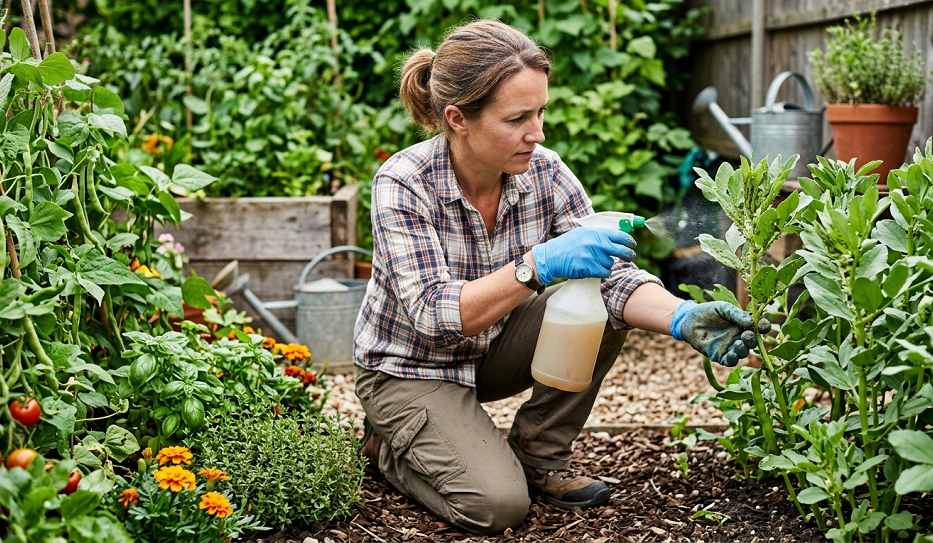
These sprays won’t kill aphids on contact the way soap-and-water does, but they make plants dramatically less appealing to aphid colonies looking for a new home. Think of them as the “no vacancy” sign for your vegetables.
For garlic spray, blend a whole head of garlic with 2 cups of water until it’s a pulp, strain it thoroughly, add 1 teaspoon of castile soap, and dilute with 1 quart of water. Spray it on your plants, especially the undersides of leaves. It smells terrible for about a day, then fades to humans while remaining detectable to insects.
For chili spray, simmer 2–3 tablespoons of cayenne pepper or dried hot chilis in 1 quart of water for 15 minutes, let it cool, strain well, and add a teaspoon of soap. Apply the same way. Capsaicin — the compound that makes peppers hot — is a legitimate irritant to soft-bodied insects and will discourage aphids from settling in.
Reapply both sprays after any rain, and don’t apply in hot sun. I alternate between garlic spray and neem oil week to week during peak aphid season (late spring through early summer in most climates) and the combination has been really effective.
A quick side note: don’t spray garlic or chili directly on open flower blossoms. It can irritate pollinators and you really don’t want to make bees miserable. Spray in the morning before flowers open, or aim carefully.
7. Yellow Sticky Traps for Monitoring and Reducing Aphid Populations
Yellow sticky traps are the most passive method on this list, and they’re underrated. Aphids are attracted to the color yellow — scientists think it mimics the appearance of young, tender plant tissue — and they’ll fly directly into hanging sticky traps in large numbers.
These won’t eliminate an infestation, but they serve two really important functions. First, they reduce the flying, reproductive adults that spread colonies to new plants. Second, and more importantly, they’re an early warning system. When I start seeing aphids appearing on my traps in late spring, I know it’s time to step up my other defenses before colonies establish on my plants. Catching an infestation early makes everything else on this list twice as effective.
Hang traps at plant height or just above, near your most vulnerable crops. Replace them every 2–3 weeks or when they’re covered. I buy them in bulk — they’re genuinely cheap — and position them throughout my garden by mid-spring every year.
Real Talk: What Doesn’t Work (Or Isn’t Worth the Effort)
Let me save you some time and money. Ladybug releases, while satisfying in theory, are largely a waste of money unless you have a truly enclosed growing space. Commercially harvested ladybugs are collected from aggregation sites during hibernation, and when you release them, the vast majority fly away within 48 hours following their genetic migration instinct. I’ve done this twice and seen maybe a 10% retention rate. Attract local ladybugs with habitat — don’t buy imported ones.
Row covers and barriers can help protect seedlings from early infestations, but once aphids are already established, fabric barriers do nothing. They’re a preventive tool, not a cure.
And please, for the love of your soil ecosystem, skip the chemical systemic insecticides for aphids. Neonicotinoids will kill your aphids and simultaneously destroy your pollinator population, disrupt your soil biology, and persist in your plants for weeks. An aphid problem is annoying. A garden without pollinators is a catastrophe. The trade-off isn’t worth it.
Parting Wisdom
Here’s the thing nobody tells you when you’re starting out: aphids are a sign of imbalance, not failure. A diverse, healthy garden ecosystem keeps aphid populations in check naturally. The goal isn’t a garden with zero pests — it’s a garden where no single pest gets the upper hand.
Start with water and soap, build up your companion planting game, and protect every ladybug you see like it’s made of gold. Do those three things consistently and you’ll spend a lot less time hunting aphids and a lot more time actually enjoying your garden.
What’s your biggest aphid battle story? Have you found a natural method that works better than anything on this list? Drop it in the comments below — I genuinely read every one, and some of my best gardening tricks came from readers who knew something I didn’t.

About Syprose Kiche
Syprose Kiche is the creator and writer behind My Besuited Home, a practical home and garden website covering DIY projects, gardening, lawn care, landscaping, home improvement, and outdoor living. She focuses on turning everyday homeowner questions into clear, practical guides backed by careful research and useful real-world considerations.