
My neighbor called me over last spring, practically in tears. She had just spent three weekends and close to $4,000 trying to landscape her lakefront backyard — and it looked worse than when she started. Muddy banks, half-dead ornamental grasses flopped sideways into the water, and a flagstone path that had already started sinking after one good rain.
“I just wanted it to look like the pictures,” she said.
I’ve been there. More than once. Lakefront landscaping is a whole different animal from regular backyard work. You’re dealing with fluctuating water levels, erosion, runoff regulations, and a shoreline ecosystem that does not care about your Pinterest board. But when you get it right? There is nothing better. Sitting on a well-designed waterfront patio at sunset, with the right plants softening the bank and the water just a few steps away — it’s worth every callus.
Here are 10 lakefront backyard landscaping ideas that actually work in the real world, not just on Houzz.
1. Build a Natural Shoreline Buffer with Native Plants
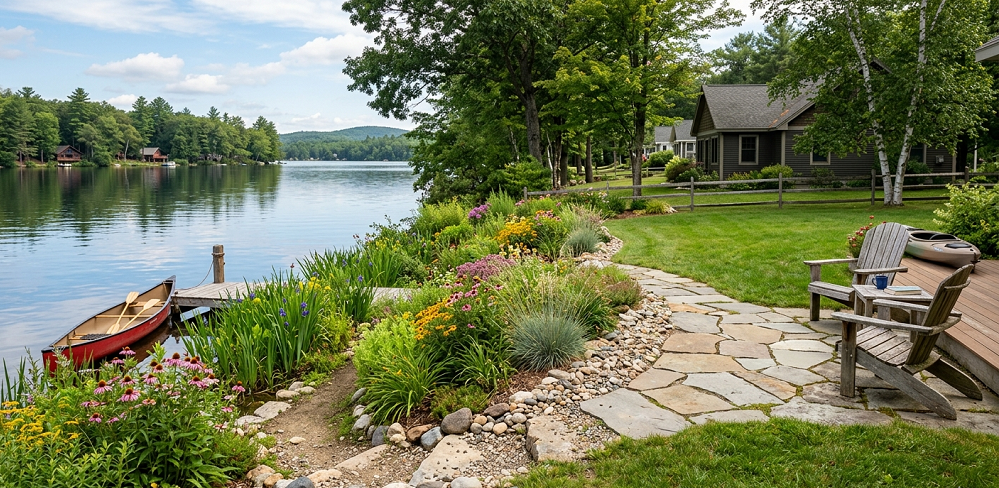
The single most important thing you can do for a lakefront property is stop fighting the shoreline and start working with it. Native shoreline plants are your first line of defense against erosion — and they do the job better than any retaining wall you’ll find at a big-box store.
I made the mistake early on of ripping out all the “messy” vegetation along my lake edge and replacing it with lawn grass right to the water. By the following spring, I had lost nearly eight inches of bank. Lawn grass has shallow roots that do almost nothing to hold soil together when water levels rise and fall. Native plants — cattails, blue flag iris, swamp milkweed, native sedges, buttonbush — have deep, complex root systems that lock the soil in place year-round.
The buffer zone doesn’t have to look wild or unkempt. Plant in layered groupings: emergent plants right at the water’s edge, taller ornamental grasses and shrubs like native willows or Virginia sweetspire in the middle tier, and then perennials blending into your lawn. It looks intentional and designed, and it works with nature instead of against it.
Many states and counties also require a native shoreline buffer by law. Check with your local conservation authority before you plant anything — or remove anything — within a certain number of feet from the water’s edge. I learned this the hard way after a friendly visit from my county’s environmental compliance officer.
2. Design a Lakefront Patio or Deck That Frames the Water View
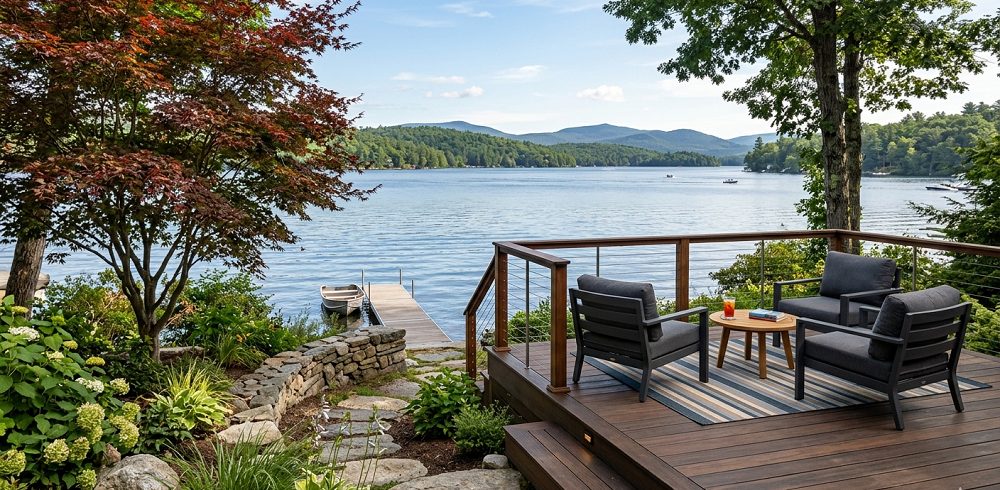
If you’re spending money on one hardscape project for your waterfront backyard, make it a lakeside patio or deck. Done right, this becomes the centerpiece of your entire outdoor living space — the place where your family actually spends time.
The key is elevation and orientation. You want to be high enough to have a clear sightline over any shoreline plantings, but not so elevated that it feels disconnected from the water. I generally aim for a deck or patio surface that sits about 18 to 24 inches above the natural bank. Composite decking is my go-to for anything right near the water — wood requires constant maintenance in a high-moisture environment, and I’ve seen gorgeous cedar decks turn gray and splintery within five years near the lake.
Stone patios are another solid option, but you have to get the base right. Compacted gravel sub-base, proper drainage, and polymeric sand in the joints. Skip any of those steps and you’ll be re-leveling stones every spring after the ground heaves.
Orient your seating area to capture the best view and, if possible, the prevailing breeze off the water. Nothing beats a lake breeze on a hot afternoon. Add a pergola or shade sail if you’re dealing with intense afternoon sun — waterfront properties often have no natural shade because people cleared all the trees when they built the house. Build in lighting from the start, because that view at night is just as good as it is during the day.
3. Install a Proper Boat Dock or Lakeside Steps for Water Access
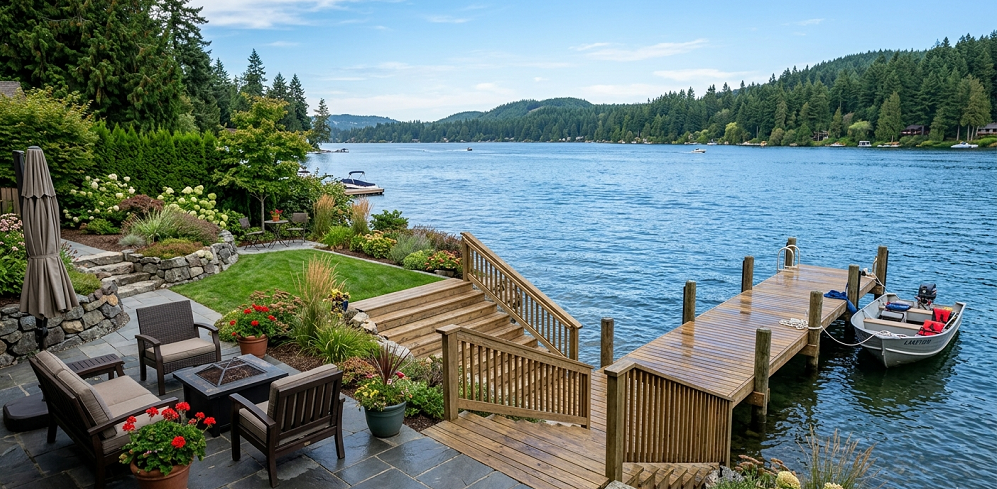
A waterfront property without easy water access is like a kitchen without a stove — technically complete, but missing the whole point. Whether you use the lake for swimming, kayaking, fishing, or just dangling your feet in the water, you need a thoughtful access point designed into the landscape.
Floating docks are almost always the better choice over fixed docks if your lake has significant seasonal water fluctuation. I installed a fixed dock at my first lakefront property. After a drought year followed by a high-water year, the dock was either sitting in mud or partially submerged. A floating dock rises and falls with the water level and stays usable all season.
Lakeside stone steps are another excellent option if you primarily want swimming or kayak launch access rather than a full dock. Natural fieldstone or cut bluestone steps set into the bank with proper drainage behind them look beautiful and last for decades. Use non-slip textures on the surface — wet stone next to a lake is an accident waiting to happen, and I say that as someone who found out personally.
Always pull permits for dock installation. This is not optional, and the fines for unpermitted dock work on navigable waterways can be significant. Your local lake association or county building department can tell you exactly what’s required.
4. Create a Fire Pit or Outdoor Fireplace Area Near the Waterfront
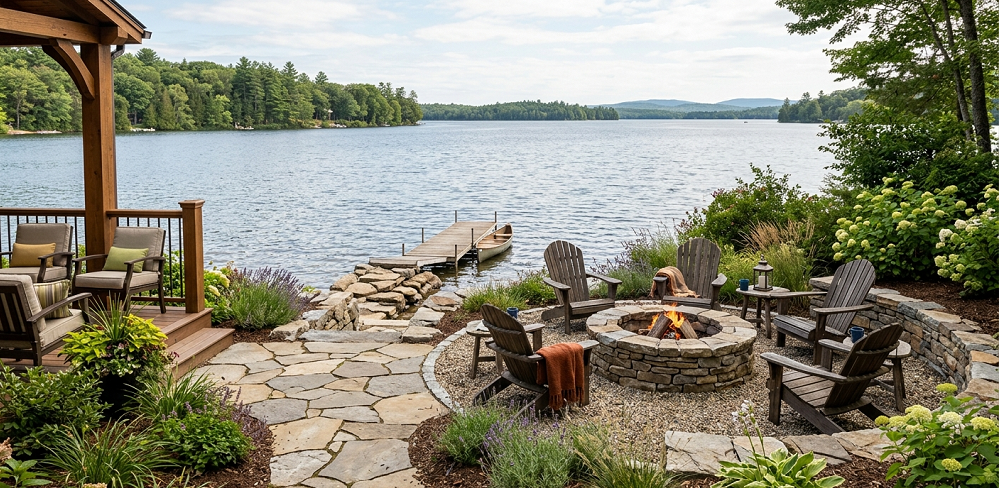
There is something almost primal about a fire at the edge of a lake. A well-placed fire pit area is one of the best investments you can make in your waterfront outdoor living space — and it adds genuine value to the property.
My first fire pit was a ring of decorative stones I placed about six feet from the water’s edge on a little gravel pad. That fire pit spent its second winter half-submerged. Lesson learned: site your fire pit at least 15 to 20 feet from the shoreline, on stable, level ground that doesn’t flood. You want it close enough to the water to enjoy the view and the atmosphere, but not so close that it becomes a casualty of spring melt.
Pea gravel or decomposed granite makes an excellent surface for the seating area around a fire pit — it drains well, stays clean-looking, and doesn’t get slippery. Arrange your seating in a circle with clear sightlines to the water. Built-in stone seating walls are gorgeous and require zero chair storage, though I’ll admit they’re cold on the backside in early spring. Movable Adirondack chairs are more practical for most families.
Gas fire pits are a popular choice right now, and I understand the appeal — no hauling wood, no smoke, push-button convenience. But I’m going to be honest: nothing beats a wood fire by the lake. The smell, the crackling, the whole experience. Go wood if local ordinances allow it, and buy a good spark screen.
5. Add Lakefront Landscape Lighting for Safety and Evening Ambiance
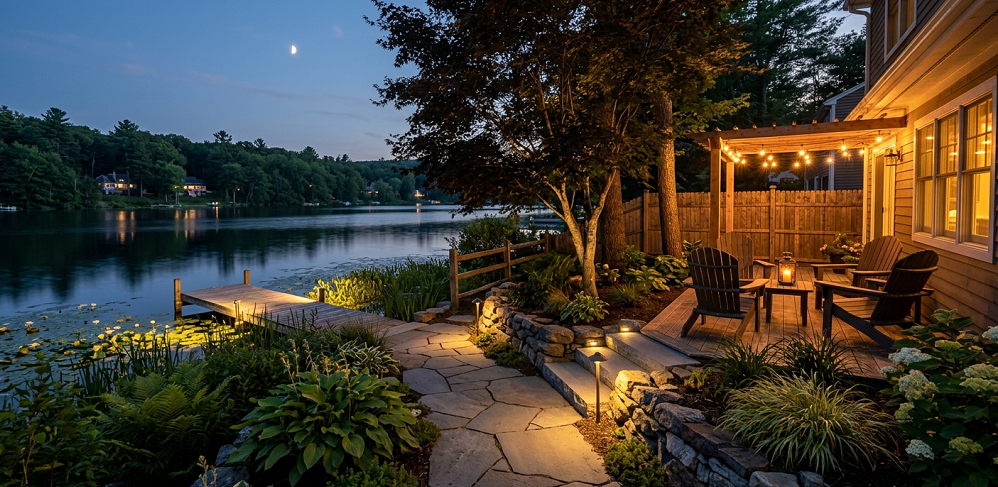
Most people treat landscape lighting as an afterthought and then wonder why their beautiful lakefront yard looks completely dead after dark. Lighting is what turns a nice-looking backyard into a space you actually use in the evenings — and near water, it also serves a real safety function.
Path lighting along any walkway leading to the dock or water’s edge is non-negotiable. Someone is going to walk out there in the dark eventually. Low-voltage LED path lights are inexpensive, easy to install, and can be solar-powered if you don’t want to run wire. I’ve used solar path lights around my lake property for years, and the newer ones with larger solar panels hold a charge reliably even in cloudy stretches.
Beyond safety, think about uplighting trees and architectural plants near the shoreline, and adding underwater lighting in the dock area if you have one. Underwater LED dock lights are genuinely spectacular — they illuminate the water column and attract fish, which is either a feature or a bug depending on whether you like watching wildlife at night.
Use warm color temperatures (2700K to 3000K) near the water. Cool blue-white light feels harsh and industrial in natural settings. Warm amber light is soft, flattering, and makes the whole space feel welcoming rather than like a parking lot.
6. Install a Rain Garden or Bioswale to Manage Runoff and Protect Water Quality
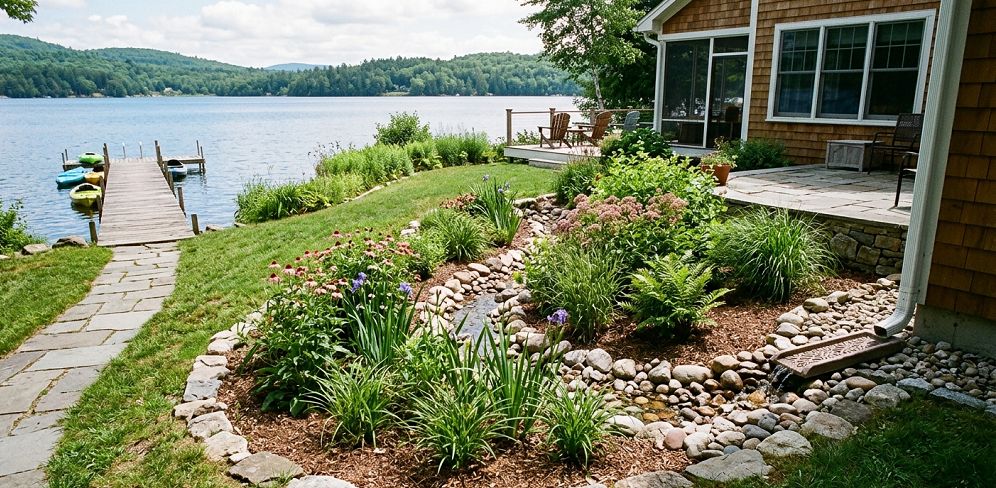
Here’s the landscaping idea nobody talks about enough: managing stormwater runoff. Every time it rains, water picks up fertilizer, sediment, pet waste, and all kinds of other things from your yard and carries it straight into your lake. Over time, that nutrient loading feeds algae blooms, degrades water quality, and damages the ecosystem you’re trying to enjoy.
A rain garden is a shallow planted depression designed to capture and absorb runoff before it reaches the water. Positioned strategically between your lawn and the shoreline, it does real environmental work while also looking great. Native plants that tolerate both wet and dry conditions — coneflower, black-eyed Susan, swamp rose, switchgrass — do well in rain gardens and attract pollinators.
A bioswale is a similar concept but linear — essentially a planted channel that slows and filters water as it moves toward the lake. Both are recognized best management practices for lakefront properties, and some states offer cost-share programs that help pay for installation. Call your county extension office to find out what’s available in your area. This is one of the few landscaping projects where you might actually get paid to do the right thing.
7. Plant a Waterfront Privacy Screen Using Ornamental Grasses and Screening Shrubs
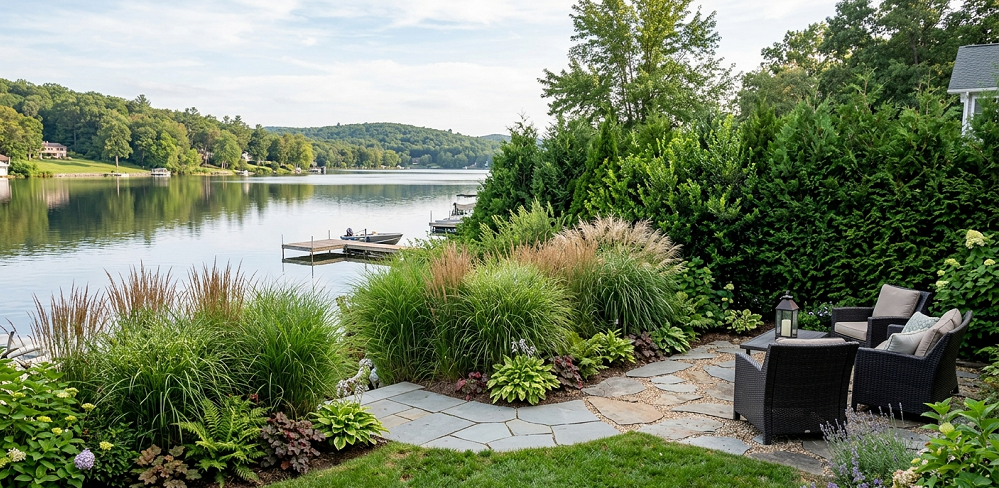
Lakes are beautiful, but lake neighborhoods are often tight. Neighboring docks, boat traffic, and people on the water can all feel uncomfortably close, especially if your property is on a smaller lake. A well-designed privacy screen solves this without walling yourself in or blocking your own view.
The trick is using plants with different heights and transparency levels. Ornamental grasses like Karl Foerster feather reed grass or native prairie dropseed provide a medium-height screen that moves in the breeze and filters views rather than blocking them entirely. Behind the grasses, native shrubs like arrowwood viburnum, inkberry holly, or native elderberry provide more solid screening.
Place the screen at the property line or along the sides of your outdoor living area, not in front of your primary water view. You want to feel enclosed and private on the sides while maintaining that open, expansive view straight out to the lake. This is the same principle landscape architects use in resort design, and it works just as well in a backyard setting.
Skip arborvitae hedges for lakefront screens. I know they’re everywhere, and I know they grow fast, but they’re thirsty, they require constant maintenance, and they look suburban and boxy — not what you want in a naturalistic waterfront setting. Arborvitae on a lakefront is, in my opinion, a total waste of money and effort, even if it looks tidy on Pinterest.
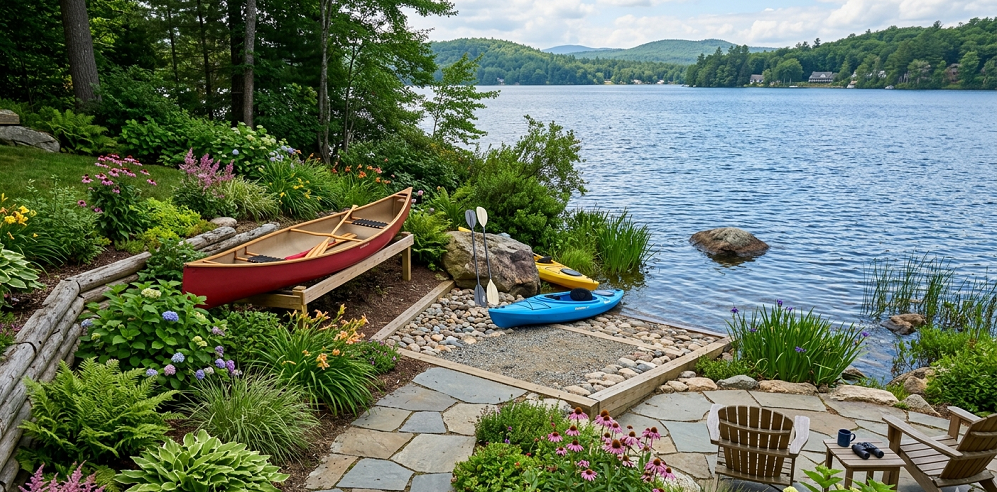
8. Design a Kayak or Canoe Launch Area with Proper Landscaping
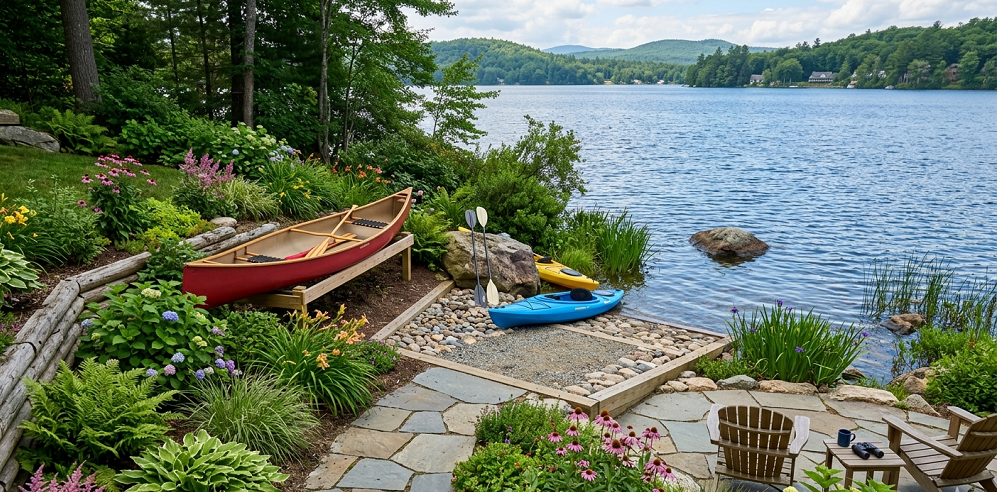
If you paddle — kayaks, canoes, paddleboards, anything human-powered — a dedicated launch area is a project that will make your life dramatically easier and protect your shoreline at the same time.
A proper kayak launch combines a hardened surface (usually gravel or concrete) to slide boats from, a gentle grade down to the water’s edge, and anchor points for a grab rail or safety rope. The launch area should be wide enough to work comfortably — at least six feet across — and positioned away from your swimming area if you have one.
Landscape around the launch with low-growing native groundcovers and low shrubs that won’t interfere with carrying boats but still provide erosion control. Creeping juniper, native wild ginger, or low-growing sedges all work well in this spot. Avoid tall, floppy plants right at the launch — nothing is more annoying than fighting through a stand of ornamental grasses with a 17-foot kayak.
If your bank is steep, consider a roller system or a simple boat ramp built from non-slip concrete or textured pavers. The investment pays back every single paddling day when you’re not dragging your hull across rocks.
9. Add a Waterfront Garden Bed Featuring Lake-Friendly Perennials and Flowering Shrubs
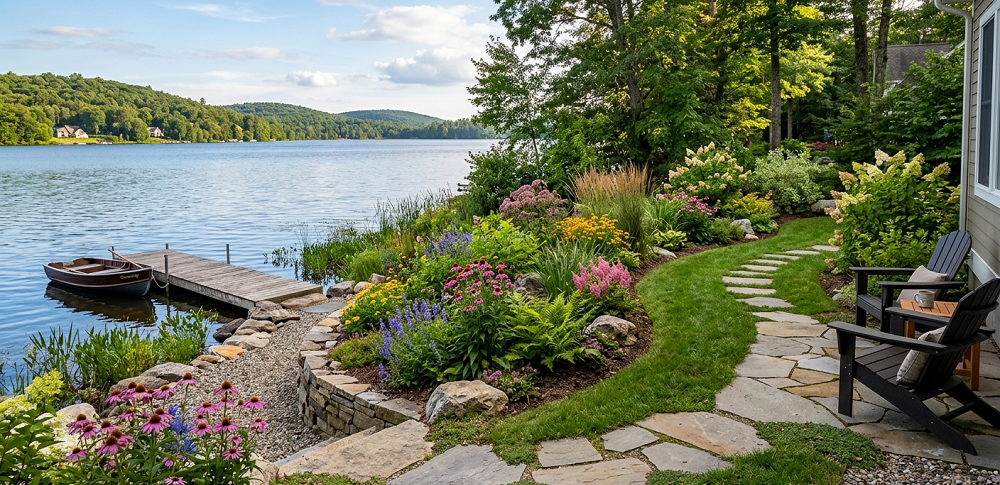
Just because you’re near water doesn’t mean you have to give up the idea of a beautiful garden. A thoughtfully planted perennial bed or mixed shrub border can add color, fragrance, and wildlife value to your waterfront landscape while being perfectly suited to the conditions.
The key word is “suited.” Plants near the lake need to handle the specific microclimate: higher humidity, potential for occasional flooding, often sandier or drier soil on the slope above the shoreline, and in many cases more wind than plants further inland. Fighting these conditions with plants that require them to be different is a recipe for frustration.
My favorite waterfront perennials are Joe-Pye weed (tall, late-season, pollinators go crazy for it), native swamp milkweed for monarch butterflies, blue lobelia for hummingbirds, and cardinal flower for sheer visual impact. For shrubs, buttonbush is unbeatable right at the water’s edge — it produces fascinating spherical white flowers, supports an enormous range of insects and birds, and tolerates standing water that would kill most shrubs.
Plant in larger masses rather than individual specimens for maximum visual impact and ecological function. Three buttonbushes planted together look intentional and dramatic. One buttonbush looks like you couldn’t decide what to do.
10. Build a Lakeside Outdoor Kitchen or Bar for Waterfront Entertaining
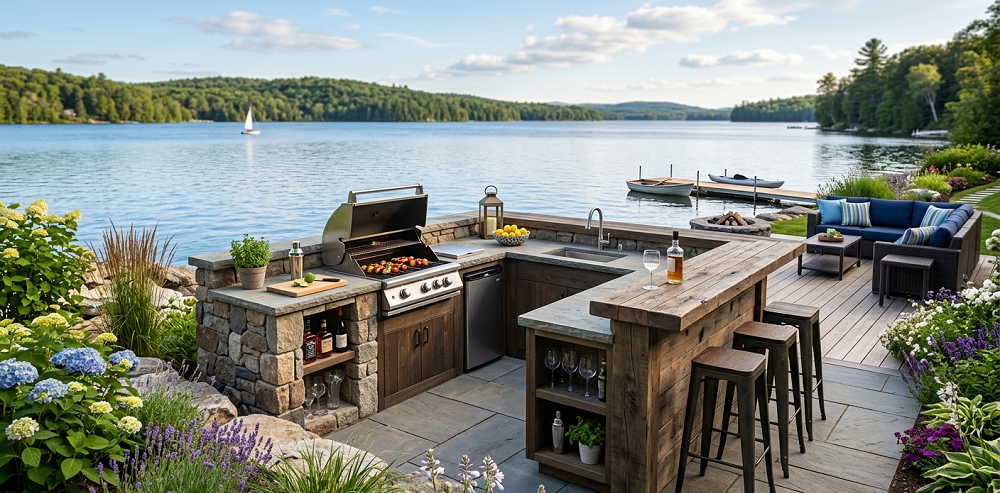
If your lakefront property is where family and friends gather — and if it’s set up right, it will be — a dedicated outdoor kitchen or even a simple outdoor bar setup near the water is a genuine game-changer.
I’m not talking about a $30,000 built-in kitchen setup that requires a contractor and a permit. Even a modest outdoor kitchen — a built-in grill, a small prep counter, a mini fridge, and a storage cabinet — transforms how you use the space. Suddenly you’re not running in and out of the house all day, and the lake becomes the actual center of your social life rather than just a backdrop.
Position the kitchen on or adjacent to your main patio, with easy sightlines to the water and to wherever kids or guests are playing. Stainless steel components are mandatory near a lake — salt air, humidity, and moisture will destroy anything that isn’t rated for outdoor use. Even if you’re on a freshwater lake, the moisture exposure is intense.
Keep the footprint of your outdoor kitchen in proportion to your overall patio space. An 8-foot grill island in the middle of a 12-foot patio is claustrophobic. The kitchen should serve the gathering space, not dominate it.
Quick bonus tip: Add a simple outdoor shower or rinse station near the water access point. After a day of swimming or paddleboarding, it keeps sand, mud, and lake water out of the house — and your family will use it every single day. It costs almost nothing and is one of those additions that makes you wonder how you lived without it.
Real Talk: What Goes Wrong (And What’s Not Worth the Effort)
Lakefront landscaping has a unique set of failure modes, and I’ve hit most of them personally.
Imported stone near the water looks great in the showroom and terrible after two winters of freeze-thaw cycles. Many decorative stones — certain sandstones, some limestones — absorb water and spall apart when temperatures drop. Use locally quarried stone whenever possible; it’s adapted to the regional climate.
Lawn grass to the waterline is probably the single most common lakefront landscaping mistake I see. It looks neat. It causes erosion, increases nutrient runoff, destroys habitat, and in many municipalities is now actually prohibited right at the shoreline. Strip that turf and replace it with native plants. You will not regret it.
Cheap solar landscape lights — not the ones I mentioned earlier for path lighting, but the little decorative ones — look fine for about one season. After that they go cloudy, the batteries stop holding a charge, and they start looking like a graveyard of dead plastic flowers. If you’re going solar, spend the money on quality fixtures with replaceable batteries.
Annual flower beds right at the water’s edge are maintenance nightmares. The humidity, fluctuating light conditions, and soil inconsistency make it hard to keep annuals looking good, and replanting every year right next to the lake is genuinely miserable when the mosquitoes are out. Stick with well-chosen perennials and native shrubs in the shoreline zone.
Parting Wisdom
Lakefront landscaping rewards patience and punishes impatience. The best shorelines I’ve seen are the ones where someone planted the right natives five or ten years ago, let them establish, and now basically does nothing except enjoy them. The worst ones are constantly being ripped out and redone because someone wanted a quick fix.
Start at the water’s edge and work your way back toward the house. Get the shoreline right first — erosion control, native plants, proper water access — and everything else will fall into place around it. The fancy patio and the outdoor kitchen are more fun to plan, but they don’t matter much if your bank is washing into the lake.
Spend time on your property in different seasons before committing to major landscaping decisions. Watch where water pools in spring. Notice where the wind comes off the lake in summer. See where the deer walk in the fall. That kind of observation is worth more than any design software.
Now I want to hear from you: what’s the biggest challenge you’re facing with your lakefront property right now? Got a slope that’s eroding? A dock area that’s perpetually muddy? Can’t figure out what to plant in that low, wet area at the edge of the water? Drop your question or situation in the comments below — I read every one, and I’ll share whatever I know.

About Syprose Kiche
Syprose Kiche is the creator and writer behind My Besuited Home, a practical home and garden website covering DIY projects, gardening, lawn care, landscaping, home improvement, and outdoor living. She focuses on turning everyday homeowner questions into clear, practical guides backed by careful research and useful real-world considerations.