
Every July, my garden turns into a battlefield. The lettuce bolts overnight. The spinach looks at me with what I can only describe as betrayal. The cilantro goes to seed before I’ve even made one batch of salsa. Sound familiar?
After more than a decade of gardening through scorching Midwest summers — including one legendary July where my thermometer hit 107°F for nine straight days and took out nearly everything I’d planted — I stopped fighting the heat. I started working with it. And that changed everything.
These 13 vegetables don’t just survive summer heat. They actually thrive in it. Plant these, and your July garden stops being a graveyard and starts producing like it owes you money.
Why Most Summer Gardens Fail (And What “Heat-Tolerant” Actually Means)
Before the list, let’s get one thing straight: “heat-tolerant” doesn’t mean a vegetable will shrug at 110°F with zero water. It means the plant won’t bolt, turn bitter, or collapse when temperatures consistently sit in the 85–100°F range. Big difference.
Most cool-season crops — your lettuce, your peas, your broccoli — evolved for 60–70°F weather. When July hits and the mercury climbs, those plants go into survival mode. They bolt (send up a flower stalk), their leaves turn bitter, and they start putting all their energy into making seeds instead of food. That’s not a personal attack on you. That’s just biology.
The vegetables below are built differently. Their origins — tropical Africa, Central America, the Mediterranean — mean they expect heat. They want it. And once you stop trying to grow shade lovers in full sun and start planting what belongs in summer, your whole gardening experience shifts.
I made the mistake of trying to extend my spring lettuce patch three summers in a row. Three summers of bitter, bolted, slimy lettuce. That fourth summer I ripped it all out in June, planted okra and sweet potatoes, and never looked back.
1. Sweet Potatoes — The Most Underrated Summer Vegetable You’re Probably Not Growing
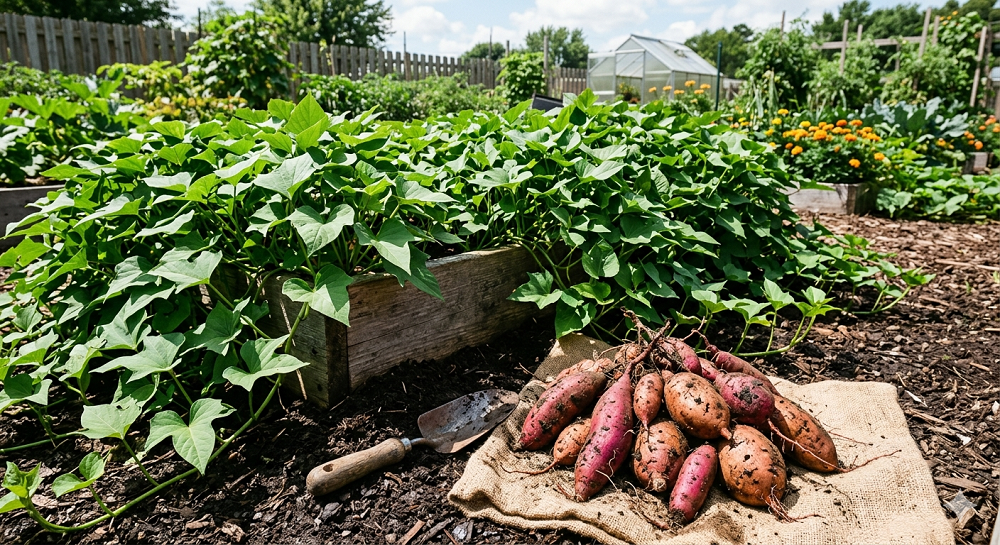
If I could only grow one thing in July heat, it would be sweet potatoes. I mean it. This plant was designed for summer. It laughs at drought. It shrugs at 95°F. It spreads its vines like it owns your raised bed — and honestly, it kind of does.
Sweet potatoes are started from “slips” — rooted cuttings from a mature tuber — rather than seeds, which trips up a lot of beginners. You plant the slips in late spring, and then you basically forget about them. The vines will spread across 4–6 feet per plant, so give them room. I once planted four slips in a 4×8 raised bed and spent August untangling vines from my tomato cages. Learn from me.
The real magic happens underground. You won’t see the tubers forming, so you just… trust the process. When the leaves start to yellow slightly in late summer or early fall, it’s harvest time. I’ve pulled sweet potatoes that weighed over a pound each from plants I barely watered after the first two weeks.
One tip: plant them in your sunniest, hottest spot. The spot where nothing else wants to grow? That’s prime sweet potato real estate.
2. Okra — The Heat-Loving Vegetable That Will Outlast Your Patience
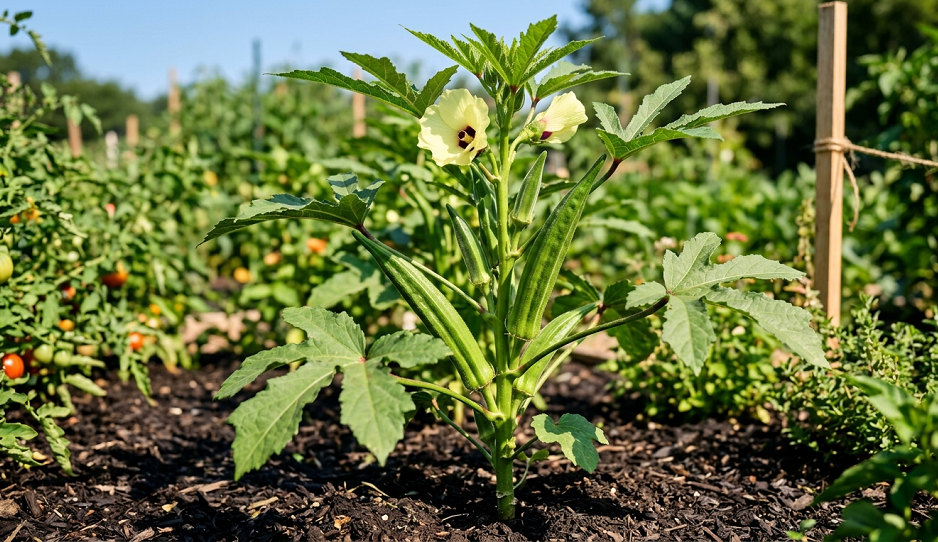
Okra is basically indestructible. I’ve grown it through droughts, through weeks of 100°F temperatures, and through one summer where I genuinely forgot to water it for two weeks straight. It still produced.
Native to northeastern Africa, okra is genetically wired for brutal heat. In fact, planting okra in cool soil is a great way to get zero germination, zero growth, and maximum frustration. Wait until the soil is at least 65°F — ideally 70°F or higher — before direct sowing. Cold soil will rot those seeds before they even try.
The plants grow tall — sometimes 5–6 feet — and they produce gorgeous hibiscus-like flowers before setting pods. Harvest the pods when they’re 2–4 inches long. I cannot stress this enough: do not let them get big. An okra pod left on the plant too long becomes a woody, unchewable stick. I learned that the hard way when I went on vacation for a week and came back to what looked like a collection of miniature baseball bats.
If you’ve written off okra because you’re convinced you don’t like it, I’m here to challenge that. Roasted okra at 425°F with olive oil, salt, and smoked paprika is a completely different experience from the slimy boiled version that traumatized half of us in childhood.
3. Southern Peas (Black-Eyed Peas, Crowder Peas, Zipper Peas) — The Heat Crop Southerners Have Known About for Centuries
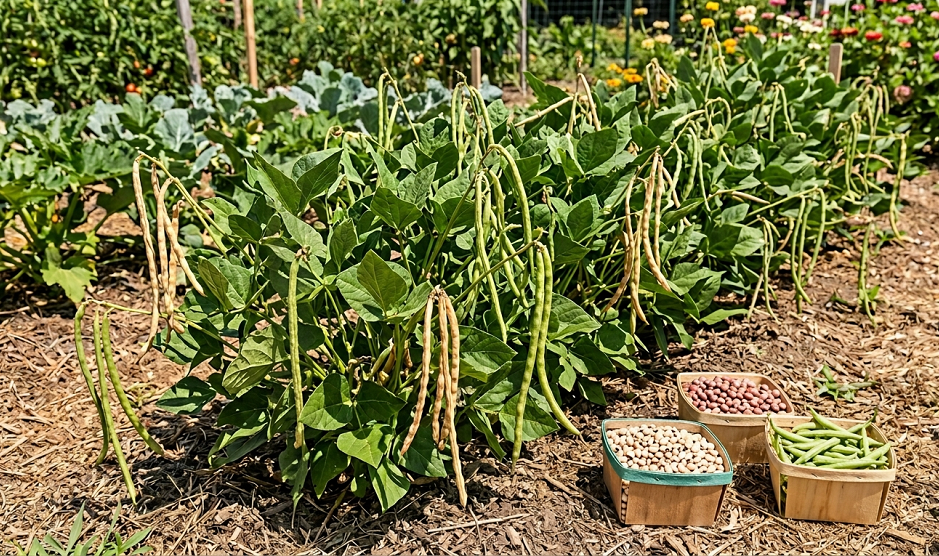
Northerners sleep on southern peas, and I genuinely don’t understand why. These are a different species from the English peas you grow in spring. While spring peas want 50–60°F weather, southern peas want summer. They’re a true warm-season crop that fixes nitrogen in the soil while they grow, which means they’re making your garden better even as they produce food.
I planted my first patch of zipper cream peas on a dare from a neighbor who insisted I’d be “shelling until my fingers hurt.” He was right. But the flavor — buttery, nutty, nothing like canned black-eyed peas — made every minute worth it.
Plant directly in the ground after your last frost when the soil is warm. These plants are drought-resistant once established, and they thrive in the same punishing July conditions that wipe out everything else. They don’t need much fertilizer either — too much nitrogen and you’ll get all vines and no pods.
A quick side note: southern peas are also one of the best cover crops you can plant in summer. If you have a bed that needs to rest, throw in some cowpeas, let them grow, then till them under in fall. Your soil will thank you.
4. Cherry Tomatoes — Not All Tomatoes Are Created Equal in July Heat
Let me be clear: I am not talking about your giant beefsteak slicing tomatoes here. Those are struggling by July. Big tomatoes drop their blossoms when nighttime temperatures stay above 70°F, which in most of the country means you’re watching fruit set grind to a halt by midsummer.
Cherry tomatoes are a different story. Varieties like Sungold, Sweet 100, Black Cherry, and Sun Gold (yes, I know I said it twice — it’s just that good) continue setting fruit even in serious heat. The smaller the fruit, the more heat-tolerant the variety tends to be. I’ve had Sungold vines producing like crazy in August while my larger tomatoes had completely shut down.
The key is variety selection. If you’re planting from a big-box store six-pack without checking the label, you’re gambling. Look specifically for varieties bred or noted for heat tolerance. ‘Heatmaster,’ ‘Solar Fire,’ and ‘Phoenix’ are large-fruited types that handle heat better than most, but even they can’t compete with cherry types for midsummer production.
And please — support your cherry tomato plants properly. I’ve watched a 6-foot Sungold vine collapse under its own weight because someone (me, it was me) thought a single tomato cage would be enough. Use a Florida weave system or a sturdy trellis. Save yourself the heartbreak.
5. Malabar Spinach — The Leafy Green That Thrives When Real Spinach Dies
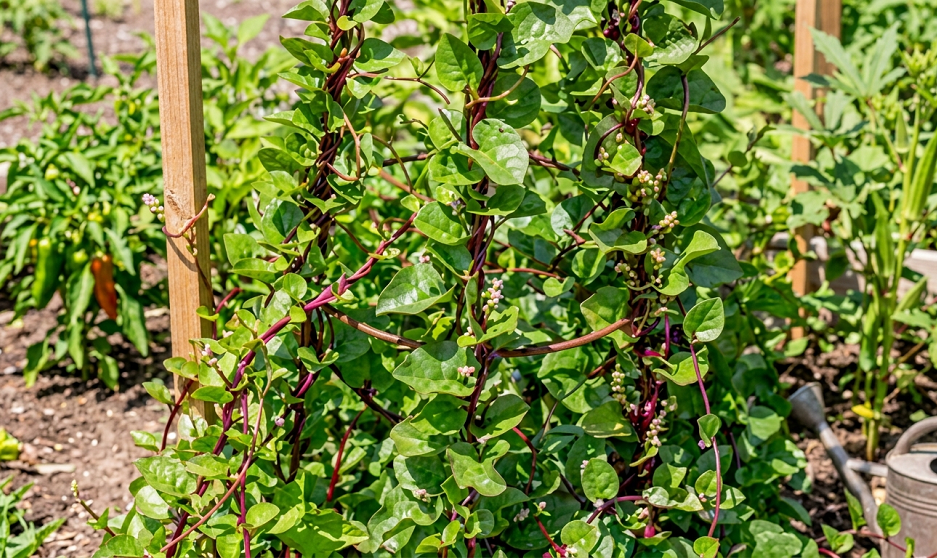
Regular spinach bolts in June. Malabar spinach is just getting started. This vining plant from tropical Asia is technically not a spinach at all, but the glossy, dark green leaves taste similar and hold up beautifully in sautés, stir-fries, and soups.
Malabar spinach grows as a climbing vine that can reach 10 feet or more by the end of summer. It needs a trellis, a fence, or something to climb. The first time I grew it, I underestimated the growth habit and ended up with a massive twining plant that had wrapped itself around my pepper plants, my drip irrigation line, and one very confused tomato cage.
The plant comes in two forms: green-stemmed and red-stemmed. The red-stemmed variety (Basella rubra) is gorgeous — thick burgundy stems with emerald leaves — and I think it’s one of the prettiest things you can grow in a summer garden. The flavor is essentially identical between the two.
Harvest individual leaves regularly to keep the plant producing. This is a cut-and-come-again green, meaning the more you pick, the more it grows. In my experience, one or two plants will give a family more cooked greens than they can eat from July through September.
6. Armenian Cucumber — Your Regular Cucumber’s Better-Looking, Heat-Tougher Cousin
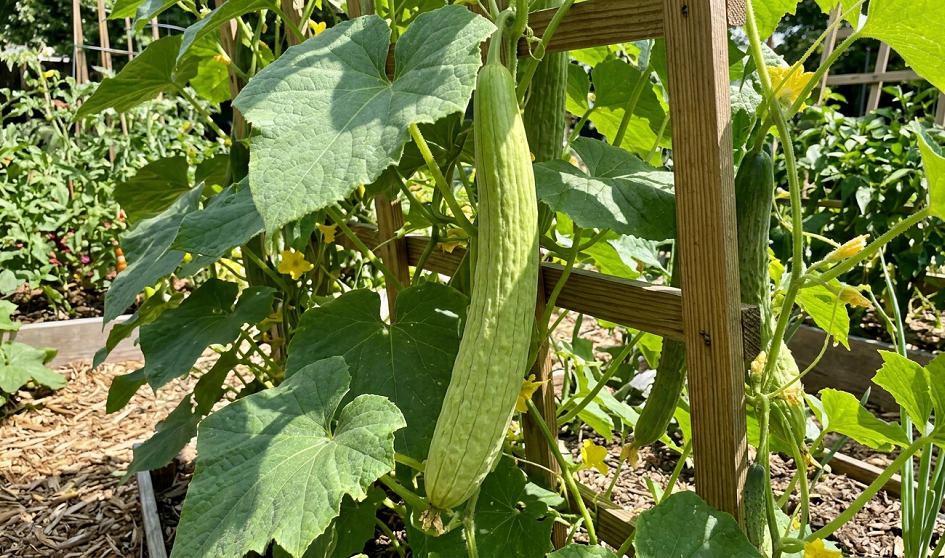
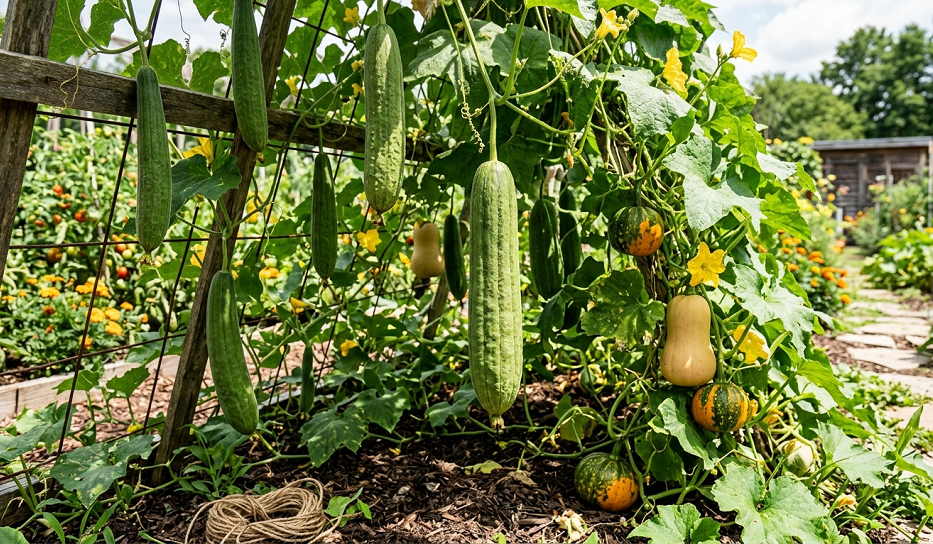
Standard cucumber plants struggle when the heat gets relentless. They get bitter, they get pest-hammered, and the production nosedives. Armenian cucumbers — technically a muskmelon — keep going. They’re long, ridged, light green, and they handle 100°F weather like it’s nothing.
The flavor is mild, slightly sweet, and never bitter. I grow Armenian cucumbers every single year now, and the 4-foot-long specimens I occasionally miss at harvest have become a running joke in my neighborhood. (“I found another one” is a text I have sent more than once to my neighbor with a photo of something that looks like a green baseball bat.)
Plant these the same way you’d plant regular cucumbers — on a trellis is ideal to keep fruit straight and save space. The vines are vigorous and will cover a lot of ground if you let them sprawl. Harvest at 12–18 inches for the best texture and flavor. After 2 feet, they start getting seedy and the skin thickens.
7. Sweet Peppers and Hot Peppers — Both Love July Like Nothing Else
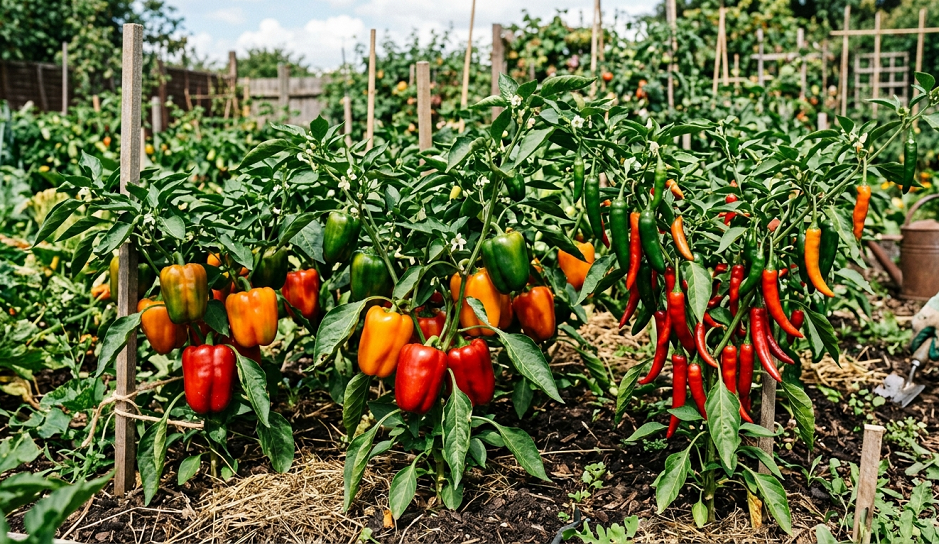
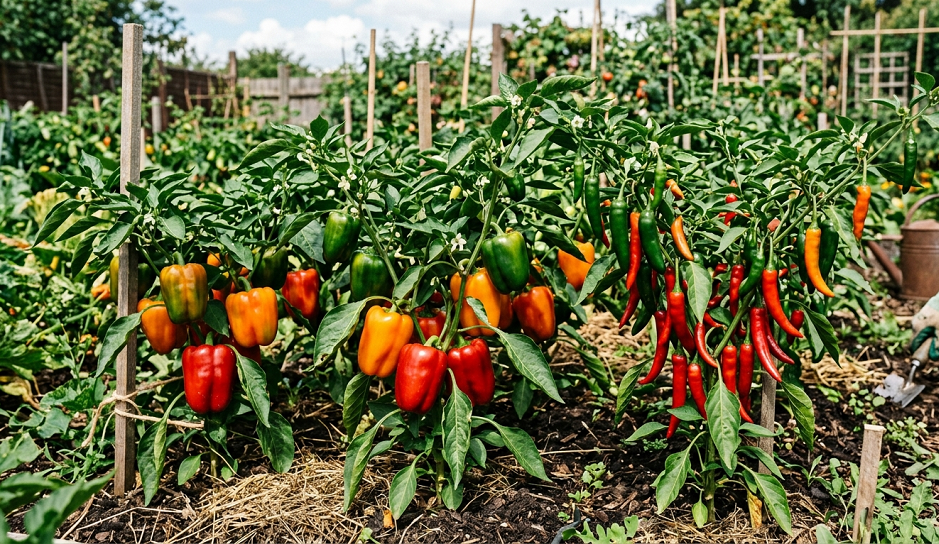
Peppers are a legitimate summer vegetable, full stop. They are warm-season crops that actually need heat to produce their best fruit. The problem most people run into is that, like large tomatoes, pepper blossoms drop when nighttime temps get too high. The trick is to keep plants well-watered and mulched during heat spikes, then watch production pick back up when nights cool slightly.
Hot peppers, in my experience, are more heat-tolerant than sweet bells. My jalapeños and cayennes have never once let me down in July. The serranos have been absolutely unstoppable. My bell peppers sometimes sulk a little in the worst heat weeks, but even they recover and produce heavily in August.
One thing I’ve stopped doing: feeding peppers high-nitrogen fertilizer mid-summer. It sounds counterintuitive, but too much nitrogen encourages lush foliage at the expense of fruit. I switch to a low-nitrogen, higher-phosphorus fertilizer once plants are in full production. The difference in fruiting has been noticeable.
Mulch deeply around your pepper plants. I use 3–4 inches of straw. It keeps roots cool, conserves moisture, and has cut my watering frequency almost in half during hot stretches.
8. Eggplant — The Vegetable That Wants to Feel Like It’s in Sicily
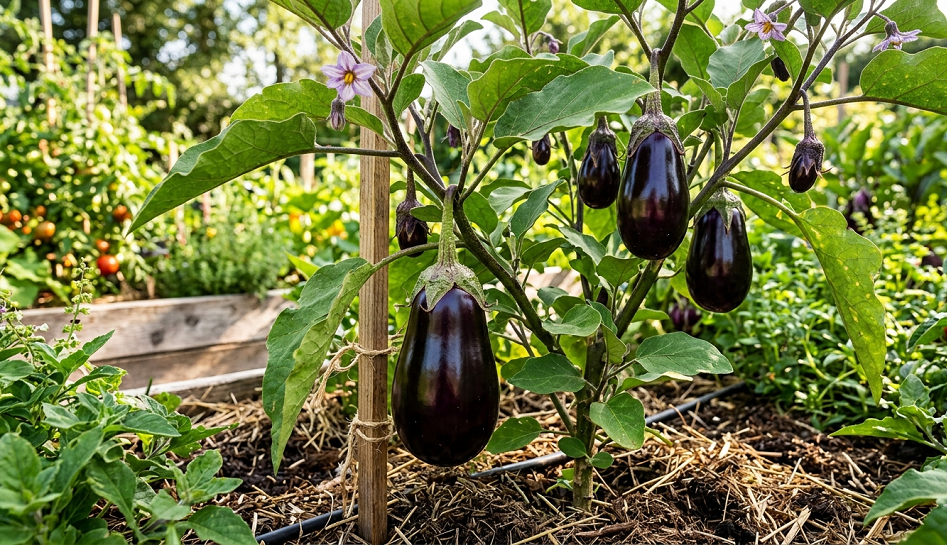
Eggplant performs like a superstar in July heat and I will die on this hill. It’s tropical in origin, it loves long hot summers, and it produces prolifically when most other crops are struggling. If you’ve avoided growing eggplant because you think you don’t like it — have you had it roasted with olive oil and garlic? Smoked over charcoal? Transformed into baba ganoush? Give it another shot.
The key to good eggplant production is heat and consistent moisture. These plants don’t like drying out completely. I water mine deeply every 2–3 days during peak summer heat, and the mulch layer I mentioned for peppers applies equally here. Stressed, drought-y eggplants get bitter and the skin turns tough. Well-watered eggplants in full sun are a completely different vegetable.
Variety matters too. I’m partial to the Italian types like Rosa Bianca and Listada de Gandia for flavor, but for sheer production in heat, the long Asian varieties like ‘Ping Tung Long’ or ‘Ichiban’ have outperformed everything else in my garden. They set fruit faster, the plants handle heat better, and they produce earlier in the season.
9. Cowpeas / Yard-Long Beans — A Legume Built for Blazing Summer Conditions
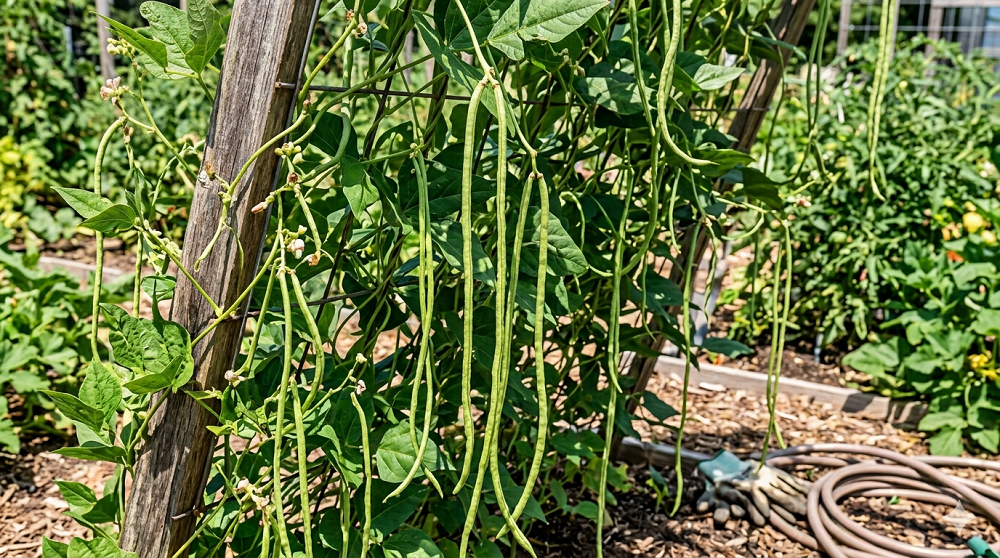
Yard-long beans (also called asparagus beans or Chinese long beans) are in the cowpea family and they want nothing to do with cool weather. These vining beans produce pencil-thin pods that can genuinely reach 18 inches in length, and they keep producing through July and August when regular snap beans have given up entirely.
The flavor is similar to green beans — slightly nuttier, with a firmer texture — and they’re fantastic in stir-fries, stews, or simply blanched and dressed with sesame oil. My Vietnamese neighbor introduced me to them about six years ago and I’ve grown them every summer since.
Give these a sturdy trellis, because the vines get tall. They’re also relatively drought-tolerant once established, though consistent moisture means better pod production. I’ve gotten 8-inch rain-season pods that were woody and tough, and beautiful 12-inch pods from plants I watered regularly. The difference in quality is worth the effort.
10. Amaranth — Grow It for Greens, for Grain, or Just Because It’s Gorgeous
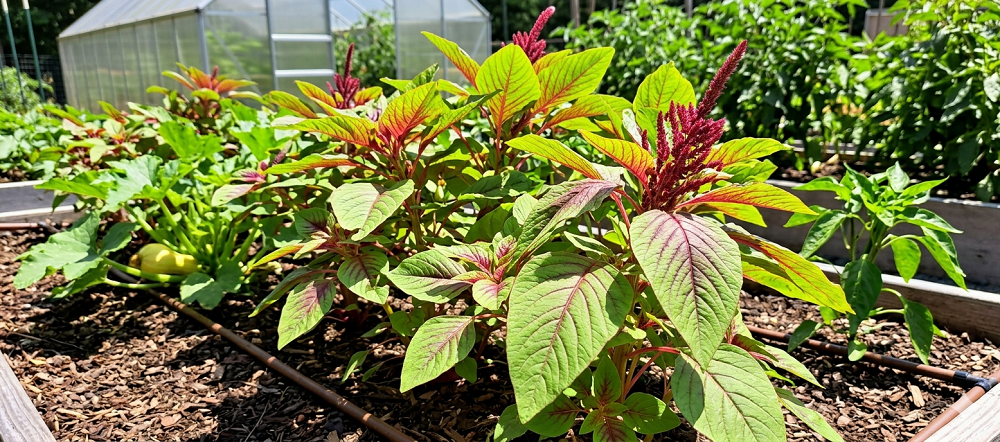
Amaranth is one of those plants that proves the garden doesn’t have to be ugly in July. The showy red, gold, and purple plumes are stunning, and the plant is completely indifferent to heat. Soil temps that would kill cool-season crops don’t even slow amaranth down.
The young leaves are edible — mild and spinach-like — and can be harvested throughout summer by pinching stem tips. Let the plant mature fully and you can also harvest the seed heads for grain. I’ve done both, though I’ll be honest: I mostly grow it because it looks incredible in the back of a mixed bed and the seeds are a magnet for goldfinches come fall.
Amaranth direct sows easily and germinates fast in warm soil. Thin to about 18 inches apart for grain production, or grow more densely if you just want greens.
11. Moringa — The Heat-Proof Tree That Produces Like Crazy
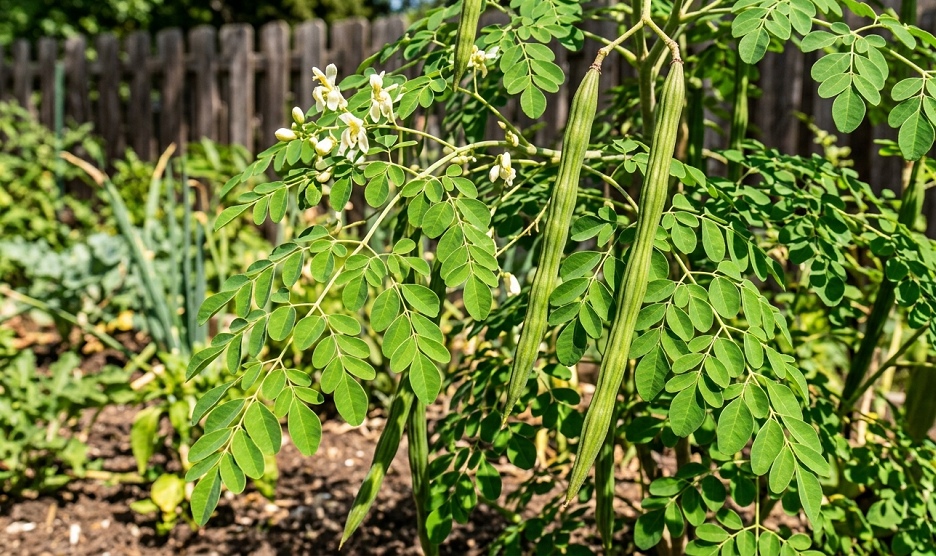
Okay, technically moringa is a tree, not a garden vegetable — but hear me out. In USDA zones 9–11, you can grow moringa as a perennial. In cooler zones, grow it as a warm-season annual. It grows extraordinarily fast (I’ve seen 6 feet of growth in a single season), and every part of it is edible: leaves, pods, seeds, and flowers.
The leaves can be harvested throughout the growing season and added to soups, smoothies, or dried for tea. The young seed pods taste somewhat like green beans. Moringa is one of the most nutrient-dense plants you can grow, and it is relentlessly heat-tolerant. Drought-tolerant too — it originated in the foothills of the Himalayas and parts of sub-Saharan Africa, where water is not abundant.
I grow moringa in a large container in my zone 6b garden, cut it down before frost, and overwinter the root in my garage. It comes back strong every spring. Is it a little high-maintenance compared to just direct sowing beans? Yes. Is the nutritional payoff worth it? Also yes.
12. Gourds and Winter Squash — Slow Starters That Hit Their Stride in the Heat
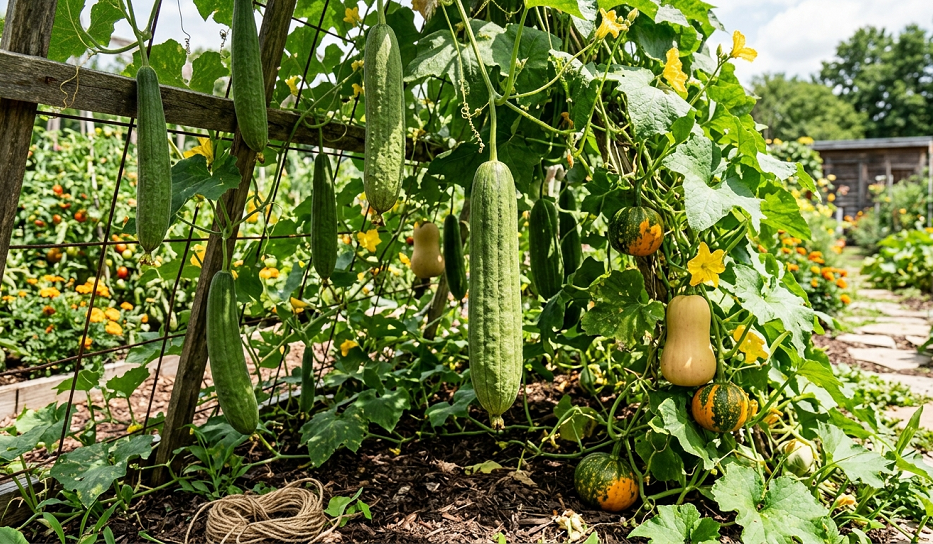
Gourds and winter squash planted in June come into peak production right when summer is at its most brutal. The vines are heat-hardy, the plants are drought-tolerant once established, and there’s something immensely satisfying about watching a butternut squash swell up during the hottest weeks of the year.
I grew a variety called ‘Seminole Pumpkin’ for the first time two summers ago on the recommendation of a Master Gardener friend, and I was genuinely amazed. It was the hottest, driest summer in recent memory, and that thing produced 15 pumpkins from two plants. It’s a Native American heirloom variety that was literally developed in Florida. Heat doesn’t scare it because heat is what it was bred for.
Give squash plenty of space — these vines travel — and plant them where they can sprawl without overtaking smaller crops. Or grow them up a very sturdy trellis (support the fruit in a sling of pantyhose or mesh if you do this).
Powdery mildew is the main villain with squash, and it hits hard in late summer. I’ve had good luck with a weekly spray of diluted neem oil once I see the first signs. Prevention beats treatment every time.
13. Sweet Corn — A July Staple That Belongs on This List
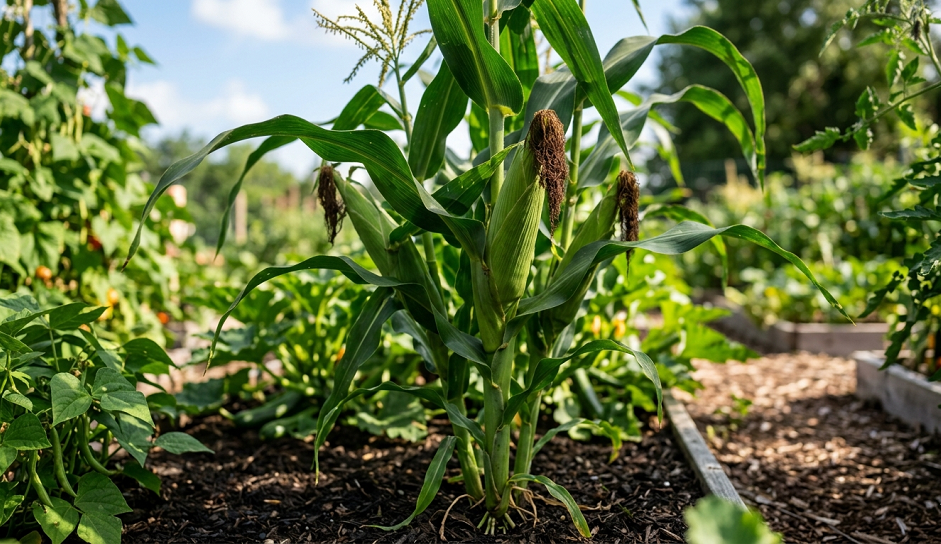
I know, I know — corn seems like a given. But I’ve talked to enough frustrated gardeners who planted corn and got nothing to know that it earns its place here. Corn is genuinely heat-tolerant once it’s past the seedling stage, and nothing — and I mean nothing — beats corn you picked 20 minutes before it hit the boiling water.
The trick with corn is mass planting. Corn is wind-pollinated, and the pollen from the tassel at the top has to fall onto the silks below. If you plant a single row, the odds of every silk getting pollinated are terrible. You’ll end up with half-filled ears and a lot of disappointment. Plant in a block: at least 4 rows wide, minimum. I plant a 4×10 block and rarely have pollination issues.
Succession plant every 2 weeks for a continuous harvest instead of having 40 ears ripen at the same time. I made that mistake my first summer — planted everything at once, had a brief, overwhelming window of perfect corn, and then nothing. My freezer was absolutely full of blanched corn kernels by August. Not the worst problem, admittedly, but succession planting is smarter.
Real Talk: What Can Go Wrong With Summer Gardening (And What’s Not Worth the Effort)
Here’s the part where I stop being an enthusiastic cheerleader and get honest with you.
Watering is everything, and drip irrigation is worth every penny. If you’re dragging a hose around your garden in 95°F heat trying to hand-water, you’re working too hard and your plants are probably getting inconsistent moisture. A basic drip system or soaker hose setup is genuinely the single best investment I’ve ever made in my garden. I fought it for years. I finally caved. I’m never going back.
Mulch is not optional in July. Bare soil in summer heat loses moisture at a terrifying rate. Three to four inches of straw, wood chips, or shredded leaves around your plants is the difference between watering every day and watering every 2–3 days. It also keeps soil temperatures more stable, which means better root health. I know it looks a little rough compared to a tidy Pinterest garden. Do it anyway.
Heat-tolerant seeds still need water to germinate. A lot of gardeners try to direct sow in July and then wonder why nothing sprouts. The top inch of soil can reach 130°F on a hot day. Seeds bake. If you’re sowing in summer, water the seed bed daily — sometimes twice a day — until germination. A light cover of shade cloth (30%) over a new seed bed makes a massive difference.
Pest pressure peaks in summer. Squash vine borers, aphids, spider mites, cucumber beetles — they all hit hard when it’s hot. I’ve found that the healthiest plants (well-watered, properly mulched, fed appropriately) fight off pest pressure better than stressed ones. It’s not magic. Stress makes plants vulnerable. Keep them healthy and you reduce, though never eliminate, your pest battles.
Some things are just not worth summer heat. I’ve given up trying to grow lettuce in July. I’ve tried shade cloth, north-facing beds, evening watering schedules, and “bolt-resistant” varieties. It’s a losing battle. Some crops belong in spring and fall. Accept it, plant the right things for the season, and use that freed-up mental energy on something that will actually reward you.
Parting Wisdom: Stop Fighting Your Climate
The best piece of gardening advice I ever got came from an old-timer at a seed swap who looked at my list of “things I want to grow this summer” and said, “Son, you’re gardening in July, not June. Plant accordingly.”
He was right. The most productive, least stressful summers I’ve had as a gardener are the ones where I leaned into the heat instead of trying to outsmart it. Sweet potatoes, okra, southern peas, peppers, eggplant, Malabar spinach — these plants are doing what they’re supposed to do in July. When you meet them where they are, gardening stops feeling like a constant battle and starts feeling like collaboration.
Your garden doesn’t owe you a spring harvest in July. But plant the right things, and it will pay you back in full.
Now it’s your turn: which of these heat-proof vegetables have you actually grown, and which ones surprised you? Or are there heat-tolerant summer crops I didn’t mention that have saved your July garden? Drop your thoughts, questions, or hard-won failures in the comments below — I read every single one, and there’s a real chance your question will help the next frustrated gardener who lands on this page.

About Syprose Kiche
Syprose Kiche is the creator and writer behind My Besuited Home, a practical home and garden website covering DIY projects, gardening, lawn care, landscaping, home improvement, and outdoor living. She focuses on turning everyday homeowner questions into clear, practical guides backed by careful research and useful real-world considerations.