
There is nothing more heartbreaking than watching a lush, vibrant lawn turn into a crunchy, brown doormat the second the summer heat kicks into overdrive. We have all been there. You look at the blistering July forecast, glance at your rising water bill, and realize you are trapped between a financial rock and a dead, crispy hard place.
The standard advice is always the same: just dump hundreds of gallons of water onto your grass every single morning. But let’s be honest. Between strict local watering restrictions, skyrocketing utility costs, and the sheer environmental guilt of wasting precious resources, drowning your yard in municipal water is not a real solution.
I learned this the hard way during the brutal summer of 2012. That was the year I tried to fight nature with my garden hose, ended up with a $400 water bill, and still managed to accidentally cook my entire front yard until it looked like a shredded wheat biscuit. It was a total disaster, but it forced me to change my strategy completely.
The good news is that you absolutely do not need to choose between a green yard and a healthy bank account. Grass is incredibly resilient if you know how to work with its natural survival mechanisms instead of fighting against them. Over the last decade, I have perfected a system that keeps my grass thriving, deep-rooted, and beautifully green through ninety-degree stretches without dragging out the sprinkler every afternoon. Here is exactly how you can do the same.
Best Lawn Mowing Height For Summer Heat
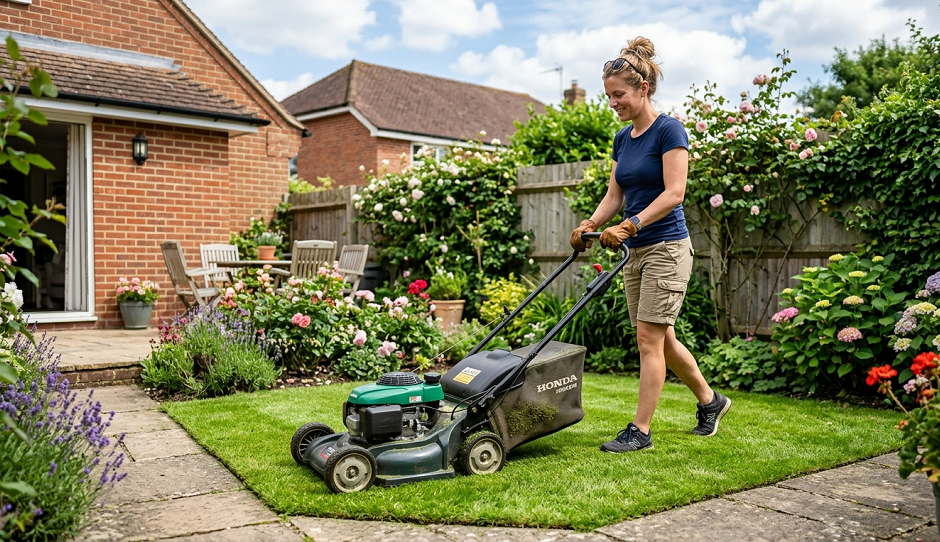
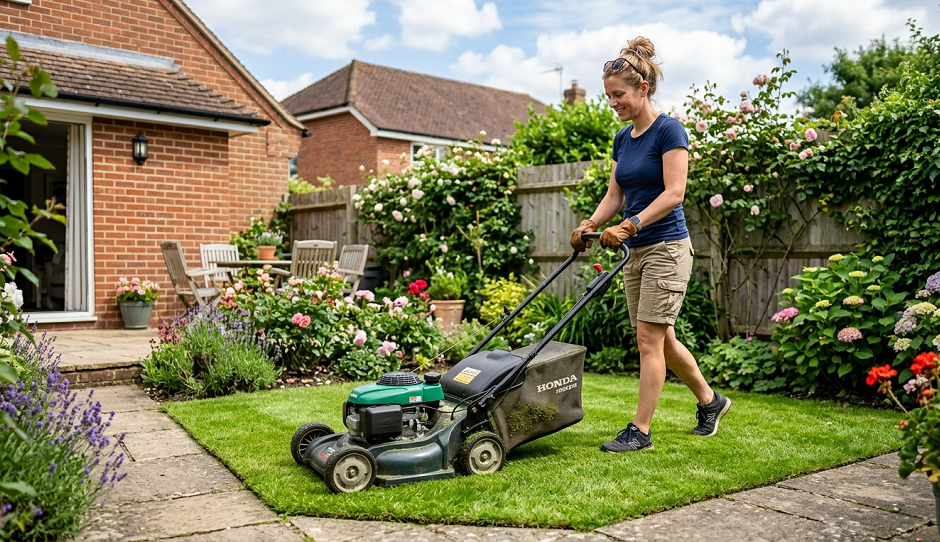
If you take only one piece of advice from this entire guide, let it be this: put away the mower settings you used in April and raise your blade as high as it will possibly go. Most homeowners treat their lawns like a golf course putting green, cutting the grass down to an inch or less because they think it looks clean and tidy. In the middle of a scorching summer heatwave, that kind of close shave is an absolute death sentence for your turf.
When you chop your grass down short, you expose the soil surface directly to the baking sun. The ground dries out in a matter of hours, baking the delicate root zones and evaporating every single drop of moisture before the plant can even think about drinking it. Short grass also forces the plant to divert all its remaining energy into growing new blades rather than maintaining a deep, heat-resistant root system below ground.
I aim for a cutting height of three and a half to four inches throughout June, July, and August. It might feel a little shaggy at first if you are used to a flat, carpet-like look, but that extra height is your secret weapon. Tall grass blades act like hundreds of tiny shade umbrellas for your dirt. They block the sun, dramatically lower the soil temperature, and stop evaporation dead in its tracks.
The difference this simple change makes is absolutely staggering. One summer, I ran an experiment and mowed my front yard at four inches while keeping my backyard short out of pure laziness. By mid-August, the backyard was a dusty, barren wasteland, while the front yard stayed remarkably green and plush without a single drop of supplemental watering. Keep your blades high, let the grass grow, and let nature shade its own roots.
Smart Grass Clippings Mulching Secrets
Stop bagging your grass clippings right now. I know the local hardware store loves to sell expensive, heavy-duty lawn bags and complicated vacuum attachments, but throwing away your clippings during a dry spell is like throwing free money and moisture straight into the garbage bin.
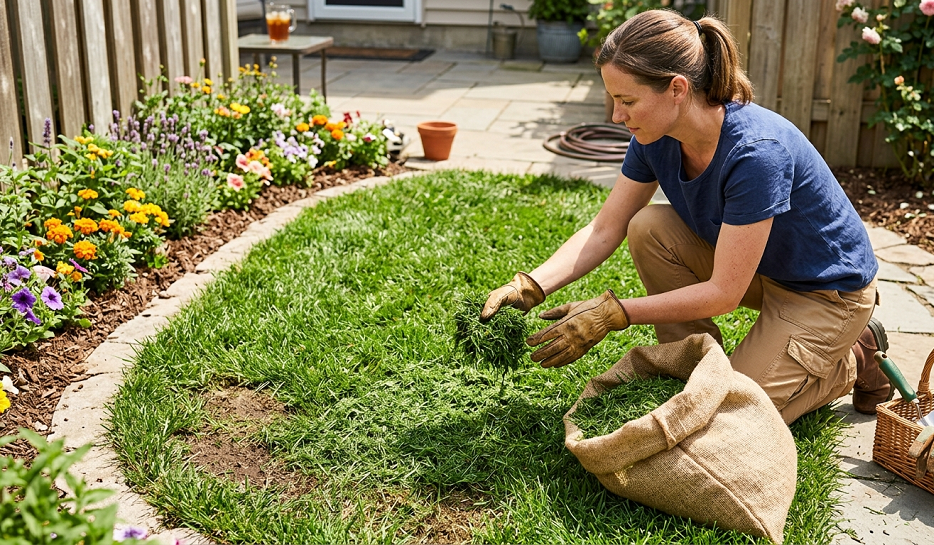
When you leave your clippings on the lawn after you mow, they slip down between the standing blades and form a thin, protective blanket over the soil surface. This is a natural mulch layer. It traps the existing moisture in the ground, prevents the wind from drying out the topsoil, and keeps the root zone significantly cooler than bare dirt ever could be.
As those clippings break down—which happens incredibly fast in hot weather—they return vital nutrients, specifically nitrogen, right back into the earth. This acts as a slow-release, organic fertilizer that feeds your grass without causing the sudden, dangerous growth spurts that chemical fertilizers trigger. It is a completely self-sustaining cycle that costs you zero dollars and cuts your yard work time in half.
The only rule here is that you need a decent mulching blade on your mower so the clippings are chopped up into tiny, easily digestible pieces. If you leave giant, wet clumps of grass sitting on top of your lawn, they will smother the turf underneath and cause ugly yellow dead spots. If you see clumps forming, just run back over them with the mower to chop them up into a fine powder that sinks right out of sight.
Deep Root Watering Methods For Drought Resistance
When people see their grass starting to droop in the July sun, their immediate instinct is to run out with a hose and give the yard a quick, ten-minute splash of water every evening. I used to do this myself, thinking I was giving my lawn a refreshing afternoon drink. In reality, this frequent, shallow watering is the absolute worst thing you can possibly do to your grass if you want it to survive a heatwave.
When you only wet the top half-inch of soil, the grass roots have no reason to grow downward. They stay right at the surface because that is where the water is. The problem is that the top inch of soil is also the very first thing to bake and dry out when the temperature climbs. You end up creating a weak, shallow-rooted lawn that is completely dependent on you watering it every single day just to stay alive.
Instead, you want to train your lawn to look for water deep in the earth. To do this, you must water deeply and infrequently. Even if you are relying purely on natural rainfall or the occasional legally permitted watering session, you want that water to penetrate at least six inches down into the dirt. This coaxes the roots to dig deep, down where the soil stays cool, damp, and completely insulated from the surface heat.
How do you know if you are watering deeply enough? Take a long screwdriver and push it into your lawn after a heavy rain or a thorough watering. If it slides easily six inches into the ground, you have done it right. If it hits a hard, dry wall of dirt two inches down, you need to slow things down and let the water soak in longer. Deep roots are the true foundation of a naturally green, drought-proof summer lawn.
Best Time To Water Lawn Professionally
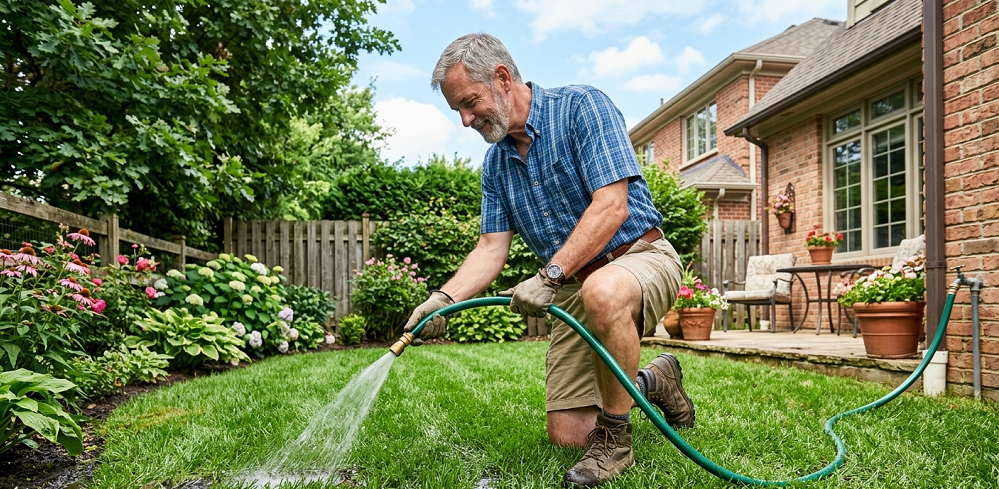
If you do find yourself needing to supplement a completely dry spell to keep your turf from dying off entirely, timing is everything. Watering your lawn in the middle of a hot, sunny day is an absolute waste of time, effort, and resources. More than half of the water coming out of your sprinkler will evaporate into the air before it even touches a single blade of grass.
Worse yet, water droplets sitting on your grass in the blistering midday sun can act like tiny magnifying glasses, scorching the blades and leaving permanent heat damage. On the flip side, watering late at night is a recipe for fungal disasters. When water sits on cool grass blades for eight to ten hours straight overnight, it creates the perfect, humid breeding ground for red thread, brown spot, and all sorts of nasty lawn diseases.
The absolute sweet spot for watering is between 4:00 AM and 8:00 AM. I know nobody wants to wake up at dawn to move a sprinkler around, but this is when the air is cool, the wind is calm, and the water has a chance to soak deep into the soil without evaporating. By the time the hot afternoon sun hits the yard, the surface grass is completely dry, but the roots are fully hydrated and ready to face the heat.
If you don’t want to wake up that early, buy a cheap, mechanical hose timer from the garden center for fifteen bucks. You screw it right onto your outdoor spigot, set it to turn on at 5:00 AM, and let it do the heavy lifting while you stay asleep. It is one of the smartest, cheapest upgrades you can make to your summer lawn care routine.
Avoid Nitrogen Fertilizer During Summer Months
There is a huge misconception that if your lawn starts to pale or lose its bright green color in July, you need to dump a heavy bag of high-nitrogen fertilizer all over it. The big commercial chemical companies love to push these “summer green-up” formulas, promising instant results. I am telling you right now to run far away from these products when the thermometer starts climbing.
Nitrogen is designed to force rapid, aggressive top growth. It tells the grass plant to produce new, tender green blades as fast as possible. The problem is that growing new tissue takes an immense amount of energy and moisture. When a heatwave hits, your grass should be resting and conservation mode, not running a marathon.
Forcing your lawn to grow rapidly in ninety-degree weather puts an immense amount of stress on the root system. The plant drains all its moisture reserves to support that fake, chemically induced growth spurt, leaving it completely vulnerable to burning out the second the weather gets even hotter. Furthermore, those tender, fast-growing new blades are incredibly weak and susceptible to pests and diseases.
If you really feel the urge to feed your lawn during the summer, stick to a light application of organic kelp meal or a specialized potassium-rich supplement. Potassium doesn’t force top growth; instead, it strengthens the cellular walls of the grass plant, making it much tougher and vastly more resistant to heat, traffic, and drought stress. Save the heavy feeding for the cool, crisp days of autumn when the grass can actually use it properly.
How To Correct Severe Soil Compaction Easily
Think of your soil like a giant sponge. When a sponge is soft, loose, and full of tiny air pockets, it easily absorbs water, holds onto moisture for days, and allows roots to move freely. But if you take that same sponge, step on it repeatedly, and let it bake in the sun, it turns into a hard, dense brick that repels water completely.
If your yard has high-traffic areas where kids play, dogs run, or you consistently walk the same path with your heavy lawnmower, the soil underneath becomes severely compacted. When rain or sprinkler water hits these hard, compacted areas, it cannot penetrate the surface. It simply runs off into the driveway or collects in shallow puddles before evaporating, leaving the grass roots underneath bone dry.
To check for compaction, take that same screwdriver test I mentioned earlier. If you can’t push a metal rod into your dry dirt without using your full body weight, your soil is choked out. The absolute best way to fix this without spending a fortune on heavy machinery is to perform a core aeration, ideally in the spring or fall, to open up the soil structure and let the ground breathe again.
As a quick side note for an immediate emergency fix during a heatwave, you can use a regular garden pitchfork to manually poke deep holes into your worst affected areas. Just press the prongs four to six inches deep into the hard soil every few inches and gently rock the handle back and forth to fracture the hardpan earth. It takes a little elbow grease, but it opens up immediate pathways for moisture to travel straight down to the root zone instead of washing away.
Liquid Aeration vs Mechanical Core Aeration Options
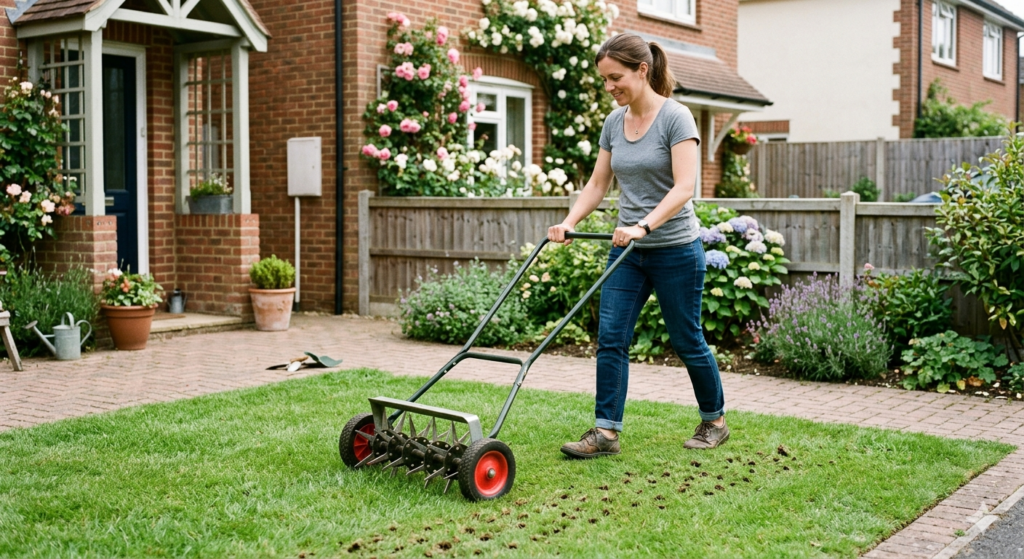
When it comes to fixing that hard, compacted soil, you will see a lot of chatter online lately about liquid aeration products. These are chemical sprays that claim to break up hard clay and compacted dirt without the physical labor of running a heavy, noisy mechanical aerator across your yard.
I decided to test these liquid aerators out a couple of seasons ago on a notoriously stubborn, hard-packed clay slope in my side yard. I sprayed it diligently according to the directions, hoping for a miracle. To be perfectly honest, I found them to be an absolute waste of time and money for severe compaction, especially when compared to old-fashioned mechanical core aeration.
Liquid aerators are essentially just advanced wetting agents or surfactants. They do help water penetrate the surface slightly better in the short term, but they do absolutely nothing to actually move physical dirt or create real, lasting space for grass roots to expand. They are a temporary cosmetic fix at best, packaged beautifully to look good on social media feeds.
Nothing beats a mechanical core aerator that physically pulls actual, finger-sized plugs of dirt right out of the ground. It creates immediate, undeniable physical space for air, nutrients, and water to flood deep into the earth. If you are dealing with a truly baked, compacted summer lawn, don’t waste your cash on miracle liquids in a spray bottle. Rent a real aerator from a local shop or stick to the manual pitchfork method for smaller areas.
The Real Talk: Managing Your Summer Expectations
Let’s sit down for a quick reality check here, friend to friend. There is a massive difference between a lawn that is naturally dormant and a lawn that is completely dead. During a severe, prolonged heatwave, it is completely normal for certain types of cool-season grasses—like Kentucky Bluegrass or Fine Fescue—to lose their brilliant emerald shine and turn a pale, dusty golden color.
This is not a sign of failure. This is the grass plant doing exactly what nature designed it to do: going into a protective dormancy state to conserve its resources until the brutal weather breaks. It is essentially hibernating. Trying to force a cool-season lawn to look like a tropical golf course in the middle of a historic drought is an exercise in futility and a guaranteed way to waste thousands of gallons of water.
Accept that your yard might look a little sleepy and golden for a few weeks in August. As long as the crowns and roots remain healthy, deeply set, and protected by high mowing habits, that grass will snap back to a vibrant, lush green the very second the cooler autumn rains arrive. Don’t panic, don’t over-manage, and don’t dump chemicals on a sleeping lawn.
Parting Wisdom for a Resilient Summer Yard
At the end of the day, successful summer gardening and lawn care isn’t about forcing nature to bend to your will using expensive inputs and endless water. It is about understanding the natural rhythm of your soil and working with the innate survival traits of your grass. By simply raising your mower blade, leaving your clippings to protect the soil, and focusing on deep root development, you can keep a yard healthy and green through the worst summer throws without draining your bank account.
Now, I want to hear from you. What is the biggest hurdle you face when trying to keep your yard alive during the summer months? Have you ever tried the high-mowing method, or are you still fighting the battle against low cuts? Drop your questions, tips, or horror stories in the comment box below—I read every single one and would love to help you troubleshoot your yard!

About Syprose Kiche
Syprose Kiche is the creator and writer behind My Besuited Home, a practical home and garden website covering DIY projects, gardening, lawn care, landscaping, home improvement, and outdoor living. She focuses on turning everyday homeowner questions into clear, practical guides backed by careful research and useful real-world considerations.