
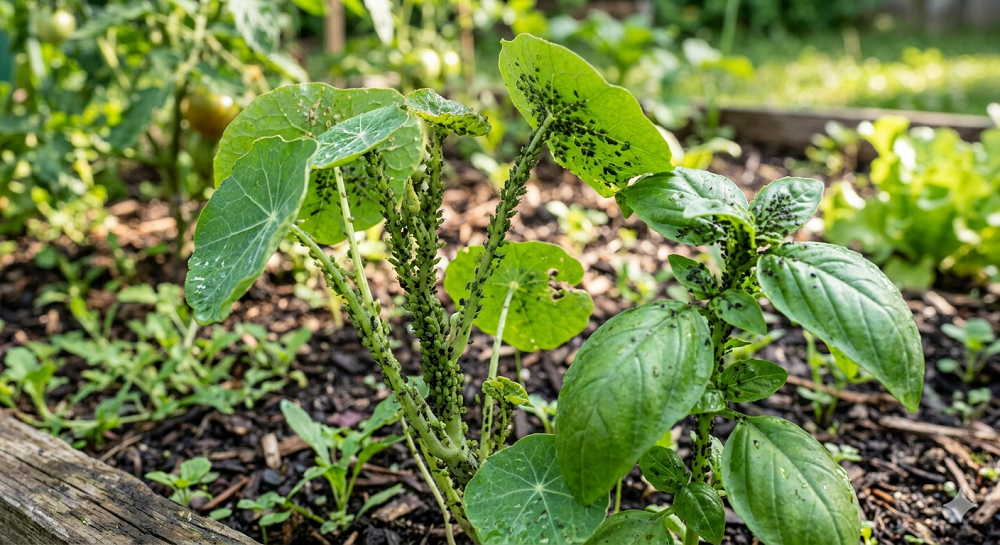
There is nothing quite like the stomach-drop moment when you roll over a pristine pepper leaf and find a squirming, crowded colony of aphids sucking the life out of your hard work. It makes you want to grab the heaviest chemical spray on the shelf and go to war. But if you care about the local honeybees and the native bumblebees buzzing around your tomato blossoms, that chemical spray is an absolute death sentence.
I learned this lesson the hard way about twelve years ago. I got overzealous with a store-bought insecticide to clear an aphid infestation on my prize-winning heirloom roses. I killed the aphids, alright. But the next morning, I found three fuzzy, motionless bumblebees turned upside down in the dirt beneath the blooms. I felt sick. It was a total wake-up call that my brute-force approach was wrecking the backyard ecosystem I had worked so hard to build.
You do not have to choose between a pest-free garden and a thriving bee population. You can absolutely protect your hard-earned harvest while keeping your local pollinators completely safe. It just takes a little strategy, some understanding of bug behavior, and a willingness to use a scalpel instead of a sledgehammer.
Let’s break down the exact methods I use every single season to wipe out aphids while keeping the bees happy, healthy, and working hard.
Blast Them Away: The High-Pressure Water Hose Trick
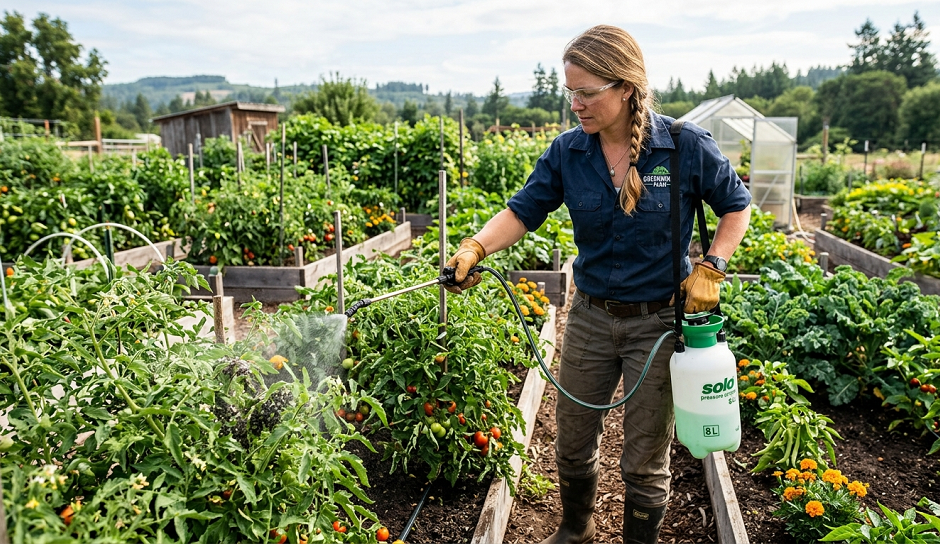
The single most effective weapon in your anti-aphid arsenal is sitting coiled up on your lawn right now. It is your garden hose. People always look at me sideways when I tell them this, thinking a high-tech pest needs a high-tech chemical solution. But simple physics wins this battle almost every single time.
Aphids are incredibly fragile creatures. They are essentially tiny, soft-walled balloons with straw-like mouths plugged into your plant’s stems. When you hit them with a sharp, concentrated blast of water, the physical impact dislodges them instantly. Once they are knocked off the plant and tumble down into the dark, damp soil mulch, they rarely have the energy or the navigation skills to climb back up before a ground beetle or a spider snaps them up for breakfast.
The trick here is to use a multi-pattern hose nozzle set to the “flat” or “sharp stream” setting. You want enough pressure to physically rip the bugs off the plant, but not so much force that you tear the leaves or break the stems. Hold the branch firmly with one hand to support it, and spray the underside of the foliage from the ground up. This upward angle is critical because aphids spend 90% of their time hiding on the bottoms of leaves to protect themselves from the hot sun and flying predators.
I make this a daily ritual for about a week when an outbreak hits. Walk the garden beds every morning with your morning coffee in one hand and the hose in the other. It takes less than five minutes per patch, costs absolutely nothing, and has zero residual impact on bees. Bees are smart; if they see a high-pressure water storm coming, they simply fly to a different part of the yard until you are done.
DIY Insecticidal Soap: The Correct Recipe for Clean Plants
When water alone isn’t cutting it, your next step should be a homemade insecticidal soap spray. Notice I said soap, not detergent. This is where a lot of backyard growers accidentally poison their soil and scorch their vegetable leaves.
Commercial dish soaps like Dawn or Joy are actually synthetic detergents designed to strip heavy grease from pots and pans. If you spray that harsh stuff onto a living plant in the heat of July, you will dissolve the protective waxy coating on the leaves, leaving your crops burned and vulnerable to diseases. Instead, you need an all-natural, vegetable-based liquid soap. Pure liquid Castile soap, like Dr. Bronner’s (unscented or peppermint), is the absolute gold standard here.
To mix this up properly, add exactly two tablespoons of liquid Castile soap to one gallon of clean, lukewarm water. Pour it into a heavy-duty pump sprayer. If you want to give it an extra kick, you can stir in a single tablespoon of horticultural oil or neem oil to help the mixture stick to the leaves, but the soap alone is usually enough to do the heavy lifting.
+————————————————————-+
| MY GO-TO BEE-SAFE SOAP RECIPE |
+———————+—————————————+
| Ingredient | Exact Measurement |
+———————+—————————————+
| Warm Water | 1 Gallon (Clean tap water is fine) |
| Pure Castile Soap | 2 Tablespoons (Must be real soap) |
| Horticultural Oil | 1 Tablespoon (Optional, for staying) |
+———————+—————————————+
Here is how the science works: the fatty acids in the natural soap break down the protective outer cuticle layer of the aphid’s soft body, causing them to dehydrate and suffocate within minutes. However, this only works while the spray is wet. Once the soap dries on the leaf, it loses its killing power completely.
Because it requires direct physical contact to work, you can easily protect bees by altering your application timing. Never spray this mixture during the middle of the day when the sun is blazing and bees are actively foraging. Instead, wait until dusk when the sun has dipped below the tree line and the bees have returned to their hives for the evening. Spray the plant thoroughly, covering every hidden nook and cranny. By the time the sun comes up the next morning, the soap will have dried, the aphids will be dead, and the arriving bees won’t be harmed at all.
Deploying Beneficial Insects: Nature’s Tiny Assassins
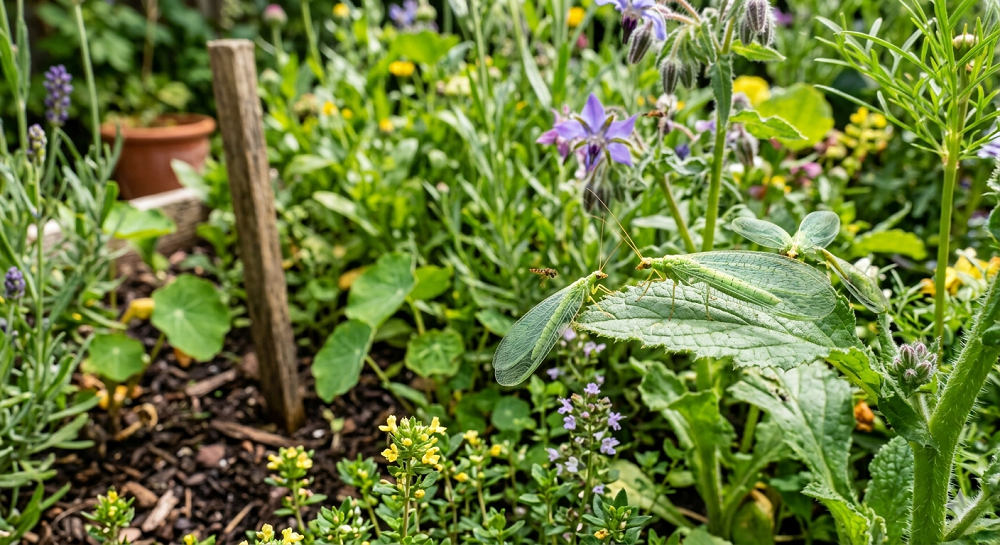
If you want to step back and let nature handle the workload, you need to start viewing your garden as a miniature wildlife safari. The quickest way to get an aphid outbreak under control without lifting a finger is to recruit the local insect predatory guild.
Most people immediately think of ladybugs, and while ladybugs are excellent aphid hunters, they have a bad habit of flying away the minute you release them from a store-bought container. If you buy a box of 1,000 ladybugs and dump them into your garden during the day, about 950 of them will immediately fly over the fence into your neighbor’s yard.
If you want a predator that actually stays put and does real damage, look for green lacewings or hoverflies. The adult forms of these insects feed primarily on nectar and pollen, meaning they act as fantastic secondary pollinators alongside your bees. But their larvae? They are absolute, remorseless aphid-eating machines. A single lacewing larva, often called an “aphid lion,” can consume up to 200 aphids per week using its curved, hollow jaws to seize and drain its prey.
To attract these helpful hunters naturally, you need to plant a diverse selection of pollen-rich flowers close to your vegetable beds. They are particularly fond of plants with tiny, cluster-style blossoms like dill, fennel, yarrow, alyssum, and cilantro.
The summer my zucchini plants took over the entire ZIP code, I noticed a massive wave of aphids moving toward my squash patch. Instead of panicking, I left a nearby row of bolted cilantro and wild yarrow completely alone. Within four days, the local hoverflies laid eggs right in the middle of the aphid clusters. By week’s end, the larvae had completely wiped out the pest population, and my zucchini kept producing until the first frost without a single drop of spray.
Companion Planting: Using Strong Scents to Mislead Pests
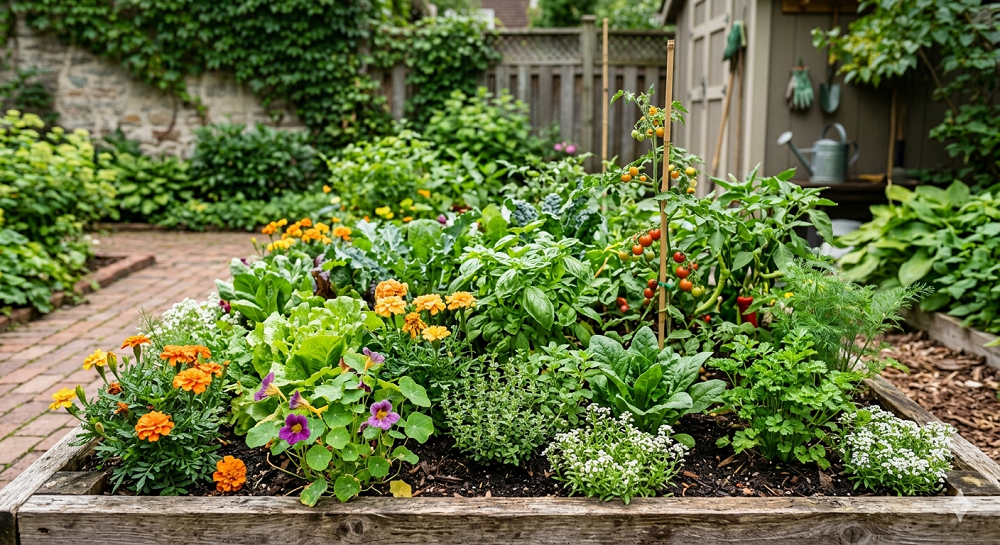
Aphids are not master navigators; they find your prize crops primarily through smell and visual cues. If you can mask the tempting scent of your tender tomato starts or crisp lettuce heads, the aphids will simply fly or crawl right past them. This is the core philosophy behind companion planting.
Intensely aromatic herbs are your best friends here. Planting alliums like garlic, chives, onions, and scallions throughout your garden beds creates an olfactory smoke screen that confuses aphids. I like to plant a ring of garlic cloves around the perimeter of my raised beds every autumn. By spring, the pungent green shoots are up, creating a natural barrier that keeps aphids from setting up shop on my vulnerable spring greens.
French marigolds are another brilliant addition. Not only do they emit a strong, musky odor that aphids detest, but their bright orange and yellow flowers act as a visual magnet for beneficial insects. Nasturtiums are also incredibly powerful, but they work on a completely different principle called “trap cropping.”
Instead of repelling the pests, nasturtiums act as a sacrificial lamb. Aphids absolutely adore nasturtiums; they find them far sweeter and more delicious than almost any vegetable. By planting a thick border of nasturtiums a few feet away from your main crops, you are essentially building a decoy city. The aphids will swarm the nasturtiums, leaving your prized peppers and eggplants completely untouched. Once the nasturtiums get heavily heavily infested, you can pull the ruined plants out, drop them into a bucket of soapy water to kill the bugs, and toss them in the trash.
Managing the Ant Connection: Shutting Down the Aphid Ranchers
You cannot truly solve a chronic aphid problem without addressing the security force protecting them. If you watch an aphid colony closely for a few minutes, you will almost certainly see ants running up and down the stems around them. This is not a coincidence; it is a highly organized, symbiotic agricultural operation.
Aphids excrete a sugary, sticky waste liquid called honeydew as they process plant sap. Ants are completely addicted to this sugar. To guarantee a steady supply, ants will actively farm, herd, and defend the aphids from natural predators like ladybugs and lacewings. I have watched an aggressive carpenter ant literally pick up a ladybug and fling it off a sunflower stalk to protect its precious aphid “cows.”
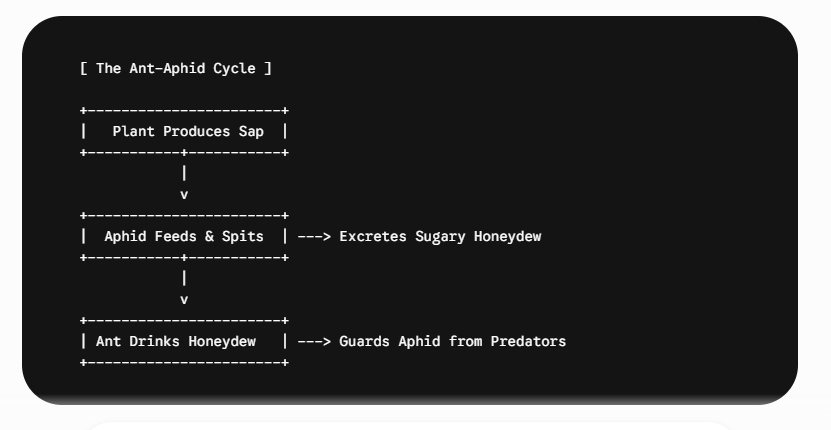
If you see ants patrolling your infested plants, your primary goal needs to be cutting off their access. The simplest way to do this on woody-stemmed plants, fruit trees, or large perennials is by applying a sticky barrier compound like Tanglefoot around the base of the main trunk.
Wrap a 3-inch strip of masking tape or tree wrap tightly around the stem about six inches above the soil line, then smear the sticky paste directly onto the tape. Never apply the sticky goo directly to the bare bark of a young plant, as it can cause damage or disease over time.
The ants will march up the stem, hit the sticky tape, and find themselves completely blocked. Deprived of their ant bodyguards, the aphid colony becomes sitting ducks for birds, ladybugs, and your garden hose. For smaller, soft-stemmed vegetables where tape won’t work, you can sprinkle a thick ring of food-grade diatomaceous earth on the dry soil around the base of the plant to deter the ants from crossing.
Real Talk: Gardening Strategies That are Total Nonsense
Let’s clear the air about a few viral gardening trends that sound fantastic on social media but are a total waste of your time, effort, and hard-earned cash.
First up: buying those tiny plastic containers of ladybugs from the local big-box nursery. I know it feels wonderful and eco-friendly to release a cloud of spotted beetles into your backyard on a sunny afternoon. It makes for a beautiful video, but from a practical standpoint, it is a gimmick.
As I mentioned earlier, those ladybugs are collected from the wild while hibernating in mountainous regions. When they wake up in your warm backyard, their instinctual biological drive tells them to fly long distances before feeding and laying eggs. Save your ten dollars and spend it on a pack of yarrow or dill seeds instead; you will get far better long-term pest control by inviting the native predators to move in permanently on their own terms.
Second, let’s talk about the internet’s obsession with spraying straight neem oil on absolutely everything at any time of day. Raw, unrefined neem oil contains a compound called azadirachtin, which disrupts the hormone systems of feeding insects. It is a fantastic tool when used correctly, but it is not a magical, consequence-free shield.
Neem oil is completely non-selective. If a honeybee lands on a leaf covered in wet, fresh neem oil and gets it on her body, it can clog her breathing pores or find its way back to the hive, disrupting the development of the young brood. Furthermore, oil acts like a magnifying glass in direct sunlight; coating your squash leaves in heavy oil at noon on a scorching summer day will bake the tissue, causing severe leaf drop. Use neem only as a targeted, late-evening option when milder steps fail.
Finally, please stop burying whole banana peels around the base of your rose bushes to repel aphids. The myth claims that the high potassium content or the smell of the decomposing skin drives them away. It doesn’t. All it actually does is invite local raccoons, skunks, and rats to dig up your root zones overnight looking for a sweet snack. Keep the banana skins in your compost pile where they belong.
Parting Wisdom for a Balanced Backyard
At the end of the day, a truly healthy organic garden isn’t one that is completely devoid of bugs; it is one where the good guys and the bad guys are locked in a stable, self-regulating balance. When you spot a handful of aphids on your kale, don’t rush to clear them instantly. A small, manageable population of pests is actually the necessary bait needed to keep the ladybugs and lacewings living in your yard. If you eliminate every single pest with zero tolerance, the beneficial predators will starve and leave, leaving your garden wide open for a massive, secondary pest explosion down the road.
Take a deep breath, reach for your garden hose first, and respect the natural rhythms of the local pollinators who make our harvests possible in the first place.
What has been your worst garden pest nightmare so far this season? Have you found a safe, chemical-free method that works wonders in your neck of the woods? Drop your thoughts, tips, or questions in the comment box right below — I read every single one and would love to swap some dirt-under-the-fingernails wisdom with you!

About Syprose Kiche
Syprose Kiche is the creator and writer behind My Besuited Home, a practical home and garden website covering DIY projects, gardening, lawn care, landscaping, home improvement, and outdoor living. She focuses on turning everyday homeowner questions into clear, practical guides backed by careful research and useful real-world considerations.