
My first Arizona summer nearly broke me as a gardener. I planted a bed full of lush lettuce, spinach, and broccoli — the same stuff that had thrived back in Ohio — and watched it all bolt, burn, and curl into sad little brown confetti within two weeks. The soil cracked like a dried riverbed. The sun was absolutely merciless. I stood there with my empty watering can and thought, “I am a complete failure.”
Turns out, I wasn’t a failure. I was just planting the wrong things.
If you’re gardening in a hot, dry climate — whether that’s the American Southwest, central Texas, the inland valleys of California, or anywhere that sees triple-digit summers and almost zero rainfall — this list is for you. After years of trial, error, and a truly embarrassing number of dead plants, I’ve narrowed it down to the 16 vegetables that actually thrive when the heat is on. Eight that love the heat, and eight that can survive low-water conditions like tiny little camels. Let’s get into it.
Why Most Gardening Advice Fails Desert and Dry-Climate Gardeners
Most gardening guides are written for USDA zones 5–7, temperate climates with reliable rainfall and cool-ish summers. When those guides say “plant in full sun,” they mean six hours of Pacific Northwest sun — not eight hours of blistering July radiation bouncing off your concrete patio.
The vegetables that survive, and even produce well, in hot and dry climates share a few traits: deep root systems, waxy or thick leaves that resist moisture loss, tolerance for alkaline soils, and a fast enough maturity window to beat the worst heat. Once I started choosing based on those traits instead of just “what looked good at the nursery,” everything changed.
Part 1: 8 Best Heat-Tolerant Vegetables for Hot Climates
1. Sweet Potatoes — The Hot-Climate MVP
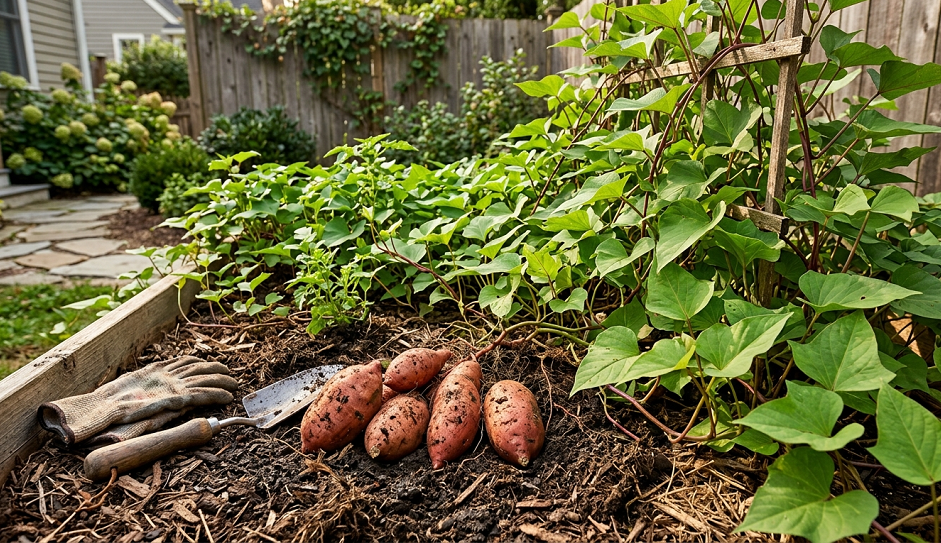
If I could only grow one vegetable in extreme heat, it would be sweet potatoes, full stop. These plants are native to tropical regions and they actually accelerate in hot weather. The vines spread aggressively (I once had them crawl under my fence and into my neighbor’s yard — she wasn’t thrilled), but that aggressive growth means they’re shading the soil and suppressing weeds while you’re not watching.
Sweet potatoes need a long growing season — about 90 to 120 days — so in very hot climates you can plant slips as early as two weeks after last frost and harvest before the ground cools. They’re also surprisingly drought-tolerant once established. I typically deep-water once a week after the first month and the plants handle the rest.
The one mistake I see people make is trying to grow them in heavy clay soil. They need loose, well-draining soil to form big, beautiful tubers. If your soil is dense, build a raised bed or mound your rows at least 10 inches high. Trust me on this — I learned it the hard way after digging up a bunch of twisted, sad little knobs that looked like they’d been stressed since birth.
Don’t bother with fancy “improved” sweet potato varieties from boutique seed catalogs. Beauregard and Covington are workhorses that perform in heat without complaint. They’re what I grow, they’re what most hot-climate farmers grow, and there’s a reason for that.
2. Okra — The Plant That Laughs at 105°F
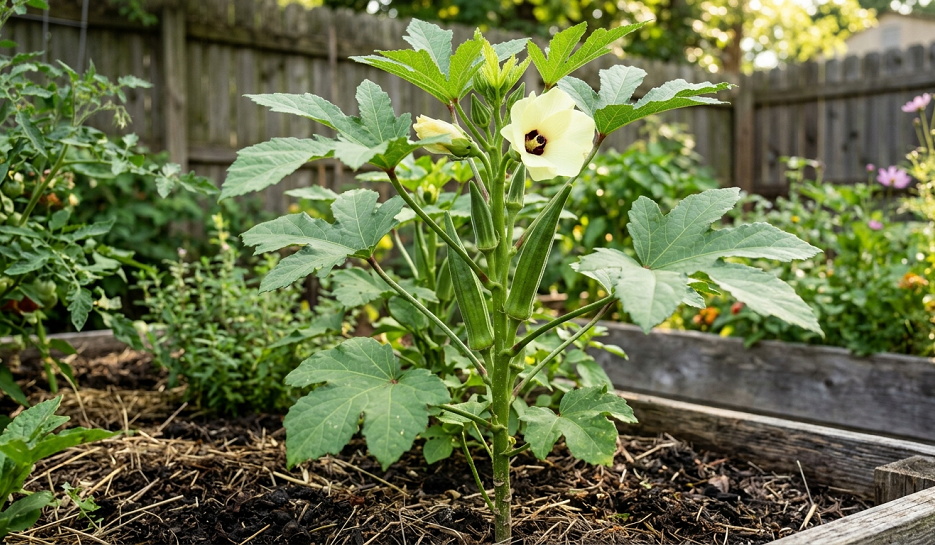
Okra doesn’t just tolerate heat — it demands it. Below 60°F it sulks. Below 50°F it basically gives up. But push it into the 90s and 100s and the stuff practically jumps out of the ground. I’ve had okra pods grow from flower to harvest-ready in 48 hours during August heat waves. If you miss the harvest window, those pods become inedible wooden clubs, which I’ve also used as stakes in a pinch.
The biggest mistake first-timers make with okra is planting it too early. Wait until your soil temperature is consistently above 65°F — at least two to three weeks after your last frost date. Cold soil stunts the taproot development, and okra that starts stressed never fully recovers. Soak seeds overnight before planting to speed up germination.
Okra is also one of the most beautiful plants in the vegetable garden, and I say this as someone who only recently started appreciating aesthetics over yield. The flowers are creamy white with deep burgundy centers, similar to hibiscus (they’re actually related). If you’ve been avoiding okra because you “don’t like slime,” try roasting it at 425°F for 20 minutes. Totally different texture. Completely converts skeptics.
For hot and dry areas, Clemson Spineless is the classic, but Jambalaya and Jing Orange are also excellent performers with slightly better drought resistance. Plant about 18 inches apart and don’t bother fertilizing heavily — in heat-stressed conditions, too much nitrogen produces gorgeous leafy plants with almost no pods.
3. Armenian Cucumber — Technically a Melon, Acts Like a Superhero
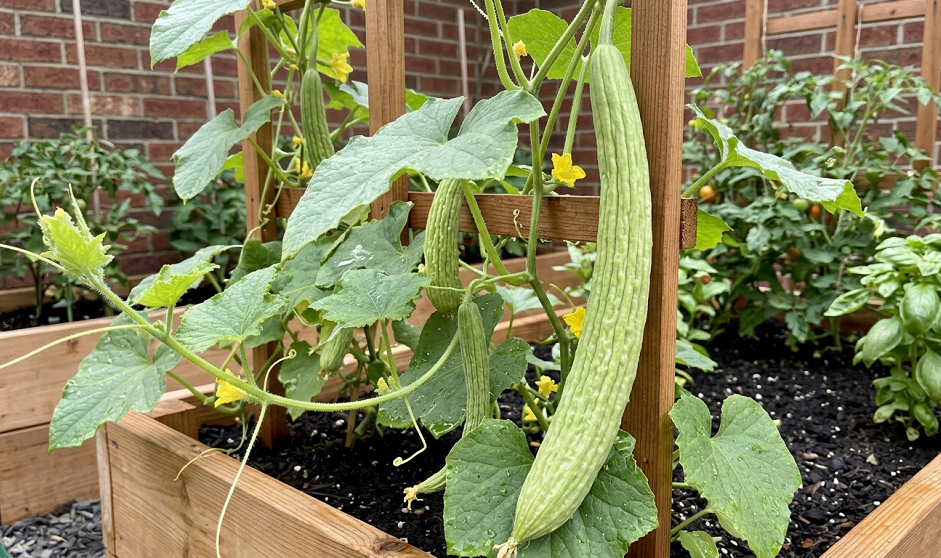
Here’s where I go slightly rogue: Armenian cucumber isn’t a true cucumber. It’s actually a variety of muskmelon, which explains why it handles desert heat like it was born there — because it basically was. I discovered it at a farmers market in Phoenix years ago, brought home one fruit, saved the seeds, and have been growing it every summer since.
The fruits are light green, ribbed, and can grow up to three feet long if you let them. I harvest them around 12 to 15 inches for the best texture. The flavor is mild and cool, like a cucumber but with a slightly smoother skin. Unlike regular cucumbers, it doesn’t turn bitter in heat and it doesn’t need as much water to set fruit.
Armenian cucumber needs a trellis — without it, the sprawling vines become a tripping hazard and the fruits curl into bizarre shapes. A simple cattle panel or T-post fence works perfectly. I run mine along the south-facing fence of my garden, where they catch maximum sun and the trellis keeps airflow going to prevent powdery mildew.
Germination is fast in heat — usually five to seven days — and you’ll see your first harvest in about 70 days from transplant. In my experience, one or two plants produce more than enough for a family. The summer I planted four, I was leaving bags of cucumbers on my neighbors’ porches like a covert cucumber operative. Plant two. You’ll thank me.
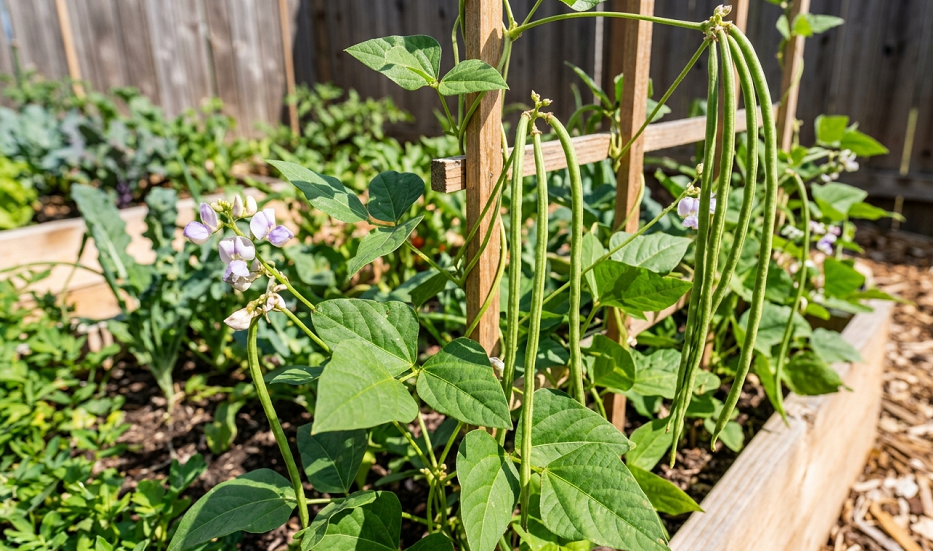
4. Yard-Long Beans — When Regular Green Beans Give Up
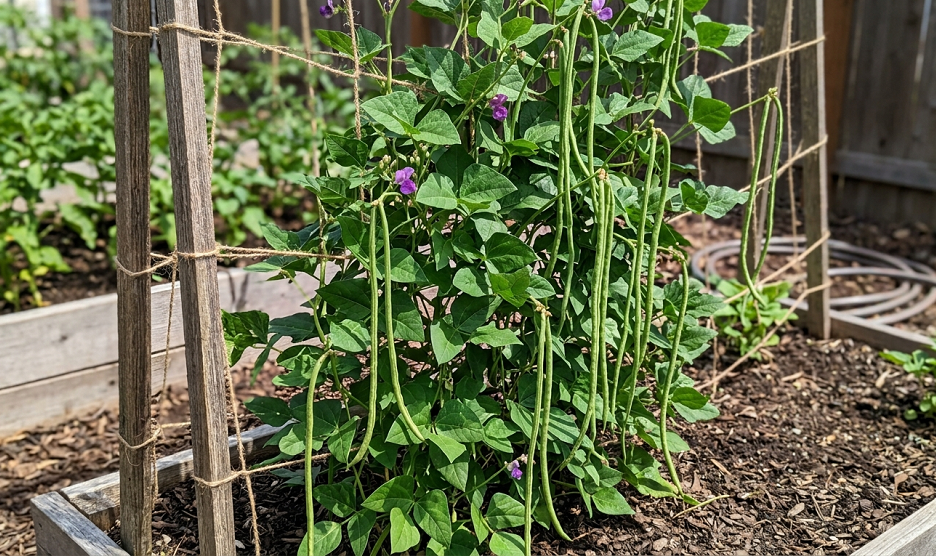
Standard green beans are not heat-lovers. Above about 90°F they drop their flowers and stop producing. Yard-long beans (also called asparagus beans or Chinese long beans) are an entirely different species — Vigna unguiculata — and they’re built for the tropics. They produce reliable harvests well into summer when other legumes have tapped out.
The pods grow, predictably, to about 18 inches to two feet long, and they’re best harvested before they start to bulge with seeds. The flavor is more complex than a regular green bean — slightly nuttier, slightly denser. I stir-fry them with garlic and chili and they’re one of the best things my garden produces all year.
Like Armenian cucumber, yard-long beans need a strong trellis. They’ll climb six feet easily. I’ve used everything from bamboo teepees to old livestock panels and they’re perfectly happy as long as they have something to grab. Give them full sun, water at the base (not on the leaves), and don’t over-fertilize — too much nitrogen in legumes gives you vines and no beans.
Seed these directly in the ground after soil reaches 70°F. They don’t love being transplanted. Germination happens fast in warm soil, usually four to six days, and you’ll be harvesting within 60 to 80 days. These are a true hot-climate gardener’s secret weapon, and I’m always baffled that more people don’t grow them.
5. Malabar Spinach — Spinach That Doesn’t Bolt in July
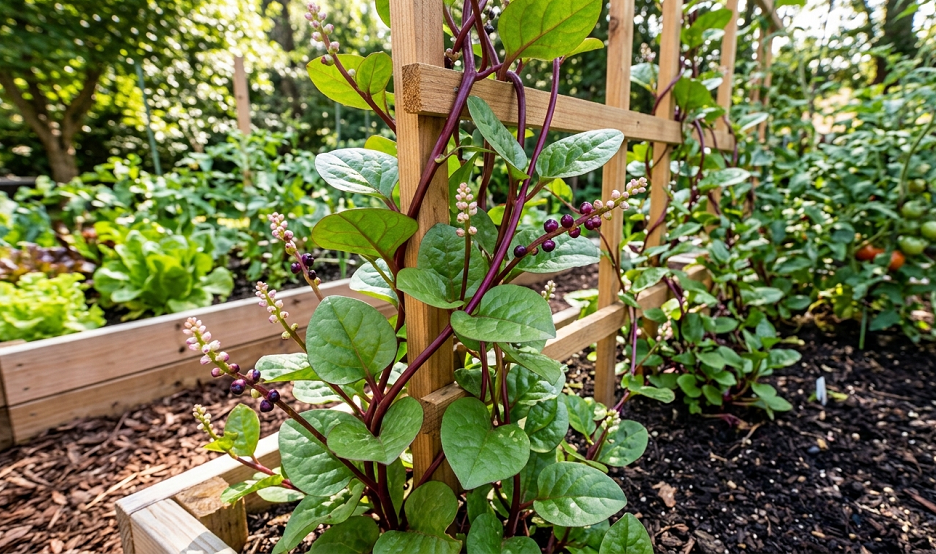
Real spinach is a cool-season crop. Plant it in summer heat and it bolts before you can harvest a single salad. Malabar spinach is not real spinach — it’s a tropical vine with thick, glossy, dark green leaves that tastes remarkably similar once cooked. The stems have a slightly mucilaginous quality raw (similar to okra), but cooking removes it.
The plant is gorgeous. Honestly, it’s one of the most ornamental things in my summer garden. Red-stemmed varieties look almost architectural climbing a trellis, with waxy leaves that shimmer in the heat. I’ve had garden visitors ask me what exotic tropical plant I was growing, and I get to say, “That’s my dinner.”
Malabar spinach is a slow starter — give it warmth and it takes two to three weeks to really wake up. Once it does, it grows fast and is incredibly productive. I harvest outer leaves continuously and the plant keeps pumping them out until frost. In frost-free areas, it’s essentially perennial.
For hot, dry climates, this is genuinely one of the most underrated greens you can grow. It handles heat above 100°F without flinching, and while it prefers regular water, it tolerates short dry spells better than most leafy greens. If your household eats sautéed greens, stews, or curries, grow this. I cannot recommend it highly enough.
6. Southern Peas (Black-Eyed Peas and Crowder Peas) — Old-School, Built Different
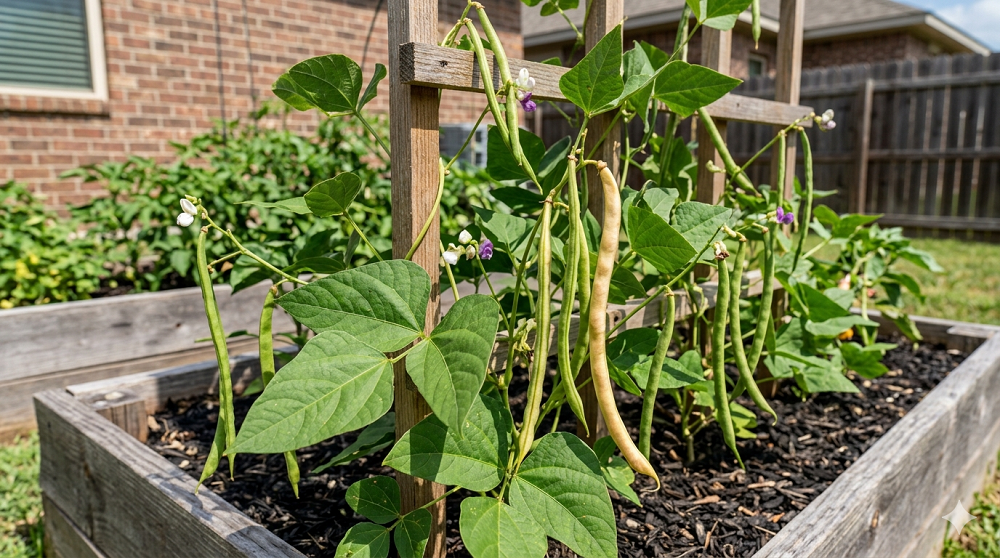
Southern peas have been a staple of hot-climate agriculture in the American South for centuries, and they earned that reputation honestly. These are among the most heat and drought-tolerant legumes you can grow, and they fix nitrogen while they’re at it — so they’re improving your soil while producing food. That’s the kind of overachiever I can get behind.
Black-eyed peas, crowder peas, and purple hull peas all fall into this category. I’ve grown all three and my personal favorite for both yield and flavor is the Mississippi Silver crowder pea. It produces abundantly, tolerates clay-heavy soil better than most, and the shelled peas freeze beautifully for months of use.
Southern peas are direct-seeded, full-sun crops that want warm soil. Don’t start them indoors — they don’t like root disturbance, and transplant shock in heat is brutal. Direct seed after your last frost once soil hits 65°F or above. Thin to about eight to ten inches apart. They don’t need much fertilizer and actually prefer lower-nitrogen conditions to produce well.
One honest caveat: shelling peas is a project. If you want fresh-shelled peas, plan to spend an evening on the porch doing it. I actually love this part — it’s meditative. But if you’re expecting a quick harvest, go with snap varieties that you can eat pod and all.
7. Eggplant — A Mediterranean Native That Loves the Burn
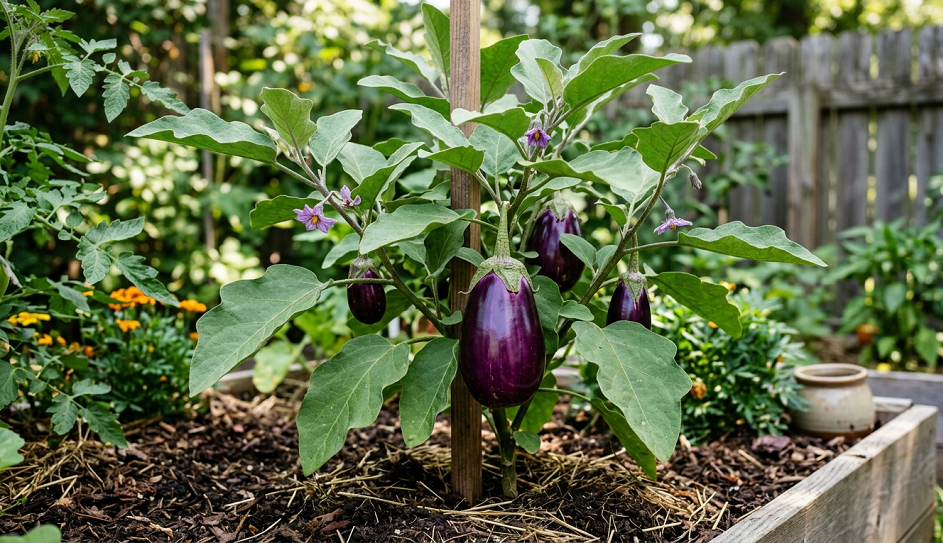
Eggplant is native to South Asia and thrives in the same conditions that kill most European vegetables. It wants heat, it wants sun, and it rewards patience. The plants take a while to establish — they look almost comatose for the first few weeks — but once the soil temperature is consistently warm and they find their footing, they produce heavily right through the hottest part of summer.
I’ve had eggplant outlast everything else in my garden. Tomatoes crack, peppers stall, squash surrenders to vine borers, but eggplant just quietly keeps going. Japanese and Chinese eggplant varieties (long, slender, thin-skinned) are my preference for heat — they set fruit at higher temperatures than the big globe Italian varieties.
One thing I’ve learned: eggplant is a flea beetle magnet. Those tiny little jumping beetles chew holes in the leaves and can stress young plants severely. Cover transplants with floating row cover for the first four to six weeks, then remove it to let pollinators in once plants are established and can handle some pest pressure without folding.
Water deeply but infrequently — eggplant prefers this over shallow, frequent watering. Once the plant is established, it handles dry spells surprisingly well. If you haven’t grown eggplant because it seems complicated, try a Japanese variety like Ichiban or Ping Tung Long. They’re forgiving, prolific, and absolutely delicious roasted or grilled.
8. Hot Peppers — Plants That Sunbathe While Everything Else Cries
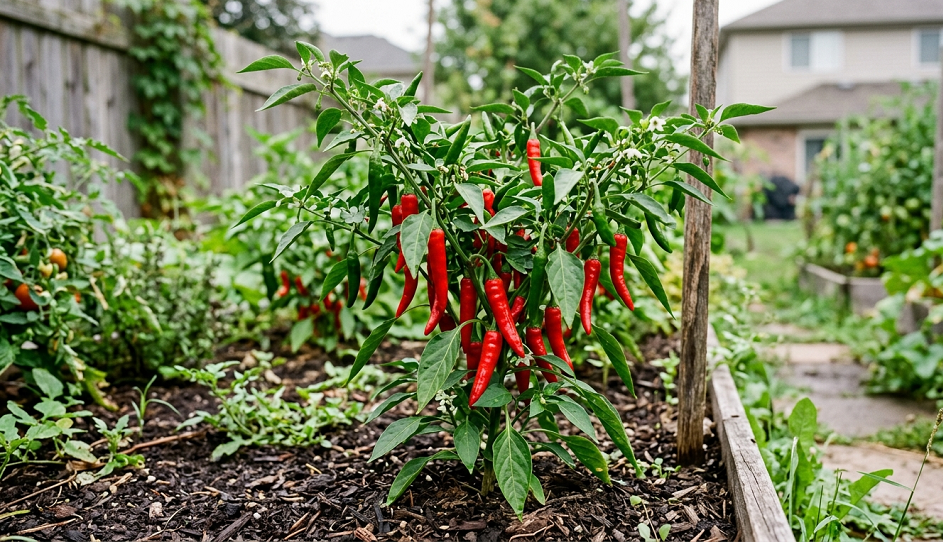
I’ll be honest: I have a personal bias toward hot peppers. I grow more varieties than any rational person needs. But from a purely practical standpoint, hot peppers are simply the most reliable performers in extreme heat. They don’t just tolerate it — the heat concentrates their flavor and capsaicin content, producing better fruit than you’d get in a mild climate.
Jalapeños, serranos, cayennes, Thai chilis, and small habanero types all thrive in hot, dry conditions. Large-fruited peppers like poblanos and Anaheims also do well, though they prefer slightly cooler nights to set fruit. In areas with very hot nights (above 80°F), stick to smaller-fruited varieties for more reliable production.
Peppers need well-draining soil and consistent moisture while they’re flowering — inconsistent watering during fruit set causes blossom drop and cracked fruit. Once they’re loaded with green peppers, you can back off the water a bit. Mulch heavily around the base to hold moisture and keep soil temps moderate.
A quick side note: If you’re in a short-season hot climate (like higher-elevation desert), start peppers indoors 10 to 12 weeks before your last frost. Peppers are slow to mature — most varieties need 70 to 90+ days from transplant — and you want as much of a head start as possible before monsoon season rolls in.
Part 2: 8 Best Drought-Tolerant Vegetables for Dry Climates
9. Tepary Beans — The Most Drought-Tolerant Bean on Earth
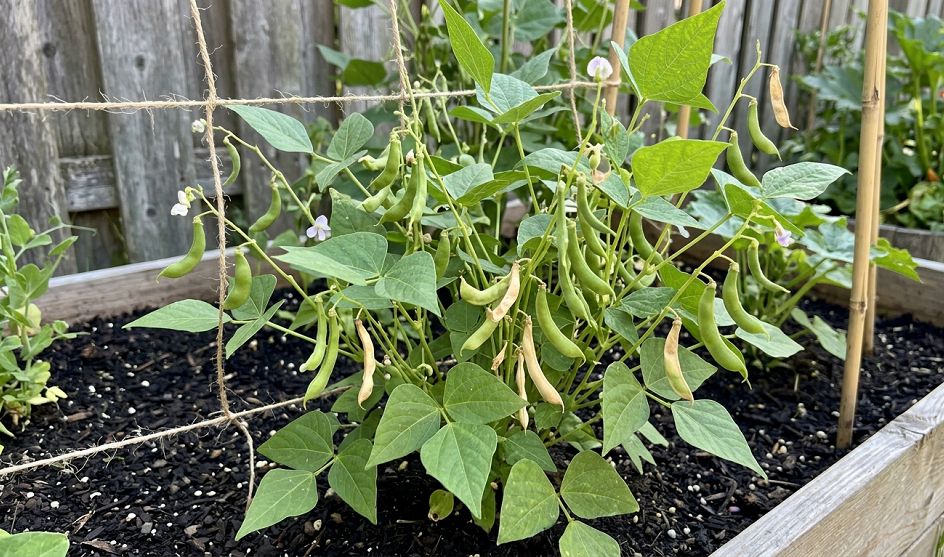
Tepary beans have been cultivated in the Sonoran Desert for over 5,000 years. That is not a plant that stumbled into dry-climate agriculture by accident — it’s genetically engineered by millennia of desert farming. The root system on these things is extraordinary. They’ll find water that other plants can’t access, pulling moisture from deep in the soil with minimal supplemental irrigation.
The beans themselves are small, dense, and highly nutritious — higher in protein than most common beans, and with a rich, earthy flavor that’s excellent in soups, stews, and traditional Southwest dishes. White tepary and brown tepary are the most commonly grown. I’ve also grown blue speckled tepary and the flavor is outstanding.
Plant tepary beans directly in warm soil after last frost. Don’t start them inside. Once established — typically after the first three to four waterings — you can dramatically reduce irrigation. In true desert conditions, some traditional growers water tepary beans little to no more than natural rainfall once established. I water mine once a week during dry spells and they produce abundantly.
This is a bean that deserves far more mainstream attention than it gets. It’s one of the most sustainable crops you can grow in a water-scarce environment and the flavor beats a standard pinto any day in my opinion.
10. Amaranth — Ancient, Edible, and Basically Indestructible
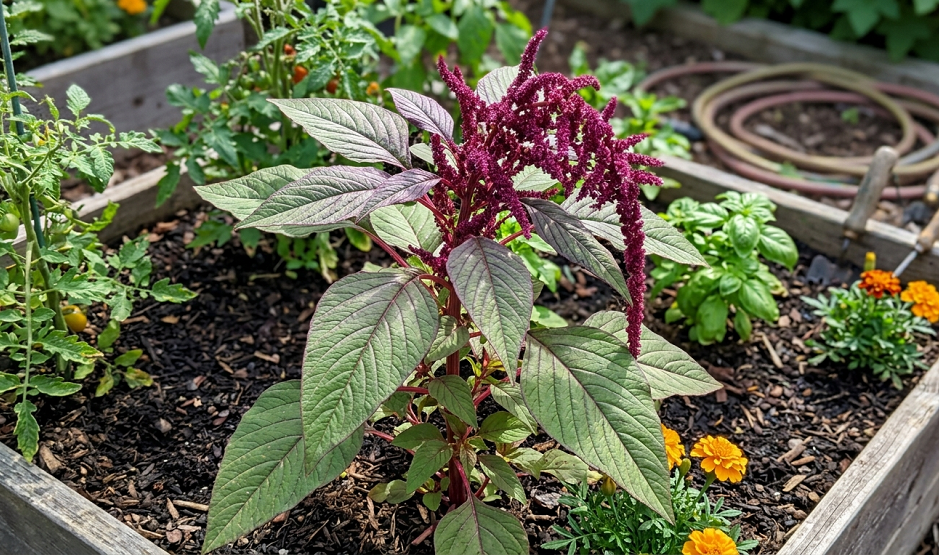
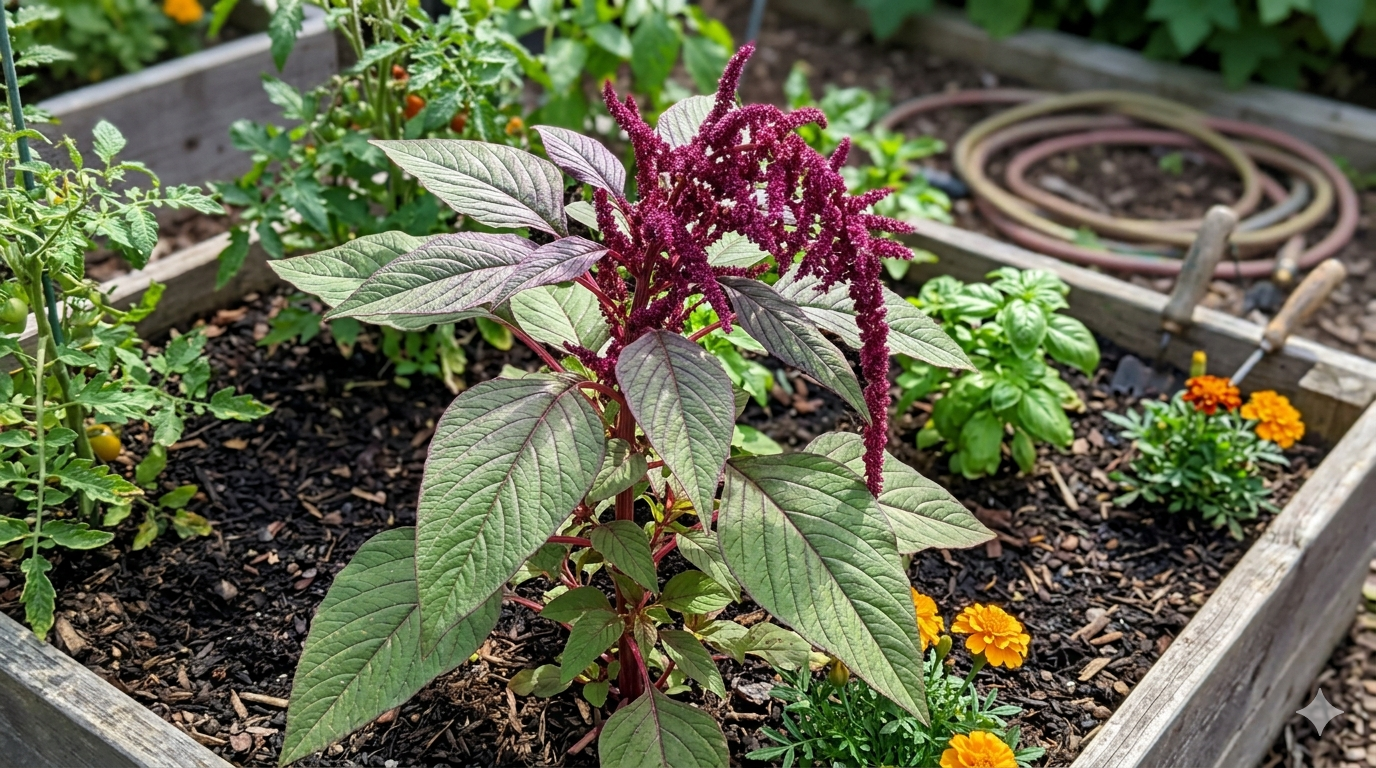
Amaranth is grown both for its grain and its leaves, and in hot, dry climates, it’s one of the most versatile plants you can have in the garden. The leaves are edible like spinach — actually nutritionally superior to spinach — and the seed heads produce enormous quantities of tiny, protein-rich seeds that can be cooked like quinoa or popped like popcorn.
The plants are genuinely stunning. Some varieties grow six to eight feet tall with dramatic magenta or golden plumes. I’ve had visitors mistake my amaranth patch for an ornamental garden. It’s a dual-purpose plant: beautiful and productive, which is a combination I deeply appreciate.
Amaranth’s drought tolerance comes from its C4 photosynthesis — the same metabolic pathway that makes corn efficient. It uses water far more efficiently than most vegetables, which is exactly what you want in a water-scarce garden. Germination needs moisture, but once seedlings are six inches tall, they’re remarkably self-sufficient.
Direct seed in warm soil at the soil surface — don’t bury amaranth seeds, they need light to germinate. Thin seedlings to 12 to 18 inches for leaf production, or 24 inches if you’re growing for grain. For the edible greens, harvest young leaves regularly and the plant will continue producing side shoots throughout the season.
11. Cowpeas (Not to Be Confused with Southern Peas) — Desert Farming Staple
While I listed Southern peas as a heat-tolerant crop, cowpeas deserve their own mention specifically for drought tolerance. Certain cowpea varieties — particularly those developed for dryland farming in West Africa and South Asia — have remarkable water efficiency that goes beyond what typical garden legumes can manage.
Varieties like Iron and Clay cowpeas, or traditional varieties like California Blackeye No. 5, can produce on minimal irrigation in sandy or loamy soils. They’re also excellent cover crops for off-season soil building — plant them after your spring garden finishes and they’ll fix nitrogen and shade out weeds with almost no supplemental water.
For edible harvest, they’re functionally similar to the Southern peas I described earlier. But if water conservation is your primary concern rather than just heat tolerance, seek out dryland-specific cowpea varieties from seed libraries or regional seed companies. The difference in water use between a generic garden bean and a dryland cowpea is genuinely significant.
12. Purslane — The Weed You Should Be Eating
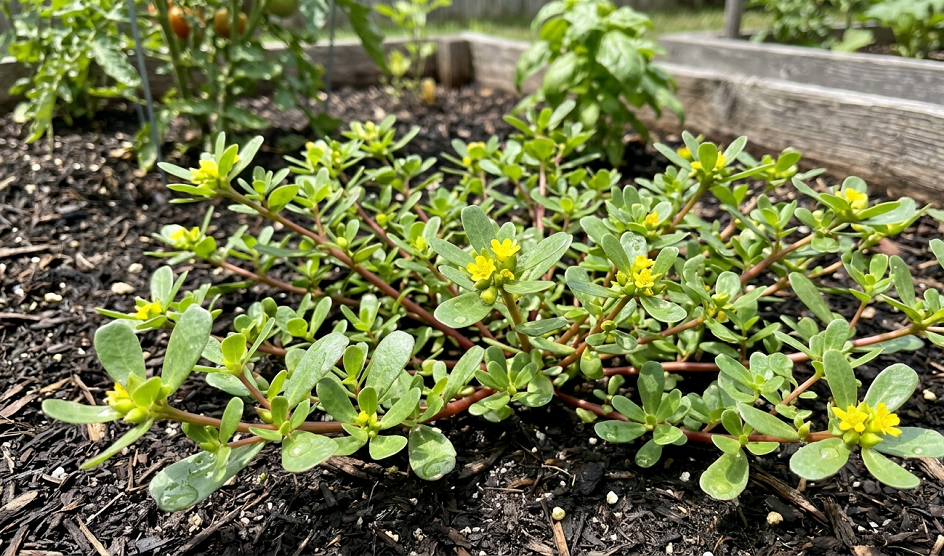
Here’s an unpopular opinion: purslane is one of the most nutritious and drought-tolerant vegetables you can grow, and most people are pulling it out of their gardens and throwing it away. Common purslane (Portulaca oleracea) is technically a weed, but golden purslane is a cultivated variety with larger, thicker leaves and excellent flavor. I actively grow it.
Purslane stores water in its thick, succulent leaves and stems — it’s essentially a succulent vegetable. It can go weeks without water and still produce fresh, edible growth. The flavor is slightly lemony and slightly mucilaginous, excellent in salads, sautéed, or pickled. It’s also extraordinarily high in omega-3 fatty acids for a land plant — higher than most fish, ounce for ounce.
I’ve found that golden purslane from a seed company produces cleaner, milder-flavored plants than foraged common purslane. Seed it directly in warm soil — it germinates fast and grows low and spreading. Harvest the stem tips regularly to keep it compact and encourage new growth.
If you have purslane volunteering in your garden beds, taste it before you pull it. You may already be growing one of the best drought-tolerant vegetables on the planet and not even know it.
13. Chard (the Right Way, in the Right Season) — The Leafy Green That Keeps Giving
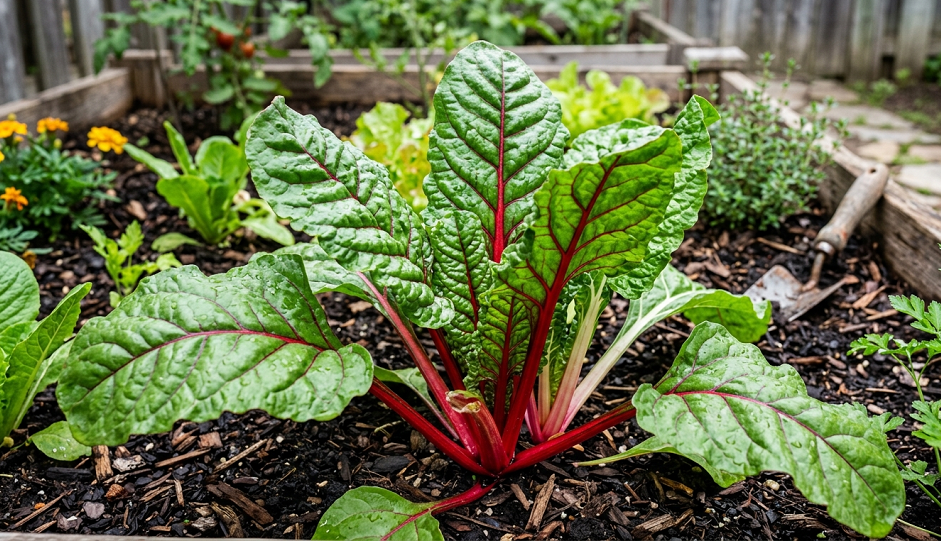
Swiss chard gets a bad reputation in hot climates because people plant it the same way they’d plant it in Seattle, and then it struggles. Here’s the real strategy: plant chard in late summer, four to six weeks before your last predicted heat break, and let it establish during the tail end of hot weather. It’s actually somewhat heat-tolerant compared to other leafy greens, and once temperatures drop into the 80s and 70s, it explodes with production and keeps going through winter.
In mild-winter dry climates (think low-desert Southwest), chard planted in September or October will produce for six to eight months straight. I’ve harvested from the same chard plants from October through April. That’s extraordinary longevity for a vegetable.
Chard needs moderate water compared to other leafy greens, and it handles dry spells with more grace than spinach or lettuce. Mulching heavily around the base cuts water needs significantly. For best production, fertilize with a balanced fertilizer once a month and harvest outer leaves consistently to keep the plant producing.
I personally grow Fordhook Giant for the most reliable production in hot conditions, though Rainbow chard is a close second. I’ll be straight with you: rainbow chard tastes exactly like regular chard despite what Instagram might imply. Grow whichever one you actually want to eat.
14. Winter Squash (Planted in Summer) — A Desert Agriculture Legend
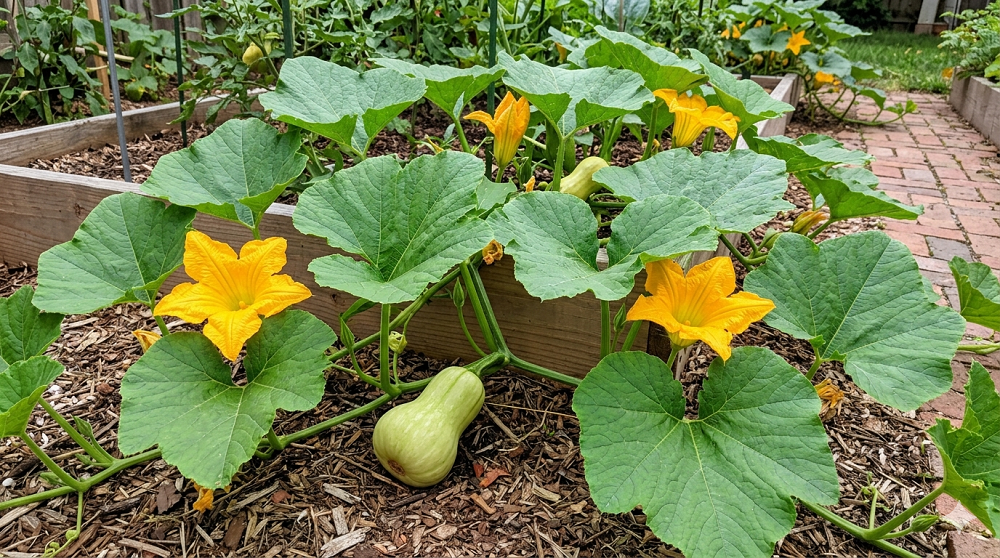
Winter squash — acorn, butternut, delicata, Hubbard — can be remarkably drought-tolerant once established. The key that most people miss is timing. In hot climates, you plant winter squash in summer for a fall harvest, not in spring like you would in a northern climate. A mid-July planting in the desert Southwest means harvest in October and November, when conditions are perfect.
Once winter squash vines hit four to six feet long, they develop an impressive root system that can access deep soil moisture. I typically water weekly with deep, slow irrigation (drip works beautifully here) and the plants handle the heat and dryness without serious stress.
The variety that absolutely dominates in dry climates is Hopi Orange — a traditional Hopi squash that was literally bred in the desert for the desert. It’s not always easy to find at mainstream nurseries, but specialty seed companies and seed libraries often carry it. The flavor is exceptional, the storage life is long, and the drought tolerance is real and documented.
Squash vine borers are the main enemy of squash in most of the continental U.S. In true desert conditions above 6,000 feet elevation, the borer pressure is often lower. Below that, row cover for the first several weeks and vigilant stem inspection are your best defenses.
15. Garlic (Planted in Fall) — The Easiest Harvest I’ve Ever Had
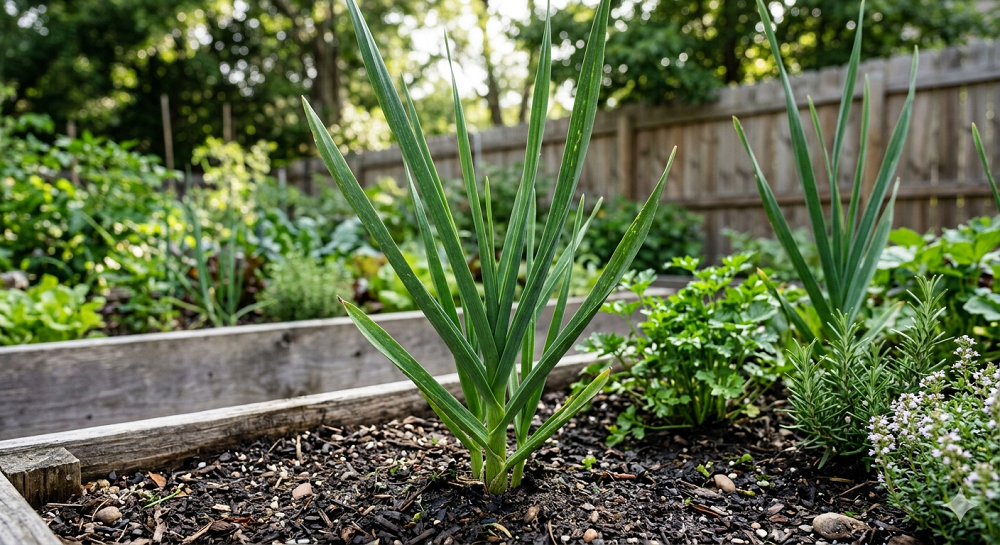
Garlic is drought-tolerant by design — it grows actively during fall and winter when moisture is most available, and then as the weather heats up in spring, it’s already setting bulbs and naturally winding down. By the time summer heat arrives and water stress kicks in, your garlic is already done and curing in a shady corner of the garage.
Plant garlic cloves in fall (October through December in most warm climates), mulch heavily, and let winter rains and modest supplemental irrigation do the work. By late spring, when you pull back the browning foliage and dig up bulbs the size of your fist, you’ll feel like a magician.
I use hardneck varieties like Chesnok Red and Music, which have outstanding flavor and store well. Softneck varieties braid nicely and store even longer, but I find the flavor of hardnecks more complex. That’s a personal preference call.
One honest thing about garlic: the grocery store myth that “you can plant any garlic clove” is partly true, but store-bought garlic is often treated with growth inhibitors and may not perform well. Source seed garlic from a reputable supplier or a local garlic grower. The difference in germination rate and bulb size is noticeable.
16. Moringa — The Tree Vegetable That Thrives on Neglect
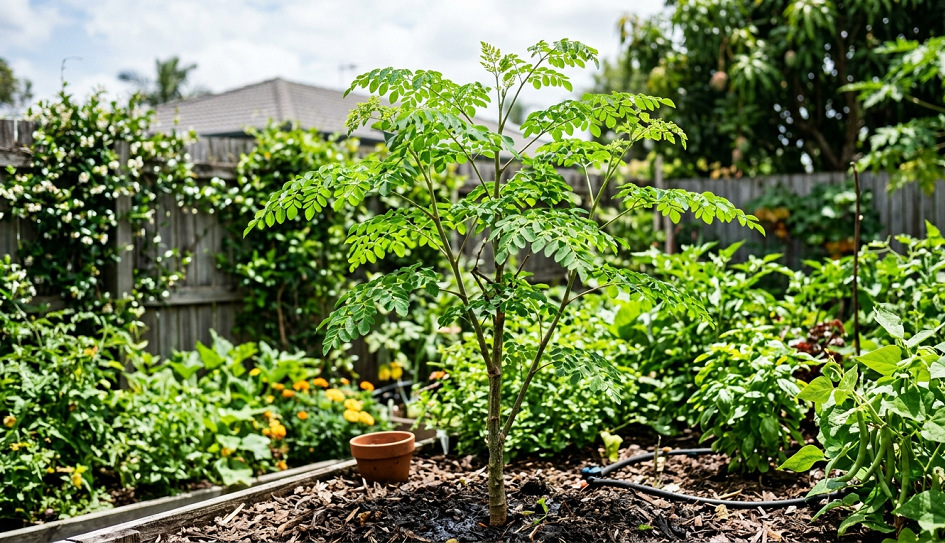
Moringa is technically a tree, but in gardening practice, it’s grown as a vegetable crop — harvested young for its edible leaves, pods, and even flowers. It’s native to South Asia and thrives in hot, dry, tropical conditions with minimal care. In frost-free climates, it’s perennial. In climates with light frost, it dies back and regrows from the root. In climates with hard freezes, you grow it as an annual.
The leaves are extraordinarily nutritious — gram for gram, higher in protein, calcium, and vitamin C than most common vegetables. The flavor is mild and slightly peppery, excellent in stir-fries, soups, or blended into smoothies. Once I tried fresh moringa leaves in a curry, there was no going back.
What makes moringa ideal for dry climates is its deep taproot — once established, it accesses subsoil moisture and can go weeks without irrigation in conditions that would collapse most garden crops. The key word is “established.” Young seedlings need regular water for the first month or two. After that, you can seriously reduce irrigation and the plant will handle itself.
You can grow moringa from seed or from cuttings. Cuttings establish faster. Plant after any frost danger is completely past in a full-sun location with well-draining soil. Don’t coddle it — I once gave a moringa plant too much water and fertilizer and it grew so fast the trunk split. Plant it, water it in, and mostly leave it alone.
Real Talk: What’s Not Worth the Effort in Hot, Dry Climates
Let me save you some money and heartbreak.
Lettuce and spinach in summer: I’ve read dozens of articles suggesting shade cloth and afternoon protection can make summer lettuce work. It can — barely, briefly, in ideal conditions. For the amount of effort and the volume of harvest, it’s simply not worth it in real summer heat. Grow your cool-season greens in fall and winter, when they’ll thrive. Grow Malabar spinach and amaranth in summer for greens. Don’t fight the season.
Corn in small, water-scarce gardens: Corn is a heavy water user and requires a large block planting for pollination. In a water-scarce environment, the water-to-yield ratio is poor compared to almost anything else on this list. If you love fresh corn, buy it locally and use your garden water budget on something more efficient.
Broccoli and cauliflower in spring: This is the mistake I made my first Arizona summer. These are cool-season crops that need to mature before temperatures hit 80°F. In hot climates, you either get them in the ground in very early spring (February in warm zones) or you grow them as fall and winter crops. Spring-planted brassicas in hot climates almost always bolt before they head up. I’ve done this too many times to count.
Fancy heirloom tomatoes before establishing basic success: I love heirloom tomatoes. But in hot climates with temperatures above 95°F, even heat-tolerant tomatoes struggle to set fruit. Standard tomatoes like Celebrity or Solar Fire are specifically bred for heat tolerance. Get consistent production with workhorses first, then experiment with heirlooms when you understand your microclimate.
The Wrap-Up: One Last Piece of Real Gardening Wisdom
Here’s what a decade of hot-climate gardening has actually taught me: stop fighting your climate and start working with it.
Every garden guide that wasn’t written for your specific conditions is giving you a template, not a prescription. The plants on this list are a starting point. Your actual soil, your elevation, your wind patterns, your microclimate next to a south-facing block wall — those things matter enormously. The single best thing you can do is keep a simple garden journal. Write down what you planted, when you planted it, when you harvested, what failed, and what thrived. Within two or three seasons, you’ll have more useful information about your specific garden than any article can give you.
I’ve given you 16 vegetables that have earned their place in my own hot, dry-climate garden. Some of them might be new to you. Some of them might change how you think about what’s possible in challenging conditions.
My parting wisdom: the most drought-tolerant and heat-tolerant vegetable is the one that’s already adapted to your specific place. Indigenous and heirloom varieties developed regionally almost always outperform modern hybrids in the conditions they evolved in. Seek out your regional seed libraries, local farmers markets, and area-specific seed companies. The seeds that have survived in your climate for generations are worth more than anything from a major national catalog.
What about you — are you growing anything in extreme heat or drought that surprised you with how well it did? Drop a comment below. I’m always adding to my list, and some of my best growing discoveries have come from a stranger on the internet saying, “Have you tried…?” Ask questions, share what’s working, and let’s figure this out together.

About Syprose Kiche
Syprose Kiche is the creator and writer behind My Besuited Home, a practical home and garden website covering DIY projects, gardening, lawn care, landscaping, home improvement, and outdoor living. She focuses on turning everyday homeowner questions into clear, practical guides backed by careful research and useful real-world considerations.