
Every year, right around mid-April, I see the same thing: a neighbor dragging a wilted, $150 “bargain” tree across their lawn because they planted a sun-loving species in a damp, shaded corner. It breaks my heart and my back just watching it. We’ve all been there—I once planted a wisteria that I swear tried to pick the lock on my back door by mid-July—but choosing the right flowering tree doesn’t have to be a gamble.
If you want your yard to be the envy of the block without spending every weekend playing plant doctor, you need the right species for your specific patch of dirt. I’ve spent over a decade digging holes (and filling them back up when I messed up), so let me give you the real scoop on what actually works for modern landscaping.
1. Eastern Redbud: The Early Spring Showstopper
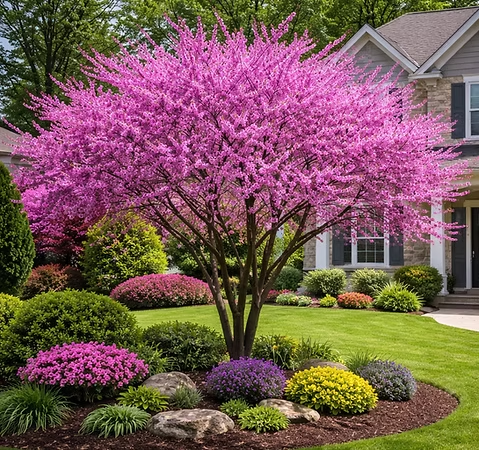
The Eastern Redbud is my absolute go-to for anyone who wants color before the grass even turns green. I remember one March when my yard looked like a gray wasteland, and then—boom—my Redbud exploded into a cloud of magenta. It’s like the tree is trying to apologize for winter. These are tough as nails and handle a bit of shade better than most flowering trees, which is a lifesaver if your neighbor’s house towers over your garden bed.
When you’re searching for low maintenance flowering trees for small yards, the Redbud is a top-tier candidate. It stays relatively small, usually topping out around 20 to 30 feet, so it won’t eat your house. The heart-shaped leaves are a nice touch once the flowers fade, and in the fall, they turn a decent yellow. I’ve found that the “Forest Pansy” variety is worth the extra cash because the foliage stays a deep, moody purple all summer long.
One thing I’ve learned the hard way: don’t plant these in a spot where water pools after a rainstorm. They hate “wet feet.” If you put a Redbud in a swampy corner, it’ll reward you by dying slowly over three years. Give it well-drained soil and a bit of mulch, and it’ll be happy. It’s a native tree in many areas, which means it’s already used to the local bugs and won’t need you to baby it with constant spraying.
2. Kousa Dogwood: Better Than the Original
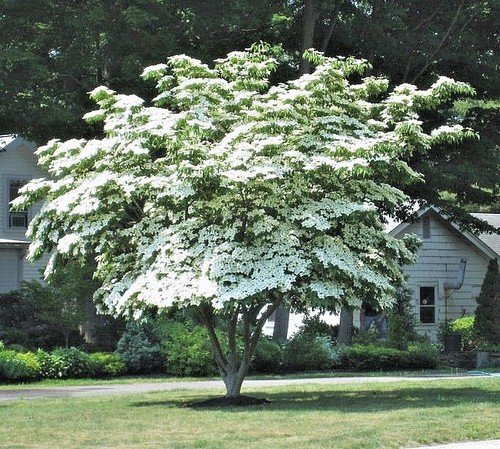
Now, don’t tell the traditionalists, but I actually prefer the Kousa Dogwood over the native flowering dogwood. Why? Because I got tired of watching my native dogwoods succumb to anthracnose and powdery mildew. The Kousa is like the armored tank version of a dogwood. It blooms a few weeks later—usually June—which is great because it extends your flower season into the early summer when everything else is just green.
If you’re looking for disease resistant flowering trees, this is your winner. The “flowers” are actually bracts (modified leaves), and they last for ages. I once had a Kousa stay in full white glory for nearly six weeks while my neighbor’s cherry blossoms lasted about four days. Plus, the bark on older trees peels back in a puzzle-like pattern of tan and gray, giving you something pretty to look at in the dead of winter.
A quick side note: the Kousa produces these weird, bumpy red fruits in late summer. They look like something from a sci-fi movie. The birds love them, but if you plant this tree over a sidewalk or a patio, be prepared for a squishy, red mess. I made that mistake once and spent an entire August scrubbing my pavers. Plant it in the middle of a mulch bed or a lawn area where the fruit can just fall and disappear.
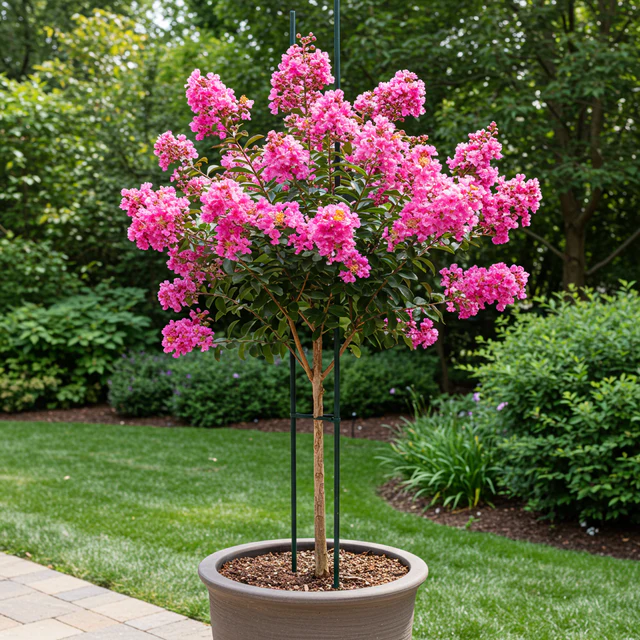
3. Crape Myrtle: The Summer Marathon Runner
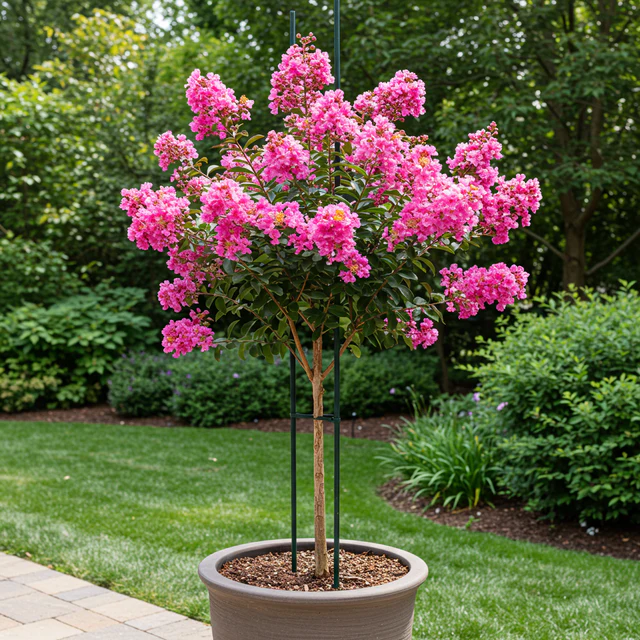
If you live in a place where the summers feel like the inside of a pizza oven, you need a Crape Myrtle. These trees are the marathon runners of the garden. While other trees are wilting and dropping leaves in the August heat, the Crape Myrtle is just getting started with huge clusters of pink, red, or white blooms. I call them “the lazy gardener’s best friend” because once they’re established, you barely have to touch them.
For anyone hunting for trees that bloom all summer, this is the gold standard. They love the sun—the more the better. If you plant them in the shade, they’ll get “the crud” (powdery mildew) and look like they’ve been dusted with flour. I’ve found that the darker-leafed varieties, like “Black Diamond,” provide a stunning contrast against the bright flowers, making them a huge hit for modern curb appeal.
Whatever you do, please do not commit “Crape Murder.” You’ll see people hacking the tops off these trees every winter until they look like knobby stumps. It’s ugly, it’s bad for the tree, and it makes me want to start a support group. Just prune out the dead wood and the spindly bits at the bottom. Let the tree have its natural, graceful shape. It’ll thank you with more flowers and a much prettier silhouette.
4. Saucer Magnolia: The “Wow Factor” Tree
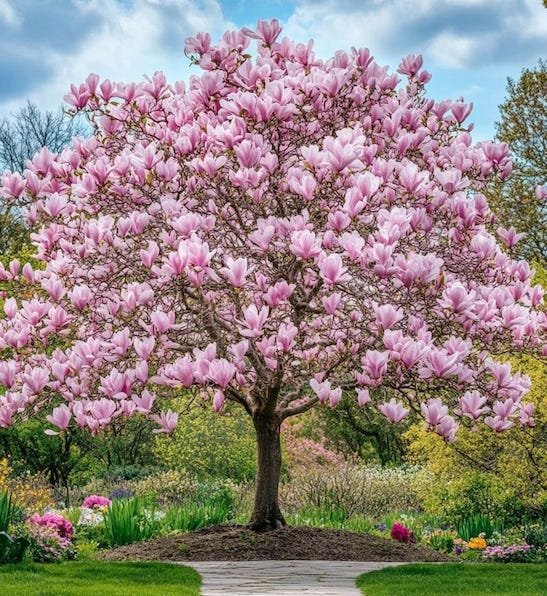
There is nothing quite like a Saucer Magnolia in full bloom. The flowers are huge—sometimes the size of a cereal bowl—and they look like pink and white tulips growing on a tree. One spring, I had people literally stopping their cars in front of my house to take pictures of mine. It’s a total show-off, and if you have the space for a wide-spreading tree, it’s a fantastic focal point for a front yard.
This is a heavy hitter for fragrant flowering trees for landscaping. The scent is subtle but sweet, and it fills the yard on a warm April afternoon. They aren’t the fastest growers in the world, but they are sturdy. They can handle clay soil better than many of the “fancier” trees, which is a huge plus if you live in a new development where the builders left you with nothing but hard-packed dirt.
Here is the “real talk” on Magnolias: they are messy. Those giant petals turn into brown, slippery mush once they fall, and the seed pods are like little wooden grenades that your lawnmower will hate. Also, a late frost can turn those beautiful pink buds into brown sludge overnight. I usually recommend planting them in a spot that’s protected from northern winds to give the flowers a fighting chance during a weird spring cold snap.
5. Yoshino Cherry: The Classic Festival Vibe
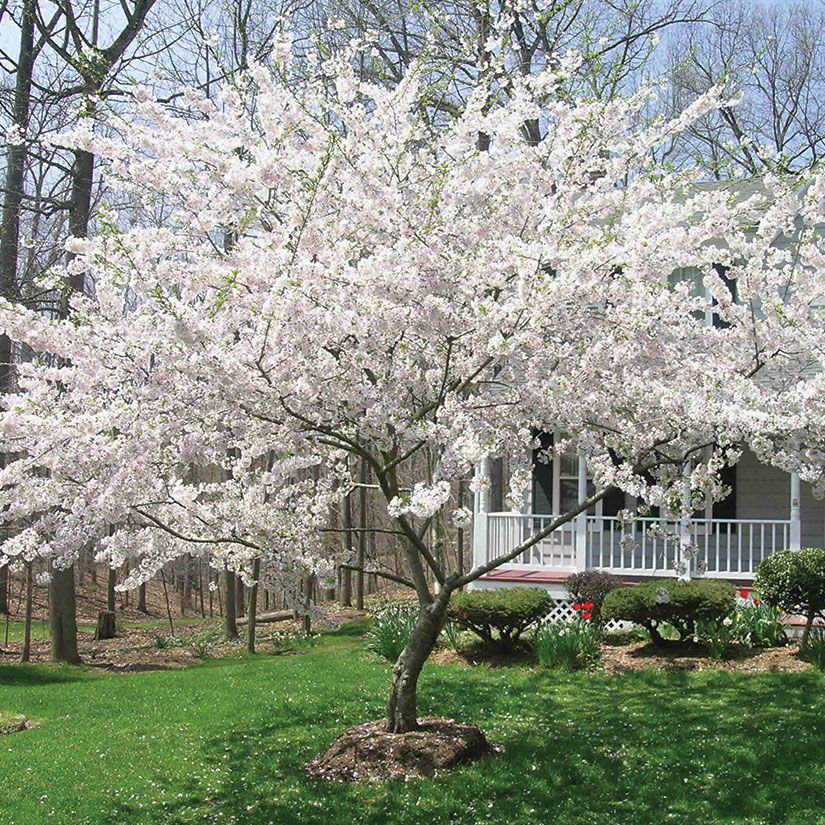
You know those famous cherry blossoms in Washington D.C.? Those are Yoshinos. If you want that ethereal, clouds-of-white-smoke look in your own backyard, this is the tree you buy. It grows into a beautiful umbrella shape that’s perfect for sitting under with a cold drink. The summer my zucchini took over the entire ZIP code, the only place I could find some peace was under the shade of my Yoshino.
In the world of fast growing flowering trees, the Yoshino is a decent contender. It puts on size quickly, which is great if you’re trying to fill a gap in your landscaping sooner rather than later. The bark is a shiny, dark silver that looks very “high-end.” However, don’t expect this tree to live for a hundred years. Most ornamental cherries are “short-lived,” meaning you might get 20 to 30 good years out of them before they start to decline.
My biggest tip for cherries: watch out for pests. They are like a Five Guys burger for every beetle and aphid in the county. I’ve found that keeping them well-watered during droughts helps them stay strong enough to fight off the bugs. If you see the leaves looking like Swiss cheese, you’ve got Japanese Beetles. Dealing with them is a pain, but the two weeks of glorious spring blooms usually make the struggle worth it.
6. Prairifire Crabapple: Toughness Meets Beauty
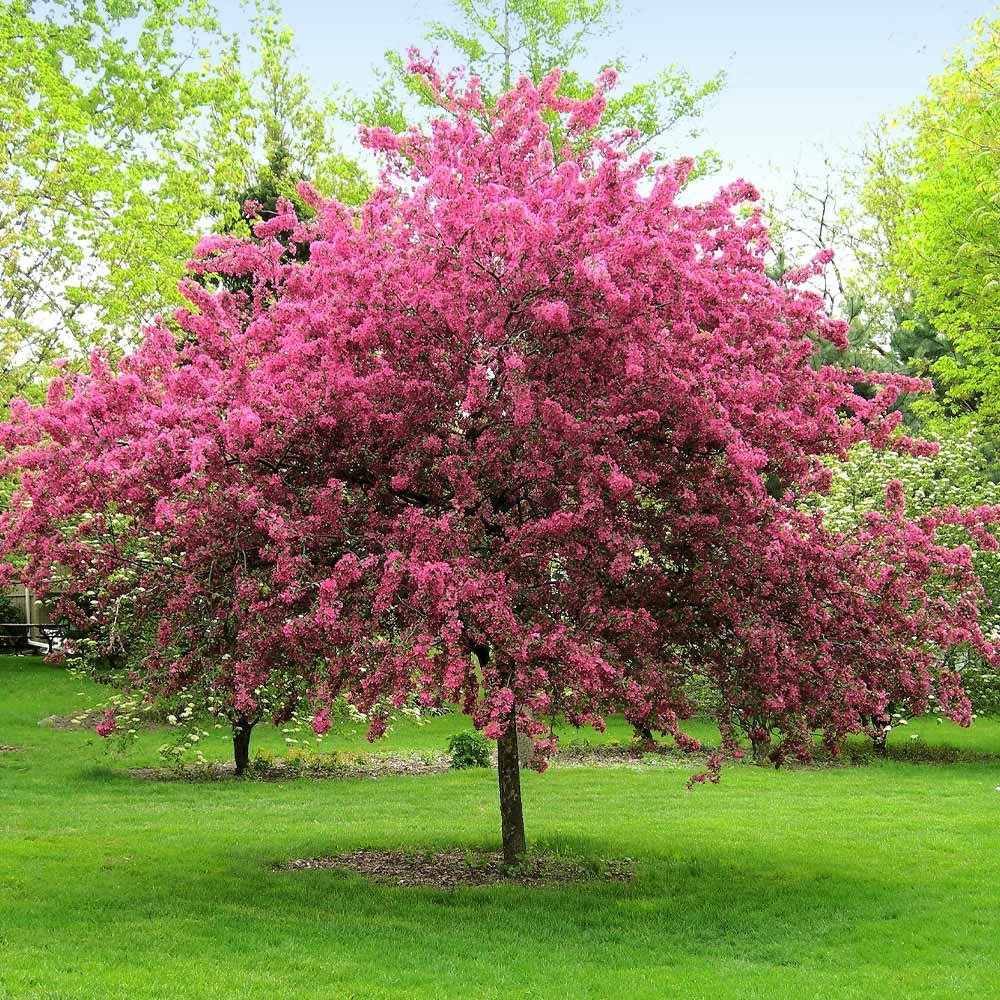
I used to hate crabapples. I grew up with the old-school ones that dropped rotting, golf-ball-sized fruit that smelled like a brewery and attracted every wasp in a five-mile radius. But the “Prairifire” variety changed my mind. It’s incredibly disease-resistant, and the fruit is tiny—more like little berries—that stay on the tree until the birds eat them in the winter. No mess, no wasps, just beauty.
For flowering trees for backyard privacy, a row of crabapples is actually a smart move. They are dense enough to block a neighbor’s view but pretty enough that it doesn’t feel like you’re building a wall. The Prairifire has these stunning dark pink flowers and leaves that start out purple before turning green. It’s a color-changing machine that keeps the yard looking interesting from April through October.
Bonus tip: Most people think you need to prune crabapples into a perfect ball. I think that looks corporate and boring. I prefer to let them grow a bit wild, only cutting out the “suckers” (those straight vertical shoots that grow from the base). Those suckers are parasites; they steal energy from the main tree and never produce flowers. Snip them off as soon as you see them.
7. Jane Magnolia: The Perfect Fit for Small Spaces
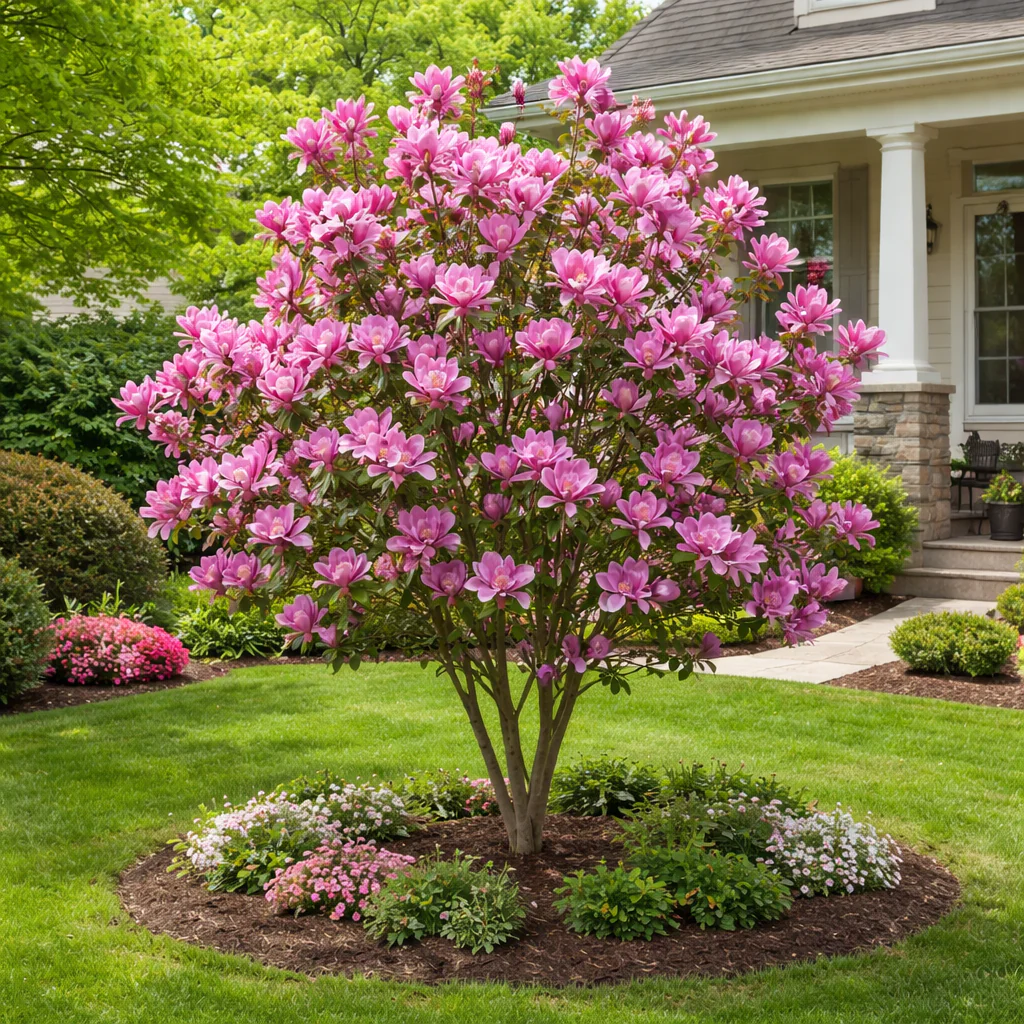
If you love the look of a magnolia but don’t have a massive estate, the “Jane” Magnolia is your new best friend. It’s part of the “Little Girl” series of magnolias, and it’s more of a large shrub or a tiny tree. It usually tops out around 10 to 15 feet. I’ve got one tucked into a corner near my patio, and it’s the perfect height to provide a bit of shade without taking over the whole area.
When looking for compact flowering trees for patios, this one is a winner. The flowers are a deep purple-pink on the outside and white on the inside, and they bloom a bit later than the Saucer Magnolia. This is a massive advantage because it often misses those late spring frosts that ruin the earlier bloomers. It’s much more reliable for people living in zones where spring weather is a total roller coaster.
I will say, these can look a bit “twiggy” in the winter. They aren’t evergreen, so you’re left with a skeleton for a few months. I like to plant some evergreen shrubs like Boxwoods or Hollies around the base to keep that corner of the yard from looking empty in January. It’s all about layering—don’t let one tree do all the heavy lifting for your winter curb appeal.
8. Japanese Tree Lilac: The Scent of June
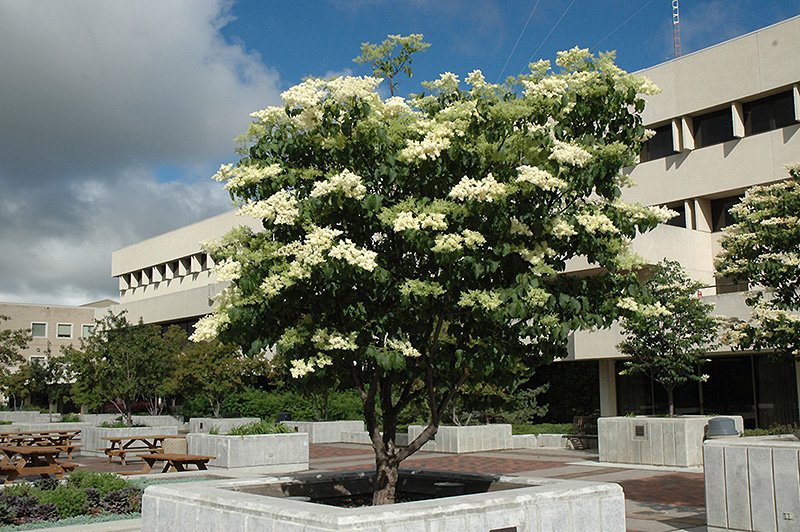
Forget the lilac bushes your grandma had; the Japanese Tree Lilac is a proper tree with a trunk and a canopy. It blooms in June with massive, creamy-white panicles that smell heavenly. While most lilacs are prone to every fungus known to man, the tree version is much hardier. I’ve seen these planted as street trees in tough urban environments, and they still thrive.
If you’re searching for late blooming flowering trees, put this at the top of your list. Most flowering trees are “one and done” by May, but this one keeps the party going. The “Ivory Silk” cultivar is the one I see most often, and for good reason—it’s compact, pest-resistant, and has beautiful reddish-brown bark that looks great in the winter.
One thing to keep in mind: the smell is strong. I love it, but if you’re someone who gets a headache from heavy floral scents, don’t plant this right under your bedroom window. I made that mistake with a mock orange once and had to sleep on the couch for a week. Plant it near a walkway or at the edge of the lawn where you can catch a whiff of it as you walk by.
9. Seven-Son Flower: The Late-Season Surprise
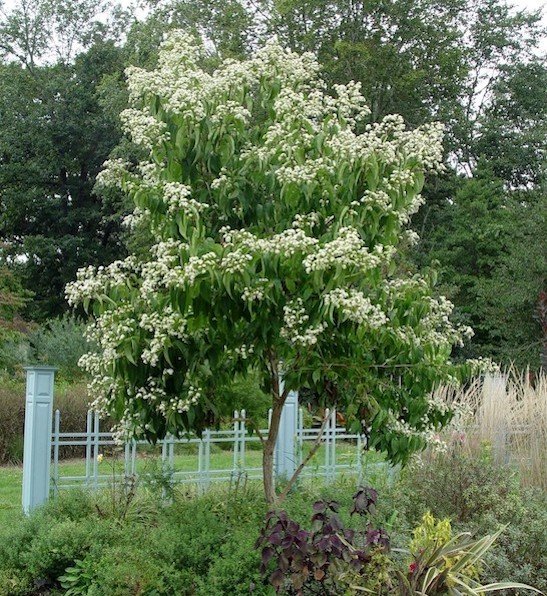
This is a bit of a “hidden gem” tree. Most people have never heard of it, but I’ve fallen in love with mine over the last few years. It blooms in late August or September when every other tree in the neighborhood is looking tired and dusty. The flowers are small and white, but once they fall off, the “sepals” turn a brilliant cherry red. It looks like the tree is blooming all over again in a different color!
This is a fantastic choice for trees for pollinators. In the late summer, my Seven-Son Flower is buzzing with bees and butterflies. It’s a literal lifeline for them before the frost hits. It also has this amazing peeling bark that looks like birch or sycamore, which adds a lot of “texture” to the garden. It can grow as a multi-stemmed shrub or a single-trunk tree, depending on how you prune it.
I’ve found that these trees are pretty drought-tolerant once they get their roots established. I barely watered mine during a record-breaking dry spell last year, and it didn’t drop a single leaf. It’s a tough, unusual tree that will definitely make your neighbors ask, “What on earth is that?” and that’s half the fun of gardening, isn’t it?
10. Serviceberry: Beauty and a Snack
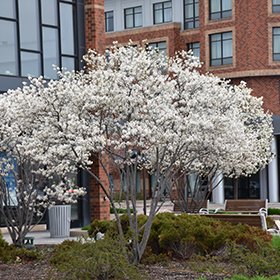
The Serviceberry (or Amelanchier) is a native workhorse. It has delicate white flowers in early spring, followed by berries that look and taste a lot like blueberries. I usually have to fight the birds for them, but they make the best jam you’ve ever tasted. The “Autumn Brilliance” variety is particularly good because, as the name suggests, the fall color is a flaming orange-red that puts most maples to shame.
For those interested in edible landscaping trees, the Serviceberry is the easiest place to start. It doesn’t need the heavy pruning or spraying that apple or peach trees require. It just does its thing. It’s a smaller tree, usually 15 to 25 feet, so it fits perfectly in a suburban backyard or a side yard where you need a bit of height.
Real talk: the berries will attract every bird in the zip code. If you have a white car and you park it under a Serviceberry in June, you are going to have a very bad day. The birds eat the berries and, well, you know the rest. Keep this tree away from the driveway and the patio furniture, and you’ll be much happier.
11. Golden Rain Tree: The Yellow Lantern
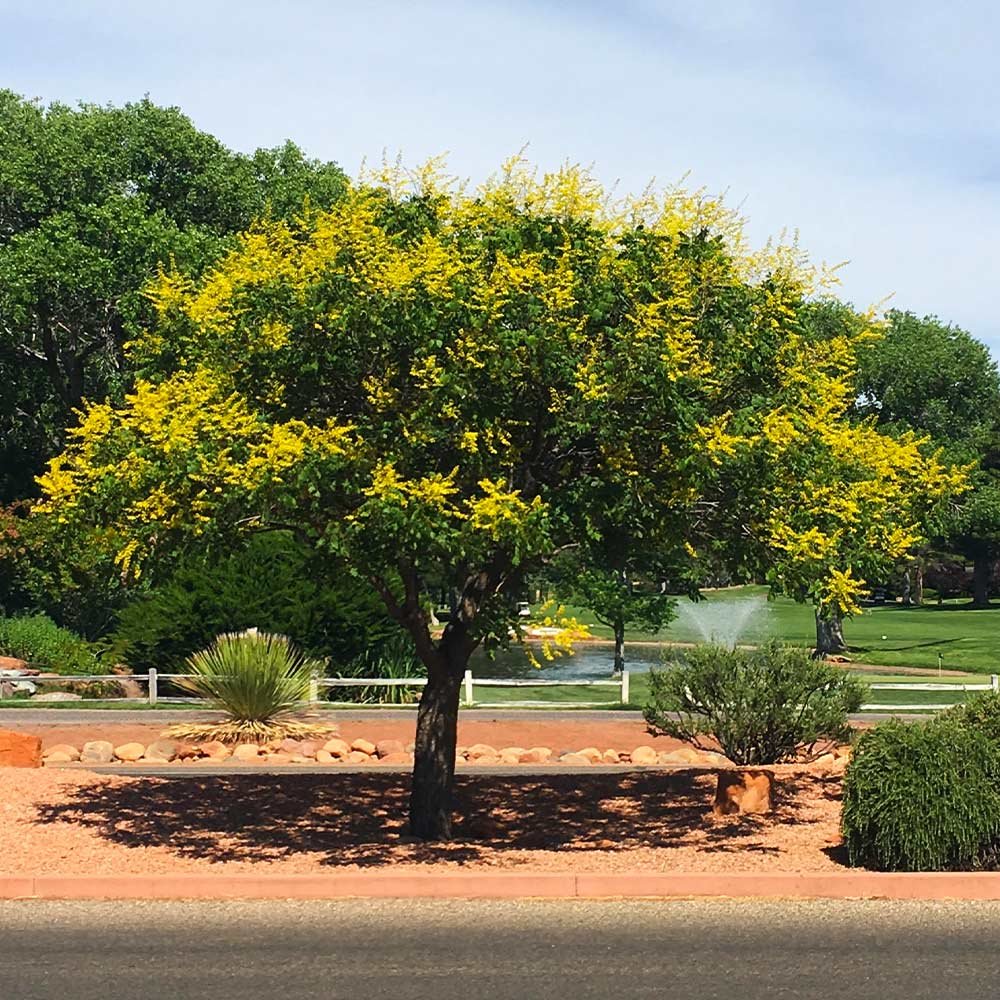
Most flowering trees are pink or white, but the Golden Rain Tree brings a blast of bright yellow to the landscape in mid-summer. The flowers grow in long, drooping clusters, followed by these cool, papery seed pods that look like little Chinese lanterns. It’s a very architectural tree that looks “designed” even if you just plopped it in a hole in the grass.
This is a solid option for drought tolerant flowering trees. It can handle heat, wind, and poor soil like a champ. I’ve seen them growing in parking lot islands and looking perfectly happy. If you have a spot in your yard where nothing else seems to grow because the sun is too intense, try a Golden Rain Tree. It’s a survivor.
A quick side note: they can be a little “weedy” in some parts of the country. The seeds in those lanterns have a high germination rate, so you might find little baby trees popping up in your mulch beds. It’s not a huge deal—you can just pull them out like any other weed—but it’s something to be aware of if you want a zero-maintenance garden.
12. Fringe Tree: The “Old Man’s Beard”
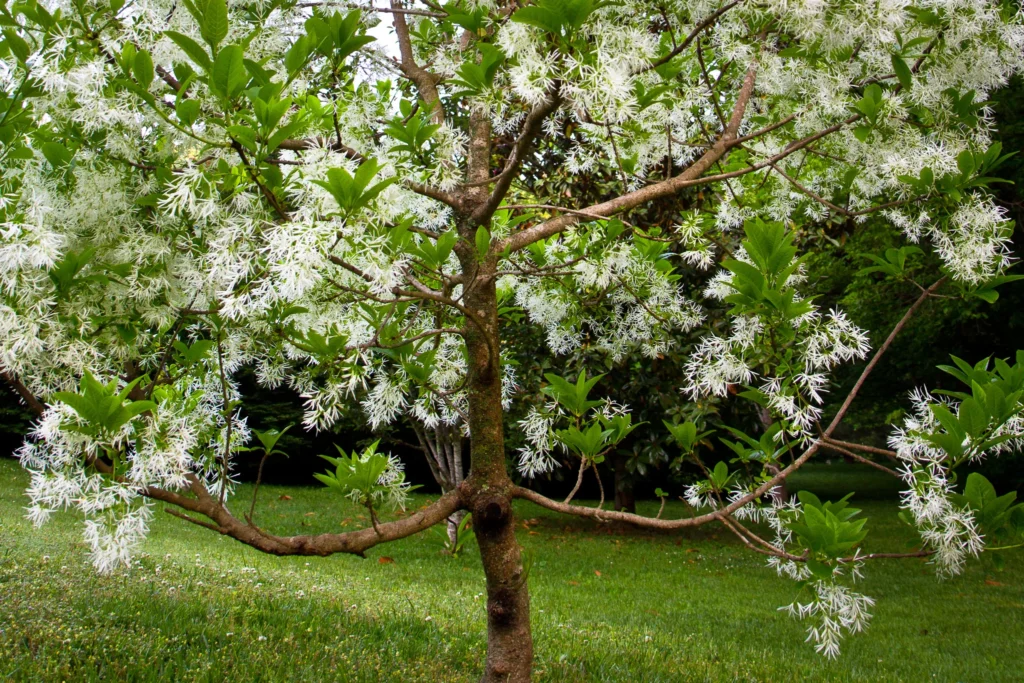
The Fringe Tree is one of the most underrated natives in North America. When it’s in bloom, it looks like it’s covered in shaggy, white ribbons. It’s incredibly fragrant—it smells like lemons and honey. It’s a slow grower, but the wait is worth it. I’ve got one near my front porch, and every May, it’s the highlight of my morning coffee.
If you’re looking for native flowering trees for shade, the Fringe Tree is a great choice. It occurs naturally in the understory of forests, so it doesn’t mind being tucked under taller oaks or maples. It’s also very resistant to the Emerald Ash Borer, which has been a huge problem for many other trees lately.
Because it’s a slow grower, don’t buy a tiny one and expect a 20-foot tree by next year. Spend the extra money on a larger specimen if you want an immediate impact. Also, they are “dioecious,” meaning there are male and female trees. The males have slightly showier flowers, but the females produce blue fruit that birds love. Most nurseries don’t label them, so it’s a bit of a surprise!
13. Flowering Plum: The Purple Powerhouse
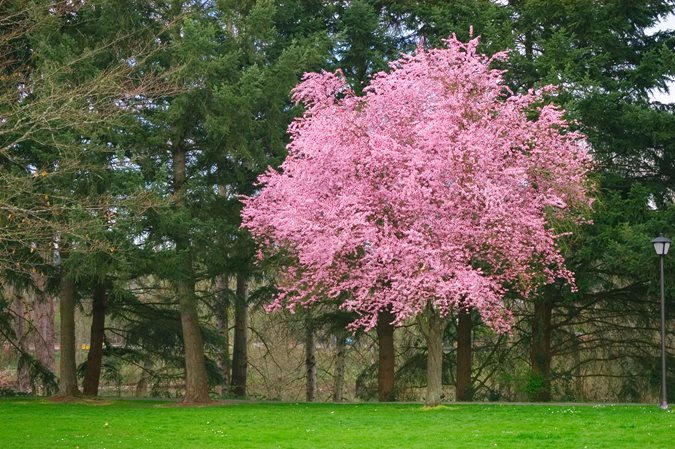
The “Newport” or “Thundercloud” Flowering Plum is the tree you buy when you want purple leaves. It has light pink flowers in early spring, but the real draw is the deep, dark foliage that stays purple all season. It’s a fantastic way to break up a sea of green in your landscaping. I’ve used them to frame entryways, and they look incredibly elegant.
These are popular ornamental trees for curb appeal because the color is so consistent. They stay relatively small—about 20 feet—and they have a nice, rounded shape without much pruning. They are also very cold-hardy, making them a good choice for northern gardens where some of the more delicate cherries might struggle.
However, plums are prone to “Black Knot,” a fungus that looks like black charcoal growing on the branches. I’ve had to prune it out of mine a few times. If you see it, cut it out immediately and clean your pruners with alcohol between cuts. If you let it go, it can kill the tree. It’s a bit of a high-maintenance relationship, but that purple foliage is hard to quit.
14. Sweetbay Magnolia: The Evergreen Choice
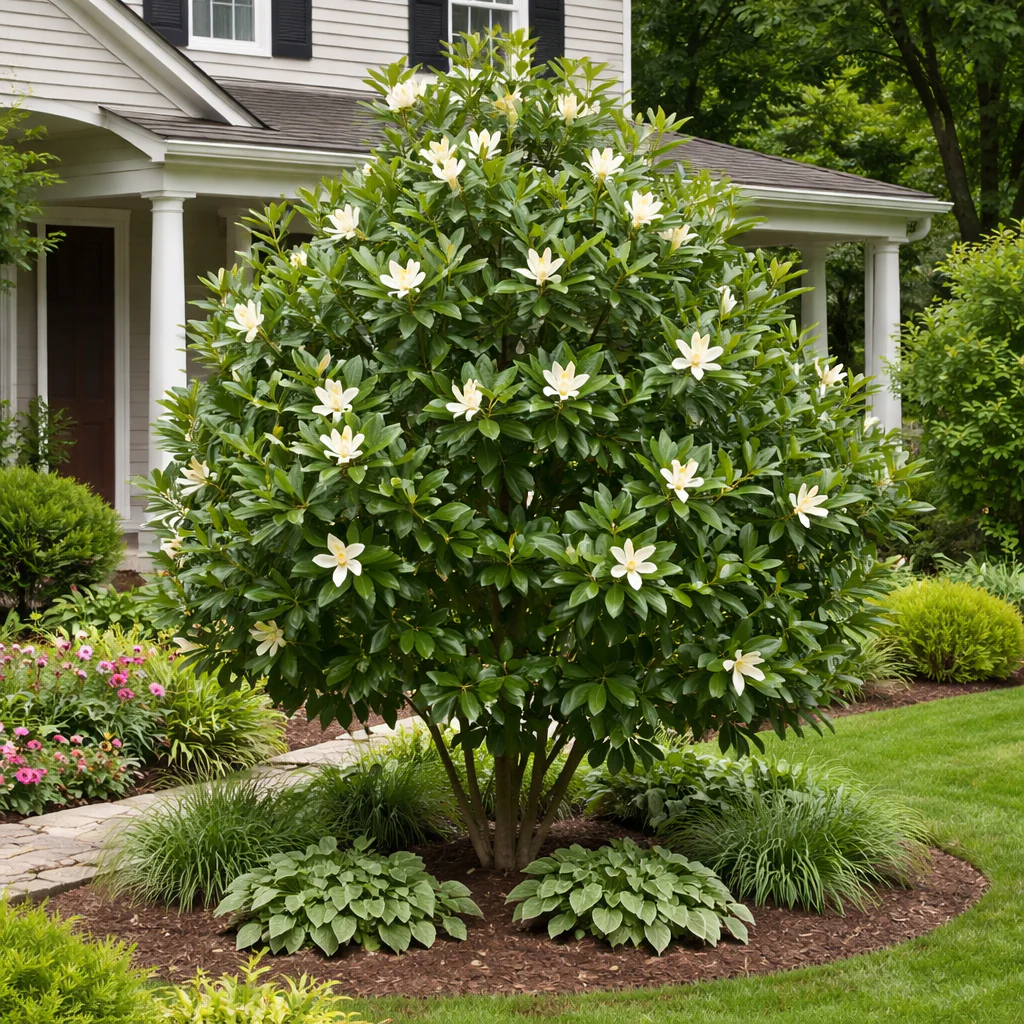
Unlike the Saucer or Jane Magnolias, the Sweetbay is often semi-evergreen, especially in warmer climates. It has creamy white flowers that smell like lemons. It’s a more “elegant” and “reserved” tree than the flashy Saucer Magnolia. I love the way the leaves have a silvery underside that flashes in the wind.
This is the best choice for flowering trees for wet soil. If you have a low spot in your yard that stays soggy after a rain, the Sweetbay Magnolia will love it. While most trees would rot and die, this one thrives in swampy conditions. It’s a lifesaver for people with drainage issues who still want a beautiful flowering specimen.
The flowers are smaller and appear sporadically throughout the summer rather than all at once. It’s more of a “discovery” tree than a “knock-your-socks-off” tree. If you want a giant burst of color, this isn’t it. But if you want a sophisticated, fragrant tree that stays green most of the year, it’s a winner.
15. Smoke Tree: The “Bonus” Texture
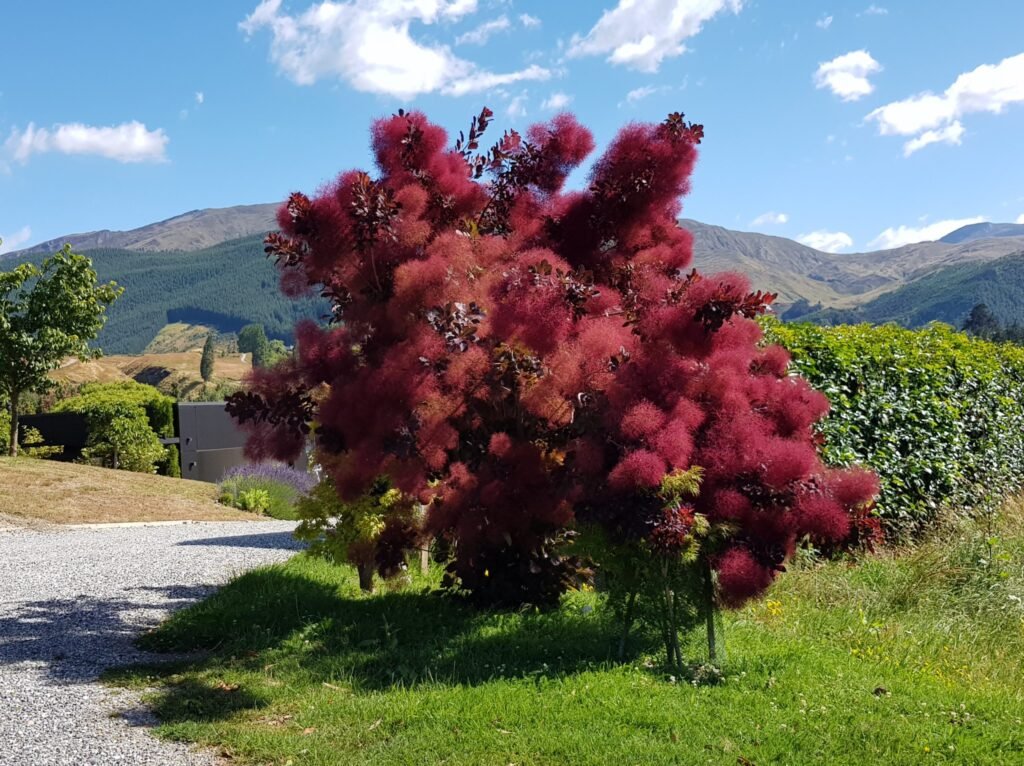
I’m counting the Smoke Tree (Cotinus) as a tree, even though many people grow it as a large bush. If you prune it to a single trunk, it becomes this whimsical, Dr. Seuss-looking tree with puffy, “smoke-like” flower clusters. The “Royal Purple” variety is the most popular, and for good reason—the color is absolutely electric.
For unique landscaping trees, the Smoke Tree is unbeatable. The “smoke” is actually the fading flower stalks, and it lasts for months. It’s incredibly drought-tolerant and loves crappy soil. In fact, if you give it too much fertilizer, it’ll actually lose some of its color. It’s a tree that thrives on a bit of neglect.
Quick side note: don’t over-prune these. If you hack them back too hard, you’ll get lots of leaves but no “smoke.” I made that mistake my first year and ended up with a very purple, very boring bush. Just let it do its thing, and only prune for shape in the late winter.
Real Talk: What Nobody Tells You at the Nursery
Listen, I love trees, but I’m not going to lie to you—they can be a pain. Most nurseries want to sell you whatever is in bloom right now, regardless of whether it’ll actually survive in your yard. Here is the honest truth about what can go wrong:
- The “Fallacy of Fast Growth”: Everyone wants a tree that grows five feet a year. But fast-growing trees usually have weak wood. One bad ice storm and your “fast grower” is laying across your driveway. Slow and steady wins the race for long-term health.
- The Root Problem: People plant trees too deep. I see it every single day. If you can’t see the “root flare” (where the trunk widens at the bottom), you’ve buried it too deep. It’ll suffocate the roots and kill the tree in five years.
- Volcano Mulching: Please, for the love of all that is holy, do not pile mulch up against the trunk like a volcano. It rots the bark and invites bugs. Keep the mulch a few inches away from the wood.
Parting Wisdom
Choosing a flowering tree is like choosing a roommate—you’re going to be living with this thing for a long time, so make sure you actually like its habits. Don’t just buy what looks pretty on Pinterest; check your soil, check your sunlight, and be honest about how much maintenance you’re actually willing to do.
What’s the one flowering tree you’ve always wanted to plant but were too scared to try? Or maybe you have a “horror story” of a tree that took over your yard? Drop a comment below—I’d love to help you troubleshoot your garden or just hear about your wins!

About Syprose Kiche
Syprose Kiche is the creator and writer behind My Besuited Home, a practical home and garden website covering DIY projects, gardening, lawn care, landscaping, home improvement, and outdoor living. She focuses on turning everyday homeowner questions into clear, practical guides backed by careful research and useful real-world considerations.