
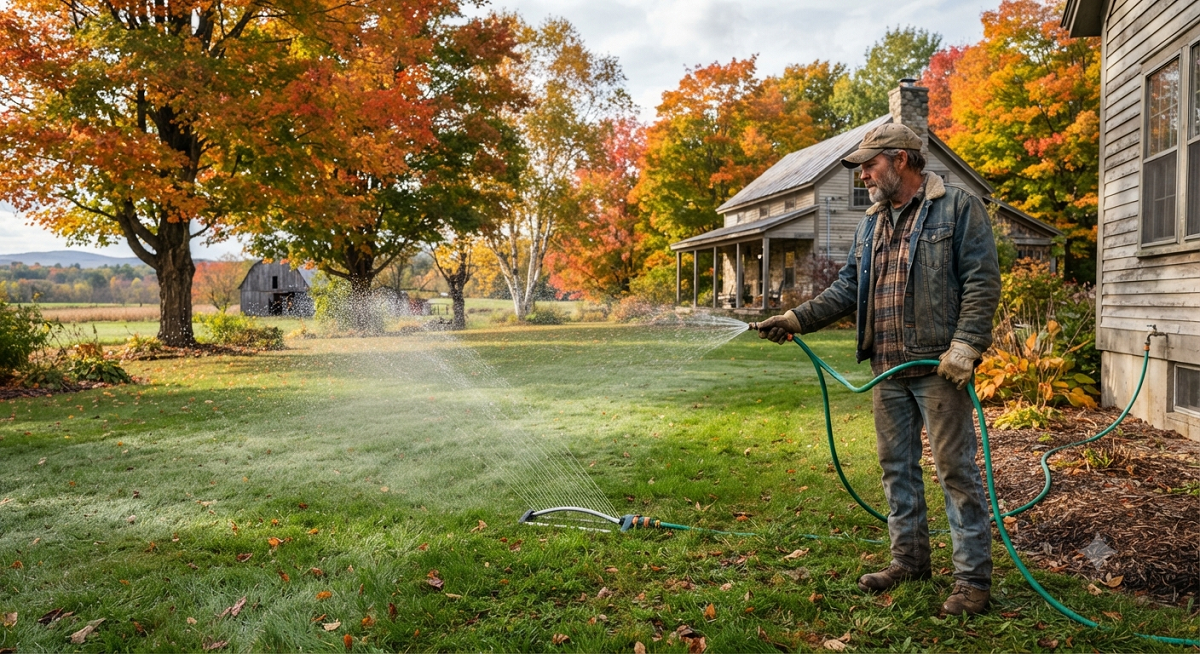
Your lawn looks like a doormat that lost a fight. Brown patches everywhere, thin spots where the kids’ inflatable pool sat all summer, and that one strip by the driveway that’s basically dirt now. September rolls around and you’re standing there with a hose wondering if it’s even worth trying to fix it before winter.
It is worth it. Fall is honestly the best time of the whole year to bring a beat-up lawn back from the dead. The soil is still warm, the air is cooler, and grass roots go into growth mode instead of just trying to survive like they do in July. But here’s the part nobody tells you: watering it wrong in fall can undo all that natural advantage. I’ve watched neighbors flood their yards every single day in September and end up with more fungus than grass to show for it.
I’ve been babying lawns back to health for over a decade now, and I still remember the fall I tried to fix three years of neglect in three weeks by running my sprinklers twice a day, every day, because I figured more water meant faster results. What I actually grew was a truly impressive crop of dollar spot fungus and a water bill that made my spouse ask some pointed questions. Fall recovery watering is one of those things that seems simple until you actually try it. Too little water and your new grass seed dries out and dies before it even sprouts. Too much and you’re basically brewing a fungus soup in your topsoil. There’s a window, and I’m going to walk you through exactly how to find it.
Why Fall Watering Is Different From Summer Watering
Summer watering is about survival. You’re keeping grass alive against heat, sun, and evaporation that’s working against you every hour of daylight.
Fall watering has a completely different job. You’re not fighting the weather anymore, you’re using it. Cooler temps mean less evaporation, which means the water you put down actually stays in the root zone where it belongs instead of baking off by 10 a.m.
This matters because your watering schedule needs to shrink as fall goes on. I see people keep running their sprinklers on the same July schedule straight through October, and it’s like leaving a heating pad on someone who doesn’t have a fever anymore. The grass just doesn’t need that much, and the excess water sits there inviting disease.
Root growth is also working overtime in fall. Grass plants sense the shorter days coming and start pushing energy down into their root systems instead of up into blade growth. Deep, less-frequent watering supports that root push. Shallow, frequent watering does the opposite, it keeps roots lazy and close to the surface where they’re vulnerable to winter cold snaps.
Reading Your Lawn Before You Set a Schedule
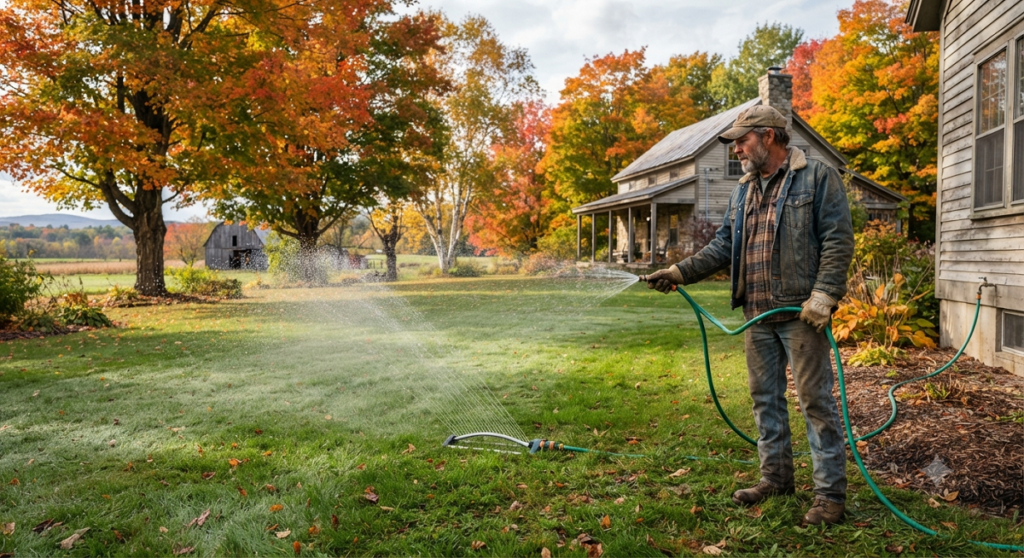
Before you touch a hose timer, walk your yard. I mean actually walk it, not just glance out the kitchen window.
Pay attention to the differences between sun and shade areas, low spots that stay soggy, and high spots that dry out first. Every lawn has its own microclimates, and a single blanket schedule almost never works evenly across the whole yard.
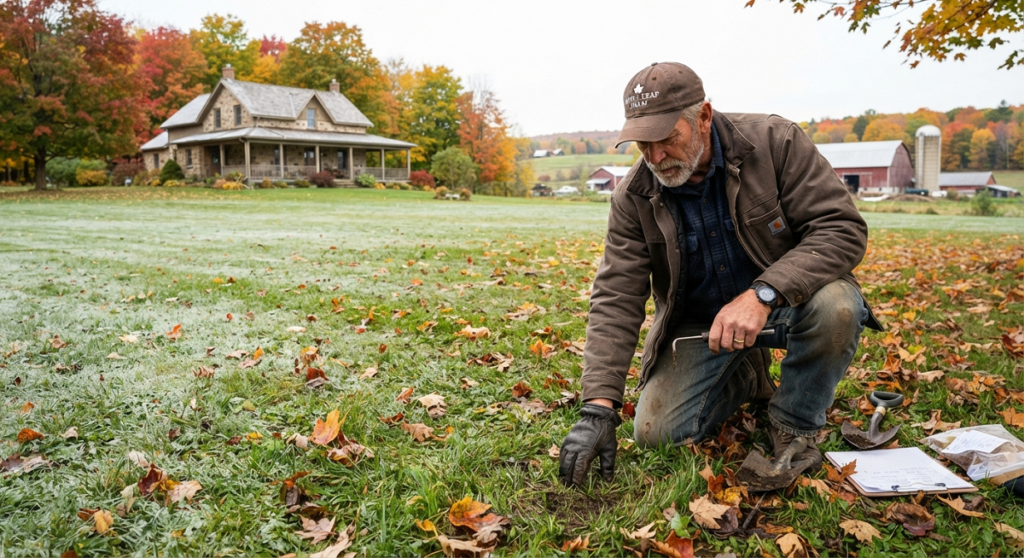
Grab a screwdriver and push it into the soil in a few spots. If it slides in easily to about six inches, your soil moisture is decent. If you’re fighting it after two inches, that ground is compacted and dry, and water is probably running off instead of soaking in.
Check your grass type too, because this changes everything about timing. Cool-season grasses like fescue, ryegrass, and Kentucky bluegrass are the ones that really shine in fall and respond fast to a good watering plan. This is their prime growing season, root systems are expanding, and they’re actively recovering from whatever summer heat threw at them.
Warm-season grasses like Bermuda and zoysia are a different story entirely. They’re heading into dormancy by fall, so you’re watering them for a much gentler wind-down, not an active growth push. Pushing a heavy watering schedule on a warm-season lawn in October is basically wasted effort, since the grass is preparing to shut down for winter regardless of how much moisture you give it.
If you’re not sure which category your lawn falls into, look at how it behaves right now. Cool-season grass tends to look its best in spring and fall and struggles in peak summer heat. Warm-season grass does the opposite, thriving in July and August and going straw-colored once nighttime temps drop into the 50s. That single observation tells you almost everything about how aggressive your fall watering plan should be.
The Actual Watering Schedule Breakdown
Here’s the framework I use, broken into early, mid, and late fall phases because a single number doesn’t cut it.
Early Fall (Late August Through Mid-September)
This is prime overseeding and recovery time in most regions, and it’s the phase that needs the most water attention.
If you’re seeding bare or thin spots, water lightly but often, about twice a day for 5 to 10 minutes each session. Seeds and tiny seedlings have shallow roots and dry out fast, sometimes within hours on a sunny afternoon.
For established grass that’s just stressed and recovering, cut back to deep watering two to three times a week, aiming for about an inch of water total per week including any rainfall.
Water in the early morning, between 6 and 10 a.m., so the grass has all day to dry before evening. Wet grass sitting overnight is basically an invitation for fungal disease.
Mid Fall (Late September Through October)
As seedlings mature and temperatures keep dropping, you can start stretching out the gaps between waterings.
Drop to about one deep watering session per week for established turf, delivering around an inch of water. New grass from your overseeding can move to once-daily watering, then eventually every other day as the roots establish.
I’ve found that soaker hoses work better than sprinklers during this window, especially for newly seeded patches. Sprinklers can blast tender seedlings sideways and wash seed into clumps.
Late Fall (November, Until the Ground Freezes)
Watering frequency drops way down here, but don’t shut it off completely just because it’s getting cold.
One watering every 10 to 14 days is usually plenty, assuming you’re not getting steady rain. The goal now is just keeping roots from drying out completely before winter dormancy, not pushing growth.
Stop watering entirely once the ground starts freezing overnight consistently. Watering frozen or near-frozen soil does nothing useful and can actually create ice damage on grass crowns.
How Much Water Your Lawn Actually Needs
The “one inch per week” rule gets thrown around a lot, and it’s a decent starting point, but I think people follow it way too rigidly.
Set out a few empty tuna cans or a rain gauge across your yard when you water. Run your sprinkler system until they collect about half an inch, then check how long that took. That’s your baseline for one watering session.
Sandy soil drains fast and needs more frequent, lighter watering. Clay soil holds water longer but can develop runoff if you apply it too fast, so slower, longer sessions with breaks built in work better there.
Rainfall counts. I know that sounds obvious, but I still meet people running their irrigation system on autopilot through a rainy week. Get a simple rain gauge or check a local weather app and subtract that rainfall from your inch-per-week target.
Signs You’re Overwatering (The Silent Lawn Killer)
Overwatering in fall is way more common than underwatering, and it’s sneakier because the damage doesn’t show up right away.
Watch for a spongy, mushy feeling underfoot even a day or two after your last watering session. That’s a sign water isn’t draining and your roots are sitting in soggy soil, which starves them of oxygen.
Fungal patches are the other big red flag. Fall’s cooler, damp conditions are basically a welcome mat for diseases like red thread and dollar spot, and constant moisture on the grass blades makes it so much worse. If you’re seeing weird colored rings or patches with a different texture than the surrounding grass, cut back on water immediately and consider a fungicide if it spreads.
Weeds love overwatered fall lawns too. Chickweed and moss especially thrive in soil that never gets a chance to dry out between waterings.
Watering Newly Seeded Areas the Right Way
This part deserves its own section because it’s where I see the most mistakes, and honestly it’s where I made plenty of my own early on.
New grass seed needs consistent moisture in the top half-inch of soil, not deep watering. That means short, frequent sessions rather than the deep-and-infrequent approach you’d use on established turf.
- Water immediately after seeding to settle the seed into contact with the soil.
- Water lightly once or twice daily for the first two weeks, keeping the surface consistently damp but never puddled.
- Once you see consistent germination, usually 7 to 21 days depending on species, start stretching the gap between waterings.
- By the time grass hits about an inch tall, shift to once-daily watering.
- Once it’s been mowed twice, you can transition to a deep, less-frequent schedule like established turf.
Quick side note: if you’re overseeding into an existing lawn rather than bare soil, you can get away with slightly less frequent watering than bare-soil seeding, since the existing grass canopy helps hold moisture at the surface.
Best Time of Day and Watering Method
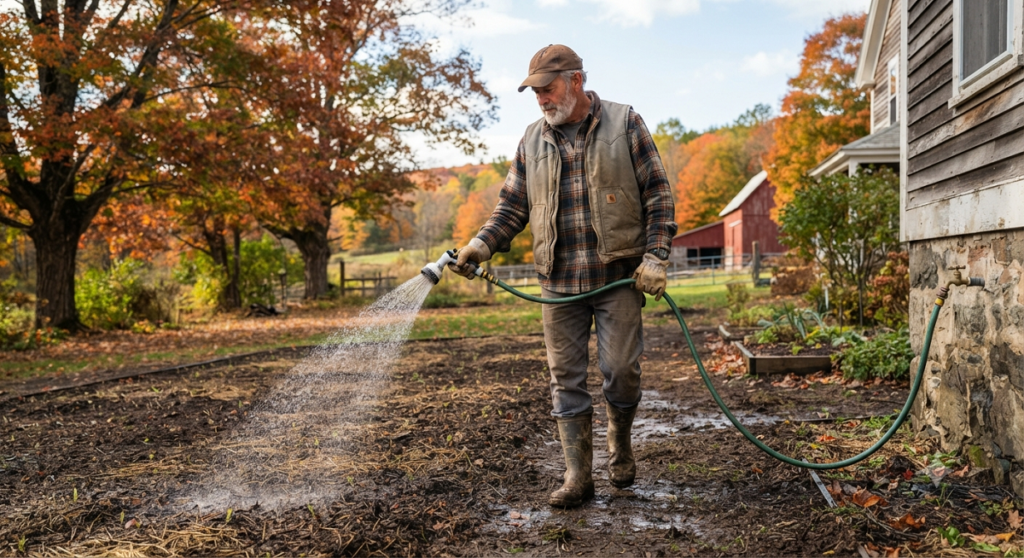
Morning watering wins, hands down, every single time I’ve compared it to afternoon or evening sessions. Early morning gives grass the whole day to dry, cuts down evaporation loss compared to midday heat, and avoids the fungal risk that comes with wet grass overnight.
Sprinklers work fine for established lawns but can be rough on new seed, as I mentioned. Soaker hoses or a fine mist setting are gentler and keep seed in place.
If you’ve got an irrigation system with a smart controller, adjust the seasonal settings manually in fall rather than trusting the default schedule. Most factory settings are calibrated for summer stress, not fall recovery, and they’ll overwater you without you noticing until your water bill shows up.
Adjusting for Your Climate and Region
None of these numbers are gospel, and I want to be upfront about that. A watering schedule that works great in Ohio is going to be way too generous in Arizona and not nearly enough in coastal Oregon.
In humid, rainy climates, you can often skip supplemental watering for stretches at a time once fall rains kick in. I know folks in the Southeast who barely touch a hose after mid-September because the sky handles it for them. Your job there is mostly just tracking rainfall so you don’t accidentally double up.
In dry, arid regions, fall doesn’t bring the natural moisture boost that other areas get, so you’re carrying more of the watering load yourself well into November. Sandy, fast-draining soil common in these areas also means you’ll water more often, just in smaller amounts each time, to avoid it running straight through before roots can absorb it.
Coastal and Pacific Northwest climates tend to have mild, damp falls, which actually raises your fungal disease risk even with less watering effort on your part. In that kind of climate, I’d rather you err on the side of underwatering slightly and let natural humidity fill the gap.
Elevation and frost timing matter too. Mountain and northern regions can see hard frosts as early as late September, which shortens your whole recovery window. If that’s you, treat every phase of this schedule as compressed, moving through early, mid, and late fall watering stages faster than someone in a milder zone would.
Tools Worth Having on Hand
You don’t need a fancy irrigation setup to nail this, but a few cheap tools make a real difference.
A basic rain gauge is the single best five-dollar purchase you can make for lawn care. It takes the guesswork out of figuring out how much water Mother Nature already gave you this week.
A soil moisture meter, the kind with a metal probe you stick in the ground, gives you a number instead of a guess. I was skeptical of these for years, honestly thinking it was a gimmick, but I’ve found mine genuinely useful for checking multiple spots around the yard fast without hauling out a screwdriver every time.
A hose-end timer is worth it if you’re watering manually rather than through an in-ground system. Set it, walk away, and stop worrying about whether you left the hose running for two hours by accident. I may or may not have done that once and flooded a flower bed into oblivion.
For anyone overseeding a decent chunk of yard, a simple oscillating sprinkler with adjustable width beats a fixed spray head for even coverage. Just keep it low to the ground and on a gentle setting so you’re not blasting seed into your neighbor’s yard.
Real Talk: What Can Go Wrong
I want to be straight with you here, because a lot of lawn advice online makes fall recovery sound foolproof. It isn’t.
Overwatering is the number one mistake, and I’ll say it again because it bears repeating: more water does not equal faster recovery. I’ve killed more grass seed with kindness (too much water) than I ever have with neglect.
Watering on a rigid calendar instead of checking your actual soil is a close second. If it rained hard yesterday, skip today’s watering even if the schedule says otherwise. Your lawn doesn’t care what day of the week it is.
Frost timing catches people off guard too. If you keep a heavy watering schedule going after a hard freeze starts hitting overnight, you risk ice forming around grass crowns, which can actually damage the plant more than drought would.
And honestly, sometimes fall recovery just isn’t going to fully fix a lawn that’s dealing with compacted soil, poor drainage, or heavy shade. Watering alone can’t fix those underlying issues. If you’re watering perfectly and still seeing thin, weak grass, the problem might be something a hose can’t solve, like soil compaction that needs aeration first.
Quick FAQ on Fall Lawn Watering
Should I water every day in fall? Only if you’ve got fresh grass seed germinating. Established lawns do better with less frequent, deeper watering.
Can I overseed without irrigation? Technically yes if you get consistent rain, but I wouldn’t count on the weather cooperating for two straight weeks. A hose or sprinkler backup is worth having.
When should I completely stop watering for the season? Once the ground freezes solid overnight on a regular basis, watering does more harm than good.
Do I need to water after aerating my lawn in fall? Yes, and this one’s easy to forget. Aeration opens up channels in the soil, and watering right after helps any seed or overseed mix you put down make good contact with soil instead of just sitting on top drying out.
Is it bad to water right before a frost? Not necessarily, since moist soil actually holds heat slightly better than dry soil and can offer a bit of frost protection. Just avoid watering grass blades themselves right before a hard freeze, since ice on the leaf surface can cause damage.
My lawn still looks patchy even though I’m watering correctly. What’s going on? Watering fixes moisture problems, not soil problems. If you’re doing everything right and still seeing thin spots, get a soil test done or consider whether compaction, poor drainage, or heavy shade is the real culprit.
Wrapping This Up
Fall gives your lawn a genuine second chance every single year, but that chance depends on getting the water right, not just turning the sprinkler on and hoping for the best. Start heavy and frequent for new seed, taper down as roots establish, and always let your actual soil conditions override whatever schedule you set on paper.
My parting wisdom: check the soil with your hand or a screwdriver before every watering session for at least the first month. It takes ten seconds and it’ll save you from both a soggy fungus farm and a crispy, dead patch come spring.
What’s your lawn dealing with this fall, thin patches, bare spots, or something else entirely? Drop a comment below and let me know what you’re working with. I read every one and I’m happy to help you figure out a schedule that fits your specific yard.

About Syprose Kiche
Syprose Kiche is the creator and writer behind My Besuited Home, a practical home and garden website covering DIY projects, gardening, lawn care, landscaping, home improvement, and outdoor living. She focuses on turning everyday homeowner questions into clear, practical guides backed by careful research and useful real-world considerations.