
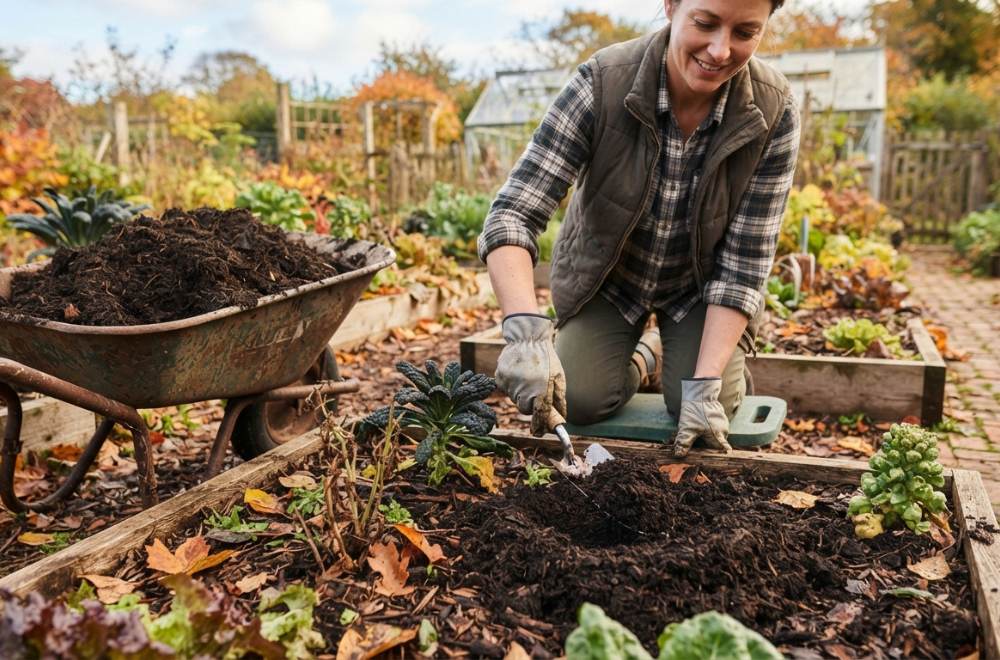
Are you staring out at a patch of tired, crusty dirt that used to be a thriving garden, wondering how it all went so wrong by late August? I get it. The summer heat bakes our soil into a brick, weeds throw seeds everywhere like confetti, and by the time autumn rolls around, the last thing you want to do is haul more heavy bags of dirt.
Trust me, I’ve been there. The summer my zucchini took over the entire ZIP code, it practically sucked every last nutrient ounce out of the earth, leaving my garden beds looking like an abandoned construction site. I used to think I could just ignore the yard until spring and cross my fingers. Spoiler alert: Mother Nature doesn’t work that way. If you skip autumn soil preparation, you are basically rolling out a red carpet for compaction, erosion, and stubborn weeds next spring.
Instead of waiting for the spring thaw to panic, let’s fix our dirt right now. By using organic compost and cover crops this fall, we can turn that compacted clay or powdery sand into rich, living earth. Grab a cup of coffee, and let’s get our hands dirty.
Why Fall Soil Preparation Matters More Than Spring Planting
Most beginners waste all their energy in April, turning over wet soil and buying expensive bags of miracle dirt. I’ve found that mindset is a total waste of money, even if it looks pretty on Pinterest. The secret to a legendary garden actually happens when the leaves start dropping and the air gets crisp.
When you prep your soil in the autumn, you give organic matter months to break down naturally. Earthworms, beneficial microbes, and fungi get to work chewing up the compost while the soil is still warm from summer. If you wait until spring, the ground is cold, soggy, and biologically asleep.
Neglecting your autumn garden clean-up also invites every garden pest and fungal spore to overwinter right where your tender seedlings will go next year. I learned this the hard way after leaving a pile of diseased tomato vines sitting in a bed all winter; the next season brought a fungal apocalypse. Putting your garden to bed properly in the fall is the ultimate insurance policy for next year’s harvest.
Clearing Out Summer Debris and Assessing Soil Health
Before we add a single shovel of compost, we have to clean the slate. You can’t build a healthy foundation on top of rotting tomato stems and knee-high crabgrass.
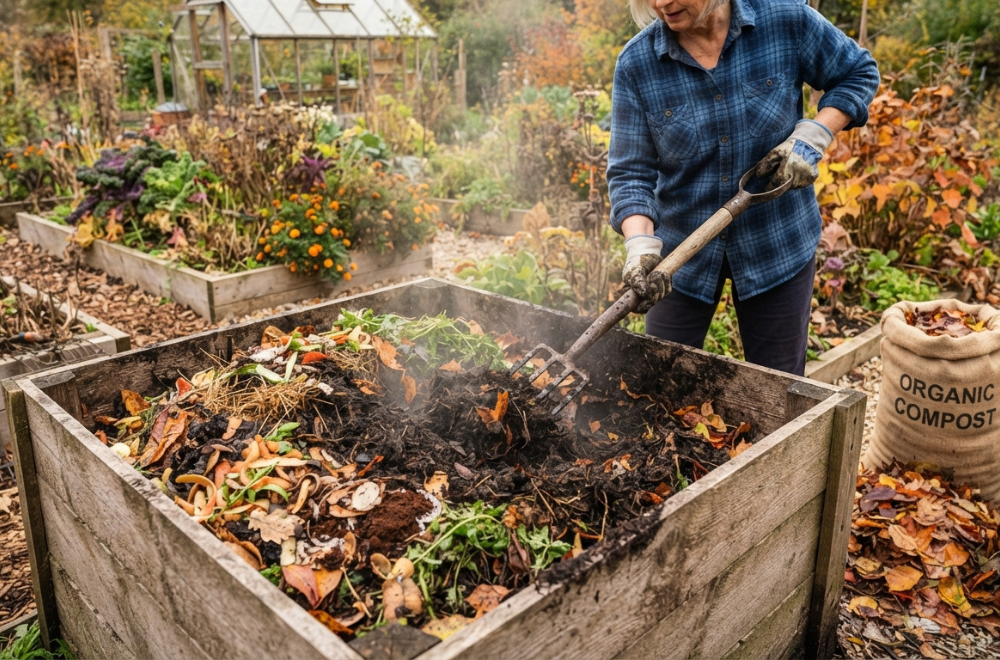
Start by pulling out all spent summer crops, but leave anything with healthy, uninfected root systems to feed the soil microbes if you’re chopping and dropping. Just make sure to toss any diseased plants straight into the municipal green waste or the trash—never into your home compost bin, unless you want to keep those pathogens alive for next year.
Once the bed is bare, grab a garden fork and test your soil compaction. If you can’t easily push the tines at least six inches deep into the dirt, you’ve got serious compaction issues. Don’t go renting a heavy gas-guzzling rototiller, though. Tilling shreds earthworm networks and turns your soil structure into dust. Instead, gently loosen the earth just enough to let air and water move through.
Take a good, honest look at what your dirt is telling you. Is it pale, sandy, and bone-dry? Is it dense gray clay that sticks to your boots like wet cement? Identifying your soil type right now dictates how much organic compost you’ll need to haul in.
Adding Organic Compost to Garden Soil in Autumn
If soil is a cake, organic compost is the rich chocolate frosting that makes everything work. Forget synthetic chemical fertilizers; they give plants a quick sugar rush and leave the soil completely dead inside.
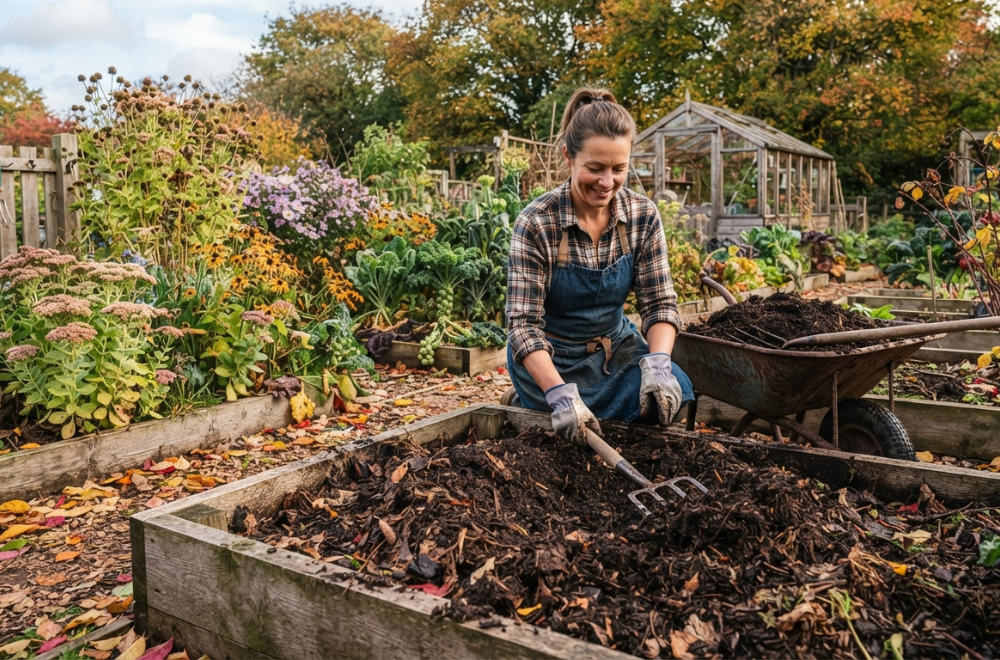
To give your garden beds a proper autumn boost, layer two to three inches of well-rotted organic compost right over the top of your cleared soil. You don’t even need to bury it. Let the winter rain, snow, and earthworms pull that goodness down into the root zone organically.
I make my own black gold in three giant bins behind my garage, but buying bulk compost from a local nursery works just as well. Just make sure it smells earthy and sweet, not sour or sulfurous. If it smells like a swamp, it hasn’t finished breaking down and will rob your soil of nitrogen.
Spreading compost in the autumn protects the underlying soil structure from heavy winter downpours. Without that protective blanket, hard raindrops act like tiny jackhammers, smashing your topsoil particles together and sealing the surface shut.
Planting Cover Crops for Organic Weed Control and Nitrogen Fixation
Once your compost is spread, it’s time for nature’s living blanket: cover crops, often called green manure. Throwing down a cover crop is the single best upgrade you can make to your organic gardening routine.
Instead of letting weeds take over your empty beds all winter long, plant seeds like winter rye, crimson clover, hairy vetch, or field peas. These plants germinate quickly in the cooling autumn air, grow a dense root system that holds the soil in place, and actively pump nutrients back into the earth.
Legumes like clover and vetch have a superpower: they pull nitrogen right out of the air and fix it into tiny nodules on their roots. When you chop them down in the spring, that free organic nitrogen feeds your heavy-feeding tomatoes and peppers.
Broadcasting cover crop seeds is ridiculously easy. Rake your compost layer smooth, scatter your seeds by hand like you’re feeding chickens, and rake them in lightly so birds don’t eat them all. Water them in gently, and let autumn’s natural rains take care of the rest.
What Can Go Wrong: Common Autumn Soil Prep Mistakes
Even with the best intentions, it is entirely possible to mess up your autumn soil routine. Let’s talk about what can go wrong so you can dodge the bullets I already took for you.
First, don’t walk on your garden beds when they are soaking wet. I did this during a particularly rainy November a few years back, and I compressed my rich garden loam into solid pottery clay. If you need to work in the beds, lay down a wide wooden board to distribute your weight.
Second, don’t plant your cover crops too late. If you wait until the ground freezes solid, your seeds will just sit there like birdseed. Get them in the ground at least four to six weeks before your region’s first expected hard freeze so they can establish a solid root system.
Third, steer clear of uncomposted fresh manure in the autumn if you plan on growing root crops or greens early next year. Fresh manure is too hot, full of weed seeds, and can carry pathogens that contaminate edible crops. Stick to aged, broken-down compost or well-rotted manure that has cured for at least six months.
Quick Side Note: Mulching Beds Without Cover Crops
If you live in an area with a brutal winter or you simply don’t want to mess with cover crop seeds this year, there is an easy fallback option.
Cover your composted beds with a thick, four-inch layer of shredded autumn leaves, clean straw, or untreated grass clippings. This acts as a heavy-duty winter mulch. It keeps the soil moisture balanced, stops erosion dead in its tracks, and breaks down slowly into gorgeous humus by the time spring arrives. Just remember to pull back the mulch in early spring so the sun can warm up the bare soil before planting time.
Wrapping Up: Setting Up Next Spring’s Success
Prepping your garden soil in the autumn with organic compost and cover crops takes a little bit of sweat equity when you’re already tired from the summer harvest, but it pays massive dividends when spring finally rolls around. You’ll walk out to soft, dark, fragrant earth that practically begs you to plant seeds, completely bypassing the rock-hard compaction headaches your neighbors are dealing with.
What’s your biggest struggle when putting your garden to bed for the winter—dealing with stubborn weeds, heavy clay, or just finding the motivation when the weather cools down? Drop a comment or ask a question in the box below, and let’s talk dirt!

About Syprose Kiche
Syprose Kiche is the creator and writer behind My Besuited Home, a practical home and garden website covering DIY projects, gardening, lawn care, landscaping, home improvement, and outdoor living. She focuses on turning everyday homeowner questions into clear, practical guides backed by careful research and useful real-world considerations.