
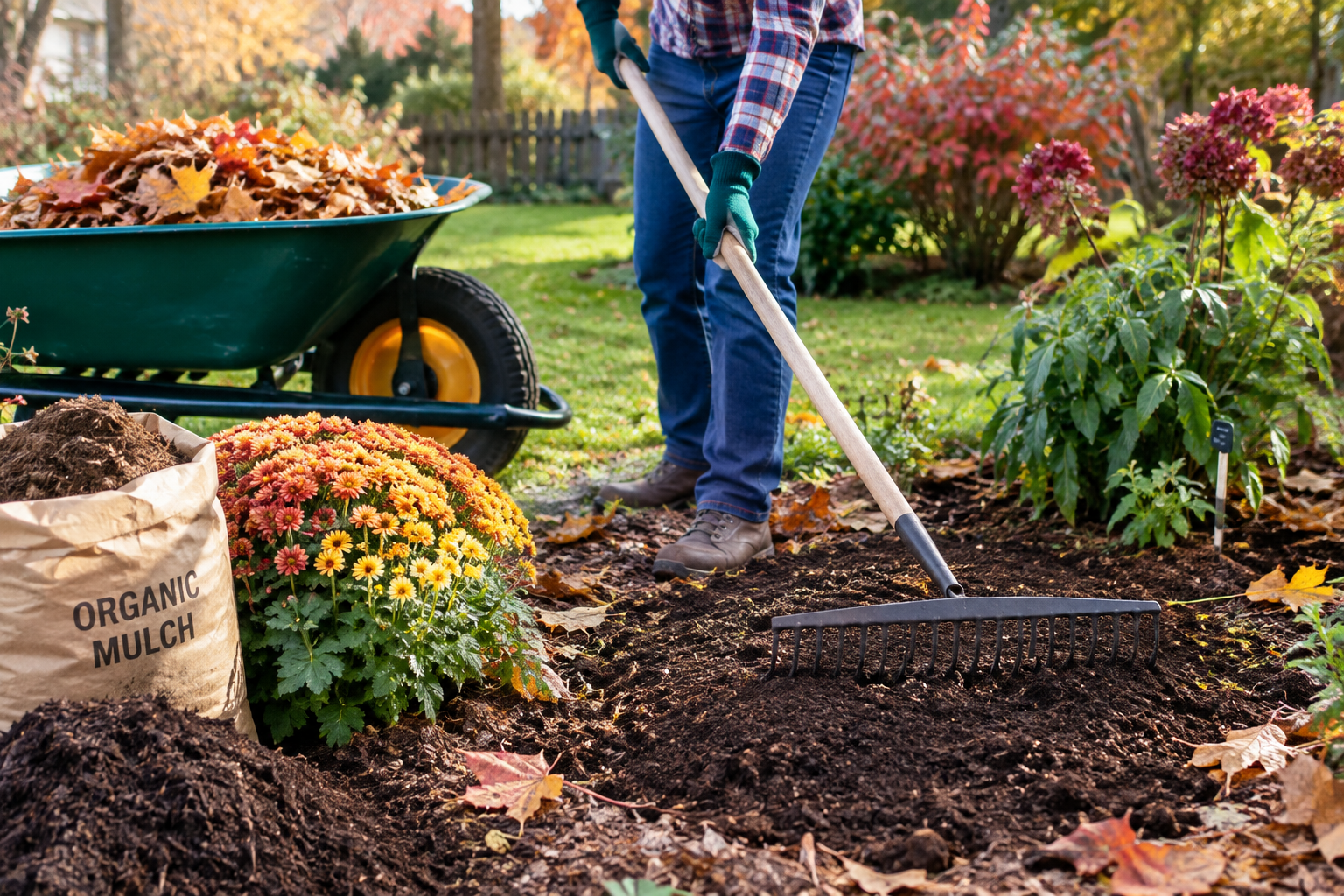
By the time most gardeners think about winter prep, the first frost warning has already gone out and half the to-do list is suddenly urgent instead of optional. Tender plants get moved indoors in a rush. Hoses freeze solid because nobody drained them. A shrub that could have been wrapped in twenty minutes ends up with split bark come spring. None of this is about being a more dedicated gardener — it’s about timing. Fall garden work is spread across roughly ten weeks, and each task has a window when it actually works best. Miss the window and the job gets harder, or the plant doesn’t make it.
This checklist breaks that stretch into September, October, and November, plus a final list of things that genuinely need to happen before the first hard freeze, regardless of what the calendar says. Dates are approximate — actual timing depends heavily on your USDA hardiness zone and local frost history, so treat the months as a general sequence rather than a fixed schedule.
September: The Garden Is Still Working, So Are You
September confuses a lot of gardeners because the weather often still feels like summer. That’s exactly the problem — plants are responding to shortening daylight even when temperatures haven’t dropped much, and several jobs are far easier to do now than after the first cold snap knocks foliage down.
Why Weeding Now Matters More Than Weeding in Summer
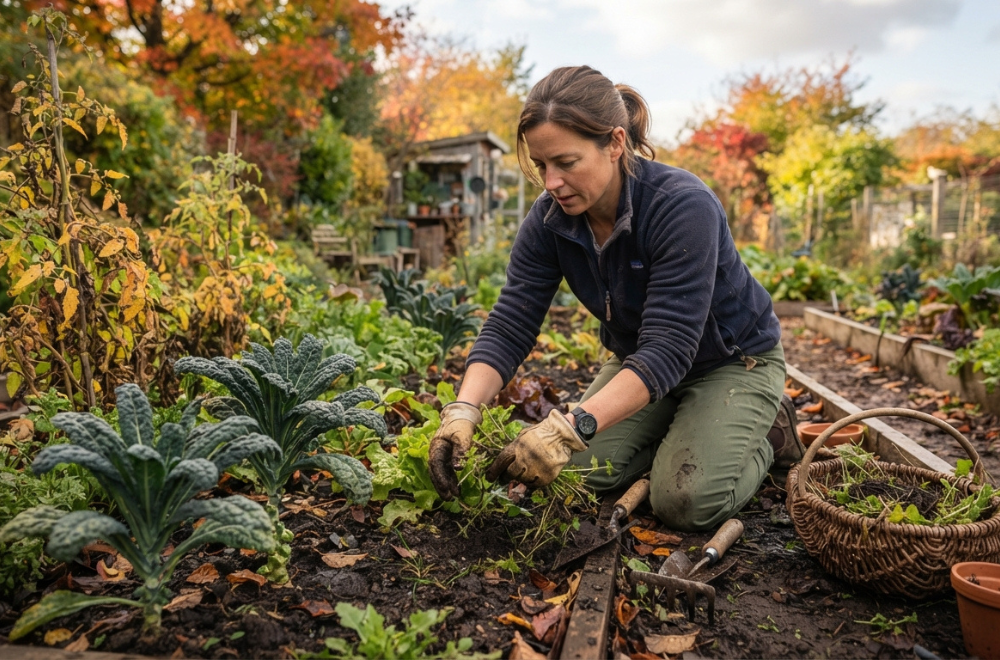
Weeds that go to seed in September are setting up next year’s weed population, not this year’s. Cooler soil and typically more consistent rainfall also make hand-pulling more effective, because roots release from moist soil rather than snapping off in dry, compacted ground. Annual weeds like crabgrass or chickweed are close to setting seed heads by early fall, so removing them before that point has an outsized effect on how clean the bed looks next spring.
Perennial weeds are a different problem. Pulling the visible top growth of something like bindweed or Canada thistle does little if the root system stays intact underground. For persistent perennial weeds, fall is actually one of the better times for a targeted herbicide application, if you use one, because the plant is pulling nutrients down into its root system to prepare for dormancy — that means a systemic herbicide gets carried down with it more effectively than during peak summer growth. If you go this route, follow the label rate exactly, apply on a calm, dry day to avoid drift onto nearby plants, and keep children and pets off the treated area until it’s dry.
Dividing Perennials While Roots Still Have Time to Establish
Overcrowded perennials — hostas, daylilies, irises, many ornamental grasses — benefit from division roughly every three to five years, and early-to-mid September is a workable window in most temperate climates. The logic is simple: divided plants need several weeks of relatively warm soil to grow new roots before the ground goes cold, but not so much heat that the exposed roots dry out or scorch. Wait until October in a zone with early frosts and a divided plant may not root in well enough to survive winter heave.
To divide most fibrous-rooted perennials, dig up the entire clump, then either pull sections apart by hand or slice through the root mass with a sharp spade or knife, aiming for divisions with at least three to five healthy shoots each. Replant immediately, water thoroughly, and skip fertilizer at this stage — new root growth is the goal, not top growth, and high-nitrogen fertilizer pushes the wrong kind of development right before dormancy.
Bearded irises are an exception worth knowing: they’re typically divided in July or August, not September, because they need a longer establishment period before frost. If you’re dividing later than that, expect reduced bloom the following spring rather than plant failure.
What’s Actually Worth Planting in September
September is a strong planting month for anything that needs to establish roots before winter but doesn’t need to bloom this season — trees, shrubs, and most perennials fall into this category. Soil is still warm from summer, which encourages root growth, while air temperatures are cooling, which reduces stress on the top of the plant. This combination is why many extension services describe fall as a better planting season for woody plants than spring in a lot of climates.
Vegetable gardeners in mild climates can also use September to start a fall crop of quick-maturing greens, radishes, or spinach, since these tolerate light frost and mature in under 60 days. In colder zones, this window has usually already closed by September and the better move is preparing beds for next year rather than trying to squeeze in another harvest.
Checking for Pests Before They Overwinter in Your Soil or Mulch
Late-season pest inspection gets skipped constantly because people assume pest pressure drops as the weather cools. Some does. But several common garden pests are actively looking for overwintering sites in September — squash bugs moving toward garden debris, spider mites finishing a final generation before cold weather, and scale insects settling onto woody stems where they’ll stay dormant until spring.
Walk the garden and check the undersides of leaves, stem joints, and the base of plants near the soil line. Yellow stippling on leaves can indicate spider mites; sticky residue or small bumps along stems often means scale. If you find an active infestation, treating it now — before the pest settles in for winter — is usually more effective than waiting, because many overwintering life stages are more resistant to treatment once they’re dormant.
Mulching Selectively, Not Everywhere Yet
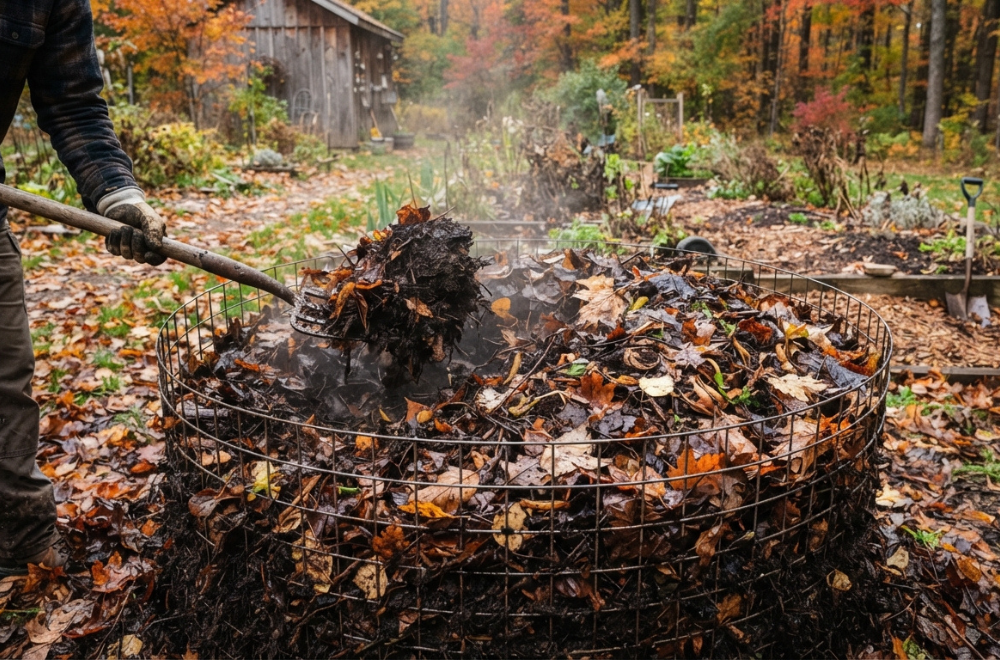
Full winter mulching is a November job in most climates, but September has one specific mulching task: newly divided or newly planted material benefits from a light layer of mulch now to stabilize soil temperature and retain moisture while roots establish. This isn’t insulation against cold — the ground is still warm — it’s about reducing moisture stress during the establishment period. Two to three inches is generally enough; more than that around a young plant’s base can trap excess moisture against the stem and encourage rot.
October: Cleanup, Harvest, and Getting Bulbs in the Ground
October is where fall gardening starts to feel more urgent, and for good reason — this is usually the month with the most tasks and the narrowest windows.
Cleaning Beds Without Removing Everything
Bed cleanup in October is often oversimplified into “cut everything back.” That’s not quite right. Diseased foliage — powdery mildew on peonies, black spot on roses, anything with visible fungal or bacterial symptoms — should come out and go in the trash, not the compost pile, because most home compost systems don’t reach temperatures high enough to kill plant pathogens reliably.
Healthy perennial foliage is a different story. Many gardeners now leave seed heads and hollow stems standing through winter deliberately, because they provide food for birds and overwintering habitat for beneficial insects like native bees, which often nest in hollow or pithy stems. Coneflower, black-eyed Susan, and ornamental grasses are commonly left standing for this reason and cut back in early spring instead. If a plant had no disease issues this season, there’s a reasonable argument for leaving it rather than cutting it to the ground purely out of habit.
Finishing the Harvest Before Frost Changes Everything
For vegetable gardeners, October is typically the last full month to harvest warm-season crops before frost damages them. Tomatoes, peppers, and winter squash should generally be brought in before a hard freeze, though tomatoes that are mature-green (full-sized but not yet colored) can often be picked and ripened indoors rather than left on the vine to gamble against the weather. A light frost, by contrast, can actually improve the flavor of some cold-hardy crops like kale, Brussels sprouts, and parsnips, so there’s no need to rush those.
Root vegetables like carrots and beets can often stay in the ground later than people expect, particularly under a layer of mulch, but should come out before the soil freezes solid enough to make digging impossible.
Planting Spring-Flowering Bulbs at the Right Depth and Timing
This is the single most time-sensitive task on the entire checklist. Tulips, daffodils, crocuses, and hyacinths all need a period of cold dormancy to bloom properly the following spring, and they need enough time in the ground before it freezes to establish roots — typically six to eight weeks. Planting bulbs too early, while soil is still warm, can encourage premature top growth that then gets damaged by frost. Planting too late, once the ground is close to freezing, doesn’t leave enough time for root development and often results in weak or absent blooms.
As a general depth guideline, plant bulbs roughly two to three times as deep as the bulb is tall, pointed end up. Tulips and daffodils generally go 6 to 8 inches deep; smaller bulbs like crocuses go shallower, around 3 to 4 inches. Add a bit of bone meal or a bulb-specific fertilizer at planting time if your soil is poor, but avoid high-nitrogen fertilizer, which tends to encourage leafy growth at the expense of blooms.
Gardeners in warmer climates (roughly zone 8 and warmer) often need to pre-chill tulip and hyacinth bulbs in a refrigerator for six to eight weeks before planting, since the ground never gets cold enough on its own to trigger the dormancy period these bulbs need.
Protecting Tender Plants Before the First Real Cold Snap
October is when the gap between “still warm during the day” and “frost overnight” starts showing up regularly, and tender plants — tropical hibiscus, elephant ears, dahlias, cannas, potted citrus, and similar non-hardy species — need attention before that first frost, not after. Tender perennials that die back can often have their tubers or rhizomes lifted after the foliage is blackened by a light frost (this signals the plant is going dormant) and stored indoors in a cool, dark spot in slightly damp peat moss or vermiculite. Tropical plants in containers should be moved indoors before nighttime temperatures consistently drop below 50°F (10°C), since many suffer chilling injury well above actual freezing.
Check any plant coming indoors carefully for pests first — aphids, spider mites, and whitefly hitchhike into homes on plants brought in from outside constantly, and an indoor environment with no natural predators lets these populations explode over winter.
November: Closing the Garden Down for the Season
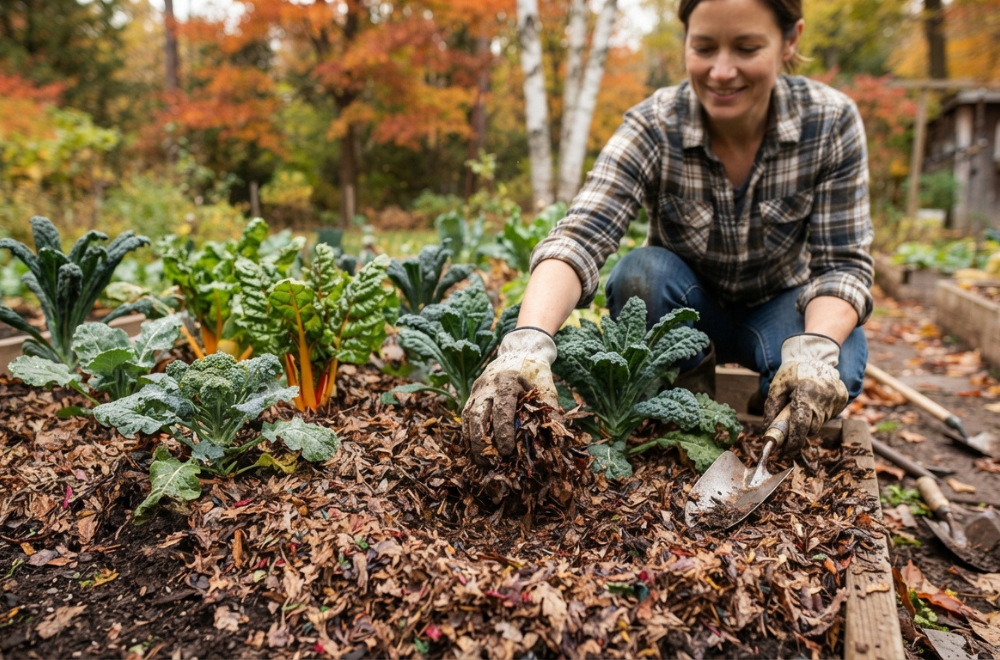
By November, active growth has mostly stopped in temperate climates, and the work shifts from maintenance to protection and storage.
The Final Cleanup Pass
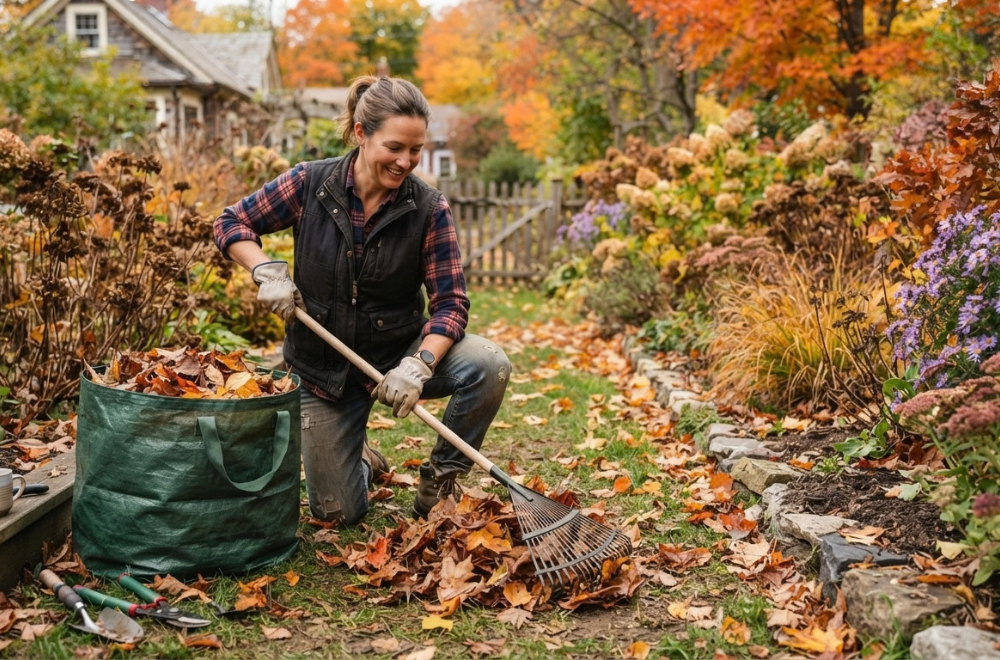
This is the last real opportunity to remove diseased material, fallen fruit that can harbor pests or fungal spores, and any remaining garden debris that would otherwise sit under snow all winter. Fallen leaves are worth a specific mention: a thin layer left on lawns and beds can be beneficial, breaking down into organic matter, but a thick, matted layer smothers grass and can create conditions for fungal disease like snow mold. Shredding leaves with a mower before leaving them on beds speeds decomposition significantly compared to leaving whole leaves.
Mulching for Winter Insulation
Where September’s mulching was about moisture during establishment, November’s mulching is about temperature stability. The goal isn’t keeping the ground warm — it’s preventing the freeze-thaw cycles that heave shallow-rooted perennials out of the soil, sometimes exposing roots to lethal cold and drying wind. Apply mulch after the ground has had its first light frost or two but before a hard freeze sets in; mulching too early can actually delay the dormancy signal plants need and, in some cases, invite rodents looking for a warm place to nest before winter really arrives.
Two to four inches of shredded bark, straw, or chopped leaves is typical for perennial beds. Around the base of shrubs and trees, keep mulch pulled back an inch or two from the trunk or stem itself — mulch piled directly against bark traps moisture and invites rot and rodent damage, a mistake commonly called “mulch volcanoing” that ends up doing more harm than the mulch’s insulation benefit is worth.
Protecting Shrubs From Winter Sun, Wind, and Snow Load
Not every shrub needs winter protection, but a few categories consistently do: broadleaf evergreens (rhododendron, boxwood, holly) are prone to winter burn, where sun and wind pull moisture from leaves faster than frozen roots can replace it. Wrapping in burlap, or setting up a simple burlap windbreak on the side facing prevailing winter wind, reduces this significantly. Newly planted shrubs of any kind, regardless of species, are more vulnerable simply because their root systems aren’t established enough to support the plant through winter stress the way a mature specimen’s would be.
Multi-stemmed shrubs in areas with heavy snowfall also benefit from loose twine wrapped around the outer branches to keep snow load from splaying the structure apart — a common issue with arborvitae in particular, where splayed branches sometimes don’t spring back even after the snow melts.
Draining and Storing Hoses, Irrigation Lines, and Watering Equipment
Water left in a hose or irrigation line expands as it freezes, and that expansion is what cracks fittings, splits hose walls, and damages backflow preventers — damage that often isn’t discovered until the following spring when the system is turned back on and starts leaking. Disconnect hoses from spigots, drain them completely by stretching them out and letting gravity do the work or by using an air compressor on a blow-out fitting for in-ground irrigation systems, and store them somewhere that won’t freeze if possible, since even indoor unheated garages can still cause damage in a hard freeze.
Outdoor spigots without a frost-free design should be shut off from an interior valve if one exists, and any remaining water in the exterior line drained or blown out. Skipping this step is one of the more common and expensive fall gardening mistakes, since a burst pipe inside a wall is a plumbing repair, not a garden task.
Cleaning and Storing Tools Properly
Tools put away dirty or wet over winter rust, and rusted tools don’t just look bad — a pitted, rusted blade tears through soil and plant tissue instead of cutting cleanly, which stresses plants and creates entry points for disease. Wipe soil off with a wire brush or stiff cloth, dry metal parts thoroughly, and apply a light coat of oil to prevent rust over winter. Pruning tools that cut plant material — especially anything used on diseased plants during cleanup — should be disinfected with isopropyl alcohol or a diluted bleach solution before storage, both to protect the tool and to avoid spreading disease to whatever gets cut first next spring.
Before the First Hard Freeze: A Non-Negotiable Short List
Some tasks don’t fit neatly into a calendar month because “hard freeze” arrives on a different date every year depending on region and weather patterns that season. These are the jobs that genuinely need to happen before that first hard freeze hits, regardless of what month it technically is.
Tender plants and bulbs that can’t survive frost. Dahlias, cannas, gladiolus, tuberous begonias, and similar tender bulbs or tubers need to be lifted and moved to frost-free storage before a hard freeze damages the below-ground structure, not just the foliage. A light frost that blackens the top growth is actually a useful signal that the plant is entering dormancy and ready to be lifted; a hard freeze that reaches the soil can damage the tuber itself, which is a different and more serious problem.
Containers. Potted plants freeze faster and harder than plants in the ground because there’s no surrounding soil mass to buffer the cold — a container’s soil can drop to the same temperature as the air within hours. Frost-tender container plants should be moved indoors or to an unheated but enclosed space like a garage before a hard freeze. For containers holding cold-hardy perennials meant to stay outside, grouping pots together against a wall and wrapping the outside of the pots in bubble wrap or burlap gives the root systems meaningfully more protection than leaving them isolated and exposed.
Irrigation systems. In-ground sprinkler systems need to be fully blown out with compressed air before a hard freeze, not just drained by gravity, because irrigation lines commonly have low points where water pools and won’t drain on its own. This is a job many homeowners hire out specifically because the equipment and pressure settings matter — too much pressure can damage the system’s components.
Sensitive shrubs and young trees. Anything planted within the last year, along with borderline-hardy shrubs pushed slightly outside their normal zone range, benefits from protection before the first hard freeze rather than after damage has already occurred. This includes burlap wrapping for wind and sun protection, and for young trees specifically, a tree wrap or guard around the trunk to prevent frost cracking — a split in the bark caused by rapid temperature changes between sun-warmed and shaded sides of the trunk on cold, clear days.
A Few Mistakes Worth Avoiding
Cutting everything back to the ground in October out of habit. As mentioned above, this removes winter habitat for beneficial insects and food sources for birds unnecessarily when the plant had no disease issues. It also removes a visual marker of where dormant perennials are, which matters if you’re planning to do any other work in the bed over winter — it’s easy to accidentally dig into or walk over a dormant crown once the stems marking its location are gone.
Piling mulch against trunks and stems. This bears repeating because it’s one of the most common fall mistakes and one of the more damaging ones. A cone of mulch pushed up against bark holds moisture against the trunk, creates a favorable environment for fungal pathogens, and gives rodents a hidden, insulated spot to chew on bark over winter — sometimes girdling a young tree so thoroughly that it dies the following year without anyone realizing why. Keep mulch in a flat ring a few inches away from the trunk, not a volcano against it.
Watering less just because it’s getting cooler. Plants going into winter with dry root systems are more vulnerable to cold damage than well-hydrated ones, particularly evergreens, which continue to lose some moisture through their foliage all winter even while dormant. A deep watering before the ground freezes solid — sometimes called a “winter watering” — is worth doing for evergreens and any plant installed within the past year, especially in regions with dry autumns.
Assuming testing the soil is a spring-only task. Fall is actually a reasonable time to test soil pH and nutrient levels, since amendments like lime, which raises pH, need months to fully react with the soil. Applying lime in fall gives it the winter to work, rather than trying to correct pH right before spring planting when there isn’t time for it to take effect.
Bringing houseplants and tender plants indoors without a transition period. Moving a plant that’s been outside all summer directly into a heated, dry indoor environment can cause leaf drop and stress, separate from any pest issues. Where practical, a gradual transition — a few hours indoors at first, increasing over a week or two — reduces the shock, though for genuinely frost-tender plants facing an imminent freeze, getting them inside takes priority over a slow transition.
Regional Timing Differences Worth Knowing
Everything above describes a general sequence, but the actual calendar dates shift substantially by region. A gardener in USDA zone 4 might see a hard freeze in late September, compressing this entire checklist into a much shorter window, while a gardener in zone 8 might not see a hard freeze until December, giving considerably more flexibility, particularly around bulb planting and tender plant protection.
The most reliable way to build a personal fall schedule is to look up the average first frost date for your specific area — county extension offices and services like the National Weather Service or regional agricultural extension programs publish this — and count backward from there. Bulb planting, for instance, works best roughly six to eight weeks before that date; tender plant protection needs to happen by the date itself, not after it.
Frequently Asked Questions
What counts as a “hard freeze” versus a regular frost? A light or frost freeze typically refers to temperatures dropping to around 32°F (0°C) for a short period, often just overnight, which damages tender foliage but not necessarily deeper plant tissue. A hard freeze usually means temperatures at or below 28°F (-2°C) sustained for several hours, which is enough to damage root systems, split plant cells more extensively, and kill tender plants outright rather than just their top growth.
Is it too late to do fall prep if I haven’t started by November? Not necessarily, but the priority order changes. Bulb planting and perennial division become riskier the later they happen, since root establishment time is running out. Protective tasks — mulching, draining irrigation, moving tender plants indoors, wrapping vulnerable shrubs — remain worth doing even late, since their benefit doesn’t depend on weeks of prior growing time the way root establishment does.
Should I fertilize my garden in the fall? This depends heavily on what you’re fertilizing. A phosphorus-heavy “winterizer” fertilizer is sometimes recommended for lawns to support root development, but general high-nitrogen fertilizer on perennial beds in fall is usually discouraged, since it encourages new leafy growth right when the plant should be shutting down for dormancy — that new growth is often too tender to survive the first freeze.
What to Prioritize If You’re Starting Late
If none of this happened yet and frost is close, protecting what you have takes priority over improving what you have. Get tender plants and bulbs out of the ground or indoors, drain anything holding water, and mulch what’s already planted. Division, new planting, and bed redesign can wait until spring without real cost. A garden protected late is in far better shape than one improved early but left exposed to a hard freeze.

About Syprose Kiche
Syprose Kiche is the creator and writer behind My Besuited Home, a practical home and garden website covering DIY projects, gardening, lawn care, landscaping, home improvement, and outdoor living. She focuses on turning everyday homeowner questions into clear, practical guides backed by careful research and useful real-world considerations.