
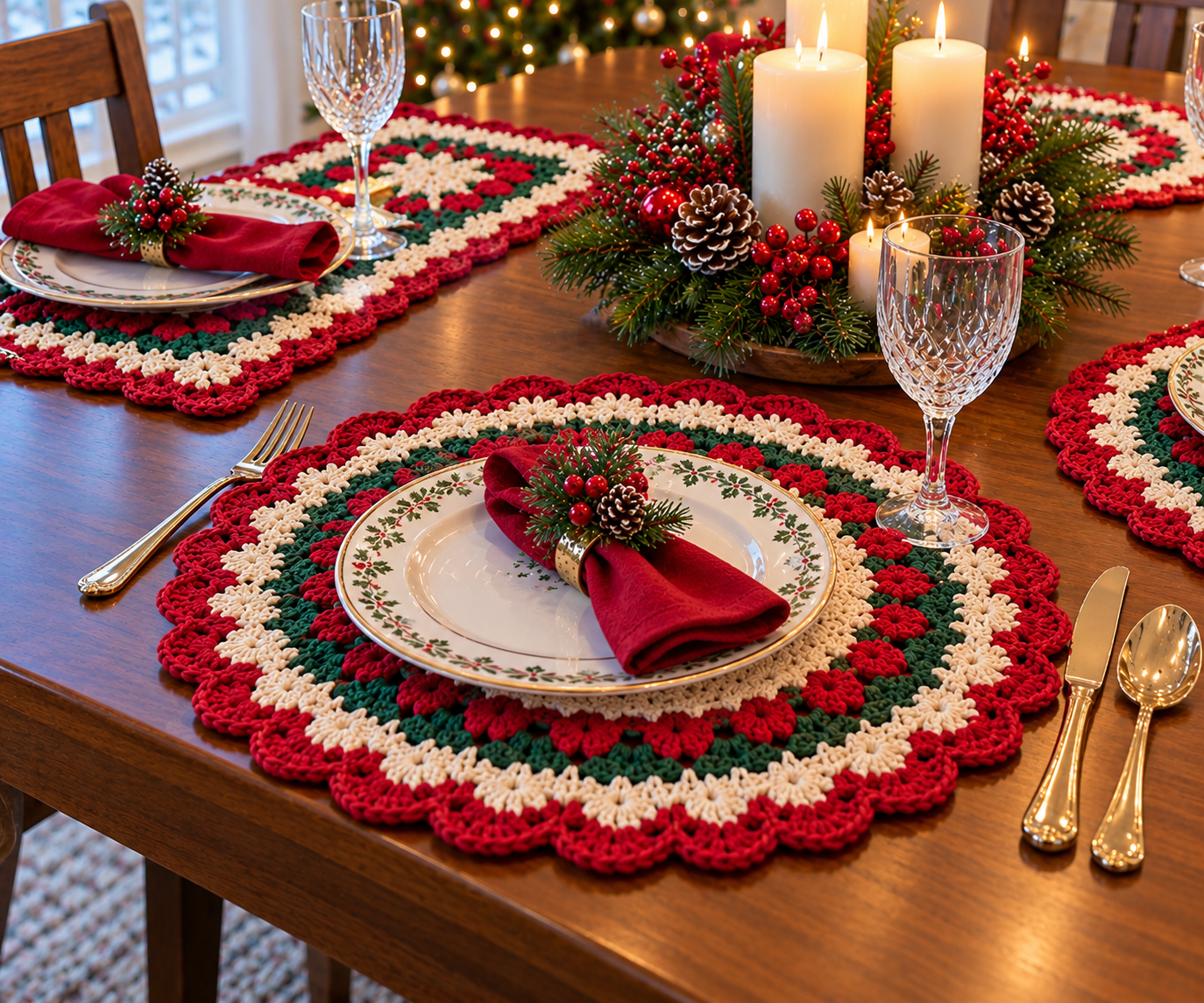
A crocheted centerpiece that looks charming on a craft-room shelf can struggle on a dinner table. Pumpkins slump, snowflakes droop toward the gravy, and a lace runner that took three evenings to finish turns out too narrow to sit under a row of serving dishes. Crochet is soft and flexible, which is exactly why people love it, but a holiday table asks for pieces that hold their shape, stay clear of plates and glasses, and keep well away from open flame.
The thirteen ideas below are grouped by where they sit on the table, and each one comes with the practical details that decide whether it works: yarn choice, approximate sizes, and what to avoid. Most suit either Thanksgiving or Christmas with a change of color, and a few are noted as better for one than the other.
Choose Yarn and Finishing Before You Choose a Project
The fiber matters more on a table than almost anywhere else in the house, because the pieces will meet food, heat, and spills.
Cotton is the safest all-purpose pick for anything that touches the table surface: runners, placemats, coasters, and napkin rings. It tolerates washing better than most fibers and does not melt. Worsted-weight cotton gives a dense, sturdy fabric. Thinner mercerized crochet cotton gives the fine, lacy look of a doily but takes much longer to stitch.
Acrylic is inexpensive, comes in a huge range of holiday colors, and holds up in the wash, but it softens and melts under high heat. It is fine for garlands, ornaments, and stuffed decorations. Keep it away from hot serving dishes and anything near a candle.
Wool and wool blends give a cozy, textured look and hold shape well when filled or stiffened, but they can felt if washed roughly. They suit display pieces better than placemats. Always check the yarn label for care instructions.
Stiffening is what keeps snowflakes, stars, and small trees upright. Commercial fabric stiffener is made for this, and a diluted white craft glue mixture is a common alternative. Ratios differ by product, so follow the label rather than a guess. The piece is soaked, shaped on a surface it will not stick to (plastic wrap over foam board works), and left to dry completely. Humid rooms slow drying considerably, so allow a full day or more.
Flame is the one firm rule. Yarn and open flame do not mix, whatever the fiber. Every idea below that sits near a candle is designed around battery-operated LED candles, and that is the only kind that belongs inside or beside a crocheted piece.
Pieces That Cover the Table
1. A Lace-Style Doily Runner
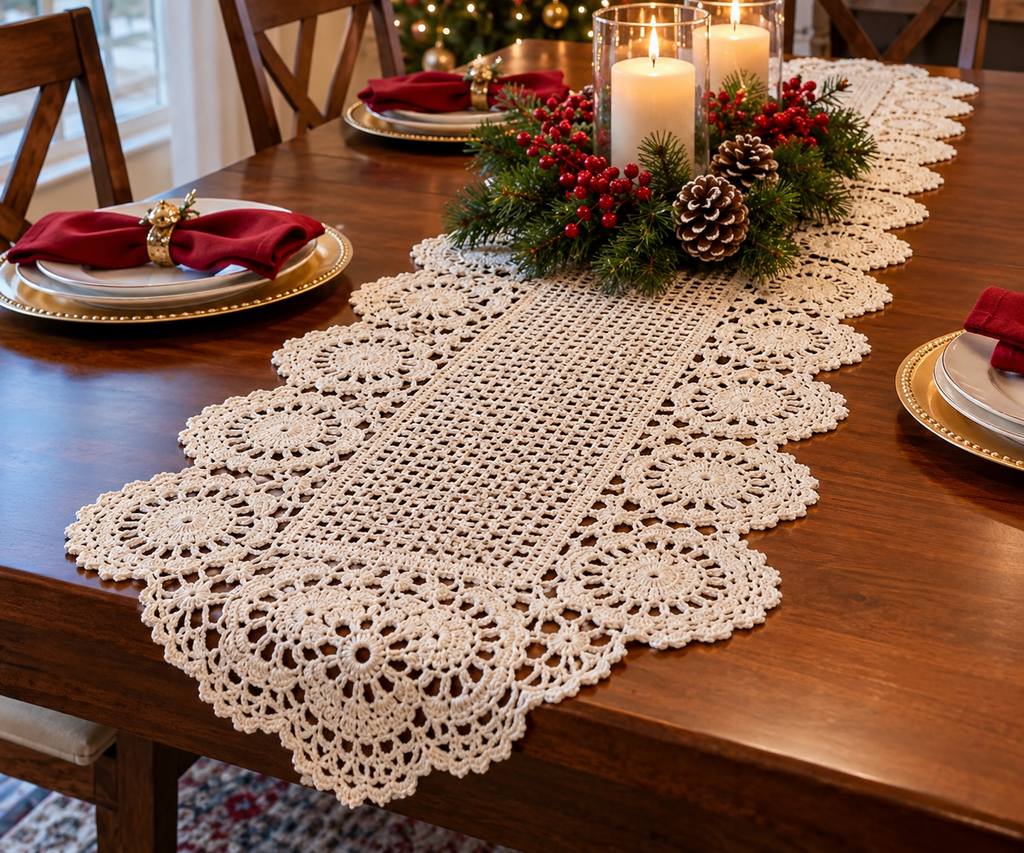
A runner built from joined doily motifs or a long strip of lace-style stitches gives a formal table a delicate look, and ivory, cream, or white thread works for nearly any holiday. Runners are commonly made around 12 to 16 inches wide, which leaves room for place settings on both sides while still reading as a runner and not a tablecloth. Let the ends hang down several inches past the table edge.
The tradeoff is time. Fine thread and small hooks produce beautiful results but a long runner can take weeks. Starting now for a December table is realistic. Starting the week before is not. Block the finished piece by pinning it to a flat surface and lightly steaming or dampening it so the pattern opens and the edges lie flat.
2. A Granny Square Runner in Holiday Colors
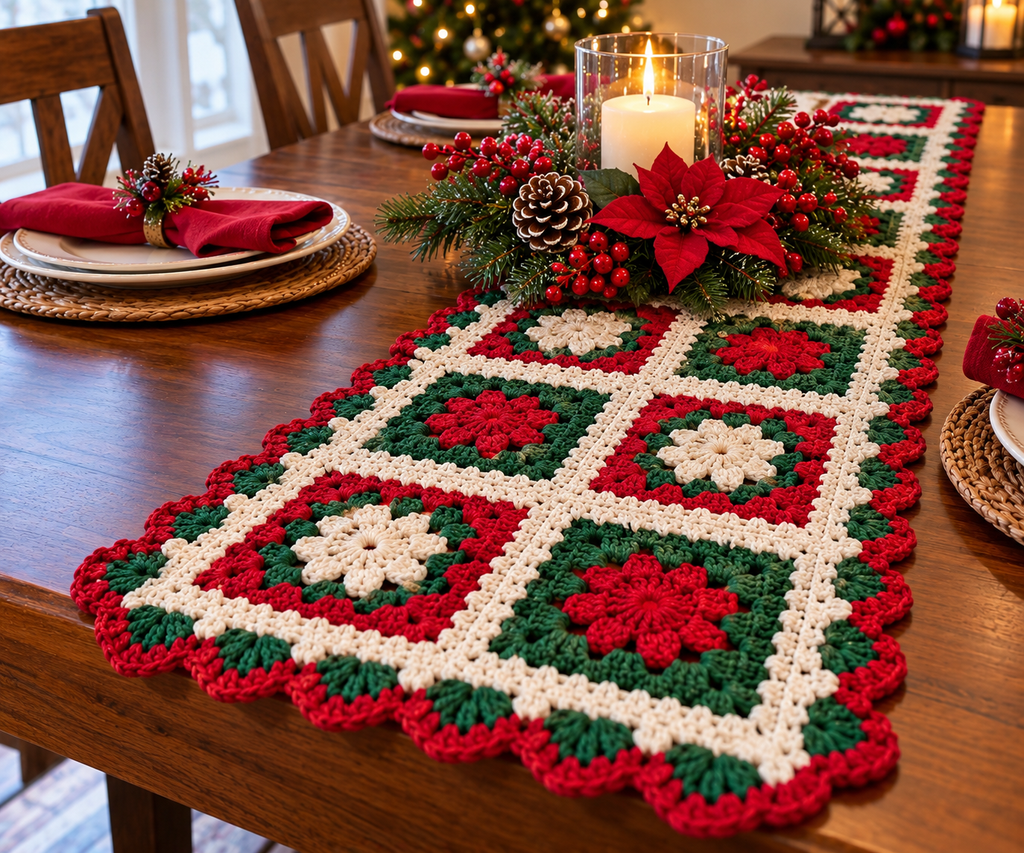
Granny squares are one of the easiest crochet projects to scale, which makes them forgiving. A single row of squares in a deep red, forest green, and cream palette gives Christmas warmth, while rust, mustard, and brown suit Thanksgiving. Join the squares by stitching or crocheting them together, then add a simple border so the edges do not ripple.
If the table already has a patterned tablecloth, choose solid-color squares. Busy squares on a busy cloth compete, and the table ends up looking cluttered rather than cozy.
3. Round or Rectangular Placemats
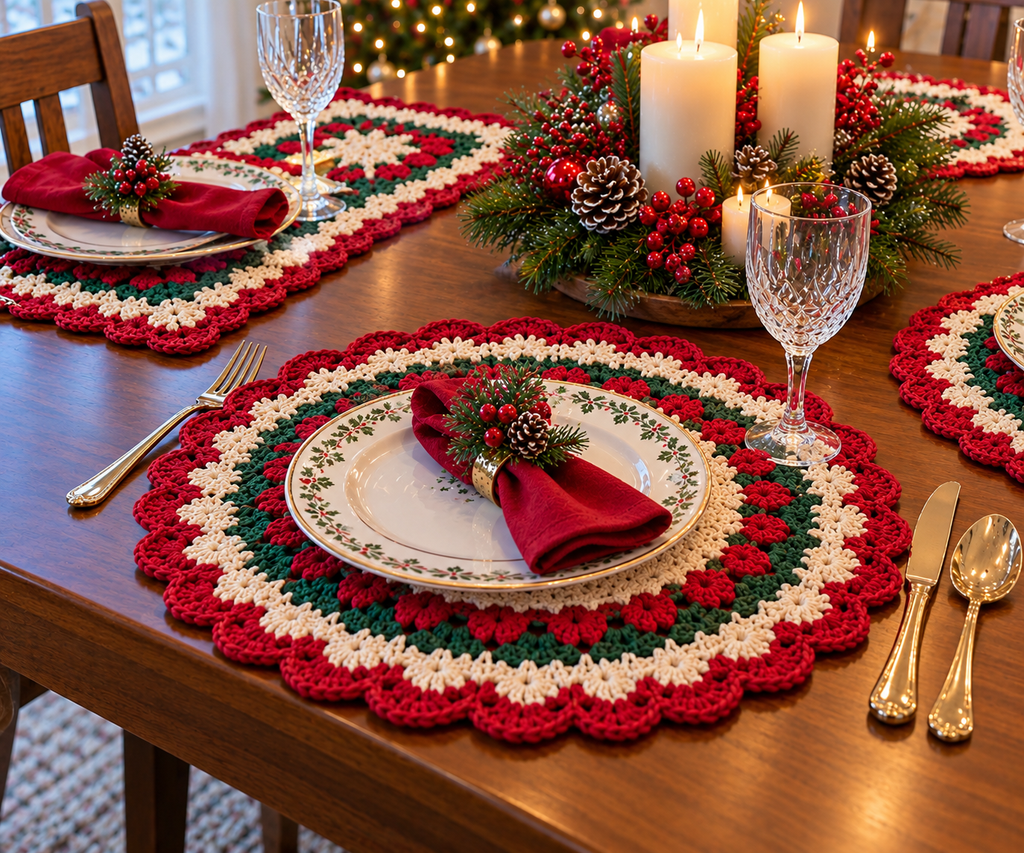
Placemats take more abuse than any other piece here, so use cotton and a tight stitch. An open, lacy stitch lets gravy and cranberry sauce soak through to the table. A standard dinner plate is roughly 10 to 11 inches across, so a round mat of around 14 to 15 inches leaves a visible border, and rectangular mats are often around 12 by 18 inches.
One caution: crocheted surfaces are slightly bumpy, so glasses can sit unevenly. A dense stitch such as single crochet worked in a spiral gives the flattest surface. Wash by hand or on a gentle cycle if the yarn label allows, and let them dry flat.
Details at Each Place Setting
4. Leaf and Snowflake Coasters
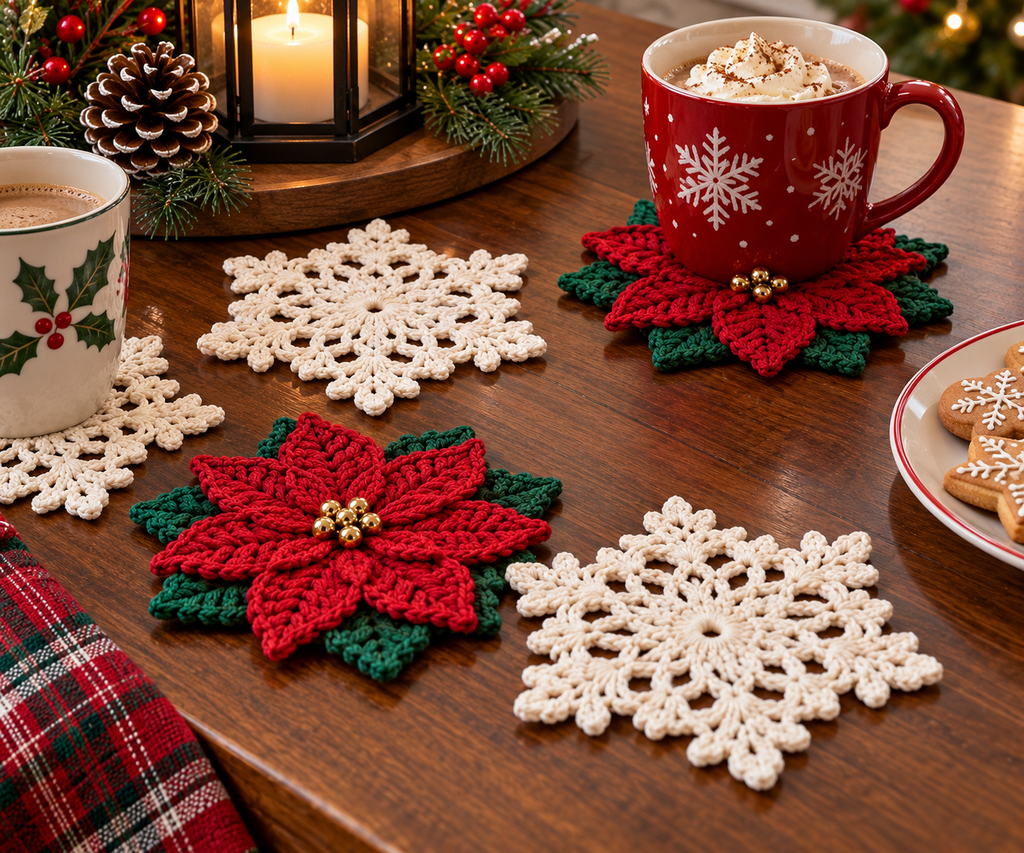
Coasters are about 4 inches across, work up in an evening, and are a good project for using leftover yarn. Leaf shapes in autumn colors suit Thanksgiving, and simple six-point snowflake shapes in white or silver-gray suit winter. Use cotton, because wet glasses will leave rings on any fiber, and cotton absorbs them better than acrylic. Make a few extras. Guests who are not sure where to set a drink will appreciate seeing a stack.
5. Napkin Rings
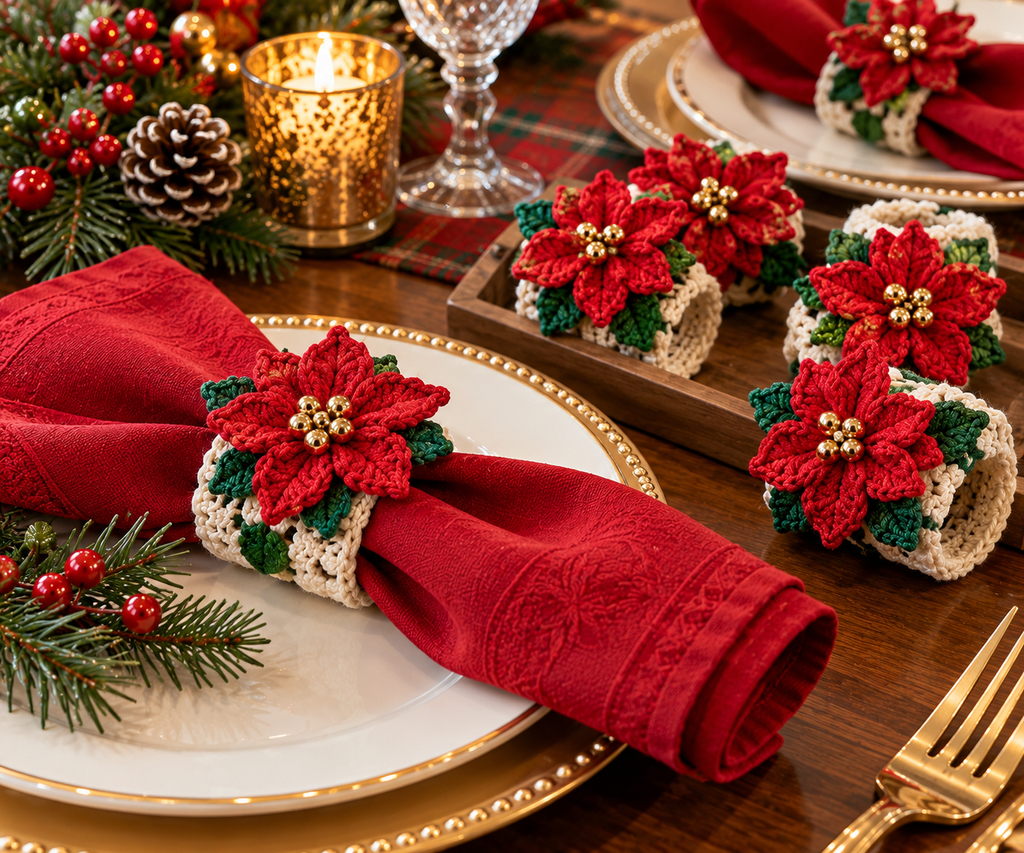
A napkin ring is a narrow band, so it is a small commitment, and it adds a handmade touch at every seat. Wrap a rolled napkin, measure around it, and crochet a strip to fit snugly with a button or loop closure. Add a tiny crocheted flower, leaf, or bow on top. Keep the band about 1.5 to 2 inches wide so it sits comfortably on a standard folded napkin.
For a Christmas table, a thin band in red with a small green leaf pair looks like holly. For Thanksgiving, a cream band with a rust-colored leaf is understated and works with most dinnerware.
6. Mini Stocking Place Cards
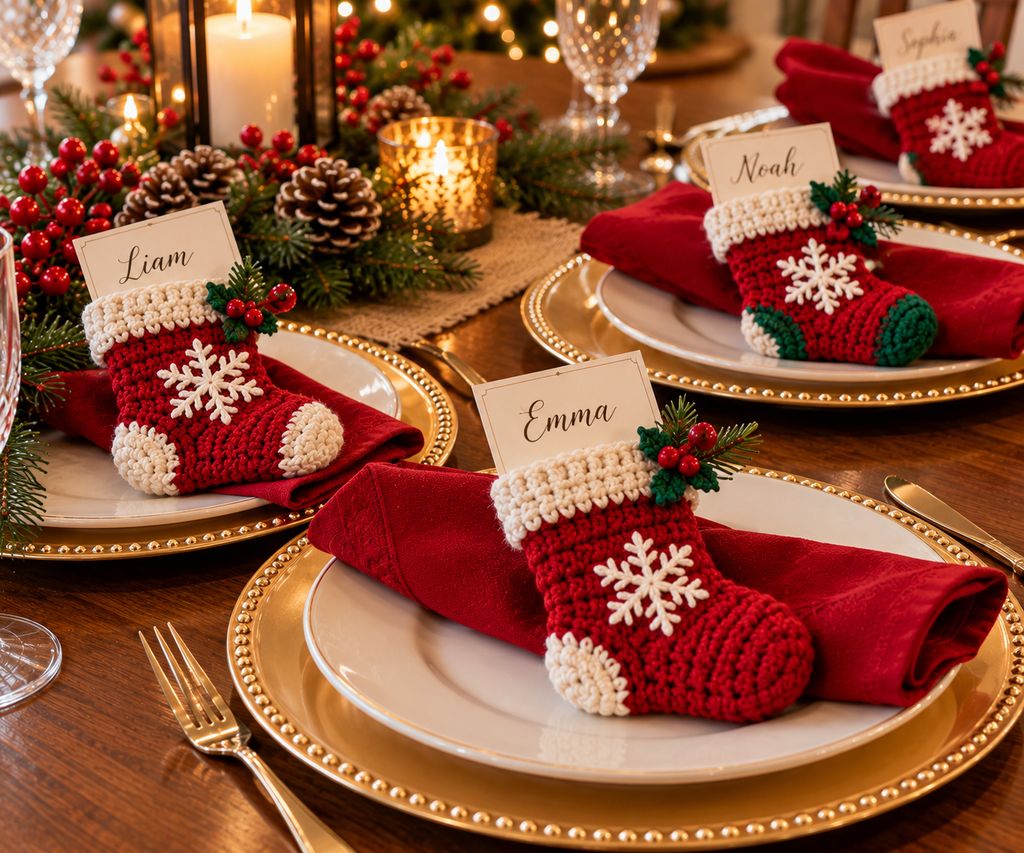
A small crocheted stocking, around 3 to 4 inches tall, holds a folded name card or a single wrapped candy at each seat. Work the name in embroidery floss, or tuck in a paper tag. This one is clearly a Christmas idea, though a mini cornucopia or leaf-shaped pouch could do the same job for Thanksgiving. Cooks hosting a large group should note that these are a good project to assign to guests who offer to help, since the pattern repeats without changing.
Centerpieces
7. A Cluster of Crochet Pumpkins
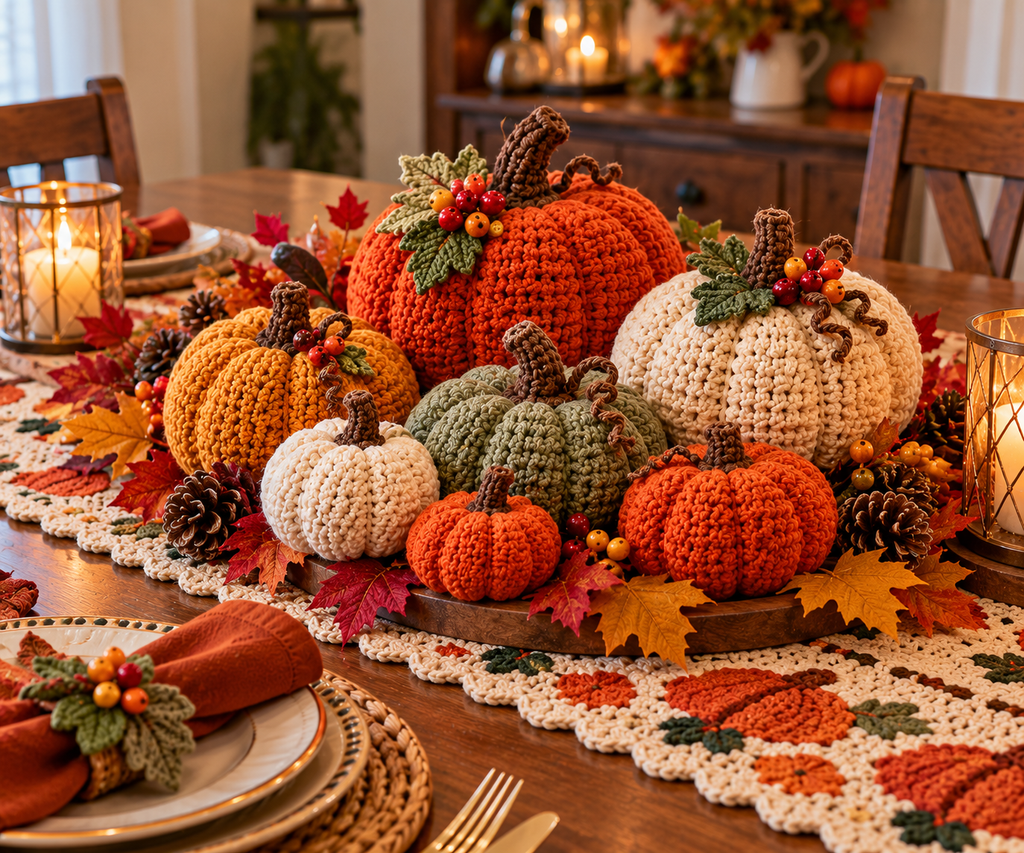
Crochet pumpkins are among the most popular fall decorations, and a group of three to five in different sizes makes a full centerpiece. Make the body from a round, lightly shaped piece, fill it firmly with polyester fiberfill, and cinch it with a few strands of yarn or a wrapped stitch to create the pumpkin ribs. Add a stem from brown yarn or a short piece of cinnamon stick or twig.
Underfilled pumpkins sag and look deflated within a day or two. Stuff them firmer than seems necessary. Use a mix of orange, cream, and sage green, and keep the cluster low enough that guests can see each other across the table.
8. A Forest of Small Crochet Trees
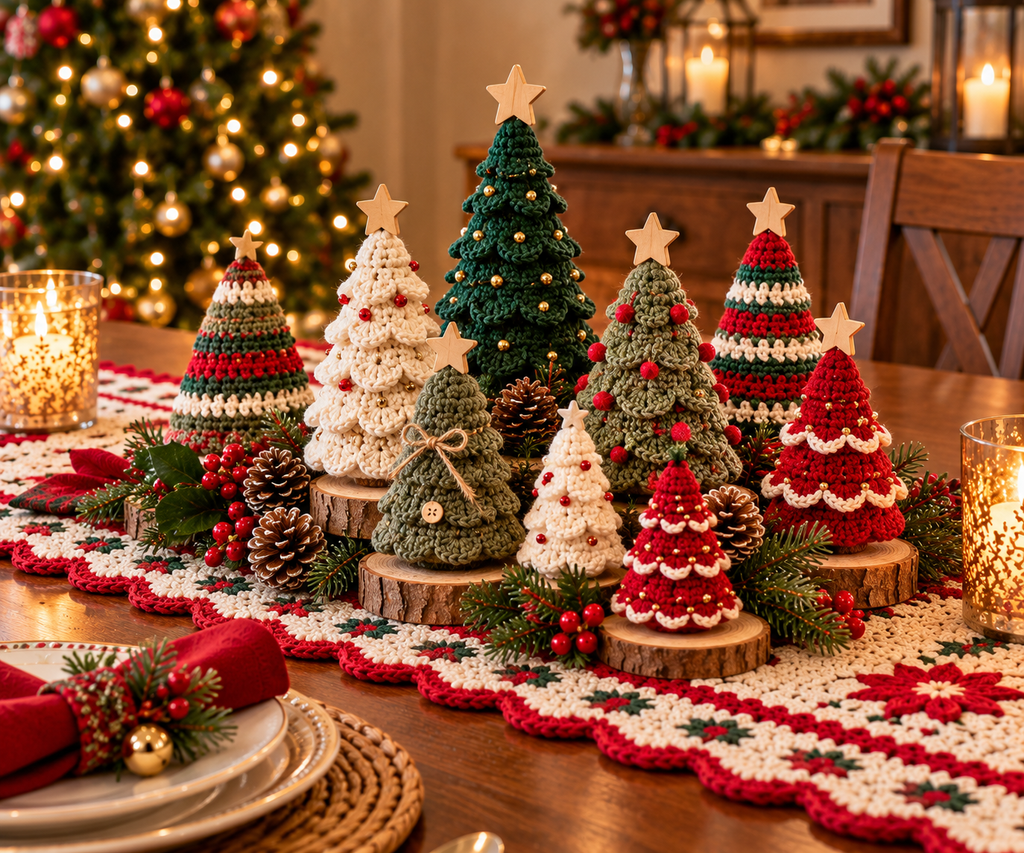
Small cone-shaped trees in several shades of green, ranging from about 4 to 10 inches tall, make a winter centerpiece with very little arranging. Stiffen them, or build each over a paper or foam cone, so they stand without leaning. Vary the heights and group them on a tray or a length of burlap.
A scattering of small white pompoms works as snow. Keep any LED string lights at the base rather than wound through the yarn, since heat from any light source is best kept away from fiber.
9. A Crocheted Wreath Around an LED Candle
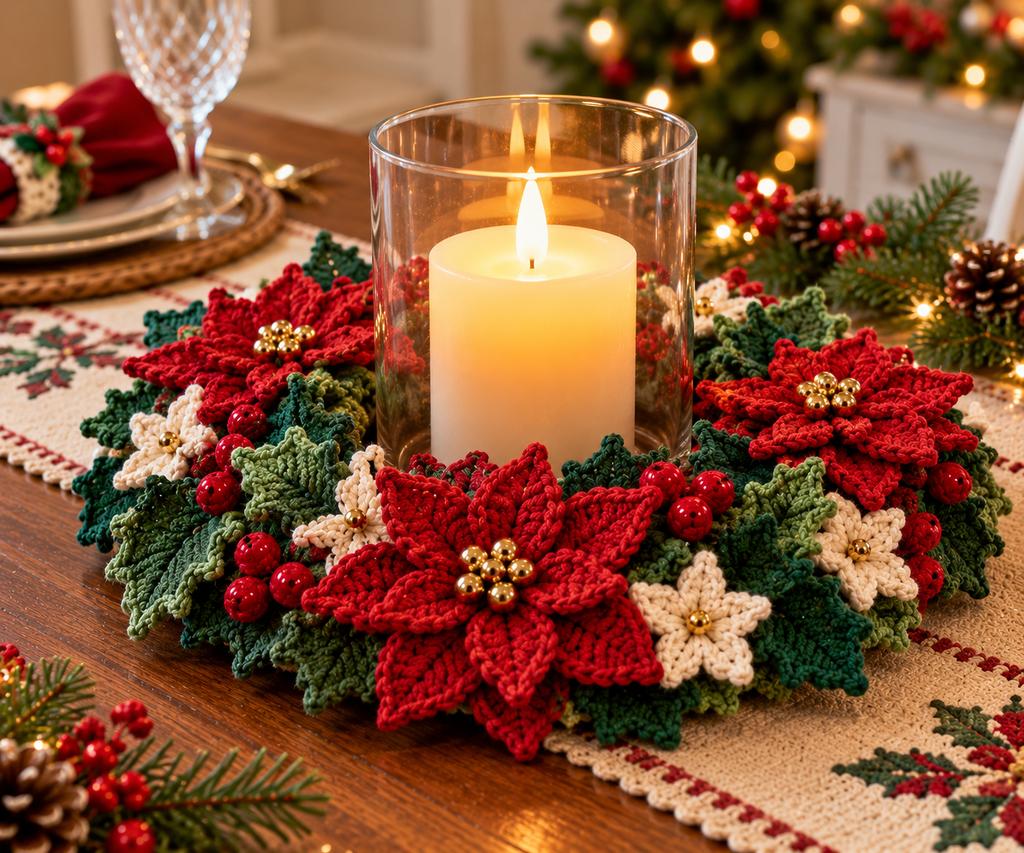
A flat wreath ring in green or cream, sized to circle a pillar or glass hurricane holder, makes a simple low centerpiece. Crochet a wide ring, stiffen it, and decorate with crocheted berries or small flowers. Place the wreath around the base of the holder, not touching the candle itself.
As noted above, use a battery-operated LED candle. The wreath sits on the table, not on the flame side of anything, and it remains safe to stand beside when the room warms up.
10. A Bouquet of Crochet Poinsettias
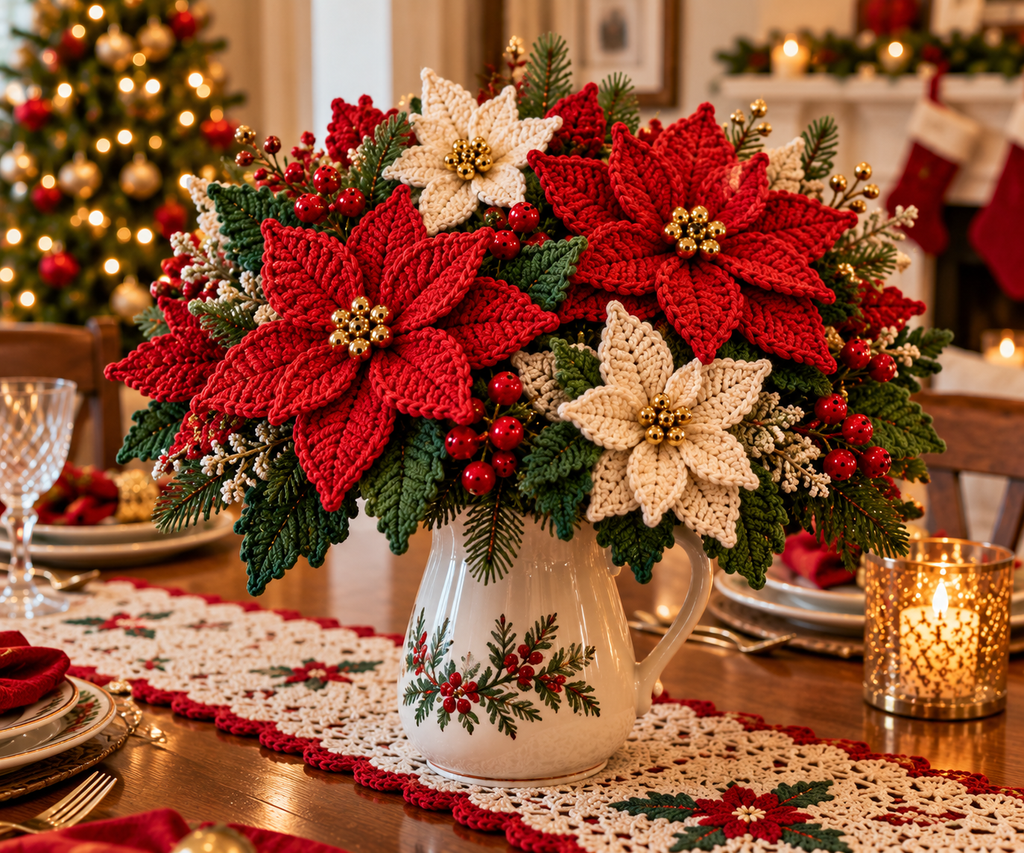
Crochet poinsettias are layered petals worked in red, white, or pink, centered with a small cluster of yellow beads or French knots. Attach each flower to floral wire wrapped in green yarn or tape, then arrange the stems in a vase, jug, or low bowl. Unlike real poinsettias, they need no watering and never drop their bracts. If you also want a living arrangement, poinsettia plants are widely used for this purpose and can sit beside the crocheted version.
The weak point is the flower head, which can flop on the wire. A small button or stiffened center helps support the weight, and a bit of floral foam or crumpled paper in the vase keeps stems from leaning.
Light, Garland, and Hanging Pieces
11. A Table-Length Garland
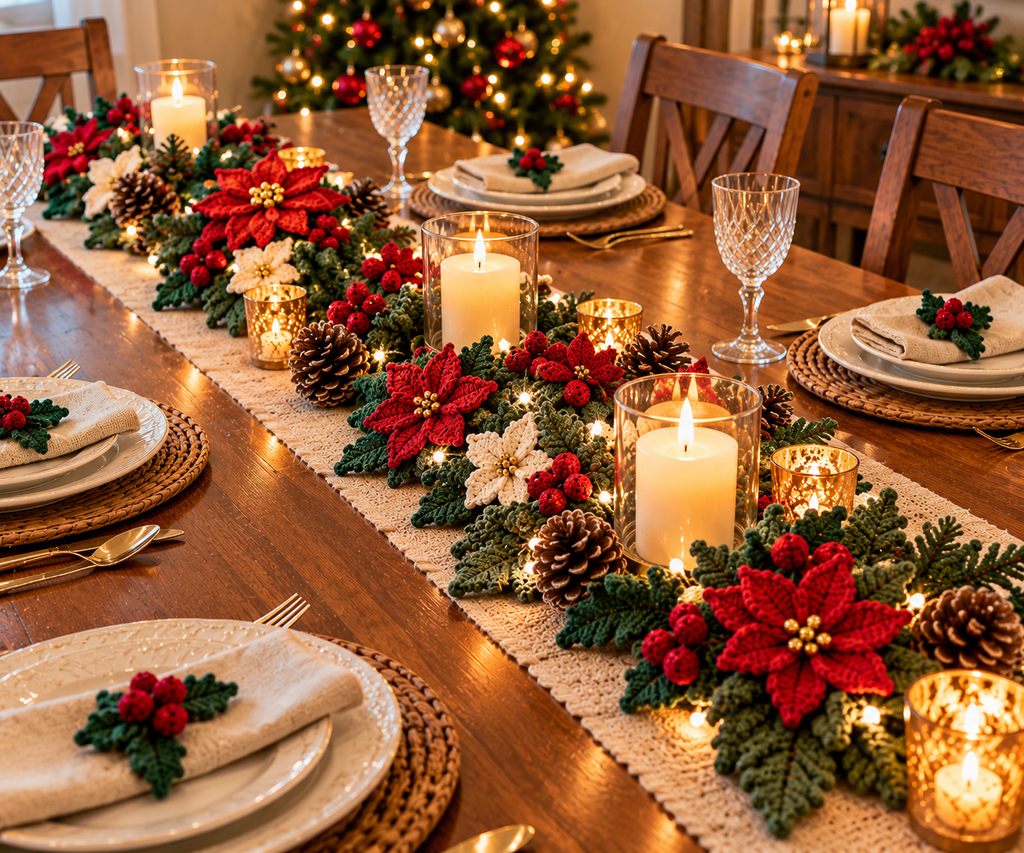
A simple crocheted chain or bunting down the center of the table is one of the fastest projects here. Triangular pennants, tiny leaves, or small stars strung along a cord can each be made in a few minutes and are ideal for using up scraps. Lay the garland flat, or loop it between a few small objects such as votives and mini pumpkins.
Keep it away from serving dishes and candle flames. A garland that drags through the mashed potatoes is a common regret.
12. Crocheted Jar Covers for LED Votives
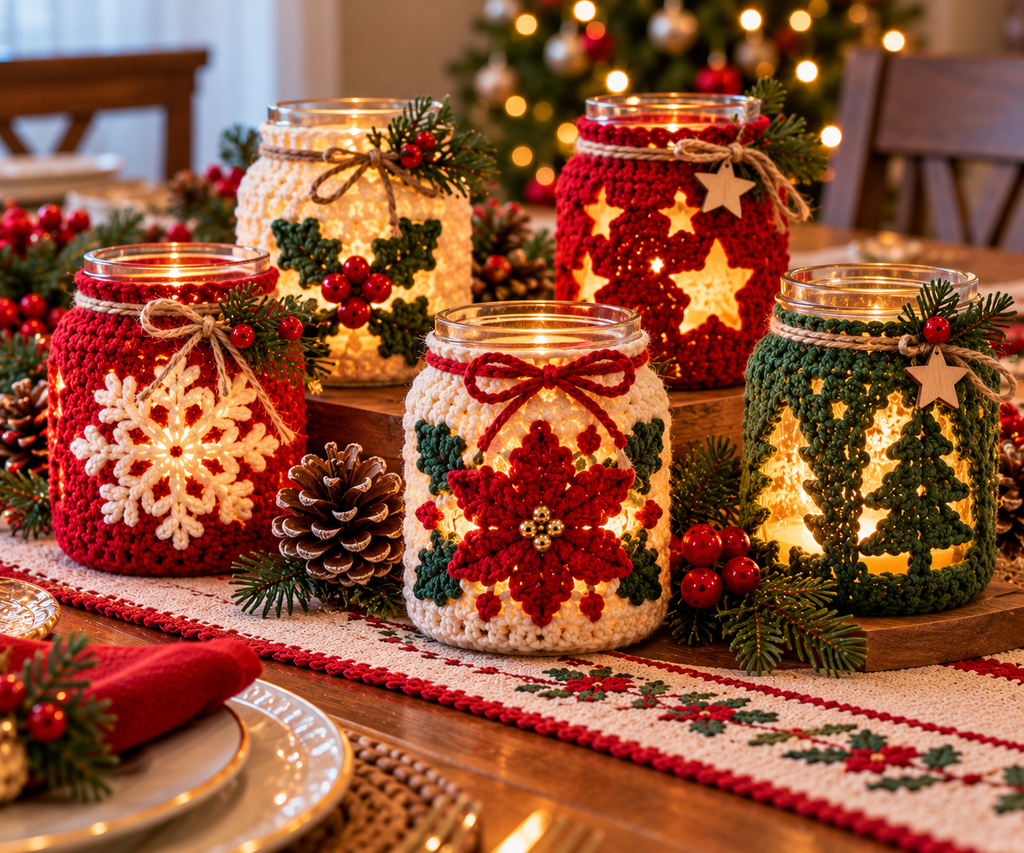
A small mason jar or glass votive can be wrapped in a crocheted sleeve, with an LED tea light inside, which gives a soft glow through the stitches. Use an open stitch pattern so the light shows through, and size the sleeve to fit the jar snugly with a loop or ribbon at the top. The yarn should never touch a real flame, so confirm the candle is battery-powered before placing it.
This idea works equally well for Thanksgiving in warm browns and for Christmas in white or silver tones.
13. Stiffened Snowflakes on a Branch
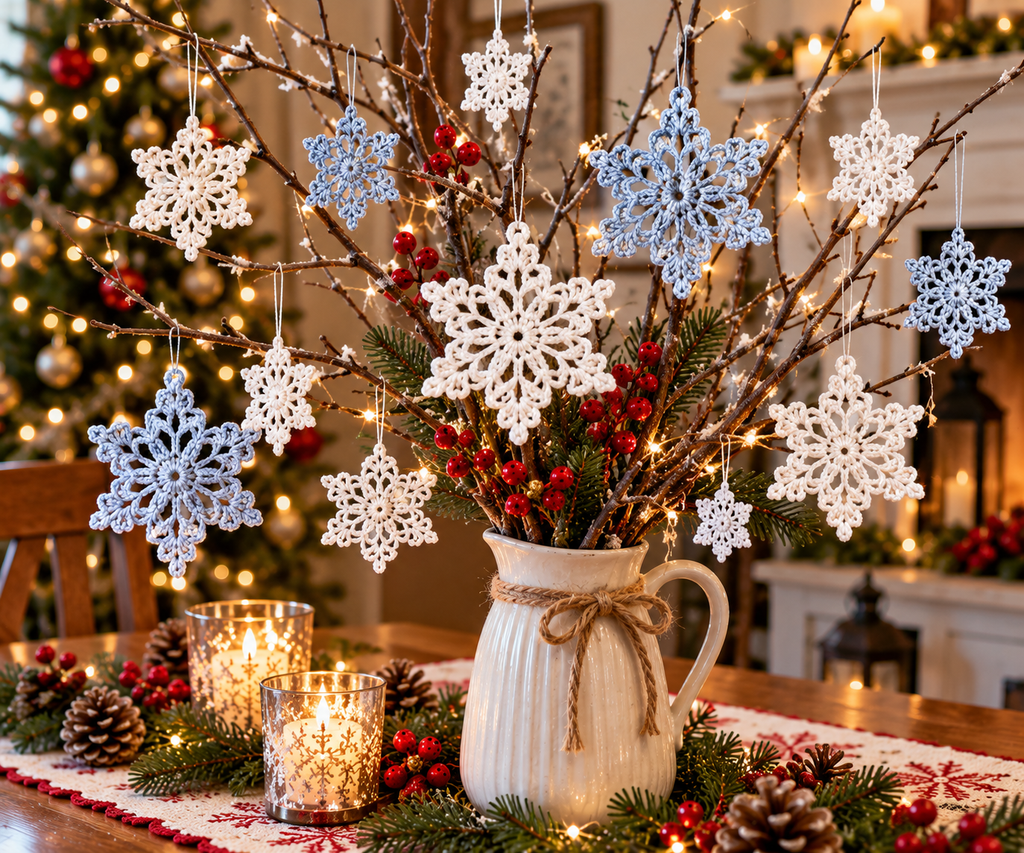
Worked in thread or fine cotton and stiffened, crocheted snowflakes are the most delicate item on this list. Hang them from bare branches set in a tall vase for a vertical centerpiece, or scatter a few across a runner. Each snowflake takes a short time to make once the pattern is familiar, so a dozen is a realistic project.
Stiffening is required here. An unstiffened snowflake will not hold its points. Allow it to dry fully on a non-stick surface, and store flat, since pressing a stiffened piece under other items can bend the arms permanently.
Planning the Table So It Does Not Look Crowded
Thirteen ideas do not need to appear on a single table. A better approach is to choose one piece that draws attention, such as the pumpkin cluster or the tree forest, and then add one or two supporting details at the place settings. A runner, coasters, and napkin rings in a matching palette give the table a finished look without making it feel busy.
Keep the center of the table lower than about 12 inches so conversation is not blocked, leave room for serving dishes, and pick two or three colors and stay with them.
Questions Readers Often Ask
How far in advance should I start?
Small items such as coasters, napkin rings, and garlands can be finished in a few evenings. Lace runners and sets of placemats take longer. Starting four to six weeks before the holiday gives some buffer, though the exact time depends on how quickly you crochet.
Can crochet go near candles at all?
Only battery-operated LED candles are appropriate. Real flames can ignite yarn, and acrylic can also melt onto a surface or skin. This applies to wreaths, jar covers, and garlands alike.
How do I keep stiffened pieces from softening?
Stiffened crochet can soften in humid air or if it gets damp. Dry pieces completely before storing, and keep them in a dry, flat container away from basements or other damp areas.
Final Thoughts
The crochet pieces that earn a place on a holiday table share a few traits: sturdy fiber, a size that leaves room for dishes, and no contact with real flame. Pick cotton for anything that touches food, stiffen anything that needs to stand, and use LED candles near all of it. Begin with one small project, such as a set of coasters or napkin rings, to settle on a palette, then build up to a runner or centerpiece once the colors feel right.
About Syprose Kiche
Syprose Kiche is the creator and writer behind My Besuited Home, a practical home and garden website covering DIY projects, gardening, lawn care, landscaping, home improvement, and outdoor living. She focuses on turning everyday homeowner questions into clear, practical guides backed by careful research and useful real-world considerations.