
The most common way a small cactus garden dies has very little to do with sun or neglect. It is the bowl. A pretty ceramic dish with no hole in the bottom, a layer of soil, a few spiny plants, and a watering can that seemed reasonable at the time: that combination quietly drowns more desert plants than any heat wave ever will. Cacti evolved to take in water fast and then sit dry for weeks. Roots that stay wet in a sealed container start to rot long before the top of the plant shows anything wrong.
The good news is that nearly every container in your cupboard, thrift store, or garage can become a successful desert planter if you handle three things up front: where excess water goes, what the plants are rooted in, and which plants share a pot. Get those right and the design part is the easy and fun part.
This guide covers the fundamentals first, then thirteen specific ways to build a miniature cactus garden, from a shallow bowl styled like a dry riverbed to a tiered stack of terracotta pots, a thrifted skillet, and a windowsill trough. After that you will find a comparison of gravel types, troubleshooting for the problems that show up most often, and a short seasonal care guide.
The Four Things That Decide Whether a Mini Cactus Garden Survives
Drainage: where the water goes
A drainage hole is the single most useful feature a container can have. Water passes through the soil, exits the bottom, and the roots get air again as the mix dries. Without a hole, every drop you add stays in the container until the plants use it or it evaporates, and in a small bowl that can take weeks.
A widely repeated shortcut is to put a layer of gravel or broken pottery in the bottom of a pot with no hole and call it drainage. It does not work that way. Water moves downward through soil until it reaches a coarser layer, and then it stops and collects above that layer because of how water is held in fine pores. The result is called a perched water table, and it means the soil just above the gravel stays saturated. A gravel layer in a sealed bowl simply reduces the amount of soil you have and raises the wet zone closer to the roots. University extension horticulture publications cover this effect in their container-gardening guidance; it is worth checking your state’s extension site if you want to see the explanation in more detail.
If you love a container that has no hole, you have three realistic options:
- Drill one. This is the best fix for ceramic, glazed pottery, glass, and thin metal, and the steps are in the thrifted-container section below.
- Use it as a cachepot. Plant in a plastic nursery pot with holes, then set that pot inside the decorative container. Lift it out to water at a sink and let it drain before returning it.
- Plant with no hole and water by the teaspoon. This is the highest-risk approach and best reserved for open, shallow containers that can be tipped to pour off any excess. Details are in idea 9.
The mix: lean, gritty, and quick to dry
Standard houseplant potting soil holds too much moisture for desert plants. Bagged cactus mixes are better, but many are still heavy on peat, which can stay damp for a long time and then turn hydrophobic when it finally dries out completely. A common approach is to blend roughly equal parts bagged cactus mix and a mineral ingredient such as pumice, coarse perlite, or crushed granite grit. Many cactus growers go even more mineral than that, up to about two-thirds grit for plants that sit indoors where light is lower and drying is slower. Treat these proportions as starting points rather than rules; a mix that dries out within about a week of watering is generally the target.
Avoid fine play sand and beach sand. Fine sand packs tightly around roots, and beach sand carries salt. Coarse, sharp-edged grit is what you want.
Light: more than most windows give
Most desert cacti want several hours of direct sun a day, and a bright room is not the same thing. A south-facing window gives the most light in the Northern Hemisphere (north-facing in the Southern Hemisphere). East windows work for a few hours of gentler morning sun. West windows can scorch plants in summer when the glass heats up. If a cactus is pale, narrow at the top, or leaning hard toward the glass, it is stretching for light, a condition called etiolation. Stretched growth does not shrink back to normal, though new growth will come in properly once light improves.
Sunburn is the opposite problem, and it happens when a plant goes from indoor light to strong outdoor sun in one step. Bleached or tan patches on the side facing the light are usually the sign, and the damage is permanent on that tissue. Move plants outside gradually over one to two weeks, starting in bright shade.
Compatibility: who can share a bowl
The rule that prevents most mixed-planter failures is this: plants in the same container must want the same watering schedule and the same amount of light. Everything else is secondary.
| Plant group | Light | Water pattern | Fits with |
| Desert cacti (Mammillaria, Echinopsis, Gymnocalycium, Rebutia, Astrophytum, Echinocereus, small Opuntia) | Full sun, several hours daily | Soak, then dry completely | Echeveria, Graptopetalum, small Sedum, other desert cacti |
| Rosette succulents (Echeveria, Graptopetalum) | Bright light, some direct sun | Soak, then dry completely | Desert cacti, Sedum |
| Hardy succulents (Sempervivum, many Sedum) | Full sun outdoors; tolerate cold | Moderate; dry between waterings | Outdoor containers; less suited to hot, dry interiors |
| Haworthia, Gasteria | Bright indirect light; can burn in strong sun | Slightly more even watering | Each other; keep away from full-sun cacti |
| Euphorbia (cactus-like species) | Bright light | Similar to desert cacti | Desert cacti, with handling cautions below |
| Forest and jungle cacti (Schlumbergera, Rhipsalis, Epiphyllum) | Bright, filtered light | Prefer lightly moist mix | Not desert cacti |
That last row is where mixed bowls most often go wrong. Christmas and Thanksgiving cacti, mistletoe cactus, and orchid cacti look like cacti but come from tropical forests, where they grow on trees. They need more moisture and softer light than a desert specimen. A bowl that suits a barrel cactus will cook a Schlumbergera, and a watering schedule that keeps the Schlumbergera happy will rot the barrel cactus.
Size matters too. A tiny seedling-sized Mammillaria planted beside a fast-growing Opuntia will be crowded out within a season or two. Check the mature size on the tag before building a design you expect to look the same in three years.
Handling spines and sap safely
Spines are obvious. Glochids, the tiny barbed hairs on prickly pear and bunny ear cacti, are less so; they detach at a touch and are difficult to see once they are in skin. A folded strip of newspaper or a pair of kitchen tongs holds a spiny plant steadily without touching it, and thick leather gloves give extra protection. Remove stray glochids with tape or tweezers and keep your hands away from your eyes until you have washed them.
Many cactus-like Euphorbia species release milky latex when cut or broken, and it can irritate skin and eyes. Wear gloves, wash up afterward, and be cautious about where you place them around children and pets. Aloe, jade, and kalanchoe are also commonly listed as toxic to cats and dogs. The ASPCA maintains a searchable plant list, so check specific species there before bringing them home if you have animals.
Thirteen Ways to Build a Mini Cactus Garden
1. A shallow bowl styled as a dry riverbed
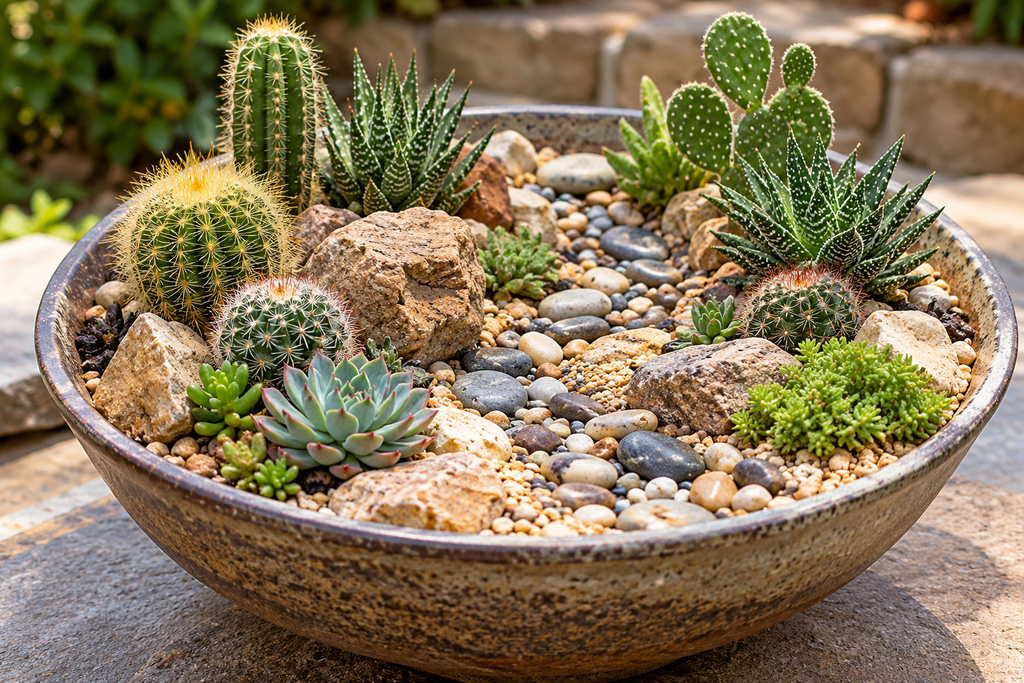
This is the classic miniature desert scene: a low, wide bowl, three or four small cacti planted off-center, and a winding strip of pale or dark gravel that reads as an empty wash running between them. It works because the layout uses the plants’ natural shapes. Round barrel types and clumping Mammillaria sit at the edges; a taller columnar plant anchors the back.
The bowl needs a hole. Terracotta bulb pans (the shallow, wide pots sold for spring bulbs) are the easiest option because they come with holes and cost little. Aim for a depth of at least three inches so roots can establish. Fill with a gritty mix, plant, then pour gravel in a curving band that is about half an inch thick. Press a few larger smooth stones into the “riverbed” edges for contrast.
One detail that improves the look and the health of the plants: pull gravel back slightly from the base of each stem. Gravel pressed hard against a cactus holds moisture against the skin and can encourage rot at the soil line.
2. A terracotta saucer garden with a stone mesa
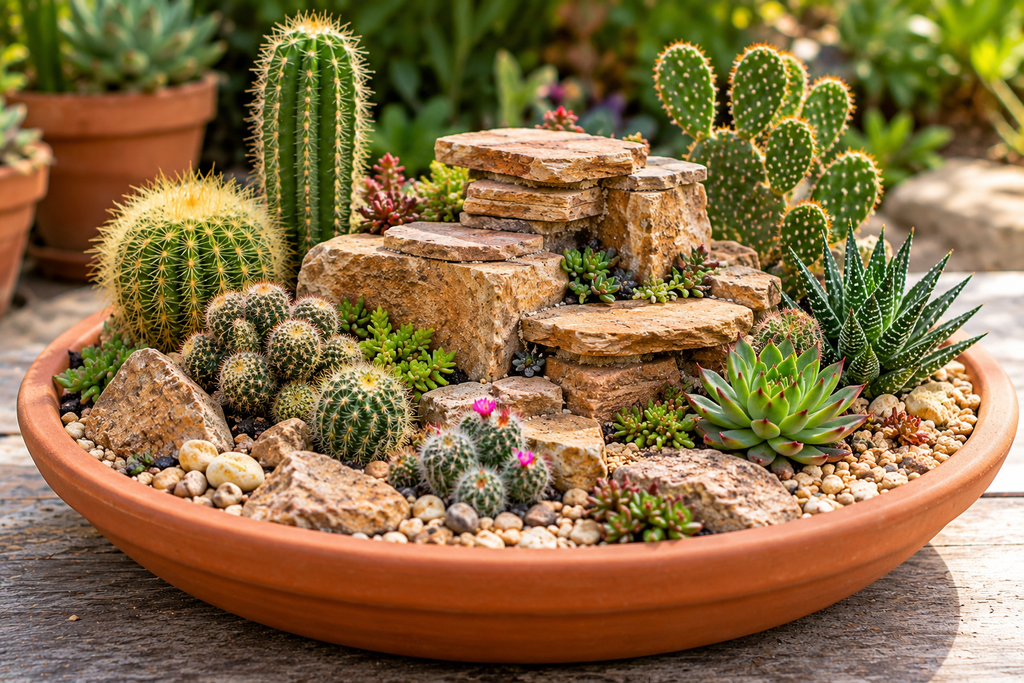
Large terracotta saucers are cheap and shallow, and they are typically sold without holes. Use a masonry bit to drill through the center (steps in the thrifted-container section), then build a landscape in the saucer: a flat rock raised on small stones as a mesa, a few tiny cacti tucked against it, and fine gravel around the base. Because the saucer is only an inch or two deep, only the smallest cacti and rosette succulents will fit. Choose plants that stay small and have shallow root systems, such as Mammillaria, Rebutia, and Echeveria.
Shallow containers dry fast, which is an advantage for desert plants but means they need attention in hot weather. In midsummer, a saucer garden outdoors can need water as often as once a week.
3. A stacked terracotta pot tower
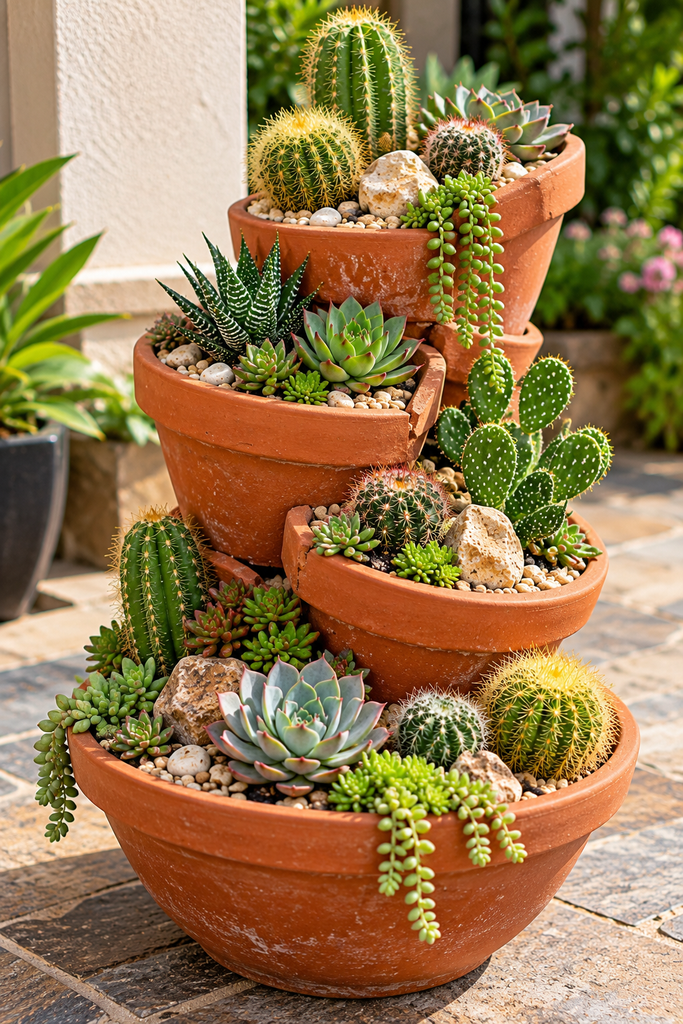
A tiered tower makes a big visual impact in a small footprint. Stack three to four clay pots in descending sizes with the largest at the bottom, and plant the exposed ring of soil in each tier. The key to making it stable is to anchor it: place a dowel or rebar stake through the drain holes of the lower pots if the tower goes outdoors, or simply place a wider base saucer beneath it.
Two drainage issues come up with towers. First, water from upper tiers runs down and wets the soil below, so the bottom tier often stays damp longest. Put the plants that tolerate more moisture, like hardy sedums, at the bottom, and use the driest-loving cacti at the top. Second, when the tower sits on a hard surface outdoors, check that the bottom pot’s hole is not sealed against the surface.
The tower is better for outdoor use in warm seasons than as a permanent indoor fixture, since indoor light is rarely strong enough on all sides to keep every tier in good shape.
4. A tiered plant stand or ladder shelf
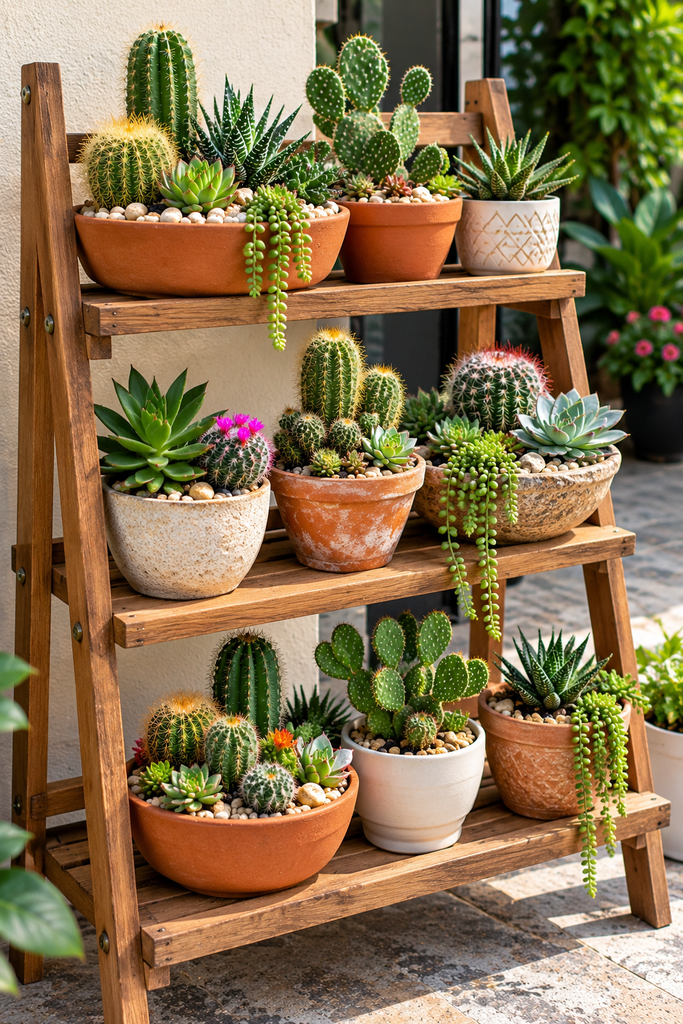
A multi-level stand lets you give each pot different conditions without any single container having to be a compromise. Lower the plants that need less light to the bottom shelf, and keep sun-hungry cacti on the top where light reaches them. This also solves the incompatibility problem: individual pots can hold plants with similar needs, while the stand tells the design story.
A few practical notes. Vary pot heights and materials but keep the color palette tight (terracotta plus one neutral looks cohesive; four finishes looks messy). Space pots far enough apart that spines do not touch your hands when you water. And leave room for a saucer or tray beneath each, because a wooden shelf will warp or stain from water that drips through.
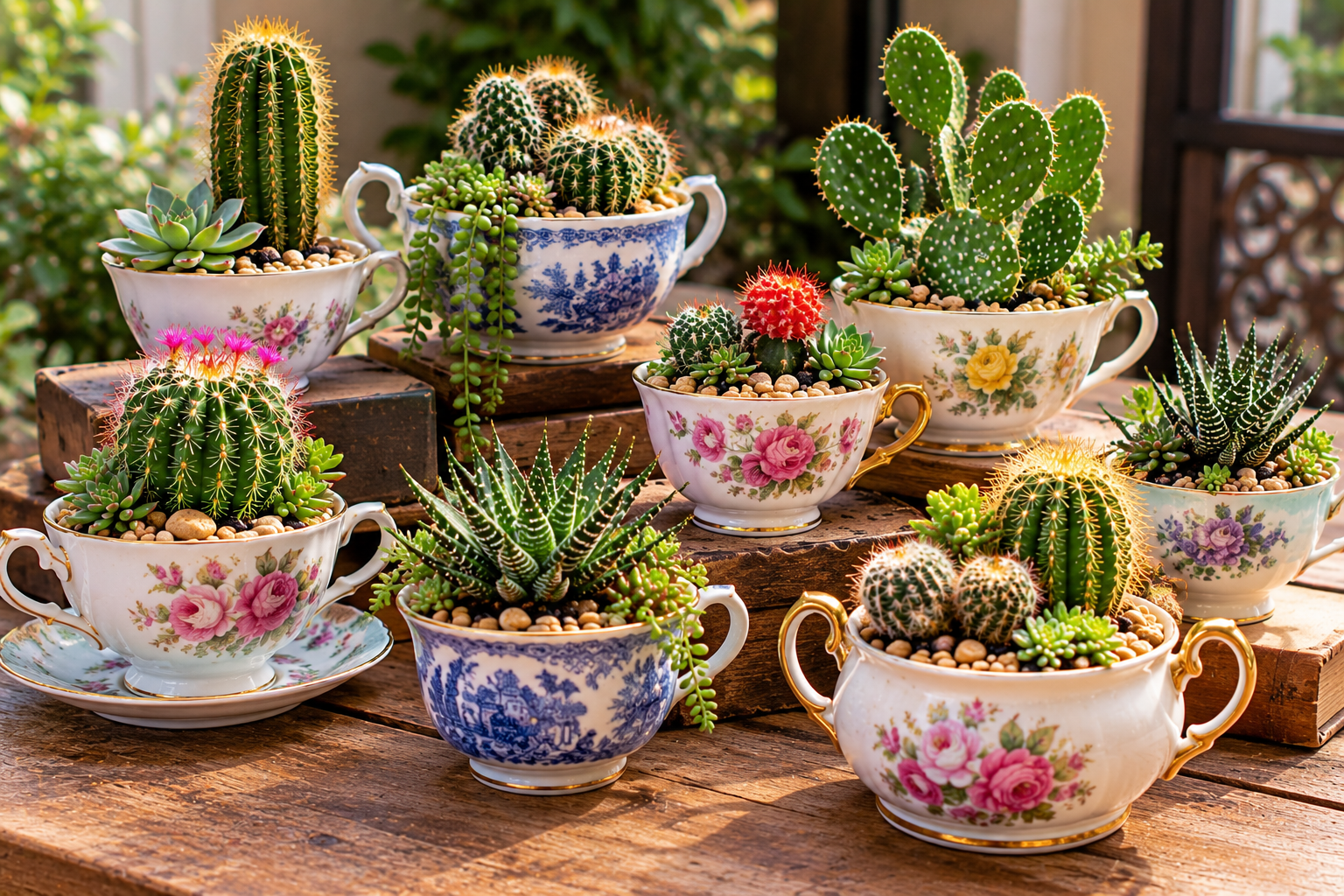
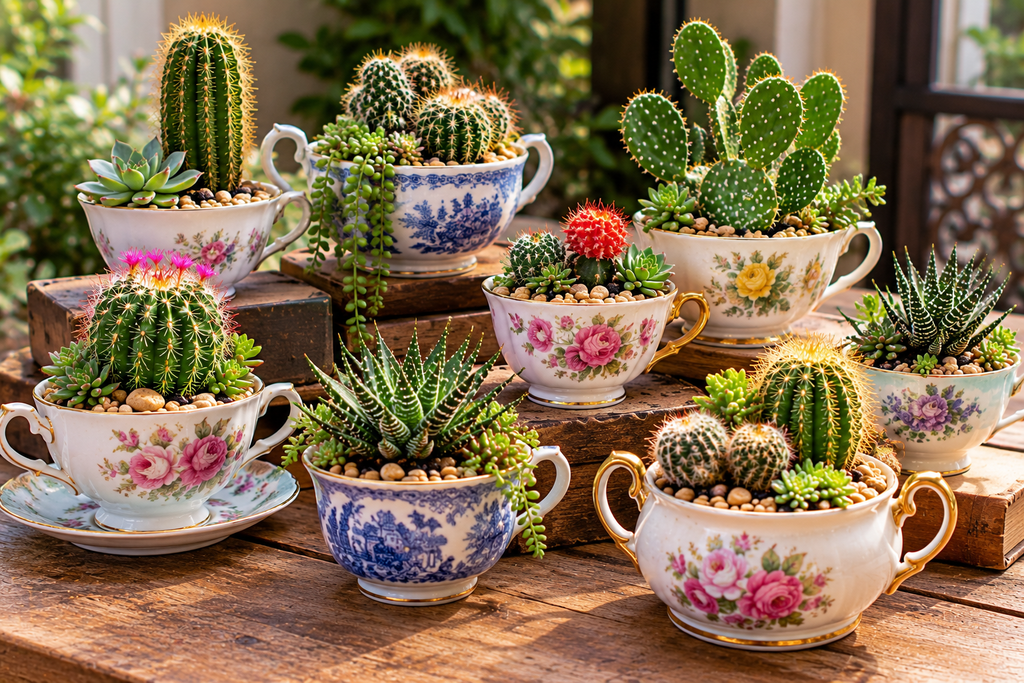
5. Thrifted teacups, sugar bowls, and small ceramics
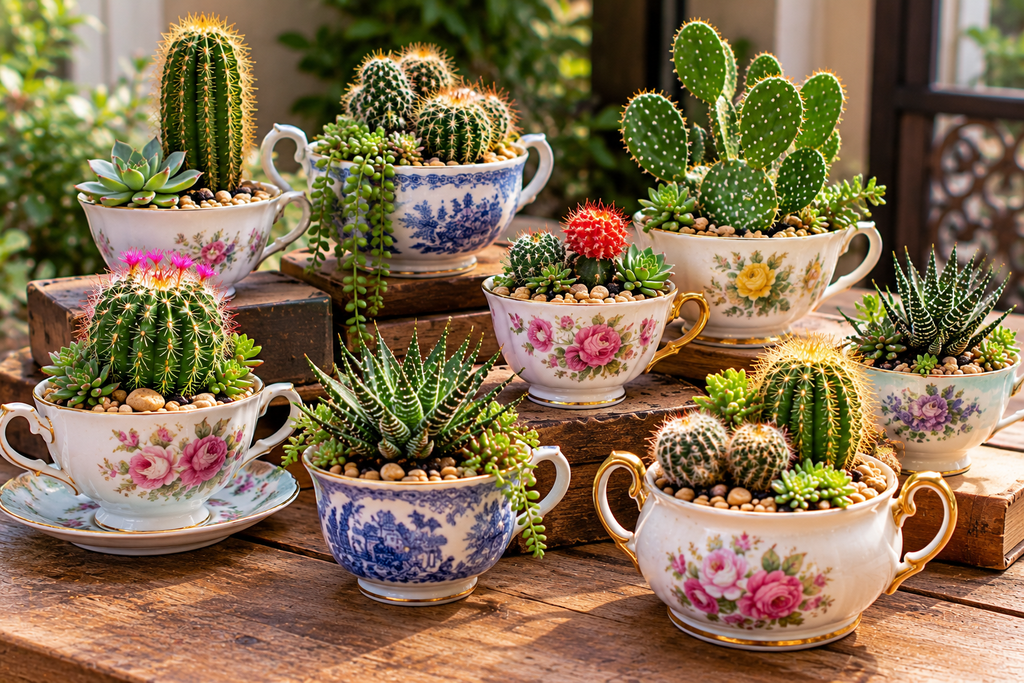
Teacups are probably the most popular thrifted planter because they are small, cheap, and charming. They are also the least forgiving: tiny volume, no hole, and glazed ceramic that holds moisture rather than breathing. A teacup works for one small cactus, not a crowd.
If you want to keep a vintage cup intact for another purpose, use it as a cachepot around a two-inch nursery pot. If you are willing to drill it, use a diamond-tipped hole bit sized for ceramic, keep the cup submerged in a shallow bath of water or work with a steady stream from a squeeze bottle so the bit stays cool, wear safety glasses, and wet-drill at slow speed. A mask is wise because glaze dust from older ceramics can contain lead, and drilling wet keeps that dust down. Do not use a drill on the cup if it has a crack, since the pressure can split it.
Group three or four cups in different heights on a tray for a display that feels intentional. Fill with gritty mix, add a single Mammillaria or Gymnocalycium to each, and top with a thin layer of gravel in one consistent color.
6. A cast-iron skillet or enamel pan
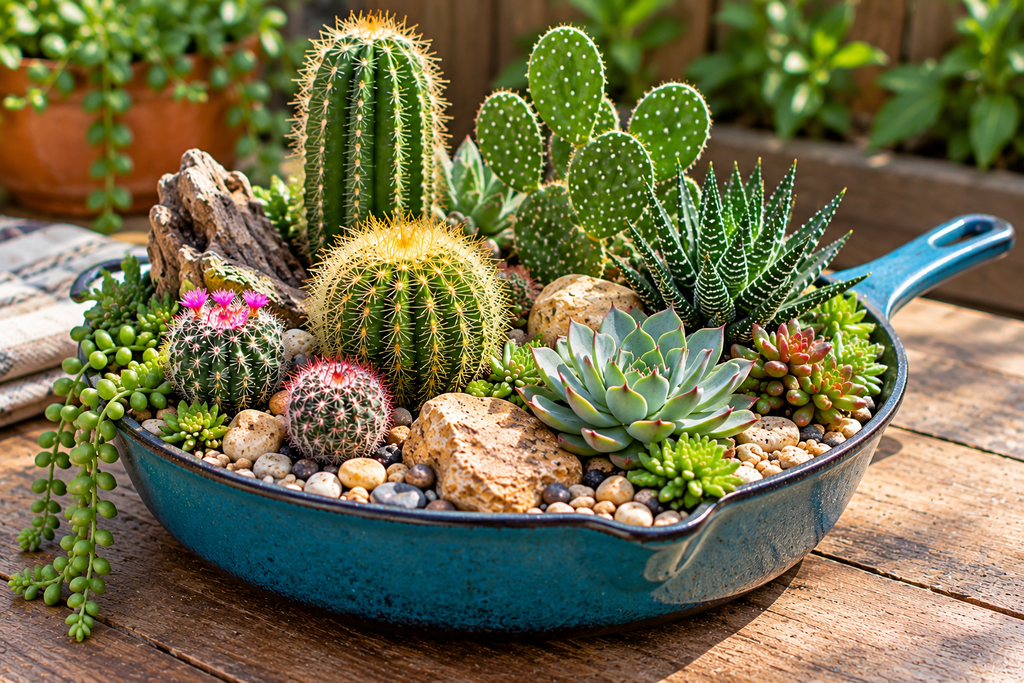
A thrifted skillet with a flat bottom and low sides produces a striking miniature desert scene, but it has two problems: no drainage and strong heat conduction. Cast iron absorbs heat in direct sun and can raise soil temperature enough to stress roots. Use a skillet indoors on a windowsill, or in an outdoor spot with partial afternoon shade, rather than on a sunny patio table.
Drilling iron needs a metal bit and patience, and you should stop if the pan is a seasoned one you hope to cook with later. A better option is to keep it intact, plant in a shallow plastic dish that fits inside, and set the dish in the pan. That lets you pull the plants out for watering.
One other item: a pan with a slightly raised lip can trap water in the soil if the mix is too fine. Use a coarser grit blend and plant on the thin side.
7. A wooden crate desert bed
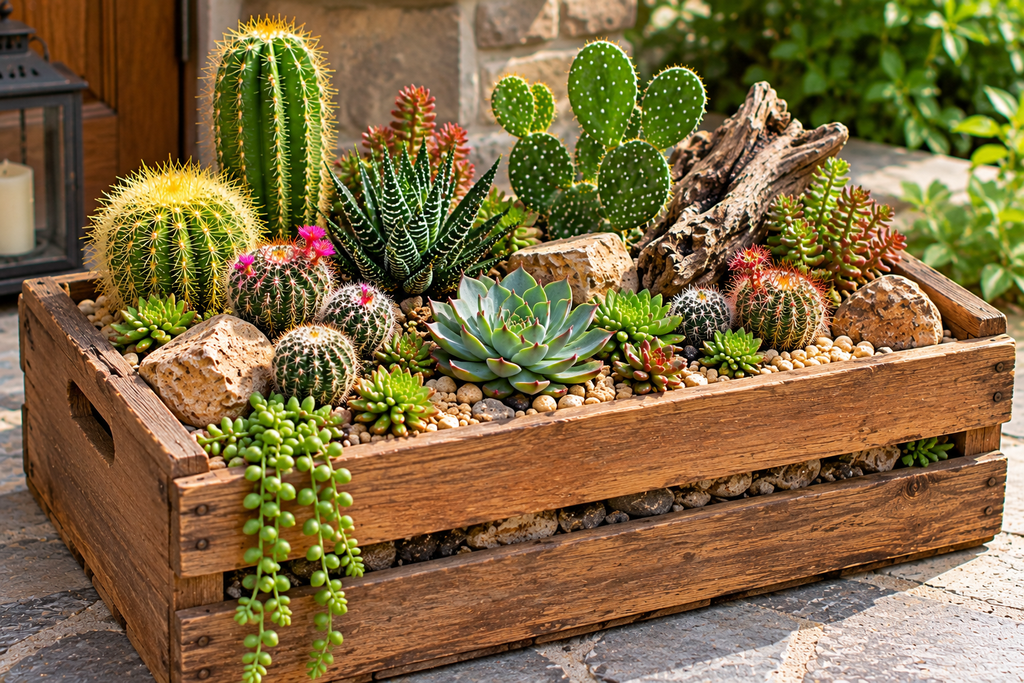
A small wooden crate or drawer works like a miniature raised bed, and it holds more soil than most bowls, which means it stays steadier in temperature and moisture. Line the inside with landscape fabric or a coco liner to keep the soil from falling out through slats, but do not use plastic sheeting, which blocks drainage entirely. If the crate is made of untreated wood, expect it to last a few seasons outdoors and less if water sits in it. Avoid wood that has been pressure-treated with older preservatives or painted with old paints of unknown composition.
Lay out the planting with intention: larger cacti toward the back or center, and gravel and rocks added to suggest a canyon floor. If the crate is large enough, add a piece of weathered wood or a large smooth rock as a focal element. A crate also works well with mixed plantings, since you can divide the interior with rocks to create zones.
Because wood holds some moisture, the crate dries a bit more slowly than clay. Check the soil a couple of inches down before watering instead of judging by the surface.
8. A windowsill trough row
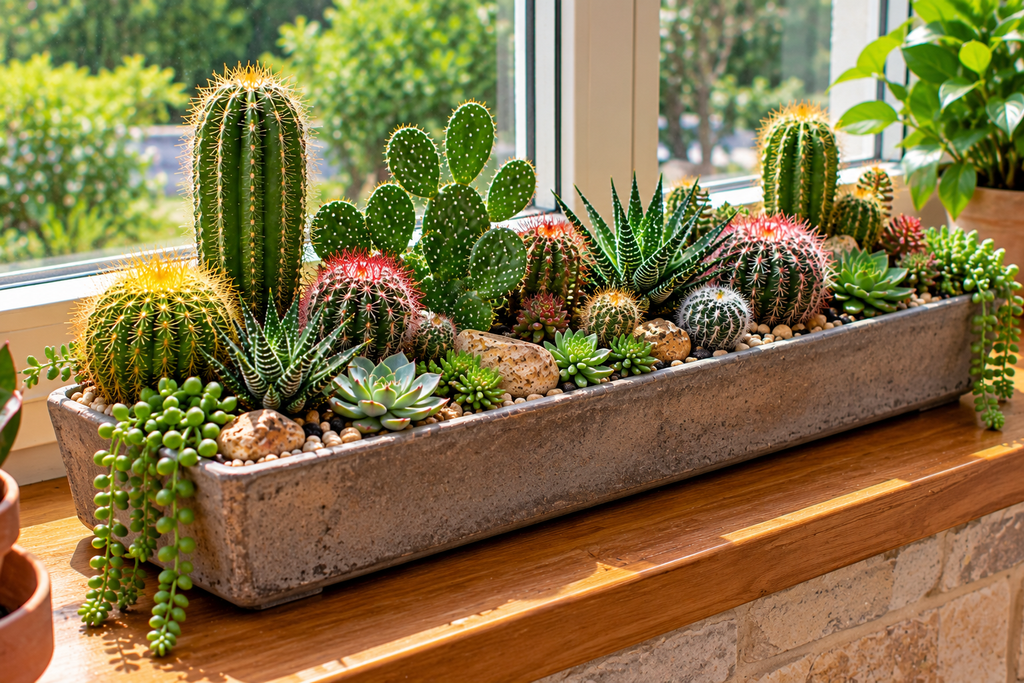
A long, narrow trough is among the most practical forms of cactus garden for a windowsill. A trough that is four to six inches wide fits most sills, and you can plant it as a continuous scene, with three to five small plants set at different heights.
Sill-specific details worth knowing:
- Glass temperature. In summer, plants that touch hot glass can scorch. In winter, a cold pane or a cold draft can chill roots and stems. Leave an inch or two between the plants and the glass.
- Even growth. Rotate the trough a quarter turn every week or two, because plants lean toward the glass over time.
- Drips. Use a drip tray that fits the trough, and empty it within an hour of watering.
- Dust. Windowsill cacti collect dust, and a dirty surface reduces light absorption. A soft brush or a quick puff of air clears it.
If your windows are not bright enough, an inexpensive full-spectrum LED grow light on a timer keeps desert plants compact. Distance and hours vary by product, so follow the manufacturer’s guidance.
9. An open glass bowl or terrarium
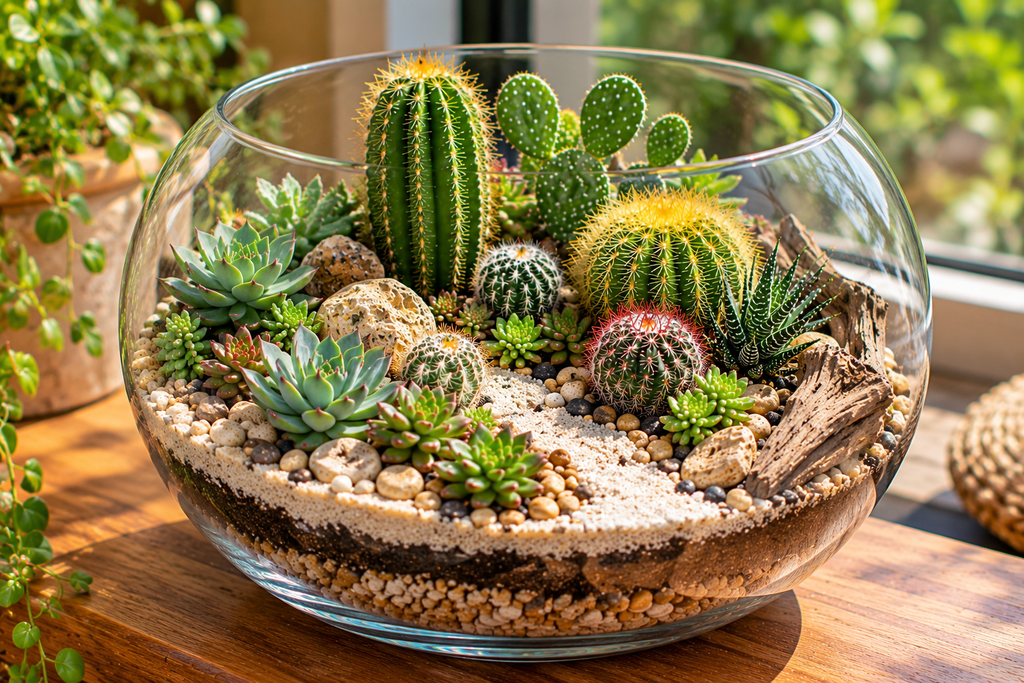
Glass is attractive, and it is also the container most likely to cause trouble. There is no drainage, glass traps heat when sunlit, and closed or semi-closed terrariums raise humidity, which cacti dislike. If you want a glass display, choose a wide, open container (a shallow bowl or a large open vase) rather than a lidded jar.
Because there is no outlet for water, use the lightest touch possible. Water with a squeeze bottle or syringe at soil level, a small amount at a time, and stop when the mix is just damp. If you tip the container slightly and a pool appears, you added too much; pour it off or blot it up with a paper towel. A layer of horticultural charcoal below the mix is sometimes recommended for open glass planters to help keep the soil from turning sour, though it does not replace a hole and does not make overwatering safe.
Place the glass bowl in bright light but out of direct midday sun, which can magnify heat enough to scorch plants through the glass.
10. A concrete or hypertufa trough
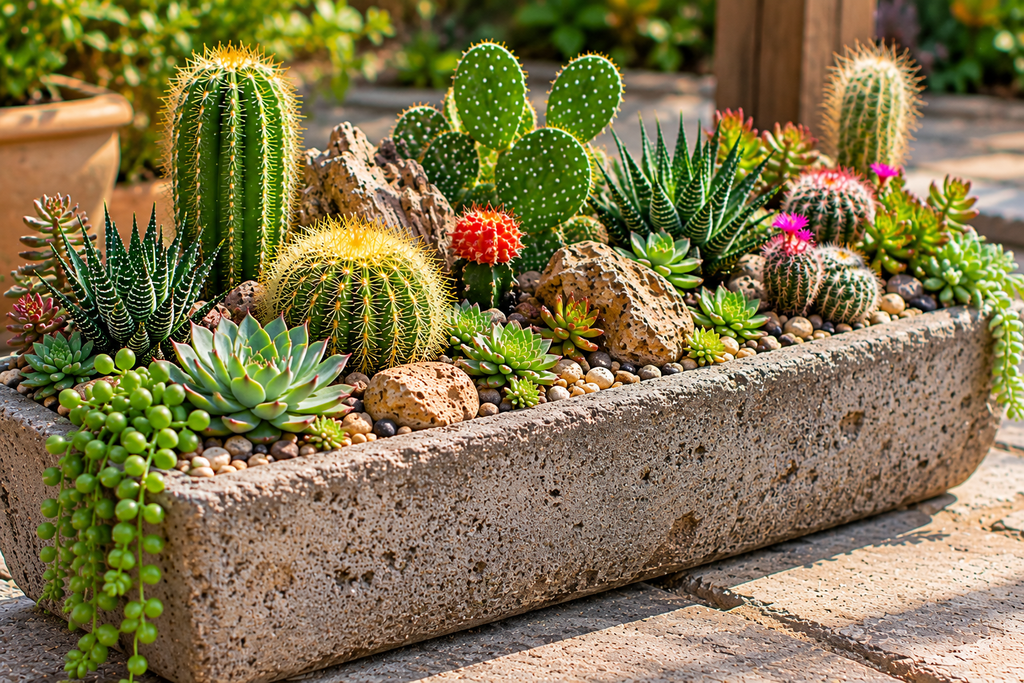
Hypertufa is a lightweight, porous mix of Portland cement, peat moss or coir, and perlite that can be cast into troughs and bowls. Concrete-look planters, either hand-cast or store-bought, share the rough texture and neutral gray that suits desert plants.
Cast concrete is alkaline and can raise the pH of the soil near the walls, particularly in new containers. Many cacti tolerate or even prefer slightly alkaline conditions, but rinsing a new container thoroughly and letting it cure fully before planting is a sensible precaution. Wear gloves, eye protection, and a dust mask when mixing cement, since dry cement is a skin and lung irritant, and follow the product instructions on the bag.
The real advantage of a trough is frost tolerance. A thick-walled trough holds up through cold spells that would crack thin ceramic, and in mild climates it can hold hardy outdoor plants year-round.
11. A thrifted colander as a hanging cactus garden
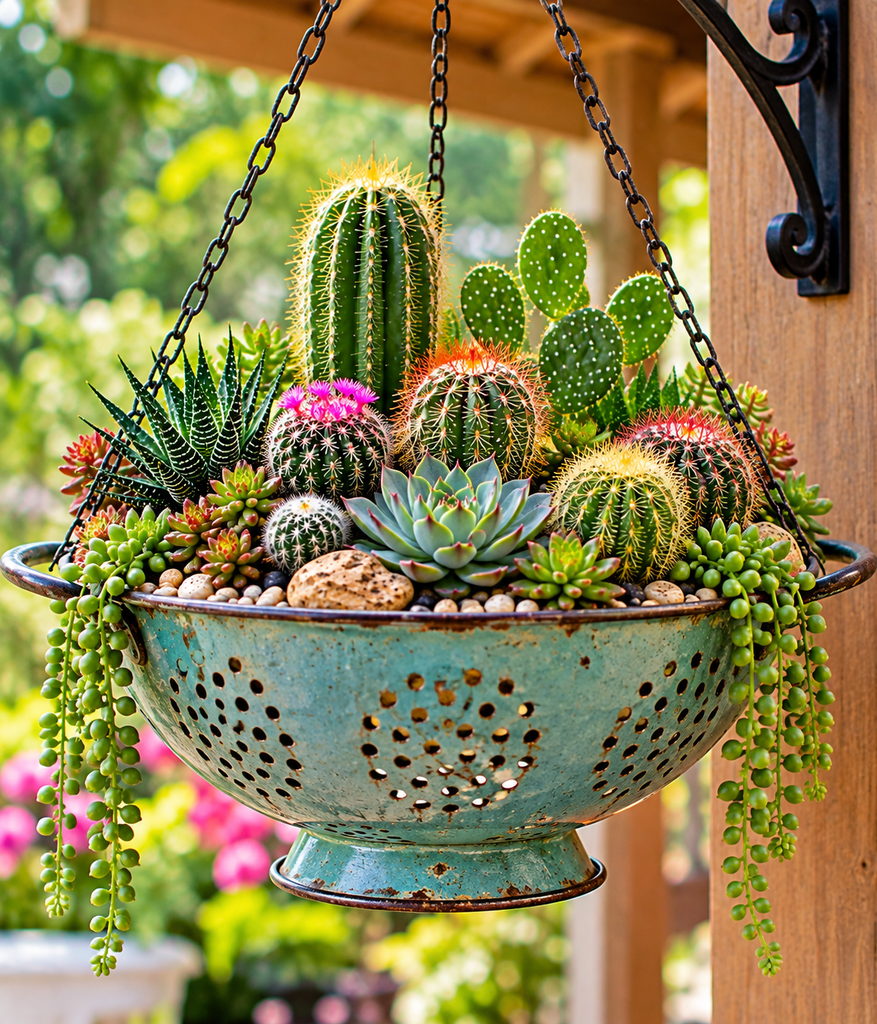
A metal or enamel colander already has dozens of drainage holes, which makes it unusually well suited to this job. Line it with a coco fiber liner or a double layer of landscape fabric so the soil stays in, fill with gritty mix, and plant small cacti or rosette succulents across the surface. Hang it with sturdy chains or set it on a stand.
The design has one important drawback: air passes through the sides, so soil dries faster than in most containers. In hot weather, that means more frequent watering, and a lined colander in full summer sun can dry out in a few days. Use the coarsest part of your gravel selection to hold the soil in place, and plant tightly so roots knit together.
Hang the colander where you can reach it. A planter that is awkward to take down is a planter that gets watered badly.
12. A single specimen in a statement pot
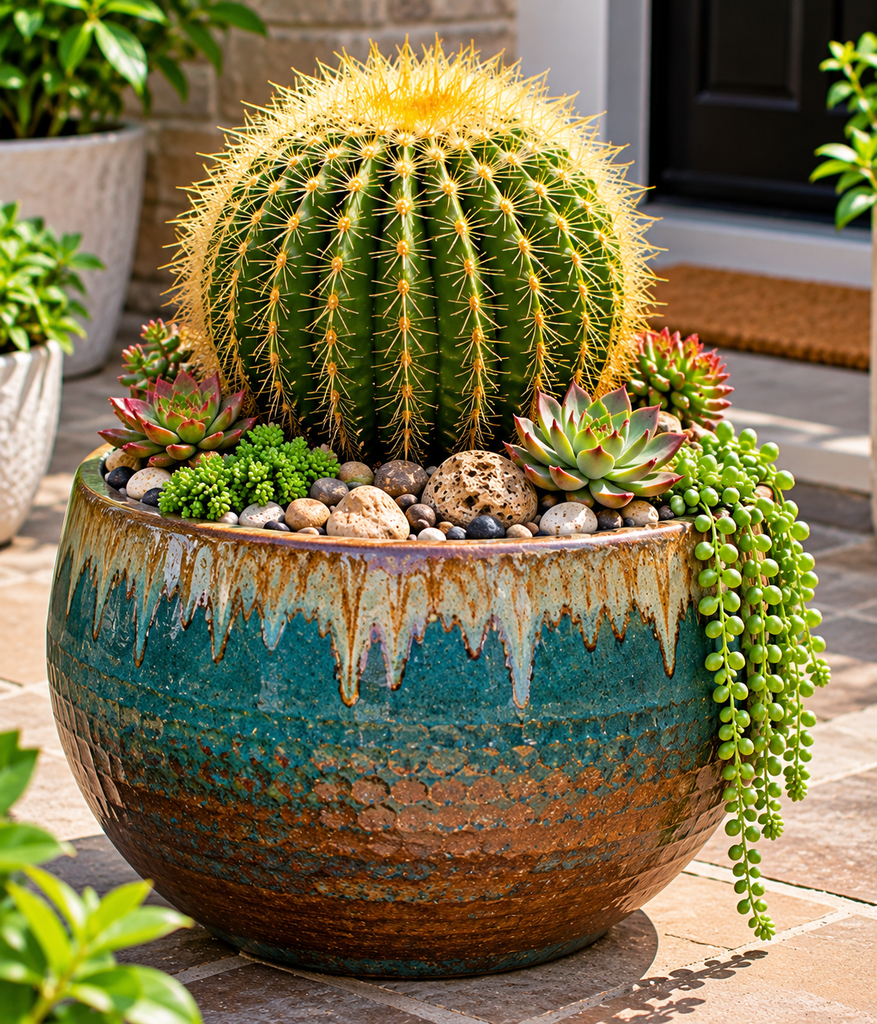
A good deal of the charm of a cactus garden can be captured by one well-chosen plant in a handsome container. A single rounded cactus such as a mature Gymnocalycium or a ribbed Echinocactus looks sculptural in a matte black or glazed pot, with a surface of crushed black lava rock or white pumice to provide contrast.
This is also the simplest design to keep alive. There is one plant, one water schedule, and no competition. It suits people who want a clean, modern look rather than a full desert landscape. If you buy a large barrel cactus, be aware that these can be very slow-growing and expensive, and handle them by wrapping with folded newspaper rather than gripping the spines.
Choose a pot only one to two inches wider than the plant. Oversized pots hold extra soil that stays wet for too long.
13. A miniature desert diorama with props
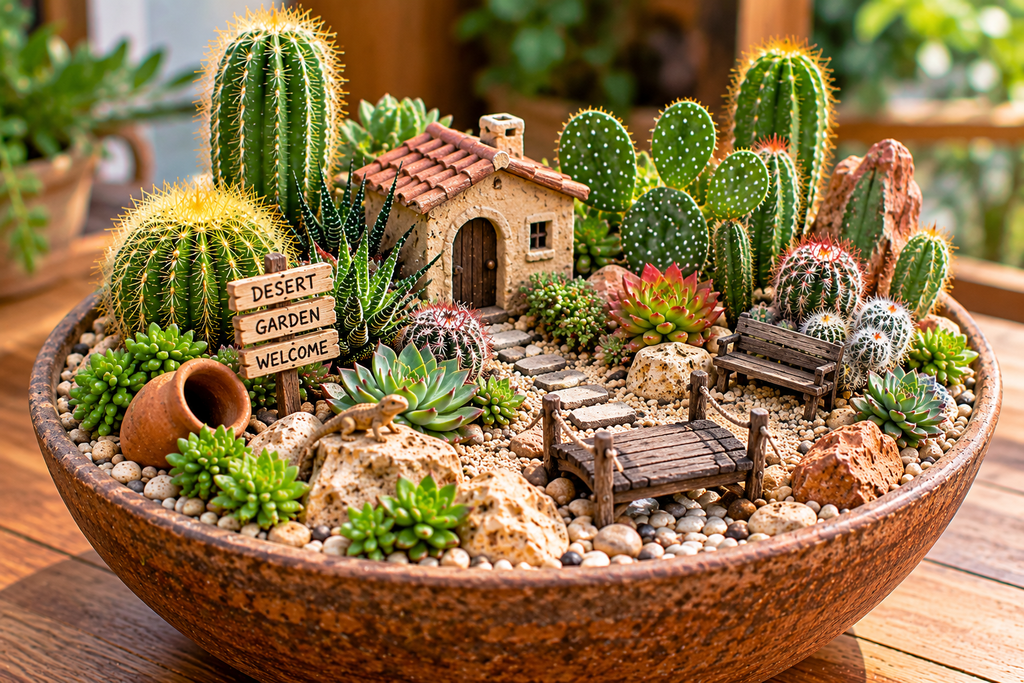
This is the version that most obviously reads as a “miniature desert garden.” Use a low planter and treat it like a tiny landscape: a bleached piece of driftwood or cholla skeleton to suggest a fallen tree, a stack of flat stones as a cairn, a scatter of small rocks, and a few sand-colored accents. The plants are sparse by design, three or four in a large space, because bare ground is part of the look.
Keep props simple and sized to the plants. Anything painted or glued can leach into the soil or wash away, so choose natural materials or sealed ceramic accessories. Avoid anything that traps moisture against the base of a cactus, such as dense moss or a bark mulch layer. Small figurines work if you like the whimsical version, but keep them on dry stone, not in the soil.
Choosing Decorative Gravel That Helps Rather Than Hurts
A top dressing of stone serves a function: it keeps the stem base drier, blocks soil splash, and gives the planting a finished look. The wrong stone can work against you.
| Material | Look | Pros | Watch out for |
| Pumice | Pale, porous, light | Very lightweight; absorbs and releases moisture quickly | Can float and shift when watered from above |
| Crushed lava rock | Dark red or black, rough | Porous; good contrast | Sharp edges can scratch skin and soft stems; heats in full sun |
| Decomposed granite | Tan, fine | Natural desert look | Fine grains can crust or compact if applied too thickly |
| Pea gravel | Smooth, rounded, mixed colors | Inexpensive; easy to find | Heavier; can be too coarse for tiny plants |
| Aquarium gravel | Uniform, often colored | Widely available in small bags | Dyed varieties may fade; rinse thoroughly first |
| Black polished pebbles | Smooth, dark | Dramatic modern look | Hold heat, which can stress shallow roots in hot sun |
Whatever you choose, rinse it first. Fine dust sticks to the surface of the soil and can slow drying. Keep the layer to roughly a half-inch to one inch, because a thick layer slows evaporation and can hide early signs of rot. Dark stone in direct sun gets hot; if plants sit in a sunny window or on a south-facing patio, choose lighter-colored material.
Planting and Watering Without the Common Mistakes
A few steps make the difference between a bowl that looks good for a month and one that looks good for years.
- Dry the plants first. If a nursery plant arrives in a wet mix, let it sit out of the pot for a day or so and gently shake off as much of the old soil as you can.
- Plant at the same depth. Set each plant at the level it grew at before, not deeper. Burying the base invites rot.
- Wait before watering. Many growers hold off watering for about a week after planting so that damaged roots can callus over. This is commonly recommended; if the plants arrive very dry and shriveled, a small drink sooner may be reasonable.
- Water deeply, then wait. Pour water over the soil until it runs out of the drainage hole, and then leave the plants alone until the mix is completely dry. In containers with no hole, use only enough water to dampen the mix.
- Skip fertilizer at first. A low-nitrogen cactus fertilizer diluted to half strength once or twice during the growing season is plenty. Never fertilize dormant plants.
How often is “completely dry”? It depends on pot size, material, light, and temperature rather than the calendar. A small terracotta bowl in a sunny window in July may be dry in four or five days. A glazed bowl in a dim room in January may take a month. Poke a bamboo skewer or a wooden chopstick several inches into the soil; if it comes out with any dark, damp soil clinging to it, wait.
What Goes Wrong, and What It Looks Like
Soft, dark, or mushy base. This is rot, usually from overwatering or a container that does not drain. If it is limited to the bottom of the plant, cut away the rotten tissue with a clean knife, let the cut surface dry for a week or more until it forms a callus, and replant in fresh dry mix. If the rot has reached the core, the plant is usually lost, though healthy offsets or the top portion can sometimes be rooted.
Wrinkled or shriveled body. This usually means thirst, not rot. The tissue is firm but pleated, and it plumps up within a day or two after a good watering. If the base is also soft, rot is the more likely cause.
Pale, stretched, or leaning growth. The plant needs more light. Move it closer to a south or west window or add a grow light.
Tan or bleached patches. Sunburn. The damaged skin does not recover, but the plant can keep growing normally. Gradually acclimate it to stronger light.
White cottony clusters in joints or spines. Mealybugs, a common houseplant pest. Dab each cluster with a cotton swab dipped in isopropyl alcohol, and repeat every few days. Isolate affected plants from the rest of the garden for a few weeks, and check any new plant before adding it to an existing bowl.
Tiny flies hovering over the soil. Fungus gnats, which breed in damp, organic-rich mix. A leaner, grittier mix and drier conditions reduce them quickly.
Seasonal Care That Keeps a Cactus Garden Going
Spring and summer are the main growing season for most desert cacti. Plants take in more water, put on new growth, and may flower. Outdoors, move containers out gradually after the last frost, and bring them in when nights drop toward the lower end of what the plants can tolerate. Tender desert cacti generally do best when kept above about 40 to 50°F, although tolerance varies by species, and a few, such as some prickly pears and hedgehog cacti, can take freezing temperatures if kept dry. Check the tag or a reliable source for your specific plants.
Fall is the time to reduce watering as growth slows. Winter is a rest period, and many cacti are kept nearly dry and cool, around 50 to 55°F, which is often suggested to encourage flowering the following spring. Indoors, water sparingly if at all through the darkest months, and shield plants from cold glass and heating vents.
Repotting is rarely needed more often than every two to three years, and the best time is in spring, when plants are about to grow. A cactus garden that was planted densely can stay in the same container for a long time.
Frequently Asked Questions
Can I really use a bowl with no drainage hole?
You can, but the margin for error is thin. Use a wide, open, shallow container, a very gritty mix, and a squeeze bottle for tiny, careful watering. Better still, use it as a decorative outer container and keep the plants in a plastic pot with holes inside.
Can I plant cacti and succulents together?
Yes, if they share light and watering needs. Echeveria and desert cacti usually get along. Haworthia, forest cacti, and most tropical succulents do not belong in the same bowl as a sun-loving desert cactus.
Do mini cactus gardens need a grow light?
Only if natural light is limited. A bright south-facing window is often enough for much of the year. In winter or in a dim room, a grow light on a timer can prevent stretching.
Are cactus gardens safe around pets and children?
Spines can injure curious animals and kids, and some succulents commonly paired with cacti, such as aloe, jade, and kalanchoe, are listed as toxic to pets. Consult the ASPCA plant list for the exact species and keep spiny containers out of reach.
Why do my cacti look fine for a month and then collapse?
Rot often develops slowly and shows up only after the damage is done. The cause is usually a wet root zone from poor drainage, a mix that holds too much water, or watering on a schedule instead of checking the soil.
Key Takeaways
Pick the container for drainage first and looks second. If a bowl has no hole, drill one or use it as a cachepot. Plant in a gritty mix that dries within about a week, and put only plants with matching light and water needs in the same container. Add a thin layer of rinsed gravel for the finished look, keep it slightly back from the stems, and water only when the soil is fully dry. Once you have those habits, the design is yours to play with, whether that is a single sculptural cactus, a thrifted skillet, or a windowsill trough full of tiny desert plants.

About Syprose Kiche
Syprose Kiche is the creator and writer behind My Besuited Home, a practical home and garden website covering DIY projects, gardening, lawn care, landscaping, home improvement, and outdoor living. She focuses on turning everyday homeowner questions into clear, practical guides backed by careful research and useful real-world considerations.