
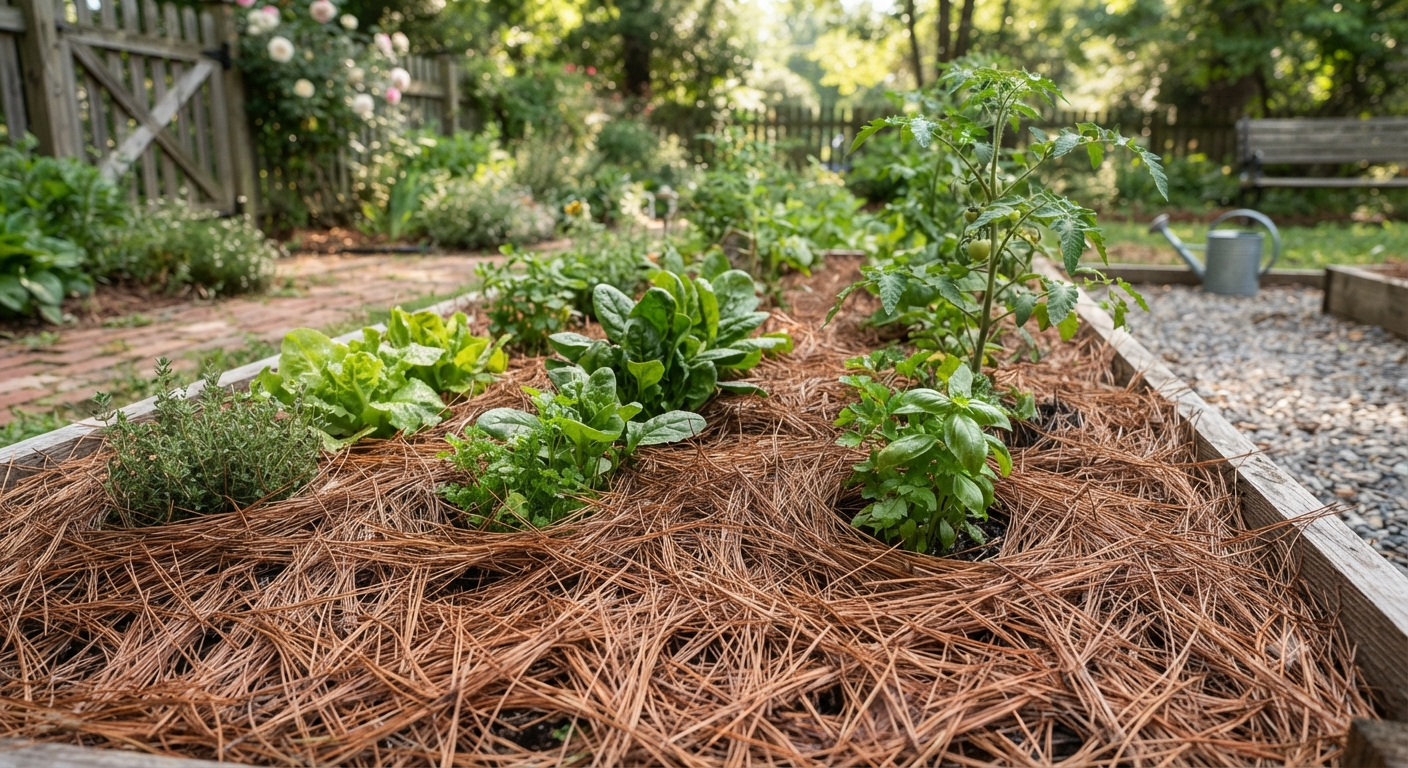
Weeds don’t care about your Saturday plans. You spend two hours pulling crabgrass out of the tomato bed, and by the following weekend it’s like you never touched the place. I’ve been gardening long enough to know that pulling weeds by hand is a losing game. The real fix isn’t more elbow grease. It’s putting down the right mulch so weed seeds never get the sunlight they need to sprout in the first place.
I’ve tested more mulch types than I care to admit, some in raised beds, some around fruit trees, some in that stubborn side yard that gets full sun for ten hours a day and turns into a weed jungle by July. Below is my honest ranking, from the mulches that flat-out work to the ones that only look good in a magazine spread.
What Makes a Mulch Actually Stop Weeds
Before we get into the list, here’s the short version of how mulch blocks weeds. Weed seeds need light to germinate. A mulch layer that’s thick enough and dense enough cuts off that light, and the seeds just sit there dormant. Organic mulches also break down over time and feed your soil, while inorganic ones like landscape fabric or gravel work more like a physical barrier.
The magic number for most organic mulches is 3 to 4 inches deep. Anything thinner and you’re basically just decorating the weeds instead of stopping them.
I also get asked constantly whether mulch actually kills existing weeds or just stops new ones. The honest answer is both, depending on the weed. A thick layer will smother small seedlings that are already up, since they run out of light and energy before they can push through. Established perennial weeds with deep roots, like dandelions or bindweed, usually need to be pulled first. Mulch on top of them just buys you time before they find a gap and come back.
1. Wood Chips (Arborist Chips) — The Overall Best Mulch for Weed Control
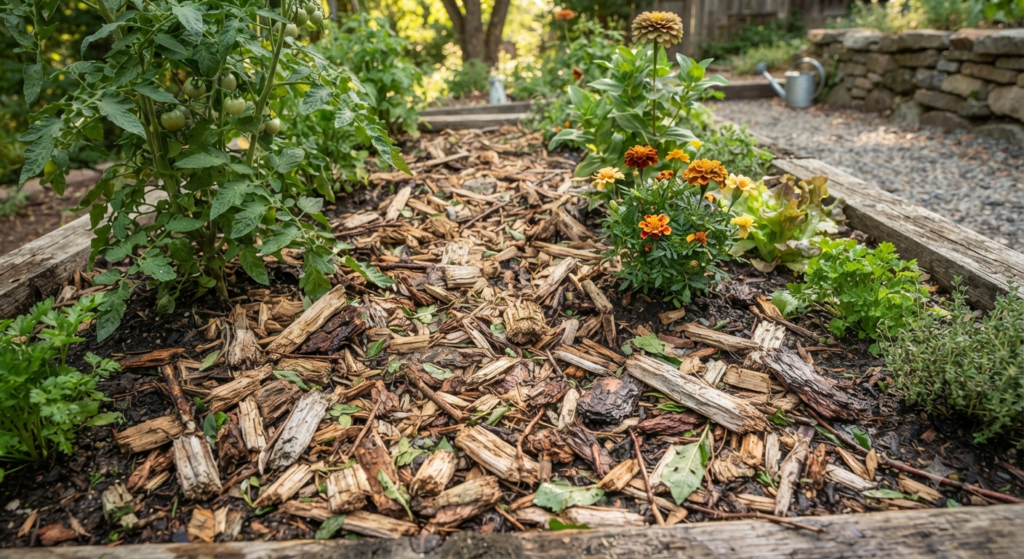
Wood chips, especially free arborist chips from local tree companies, top my list every time. They’re chunky, they interlock, and they create a mat that weed seeds can’t push through.
My neighbor’s oak tree came down in a storm a few years back, and the tree service dropped off three truckloads of chips in my driveway because I asked nicely. I spread them 4 inches deep around my fruit trees and along the fence line, and I didn’t pull a single weed in that bed for over a year.
The catch is that fresh wood chips can temporarily rob nitrogen from the top layer of soil as they decompose. This only matters if you’re mixing them into the soil instead of laying them on top, so keep the chips as a surface layer and your plants will be fine.
Arborist chips are usually free if you ask a local tree trimming company, and that price point beats every bagged mulch on this list. Bonus tip: ask for a mix of leaves and chips together, since that combination breaks down faster and adds more organic matter to your soil.
2. Straw Mulch — Best for Vegetable Gardens
Straw is my go-to for the vegetable garden, hands down. It’s light, it’s cheap, and it doesn’t compact into a soggy mat the way grass clippings can.
I use straw around my tomatoes, peppers, and squash every single season. It keeps the soil temperature more even, which matters a lot during a heat wave, and it keeps mud from splashing up onto the lower leaves when it rains. That splash-back is actually how a lot of fungal diseases spread, so straw does double duty.
Just make sure you’re buying straw and not hay. Hay is full of seed heads, and I made that mistake my first year growing peppers. I ended up with a lawn’s worth of random grass sprouting through my pepper bed by mid-July, and I spent an entire weekend pulling it all back out.
Search for “weed-free straw” at garden centers, since it’s been sourced or treated to avoid seed contamination. It costs a little more, but it saves you the headache.
3. Shredded Bark Mulch — Best Looking Option for Front Yard Beds
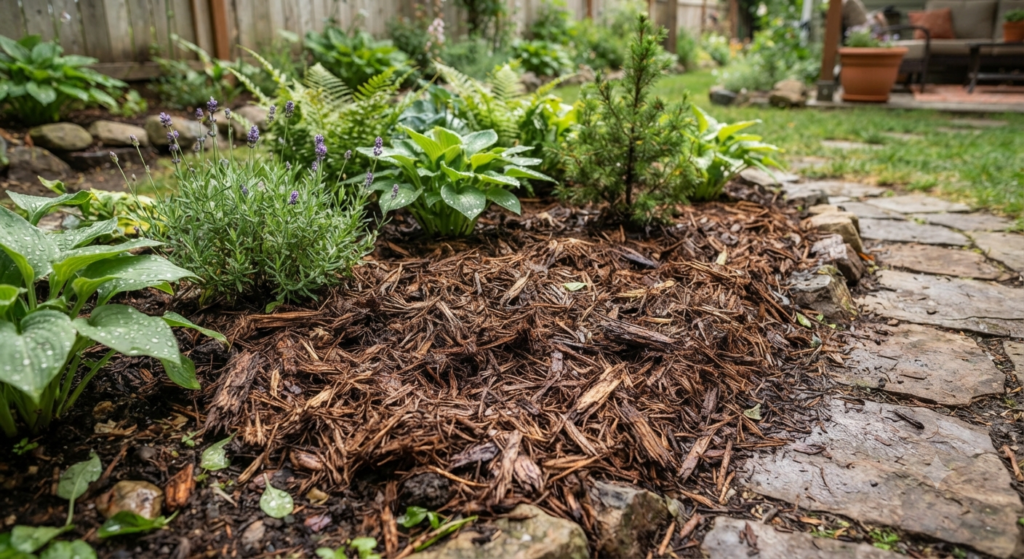
If you want your flower beds to look sharp for the neighbors, shredded bark is the mulch that photographs the best. It holds together on slopes better than wood chips do, and it comes in that classic reddish-brown or dark walnut color that makes a landscaping bed pop.
Shredded bark breaks down slower than straw or grass clippings, so you’re not reapplying every few months. I’ve got a bed along my front walkway that I top off with bark mulch once a year, and it holds its color and its weed-blocking power for a solid ten to eleven months.
The downside is cost. Bagged bark mulch adds up fast if you’ve got a big yard, and the dyed versions can bleed color onto a sidewalk after a heavy rain. I’d stick with natural, undyed bark if you’re mulching anywhere near a patio or driveway.
Side note: bark mulch works best for ornamental beds and shrubs, not vegetable gardens, since it takes too long to break down and doesn’t add nutrients fast enough for hungry crops like tomatoes.
4. Cardboard Sheet Mulch — Best Budget Option for New Beds
Cardboard is the cheapest weed barrier you’ll find, and it’s sitting in your recycling bin right now. I use it constantly when I’m converting a patch of lawn into a new garden bed.
Here’s how I do it: lay flattened cardboard boxes directly over the grass, overlap the edges by a few inches so there are no gaps, then wet it down and cover it with 3 inches of wood chips or compost on top. The cardboard smothers the grass and any weed seeds underneath, and it fully decomposes within a season, adding organic matter to the soil as it goes.
That trick saved me an entire weekend of double-digging a new bed the summer I expanded my pollinator garden. I just laid cardboard over the lawn on a Friday, mulched over it Saturday morning, and by fall the grass underneath was completely gone.
Remove any tape, staples, or glossy printed labels first, since those don’t break down and can leach chemicals into your soil. Plain brown cardboard is what you want, not the shiny stuff.
5. Pine Straw (Pine Needles) — Best for Acid-Loving Plants
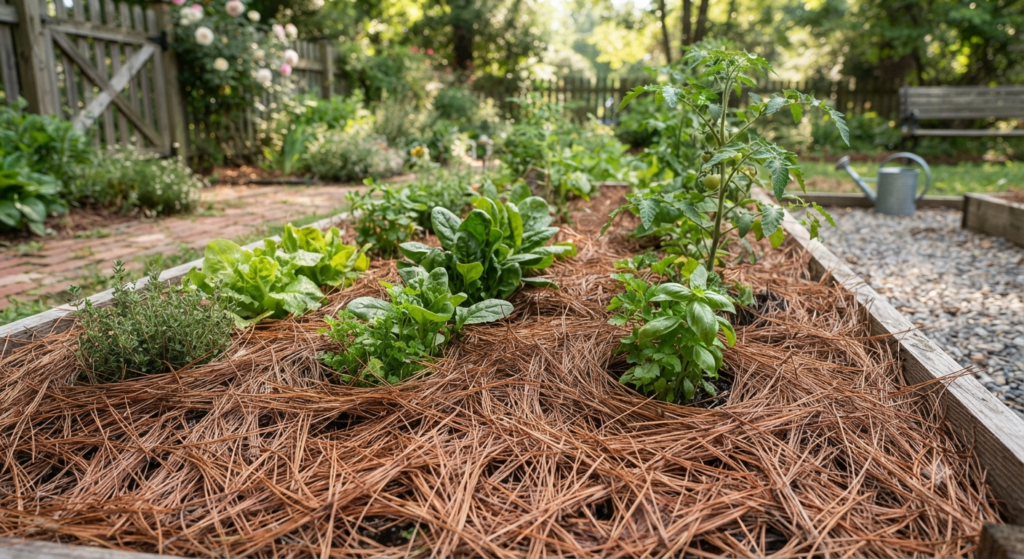
Pine straw is a favorite of mine for azaleas, blueberries, camellias, and anything else that likes acidic soil. It’s lightweight, it doesn’t wash away in a downpour the way shredded mulch can, and it knits together into a mat that’s genuinely tough for weed seedlings to punch through.
I switched to pine straw around my blueberry bushes a few seasons back after getting tired of reapplying bark mulch every spring. Pine straw settles in and stays put, even on the slight slope where my blueberry patch sits.
It does slowly acidify the soil as it breaks down, which is a feature if you’re growing acid-loving plants and a problem if you’re not. I wouldn’t use it around lavender or clematis, which prefer more neutral or alkaline conditions.
Pine straw is common and cheap in the South, but it can be harder to find and pricier if you live somewhere without a lot of pine trees nearby.
6. Grass Clippings — Best Free Mulch for Quick Coverage
Grass clippings are free, and if you’ve got a lawn, you’ve got an endless supply every time you mow. I use them as a light mulch layer in my vegetable garden between waterings.
The trick is thin layers. A fresh, thick pile of grass clippings turns into a slimy, matted mess that actually smells pretty bad as it decomposes. I spread mine no more than an inch thick at a time and let it dry out a bit before adding another layer.
Never use clippings from a lawn that’s been treated with herbicide within the last few mowing cycles. Those chemicals can persist and damage or kill whatever you’re trying to grow, which is a mistake that can wipe out an entire vegetable bed in a matter of weeks.
Grass clippings break down fast, so you’ll be topping them off regularly. That’s fine for a small raised bed, but it gets tedious if you’re trying to cover a big area.
7. Compost as Mulch — Best for Feeding Soil While Blocking Weeds
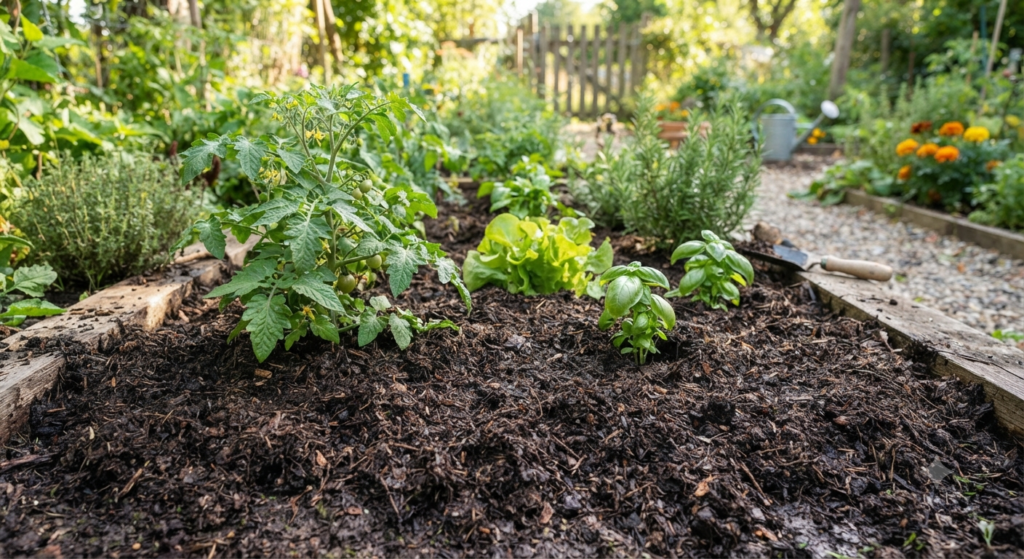
Compost isn’t usually thought of as a weed-blocker, but a thick layer, 2 to 3 inches, does a solid job while also feeding your plants at the same time. I like using finished compost around my perennial beds every spring.
The nutrients in compost mulch make a visible difference. My peonies and hostas came back noticeably fuller the year I started topping them with an inch or two of compost instead of just bark mulch.
Compost alone isn’t quite as effective at blocking weeds as wood chips or straw, since it’s finer and weed seeds can sometimes root right into it. I usually layer compost first, then top it with a thin layer of straw or wood chips for extra weed suppression.
Making your own compost is basically free once you’ve got a bin going, but buying bagged compost by the yard gets pricey fast if you’re covering a large garden.
8. Landscape Fabric (Weed Barrier Cloth) — Best for Long-Term Pathways, Not Plant Beds
Landscape fabric is a mulch I have complicated feelings about. Rolled-out weed barrier cloth does block light effectively, and it’s genuinely useful under gravel pathways or around mailbox posts where you’re not planting anything new.
I put landscape fabric under the gravel path along the side of my house eight years ago, and it’s still doing its job today. That’s a legitimate win.
Here’s my real talk though: I’ve found that landscape fabric is a total waste of money in actual planting beds, even if it looks tidy on Pinterest. Weeds still find a way to grow on top of it once dust and organic debris build up over the fabric, and their roots grow right through the weave and tangle into it. Pulling those weeds out later becomes a nightmare because you’re fighting the fabric the whole time. I ended up cutting mine out of a perennial bed after three frustrating seasons.
Save landscape fabric for hardscaping projects, not for beds where you actually want plants growing and changing over time.
9. Cocoa Bean Hull Mulch — Best for Small Ornamental Beds
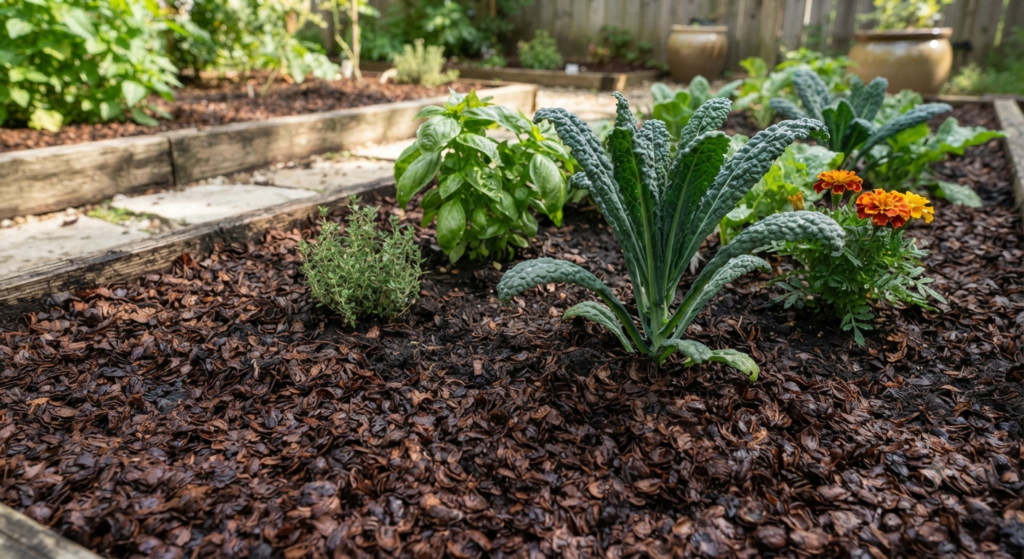
Cocoa hulls are the mulch nobody talks about, and honestly, they deserve more attention for small beds near a patio. They smell like chocolate for the first week or two after you spread them, they’re a rich dark color, and they lock together into a light crust that resists weeds surprisingly well for something so lightweight.
I used cocoa hulls one year in a small bed near my back door, mostly because I liked the smell, and I was surprised by how well they held up against weeds through a rainy spring.
One serious warning: cocoa hull mulch is toxic to dogs. It contains theobromine, the same compound that makes chocolate dangerous for pets, and dogs are sometimes attracted to the smell. If you’ve got a dog that roams the yard, skip this one entirely.
It’s also pricier per bag than bark or wood chips, so I’d reserve it for small, high-visibility spots rather than a whole yard.
10. Rubber Mulch — Ranked Low Despite the Marketing
Rubber mulch gets marketed hard as a “never needs replacing” option, and I get why that sounds appealing. It’s made from recycled tires, it doesn’t break down, and it does technically block light from reaching weed seeds.
I tried it once in a playground border for a family member, and I regret recommending it. Rubber mulch gets hot in direct sun, hot enough that I’ve seen it burn bare feet on an August afternoon. It doesn’t feed the soil at all since it never decomposes, and over the years it can leach zinc and other compounds into the ground, which isn’t something I want near vegetables or anything I’m eating.
Weeds do eventually find their way into rubber mulch too, once enough dust and organic material settles between the pieces. At that point you’ve got weeds growing in a material that will still be sitting in your yard decades from now.
I’d only consider rubber mulch for a purely decorative area with zero plants, and even then, I’d think twice.
11. Gravel or Rock Mulch — Ranked Lowest for Weed Control Specifically
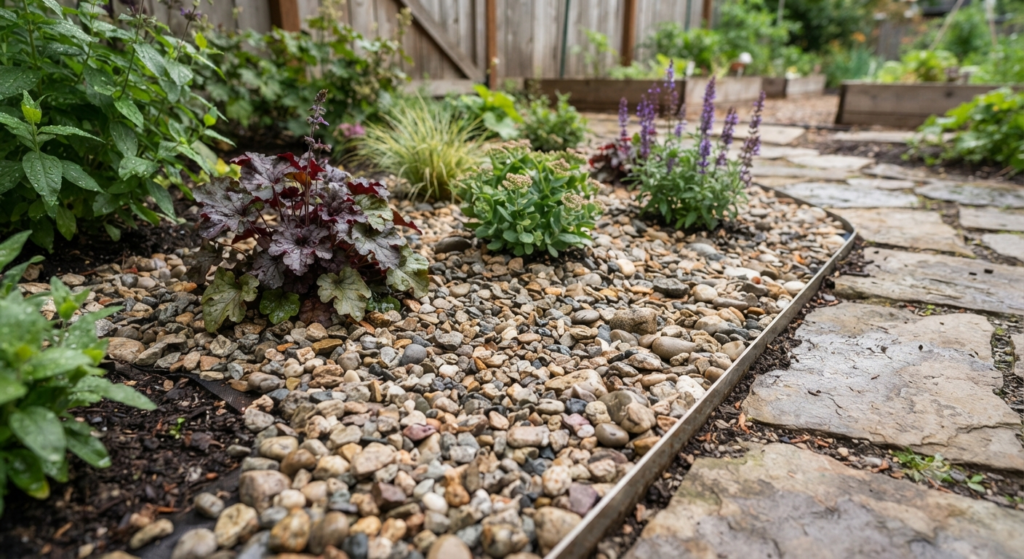
Gravel looks clean, it’s low maintenance in the sense that it never needs replacing, and it works well around succulents or in xeriscaped areas that don’t get much rain. But for pure weed control, I’m ranking it last on this list.
Rock mulch doesn’t block weeds nearly as well as people expect. Windblown dust and organic debris settle between the stones over time, creating just enough of a growing medium for weed seeds to take root. Once weeds do get established in gravel, pulling them is far more annoying than pulling weeds out of soil or wood chips, since the roots tangle around individual rocks.
Gravel also absorbs and radiates heat, which can stress nearby plants during a summer heat wave. I’ve got a small gravel strip along my driveway, and I still end up pulling weeds out of it every few weeks during the growing season, more often than I do in my wood-chipped beds.
If you want gravel for the look, pair it with a thick layer of landscape fabric underneath and accept that you’ll still be doing some weeding. Don’t expect it to be a truly weed-free solution on its own.
Real Talk: What Actually Goes Wrong With Mulch
Mulch isn’t magic, and I want to be straight with you about where people mess this up.
- Piling mulch against tree trunks and plant stems is probably the most common mistake I see. Everyone calls this “volcano mulching,” and it traps moisture against the bark, which invites rot and disease. Keep mulch a few inches away from any trunk or stem.
- Going too thin is the other big one. An inch of mulch might look fine on day one, but it won’t stop weeds. You need that 3 to 4 inch depth for organic mulches to actually block light.
- Using contaminated materials will undo all your work. Hay with seed heads, herbicide-treated grass clippings, or dyed mulch that bleeds chemicals into your soil can create bigger problems than the weeds you’re trying to stop.
- Expecting zero maintenance isn’t realistic with any mulch, even the good ones. Wind blows in dust, birds drop seeds, and some tough weeds like bindweed will punch through almost anything eventually. Mulch cuts your weeding time by a huge margin. It doesn’t eliminate it completely.
Quick side note: timing matters more than people realize. Mulching in early spring, before weed seeds have a chance to germinate, gets you far better results than mulching in the middle of summer after weeds are already established and growing. If you’re playing catch-up on a bed that’s already weedy, pull what you can first, then mulch. Laying mulch over an already-weedy bed just hides the problem for a few weeks before those weeds push right back through.
Final Thoughts
If I had to pick just one mulch for stopping weeds naturally, I’d grab free arborist wood chips every time and never look back. But the truth is your best mulch depends on what you’re growing, your budget, and how often you’re willing to top it off.
Start with wood chips or straw if you’re new to this, skip the rubber mulch no matter what the bag promises, and always keep that mulch a few inches back from your plant stems.
What’s your go-to mulch, and has it actually held up against your worst weeds? Drop your experience in the comments below. I read every one, and I’m always curious what’s working in gardens outside my own zone.

About Syprose Kiche
Syprose Kiche is the creator and writer behind My Besuited Home, a practical home and garden website covering DIY projects, gardening, lawn care, landscaping, home improvement, and outdoor living. She focuses on turning everyday homeowner questions into clear, practical guides backed by careful research and useful real-world considerations.