
Whimsical Christmas decorating tends to go wrong in one predictable way. Someone buys a candy-themed ornament set, a pink garland, a few novelty figurines and a glittery tree topper, puts them all out at once, and the room reads as a pile of cute things instead of a point of view. Each item might be charming alone. Together they cancel each other out.
Whimsy works when it follows rules. It usually means one playful idea repeated with discipline, a deliberate play with scale, color or expectation, and plenty of plain background so the fun has room to show. The twenty ideas below are organized around the places people actually decorate: the tree, the wreath, handmade pieces, the mantel, the gift table, and what you wear to the party. Each comes with materials, rough costs and quantities where they’re knowable, and the things that tend to go wrong.
What Actually Makes Decor Whimsical
Whimsy is the feeling that someone had a good idea and committed to it. A few principles hold across nearly every style.
Pick one playful idea per room. A candy tree in the living room and a woodland-creature mantel in the same sightline compete. Give each space one story.
Repeat a motif at least three times. One felt mushroom looks like an accident. Three mushrooms, in different sizes and different places, look intentional. Repetition is what separates a theme from clutter.
Play with scale. An oversized bow, a tiny tree on a stack of books, or a giant paper star over a table all signal humor without needing a joke. Changing the expected size of an object is one of the cheapest ways to make a room feel playful.
Limit the palette to three or four colors, and let one be neutral. Pastel pink, mint and cream read as sweet and storybook. Cranberry, forest green and gold read as classic. Whimsy doesn’t require unusual colors, only a deliberate set. When a palette has more than four or five strong hues, the eye can’t rest anywhere.
Leave blank space. A mantel with five things on it looks styled. A mantel with fifteen looks stored. If you’re unsure whether to add one more piece, don’t.
With that in place, here are the ideas.
Whimsy Christmas Tree Ideas
The tree is the largest single decision, so it sets the tone for everything else. These five approaches range from a full theme to a smaller gesture.
1. The Sweets Tree
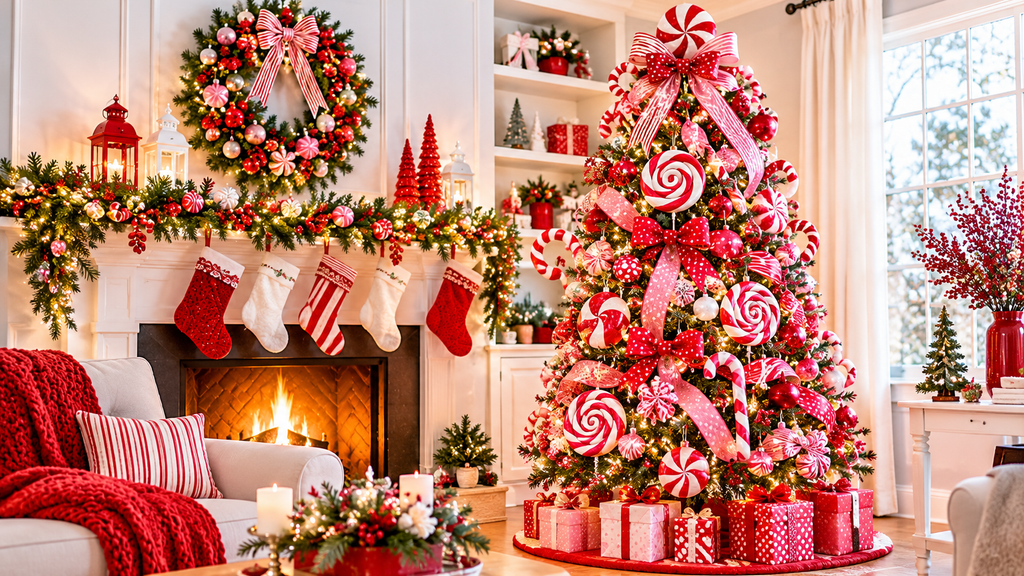
A candy-themed tree is the most recognizable whimsical look: oversized lollipops, peppermint rounds, gumdrop garland, and ribbon in candy-stripe patterns. Use faux candy and plastic or resin ornaments. Real candy hung on a tree attracts ants and other pests and can be a hazard around dogs, and some sweeteners, such as xylitol, are toxic to dogs. If you want a real element, hang wrapped candy canes only where pets can’t reach them.
The look holds together when the base is quiet. A white or pale green tree with a few large lollipops and ribbon loops reads as a confection. A dark green tree covered edge to edge in a dozen candy types reads as a candy store explosion. Choose two or three candy shapes and repeat them rather than buying every shape available.
2. The Pastel Tree
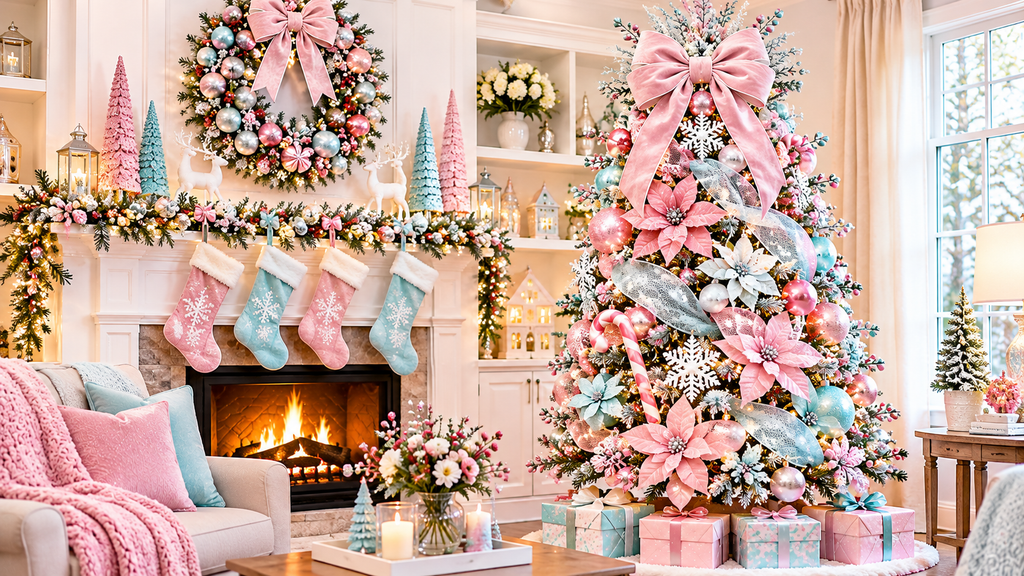
Pink, mint, pale blue and soft lavender ornaments on a white, flocked or green tree turn the traditional look on its head without introducing any gimmick. Matte finishes keep the pastels from looking plastic. Mixing in a few metallic champagne pieces gives the eye something to catch.
If you’re working with an existing green tree, skip the idea of covering it up. Cluster the pastels in groups of three to five ornaments rather than spreading single pieces everywhere, and let the green read as a backdrop. A tree with obvious greenery and soft pastel clusters looks fresher than one in which every branch is covered.
3. The Ribbon and Bow Tree

Bows are one of the least expensive ways to add whimsy, and they scale well. Wire-edged ribbon holds its shape on branches, so the bows don’t collapse. A typical full-size tree takes surprisingly little ribbon if the bows are large and spaced out; a tree this way looks deliberately dressed rather than crowded.
For a storybook effect, tuck in streamers of ribbon that fall vertically from the top to the bottom of the tree, like a cascading waterfall, then add bows at the points where the ribbon changes direction. Velvet ribbon in a single deep color (burgundy, emerald, dusty rose) looks richer than a mixed set of patterned ribbons.
4. The Woodland Tree
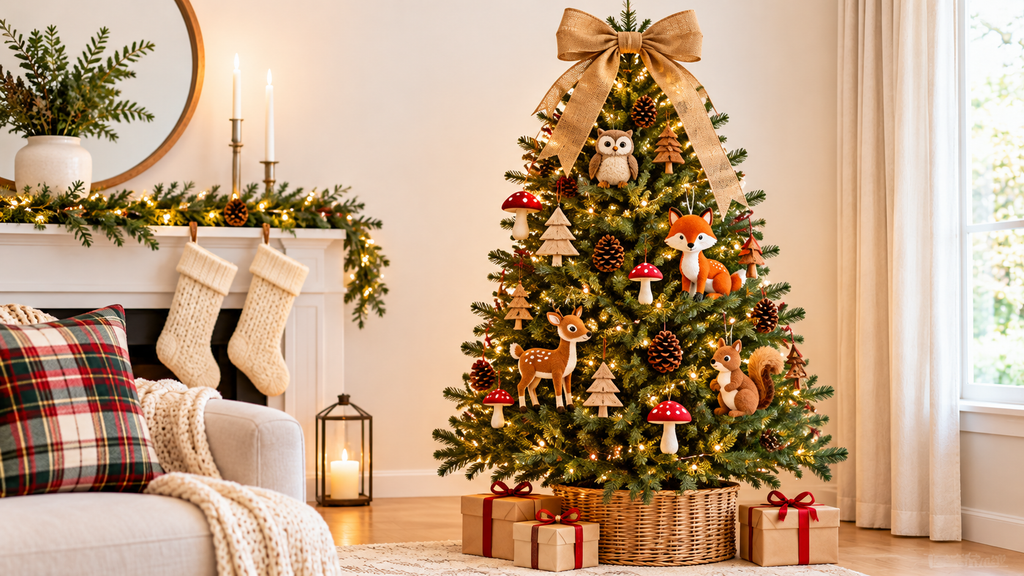
Felt animals, mushrooms, acorns, birds, pinecones and small wooden stars give a tree a forest-storybook mood. This look benefits from texture contrast: wool felt, rough wood, dried orange slices, and a little burlap or linen ribbon.
Keep the palette earthy (rust, moss, cream, a touch of red). Include a few oversized elements, such as a large felt mushroom near the base or a big wooden bird near the top, to set the scale. Real pinecones should be baked on a low-heat sheet pan before use if they came from outdoors, to drive out any insects or sap; most craft guidance suggests a low oven for an hour or so, but check a trusted source and keep an eye on them for the first few minutes, since sap can run and ignite.
5. The Tiny Tree in an Unexpected Container
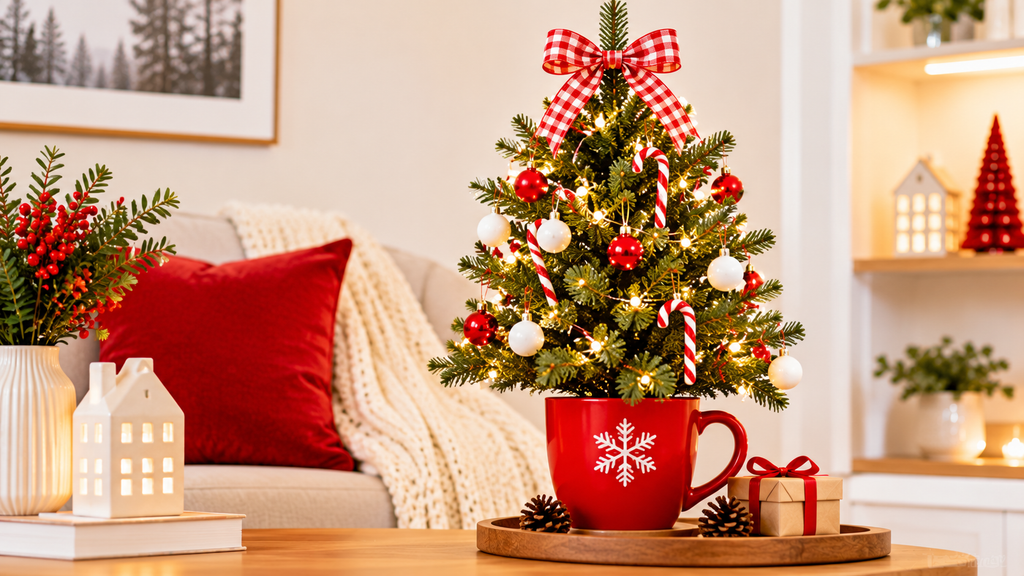
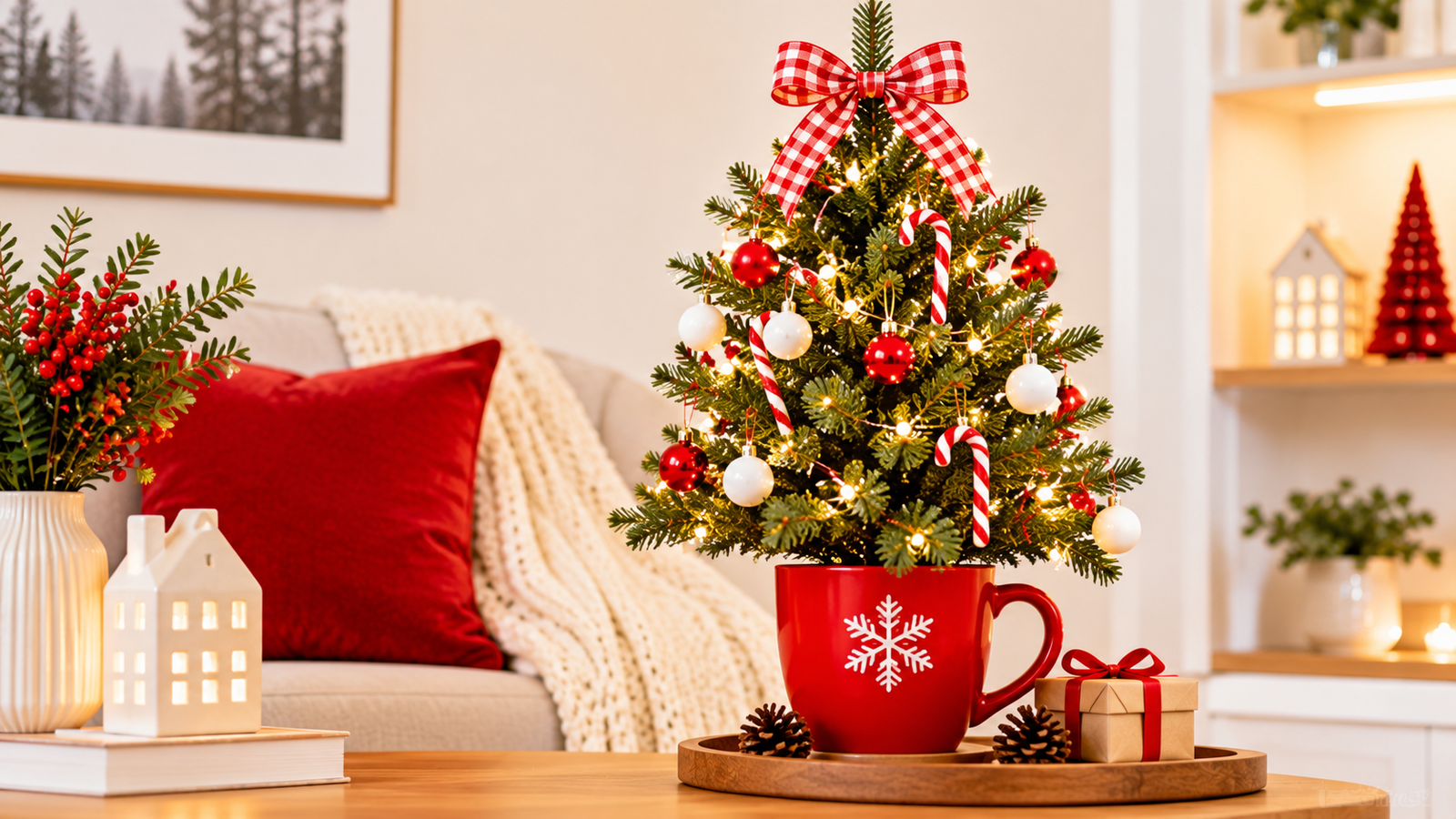
A small tabletop tree set in a teacup, a vintage tin, a stack of old books, or a wooden crate counts as whimsy through scale alone. It works well in homes with little floor space, in a kitchen, on a desk, or beside a bed.
Choose a tree in the 18 to 24 inch range, which is small enough to feel playful but large enough to decorate with miniature ornaments. Wrap the base with a piece of fabric or burlap to hide the nursery pot. Place a few tiny ornaments, a bead garland, and a small paper star on top. It’s a good option for renters, for apartments, and for people who want some whimsy without committing to a full theme.
Whimsy Christmas Wreath Ideas
A wreath is a contained space, which makes it a good place to try a bold idea. The key constraint is that front-door wreaths face weather, so materials have to be chosen with that in mind.
6. The Pom-Pom Wreath
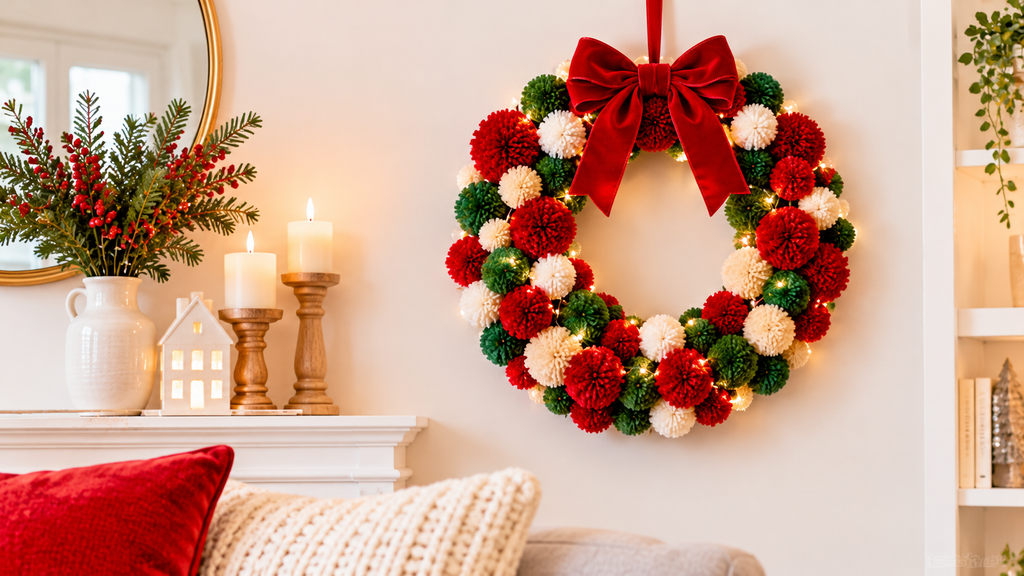
Yarn pom-poms attached to a foam or wire ring make a soft, colorful wreath that’s more playful than a traditional greenery wreath. It’s best for indoor use or a covered porch. Wool and acrylic both soak up moisture and can look sad after rain.
To make one, wrap a foam ring with yarn so no foam shows, then hot-glue pom-poms (store-bought or made with a pom-pom maker) over the surface. Using three sizes of pom-pom creates depth; using one size creates a flat, patterned look. A mix of red, white and pale pink is a sweet-shop combination. Hot glue gets hot enough to burn skin, so use a low-temperature gun if children are helping, and keep cold water nearby.
7. The Peppermint Candy Wreath
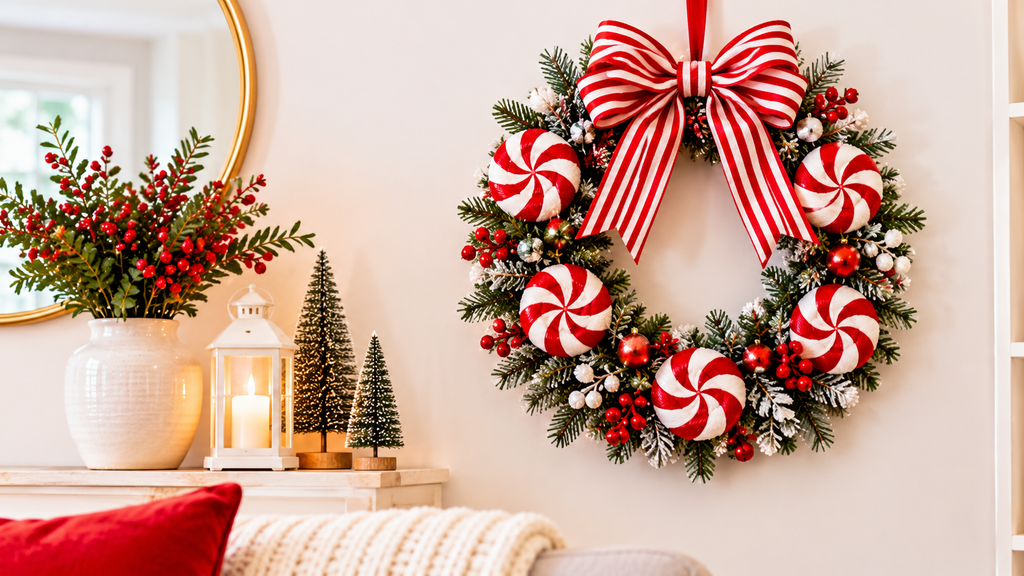
A wreath covered in oversized faux peppermints, or in real hard candies sealed with clear acrylic spray, brings the sweets theme to a door. Real candy will soften in humidity, which makes this one an indoor project unless you use plastic. Plastic peppermints bought in bulk are the safer choice outdoors.
The most common mistake with this idea is symmetry that’s too perfect. Placing the candies in a slightly irregular pattern, with a few larger ones breaking the rhythm, looks more charming than a ring of identical circles.
8. The Ornament Cluster Wreath
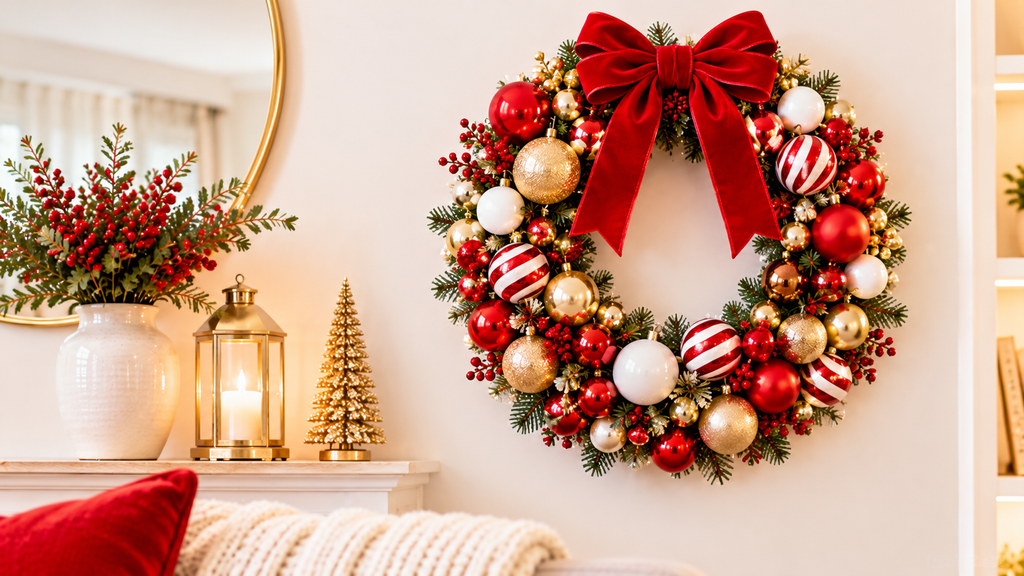
Take a wire frame or a foam ring and attach shatterproof ornaments in several sizes, packed tightly so no ring shows. It’s a good use for leftover ornaments, and it’s more forgiving than greenery since nothing dries out or sheds.
Use shatterproof plastic ornaments if the wreath will hang outside or in a place where children and pets are around. Choose a limited color range, such as all pinks and golds, or all shades of blue, to avoid the look of a mismatched pile. Wire the ornaments rather than gluing them if you want to reuse them next year; glue tends to make removal messy.
9. The Oversized Bow Wreath
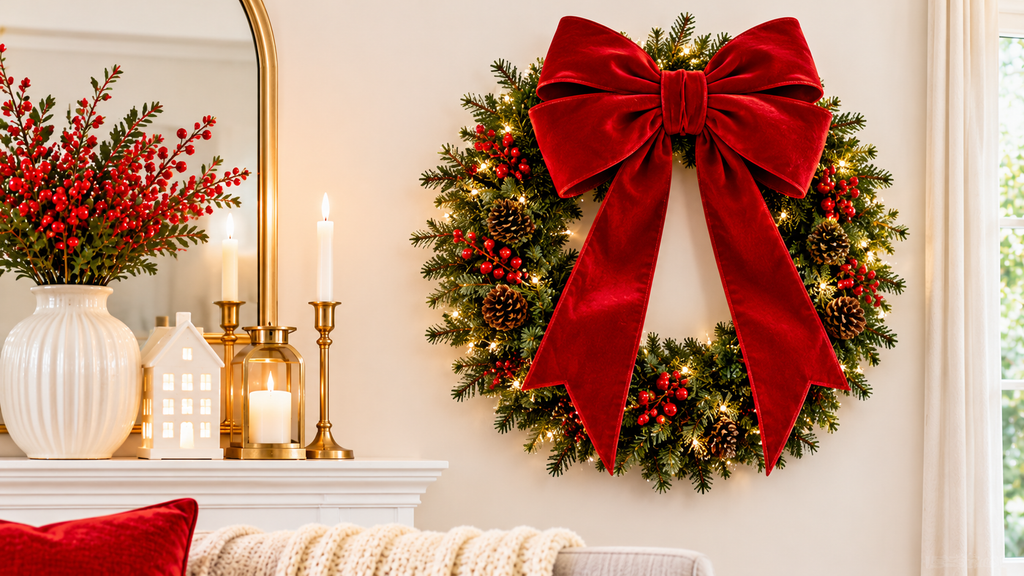
A relatively plain greenery wreath topped with an enormous bow, 12 inches or more across, is whimsical through scale. Many people tie bows that are too small for the wreath they sit on. If the bow looks slightly too big when you hold it up, it’s probably right.
Wire-edged outdoor ribbon is made for this use and holds up to weather better than standard craft ribbon. Using two ribbons in coordinating patterns, such as a plaid layered over a solid, adds depth. Hang the wreath slightly off-center on a door or mirror, or hang it on a window with a ribbon loop, for a playful departure from the usual placement.
Handmade Whimsy: DIY Christmas Decor
Handmade pieces carry the most personality, and several of the following need only inexpensive materials. They’re also the ones where safety and technique matter most.
10. Salt Dough Ornaments

Salt dough is a classic: roughly two parts flour to one part salt, with enough water to form a dough, rolled out around a quarter inch thick and cut with cookie cutters. Bake at a low temperature until completely dry. Many recipes use about 250°F for a couple of hours, but thickness changes the time considerably, so follow the recipe you use and check that the centers are hard. Poke a hole for the ribbon before baking.
Two cautions apply. First, salt dough is dangerous to dogs and cats if eaten, because of the salt content, so keep finished ornaments out of reach, especially on the lower branches. Second, the ornaments absorb moisture and will soften or crumble if stored in a damp place; sealing them with clear acrylic spray or varnish helps them last. Painting them in your tree’s palette ties them in, and leaving them white with a simple stamped pattern has a modern, Scandinavian feel.
11. Pleated Paper Star Garland
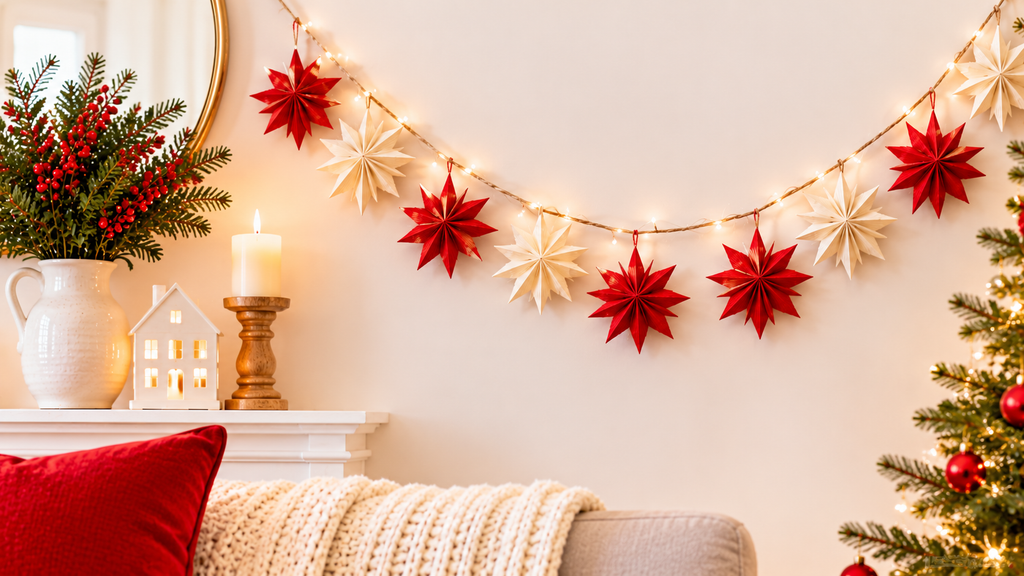
Paper stars made from folded strips look elaborate but use inexpensive materials. Cut strips of heavy paper or cardstock, fold them into a pentagon-shaped knot, then pinch the edges into a star shape. Many video and printed tutorials show the technique. Practice with a couple of test stars before committing to a whole set.
Hung across a window or a mantel on twine, a string of these stars has a handmade charm. Because paper is flammable, keep them clear of candles, fireplaces, and heat sources, and string lights of the cooler LED type rather than older incandescent bulbs, which run hot.
12. Felt Ball Garland
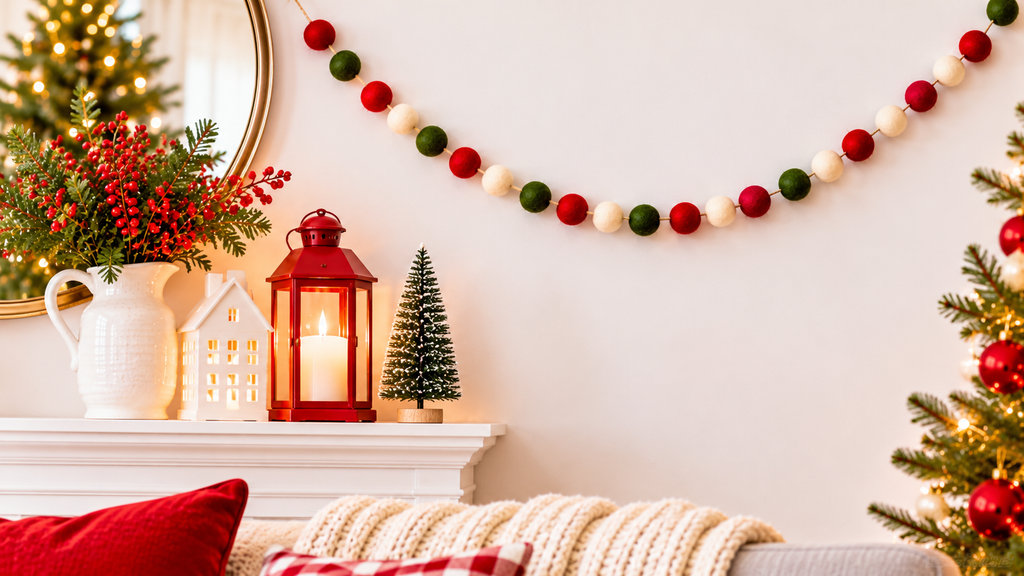
A garland of wool felt balls, sold by the yard or in bulk by craft suppliers, brings color without much work. Threaded on a long needle and heavy thread, the balls can be arranged in a repeating color pattern or an ombre from deep red to pale pink.
Plan the color order before stringing, because rethreading is tedious. A 6-foot garland usually calls for somewhere around 50 to 70 balls at three-quarters of an inch to an inch in diameter, though the exact number depends on how closely you pack them. Felt balls are small, so keep the garland away from toddlers and pets who might chew and swallow them.
13. A Cardboard Village Mantel
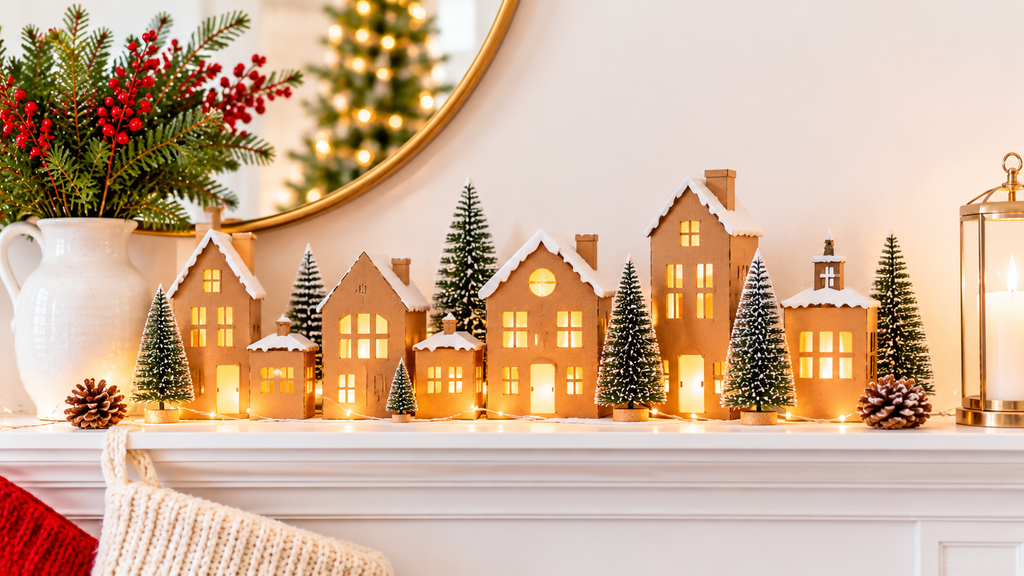
Small houses cut from cardboard or thin wood, painted white or pastel, and arranged along a mantel or shelf create a tiny town. Cut a simple house shape, add a roof, and decorate with paint pens, washi tape, or paper cutouts for windows and doors. Battery-powered LED tea lights placed inside, with windows cut or perforated, give the village a glow.
The mistake to avoid is making each house different in size and style without any shared element. Using a single color family and a repeated roof shape makes the group feel like a set. Use LED lights only, never real candles, because the cardboard and paper are combustible.
14. Snow Jar Luminaries
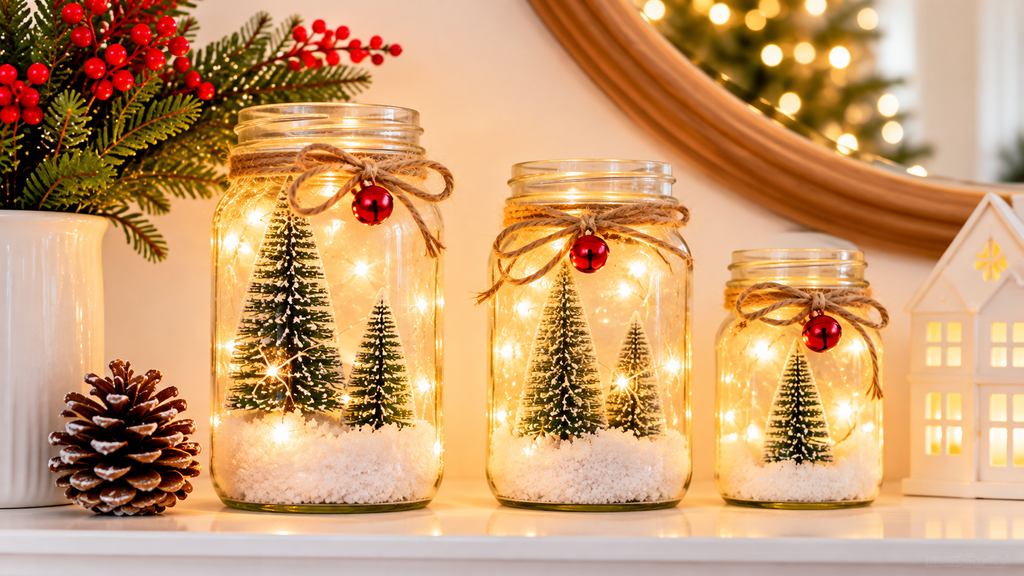
Clean glass jars, such as pickle, jam or canning jars, become luminaries when filled with a few tablespoons of faux snow or epsom salt and a battery-powered LED tea light, and perhaps a small plastic tree or figurine standing in the snow. Group three jars of different heights on a table or porch step.
Use LED lights only. Be aware that epsom salt can irritate skin and eyes, and should be kept away from pets that may lick or eat it. For a frosted look, a thin coat of spray-on frosting or etching spray on the outside of the glass can soften the light, but follow the label for ventilation, since these sprays release fumes.
The Mantel and Stocking Moment
15. Mismatched Stockings on a Ladder or Branch

Matching stockings are tidy but not especially whimsical. Mismatched ones, in different sizes, patterns and fabrics (velvet, knit, vintage, felt), look collected rather than bought as a set. The unifying element can be a color, such as every stocking including some red, or a consistent type of hanger.
If the mantel isn’t suitable, perhaps because it’s gas, narrow, or absent, hang stockings from a leaning wooden ladder, a bare branch mounted horizontally, or a row of brass hooks on a wall. Stockings filled with small gifts can be heavier than they look, so use hooks rated for the weight. For a fireplace in use, never hang stockings or other fabric where flames or heat could reach them. Look to your fireplace manufacturer’s clearance guidance, and consult a professional if you’re unsure.
Whimsy Christmas Wrapping Ideas
Wrapping is often the last thing people think about and the first thing that guests see. It’s also the area where whimsy costs the least.
16. Tissue, Gingham and Oversized Bows

Plain kraft paper or white wrapping paper, topped with a wide gingham or velvet ribbon and a larger-than-expected bow, looks cheerful and coordinated. A tonal approach, with every package in the same two or three colors, makes a pile of gifts look like part of the decor.
Fabric wrapping, in the style of the Japanese furoshiki technique, is another option. A square of cotton or flannel knotted around a gift can be reused and looks soft and unusual. For awkward shapes like bottles, fabric is often easier than paper.
17. Toppers That Do the Work
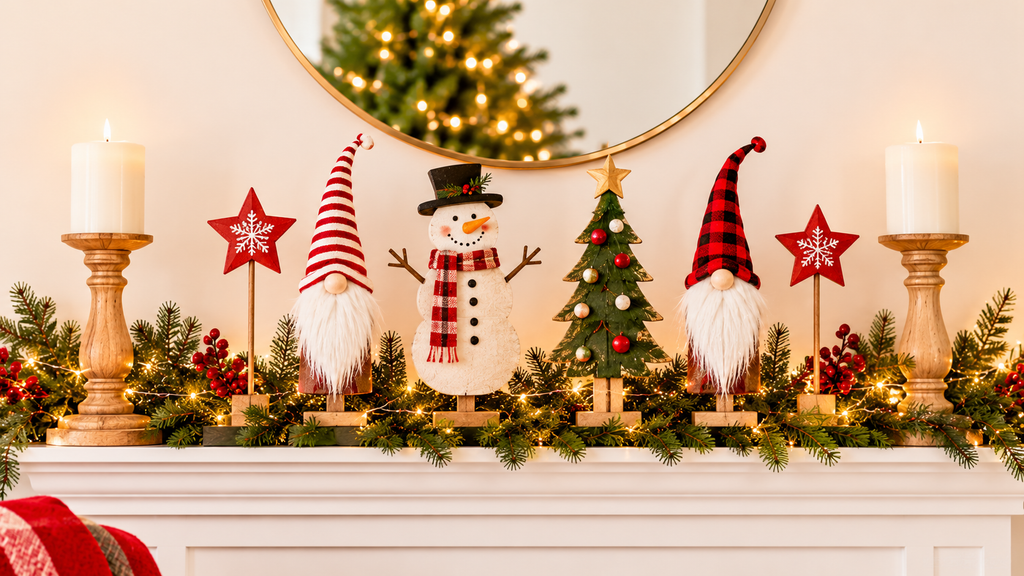
Instead of a bow alone, tie something onto each gift: a miniature ornament, a candy cane, a sprig of rosemary or evergreen, a dried orange slice, a felt mushroom, or a small bell. The topper doubles as a second gift or a decoration to keep.
Fresh greenery can dry out or shed, so add it close to the time of giving. Avoid holly with berries if children or pets will be near, since holly berries are toxic if eaten. Rosemary, pine, and cedar are common safer choices for decoration, though pets may still chew them.
18. Hand-Stamped Paper
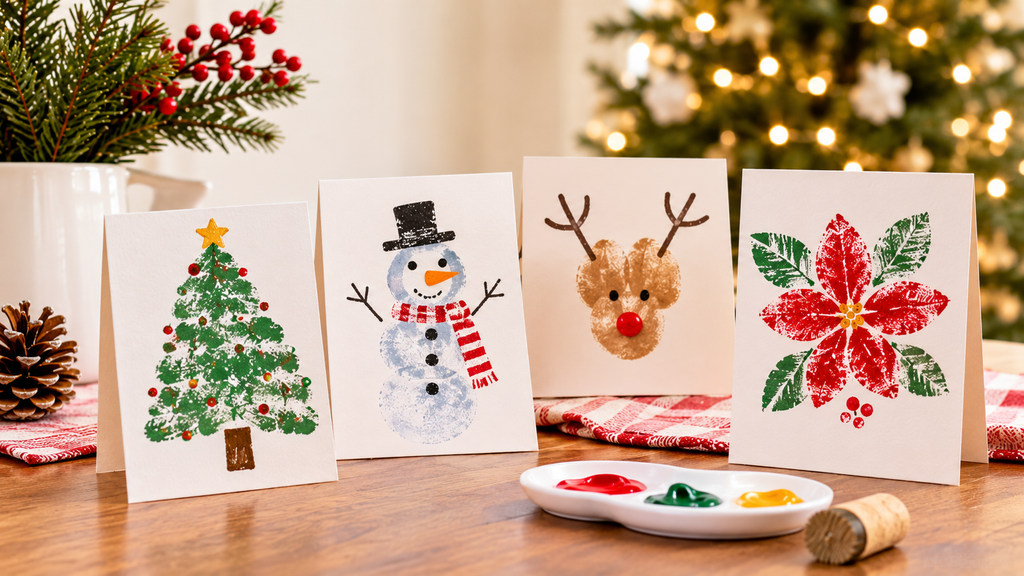
Plain kraft paper stamped with a potato-cut shape, a rubber stamp, or a sponge in one or two colors turns ordinary paper into patterned gift wrap. Stars, dots, trees and simple hearts work well because they’re easy to cut and repeat.
Let the ink or paint dry fully before wrapping, and use water-based, non-toxic craft paint if children are helping. Aim for an imperfect look; slightly uneven stamping is part of the appeal. Roll out a long sheet on a table so you can stamp in a rhythm instead of one gift at a time.
Whimsy Christmas Party Outfit Ideas
Whimsy in clothing follows the same logic as decor: one strong idea, kept deliberate, with everything else quiet.
19. The Soft-Whimsy Outfit: Velvet, Tulle and One Novelty Detail

A velvet top or blazer with a tulle or satin midi skirt gives a base that feels festive without being a costume. Then add one playful element: ornament-shaped earrings, a bow headband, a sweater with pom-poms, a pair of glittery shoes, or tights with a subtle pattern.
The principle is that the novelty piece should be the only one. Wearing candy-cane tights, a pom-pom sweater, light-up earrings and a Santa hat at once pushes toward costume rather than outfit. If you want to commit to costume, that’s a valid choice at some parties; just make it deliberate. Check the event: an office party, a family dinner and a friend’s ugly-sweater night call for different amounts of play.
Comfort matters, too. Tulle can be scratchy, and velvet can be warm in a crowded, heated room. Layers that you can remove make the evening easier.
20. The Quiet-Whimsy Outfit for Anyone

For people who prefer not to look like they’re dressed up, a plaid or corduroy base with one unexpected accessory works: a bow tie in a velvet or novelty print, a hat with a pom-pom, a brooch in a tree or snowflake shape, or socks with a fun pattern. The effect is that someone has a sense of humor without needing an explanation.
A holiday brooch or pin on a jacket lapel is a good unisex option and is easy to reuse. Neutral clothing plus one playful object works at the widest range of parties, and it can be dressed up or down by changing the base garment.
Making Whimsy Work in Your Home: Practical Decisions
Choose your theme before you shop
The biggest cause of overbuying is shopping without a plan. Decide on a motif (sweets, woodland, ribbon, snow) and a palette before you buy anything. Walk through the house and decide which two or three spots get the most attention, usually the tree, the mantel or a main table, and the front door. Put most of your effort there.
Mix store-bought and handmade
An all-handmade look can seem amateur if the pieces vary in quality, and an all-store-bought look can seem generic. A common approach is to buy the foundations (tree, garland, a set of basic ornaments) and make the accents (stars, tags, toppers, one wreath). Handmade pieces are most noticeable when they’re set against plain backgrounds.
Lighting changes everything
Warm white lights tend to feel cozier and more storybook; cool white lights look crisper and more modern. Mixing the two on one tree usually looks off. Use LED strings where possible; they run cooler than traditional incandescent bulbs, which matters near paper, fabric and fresh greenery. Look for products certified by a recognized safety testing lab (such as UL), follow the manufacturer’s limits on how many strings can be connected end to end, and don’t use indoor-only lights outdoors.
Safety checks worth making every year
- Fresh trees need water daily; a dry tree is a fire hazard. Keep trees away from heat sources.
- Never use real candles near paper, fabric, dried greenery, or a tree.
- Inspect light strings for frayed wire or broken sockets before using them.
- Keep small ornaments, tinsel, ribbon, salt dough, and edible-looking decorations away from pets and young children.
- Use hot glue guns carefully, and ventilate rooms when using spray adhesives, frosting spray or flocking.
- When climbing to hang decorations, use a stable ladder rather than a chair.
Storing for next year
Whimsical pieces are often delicate. Felt, yarn and paper items store best in sealed plastic bins with a silica gel packet or two to limit moisture. Wrap glass ornaments in tissue or place them in divided boxes. Salt dough ornaments should be fully dry and sealed, then stored in a dry spot. Label bins by room or category so setup the next year goes faster.
Questions People Actually Ask
How do I make a whimsical look without spending a lot?
Concentrate the budget on one spot. A single oversized bow, a handmade garland, and a stamped-paper gift pile can add more personality than a whole new set of ornaments. Salt dough, paper stars, jar luminaries and fabric wrapping all use inexpensive or on-hand materials. Thrift stores often carry vintage ornaments, ribbon, and glass jars at low prices.
Can I do whimsy if my style is usually minimal or modern?
Yes, and a restrained palette helps. A white tree with a few oversized ribbon bows, a pale pink-and-cream set of ornaments, or a single sweets-themed wreath fits within a minimal home. The trick is to treat whimsy as a single accent rather than a full theme.
Will a whimsical tree look dated next year?
Trend-driven pieces, such as a very specific color, can feel tied to a year. Pieces built from simple, repeatable elements, like ribbon, felt shapes, paper stars or glass ornaments in a soft palette, tend to be easier to refresh. If you want flexibility, buy a neutral base and change the accent color from year to year.
What if I have pets or young children?
Choose shatterproof ornaments, keep the lower third of the tree free of anything breakable or edible-looking, avoid tinsel and small felt or yarn pieces within reach, and skip real candy and salt dough ornaments on lower branches. Consider a tabletop tree on a high surface or a gated area.
Final Thoughts
Whimsy in Christmas decor mostly comes down to restraint with one playful idea. Choose a motif, limit the palette, repeat it with some variety in scale, and leave blank space around it. Start with the spot that gets the most attention, usually the tree or the front door, and add one handmade piece, one wrapped gift pile in a coordinated look, and one outfit detail that makes you smile. Anything beyond that should earn its place.
If you’re deciding where to start this weekend, make the cheapest, quickest thing first, whether that’s a stamped-paper stack, a batch of felt-ball garland, or a bow for the wreath. Seeing it in place will tell you whether the rest of the house needs more or less.

About Syprose Kiche
Syprose Kiche is the creator and writer behind My Besuited Home, a practical home and garden website covering DIY projects, gardening, lawn care, landscaping, home improvement, and outdoor living. She focuses on turning everyday homeowner questions into clear, practical guides backed by careful research and useful real-world considerations.