
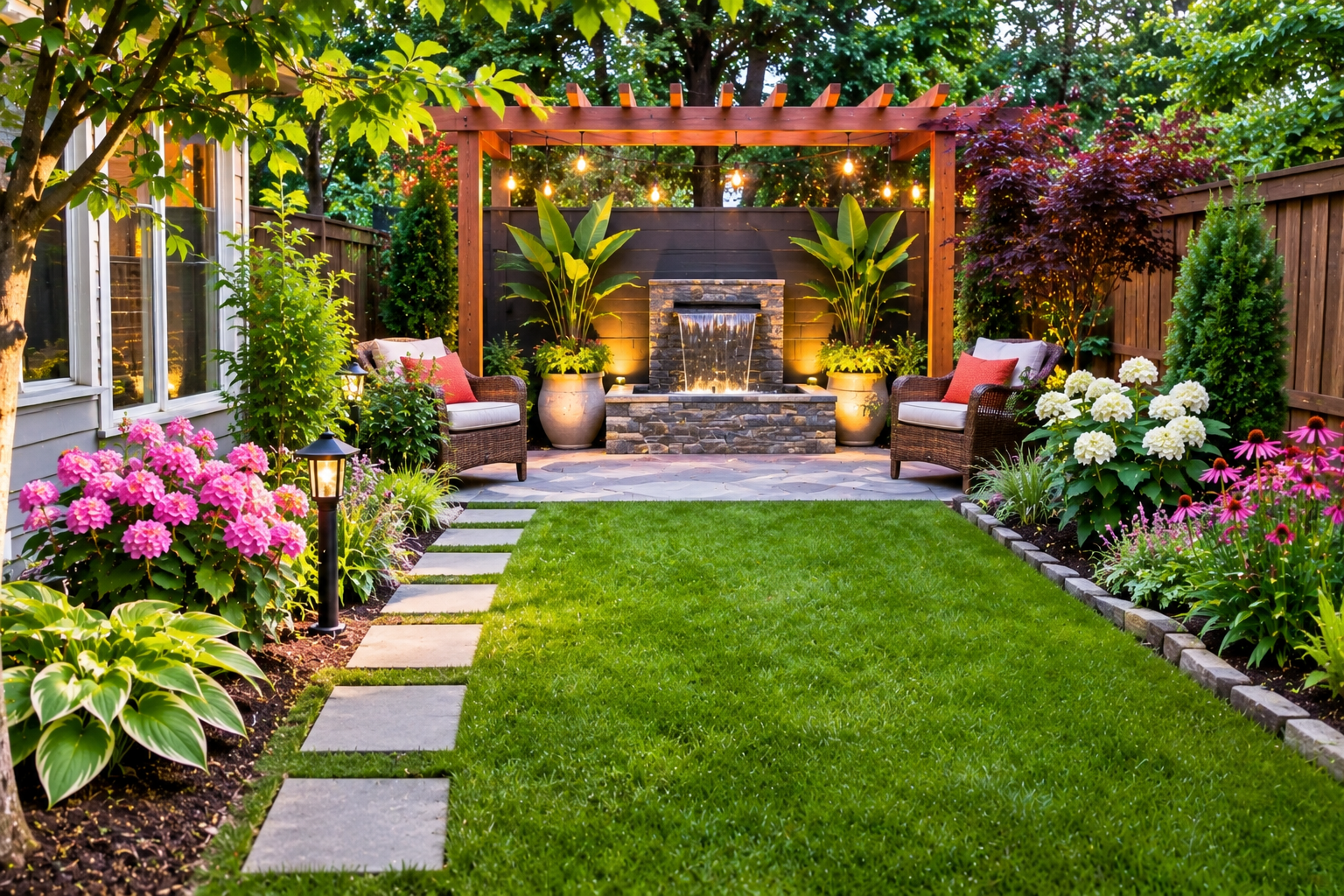
A small yard usually looks cramped for one of two reasons. Either everything in it is the same height and shape, so the eye has nowhere to travel, or it holds too many separate things: a lawn patch, a few pots, a bench, a shed, a path, none of them related to each other. Shrinking every element rarely helps. Fewer, better-placed elements usually do.
Small gardens also have an advantage that large ones don’t. Every square foot is visible and reachable, so a single good decision (a curved path, a tall evergreen in the right corner, a change of ground material) changes the whole space. The ideas below are grouped by what they actually fix: how the space is laid out, how to use height, which surfaces to choose, which plants earn their place, and which finishing touches are worth the room.
Three Decisions to Make Before You Buy Anything
Most disappointing small gardens were planted before anyone measured, watched the light, or decided what the space was for. Settle these first.
Measure and sketch to scale. Graph paper with one square equal to one foot is enough. Mark the house, fences, windows, doors, downspouts, and any tree. A sketch shows quickly whether the patio you imagined (say, 12 by 12 feet) would swallow a 15-by-20-foot yard.
Track the sun for a full day. Note when each area gets direct light. The usual categories are full sun (six or more hours), part shade (roughly three to six), and shade (under three). Small yards often have wildly different conditions within a few feet, because a neighbor’s wall or a house can shade one corner all afternoon while another bakes. Plant labels mean little until you know which category each spot falls into.
Check drainage. Dig a hole about a foot deep, fill it with water, let it drain, then fill it again and time how long the second fill takes. If water is still standing many hours later, that spot suits raised beds, containers, or plants that tolerate wet soil better than it suits a lawn or lavender.
One more step belongs here. In the United States, call 811 a few days before any digging project that involves new posts, trenching, or deep planting holes. The free service marks buried utility lines. Even shallow-looking lines can sit closer to the surface than expected.
Layout Ideas That Make the Space Feel Larger
1. Run Paths on a Curve or Diagonal
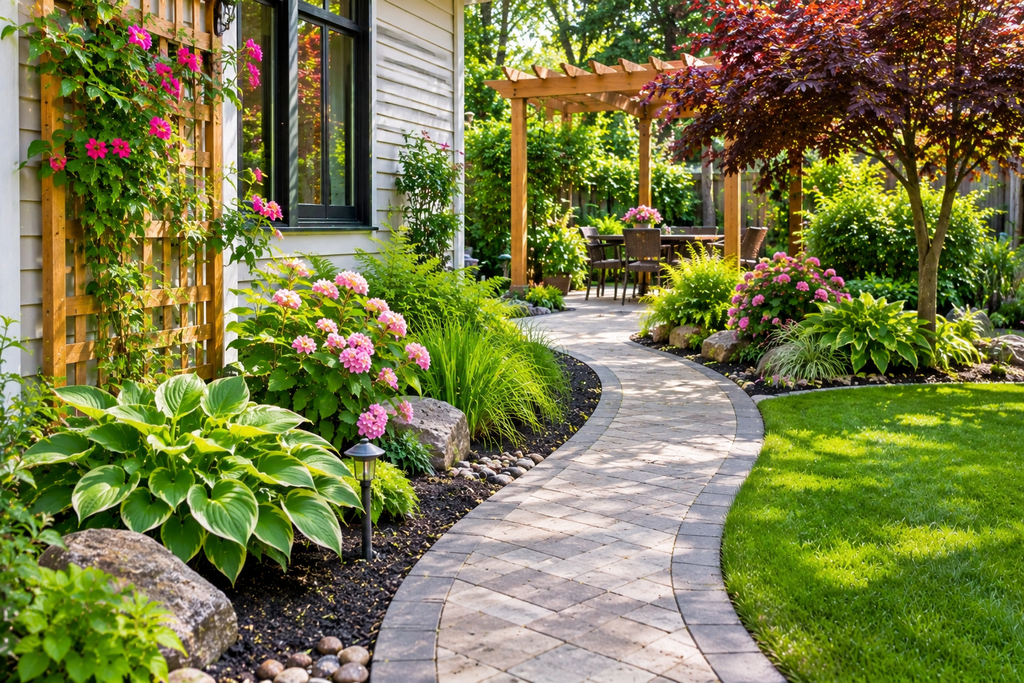
A straight path from gate to door shows the whole yard at once and then ends. A path that bends, or crosses the space corner to corner, lengthens the walk and hides part of the view until you reach it. A diagonal also gives you triangular planting areas on either side, which tend to look more natural than rectangles.
The bend needs a reason. A curve around a shrub or a small tree looks intentional. A curve around nothing looks like a mistake. Plant something substantial at the outside of each bend, tall enough to block the view beyond it.
2. Divide the Yard Into Two or Three Zones
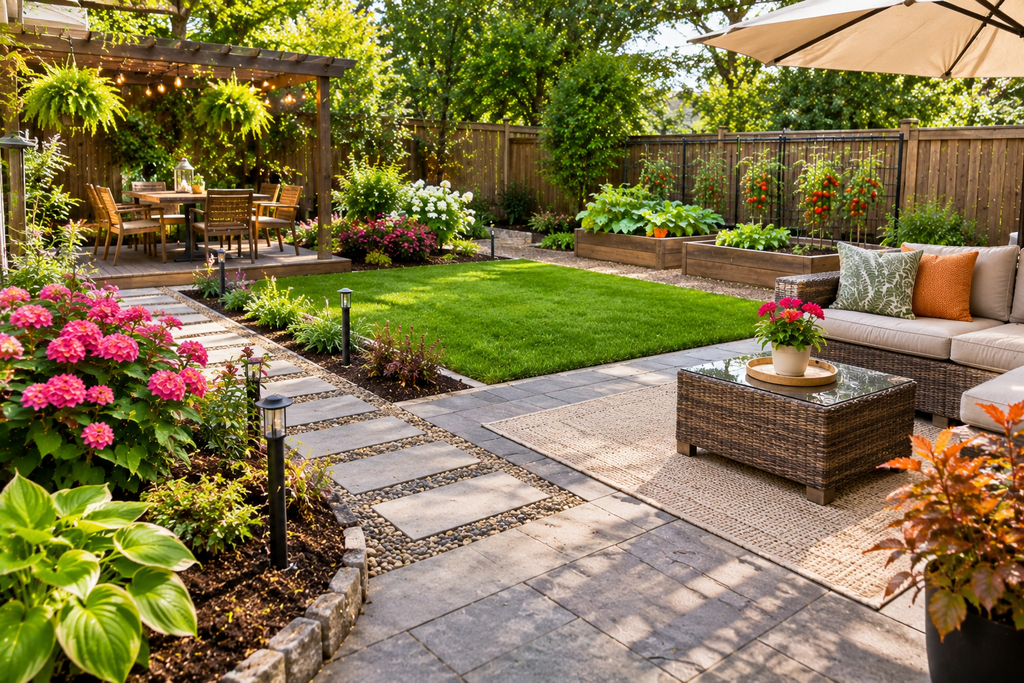
Even a 15-by-25-foot yard can hold separate zones: a seating area near the house, a planting bed in the middle, and a small corner for something quieter. Separation can be as simple as a change in ground material, a low hedge, a trellis panel, or a row of tall pots. Because you cannot see everything at once, the space reads as larger than it is.
Resist the urge to make every zone useful. One of them can simply exist to be looked at.
3. Give the Far End a Focal Point
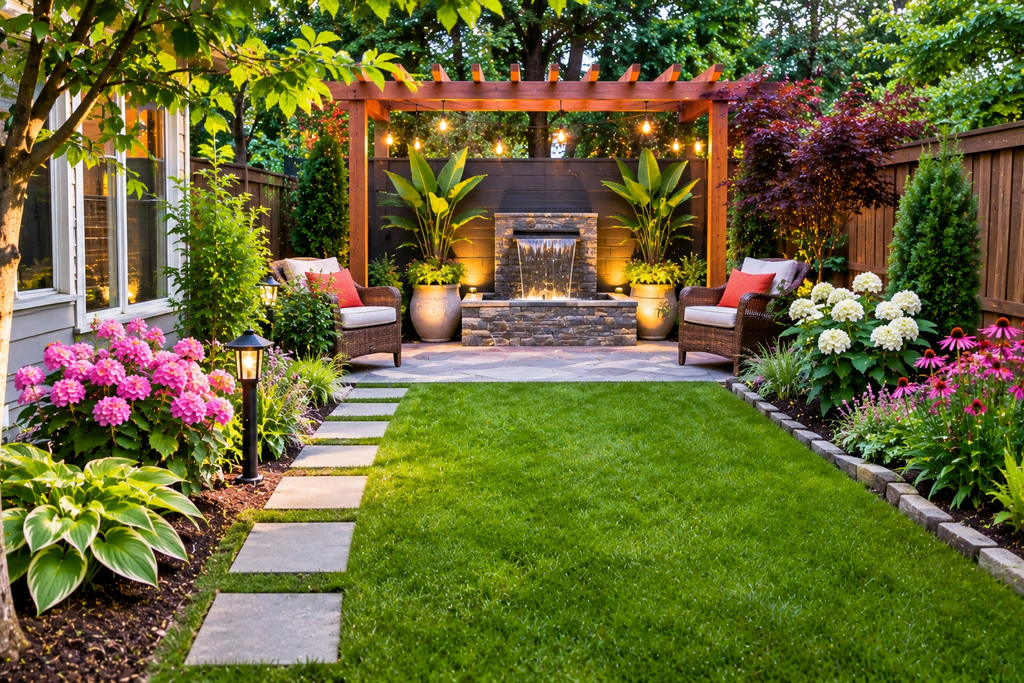
Whatever sits at the end of your longest sightline determines how the garden feels from the door. A specimen tree, a pot taller than anything else nearby, a bench against a dark hedge, a simple water bowl, or a piece of outdoor art all work. The point is to draw the eye to the back, which pushes the boundary away psychologically.
Keep the foreground quieter than the focal point. If the front of the yard is busy and the back is busy, nothing stands out.
4. Use Mirrors Carefully
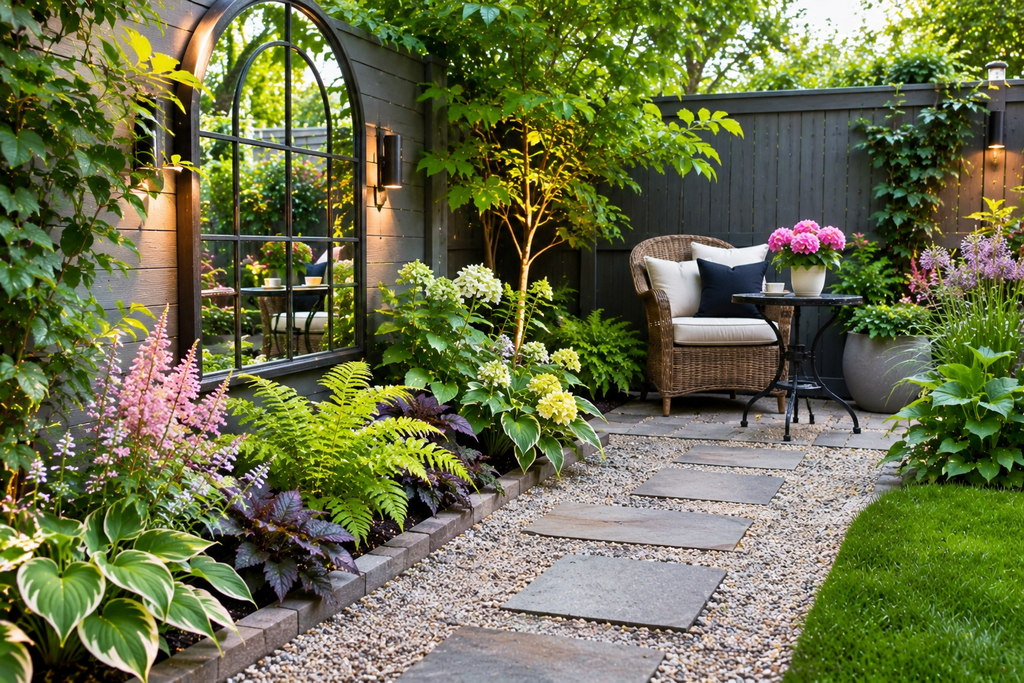
Weather-rated outdoor mirrors, set in a frame against a fence or wall, can suggest a doorway or a continuation of the planting. They do come with risks. A mirror aimed at the afternoon sun can reflect concentrated light onto plants or a neighbor’s windows. Birds can also fly into reflective surfaces they read as open space.
Reduce both problems by placing the mirror where it picks up foliage rather than open sky, angling it slightly downward, and letting a climber or tall pot partly overlap the edges. Break up the reflection and it reads as depth instead of a window.
5. Layer Plants by Height

A flat bed of knee-high plants looks smaller than a layered one. Put the tallest plants at the back or center (depending on whether the bed is viewed from one side or all around), medium plants in front of them, and low edgers or ground covers along the front. Within each layer, vary the foliage shape. Spiky grass next to a broad-leaved hosta looks more interesting than two plants with the same outline.
The layering should also have gaps. Plants growing shoulder to shoulder at the same density across a whole bed turn into a wall of green, which flattens depth.
6. Borrow the View Beyond Your Fence
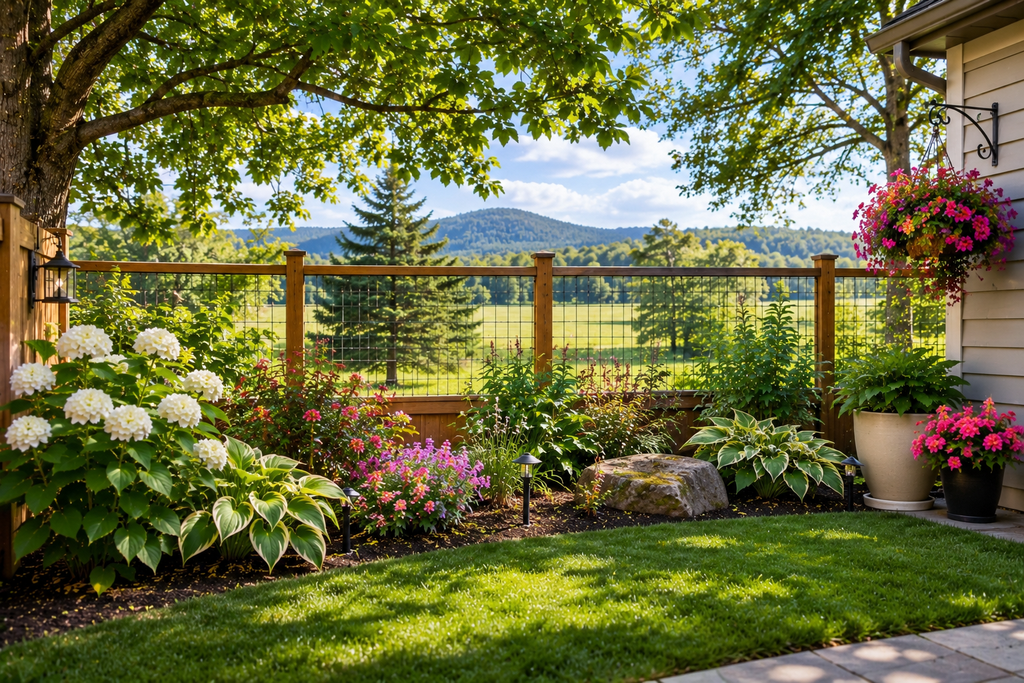
A neighbor’s mature tree, a distant hill, or a church steeple can all expand a small garden if you frame them instead of blocking them. Leave a gap in your planting that lines up with the view, and echo the borrowed element with something similar in your own space (a tree of similar shape or foliage color, for instance). If the borrowed view is something you would rather not see, such as a utility pole or a neighbor’s shed, plant a screen directly in front of it. A narrow evergreen or an obelisk with a climber is usually enough.
Using Height When Floor Space Runs Out
7. Put Climbers on Trellises or Wire Grids
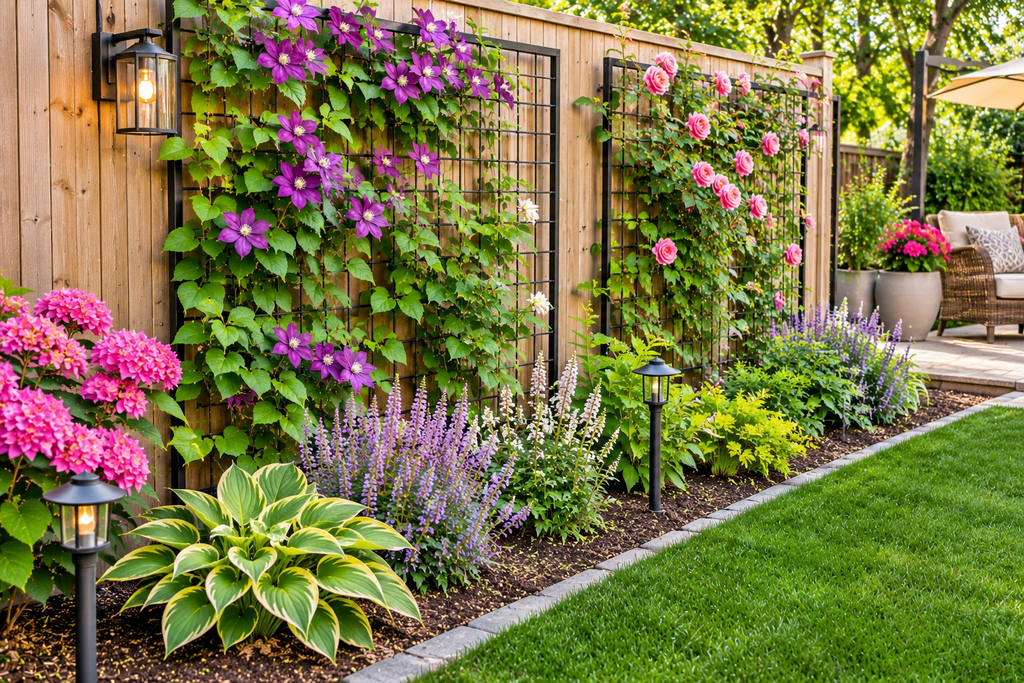
A wall or fence is the biggest unused surface in a small yard. A trellis or a grid of stainless steel wires, fixed a couple of inches off the surface so air can circulate, lets climbers cover it without adding to the footprint.
Match the plant to the structure and your climate:
- Clematis suits trellises well. Most prefer cool roots and sun on the foliage, so plant a low shrub or groundcover at the base to shade the root zone.
- Sweet peas and other annual climbers give fast results in a single season and carry no long-term commitment.
- Climbing roses need sturdy support and regular tying in, and they need good air circulation to reduce disease problems.
- Star jasmine (Trachelospermum jasminoides) is evergreen and fragrant but suited only to warmer regions, so check your hardiness zone.
Some climbers cause trouble in a small space. Wisteria is extremely vigorous and can damage structures. Trumpet vine and Japanese honeysuckle can spread aggressively, and the latter is considered invasive in many parts of the United States. English ivy can work its way into mortar and siding. Choose restrained plants for small yards, and check your state or local extension service for invasive species lists before buying.
8. Train an Espalier Against a Wall
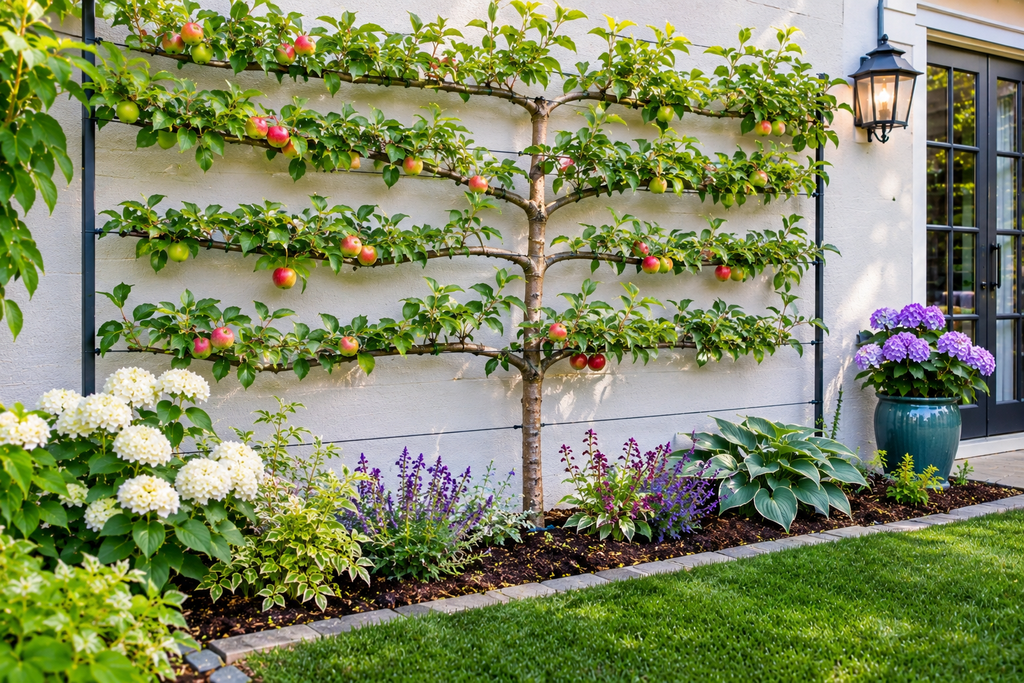
An espalier is a tree pruned flat along horizontal wires, which makes a fruit tree workable in a space only a foot or two deep. Apples and pears on dwarfing rootstocks are the traditional choices, and the shape looks intentional and architectural even in winter.
Set it up with horizontal wires spaced roughly 15 to 18 inches apart, fixed to the wall or to posts. Expect it to take several years to build the framework, and expect to prune once or twice a year after that. If the idea of regular pruning feels like a burden, choose a different idea from this list. A neglected espalier loses its shape quickly.
Most apples and pears also need a compatible pollination partner nearby. Check the specific variety, since some are self-fertile and many are not.
9. Build a Living Wall With Pocket Planters
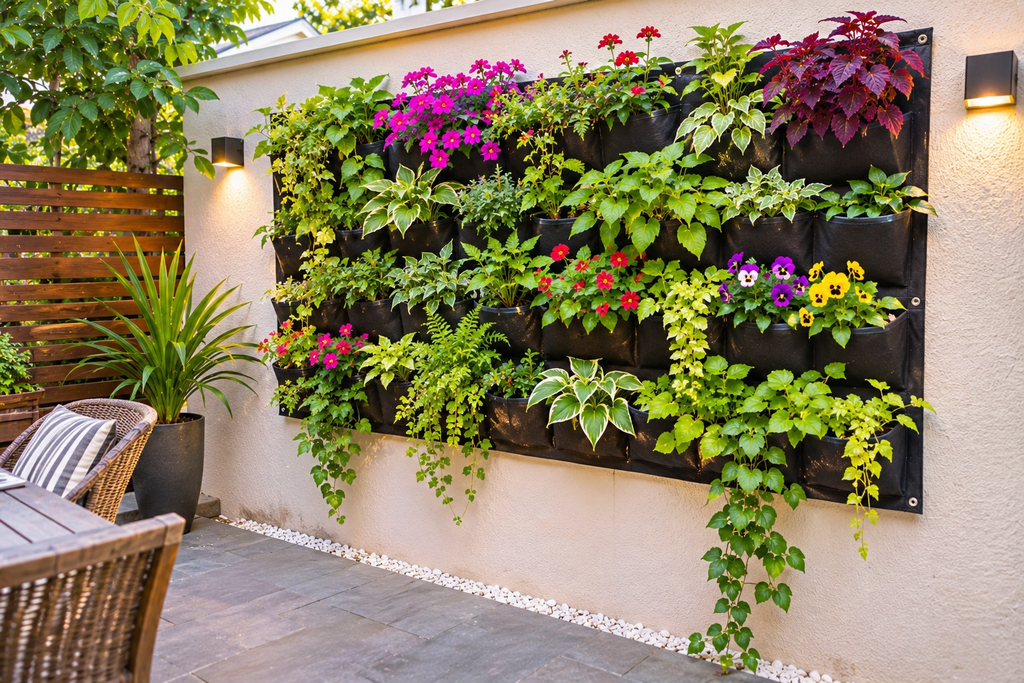
Felt or fabric pocket planters, modular wall pots, or a wooden frame with shallow trays turn a blank fence into a planting surface. Good candidates are shallow-rooted plants: ferns and heucheras in shade, sedums and trailing herbs like thyme in sun.
The weak point is water. Vertical planters dry out quickly, especially in the upper rows and in sun. Drip irrigation on a timer makes them far more reliable than hand watering, and it is worth planning before you hang anything. Heavy wet soil also adds weight, so fix the structure to studs or masonry, not just to thin fence boards.
10. Use Tall Planters and Obelisks as Vertical Accents
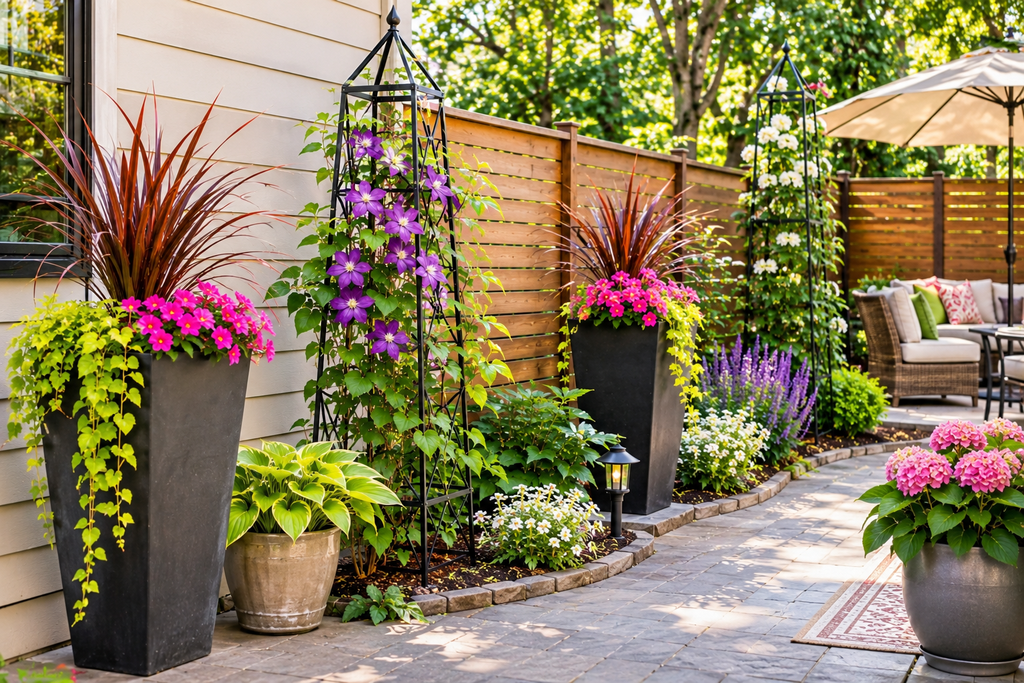
An obelisk (a freestanding frame, usually 4 to 6 feet tall) holds a climber without needing a wall at all. Set one in the middle of a bed, plant a clematis or a sweet pea at its base, and you have height in a footprint of about a square foot. Put a pair on either side of a path or seating area for symmetry.
Tall narrow containers do something similar for foliage plants. A single large pot with a spiky grass or a small evergreen gives vertical interest where a bed would be too large.
11. Hang Baskets and Rail Planters

Railing planters, hanging baskets, and wall-mounted pots keep color at eye level and free the ground. Choose containers with a reservoir or liner, since small hanging pots dry out fast. Hang them at different heights, not all in a line, to avoid a fence-top “row of buckets” effect.
If you are renting or the structure belongs to someone else, hooks and removable brackets let you do this without permanent changes.
Surfaces and Structures That Define the Garden
12. Choose One Main Paving Material and Stick to It
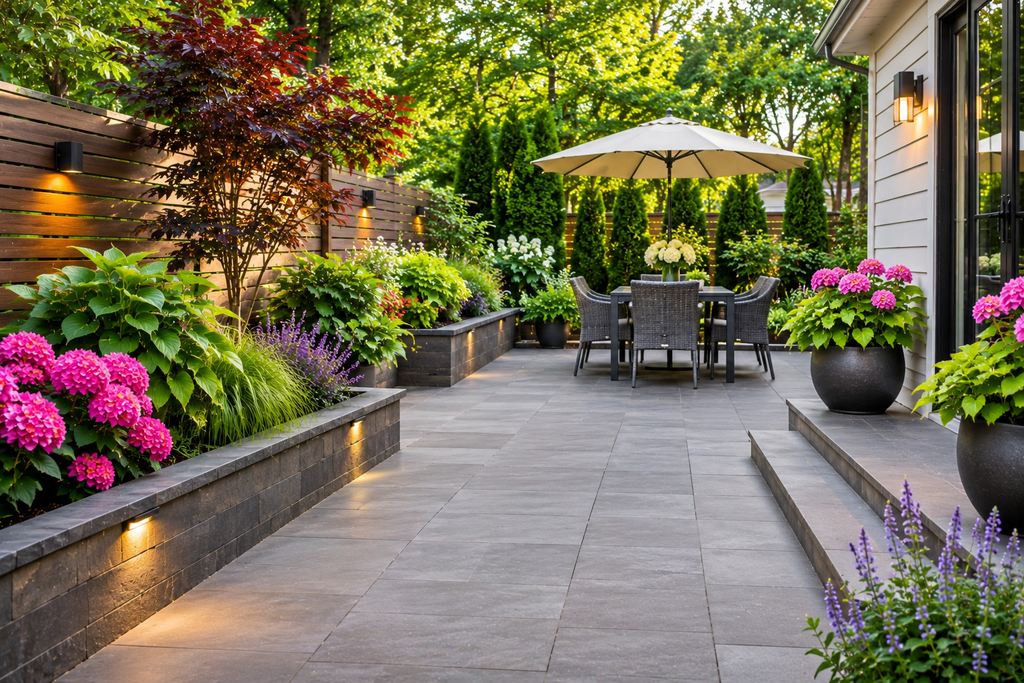
Patios, paths, and edges in four different materials make a yard look smaller and busier. Pick one primary material (pavers, flagstone, or gravel) and use a second only as an accent, such as a border of brick or a band of cobbles. Consistency ties the space together visually.
Lighter paving reflects more light and makes tight yards feel bigger. Very dark paving gets hot in direct sun and makes a small space feel heavier.
13. Lay Pavers With Planted Joints
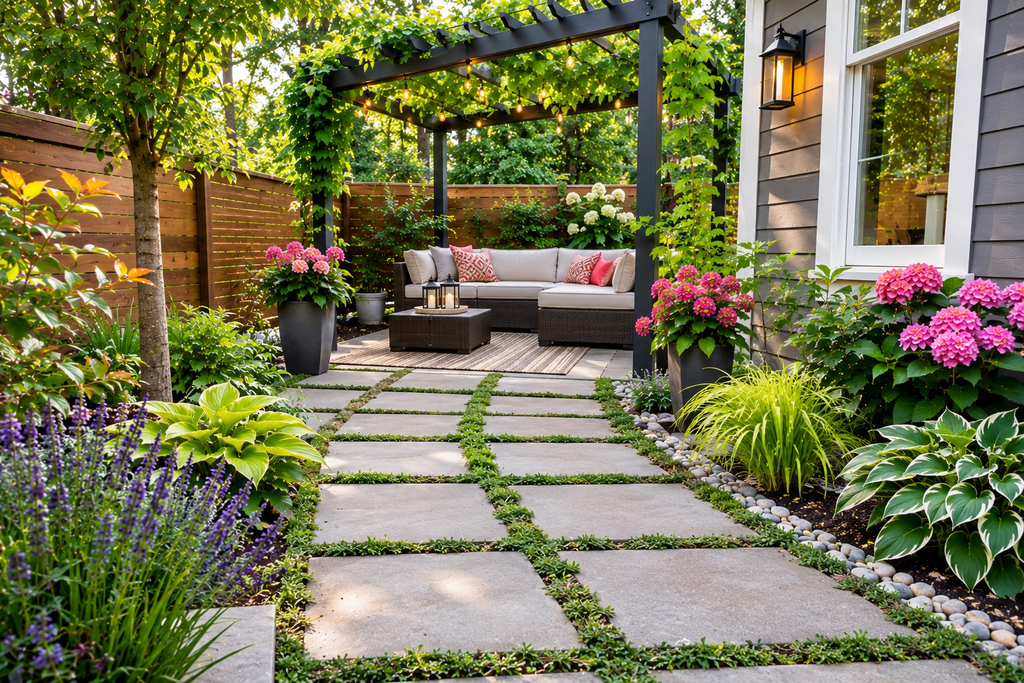
Rather than butting pavers tightly, space them an inch or two apart and fill the joints with a low, walkable plant. Creeping thyme (Thymus serpyllum), mazus (Mazus reptans), and similar low growers tolerate light foot traffic and soften the hard edges. Hardiness varies by species and variety, so check what suits your zone.
The caveat is traffic. Joints filled with plants suit occasional walking, not the daily route from the back door to the trash can. Reserve those tight-fitted pavers for the main route.
14. Use Gravel Where You Want Texture and Easy Drainage
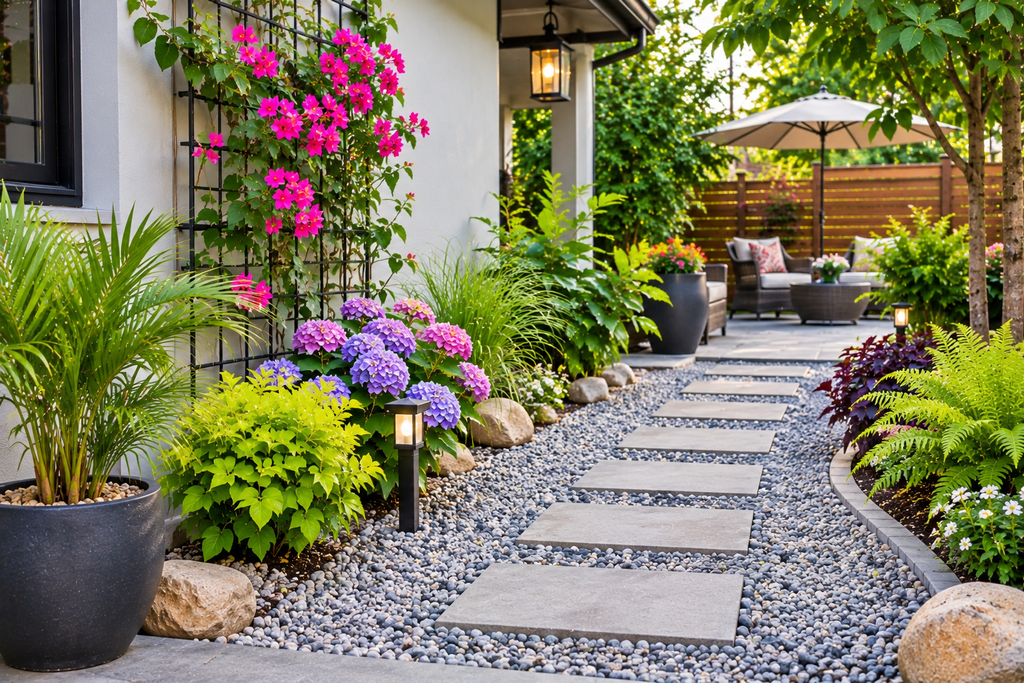
Pea gravel or crushed stone is relatively inexpensive, drains well, and needs no mowing. It fits seating areas, paths, and low-maintenance beds. A depth of around 2 to 3 inches over a compacted base works for most residential uses, and firm edging (steel, brick, or stone) keeps it from migrating into beds and lawn.
Gravel does have limits. Rounded pea gravel shifts underfoot and is tiring to walk on, and a wheelchair or a rolling cart will struggle with it. Crushed stone with angular edges locks together better. Wind-blown seeds will still germinate in the top layer, so occasional weeding is part of owning a gravel surface.
15. Build a Raised Bed Into the Layout
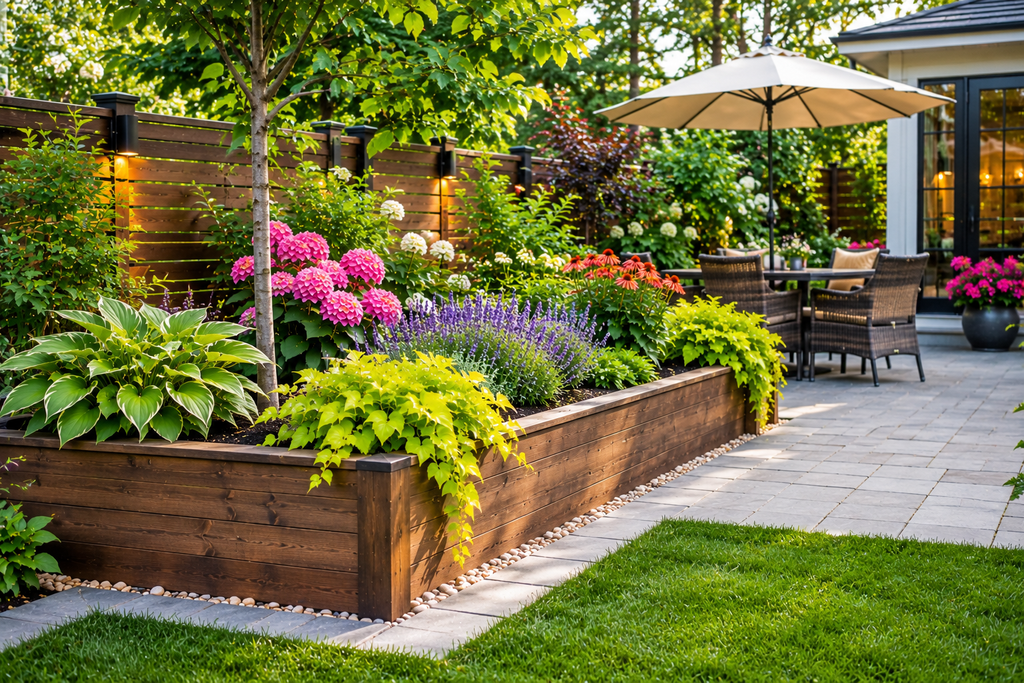
Raised beds earn their place in a small garden because they define edges, solve drainage problems, and bring plants closer to hand. For a bed you reach from both sides, 3 to 4 feet is a workable width. If the bed sits against a wall or fence, 2 feet is easier to manage.
Height depends on use. Around 12 inches suits most vegetables and flowers, while 18 to 24 inches reduces bending. A bed with a wide, flat cap rail around 18 inches high doubles as seating, which suits a tight yard where a bench would take up more room.
For edible plants, choose untreated lumber, stone, or metal, and avoid reclaimed railroad ties, which may contain creosote.
16. Add a Low Deck or Platform
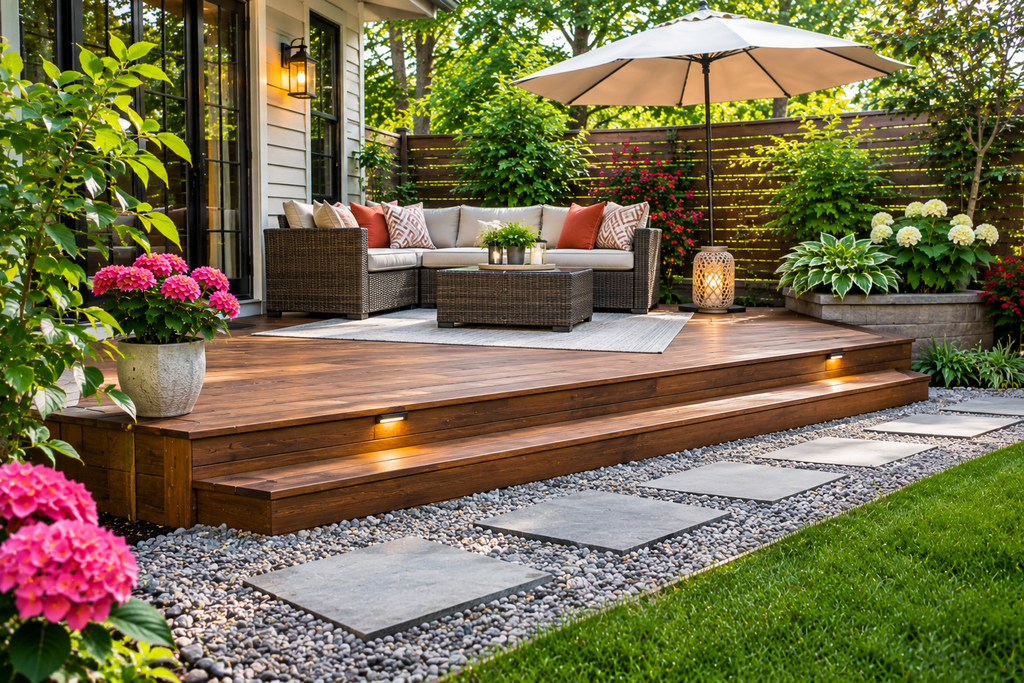
When the ground slopes or is uneven, a small platform deck can create a flat sitting area without major regrading. Even a modest rise of 6 to 12 inches changes how the garden reads, giving a distinct “room.” Decks above a certain height typically require a permit and a railing in most jurisdictions, and the threshold varies by location, so check your local building department before starting.
17. Replace Part of the Lawn With a Planted Bed
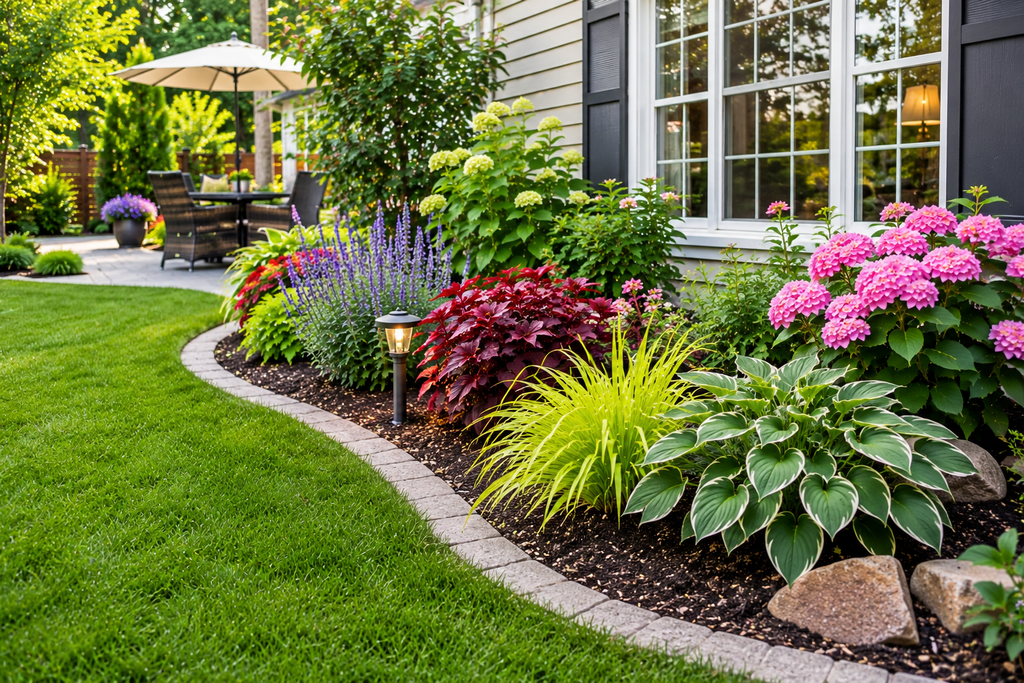
A lawn smaller than about 200 square feet often takes more effort per square foot than it gives back, since mowing, edging, and fertilizing all scale poorly for tiny areas. Cutting the lawn in half and turning the rest into a border or a ground-cover bed usually improves the garden’s look and reduces upkeep.
If you want to keep a bit of green space for kids or pets, keep it simple in shape: a rectangle or a gentle curve is easier to mow than a complicated outline.
Plant Choices That Suit Tight Quarters
18. Choose Dwarf and Columnar Trees
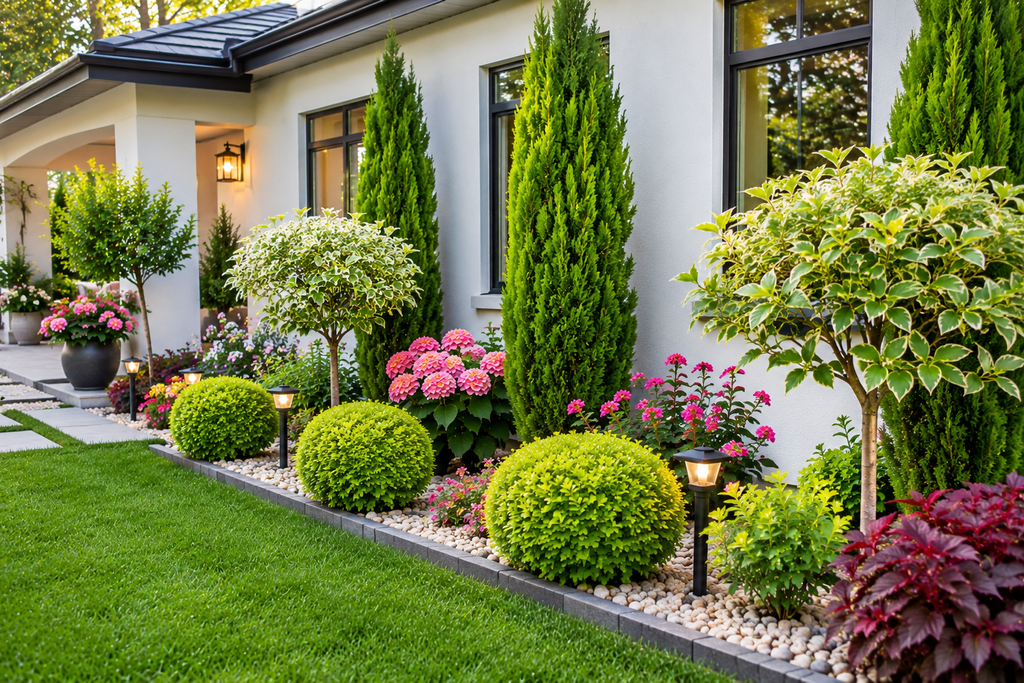
A full-size shade tree overwhelms a small yard within a decade. Look for trees labeled dwarf, compact, or columnar, and check the mature size on the tag, not just the size in the pot. Three good groups:
- Small ornamental trees, such as many Japanese maple (Acer palmatum) cultivars, serremoved-from-the-fence redbuds, and compact crabapples. Mature heights vary widely within each group, so look up the specific cultivar.
- Columnar evergreens like ‘Sky Pencil’ holly (Ilex crenata ‘Sky Pencil’), which grows tall and very narrow, or narrow arborvitae selections. These work well against fences where you need height without width.
- Dwarf fruit trees on dwarfing rootstock, which stay at a size you can pick from without a ladder.
Plant a tree at least as far from the house, fence, and paving as its mature spread suggests, or choose something smaller. Roots and branches cause more problems when a tree outgrows its location.
19. Rely on Ornamental Grasses for Movement
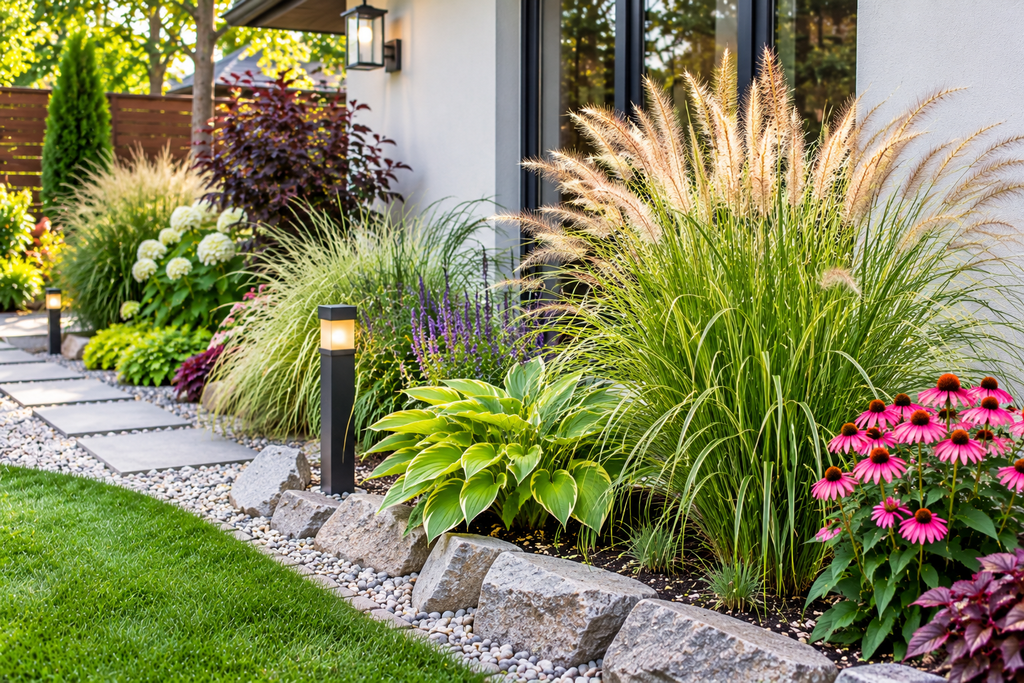
Grasses add motion, texture, and winter interest without taking up much ground. Feather reed grass (Calamagrostis × acutiflora ‘Karl Foerster’) grows in a tight upright clump, which suits narrow beds. Dwarf fountain grasses like ‘Hameln’ provide a softer, arching form at around 2 to 3 feet.
Check the cultivar’s hardiness and sun needs, and avoid grasses that self-seed aggressively in your region. Some pampas and miscanthus types spread widely and are on invasive lists in parts of the country.
20. Repeat a Few Plants Instead of Collecting Many
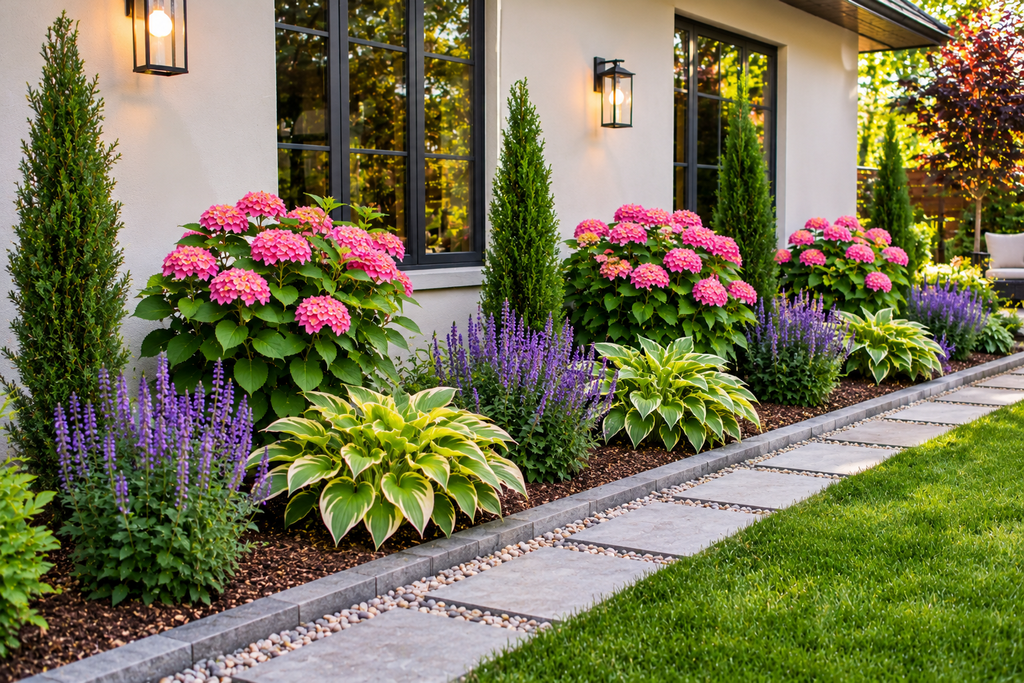
A small garden with 30 different plants, one of each, looks like a plant sale. Repeating a handful of species in groups of three or five gives rhythm and calm. A good rule: choose three to five main plants, repeat them throughout, and add a few accents.
Repetition also helps with maintenance. You learn what each plant needs, and the garden’s problems become easier to spot.
21. Keep the Color Palette Narrow
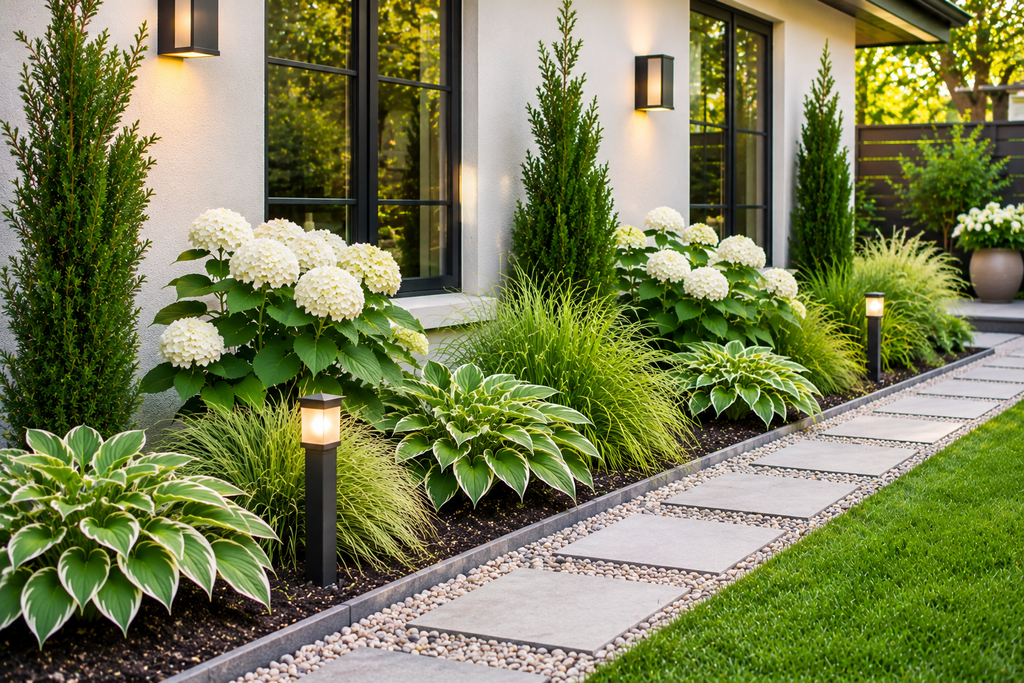
Two or three colors, plus green, are easier to manage than a rainbow. Cool colors (blues, violets, whites) tend to recede and can make a space seem deeper, while hot colors (reds, oranges) tend to pull forward. Putting cool tones near the back and warm tones near the house can work with that tendency. It is a design convention, not a law, and plenty of beautiful gardens ignore it.
White and pale flowers show up well in shade and at dusk, which suits a patio people use in the evening.
22. Fill Gaps With Ground Covers
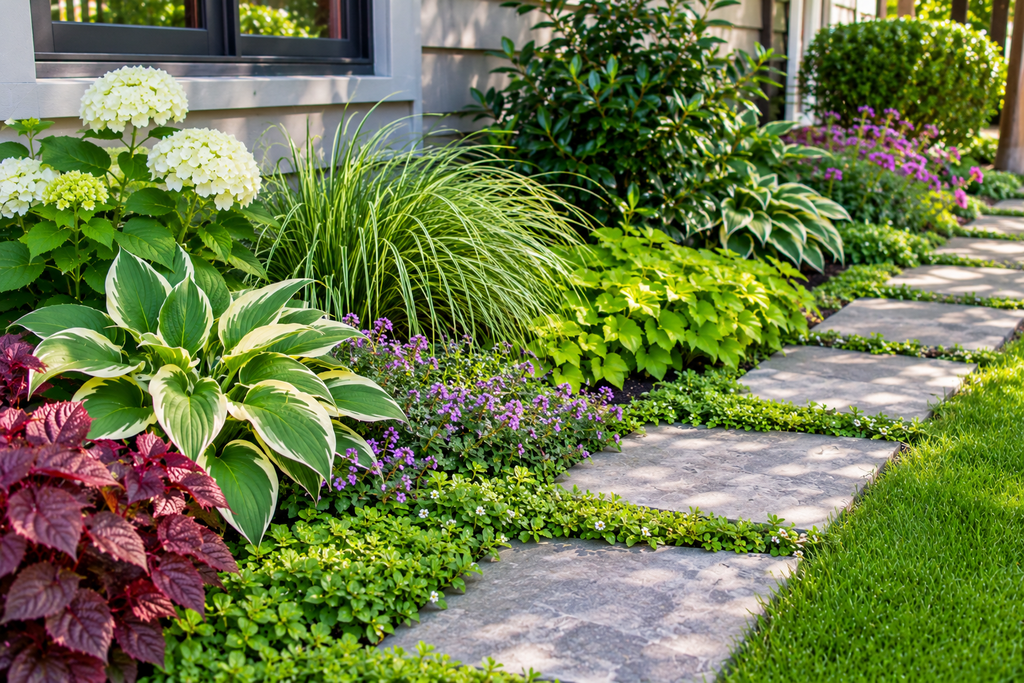
Bare soil invites weeds and makes beds look unfinished. Low ground covers fill the spaces between larger plants, hold moisture, and cut weeding. Options depend on conditions: sedums and creeping thyme for sun and dry soil, and sweet woodruff, barrenwort (Epimedium), or ajuga for shade. Be cautious with ground covers that spread by runners, like ajuga and some mints, since they can jump into neighboring beds.
23. Plan for More Than One Season
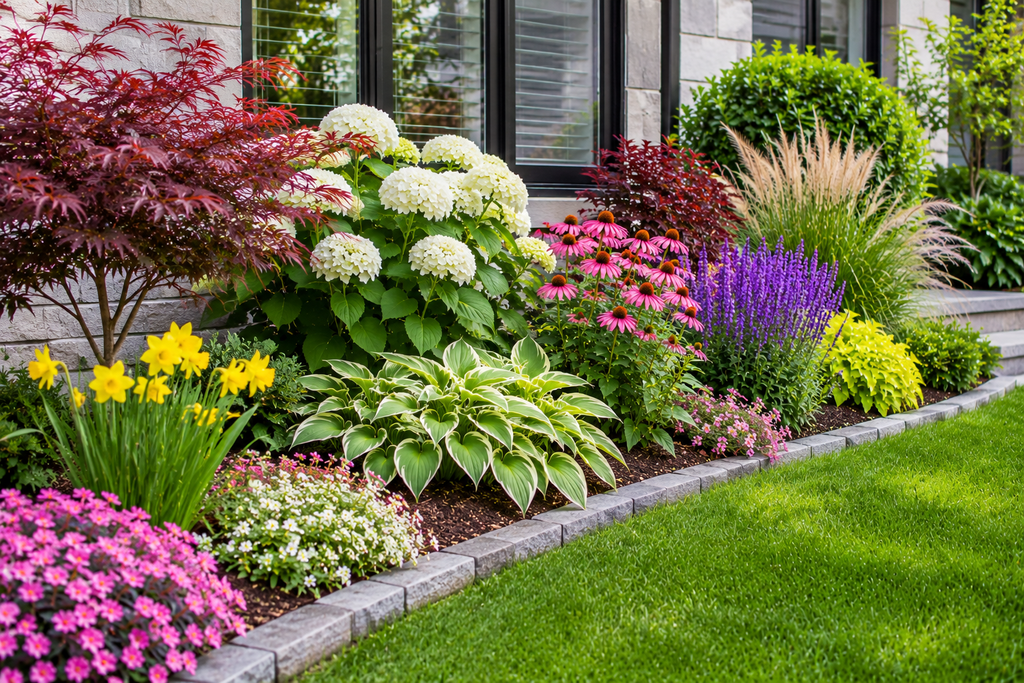
A garden that looks great for three weeks in June and plain the rest of the year wastes limited space. Aim for something of interest in every season: spring bulbs, summer perennials, fall color or seed heads, and winter structure from evergreens, bark, or grass stems. In a small garden, a single plant with two or three seasons of interest, like a serviceberry with spring blossoms, summer fruit, and fall color, beats a plant that peaks once.
Features and Finishing Touches
24. Make a Container Grouping, Not a Container Scatter
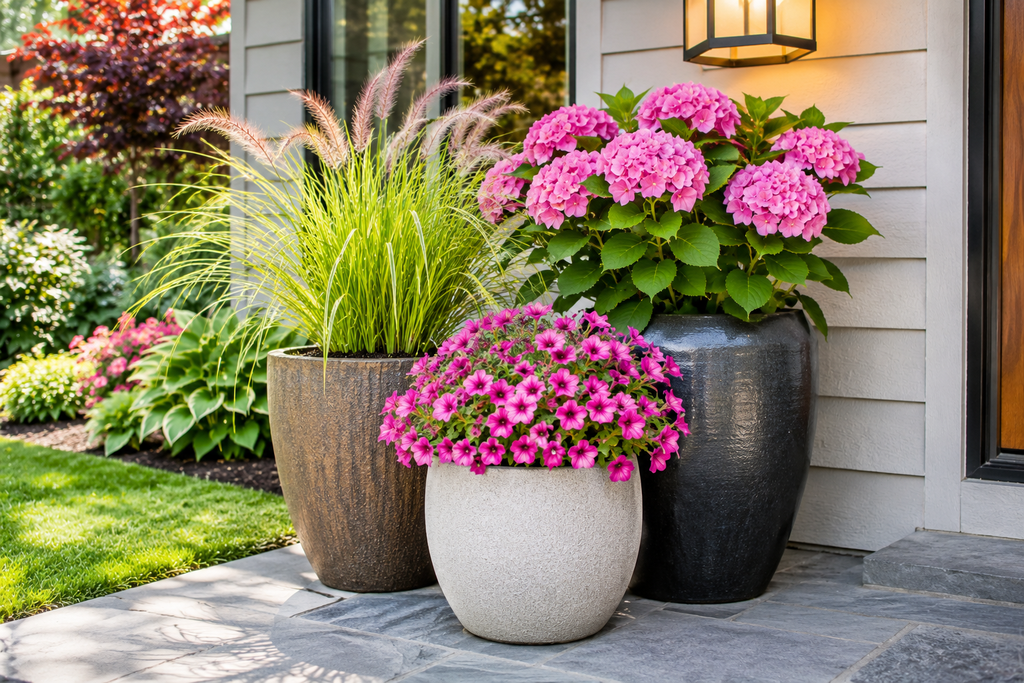
Pots dotted around the yard look random. Grouped together, they look planned. Cluster three or five containers of different heights and sizes in one corner or beside the door, using a consistent material or color to unify them.
Bigger pots hold moisture longer and buffer roots against temperature swings, so a few large containers are less work than many small ones. Every pot needs drainage holes. If you are on a balcony, roof deck, or elevated patio, check the weight limit. Wet potting mix is heavy, and several large pots can add up quickly.
25. Install Built-In Seating With Storage
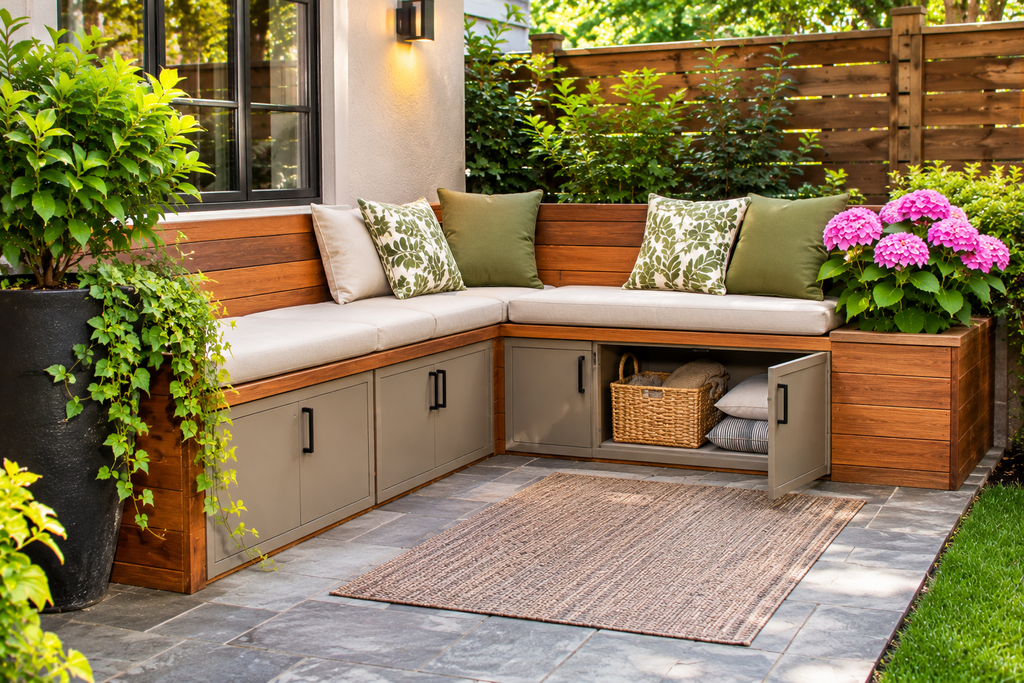
Freestanding furniture takes up floor space, and it often looks cluttered. A bench built against a fence or along the edge of a raised bed uses an area that would otherwise be dead space. A hinged seat lid gives you hidden storage for cushions, tools, or hoses. Allow enough depth for comfort, around 16 to 18 inches, and keep the back low if you want to preserve a view.
If the patio is for dining, a rough guide is that a bistro set for two fits comfortably in about 6 by 6 feet, and a table for four generally needs closer to 10 by 10 once chairs are pulled out. Leave about three feet behind chairs so people can move.
26. Add a Small Water Feature

A bubbling urn or a small wall fountain adds sound that masks street noise and makes a small space feel calmer. Pondless designs, in which water recirculates from a hidden reservoir, take up little room and need less upkeep than a pond.
Standing water of even a few inches can be a drowning hazard for toddlers, so a feature without open water is the safer choice if young children visit. The pump should run on a GFCI-protected outdoor outlet, and any hard-wired electrical work belongs to a licensed electrician. Moving water discourages mosquitoes more than still water does, but it does not eliminate them.
27. Use Lighting to Extend the Garden After Dark
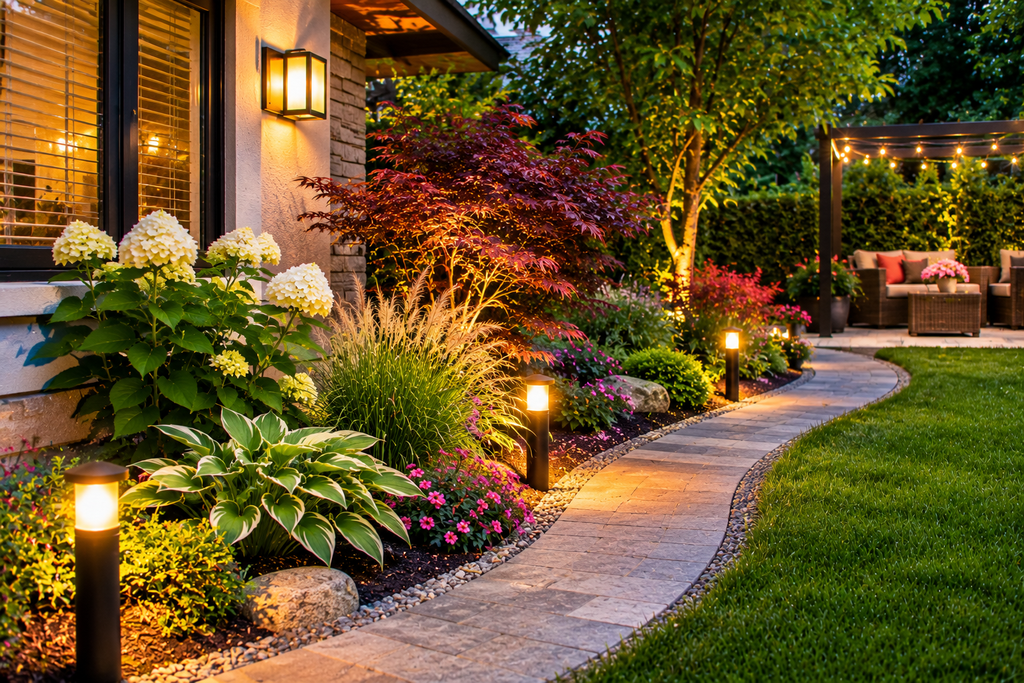
Good lighting doubles the usable hours of a small yard and makes it look larger at night. A few well-placed fixtures beat many bright ones: uplight a tree or a textured wall, wash a path with low light, and string soft lights across the seating area.
Warm white bulbs (around 2700K) generally look more natural around plants than cool white. Solar lights are easy to install, though they tend to be dimmer and less reliable in shade or through winter. Low-voltage systems run from a transformer and are safer for DIY than line-voltage wiring, but anything that connects to household current should be outdoor-rated, and fixed wiring is a job for a licensed electrician.
28. Plant a Screen for Privacy

Tall plants block neighbors’ views without the closed-in feel of a high wall. Narrow evergreens, a trellis with climbers, or a row of tall grasses all work, depending on how much year-round screening you need. Evergreens give winter privacy. Deciduous options and grasses give a lighter feel but thin out in cold months.
Check local fence and hedge height rules before choosing. Many municipalities and homeowners’ associations limit height, and limits are often lower in front yards than in back. Rules vary, so call your local planning office or review your HOA covenants.
29. Make Room for Pollinators
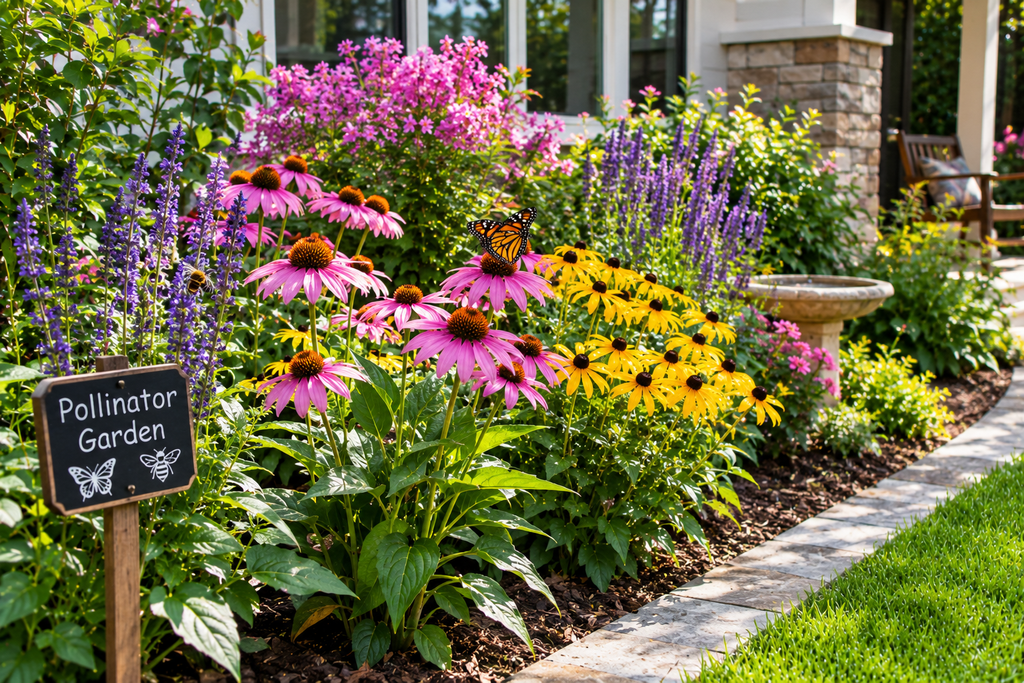
Even a tiny garden can support bees, butterflies, and other beneficial insects. Choose a mix of native flowering plants with staggered bloom times from spring to fall, since native plants often suit local pollinators well. Your state’s cooperative extension service or a native plant society usually publishes regional lists. Avoid broad-spectrum insecticides on or near flowering plants, since they harm pollinators too.
30. Add a Fire Bowl or Tabletop Fire Feature, With Care
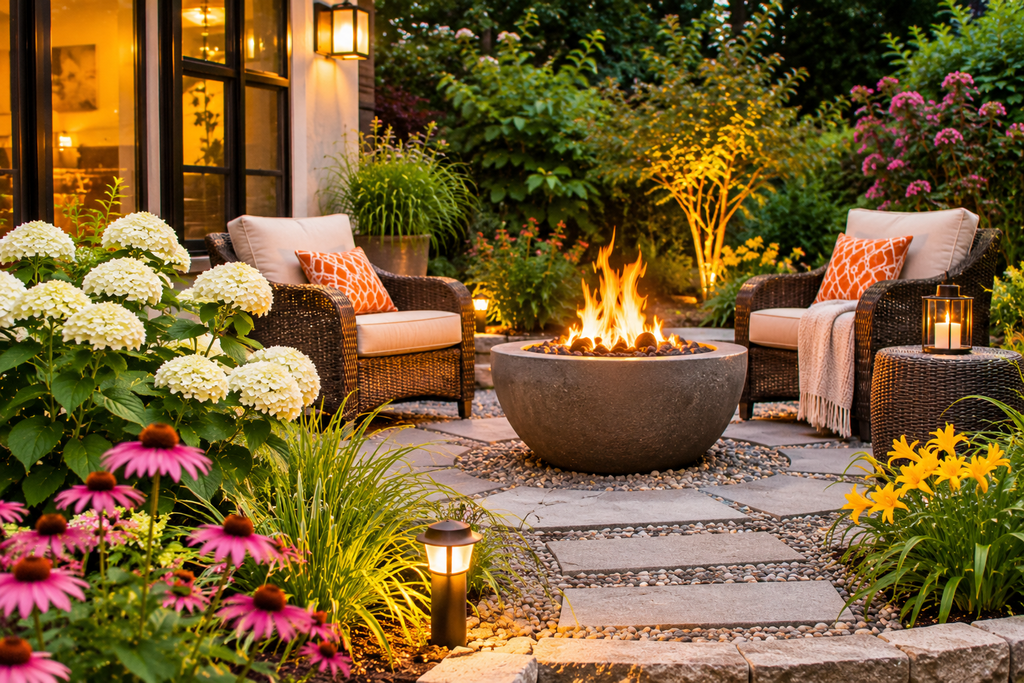
A small fire feature gives a tight patio a gathering point and extends the season into cooler evenings. Tabletop models running on ethanol gel or propane are compact, while a wood-burning bowl needs more clearance. Keep any open flame well away from overhanging branches, fences, siding, and dry plants. Check local ordinances before buying, because some areas restrict open burning or require specific clearances, and never leave a fire unattended.
Putting It Together: Matching Ideas to Your Biggest Problem
| If your yard feels… | Start with |
| Boxy and flat | Curved or diagonal path, layered heights, a focal point at the far end |
| Too small to use | Built-in seating, a smaller lawn, a pavers-and-gravel patio |
| Overlooked by neighbors | Narrow evergreens, trellis with climbers, tall grasses |
| Dull in winter | Evergreens, ornamental grasses, bark, lighting |
| Hard to maintain | Fewer plant types, ground covers, drip irrigation, reduced lawn |
| Cluttered | One paving material, narrower color palette, grouped containers |
Common Mistakes That Make Small Gardens Look Smaller
Planting for the pot size. A tree that looks cute at three feet tall will push against the house in ten years. Always plan around mature size.
Filling every inch. Open space (a patch of paving, gravel, or lawn) is what lets planted areas read as intentional. Leave some quiet.
Mixing too many materials. Brick, flagstone, gravel, concrete, and timber all in one tiny yard compete with each other.
Ignoring the view from inside. Most people look at their garden through a window more often than they stand in it. Stand at the kitchen sink or the sofa and check what you see.
Skipping the maintenance plan. An espalier, a living wall, and a dozen hanging baskets all need regular attention. Choose features that fit the time you will actually spend.
Questions Readers Often Ask
What is the cheapest change that makes the biggest difference?
Usually removing things. Clearing overgrown plants, dead material, and surplus pots, then adding mulch or gravel to define the beds, can change a space dramatically at little cost. After that, a single large pot or a coat of paint on a fence often gives more visual impact than several small purchases.
Can a small garden work without any lawn?
Yes, and many do. Paving, gravel, and ground covers can replace grass, and the result generally needs less upkeep. The trade-off is surface comfort: a lawn is soft for sitting and for children and pets, while hard surfaces are not.
How many plants should I put in a small bed?
It depends on the mature size of each plant, which is why the plant tag matters. Spacing guidelines on tags are usually based on mature spread. Planting closer gives a fuller look sooner but means more thinning or moving later, and tight planting can also encourage fungal problems by limiting airflow.
Are outdoor mirrors worth trying?
They can add depth, but they carry the reflection and bird-collision risks described earlier. If you try one, place it where it reflects foliage, angle it slightly, and partly cover its edges with plants.
Key Takeaways
Start with measurements, sunlight, and drainage, since those three facts determine which of these ideas will work in your yard. Then pick the one that addresses your biggest problem from the table above and do that first. A curved path, a vertical element on a bare wall, or a smaller lawn each change the whole space more than any single plant purchase.
Keep the plant list short, repeat what works, size everything to its mature dimensions, and plan for upkeep you will actually do. A small garden rewards restraint.

About Syprose Kiche
Syprose Kiche is the creator and writer behind My Besuited Home, a practical home and garden website covering DIY projects, gardening, lawn care, landscaping, home improvement, and outdoor living. She focuses on turning everyday homeowner questions into clear, practical guides backed by careful research and useful real-world considerations.