
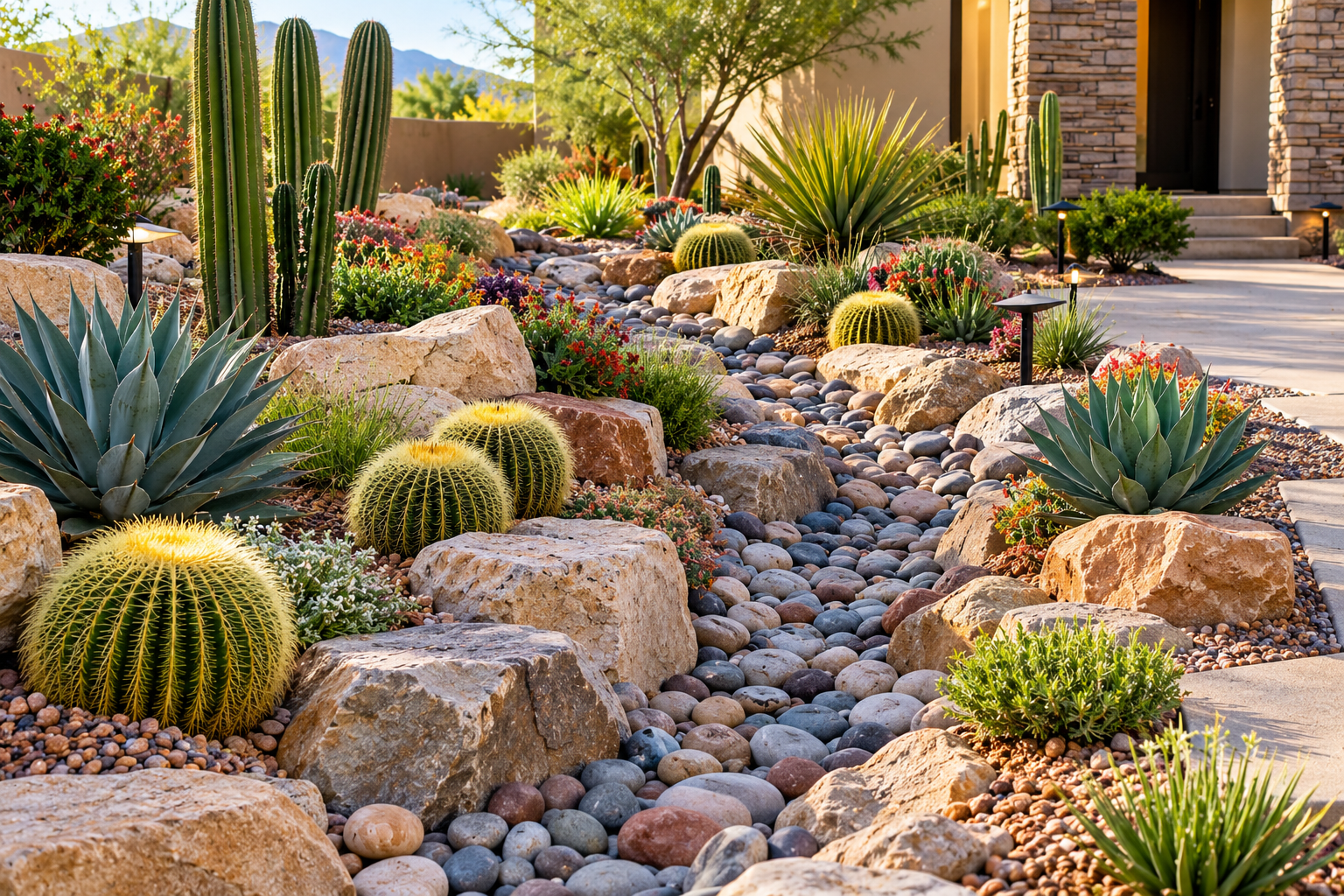
Most cactus gardens fail for a simple reason: the plants were fine, but the soil was not. A cactus bought at a garden center and planted in ordinary garden loam, then watered on the same schedule as the petunias next to it, will usually rot from the roots up. The plant is rarely the problem. Drainage, sun exposure, and winter cold decide whether a cactus garden thrives or turns to mush by spring.
That is also the good news. Once those three things are sorted out, cactus gardens are among the most flexible and low-maintenance designs in landscaping. They can be a rock-framed bed, a row of pots on a patio, a dry streambed, or a single sculptural specimen against a wall. The fifteen ideas below are organized around that flexibility, with the practical details that decide whether each one works in your yard.
Before You Pick a Design: Three Conditions That Decide Everything
Drainage matters more than the plant you choose
Cacti evolved in soils that shed water quickly. In heavy clay or any spot where water pools after rain, their roots sit wet, and wet roots invite rot. A simple test: dig a hole about a foot deep, fill it with water, let it drain, then fill it again. If the second filling takes more than a few hours to disappear, the spot will need correction before you plant.
You have three realistic options. Build a raised mound or bed so roots sit above the wet zone. Amend the soil heavily with coarse mineral material such as pumice, crushed granite, or coarse sand. Or move the whole project into containers. Raised beds 12 to 18 inches tall are a common fix because they solve drainage and give the garden visual height at the same time.
A caution on sand: fine sand mixed into clay can make the soil denser, almost like concrete. Coarse, gritty material (often sold as grit, decomposed granite, or pumice) works better. If you are unsure, look for products labeled for cactus and succulent mixes, or ask a local nursery what they recommend for your soil.
Sun, and how much is too much
Most cacti want at least six hours of direct sun. That said, a plant that spent its life in a greenhouse or under shade cloth can sunburn when moved into full afternoon sun. Scorched cactus shows up as pale, tan, or white patches that do not recover. Harden new plants over a week or two by giving them progressively more sun, or plant them in spring so they adjust as days lengthen.
In very hot climates, afternoon shade from a wall, tree, or shade cloth can help some species. Nothing here is absolute. Prickly pear tolerates punishing heat, while many barrel cacti and some flowering types do better with a little afternoon relief in the hottest regions.
Cold hardiness: check your zone, then check the species
The USDA Plant Hardiness Zone Map divides the country by average minimum winter temperature, and it is the standard starting point. Plenty of people assume cacti are strictly desert plants, but several species handle serious cold. Opuntia (prickly pear) and Cylindropuntia (cholla) include varieties rated for much colder zones, and some are reported to survive well below freezing when kept dry. The key phrase is kept dry. Cold plus wet is what kills most cacti, not cold alone.
Hardiness ratings vary between sources and between named cultivars, so check the specific plant tag or a reputable nursery before committing. If your winters regularly drop below what a plant is rated for, container planting lets you move it to a protected spot.
15 Cactus Garden Landscaping Ideas
1. A Raised Rock Bed With a Sloped Profile
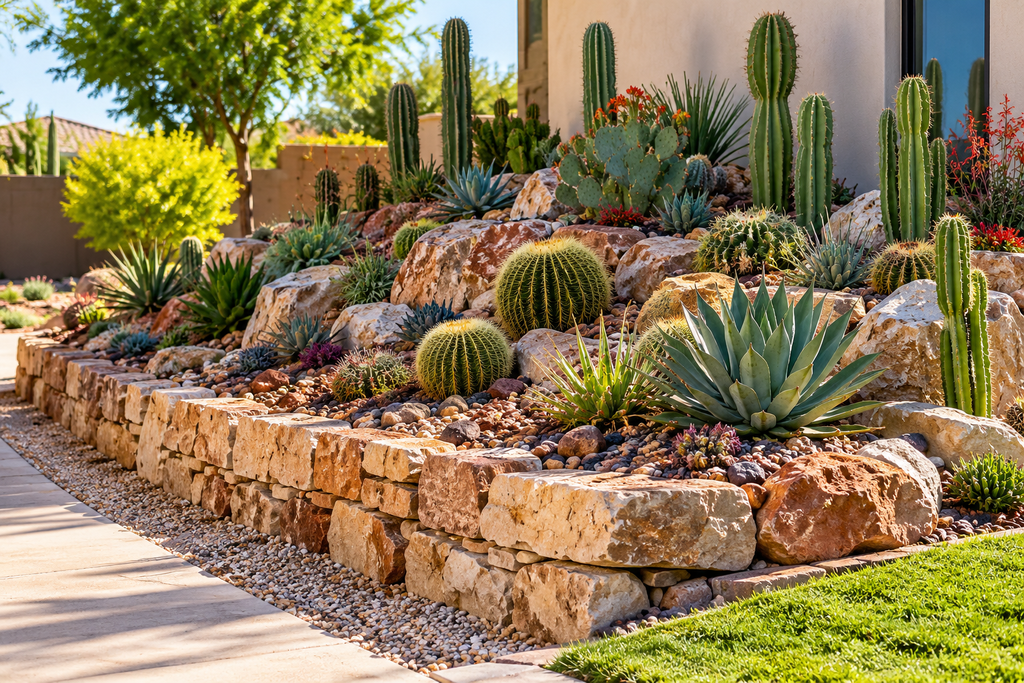
A raised bed built from stacked stone, concrete blocks, or sturdy timber gives you drainage by design. Fill it with a lean, gritty mix and mound the center a few inches higher than the edges so water runs outward.
Plant taller specimens toward the back or center and keep smaller, low-growing types along the edges. Leave room between plants. Cacti look sparse when first planted, which tempts people to crowd them, but mature plants of many species will fill the gaps within a few seasons.
This design suits anyone with clay soil. It also works well along a driveway or fence line where you want a defined edge.
2. A Dry Streambed That Handles Runoff and Looks Intentional
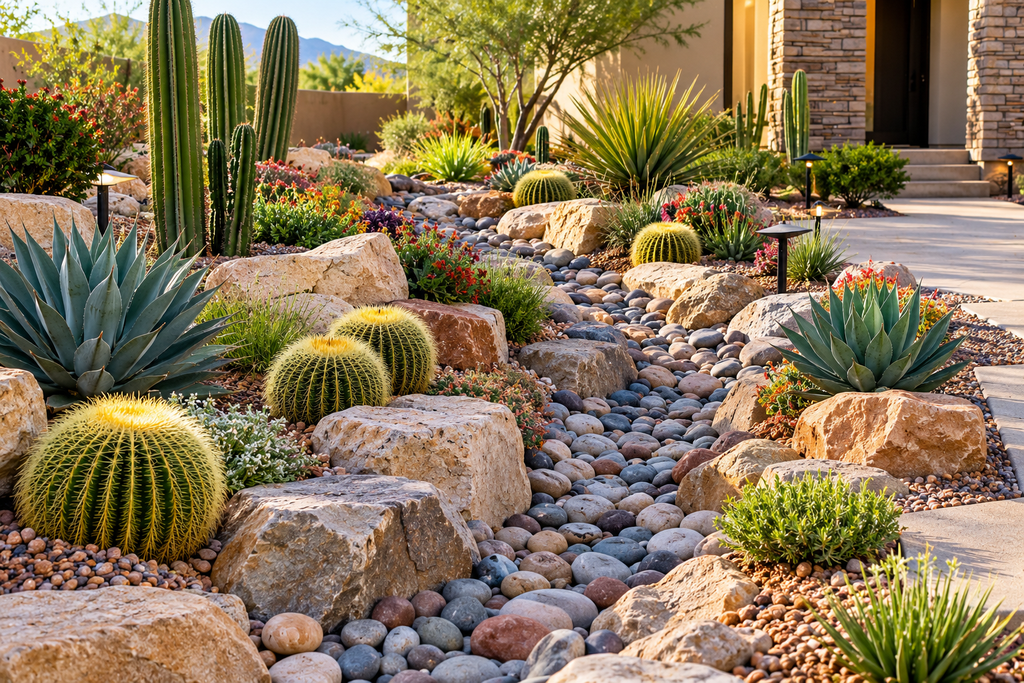
A dry creek bed is a shallow, winding channel lined with river rock and cobbles, designed to look like a seasonal watercourse. It does real work in a yard: it carries runoff away from the house and gives a cactus garden a natural structure.
Dig the channel a few inches deep with gently curving edges, line it with landscape fabric if you want to suppress weeds, and fill it with rounded stones in mixed sizes. Plant cacti and agaves along the banks, where soil is better drained than in the channel itself.
Straight lines read as artificial. Curves, varied rock sizes, and a few larger boulders placed partly buried make the effect convincing. One practical point: the slope should lead water away from your foundation, not toward it.
3. Mixed Container Groupings on a Patio or Deck
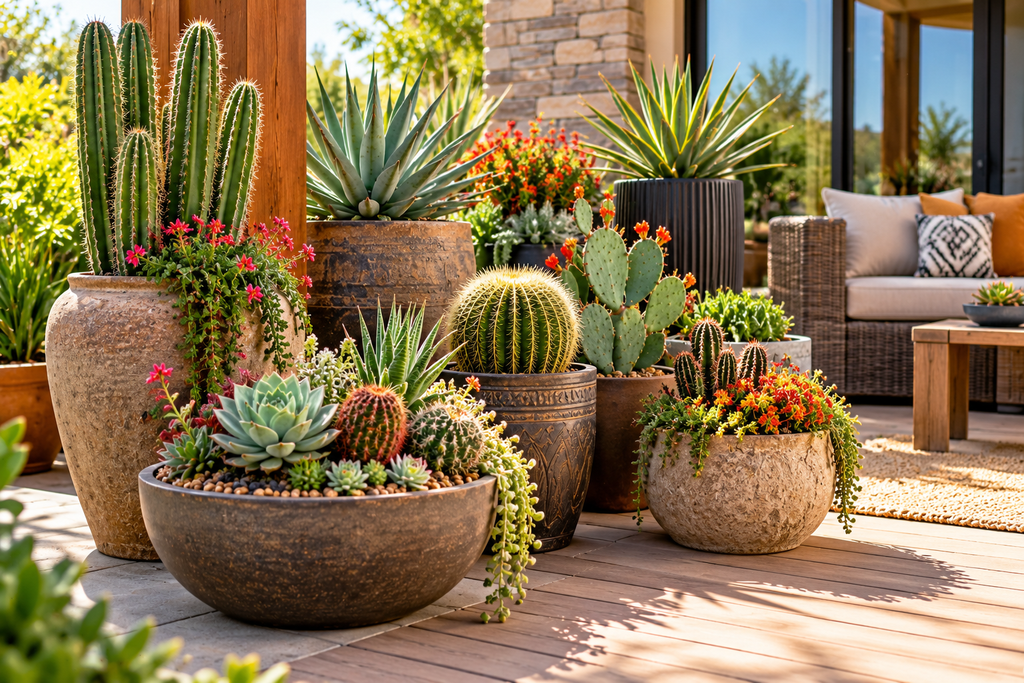
A cactus garden in pots is the most forgiving format for beginners, renters, and anyone in a cold climate. Containers let you control soil perfectly and move plants indoors when temperatures drop.
Cluster pots at different heights rather than lining them in a row. Odd numbers (three, five, seven) tend to look more natural. Mix sizes, and let one large pot act as an anchor with smaller ones around it.
Drainage holes are non-negotiable. A decorative pot without a hole is fine as a cachepot only if the plant sits in a liner pot that you lift out to water. Terracotta is a good choice because the porous clay lets soil dry faster, though it can crack in freezing weather if left outside with moisture inside.
4. A Single Statement Plant in a Large Glazed Pot
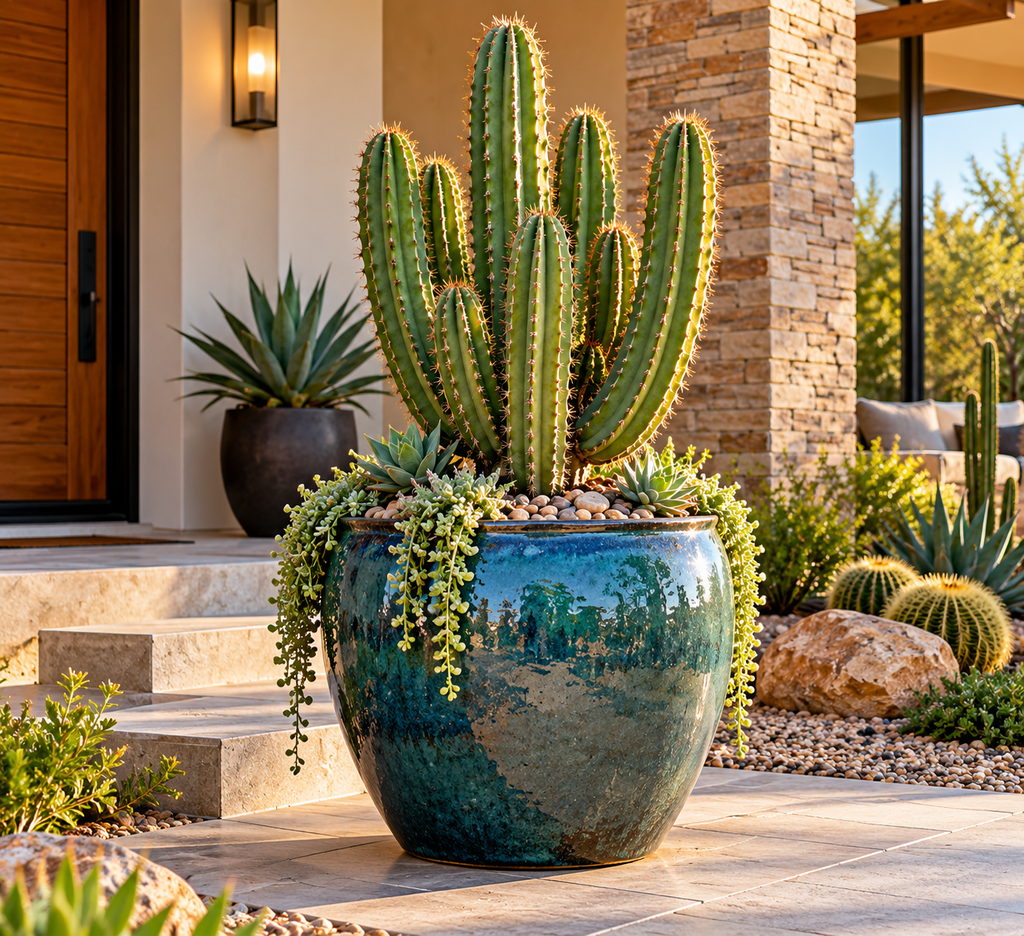
Not every cactus garden needs a crowd. One large columnar cactus, a big barrel type, or a mature paddle cactus in an oversized glazed container works as a focal point beside a front door or at the end of a path.
Choose a container wide and heavy enough that a tall plant will not tip in wind. Cacti are top-heavy, and a container that looks right when the plant is small can become unstable as it grows. Color matters here: a deep blue, charcoal, or rust-colored pot sets off green-gray cacti better than a pale terracotta that blends in.
5. A Gravel Garden With Boulders and Sculptural Plants
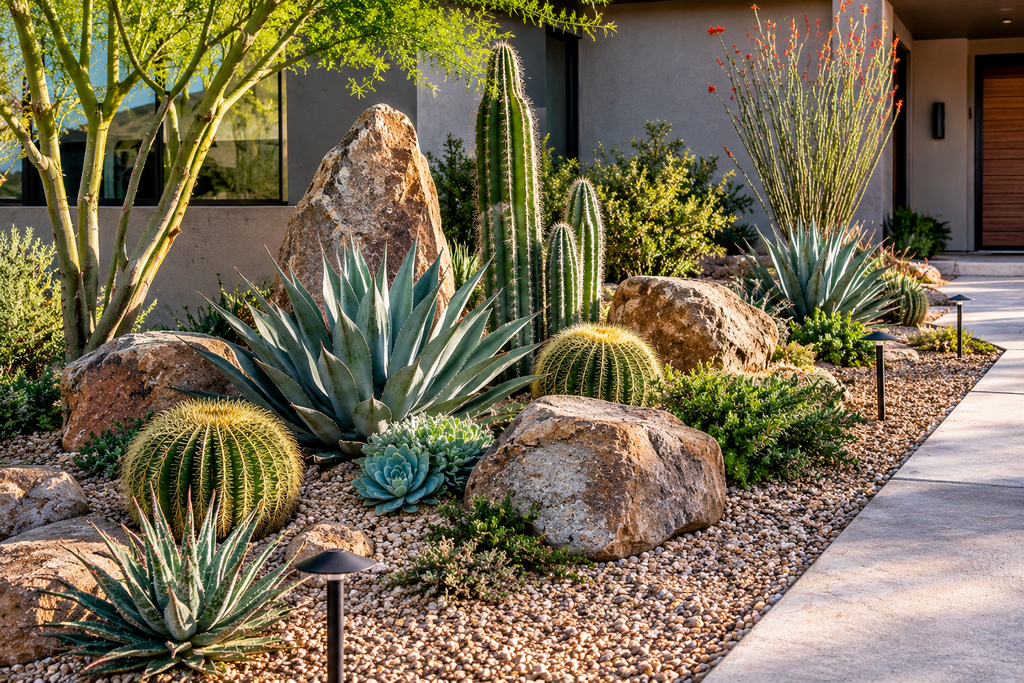
This is a clean, modern look. Replace lawn or mulch with a layer of crushed stone or decomposed granite, set a few large boulders, and place a handful of architectural plants with space around each one.
Space is the design. A cluster of five cacti shoulder-to-shoulder looks like a collection. Three well-placed plants with open gravel between them look like a landscape.
Lay landscape fabric under the gravel to reduce weeds, but know that it is not a permanent fix. Windblown debris and seeds settle on top of the gravel and sprout anyway, so plan on occasional hand weeding. A depth of two to three inches of gravel is typical.
6. A Desert-Inspired Front Yard to Replace Lawn
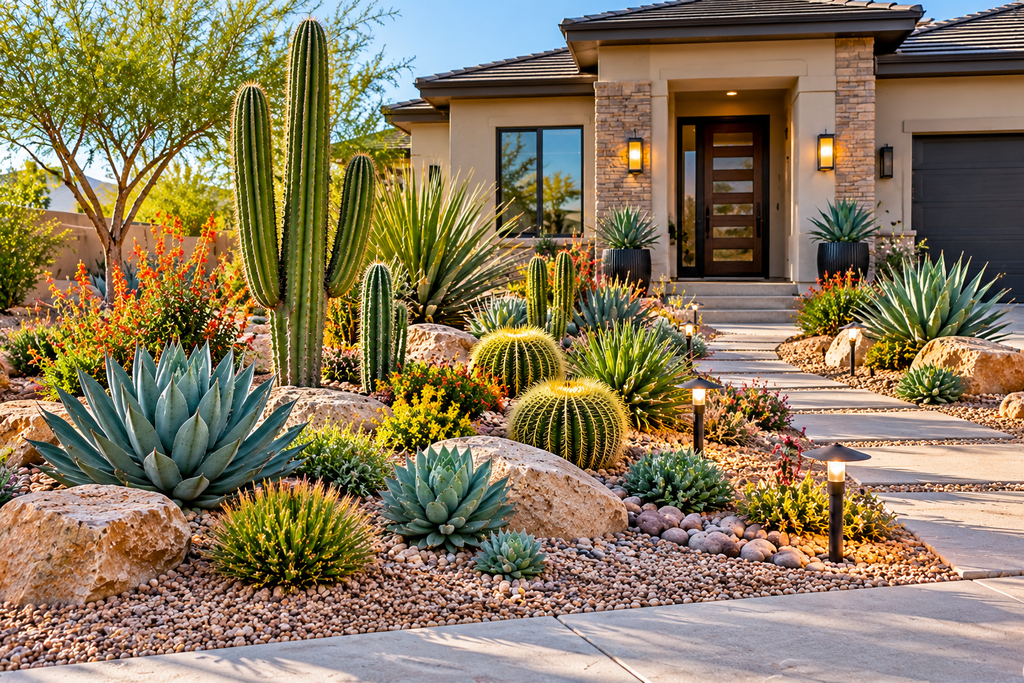
For homeowners in dry regions, converting a front lawn to a cactus and succulent landscape cuts water use significantly and can reduce mowing to nothing. Many water utilities in the Southwest offer turf-removal rebates, though availability and amounts vary by city, so check with your local utility before you start.
Remove the lawn fully rather than tilling it in. Leftover grass will push through gravel and mulch. Sheet-mulching with cardboard can smother turf over a few months, or you can strip it with a sod cutter.
Layer plants by height: low ground covers and small cacti at the front, mid-height agaves and barrel types in the middle, tall columnar species or a desert tree like palo verde (where hardy) toward the back or corner. Keep in mind that spiny plants near sidewalks can snag passersby, so keep thorny varieties at least two to three feet back from walkways.
7. A Rock Garden Built on a Slope
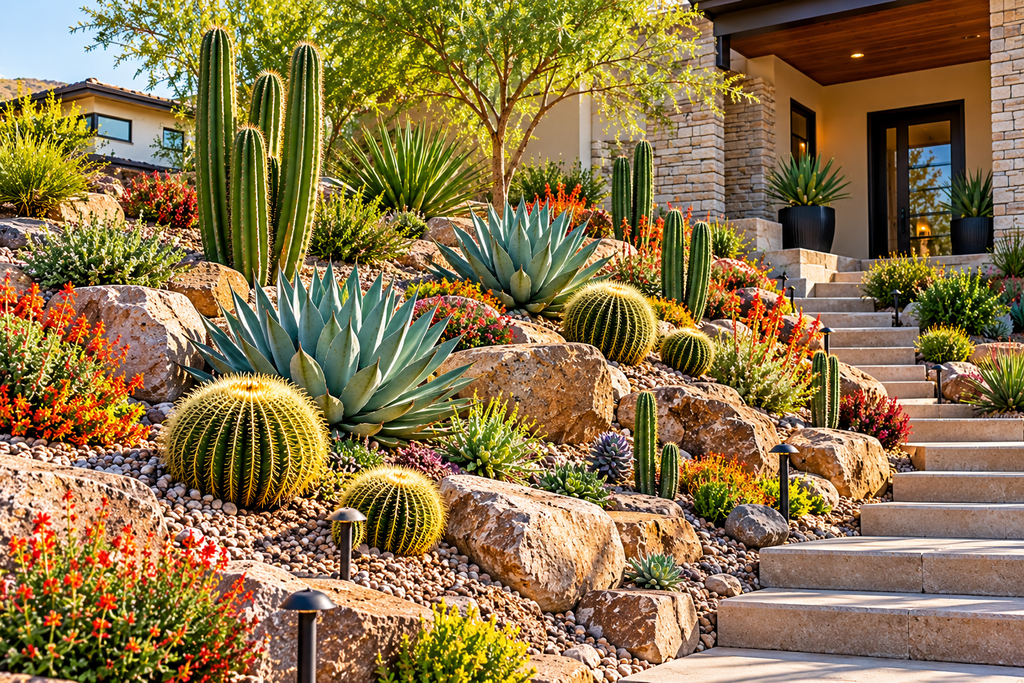
A sloped yard is often a headache for lawns and a gift for cactus gardens. Water drains off naturally, and boulders can be tucked into the hillside to hold soil in place.
Set larger rocks first, burying about a third of each so they look settled. Plant cacti in the pockets of soil between them, mounding soil slightly on the uphill side to catch water. On steeper grades, terracing with stone walls prevents erosion during heavy rains. If the slope is steep enough that you are worried about stability, a retaining wall over about three or four feet usually requires engineering and, in many places, a permit. That is a case for a professional.
8. A Courtyard or Wall-Backed Garden for Reflected Heat
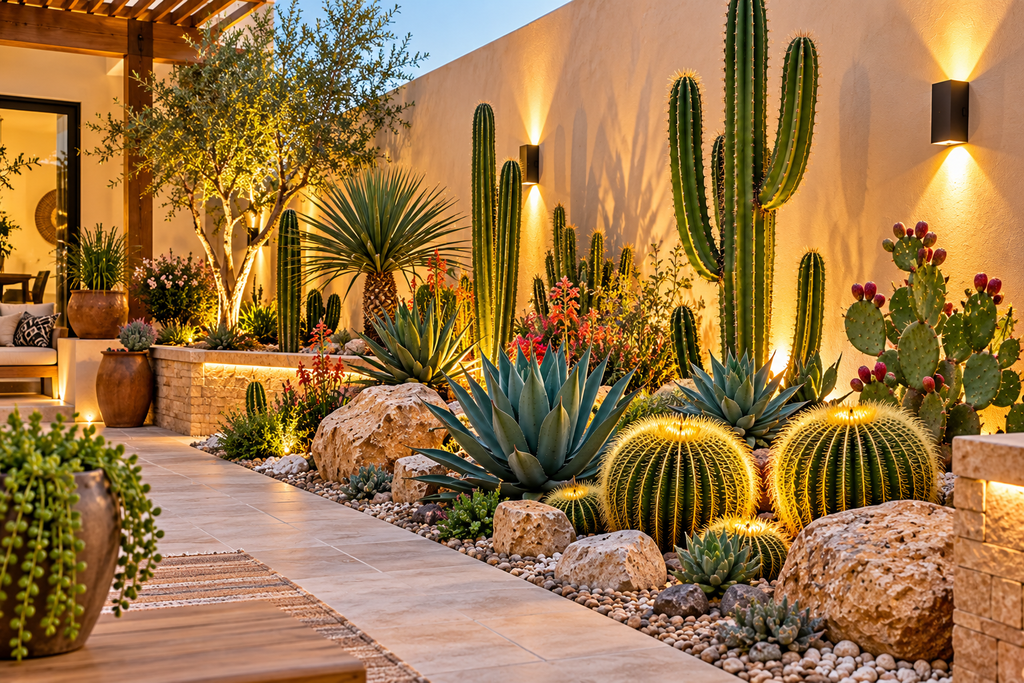
South- and west-facing walls absorb and radiate heat, which borderline-hardy cacti appreciate in cooler zones. Planting against a masonry wall can create a microclimate a zone or so warmer than the open yard, though the effect depends on the wall material and local conditions.
This works especially well in a courtyard. A pale stucco wall bounces light back onto plants, and a dark wall holds warmth overnight. Be careful in very hot regions, though. That same reflected heat can scorch plants during peak summer.
9. Cactus Garden Under the Eaves
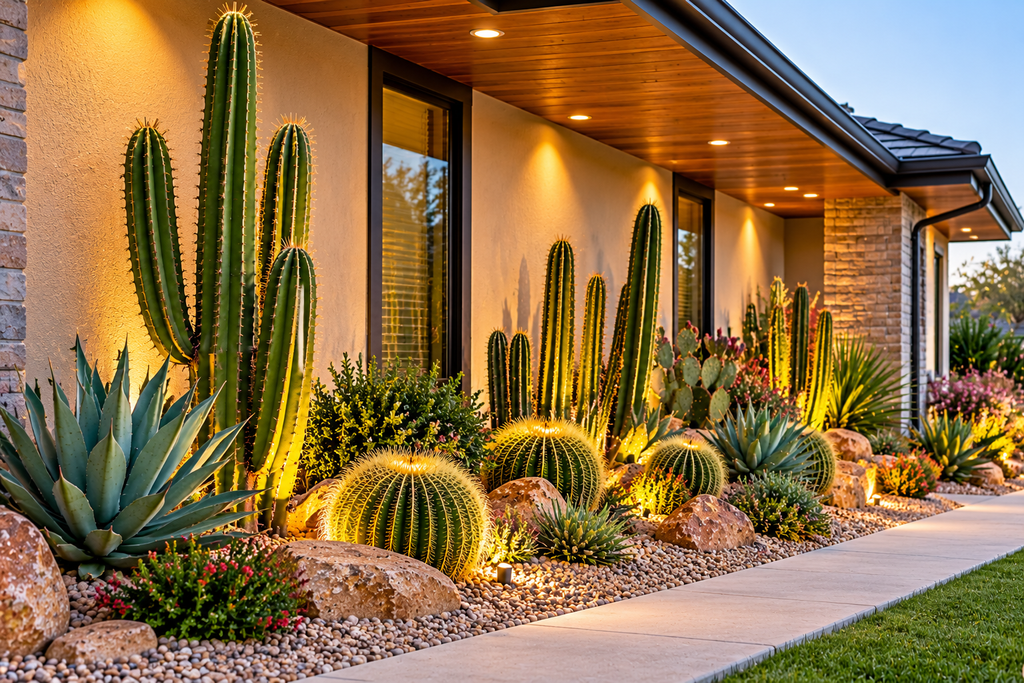
Rain is the enemy of cold-climate cacti, which is why planting beneath a wide roof overhang can extend your options. Cacti under an eave stay drier in winter, which improves survival of cold-tolerant species.
The trade-off is that eave-protected beds get no natural rainfall, so you will water by hand during dry spells. Watch for roof runoff, too. If a gutter overflows or the eave channels water down in one spot, that area can become a swamp.
10. A Vertical or Wall-Mounted Cactus Display
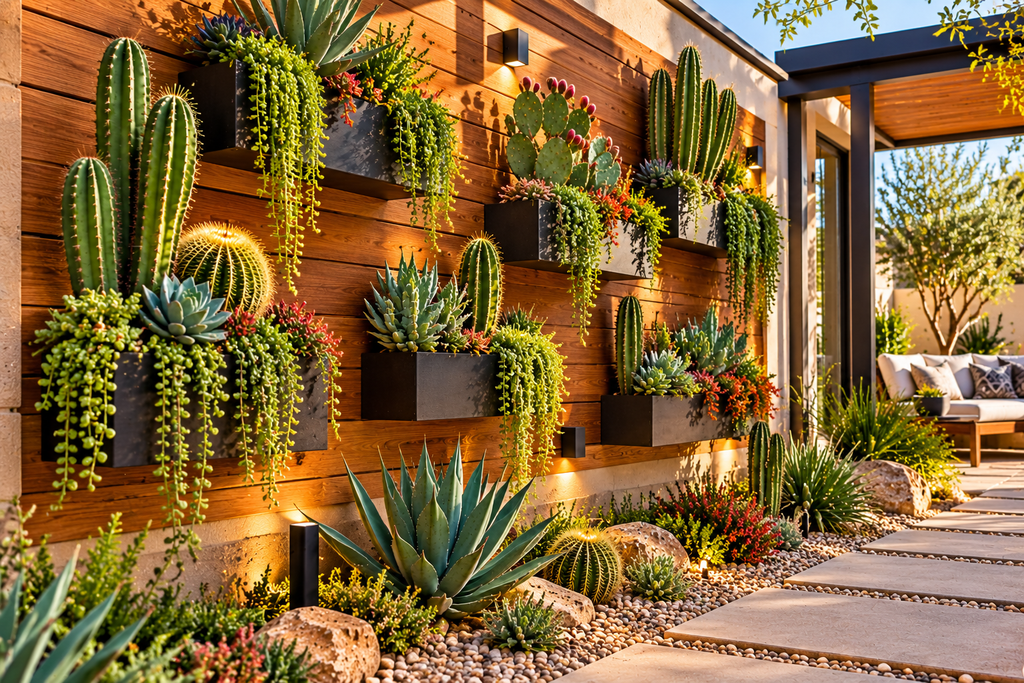
Where ground space is limited, a vertical frame holds small cacti and succulents in pockets or mounted planters. Use a sturdy frame, a lightweight gritty mix, and plants that tolerate shallow roots.
Vertical displays dry out faster than ground plantings because less soil holds less moisture, so they usually need more frequent watering than other cactus gardens, though still far less than typical plants. Choose compact species and avoid heavy barrel cacti. Position the display where it gets sun but where passersby will not brush against spines.
11. A Mini Cactus Garden in a Shallow Bowl or Trough
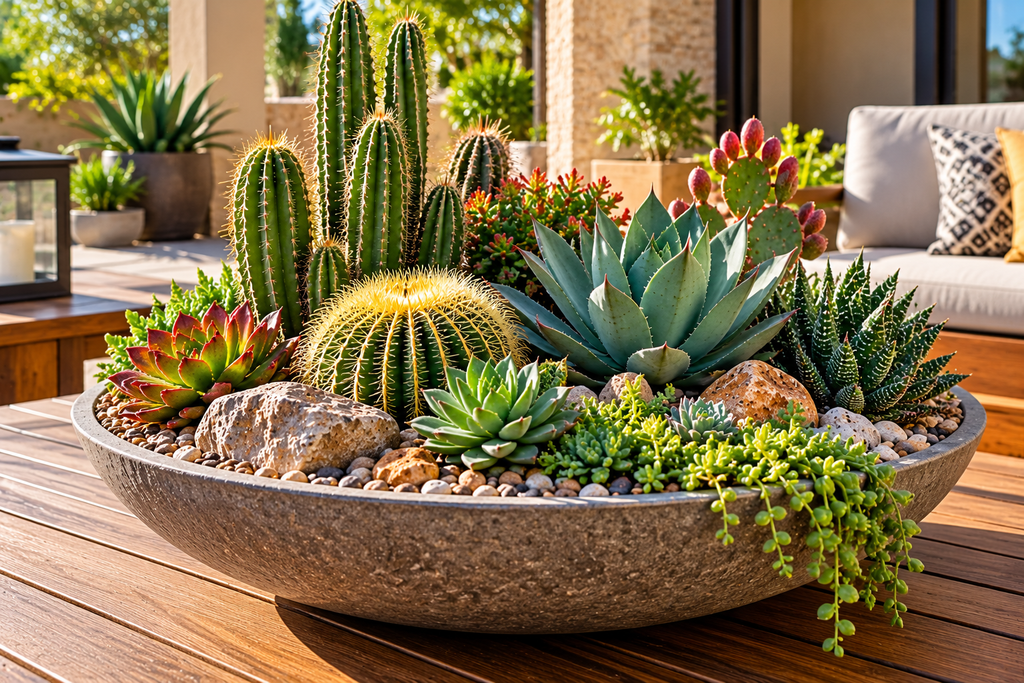
A wide, shallow container such as a stone trough, a low ceramic bowl, or a galvanized tub makes a miniature landscape on a table or entry step. Shallow containers suit cactus roots, which tend to spread out near the surface rather than dive deep.
Use a layer of grit at the bottom, then a cactus mix, then top-dress with fine gravel. Add a small rock or two for scale. Plant slowly-growing varieties so the arrangement lasts, since fast growers will outgrow a tiny bowl within a couple of seasons. If the container has no drainage hole, drill one (masonry bits work on ceramic and stone) or choose another vessel.
12. A Cactus and Ornamental Grass Combination
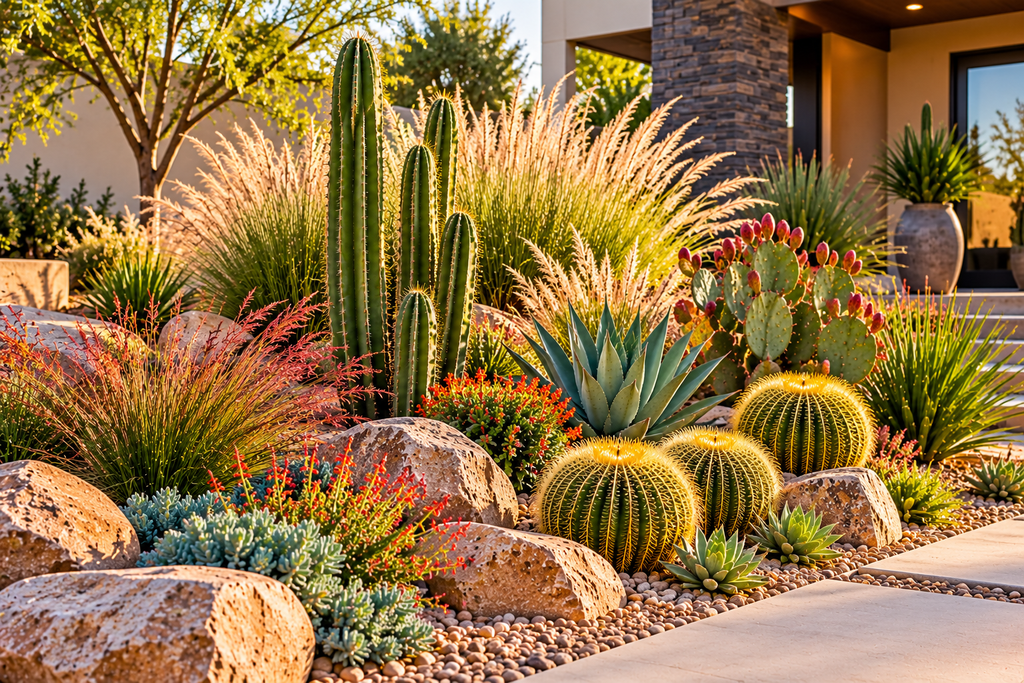
Fine-textured grasses soften the stiff geometry of cacti. Plants like blue fescue, little bluestem, or feather grass offer movement against the stillness of spiny forms. Choose grasses that tolerate the same dry, sunny conditions, since pairing a thirsty grass with a cactus sets up a conflict at watering time.
The visual logic is contrast: spiky and soft, rigid and swaying. Keep grasses a comfortable distance from cactus spines, because dried blades can drift into spiny plants and become hard to remove.
13. A Succulent-Heavy Cactus Garden With Agave, Aloe, and Yucca
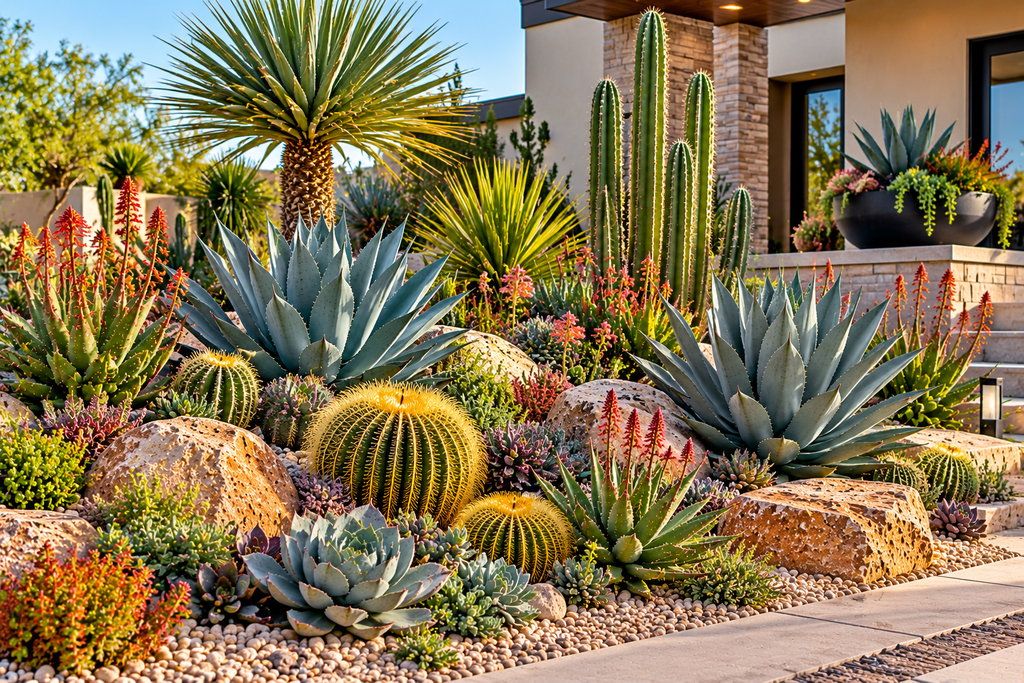
Cacti alone can feel monotonous, and mixing them with other drought-tolerant plants adds color and shape. Agaves provide bold rosettes, aloes add winter flowers in warm climates, and yuccas give height.
Be aware of a few cautions. Agave leaf tips are sharp enough to puncture skin, and some agave sap can irritate skin. Wear gloves and eye protection when handling them. Many aloes and agaves are also less cold-hardy than the hardiest cacti, so check ratings. A common mistake is assuming all succulents share the same needs. Some prefer partial shade, and some need more water than a true cactus.
14. A Pathway Lined With Low Cacti and Gravel
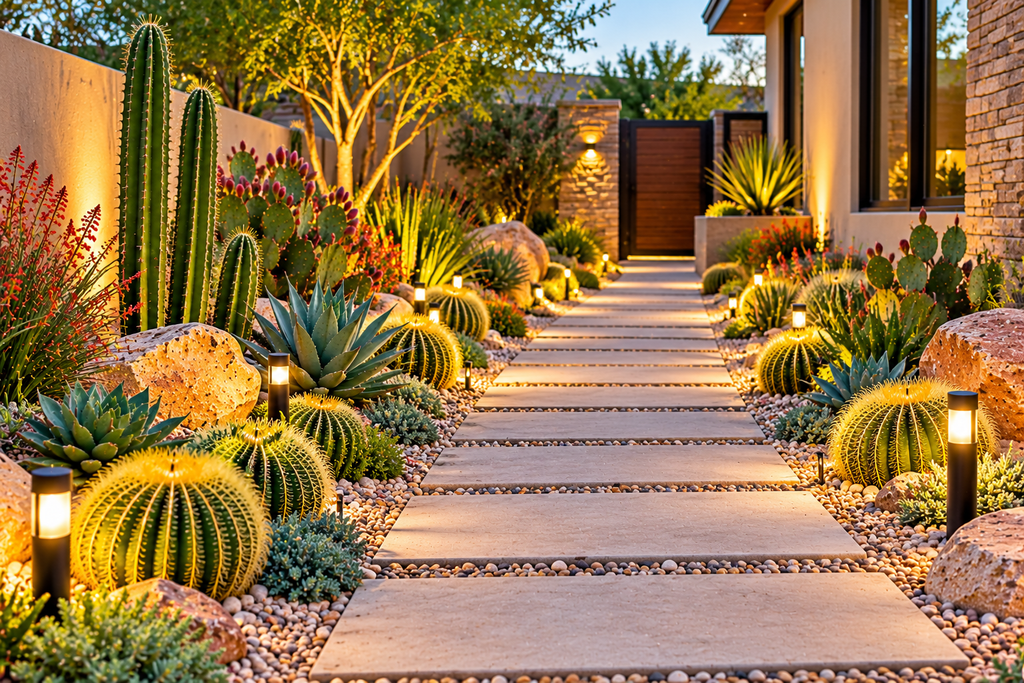
A gravel path flanked by low-growing cacti, such as hardy prickly pear varieties or clumping hedgehog types, leads the eye through a garden and keeps spines away from walking space if you plan clearances well.
Make the path at least three feet wide for comfortable passage. Edge it with stone or steel to keep gravel from creeping into beds. Low-voltage solar path lights help with nighttime visibility, which is a real safety consideration around spiny plants. Avoid planting anything with long, hooked spines along the edge.
15. A Cactus Garden Designed Around Seasonal Flowers
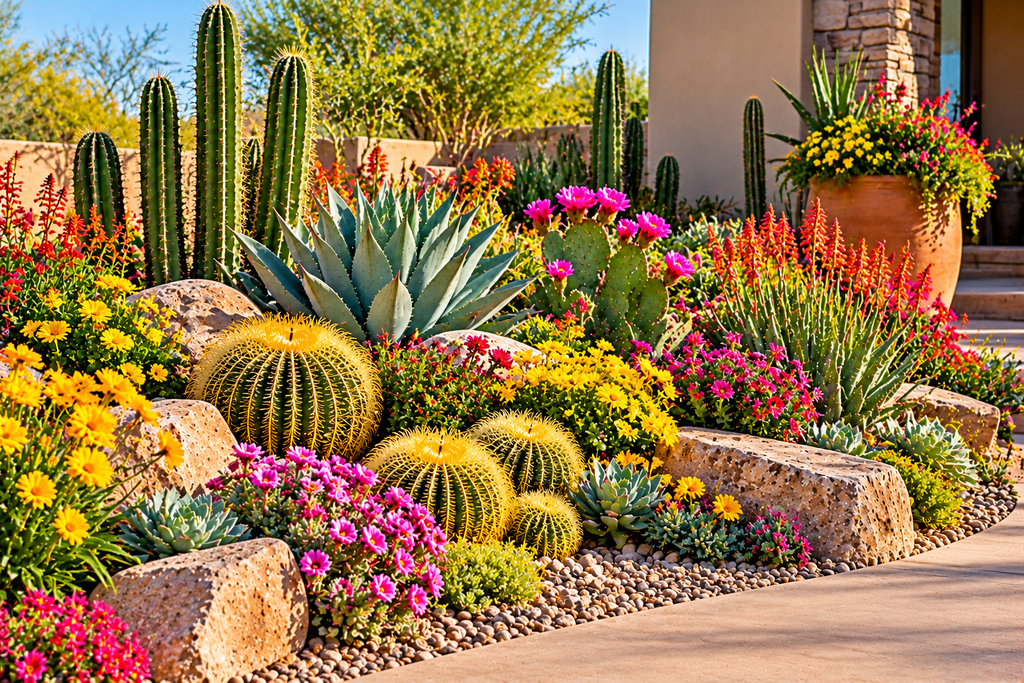
Many cacti bloom for only a short window, but the flowers can be showy. Prickly pear produces bright yellow, orange, or pink blooms in late spring or early summer in many climates, followed by fruit on some species. Hedgehog cacti and some others produce vivid flowers as well. Bloom timing varies by species, climate, and growing conditions.
Plan your garden so that several species bloom in sequence, and add companions like desert marigold or penstemon to extend color. Keep expectations realistic: cacti need appropriate winter dormancy and enough light to flower, and young plants may take years to bloom.
Choosing Plants That Match Your Climate
If you live in a region with cold, wet winters, cold-hardy opuntias, certain cholla, and hedgehog cacti are the most common candidates. In mild, dry climates, you can add columnar cacti, barrel cacti, and many agaves. In humid regions like the Southeast, rot and fungal issues are a bigger concern than cold, so raised beds, extra-gritty soil, and good air circulation become more important.
Local native plant societies, cooperative extension offices, and botanical gardens are better sources than generic plant tags. They can tell you which species actually survive in your area, which beats trusting a nursery label alone.
Planting and Soil: What to Do Step by Step
For in-ground planting, amend the soil so it drains quickly. A mix with a large share of coarse mineral material is typical, though exact ratios vary with your native soil, so there is no single correct recipe. For containers, a commercial cactus mix improved with extra pumice or perlite works for most species.
Handle plants with thick gloves, folded newspaper, or tongs. Set the plant at the same depth it grew in its nursery pot, and avoid burying the stem base. After planting, many growers wait several days to a week before watering to let any damaged roots callus over, which reduces rot risk. Then water deeply but infrequently.
Watering and Seasonal Care
Newly planted cacti need modest water to establish roots, then far less. In summer growth, a deep watering followed by a full dry-out is the usual pattern. In winter, most cacti need little to none, especially in cold regions. Overwatering is the most common cause of death, and the early signs are soft, yellowing, or translucent tissue.
In cold climates, protect borderline-hardy plants from winter wet with a rain cover, a frame, or a move to shelter. Do not wrap plants in plastic, which traps moisture. Frost cloth over a frame is a safer approach.
Safety Around Spines
Cactus spines cause real injuries. Tiny barbed hairs called glochids on prickly pear are especially irritating and can be hard to see. Wear thick leather gloves, long sleeves, and eye protection when planting or pruning. Tweezers handle larger spines. Duct tape or a thin layer of white glue peeled off can help lift glochids from skin.
If you have small children or pets that roam the yard, keep spiny plants away from play areas or choose lower-spine species. A spine embedded near a joint or eye, or any wound that looks infected, warrants medical attention.
Mistakes That Quietly Kill Cactus Gardens
Planting in the wrong soil. Standard potting soil holds too much water. This is the leading cause of failure.
Watering on a schedule instead of by conditions. Cacti respond to how dry the soil is, not the calendar.
Using a pot with no drainage. Water pools at the bottom and roots rot.
Overcrowding. Poor airflow and trapped moisture encourage rot.
Ignoring winter wet. Cold alone is survivable for hardy species. Cold and soggy is not.
Moving plants into full sun too quickly. Sunburn scars are permanent.
Frequently Asked Questions
Can a cactus garden survive winter in a cold climate?
Some can. Cold-hardy prickly pear and hedgehog cacti survive freezing temperatures in many northern regions, provided the soil drains well and stays dry. Check the hardiness rating of any species before planting. Tender species should be potted and moved indoors.
How often should I water outdoor cacti?
There is no universal schedule. After establishment, many outdoor cacti in the ground need little supplemental water, except during prolonged drought. Containers dry faster and typically need more attention. Check that the soil is fully dry before watering again.
Do I need landscape fabric under gravel?
It helps with weeds at first but is not essential, and fabric can clog with debris over time. Some gardeners prefer a thick gravel layer with periodic hand weeding.
What size container is best for a cactus?
Choose a pot only slightly larger than the root ball. An oversized pot holds extra moisture that the roots cannot use. Shallow, wide pots generally suit cacti better than deep, narrow ones.
Key Takeaways
A cactus garden succeeds or fails on drainage, sun, and winter moisture, so settle those three before choosing a layout. Raised beds, slopes, and containers are the dependable fixes for poor soil. Match species to your zone rather than to what looks good on a tag, and handle spines with real protection. After that, the design is up to you: a sculptural single specimen, a gravel garden, or a streambed full of mixed desert plants can all work.

About Syprose Kiche
Syprose Kiche is the creator and writer behind My Besuited Home, a practical home and garden website covering DIY projects, gardening, lawn care, landscaping, home improvement, and outdoor living. She focuses on turning everyday homeowner questions into clear, practical guides backed by careful research and useful real-world considerations.