
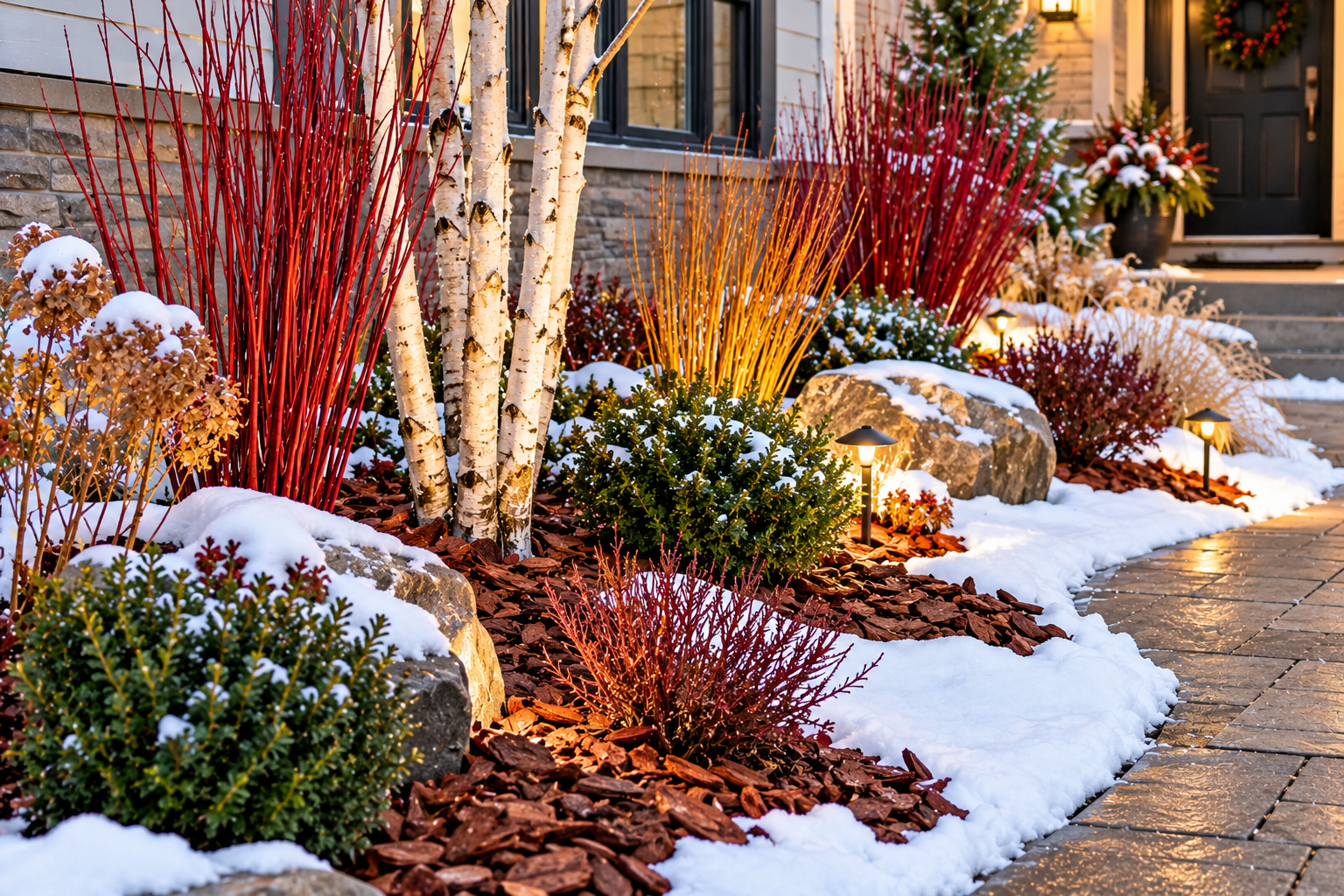
A front yard rarely fails in winter because of one bad plant. It fails because everything was doing the same job. Perennials supplied the color, deciduous shrubs supplied the bulk, and the lawn supplied the green. When frost takes all three, what’s left is bare soil, brown stalks, and a house that suddenly looks exposed. Fixing that doesn’t take a landscape crew. It takes a handful of structural plants, a few cheap materials, and a clear idea of what each part of the yard has to do from December through March.
The ideas below are grouped by that job: plants that hold the scene, color you can add in a weekend, structures and materials, light, and care. Most are DIY-friendly and none require special equipment. Where an idea depends on your climate, the text says so.
Start With What Your Winter Yard Is Missing
Before buying anything, look at the yard from the spots where you actually see it in winter: the driveway, the front door, the kitchen window. Then check which of three things is missing.
- Height and mass. If the beds look flat and empty, you need evergreen shrubs or tall grasses.
- Color. If the shapes are fine but everything is brown or gray, you need berries, colored bark, or seasonal containers.
- Definition. If the yard looks shapeless, the walkway, edges, and entry probably aren’t marked, and structures, stone, and lighting will help more than plants.
Most yards are short on two of the three. Knowing which ones keeps you from spending money on the wrong fix.
One rule applies throughout: check your USDA Plant Hardiness Zone before buying. Many plants listed below are reliable in a wide range, but a few, such as camellias and some boxwood types, are marginal in colder zones. Your local cooperative extension office can tell you what holds up in your area.
Plants That Carry the Yard Through Winter
1. Build the backbone with evergreen shrubs
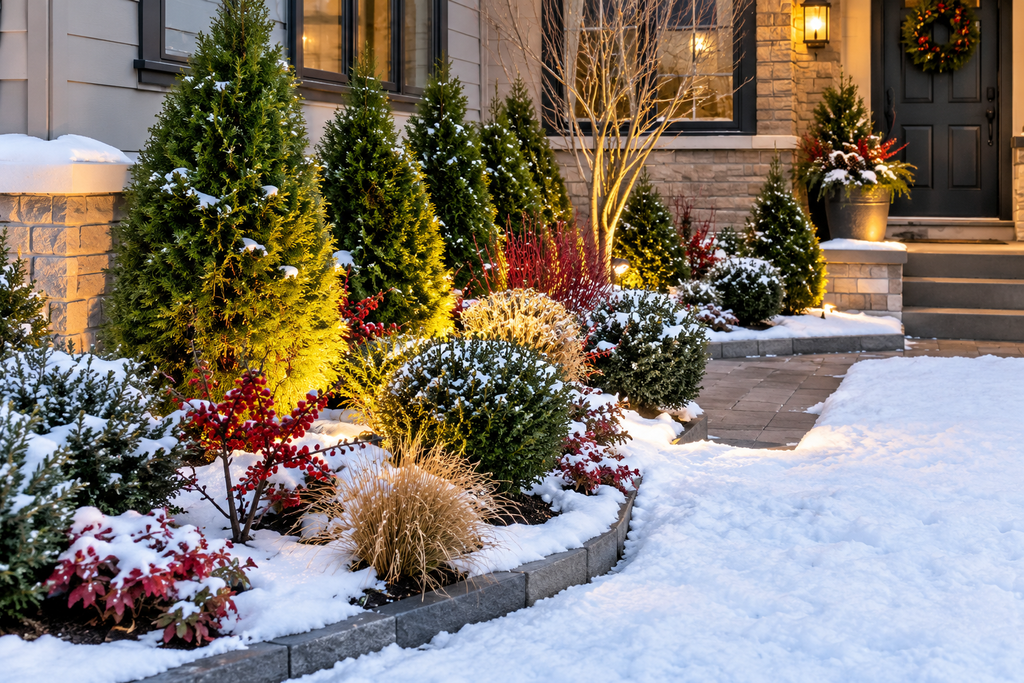
Evergreens do the heavy lifting because they keep their mass when everything else drops. Boxwood, holly, juniper, yew, and arborvitae are common choices, and they differ more than the “evergreen” label suggests:
- Boxwood is formal, clips well, and suits foundation plantings and entry flanking. Some varieties bronze or yellow-brown in cold wind, so a sheltered spot helps. Boxwood blight has affected plantings in parts of the U.S., so buy from a reputable nursery and check your state extension’s current guidance.
- Holly brings glossy leaves and, on female plants, berries. Most hollies need a male pollinator nearby to fruit.
- Juniper tolerates poor, dry soil and full sun, which makes it a good fit for slopes and hot corners.
- Arborvitae grows upright and works as a screen, but heavy snow can bend or split the branches of multi-stemmed varieties.
A simple placement rule: use taller evergreens at corners and in back, and mound or rounded types near walkways where you’ll see them up close. Leave room for mature width. A shrub planted 18 inches from the house will be pressing on the siding in five years.
2. Plant shrubs that hold berries all winter
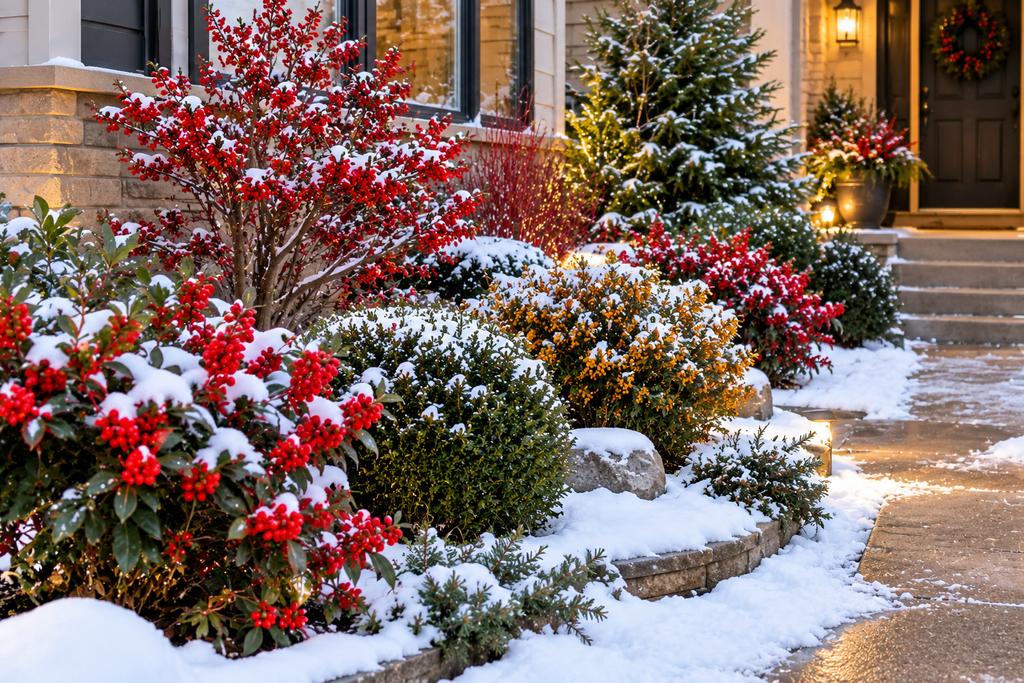
Winterberry (Ilex verticillata) is a deciduous holly that drops its leaves and leaves bright red fruit on bare stems. It’s among the most striking things you can put in a winter bed. Like other hollies, it needs both sexes: one male for roughly every handful of females is the usual guidance, but check the tag because cultivar pairing matters. Other berry options include viburnum, beautyberry (more purple than red), and some crabapples that hold small fruit into winter.
Berries are also bird food, and how fast birds strip them varies by season and region. Don’t count on any shrub keeping its fruit until spring. Many berries are toxic to people and pets if eaten in quantity, so think twice about planting them where small children or dogs have free access.
3. Use bark and stems as the color
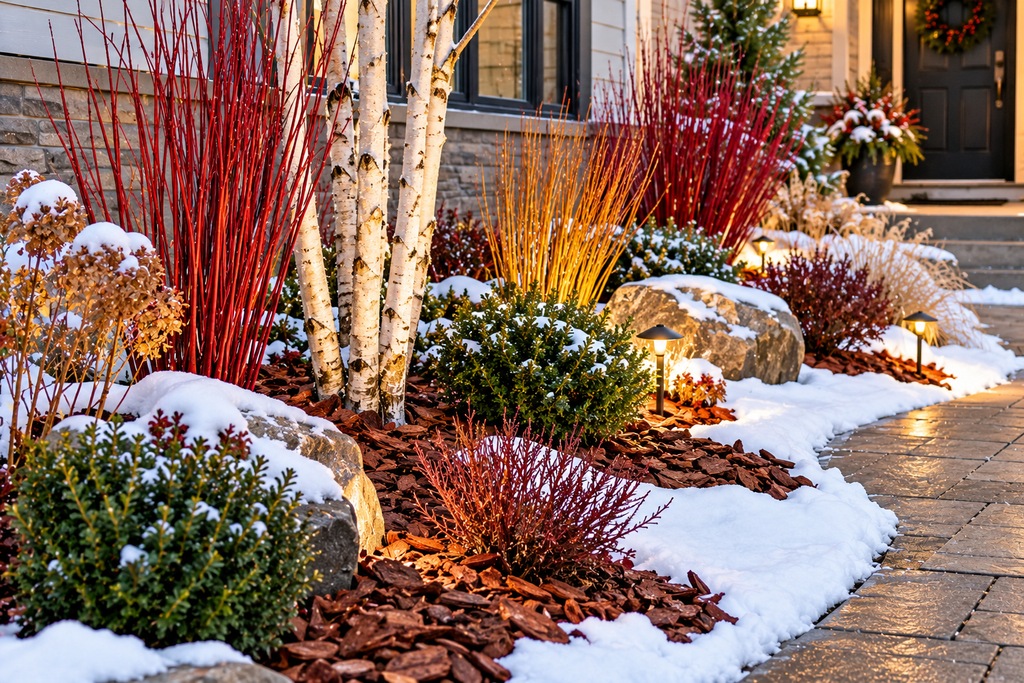
Several shrubs and trees are grown mostly for what they look like without leaves:
- Red twig dogwood and yellow twig dogwood have stems that color up in cold weather. The brightest color shows on young growth, so many gardeners cut the oldest stems back to the ground in late winter or early spring to push new ones.
- River birch has peeling, cinnamon-to-cream bark and tolerates wet soil better than most trees.
- Paperbark maple has exfoliating copper bark, though it grows slowly and costs more.
- Coral bark maple shows its stem color best in the coldest months.
If you’re working with a small front yard, a single multi-stemmed tree can do more than a row of shrubs. Place it where you can see it from a window, because bark is a close-up pleasure.
4. Choose plants that actually bloom in winter
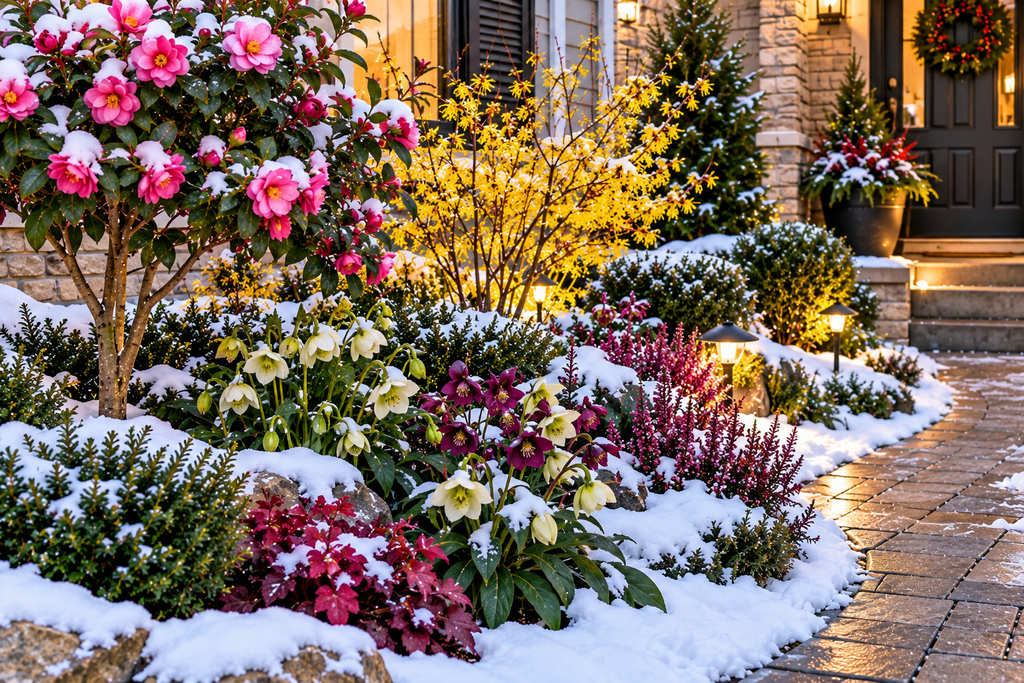
Few plants flower in the cold, but a handful do, and they reward a planting spot near a door or path:
- Hellebores (Lenten rose) often bloom in late winter and tolerate shade. Their nodding flowers are easy to miss, so plant them where you’ll look down on them.
- Witch hazel blooms on bare branches in winter or very early spring, depending on the species and cultivar, with a spidery flower and light fragrance.
- Winter jasmine has yellow flowers on arching green stems and works on a wall or slope.
- Snowdrops poke up in late winter, sometimes through snow. The bulbs go in during fall, so this is a plan-ahead choice.
Bloom timing varies by zone and by year, so treat these as late-winter color rather than midwinter guarantees.
5. Leave grasses and seed heads standing
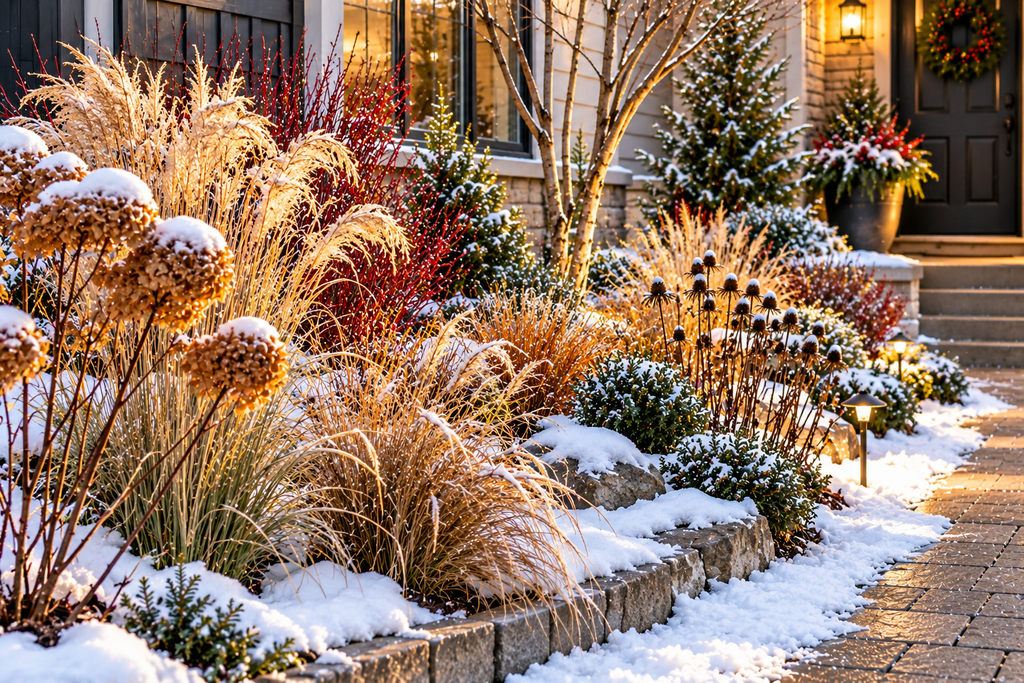
Ornamental grasses such as feather reed grass, switchgrass, and miscanthus turn tan or gold and keep their shape through much of winter. Frost and snow make them look better, not worse. The standard approach is to cut them back in late winter or early spring, before new growth starts.
Several perennials hold seed heads that look good when frosted: coneflower, sedum, black-eyed Susan, and hydrangea flower heads. Birds often feed on them, which is a practical reason to wait until spring to cut them down. Heavy snow or wind will flatten some, and that is the limit of the idea: this works best where the plants are reasonably stout and the location isn’t severely windy.
6. Add low evergreens and winter foliage in the front of the bed
The front edge of a bed often looks emptiest. Low, evergreen or semi-evergreen plants fill that space: heuchera (many hold color through mild winters), creeping juniper, ajuga, and some sedums. They also cover soil, which helps reduce winter mud splashing up onto siding and walkways.
Containers and Seasonal Color You Can Do in a Weekend
7. Fill pots with cold-tolerant color
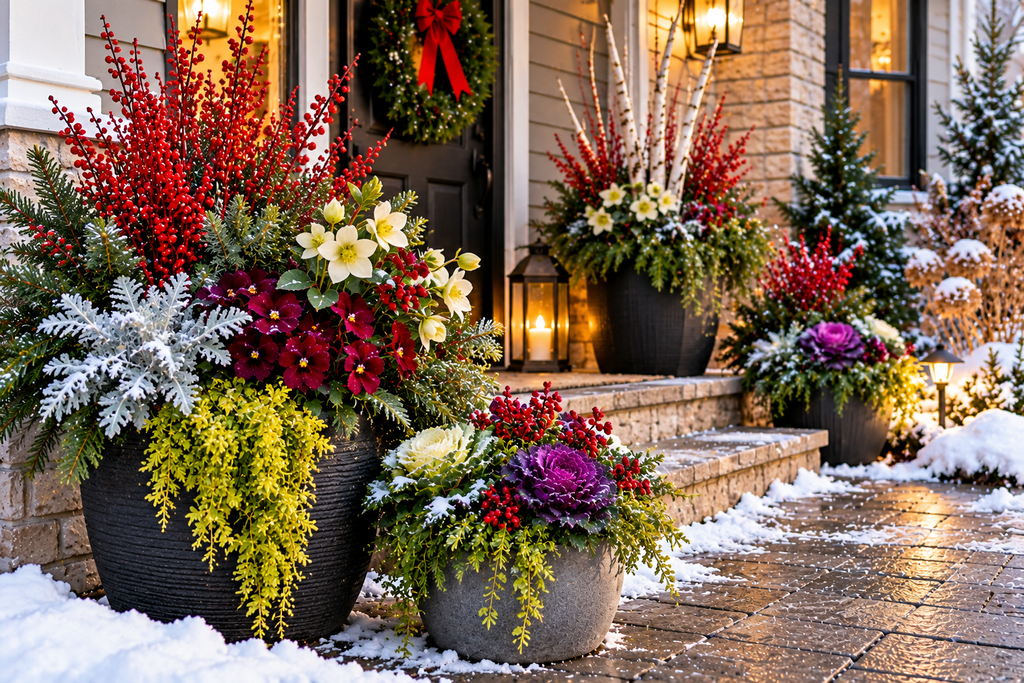
Pansies and violas tolerate light frost and often keep blooming through cool weather. Ornamental kale and cabbage color up more as temperatures drop, and they hold well in cold. Pair them with a trailing evergreen such as ivy (check that it’s appropriate for your region, since English ivy is invasive in some areas) or a short conifer for height.
Where winters stay below freezing for weeks, pansies will stall rather than bloom, and they can be damaged by hard freezes. Treat them as early-winter or mild-winter color.
8. Use freeze-proof containers and know the zone trick
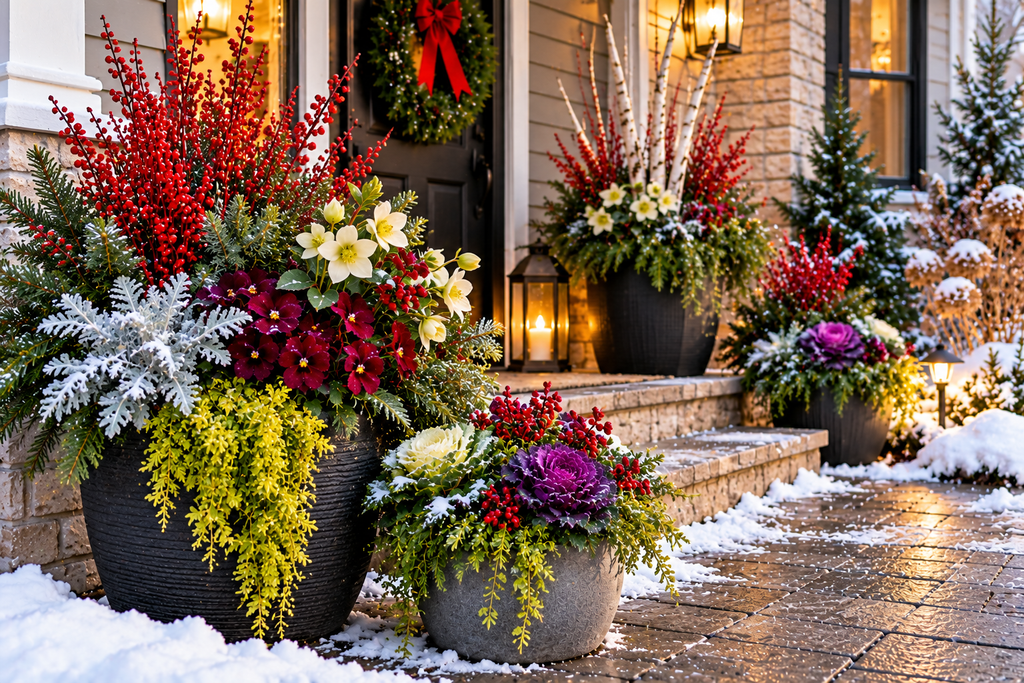
Terracotta and thin ceramic can crack when soil inside freezes and expands. Fiberglass, thick resin, and heavy stone or concrete hold up better. Whatever the material, make sure the drainage holes are open, because pots sitting in standing water are the ones that crack.
A commonly cited guideline is that plants in containers are less cold-hardy than the same plants in the ground, often by one to two USDA zones, because roots lose the insulation of surrounding soil. If a shrub is rated for zone 5 and you live in zone 5, it’s safer in the ground than in a pot. For perennial plants that must stay in containers, group the pots against a wall or in a sheltered corner and consider wrapping them.
9. Make a cut-greens “porch arrangement”
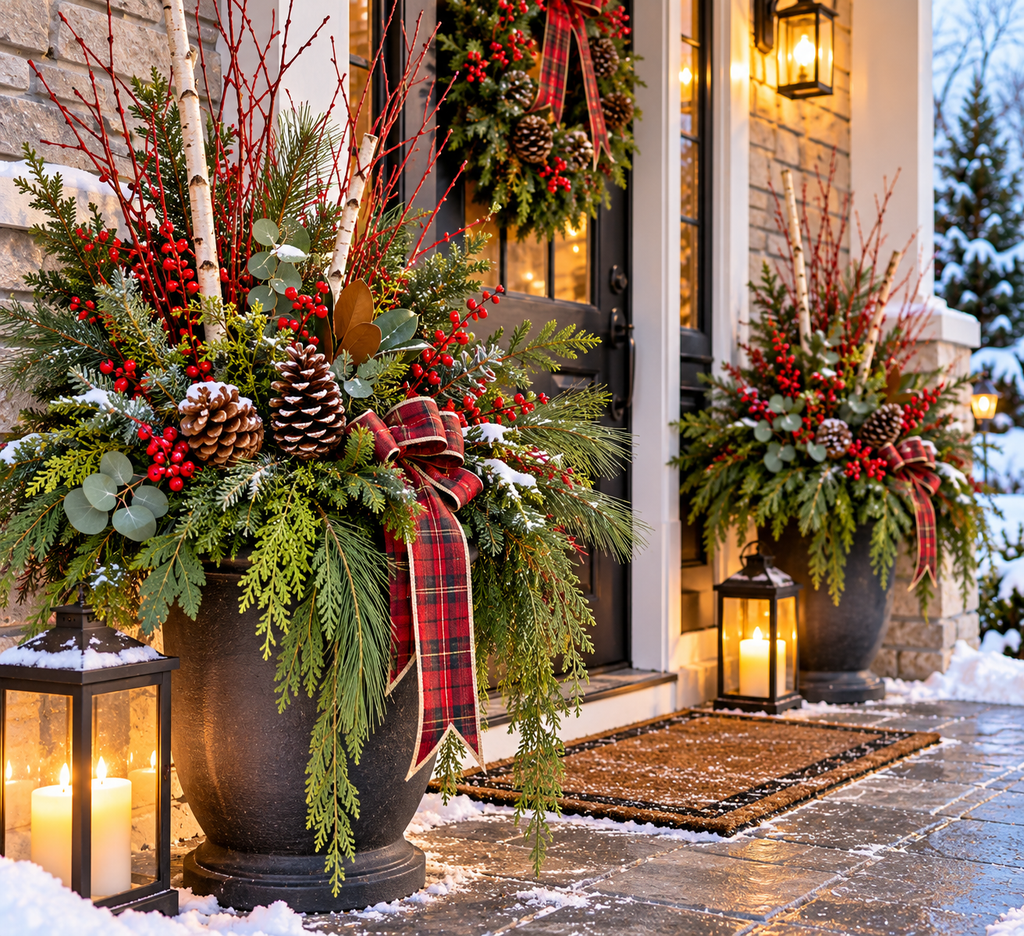
This is the classic evergreen-bough container, and it’s a good use of trimmings. Push cut stems of pine, cedar, fir, spruce, or boxwood into a pot filled with damp soil or sand, then add red dogwood twigs, dried hydrangea heads, or pinecones. Because the stems are cut, they won’t root. They’ll stay green for weeks in cold weather and dry out faster if exposed to sun or heat. Start with a pot that’s heavy enough not to tip in wind.
Before cutting from the landscape, confirm that the plant isn’t one you want to keep full. Cut from the back or from branches that need thinning anyway. Never cut from public land without permission.
10. Put window boxes to work
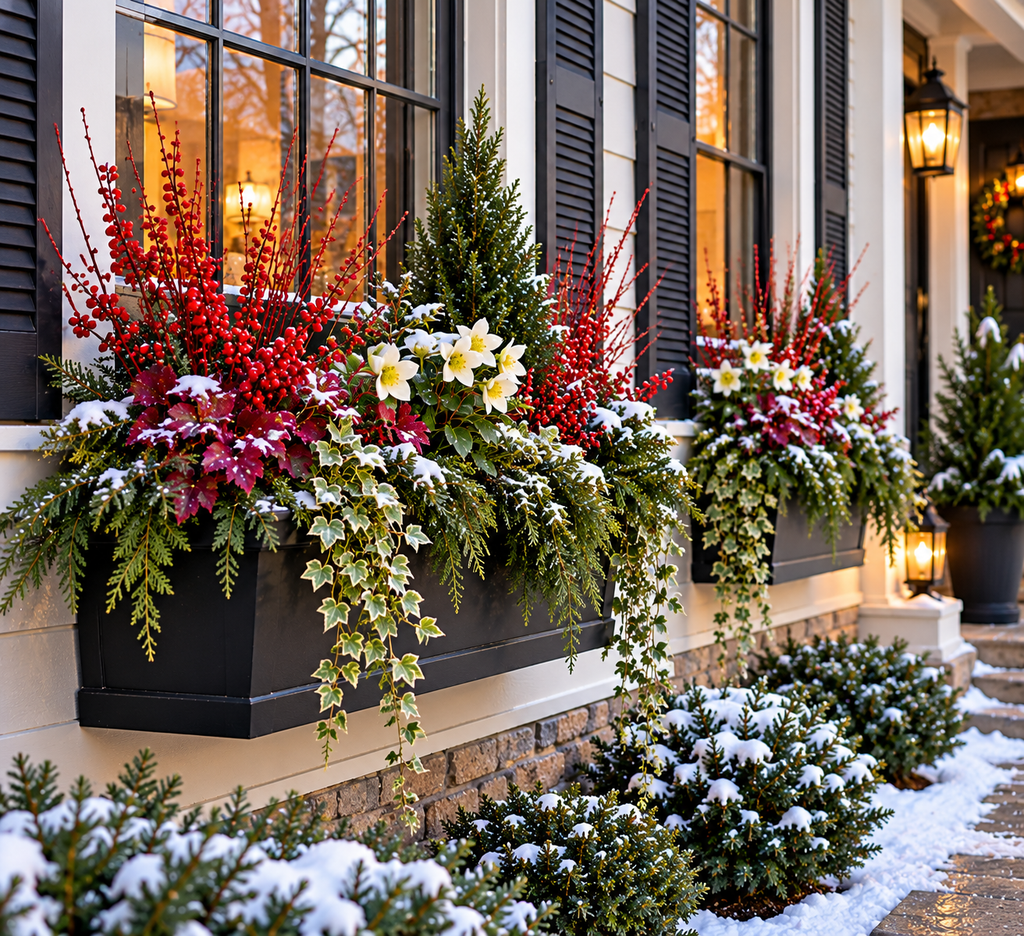
A window box is a small, easy canvas. For winter, use a mix of evergreen sprigs, berried stems, and trailing greens. Fill the box with a bit of soil or floral foam so the stems stay upright. If the box is plastic or lined, check that water can drain, and skip anything that rests directly on soaked material. If your boxes are wood and attached to the house, make sure ice and snow melt won’t pool against the siding.
Structures, Textures, and Materials That Add Shape
11. Stack a log pile as a feature
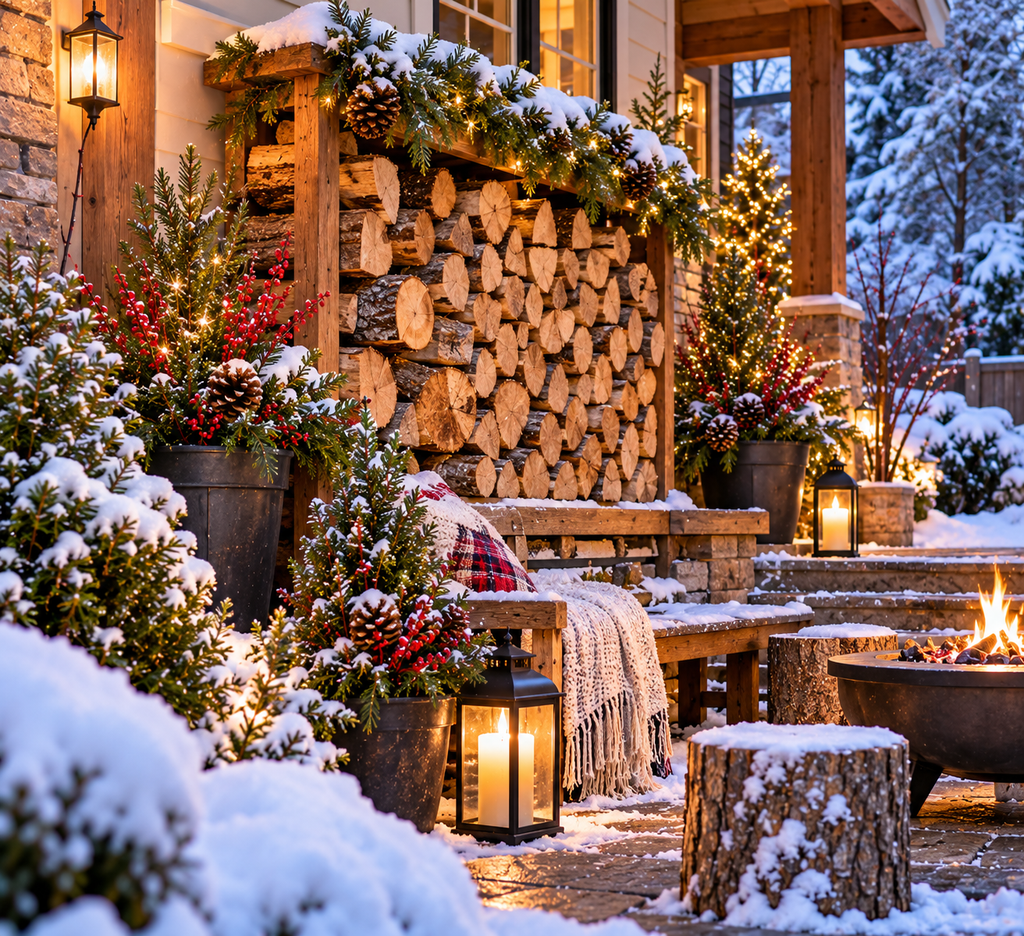
A tidy firewood stack against a wall or in a freestanding rack reads as design when it’s neat. Use consistent log lengths and stack them bark side up where rain can shed off the top. Keep firewood several feet from the house in areas prone to termites or pests, and check local fire guidance if you live in wildfire country. Dry, seasoned wood holds up better visually, and it burns better as well.
12. Create a bundled birch pole or branch screen
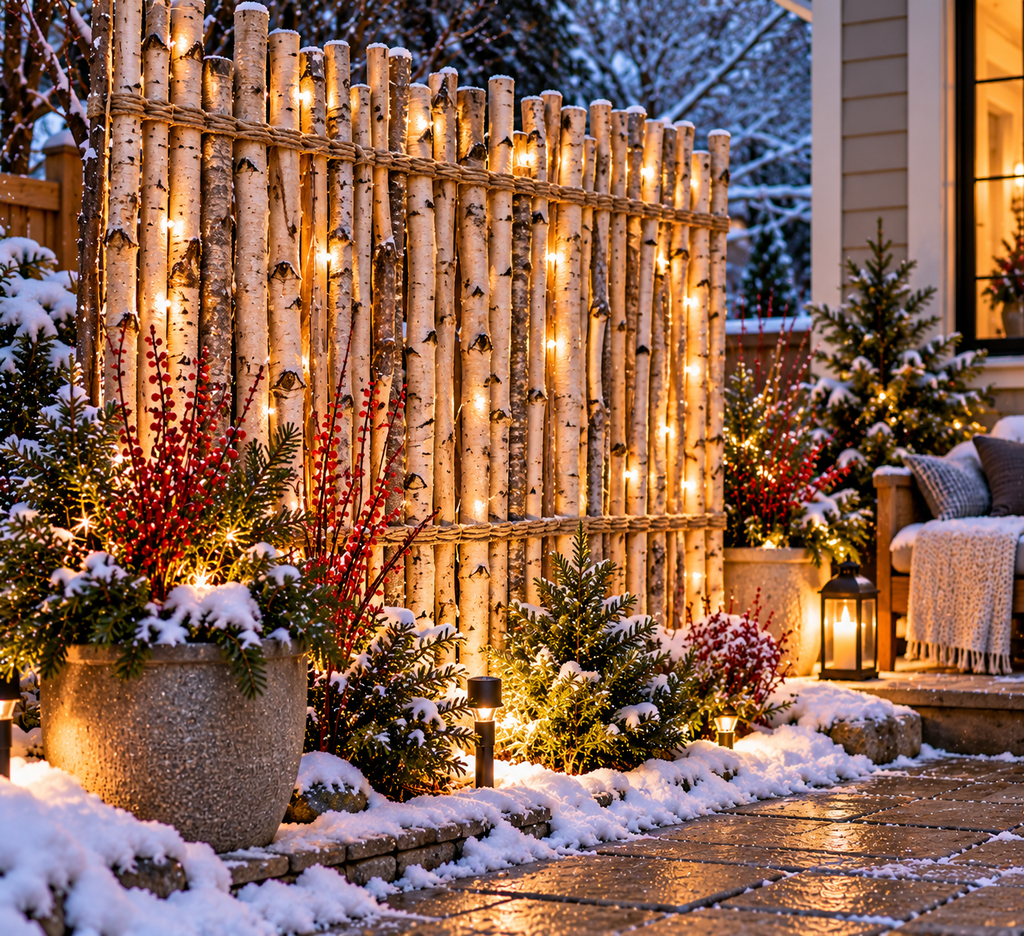
Bundles of birch poles, bamboo, or straight branches make a quick vertical accent. Tie bundles together at several heights with weatherproof twine or wire, and set them upright in a large container filled with sand or gravel, or sink them into the ground. They give a bed height without waiting for a plant to grow. Use branches that are dry and sound, and expect them to weather over a season or two.
13. Build a simple wattle edge or branch fence
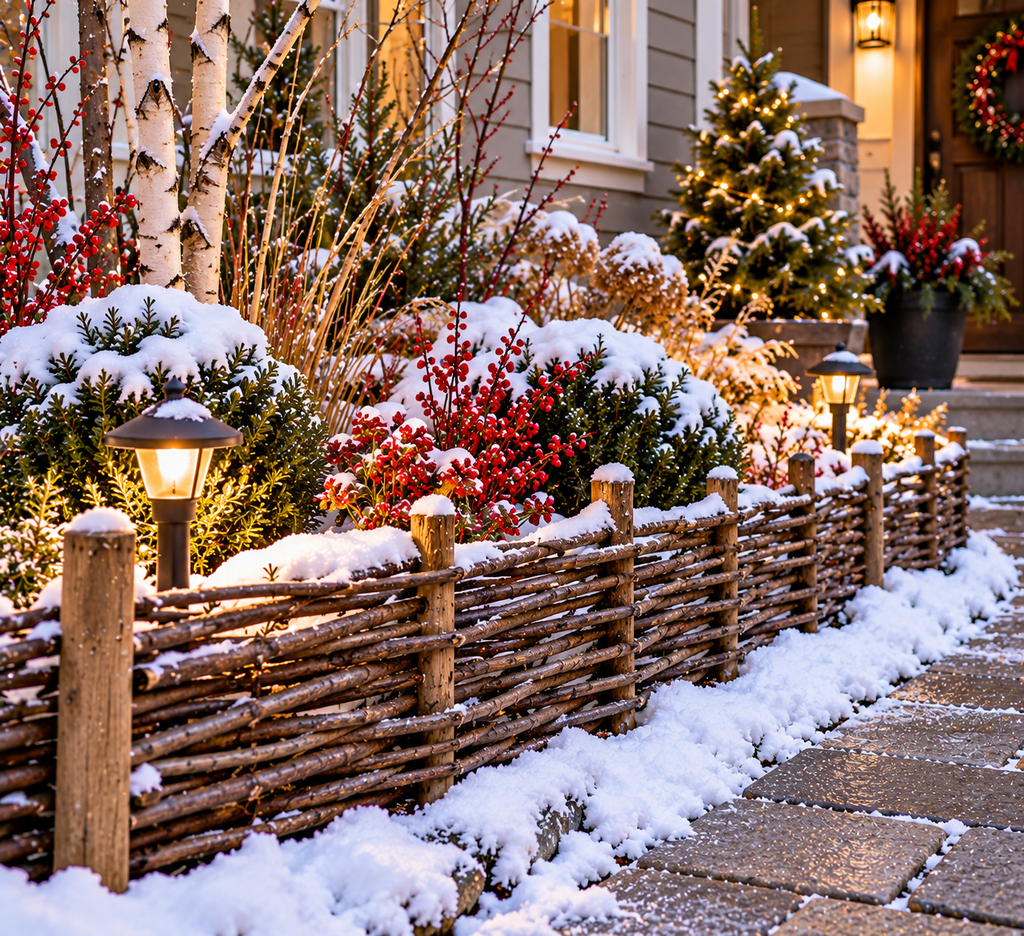
A wattle fence is made by weaving flexible branches (willow, dogwood, hazel, or whatever pliable stems you have) between upright stakes. It works as a low bed edge or a small windbreak for tender plants. It won’t hold much weight, so don’t use it to retain soil on a steep slope. Stakes driven 12 to 18 inches into the ground give it stability, and the weave tightens as it dries.
14. Use stone for structure that doesn’t change
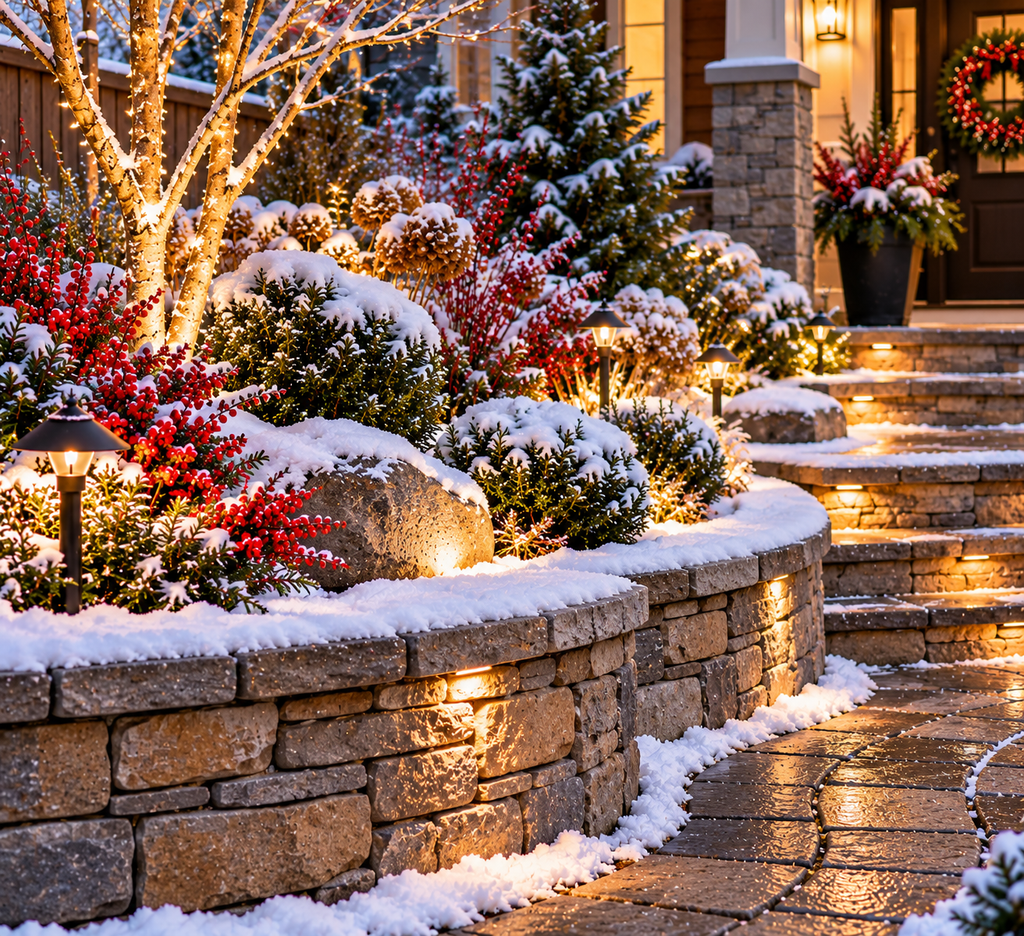
Winter is when stone stops being background. A dry-stacked low wall, a stone-edged bed, a gravel path, or a handful of large boulders set into a bed all keep their form through the coldest months. For DIY, small stacked walls up to about a foot or two high are within reach for most people. Taller or load-bearing walls are a different matter, and retaining walls above a certain height often require engineering or permits depending on local code. Check before you build.
15. Mulch the beds so they look finished
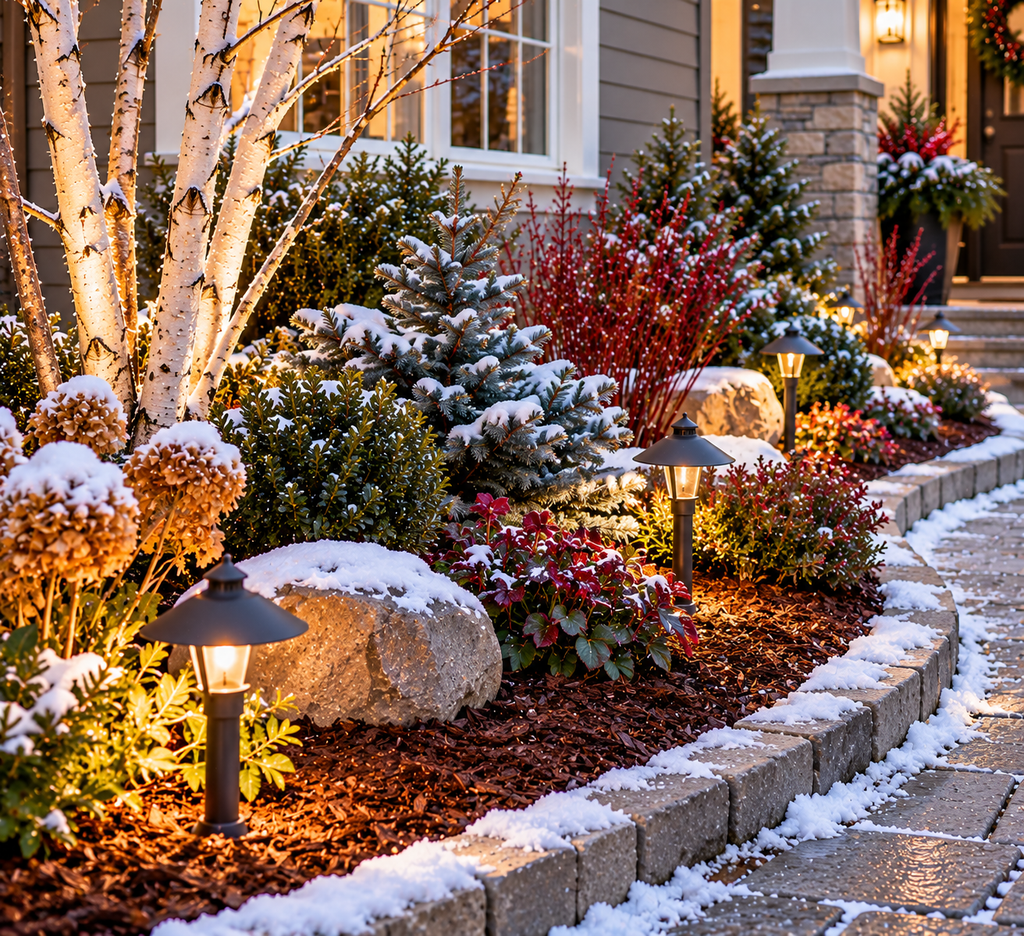
Fresh shredded bark or wood chips give bare beds a clean, dark backdrop that makes evergreens and berries stand out. A layer of roughly 2 to 3 inches is the usual guidance. Keep mulch pulled back a few inches from trunks and stems, because piling it against bark invites moisture problems and rodents. In cold climates, mulch also moderates how fast soil freezes and thaws, which helps protect shallow roots.
Light, Wildlife, and Movement
16. Light the path and the plants, not just the door
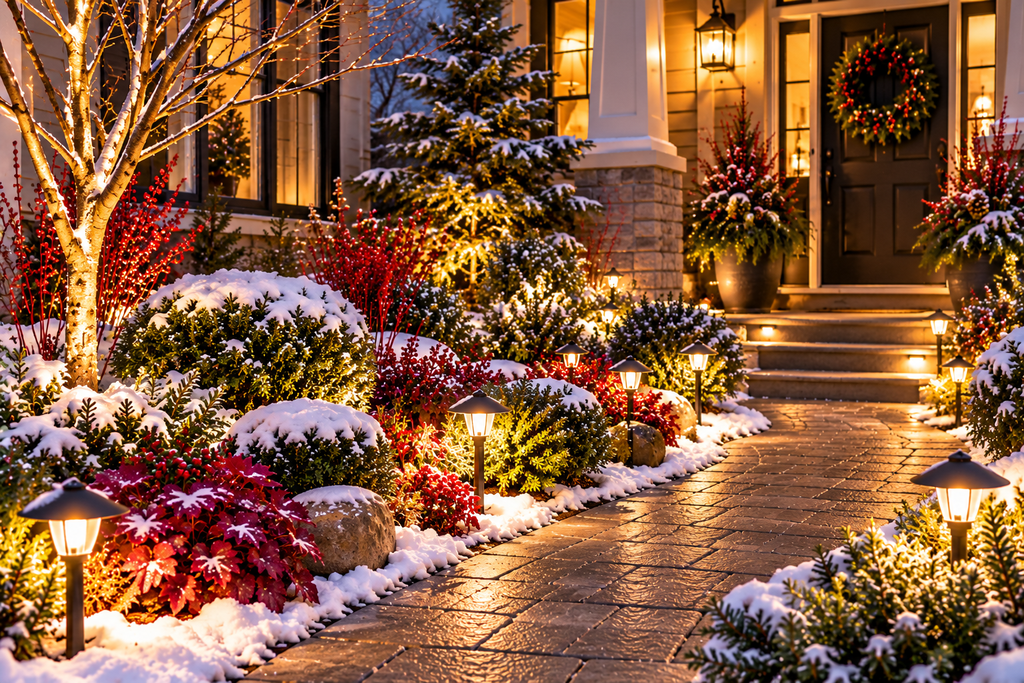
Low-voltage LED landscape lighting does more for a winter yard than almost any plant, since winter nights are long. Uplight a textured tree trunk or a stand of grasses, and put small path lights along the walkway where ice is likely. Use fixtures rated for outdoor use and plug into a GFCI-protected outlet. If you’re running anything beyond a simple plug-in kit, such as hardwired lines or transformer wiring, have a licensed electrician handle it.
Solar lights have a hard time in winter. Short days, low sun angle, and snow cover on the panel cut output sharply, so don’t expect them to deliver much light in December. Plug-in or low-voltage systems are more reliable.
17. Wrap trees and shrubs in lights with a plan
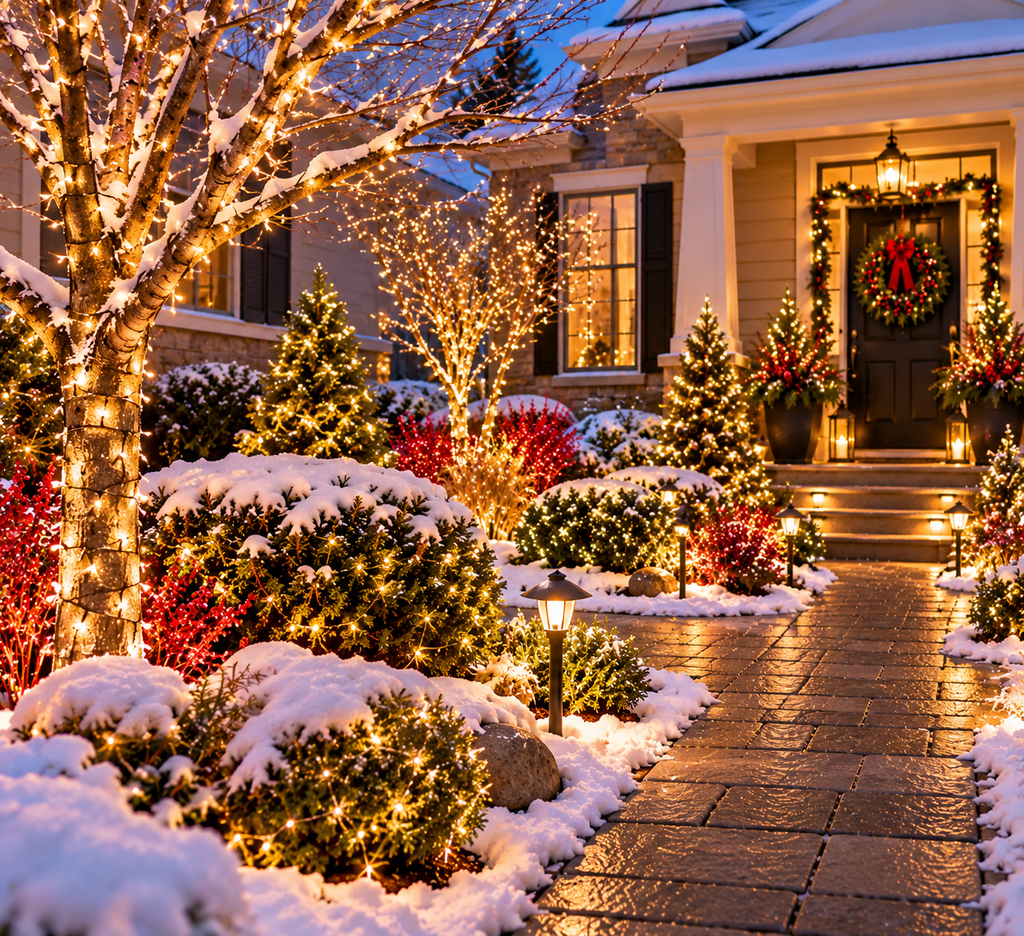
String lights look best when they follow a structure. Wrapping the trunk and main branches of a deciduous tree, or running lights along the top of an evergreen hedge, gives clear shape. Use warm-white LEDs rated for outdoor use. Don’t wrap lights tightly around growing branches and leave them for years. Remove them in spring so the bark isn’t girdled as the branch grows.
18. Make ice lanterns
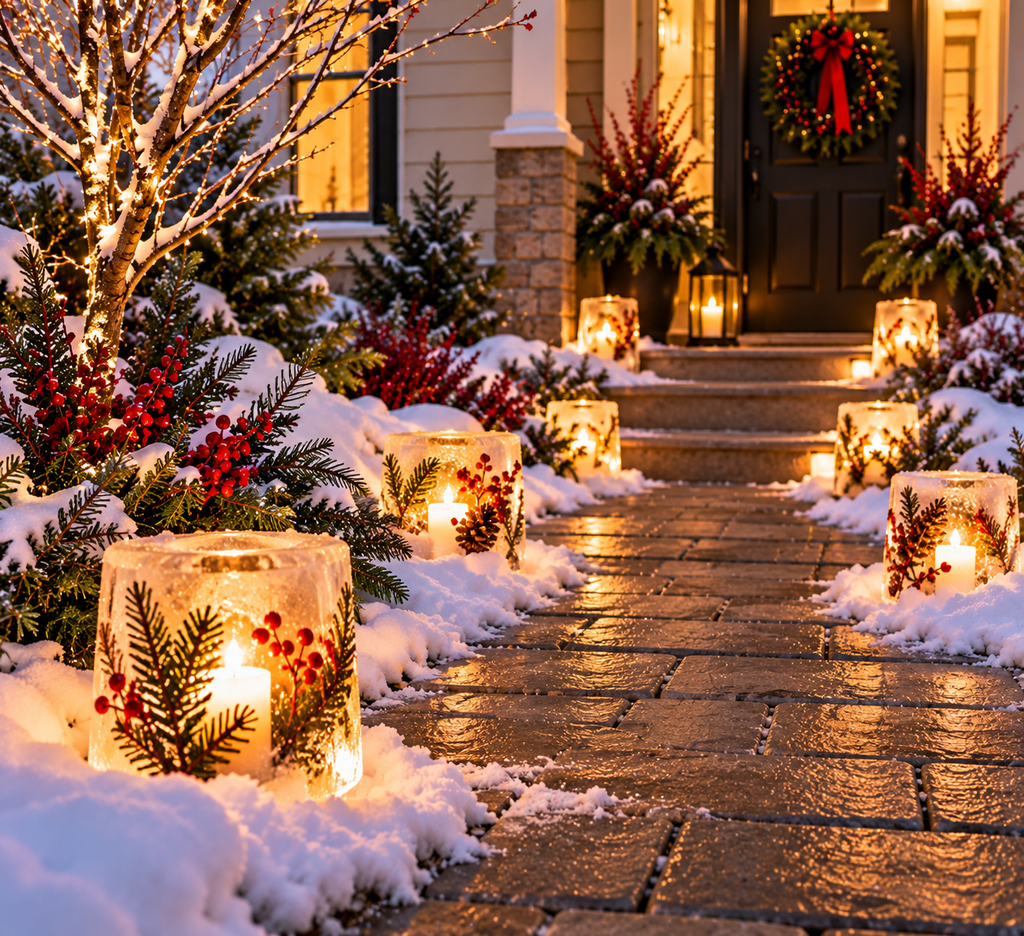
Ice lanterns are among the cheapest winter features you can build. Fill a plastic bucket or a balloon with water and leave it outside until it freezes, which is quickest when temperatures stay well below freezing. The usual method is to let it freeze partway, then remove the unfrozen center so you have a hollow shell. Place an LED tea light inside. Skip real candles in windy conditions or near anything flammable. Lanterns will last until a thaw, and they work best in climates where freezing is dependable.
19. Set up a bird-friendly corner
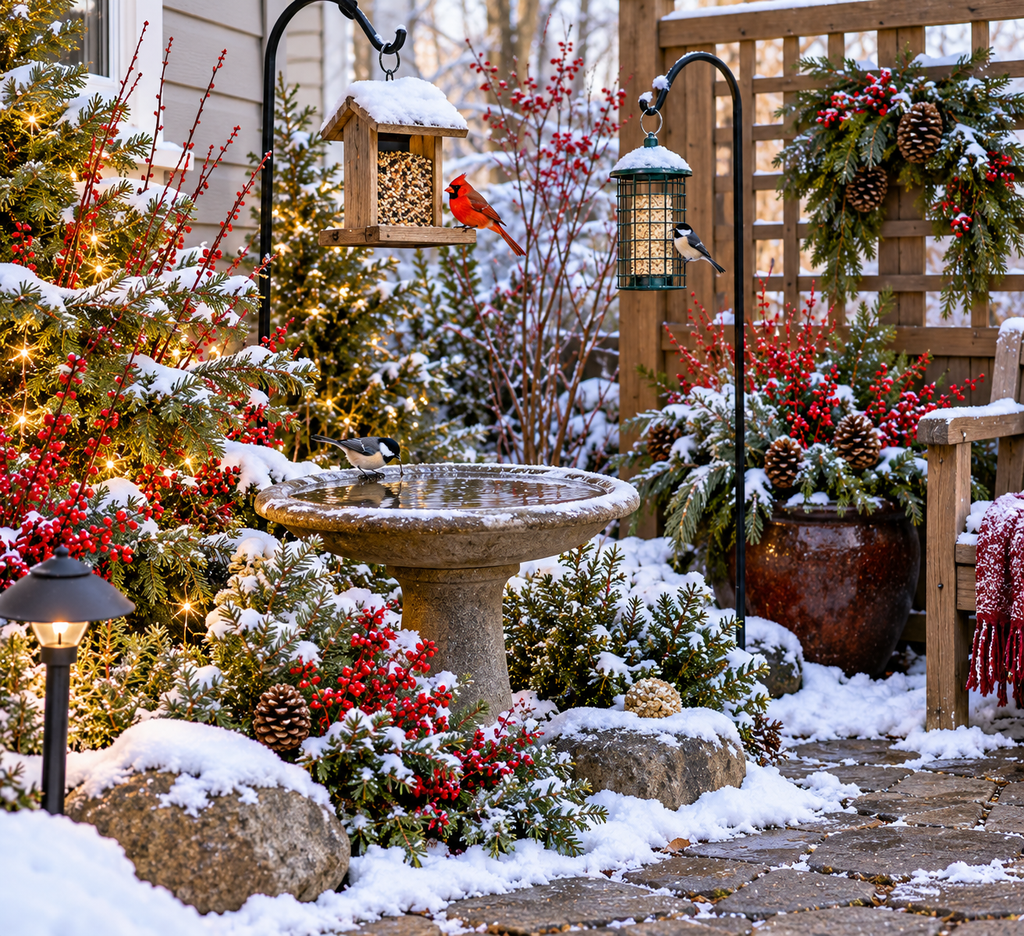
Winter wildlife adds movement to a still yard. Berried shrubs, seed heads, a dense evergreen for shelter, and a feeder or two bring birds close enough to see from a window. Place feeders where birds have cover nearby but cats and hawks don’t, and clean them regularly to reduce the spread of disease. A shallow heated birdbath is another draw, since open water is scarce when it freezes. Use only a bird-safe, outdoor-rated heated bath, never add antifreeze or salt to water, and keep any electrical cord protected.
Care That Keeps the Plants Alive
20. Protect plants from salt, wind, and snow load
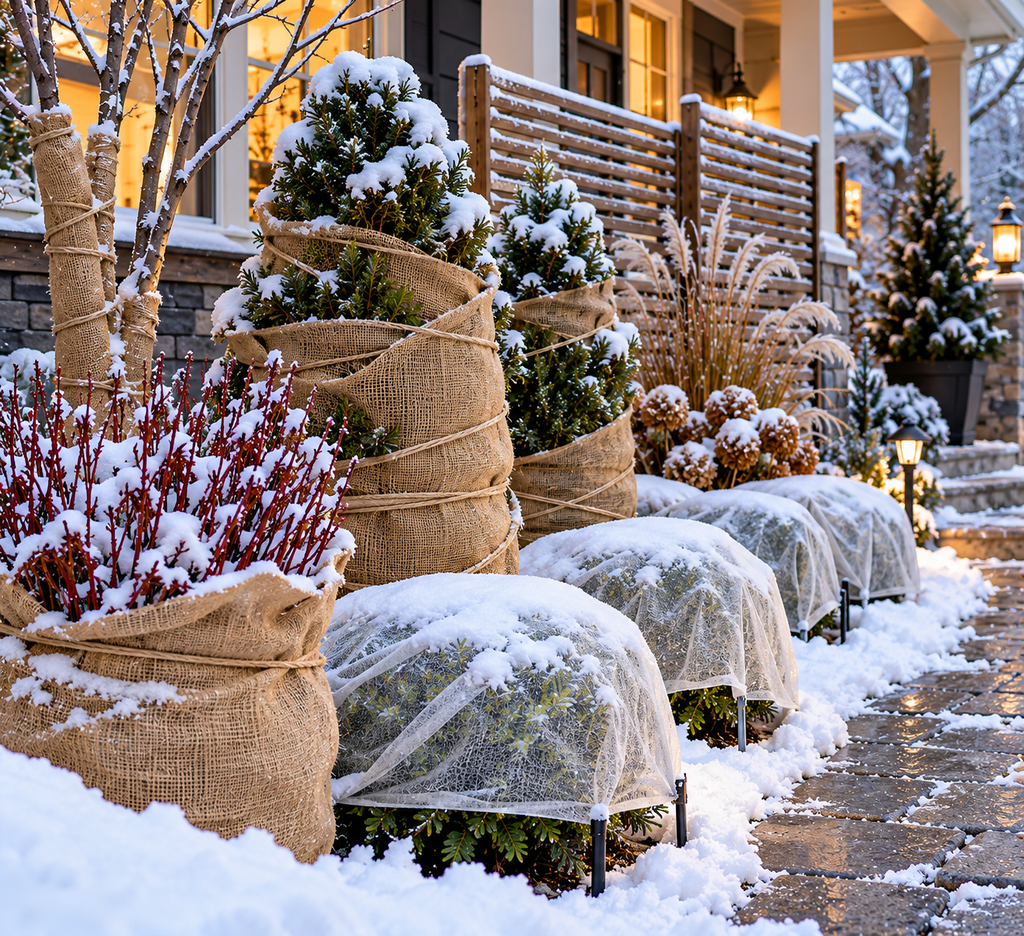
This is the least glamorous idea on the list, and probably the one that saves the most money. A few problems recur in cold climates:
- De-icing salt. Salt spray and salt-laden snow piled on beds can burn evergreens and damage roots. Where possible, use a pet- and plant-safer alternative on walkways, keep shoveled snow away from plantings, and choose salt-tolerant plants (some junipers and ornamental grasses handle it better than boxwood or yew) for beds near the road.
- Wind and winter sun. Broadleaf evergreens such as boxwood, rhododendron, and holly can lose moisture through their leaves when the ground is frozen and roots can’t replace it. A burlap screen placed on the windward side, not wrapped tightly around the whole plant, can reduce that. Some gardeners use anti-desiccant sprays, but the evidence for their effectiveness is mixed, so check your extension service’s current advice before spending money on them.
- Snow load. Tie multi-stemmed upright evergreens loosely in late fall so branches don’t splay under heavy snow. When snow piles up, brush it off gently from below with a broom, upward and not down. Frozen, brittle branches can snap if you shake or hit them. Never chip ice off a branch.
- Watering. Evergreens that went into winter dry can suffer. If fall was dry, water deeply before the ground freezes.
What About Winter Landscaping in Bloxburg?
Some of the searches that lead here are about Welcome to Bloxburg, the Roblox building game, and winter landscaping there is a different kind of project. The in-game version has its own tools and item lists, and those change with game updates, so check the current options inside the game rather than relying on a fixed list. The design logic from real landscaping still carries over:
- Group evergreen-style trees and bushes near the house for mass.
- Use a path or fence line to give the lot shape.
- Add lighting, a bench, and a few seasonal props near the entry as focal points.
- Stick to a limited palette of whites, deep greens, and one or two warm accents such as red or gold.
Since game details, items, and seasonal events can change, any step-by-step Bloxburg guide should be checked against the current version before publication.
Which Ideas Fit Which Yard?
Not every idea suits every property. A rough way to choose:
- Small front yard with a short walkway: evergreen shrubs, a couple of containers at the door, and path lighting. Skip the wattle fence and log pile.
- Large yard with mostly lawn: bark or branch color, grasses, a berry shrub or two, and a bird-friendly corner. Large masses read better than scattered small ones.
- Cold, snowy region: emphasize structure, stone, evergreens, and salt-tolerant plants. Count on pansies only in early winter.
- Mild-winter region: hellebores, camellias (where hardy), pansies, and winter-flowering shrubs can give real bloom.
- Rental or limited budget: container arrangements, cut-greens pots, ice lanterns, and a bundle of poles. All are removable and cheap.
Frequently Asked Questions
Can I plant shrubs and trees in winter?
It depends on your ground. Where the soil stays workable (not frozen solid), dormant planting is possible for many trees and shrubs. Where the ground freezes hard, wait until it thaws. Evergreens planted late in fall need good watering before freeze-up.
Will frost kill my winter containers?
Pansies, violas, ornamental kale, and hardy evergreens tolerate frost. Tender annuals such as petunias and geraniums do not. If a very hard freeze is forecast, move pots against the house or into a garage overnight.
When should I cut back grasses and dogwood?
Late winter to early spring, before new growth begins, is the usual timing for both. Cutting back earlier removes the winter interest you planted them for.
Are cut evergreen boughs safe to use around pets?
Some are mildly irritating or toxic if chewed, and yew is among the more dangerous. If you have a dog or cat that chews plants, check each species with your veterinarian or the ASPCA’s plant list before using it.
Key Takeaways
Winter landscaping works when each part of the yard has a job. Evergreens give mass, bark and berries give color, stone and branches give shape, and lighting gives the long nights something to look at. Start with the gap you saw in your own yard, whether that’s height, color, or definition, and fix it with one or two ideas before adding more. Check your hardiness zone and local conditions first, keep salt and wind off the plants you care about, and save heavier projects such as retaining walls or hardwired lighting for the right permits or professionals.

About Syprose Kiche
Syprose Kiche is the creator and writer behind My Besuited Home, a practical home and garden website covering DIY projects, gardening, lawn care, landscaping, home improvement, and outdoor living. She focuses on turning everyday homeowner questions into clear, practical guides backed by careful research and useful real-world considerations.