
Purple is a hard colour to judge from a nursery tag. The word can mean a blue-violet salvia, a pinkish-magenta coneflower, or a pansy so dark it reads as black. Those plants behave very differently once they are in the ground. Deep shades vanish in shade and at a distance. Pale lavenders wash out in hard midday sun. Blue-leaning violets can look flat grey on a cloudy day and almost glow at dusk. A bed built around the wrong purple ends up muddy or strangely dull.
This list sorts fifteen reliable purple flowers by what they need and what they do. Each entry says which shade of purple you actually get, where it grows well, and where it tends to go wrong. Later sections cover low-growing, tall, container and pollinator choices, plus the planting mistakes that waste the most money.
Why Purple Behaves Differently From Other Garden Colours
Purple sits between blue and red, and which way a particular plant leans changes how it works in a border.
Blue-purples (lavender, salvia, catmint, delphinium) look cool and recede visually. They make a small garden feel deeper, and they blend easily with greens and greys.
Red-purples (coneflower, petunias in magenta shades, many alliums) look warmer and advance toward the viewer. They hold their own beside orange and gold.
Light matters as much as pigment. In low evening light, human vision becomes more sensitive to blue and violet and less sensitive to red. This is known as the Purkinje shift. Blue-violet flowers keep glowing after reds have gone dark, so they are a good choice near a patio or window you use after dinner.
Dark purples need a pale backdrop. A deep violet pansy against dark mulch nearly disappears, but the same flower beside silver foliage or a light stone edge stands out. Yellow, chartreuse and white all sit opposite or near purple and make it look more saturated, which is why those combinations show up so often in well-planned borders.
Quick Reference: Fifteen Purple Flowers at a Glance
Heights, bloom times and hardiness zones vary by cultivar and region. Treat these as typical ranges and check the plant tag for the variety you buy.
| Plant | Light | Type | Typical height | Main bloom | Typical USDA zones |
| English lavender | Full sun | Perennial shrub | 1–3 ft | Early to midsummer | 5–8 |
| Salvia ‘May Night’ | Full sun | Perennial | 18–24 in | Late spring, early summer | 4–8 |
| Catmint | Full sun | Perennial | 1–3 ft | Late spring to fall with trimming | 3–8 |
| ‘Purple Sensation’ allium | Full sun | Bulb | 2–3 ft | Late spring | 4–8 |
| Purple coneflower | Full sun | Perennial | 2–4 ft | Summer into fall | 3–8 |
| Russian sage | Full sun | Perennial | 3–5 ft | Mid to late summer | 4–9 |
| Blazing star (Liatris) | Full sun | Perennial (corm) | 2–4 ft | Midsummer | 3–9 |
| Verbena bonariensis | Full sun | Tender perennial / annual | 3–5 ft | Summer to frost | 7–11 |
| Petunia | Full sun | Annual | 6–18 in | Spring to frost | Grown as annual |
| Delphinium | Full sun, cool summers | Short-lived perennial | 4–6 ft | Early summer | 3–7 |
| Hardy geranium ‘Rozanne’ | Sun to part shade | Perennial | 12–24 in | Early summer to frost | 5–8 |
| Columbine | Part shade | Perennial | 1–3 ft | Spring | 3–8 |
| Foxglove | Part shade | Biennial | 3–5 ft | Late spring, early summer | 4–8 |
| Ajuga | Part to full shade | Perennial groundcover | 4–8 in | Spring | 3–9 |
| Pansy / viola | Sun to part shade, cool weather | Cool-season annual | 4–8 in | Cool seasons | Grown as annual |
Purple Flowers for Full Sun
“Full sun” means six or more hours of direct light a day. Most of the plants in this group also tolerate heat and some drought once established, which makes them useful for exposed beds, slopes and the hot side of a house.
1. English Lavender (Perennial, Pollinator-Friendly, Container-Capable)
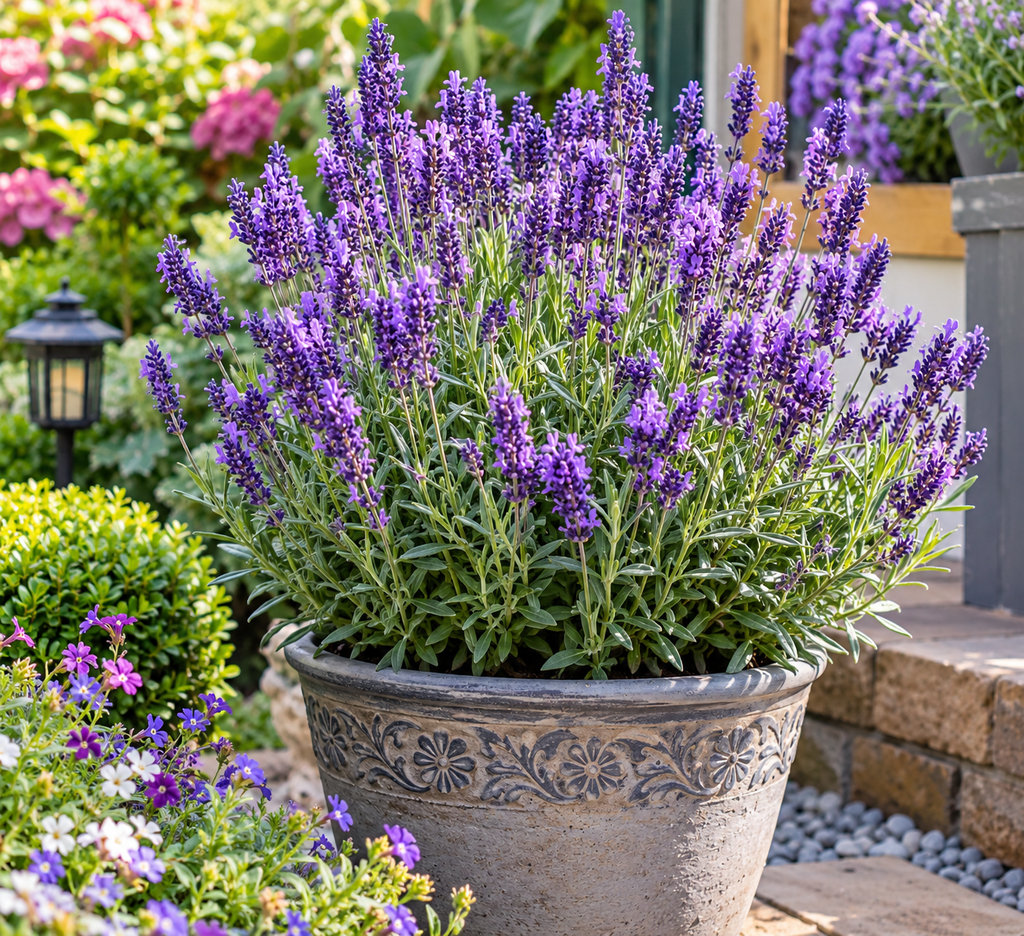
Lavender is a woody shrub rather than a true perennial, and that explains most of its problems. It wants sharp drainage, full sun and soil that is neutral to slightly alkaline. It does not want rich soil, frequent watering or a mulch of wet bark chips piled around the crown. Wet winter soil kills far more lavender plants than cold does.
English types (Lavandula angustifolia) such as ‘Hidcote’ and ‘Munstead’ are the hardiest, generally into zone 5. Their flowers are a true blue-violet. The larger lavandins are showier but usually less cold hardy. Spanish lavender, with its rabbit-ear bracts, is more tender still.
In heavy clay, plant on a raised mound or in a raised bed, or choose a different plant. Prune lightly after the first flush of flowers, cutting into green growth, and avoid cutting back to bare wood, which often does not resprout. Bees work the flowers heavily. Lavender is also listed as mildly toxic to cats and dogs if eaten in quantity.
2. Salvia ‘May Night’ (Perennial, Pollinator-Friendly)
‘May Night’ is a woodland sage hybrid (Salvia × sylvestris) with upright spikes of deep violet-blue over compact mounds of foliage. It is one of the most dependable purple perennials for a first-year border because it asks for very little: sun, decent drainage and a trim.
The trim is the part people skip. After the first flush of flowers fades in early summer, cutting the whole plant back by about a third to a half stimulates fresh foliage and a second round of bloom later in the season. Left alone, it flops and sets seed.
Deer and rabbits usually leave salvias alone because of the scented foliage, though no plant is deer-proof in a hungry year. Bees and hummingbirds visit the flowers.
3. Catmint (Perennial, Low to Medium, Pollinator-Friendly)
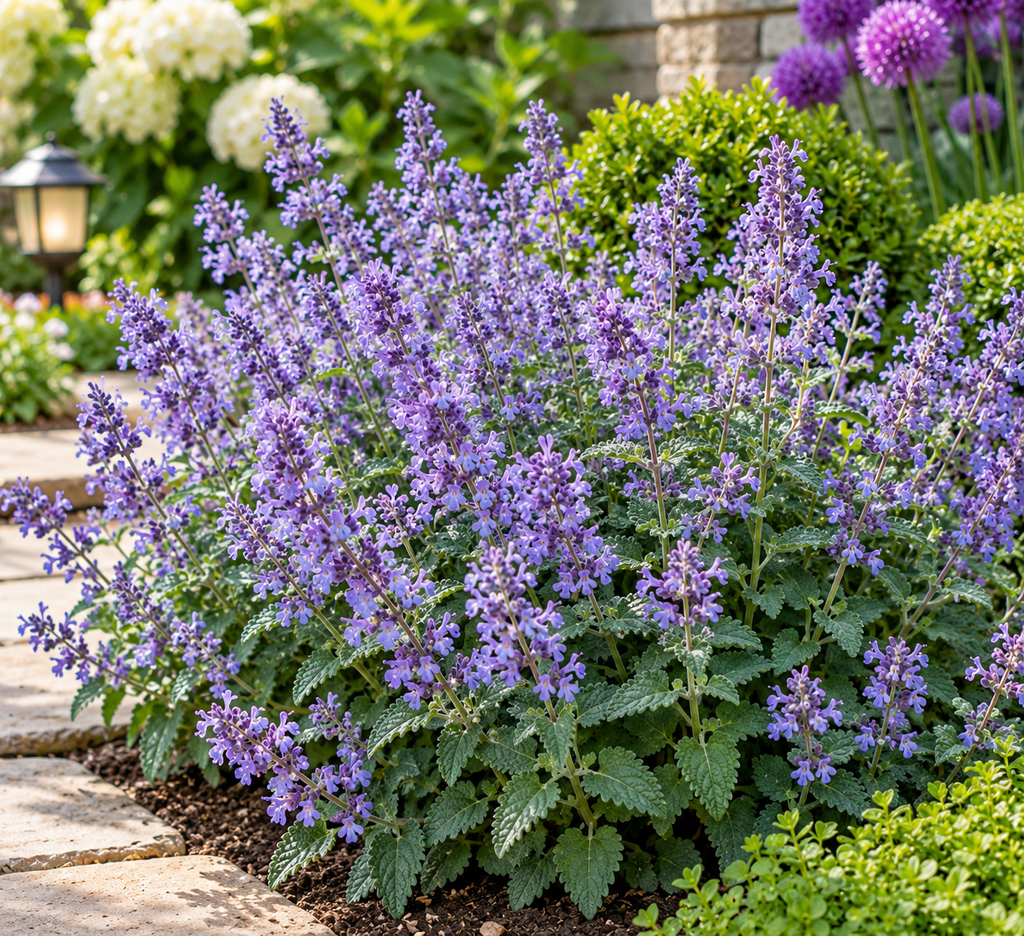
Catmint (Nepeta) bridges the gap between lavender’s look and a plant that tolerates ordinary garden soil. It forms a soft grey-green mound covered in lavender-blue spikes in late spring, and it will often bloom again if sheared after the first flush.
Size is where buyers get caught. Names are misleading, and some “low” selections still reach two feet and spread wider than that. Compact cultivars suit path edges and the front of a border; larger ones belong mid-border or beside roses, where the soft purple covers bare lower stems.
Cats often react to catmint, and the plant can end up flattened in spots where neighbourhood cats lie down in it. Ordinary garden catmints are generally less appealing to cats than true catnip, but results vary. Bees love it.
4. ‘Purple Sensation’ Allium (Bulb, Tall, Pollinator-Friendly)
Alliums give you a violet globe on a bare stalk, floating above everything else in late spring, when much of the border has not yet filled in. ‘Purple Sensation’ is a classic choice: a tight, rich red-violet sphere of roughly four inches on a stem about two to three feet tall.
There is one design catch. The strappy foliage starts yellowing around bloom time and looks untidy for weeks. Plant alliums behind or between leafy perennials, such as hardy geraniums or catmint, so the new growth hides the fading leaves.
Plant the bulbs in fall. A common rule of thumb is a planting depth of about three times the bulb’s height, and spacing of several inches between large bulbs. Squirrels and deer generally avoid them. All parts of alliums are toxic to cats and dogs if eaten.
5. Purple Coneflower (Perennial, Pollinator-Friendly)
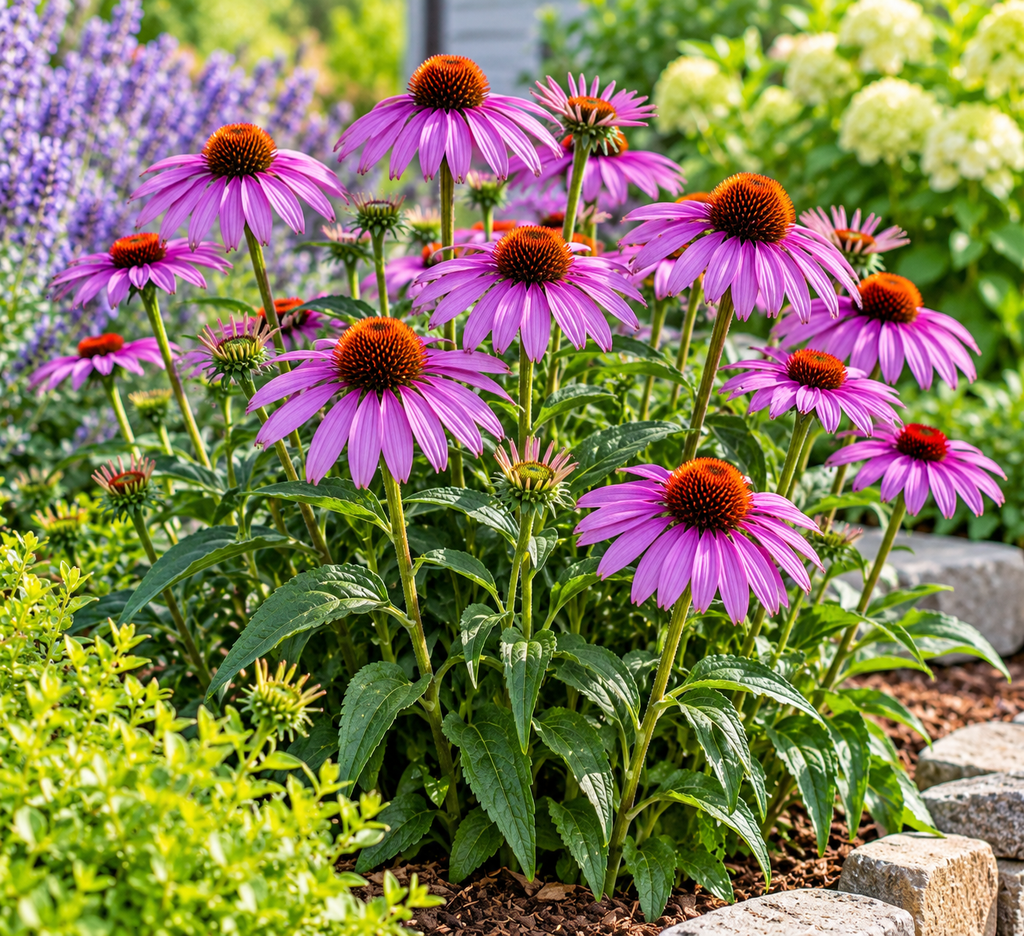
Echinacea purpurea is more pink-magenta than true purple, with drooping petals and an orange-bronze central cone. It blooms from midsummer into fall and tolerates heat, humidity and poor soil better than many border perennials.
Pollinators use the flowers, and birds such as goldfinches eat the seeds, so leaving the spent seed heads standing through autumn serves a purpose beyond tidiness.
The species is generally longer-lived than the flashy double and orange or red hybrids, which often fade within a few years in colder or wetter gardens. If a coneflower comes up with twisted, green, frilly petals, that can be aster yellows, a disease spread by leafhoppers with no cure. Pull and discard the plant rather than composting it.
6. Russian Sage (Perennial, Tall, Drought-Tolerant)
Russian sage (Perovskia atriplicifolia, now often classified as Salvia yangii) forms a hazy cloud of lavender-blue flowers on silver-white stems from mid to late summer. It handles heat, wind, poor soil and drought, and is among the most useful purples for a hot, dry slope.
It dislikes pampering. Rich soil and generous watering make it floppy, and wet feet cause root rot. Cut stems back hard in early spring, to roughly six to twelve inches above the ground, once new growth appears at the base. Pruning in fall removes winter structure and can expose crowns to cold damage.
Plant it behind lower plants, because the lower stems tend to look sparse. Stachys, salvia or catmint planted in front solve that.
7. Blazing Star / Liatris (Perennial, Tall, Pollinator-Friendly)
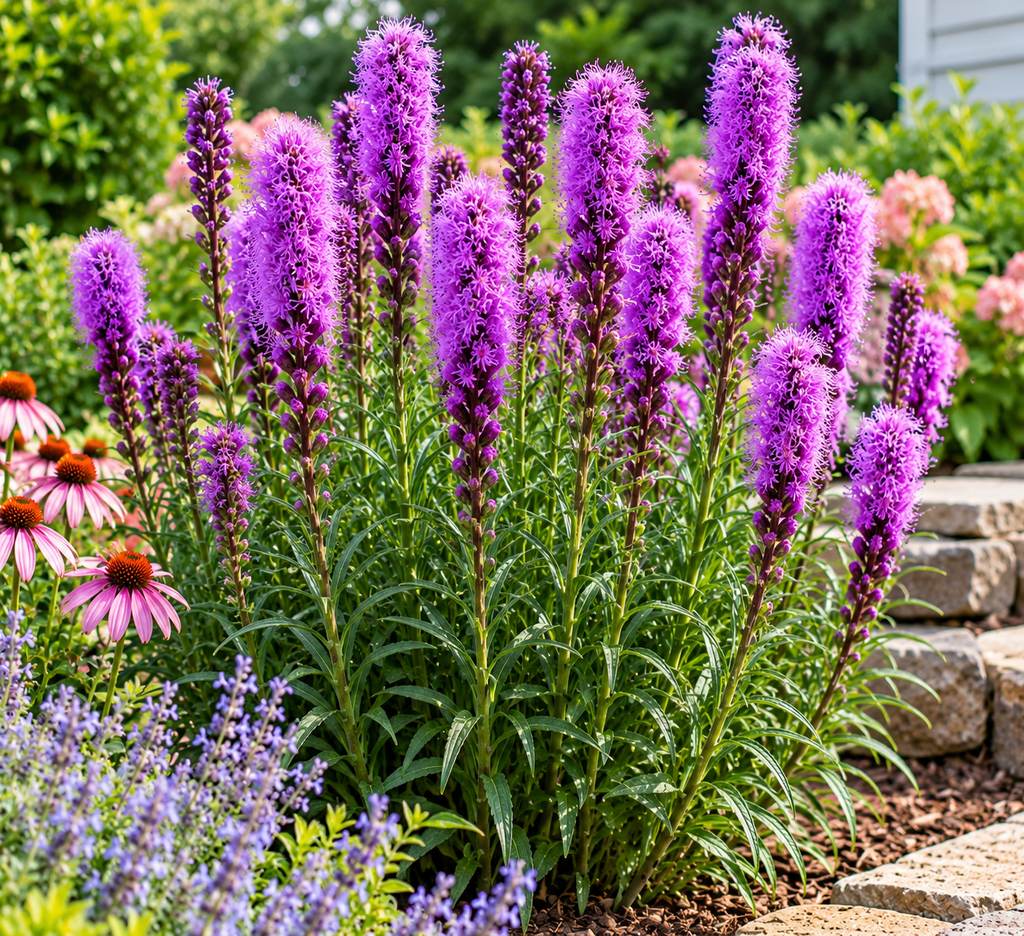
Liatris (Liatris spicata) sends up stiff spikes of fuzzy rose-purple flowers that open from the top down, which is unusual and gives the spike a long, staggered bloom. Butterflies, including monarchs, visit it, and its vertical shape works well against rounded plants such as coneflowers or black-eyed Susans.
It grows from a corm, and it tolerates moister soil than many prairie plants. It can look thin as a single plant, so grouping three to five gives a better effect. Stems may lean after heavy rain, and a plant that is shaded or overfed will often need support.
8. Verbena bonariensis (Tender Perennial or Annual, Tall, Pollinator-Friendly)
This plant is nearly transparent. It sends up wiry, branching stems to four feet or more, topped with small clusters of bright purple flowers, and you can plant it in front of other flowers without blocking them. It is ideal for bringing height into a bed without creating a wall.
It is a perennial in warmer zones (generally around zone 7 and up) and is often grown as an annual elsewhere, but it self-seeds enthusiastically and may return from seed in colder gardens. Butterflies and bees use the flowers, and the seedlings are easy to pull where unwanted. In some regions it self-sows aggressively enough to be a concern, so check local invasive-species guidance before planting it near natural areas.
9. Petunia (Annual, Container, Low-Growing)
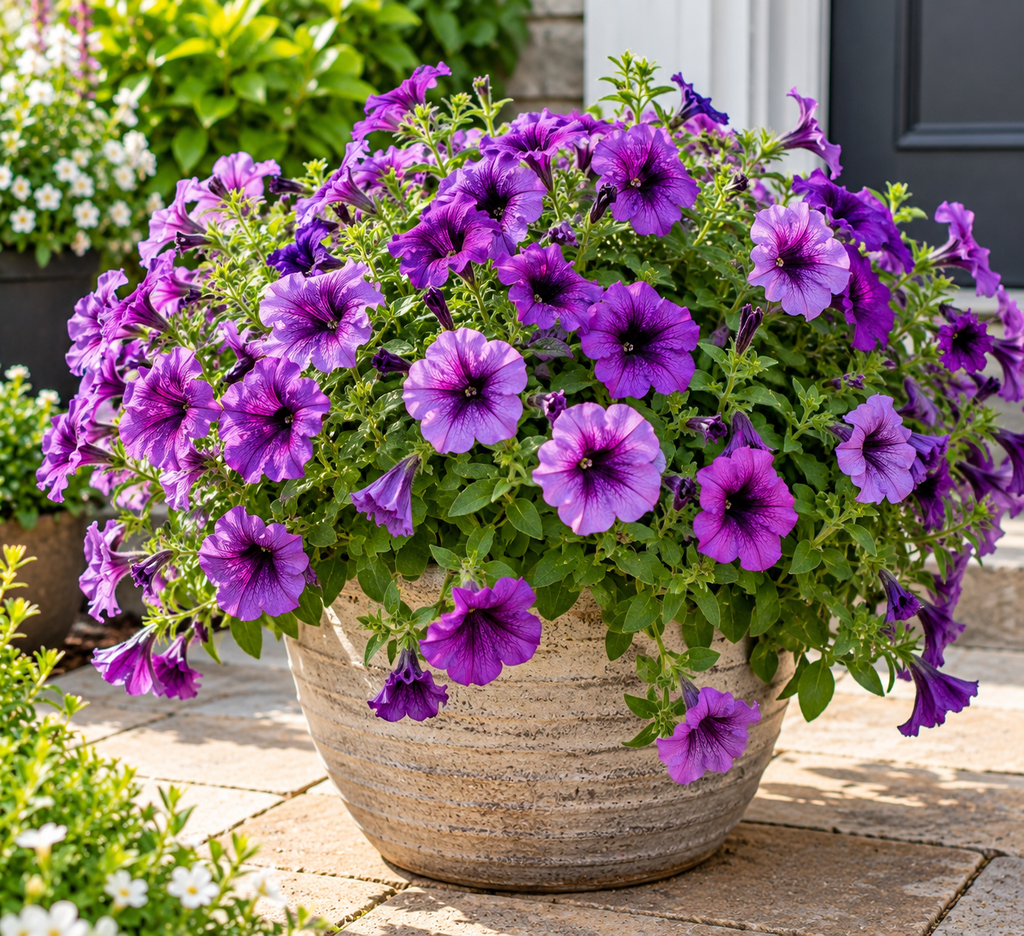
Petunias are the workhorse annual for purple in sunny pots, hanging baskets and window boxes. Purple varieties range from pale lavender through deep velvet violet to near-black.
Two points affect results. First, they are heavy feeders, and a plant in a container with only the potting mix’s initial nutrients will usually fade by midsummer without regular fertilizer. Second, the types differ: older grandiflora types need deadheading to keep blooming, while many modern spreading and trailing series are bred to bloom without it.
Petunias do poorly in constantly wet soil and appreciate a sunny, airy spot. If a plant gets leggy and sparse in midsummer, a hard trim and a feeding often restore it within a few weeks.
10. Delphinium (Short-Lived Perennial, Tall)
Delphiniums are the tall, dramatic purple. Spires of blue-violet flowers can reach four to six feet, and nothing else in a purple palette is as architectural. They are also the most demanding plant on this list.
They like cool summers, rich well-drained soil, steady moisture and shelter from wind. In hot, humid climates they decline quickly. Tall stems usually need staking before they get large, because wind and rain can snap them in an afternoon. Slugs and snails favour the young shoots in spring.
Cutting spent flower stalks to the base can encourage a smaller second bloom in some cultivars. Expect plants to last only a few years, so some gardeners treat them as temporary stars and replace them periodically. All parts are toxic if eaten, which matters if children or pets use the garden.
Purple Flowers for Partial Shade
Partial shade usually means three to six hours of sun, or a day of dappled light under tall trees. Deep purples that vanish in full shade work better here if paired with pale or variegated foliage.
11. Hardy Geranium ‘Rozanne’ (Perennial, Low to Medium, Sun or Part Shade)
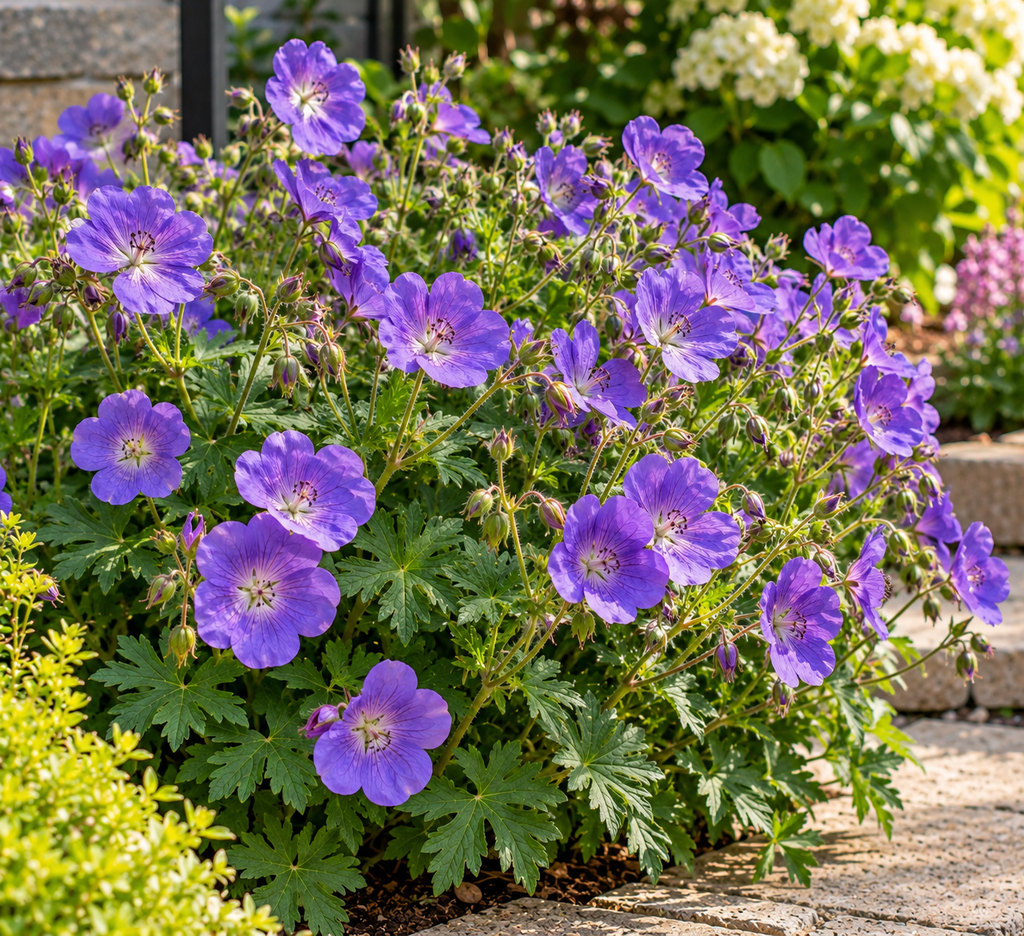
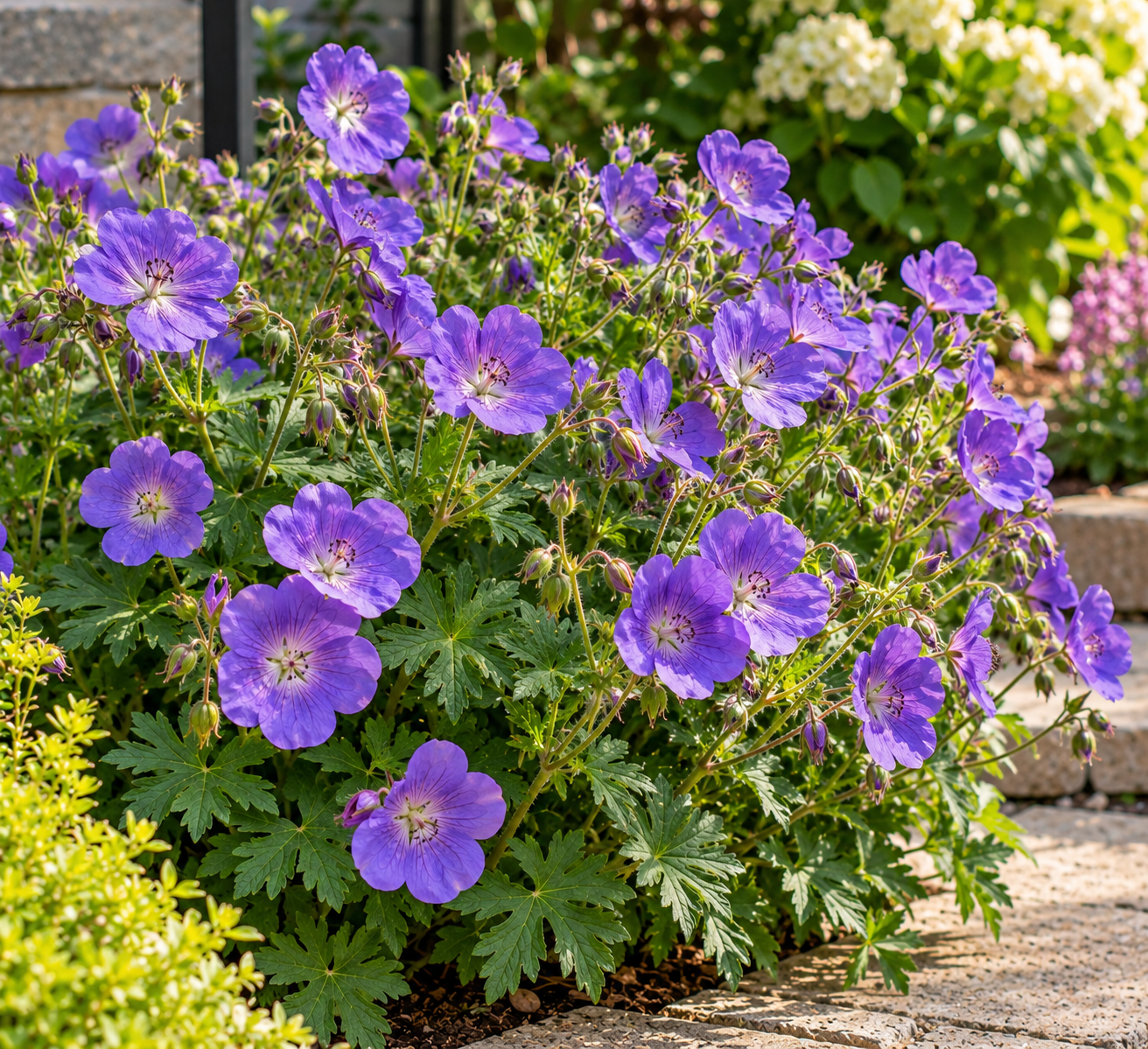
This is a hardy geranium (cranesbill), not the bedding Pelargonium sold as “geranium” for pots. ‘Rozanne’ produces saucer-shaped blue-violet flowers with pale centres from early summer, and under good conditions keeps going until frost. It is sterile, so it does not put energy into seed, and that is the reason the bloom runs so long.
It forms a sprawling mound about a foot to two feet tall and spreads wider. In hot climates, it often looks best with afternoon shade. A shear in midsummer if the plant looks tired usually produces fresh growth. It weaves between other plants and covers the bare ankles of taller flowers, so it is useful in a mixed border.
12. Columbine (Perennial, Pollinator-Friendly)
Columbines (Aquilegia) bloom in spring, with spurred, nodding flowers in violet, purple, blue and bicolour combinations. They suit light woodland shade and early-season gardens.
They are short-lived but self-seed freely. Seedlings may not match the parent plant, and cross-pollination between different columbines produces surprises, which some gardeners enjoy and others find annoying. Leaf miners leave pale squiggly trails on foliage in summer. They are mostly cosmetic, and cutting back affected leaves after flowering encourages clean new growth.
Bumblebees can reach the nectar, and hummingbirds visit the red-flowered species more than the purples. Columbine seeds and roots are toxic if eaten.
13. Foxglove (Biennial, Tall, Pollinator-Friendly)
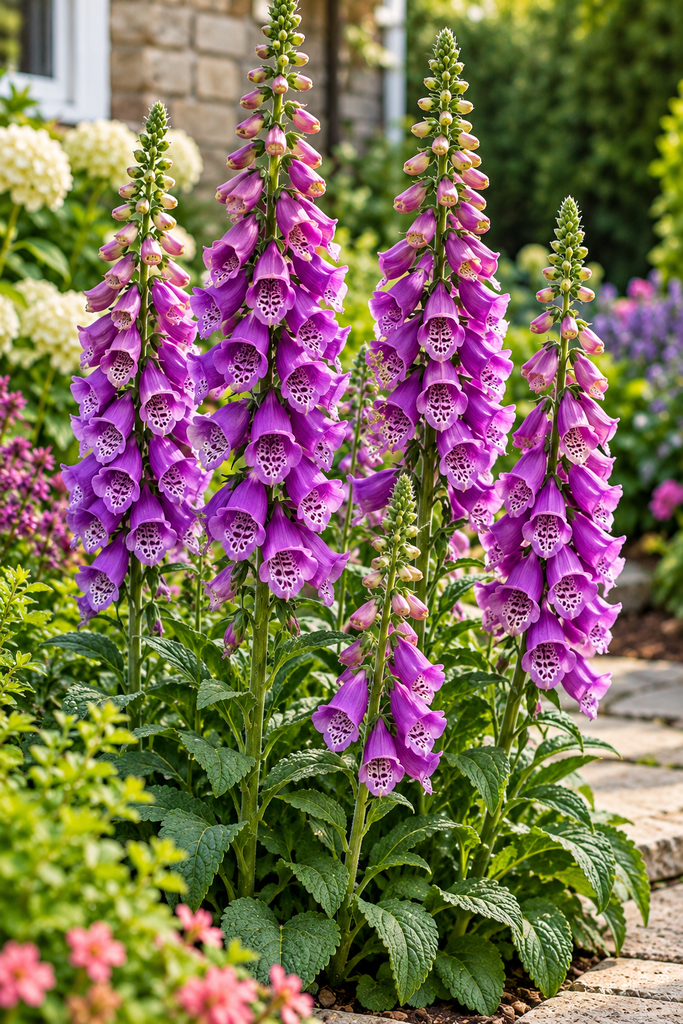
The common foxglove (Digitalis purpurea) is a biennial. It forms a low rosette of leaves in its first year and flowers in its second, then sets seed and dies. Flower colours run from pinkish-purple to deep purple and white, with spotted throats.
To keep foxgloves in the garden, allow some plants to set seed, or plant a few new ones each year so you always have both first-year and flowering plants. Bumblebees are the main visitors to the flowers.
Every part of the plant is poisonous if eaten, and it can affect the heart. Do not plant it where children are likely to chew leaves or flowers, and wear gloves if you have sensitive skin when handling it.
14. Ajuga (Groundcover, Low-Growing)
Ajuga (Ajuga reptans) is a low evergreen to semi-evergreen groundcover with bronze, burgundy or green leaves and short spikes of blue-purple flowers in spring. It fills shady ground under shrubs and trees where grass struggles.
Its weakness is its ambition. It spreads by runners and can move into lawns and out of beds, and in some regions it escapes into woodland. In humid climates, crown rot can leave dead patches in wet summers. Plant it where its edges are contained by a path, a mowing strip or a hard edge, and plan on trimming runners occasionally.
15. Pansies and Violas (Cool-Season Annual, Low-Growing, Container)
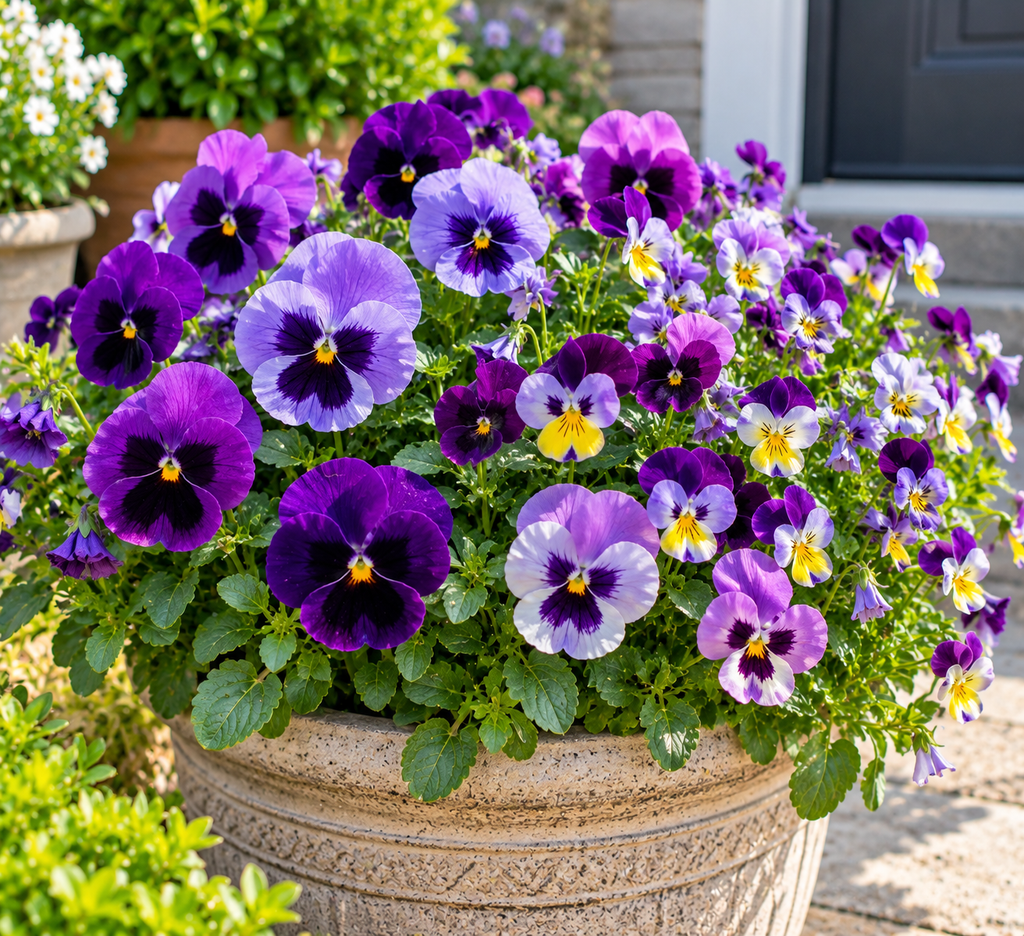
Pansies and violas offer a lot of purple for little money, in shades from pale lilac to nearly black. They are the plant for fall and early spring, when warm-season annuals are not available or are not yet worth planting.
They tolerate light frost, but flower best in cool weather, and many fade once temperatures regularly rise into the high seventies Fahrenheit. In mild-winter regions, planting in autumn gives a long bloom through winter. In colder regions, plant in early spring as soon as the soil can be worked.
Violas have smaller, more numerous flowers and usually tolerate heat and cold slightly better than large-flowered pansies. Pansy and viola flowers are edible, but only if the plants have not been treated with pesticides not labelled for food use, which is not true of most nursery plants.
Choosing by Job: Low, Tall, Container and Pollinator Picks
Not every purple plant suits every spot. These shortlists are drawn from the fifteen above.
Low-Growing Purple Flowers for Edges, Paths and Groundcover
Ajuga, pansies and violas, and hardy geranium handle the front of a bed. Compact catmints and lavenders can also edge a path. The key is spacing, because low plants that spread, such as ajuga and hardy geranium, need a boundary or regular division to keep them in place.
Tall Purple Flowers for the Back of the Border
Delphinium, Russian sage, foxglove, Verbena bonariensis, liatris and the taller coneflowers all reach three feet or more. Use them for height and structure. Verbena bonariensis is the exception that works at the front too, because you can see through it.
Purple Flowers for Containers
The best container performers are petunias and pansies, with lavender as a more permanent choice. Containers dry out faster than ground, which suits lavender if drainage is excellent, and demands steady feeding for petunias.
Other tender plants, such as angelonia (summer snapdragon), are also popular in pots for their upright purple spikes and heat tolerance, though they are not on the main list. For all containers, use pots with drainage holes and a quality potting mix rather than garden soil.
Pollinator-Friendly Purple Flowers
Lavender, salvia, catmint, allium, coneflower, liatris, Verbena bonariensis, columbine and foxglove all attract bees or butterflies. A continuous sequence of bloom matters more than any single species: columbine and allium in spring, salvia and catmint into early summer, then coneflower, liatris, Russian sage and verbena from midsummer to frost. Pollinators need food across the whole growing season, not just one flush.
Avoid broad-spectrum insecticides on or near flowering plants, since they harm bees as well as pests.
Annuals or Perennials: Which Makes Sense?
Choose perennials when you want a bed that fills in and requires less replanting. They cost more at first and take a season or two to reach full size, but they mature into larger clumps you can divide.
Choose annuals when you want fast, season-long colour in pots, gaps in a young border, or a change of scheme from year to year. They need replanting annually but give quick results.
A mix usually works best. Perennials provide the structure, and annuals such as petunias or verbena fill gaps and extend bloom.
Purple Combinations That Tend to Work
- Purple and silver. Lavender, Russian sage and catmint have grey foliage that makes violet flowers look cleaner. This is the safest and most reliable combination.
- Purple and yellow. Yellow coneflowers (Rudbeckia) or coreopsis beside salvia or liatris give strong contrast. Because yellow is purple’s opposite, each colour looks more saturated beside the other.
- Purple and white. White flowers help dark purples show up and brighten shady spots.
- Purple and chartreuse. Lime-green foliage such as certain hostas or heucheras makes deep violets look rich.
Be wary of placing red-purples and blue-purples side by side without a buffer. A magenta coneflower next to a blue-violet salvia can look off, and a neutral plant between them, such as white or silver foliage, solves it.
Common Mistakes With Purple Flowers
Planting dark purples where they cannot be seen. Deep violet disappears in shade and against dark backgrounds. Put them where light can reach them or pair them with something pale.
Giving Mediterranean plants rich soil and frequent water. Lavender, Russian sage and catmint do best in lean, well-drained soil. Overwatering and heavy feeding produce floppy plants and root rot.
Ignoring mature size. A plant that looks small in a one-gallon pot may reach several feet. Check the tag and space accordingly, because crowding invites fungal disease.
Forgetting the second bloom. Shearing salvia, catmint and some geraniums after the first flush often brings a second round. Skipping it leaves tired plants.
Planting toxic plants without thinking. Foxglove, delphinium, allium and columbine can all cause problems if eaten. If young children or pets use the garden, check the ASPCA’s plant lists or ask a local extension office before choosing.
Buying purely by the colour name. “Purple” on a tag can mean a wide range of hues. If matching matters, buy plants in bloom or look at several photographs from different growers.
Questions Readers Often Ask
Which purple flowers bloom the longest?
Hardy geranium ‘Rozanne’ can bloom from early summer to frost because it is sterile. Petunias, and Verbena bonariensis in warm climates, also run through the summer. Catmint and salvia rebloom if you shear them after the first flush.
Do purple flowers work in full shade?
Few do, and those that bloom in shade usually need at least some filtered light. Ajuga, columbine and foxglove cope with part shade. In deep shade, pale foliage plants often look better than flowers that struggle to bloom.
Are purple flowers deer-resistant?
Some are less appealing to deer, particularly aromatic plants such as lavender, salvia, catmint and Russian sage, and alliums. No plant is guaranteed deer-proof, because hungry deer will eat nearly anything. Local extension offices often publish regional resistance ratings.
Key Takeaways
Start with light, because it decides most of the list: lavender, salvia, catmint, allium, coneflower, Russian sage, liatris, verbena, petunia and delphinium need full sun, while hardy geranium, columbine, foxglove, ajuga and pansies cope with part shade. Match the shade of purple to its background, putting dark violets against pale foliage and blue-violets where you will see them at dusk. Give Mediterranean plants lean, well-drained soil, and shear salvia, catmint and geranium after their first bloom for a second round. Add structure with perennials, fill gaps and containers with annuals, and check toxicity before planting foxglove, delphinium or alliums near children or pets.

About Syprose Kiche
Syprose Kiche is the creator and writer behind My Besuited Home, a practical home and garden website covering DIY projects, gardening, lawn care, landscaping, home improvement, and outdoor living. She focuses on turning everyday homeowner questions into clear, practical guides backed by careful research and useful real-world considerations.