
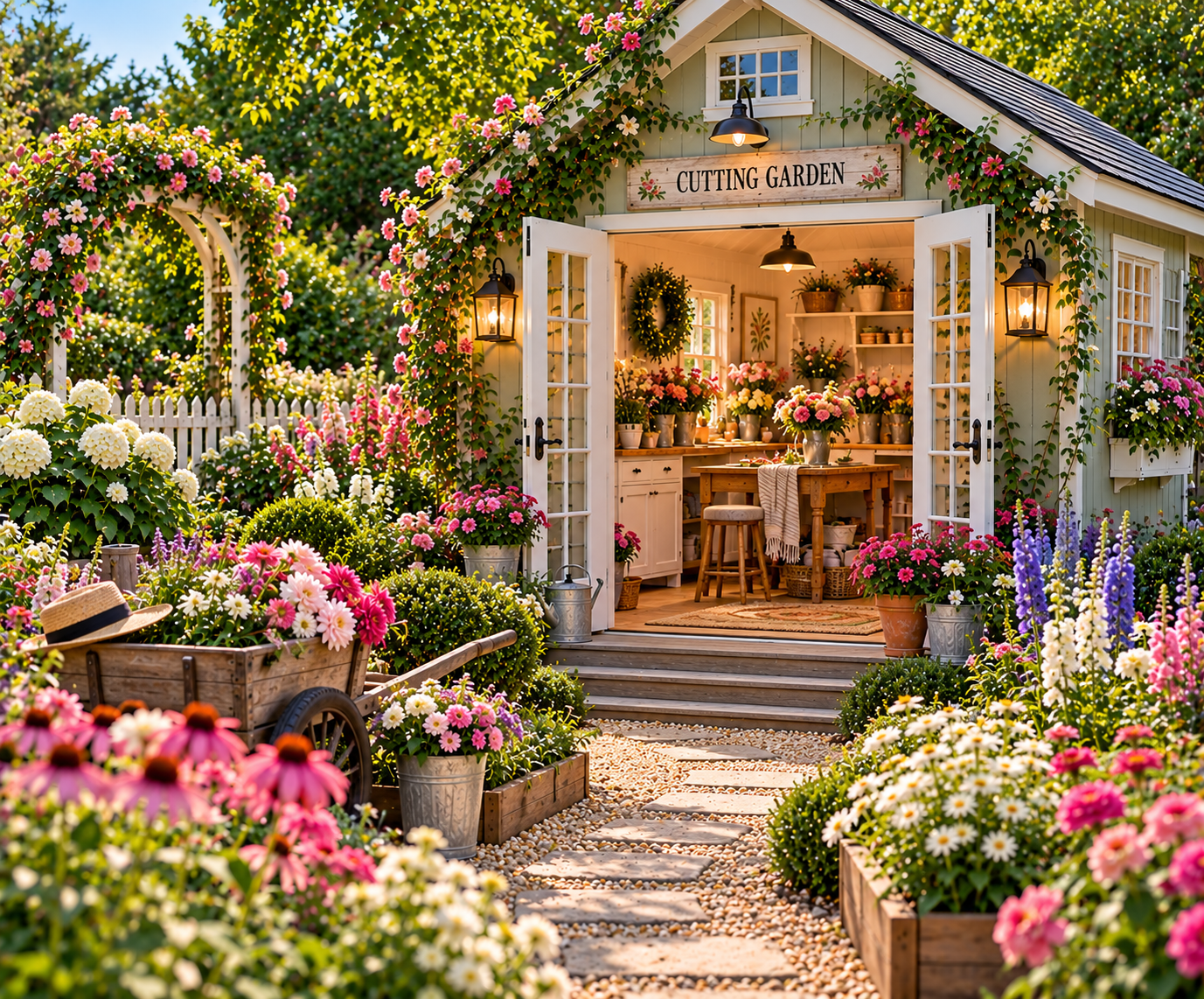
A she shed that sits alone on bare lawn looks like a garden shed with a nicer paint job. The same building with a path leading to it, plants softening its corners and a place to sit outside the door looks like a destination. The structure matters less than most people expect. What surrounds it does most of the work, and that’s where plans tend to go wrong: money goes into the building, and the landscaping is left for “later,” which often means never.
The fifteen ideas below pair a style of she shed with the planting and hardscape that suits it. Each one covers what to plant, where to put it, and what can go wrong. Some of the ideas combine easily, so treat them as a menu rather than a set of rival options.
Before You Choose a Style: Four Site Decisions That Shape Everything
Landscaping around a small building is mostly about conditions, and the conditions are decided before a single plant goes in.
Sun exposure. Watch the site through a full day. Roses, lavender, and most herbs need roughly six or more hours of direct sun to flower well. A shed tucked against a north-facing fence or under tall trees gets far less, and the planting list changes accordingly: hostas, ferns, hellebores, and astilbe for shade; the sun-lovers stay out.
Drainage. A building, especially one sitting on blocks or a gravel pad, can shed a surprising amount of rainwater from its roof. Without gutters, that water lands in a line along the eaves and can erode soil or drown plants planted right underneath. A simple rain barrel, a short gutter run, or a gravel drip strip along the roofline solves most of it.
Distance from the house. A she shed used daily gets walked to in all weather. If it’s more than a short stroll from the back door, the path matters more than any flower bed.
Rules and permits. Many municipalities regulate accessory structures by size, height, and distance from property lines, and adding electricity or plumbing usually triggers separate requirements. Rules vary widely by location, so check with your local building or planning office before you build or place anything. Don’t assume that a small or “temporary” structure is exempt.
1. The Cottage She Shed
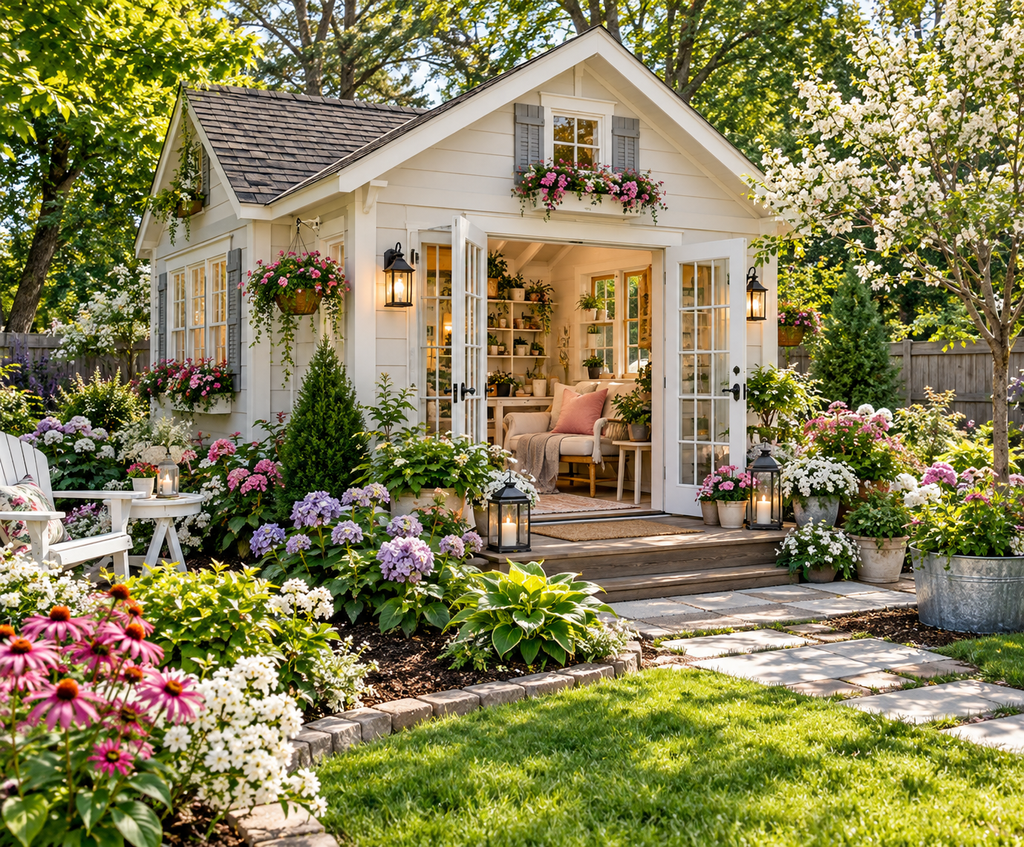
The cottage look is built on contrast between a neat, simple building and loose, abundant planting. Painted board-and-batten siding in a soft color (sage, cream, pale blue, warm gray) works well, with a contrasting door and window boxes.
The planting is where the style lives. Think layers: tall plants at the back or corners, such as delphinium, foxglove, and hollyhock; mid-height perennials like catmint, peonies, and coneflowers in front of them; and low edging plants like lady’s mantle or dianthus where the bed meets the path. The point is for the bed to look generous without being random. A good test is whether something is in bloom from spring through early fall. That takes planning, because most perennials bloom for only a few weeks. Staggering early bloomers (peonies, iris), midsummer plants (coneflower, phlox, daylily) and late performers (sedum, asters) keeps the beds going.
One caution: hollyhocks and foxglove are short-lived or biennial, and foxglove is toxic if eaten, which matters if children or pets use the garden. Both reseed readily, so you can keep them going, but expect them to wander.
2. The Flower-Covered She Shed
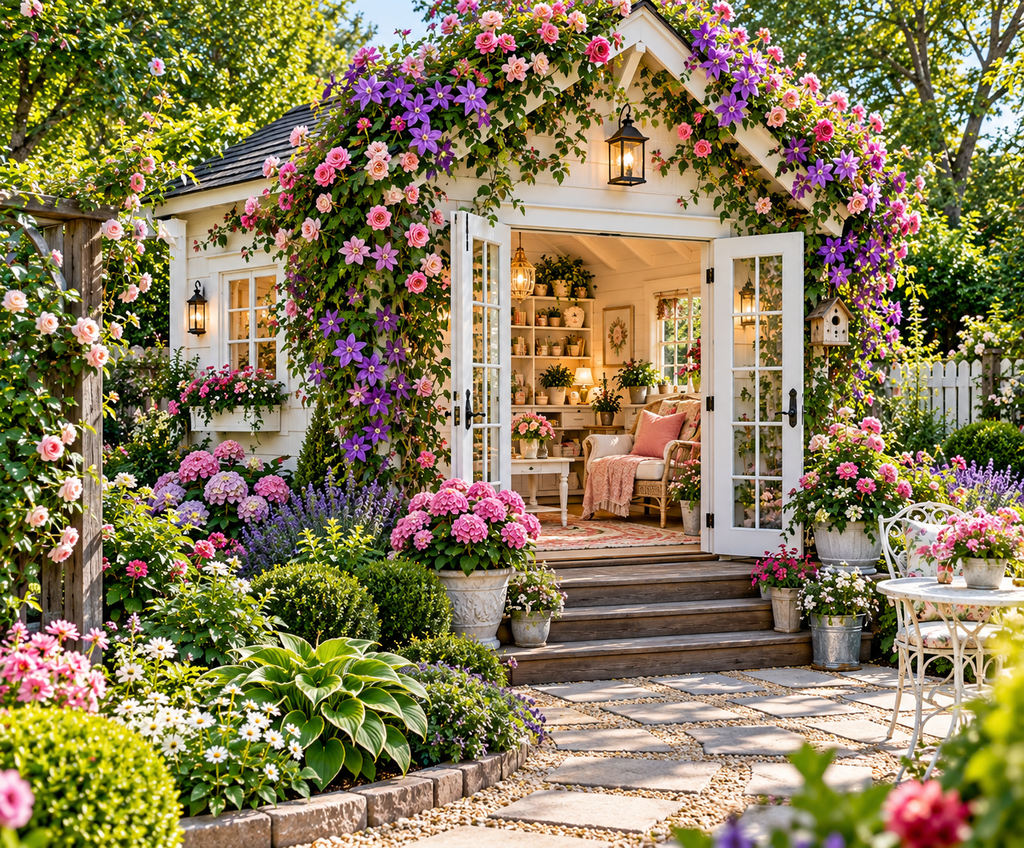
Climbing plants can turn plain walls into a feature, but they can also damage the wall. The key decision is how the plant attaches.
Self-clinging climbers like English ivy and Boston ivy grip with aerial rootlets or adhesive pads, and they can work their way into wood siding, trim, and mortar joints. On a wood-clad shed they’re a poor choice. Twining or scrambling climbers such as clematis, climbing roses, and honeysuckle don’t attach themselves to the wall, so they need support, and that’s an advantage.
The safer approach is to mount a trellis or tensioned wires on the wall, leaving a gap of an inch or two between the structure and the plant so air can move behind the foliage. Poor airflow against a wall encourages mildew and keeps timber damp. Fix the support so it can be unscrewed or hinged away from the wall when the building needs repainting, which it will.
Clematis is a good partner for roses because its roots like cool, shaded soil while the top grows into the sun. Clematis varieties are grouped by pruning type, so check the label when you buy: pruning the wrong group at the wrong time can remove the season’s flower buds.
3. A She Shed Surrounded by Roses
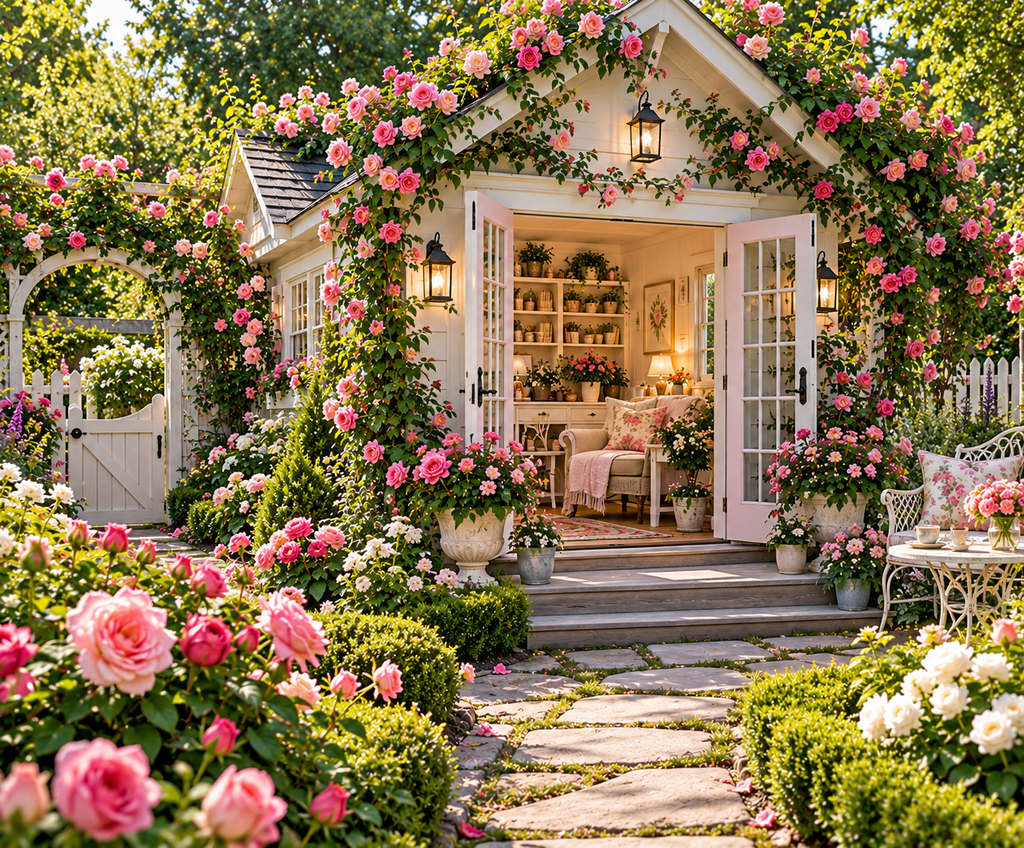
Roses carry a reputation for being difficult, and some are. Others are quite forgiving. The difference comes down to variety choice and a few site fundamentals.
For a mostly hands-off planting, look at modern shrub roses bred for disease resistance, and ask a local nursery or your regional extension service which ones perform in your climate. Black spot and powdery mildew are the usual problems, and both are far worse where air circulation is poor. That means not packing roses tightly against the shed wall and leaving enough space between plants for them to reach their mature width.
Roses want sun, generally at least six hours, and soil with decent drainage. Spacing depends on the variety, so use the mature size listed on the plant tag rather than the size at purchase, which is almost always far smaller.
A practical layout: plant a low-growing or compact shrub rose along the front, climbers on the sides on proper supports, and keep the door side clear. Thorny plants next to an entrance are a hazard to sleeves, skin, and anyone carrying things in or out. Pruning timing differs between once-blooming and repeat-blooming roses, so confirm the type you’ve bought before you cut anything.
4. A Lavender Garden Around the Shed
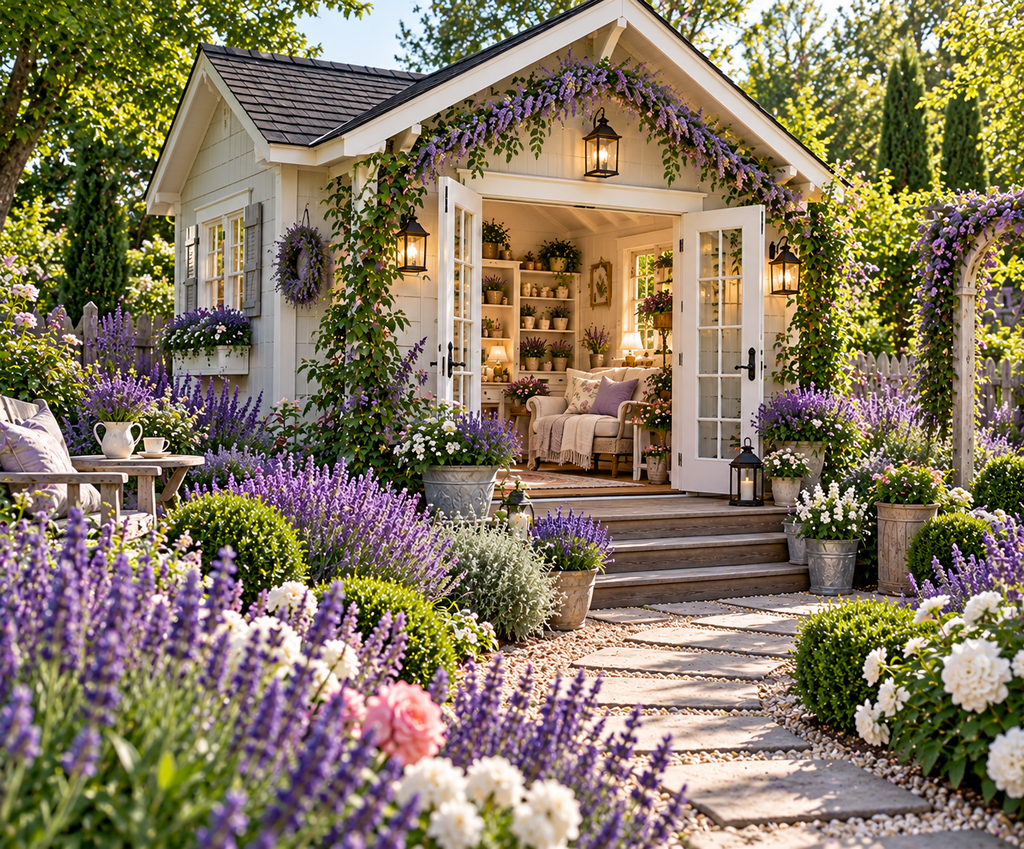
Lavender asks for what many gardens don’t offer: full sun, sharp drainage, and not much else. It’s native to dry, rocky Mediterranean hillsides, and heavy, wet clay is what usually kills it. Roots sitting in saturated soil rot, and no amount of care fixes that.
If your soil is heavy, plant lavender in a raised bed or on a mound, and mix in coarse grit to improve drainage. Avoid rich compost and frequent feeding. Rich soil produces soft, leggy growth and fewer flowers. Mulch with gravel rather than bark, which holds moisture against the crown.
Hardiness varies. English lavender (Lavandula angustifolia) is generally the hardier group, while Spanish and French types prefer milder winters. Check your hardiness zone before choosing.
Lavender also needs regular, modest pruning after flowering to stay compact. Left unpruned it becomes woody and sprawling, and cutting into old bare wood often doesn’t regrow. Trim back the green growth, but not into the leafless woody base.
Placed along a sunny wall or on either side of a path, lavender releases scent when brushed past, which is the best argument for putting it close to the door.
5. A Garden Path That Leads to the Shed
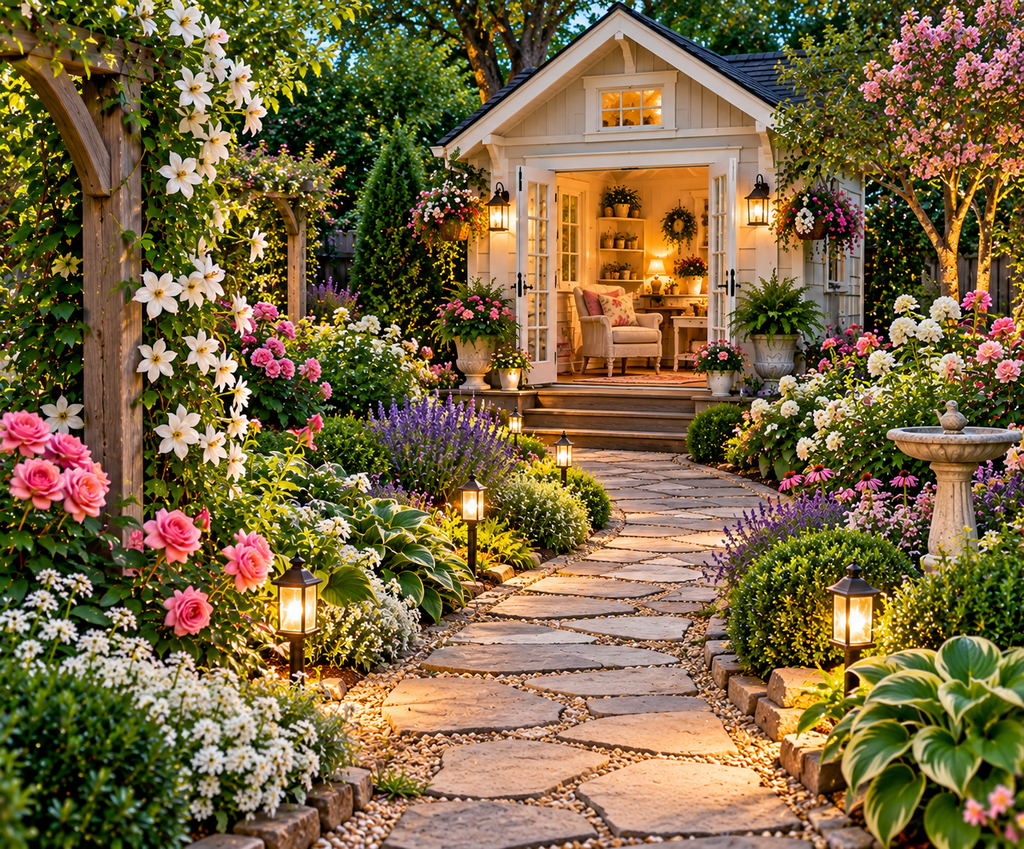
The path is arguably the single most important landscaping decision, because it determines how the building feels and whether you actually use it.
Material choice depends on how the path will be used:
- Gravel is inexpensive and drains well, but it migrates onto lawn and is awkward for wheelbarrows, wheelchairs, and walkers. It also needs edging to stay put.
- Stepping stones set in lawn or ground cover look informal and are easy to install, but they can be uncomfortable to walk on in the dark or in wet weather, and a gap that’s too wide feels like a hurdle. Stones spaced so a normal stride lands on each one are more comfortable. A common rule of thumb is to set them roughly 24 inches apart, center to center, but adjust to the people who’ll use it.
- Pavers or flagstone on a compacted base are the most durable and the most work. A proper base of compacted gravel and sand prevents the sinking and heaving that makes loose pavers a trip hazard.
- Mulched paths are cheap but need topping up and can wash out on slopes.
Width matters too. A path wide enough for one person is easy to build, but two people can’t walk side by side. If you plan to haul potting soil or furniture, think wheelbarrow width.
Soften the edges with low plants that tolerate being brushed or lightly trodden: creeping thyme, sweet alyssum, and Irish moss in the right conditions. Curves feel more natural than straight lines, but don’t add a bend just for effect; a path that wanders for no reason tends to get shortcut across the lawn.
6. A Tiny Greenhouse She Shed
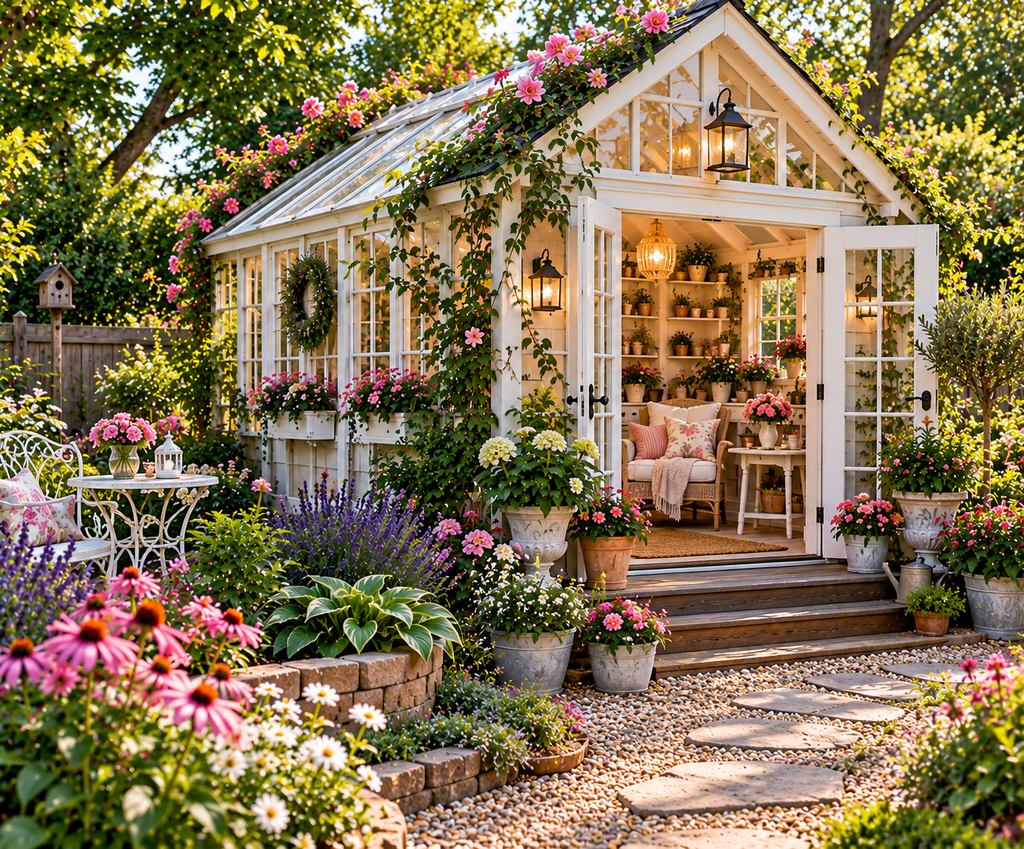
A shed with a glazed wall or a lean-to greenhouse attached to one side lets you use the space for starting seeds, overwintering tender plants, and growing herbs and tomatoes early.
The common mistake is orientation. A greenhouse needs light, so the glazed side should generally face south in the Northern Hemisphere (north in the Southern). A shaded greenhouse mostly serves as a cold, damp storage room.
The second is ventilation. Even in cool weather, a small enclosed glazed space can overheat quickly on a sunny day, and heat stress or fungal problems follow. Opening vents or roof louvers, ideally automatic ones that work without electricity, make a big difference. Plan the ventilation before you buy the structure.
Polycarbonate panels are safer than glass if children or pets will be around, and they insulate better. Glass gives clearer light and lasts longer but breaks into sharp pieces. Neither is the obvious winner; it depends on the budget and who uses the space.
Landscape the exterior with low, tidy planting so tall shrubs don’t shade the glazing, and keep a firm, easy surface directly outside for pots and trays.
7. The Reading She Shed
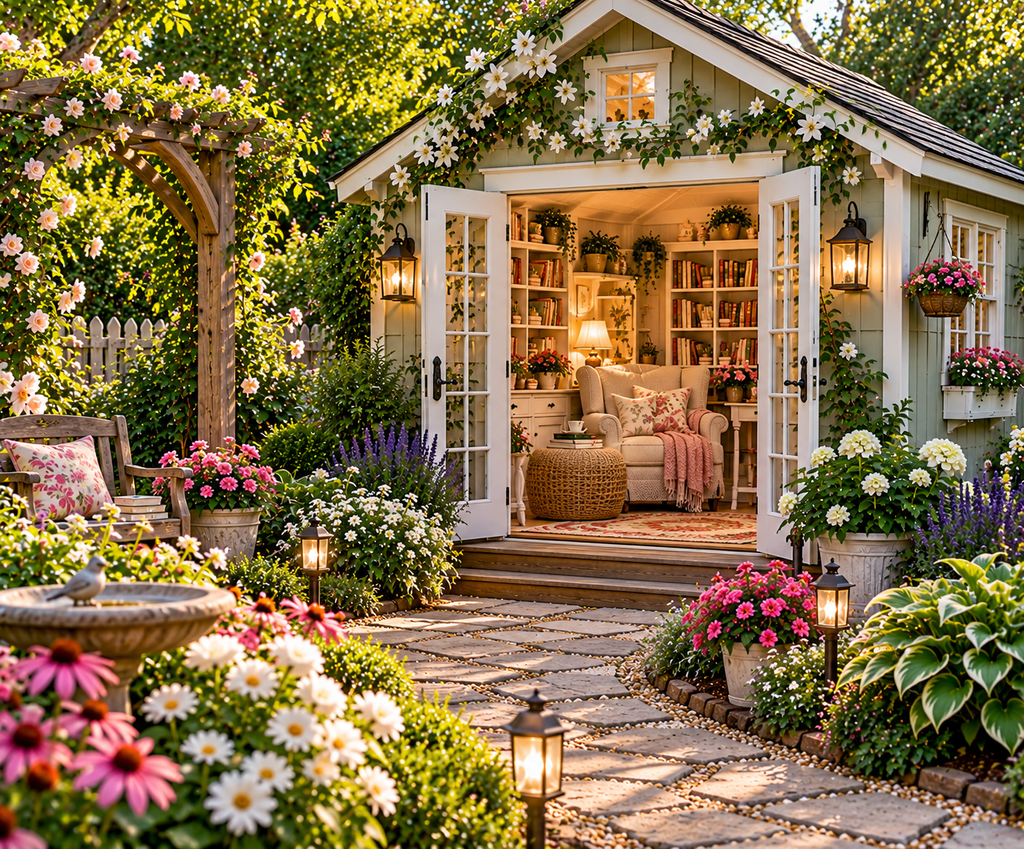
A reading retreat works best when the outside matches the quiet inside. That points to enclosure, scent, and soft sound.
Plant a screen. A hedge or a row of tall shrubs and grasses around one side gives privacy and cuts down on neighbor sightlines. Ornamental grasses like feather reed grass (Calamagrostis) rustle in the wind, which adds ambient sound and screens traffic noise a little. Evergreens such as arborvitae or boxwood give year-round cover, though the right choice depends on your region and the mature height you’ll accept.
Put fragrant plants where you’ll sit, not where you pass by. Jasmine, honeysuckle, and sweet peas are heavily scented on warm evenings. Check local conditions: some honeysuckles are invasive in parts of North America, so look for a native species or ask your local extension office.
A bench or two chairs outside the door, even a small one, lets you use the garden as part of the space on days when you’d rather not be shut indoors. If you’ll read there in the evening, consider low-voltage or solar lighting, which avoids the wiring work and permit complications of mains lighting.
8. The Potting She Shed
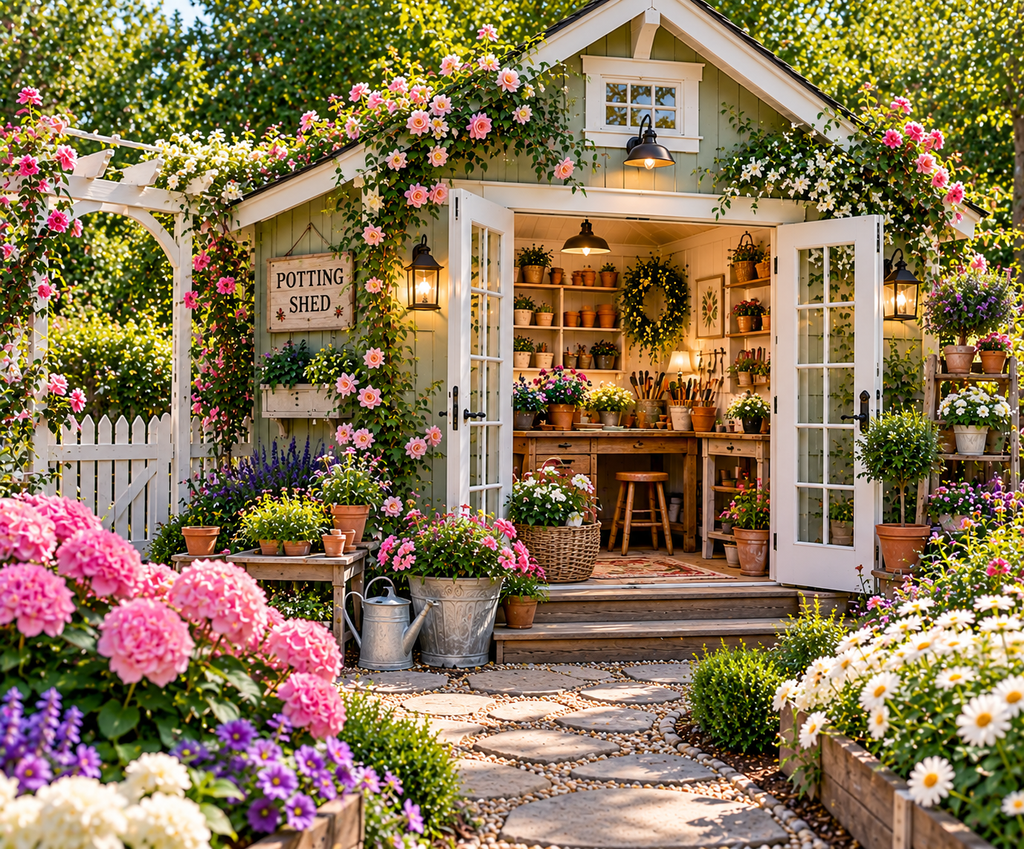
This is the practical option, and it doesn’t have to look practical. The goal is a shed that makes gardening easier because everything is within reach.
Think about work flow. A potting bench at a comfortable height, usually somewhere around hip height, depending on who’s using it, avoids a sore back. Bins for soil and compost, a sink or at least a water source nearby, hooks for tools, and shelves for pots keep clutter in check. Direct light helps: a window above the bench is worth more than a decorative one on the opposite wall.
Outside, a gravel or paver landing area lets you work with soil and water without turning the surrounding lawn into mud. Place raised beds or a cutting garden within a few steps of the door so the shed actually earns its place.
Storage safety matters. Fertilizers, pesticides, and other garden chemicals should be kept in their original labeled containers, closed, out of reach of children and pets, and away from heat. Don’t store them mixed or loose. Follow label instructions for storage temperature limits, since many products degrade or become hazardous when frozen or overheated.
9. A She Shed With a Pergola
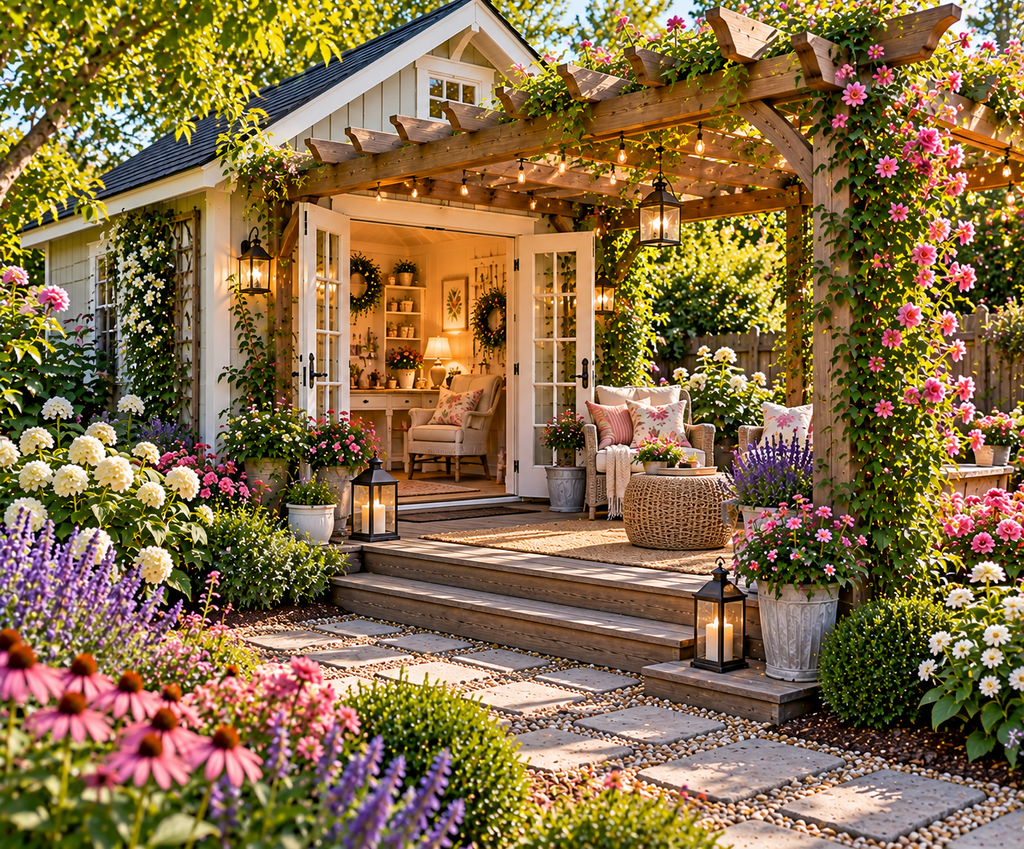
A pergola attached to the front or side creates a shaded outdoor room without the cost of expanding the building. It also gives climbers a structure to cover.
Think about what will grow on it and how heavy it’ll get. Wisteria is stunning but extremely vigorous, with stems that can twist and crush weak timber over time; it needs a robust, well-anchored structure and annual pruning, and it can take years to bloom. Grapevines, clematis, and climbing roses are lighter options. Annual vines such as sweet peas or scarlet runner beans cover a new pergola quickly while perennials establish.
Structural details matter. Posts need solid footings suited to your ground conditions, and local wind and snow loads vary. If the pergola attaches to the shed, make sure the shed can actually carry the load; a lightweight prefabricated building usually can’t. A freestanding pergola next to the shed is often the better design. For anything large or attached, check local requirements and consider getting professional advice.
Leave about 7 feet of clearance or more underneath for comfortable use, and make sure the shade you create doesn’t block the light needed by the sun-loving plants you’ve already put in.
10. The Moon Garden She Shed
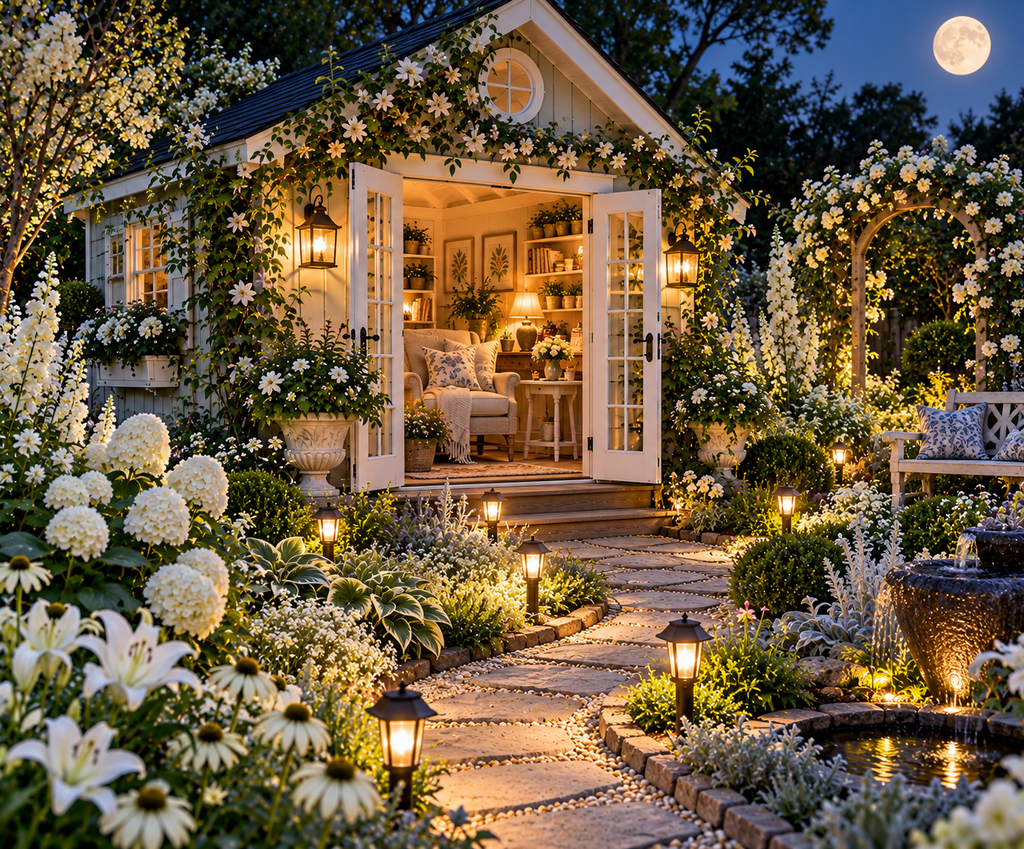
Evening is when many people have time to use a she shed, so it makes sense to plant for dusk.
White and silver foliage, plus pale flowers, reflect low light and glow in the evening. Good candidates include white phlox, white hydrangea, silver artemisia, lamb’s ear, and white roses. Night-scented plants like nicotiana, evening primrose, and moonflower open or become fragrant after sunset.
Pair it with soft lighting: small solar stakes along the path edge, string lights, or lanterns. Avoid bright floodlights, which wash out the effect and disturb nocturnal wildlife. Down-facing, shielded fixtures keep light where it’s needed.
11. A She Shed in a Shade Garden
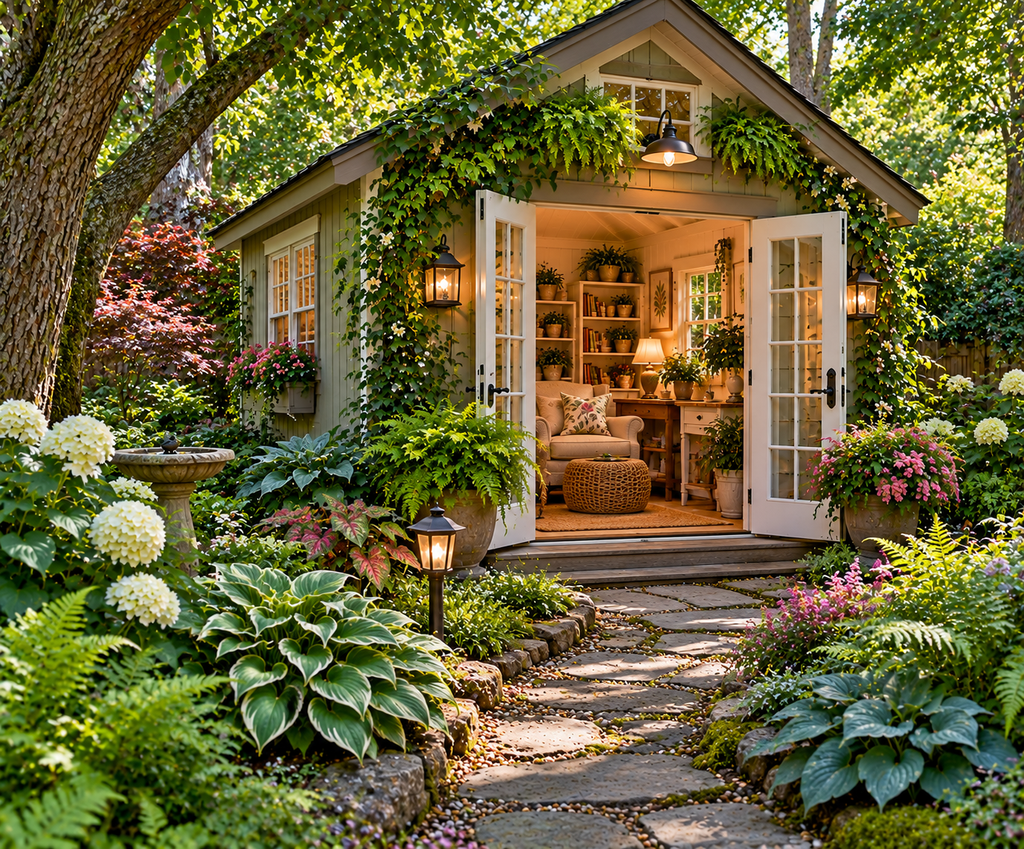
Not every yard gets full sun. A shed beneath mature trees can look beautiful with the right planting; the mistake is trying to grow sun-loving plants there anyway.
Hostas, ferns, heuchera, hellebores, astilbe, foxglove, and bleeding heart all tolerate shade to varying degrees. Look for variation in leaf texture and color rather than relying on flowers, since shade plants tend to bloom less. Pale or variegated foliage brightens dark corners.
Trees bring a complication: roots. Digging deep beds under mature trees can damage the roots that keep the tree healthy, and soil there is often dry and full of competing roots. Mulch, and plant small, shallow-rooted perennials rather than excavating. If the shed itself sits within the root zone of a large tree, think about whether the foundation might disturb roots or the tree might drop limbs on the roof.
12. The Cutting Garden She Shed
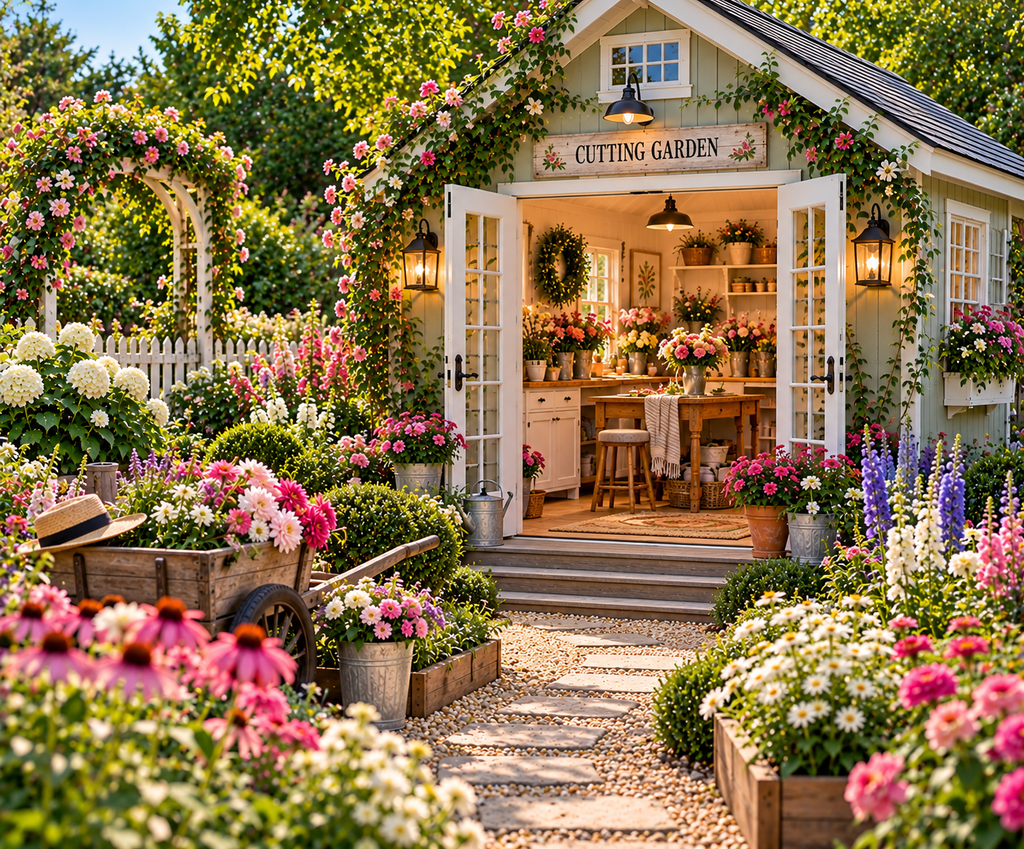
If you like flowers indoors, plant a bed designed for harvesting. A cutting garden is arranged for productivity rather than looks: rows or blocks of flowers that can be picked without leaving the garden bare.
Reliable cut flowers include zinnias, cosmos, sunflowers, snapdragons, dahlias, and sweet peas. Zinnias and cosmos are easy from seed and keep producing the more you cut. Dahlias give a heavy yield but in colder climates need their tubers lifted and stored over winter, which is extra work.
Put the beds close to the shed’s workspace so cut flowers go straight to a bucket and bench. Some cut flowers, including lilies, are toxic to cats, so keep that in mind if pets share the space.
13. A Gravel Garden She Shed
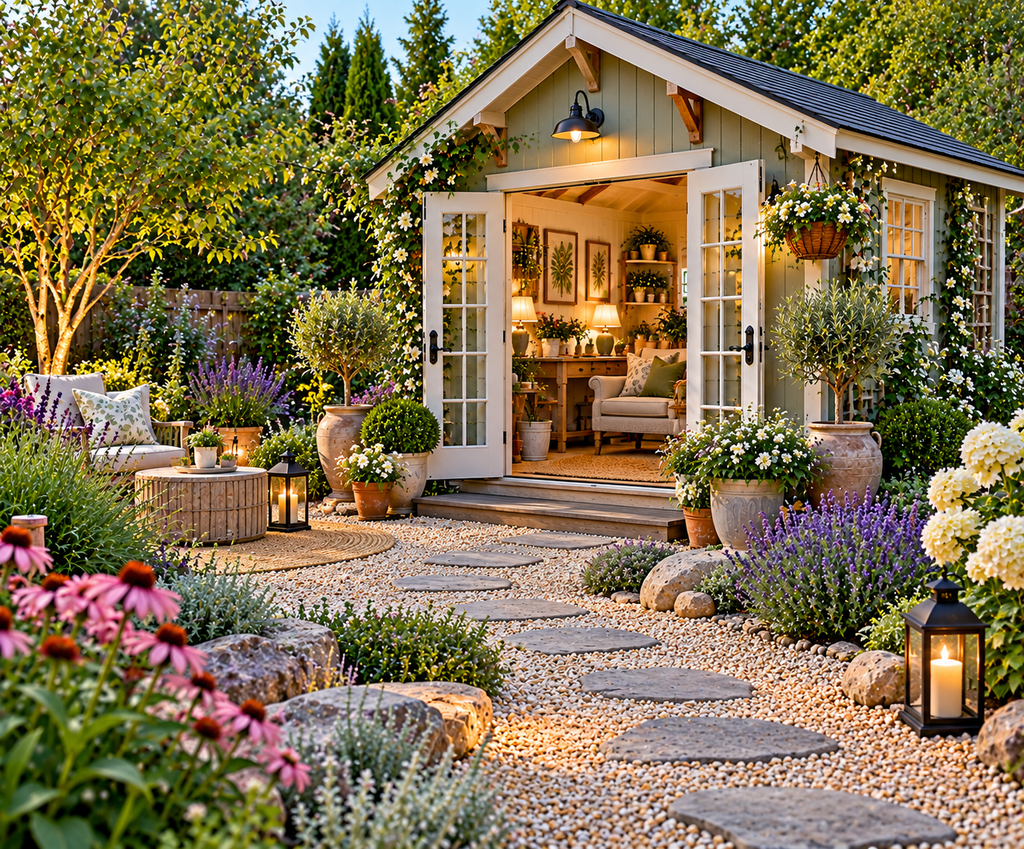
Not everyone wants a lush border. In a dry climate, or if you want something low-maintenance, a gravel garden suits a she shed with a clean, modern look.
A layer of gravel over landscape fabric or directly over prepared soil suppresses weeds and holds a surprisingly attractive set of drought-tolerant plants: lavender, sedum, ornamental alliums, thyme, salvia, and ornamental grasses. Skip plastic sheeting, which blocks water and air; permeable landscape fabric is a better choice, though it can clog over time as soil builds up on top.
The tradeoff is that leaves and debris collect in gravel and decompose into soil, which weeds then colonize. You’ll need to rake or blow it clear occasionally.
14. Raised Beds and Container Gardens by the Door
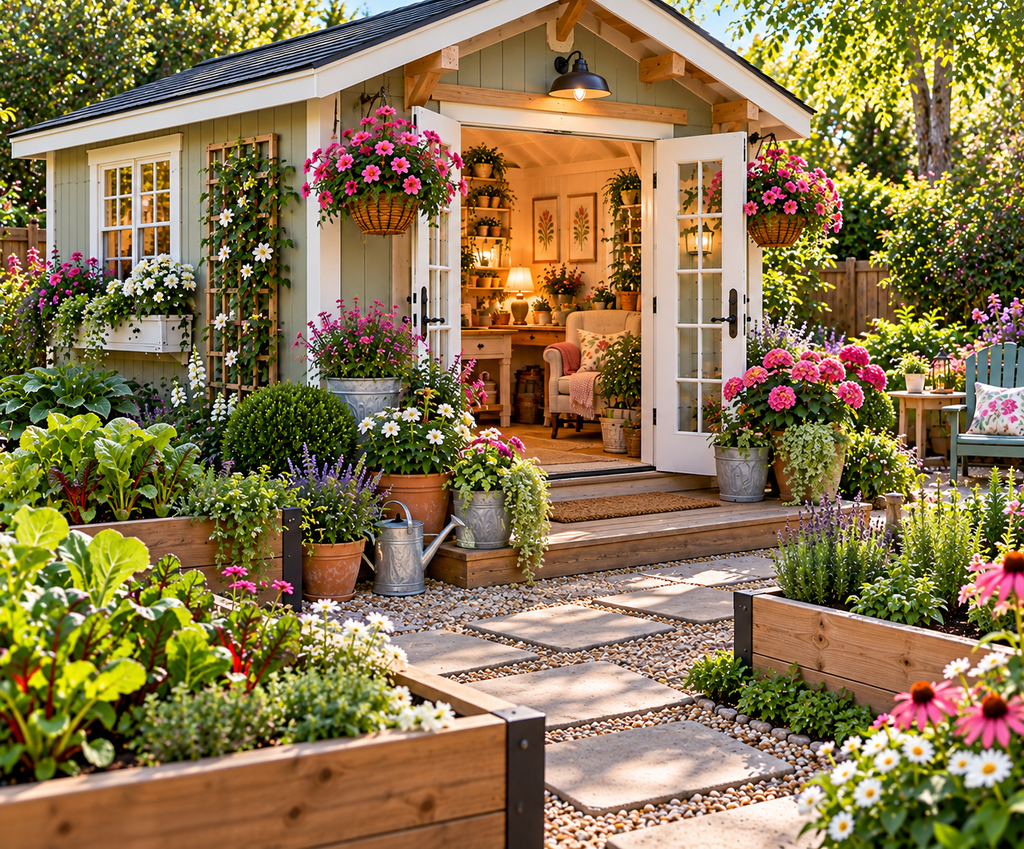
Where the soil is poor, rocky, or contaminated, or if you have limited mobility, raised beds and containers solve problems that in-ground planting can’t.
Raised beds warm earlier in spring, drain better, and let you control the soil. If you’re growing edibles near an older building, be cautious: soil near structures painted before the late 1970s can contain lead from weathering paint, and soil testing is worth doing before growing vegetables nearby. Your local extension service or a soil lab can advise on testing.
Large containers give flexibility. Group pots in odd numbers at the door, mixing a tall plant, a mid-height filler, and something that spills over the edge. Check drainage holes, and use potting mix, not garden soil, which compacts in pots. Containers dry out faster than ground soil, so in summer expect to water them frequently.
15. A Pollinator-Friendly She Shed Garden
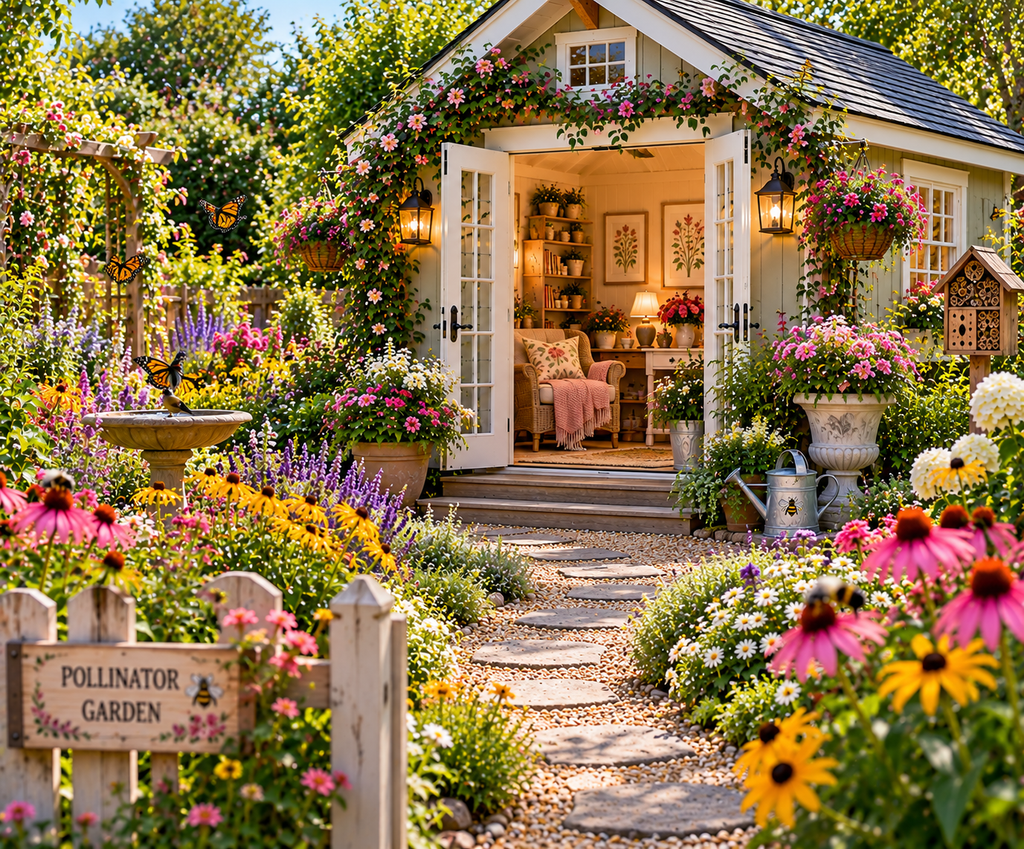
A garden that attracts bees, butterflies, and hummingbirds adds movement and life that a static garden doesn’t. It also tends to need fewer inputs once established, particularly if you choose plants native to your region.
Aim for flowers in succession, so something is in bloom from early spring until frost. Single-flowered varieties are usually better for pollinators than heavily doubled ones, which can hide the pollen and nectar. Coneflower, bee balm, milkweed, salvia, and native asters are common choices, but local natives are ideal. A regional native plant society or extension office can supply lists.
Avoid broad-spectrum insecticides in this garden. If you must treat a pest, follow the label, avoid spraying open flowers, and apply in the evening when bees are less active, if the label allows. A shallow dish of water with stones for landing is a small addition that helps.
Questions Readers Commonly Have
How close to the house should a she shed be? There’s no universal answer. Closer is more convenient for power, water, and daily use; farther gives more privacy. Local rules often set minimum distances from boundaries and the main house, so check before you decide.
Do I need a foundation? Many small sheds sit on a gravel pad, concrete blocks, or a timber frame, but the right base depends on size, soil, and local rules. Wet or sloping ground needs more care than level, well-drained ground. A base that lets air circulate underneath helps prevent rot.
Can I plant right against the shed walls? You can, but leave a gap. Planting tight against timber walls traps moisture and encourages rot and pests. Leaving a foot or so, depending on the plant’s mature size, helps with airflow and gives you room for maintenance such as painting.
What’s the cheapest way to make a plain shed look good? Paint, a path, and a few well-chosen plants do more than most people expect. Start with a fresh coat of exterior paint, add a trellis with an annual vine, and put pots by the door.
Key Takeaways
Pick the planting around your actual conditions, not the picture you like. Sun, drainage, and soil decide what thrives, and the same shed can look very different in a sunny rose-and-lavender border than in a shaded fern garden. Build the path before the plants, leave air between plants and walls, and check local rules before building anything that’s more than a lightweight storage unit. If you want one place to start, put in a proper path and a bench by the door; the rest of the garden can grow around that over time.

About Syprose Kiche
Syprose Kiche is the creator and writer behind My Besuited Home, a practical home and garden website covering DIY projects, gardening, lawn care, landscaping, home improvement, and outdoor living. She focuses on turning everyday homeowner questions into clear, practical guides backed by careful research and useful real-world considerations.