
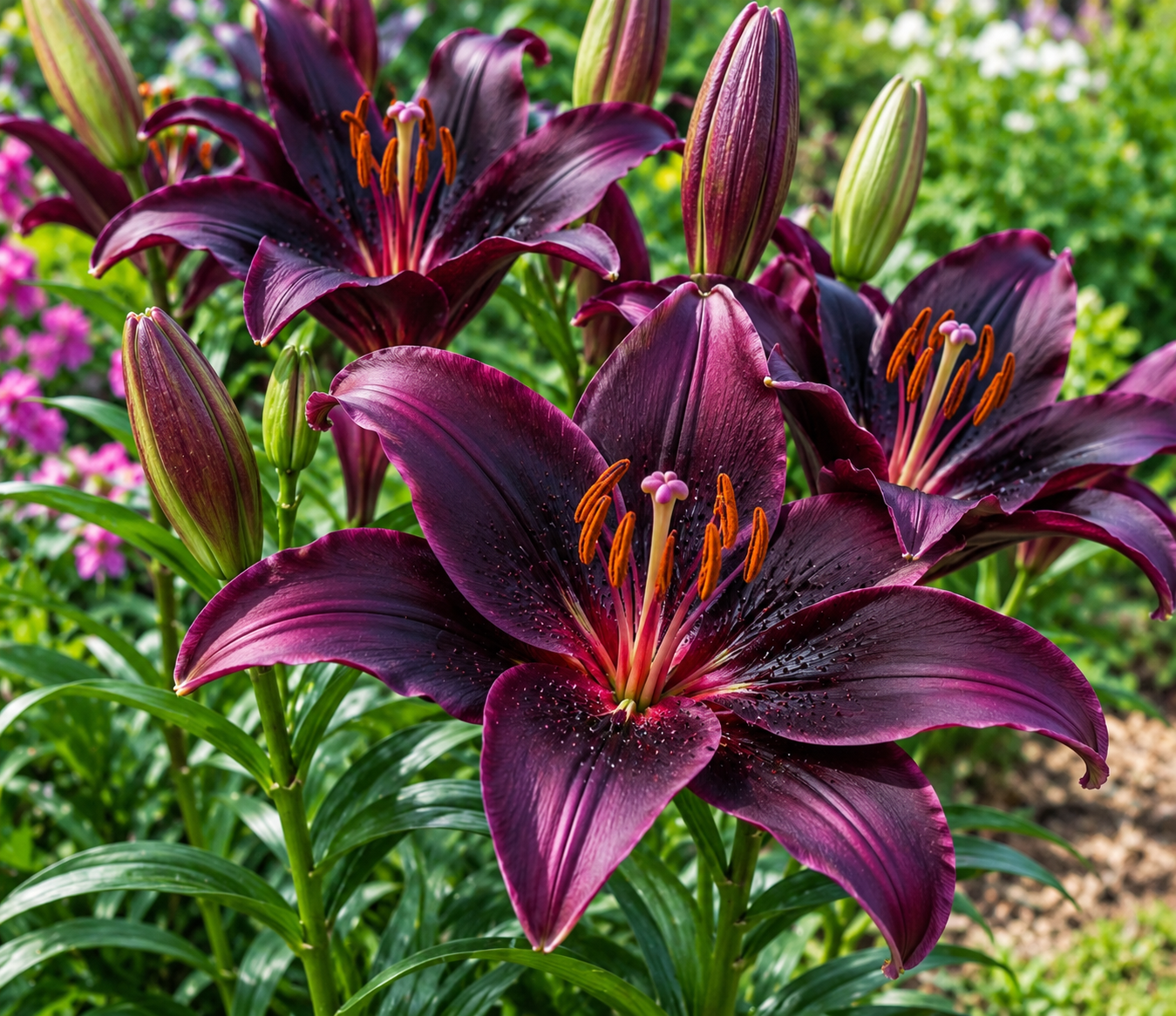
Most “purple lilies” aren’t purple. Nursery tags and catalog photos use the word loosely, and what arrives in July is often burgundy, plum, wine-red or magenta, with a few lavender-pink exceptions. That is still excellent for a summer border, but it changes what you should buy and where you should plant it. Dark flowers vanish against dark soil and dense green foliage, and the faintest violet shades can read as plain pink in strong sun.
This guide covers 17 plants, all genuinely purple or close to it. Some are true lilies (Lilium), some are daylilies, and some are lily-lookalikes with a better chance in tricky conditions. It also covers bloom timing, planting depth and pest problems, plus one safety issue that matters if you share your yard with cats.
What “Purple” Means in a Lily Catalog
True lilies come from a handful of species groups. Hybridizers have pushed color in many directions, but a clear blue-violet has never appeared in Lilium. The nearest equivalents are:
- Deep maroon to near-black (many Asiatic hybrids)
- Crimson-magenta and wine (Oriental types)
- Dusky mauve-purple (martagon species)
Daylilies (Hemerocallis) have a wider purple range, including true grape and violet shades. If strong purple matters more to you than having real lilies, daylilies and the lily-like plants later in this article are the better bet.
Cultivar colors also shift with light, soil, temperature and the grower’s photography. A bulb sold as “black” may look burgundy in your bed. Treat any description as approximate.
Asiatic Lilies: The Dark Ones That Bloom First
Asiatic lilies flower in early to midsummer, usually June into July in temperate climates. The flowers face upward or outward and carry little or no scent. They are among the easiest true lilies to establish, tolerate a wider range of soils than Orientals, and generally manage in colder zones. For dark, saturated color early in the season, they are the most dependable group.
1. ‘Landini’
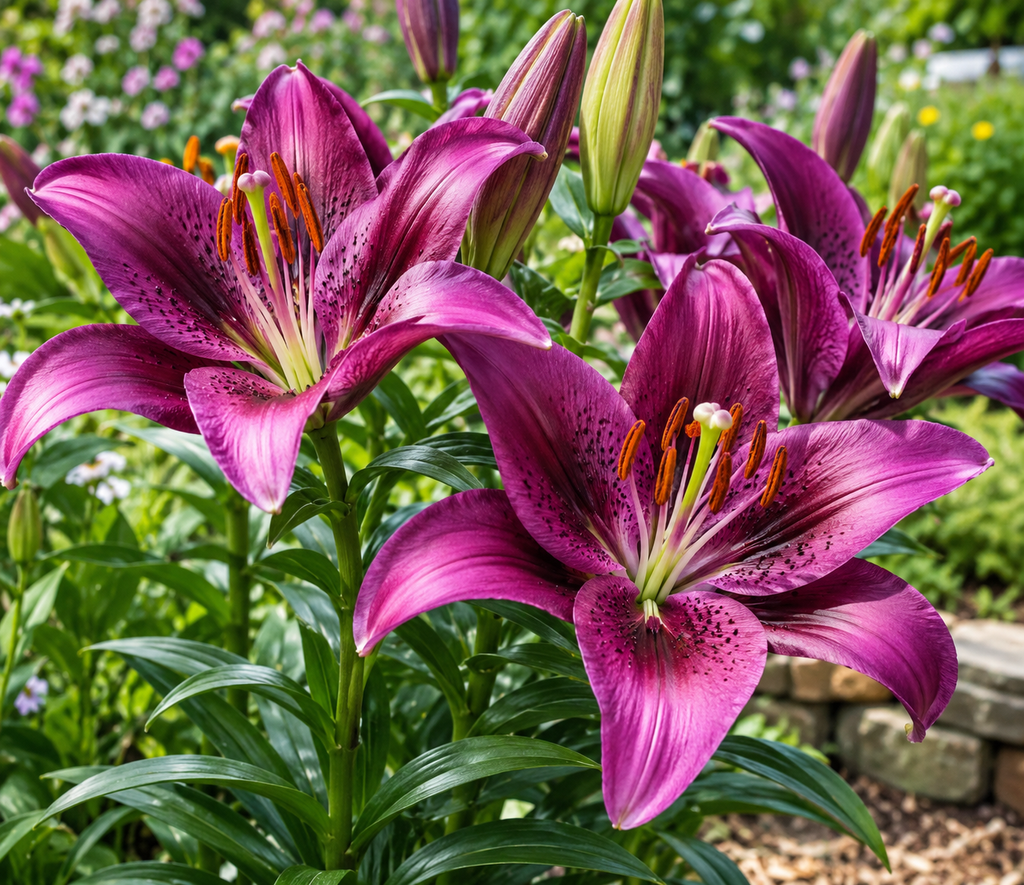
‘Landini’ is often sold as the darkest Asiatic you can buy, a deep maroon that looks nearly black in bud and in shade. Plan on roughly three feet of height. The trade-off is visibility. Planted against dark mulch or a deep green hedge, the flowers disappear, so give it a light backdrop such as a pale fence, silvery foliage or white flowers behind it.
2. ‘Netty’s Pride’
This one has a deep burgundy-black center edged in cream or white. The pale margin outlines each petal and helps it stay visible at a distance, which makes it a sensible choice if a pure dark lily feels too heavy. The contrast is sharper in cool weather and softens in hot spells, as petal pigment often does.
3. ‘Night Rider’
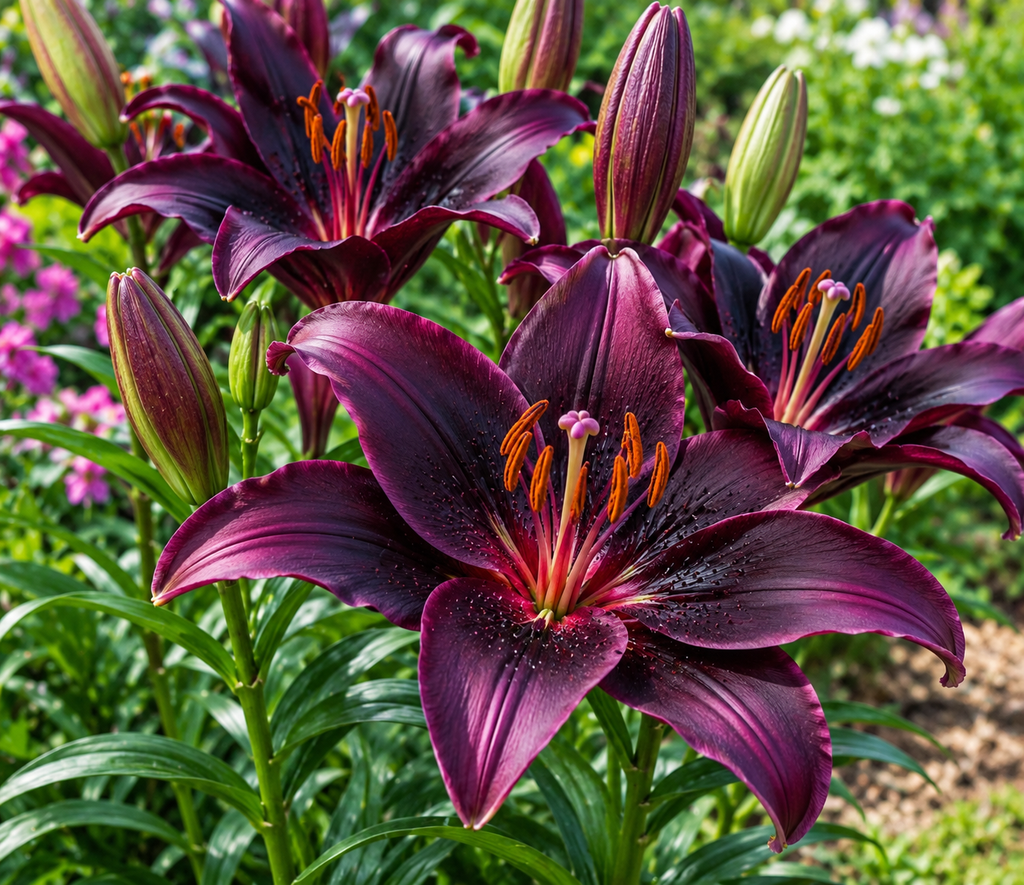
‘Night Rider’ is a dark burgundy Asiatic that is easy to find from bulb suppliers. Its flowers are glossy and tend to sit well above the foliage. Supplier descriptions of height and exact color vary, so check the listing for the specific bulbs you buy.
Asiatics are generally the best value if you want a lot of flowers for a modest price. They also multiply steadily, and a clump can be lifted and divided every few years.
Oriental Lilies: Fragrance and Late-Summer Weight
Oriental lilies bloom later, typically July into August, with larger flowers that are usually fragrant. They are also the group that most often disappoints in wet clay or alkaline soil. They want good drainage and a slightly acidic to neutral soil, and many cultivars appreciate some afternoon shade in hot climates.
The scent is strong. One group of stems near a patio table or an open window is plenty, and a dense planting can be overwhelming for some people.
4. ‘Black Beauty’
Strictly speaking, ‘Black Beauty’ is a hybrid of Lilium henryi and L. speciosum, but it is sold and treated like an Oriental. The flowers are deep crimson with a pale edge and swept-back petals, and the plants can reach five feet or more. It tends to be tougher, longer-lived and more tolerant of heat than many true Orientals. It also holds its own in a mixed border instead of needing a pampered bed. Tall stems in wind may need staking.
5. ‘Scheherazade’
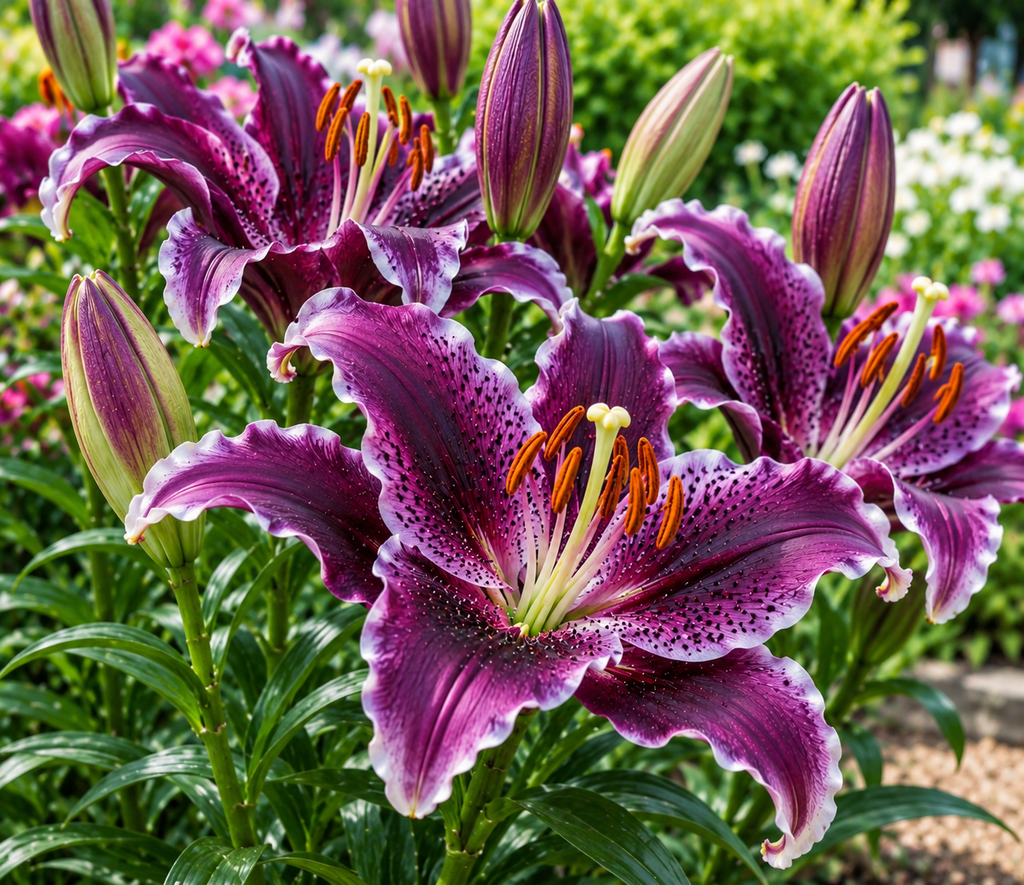
‘Scheherazade’ is also an Orienpet hybrid, with deep wine-red flowers edged in gold and a heavy, sweet fragrance. It leans warmer and redder than purple, so it works best when paired with true purples nearby rather than carrying the purple role on its own. It reaches a similar height to ‘Black Beauty’.
6. ‘Stargazer’
‘Stargazer’ is a crimson-magenta Oriental with a white margin and darker spotting, and it faces upward. It is the nearest thing in this group to a “pink-purple,” and it’s also the lily most often seen in florist bouquets. Because it’s so widely grown, bulbs are inexpensive and easy to find. The pollen stains badly, which is a bigger issue indoors than outdoors.
Martagon Lilies: The Purple Lilies for Shade
Martagons look different from other lilies. They carry many small, nodding, turk’s-cap flowers on tall stems, sometimes 20 or more per stem on an established plant, and the petals curl backward. They tolerate light to partial shade, which most true lilies do not, and they are among the hardiest in cold climates.
They also demand patience. A newly planted martagon bulb may take a year or two to settle before it blooms well, and they dislike being moved. Choose the spot carefully, plant in autumn when bulbs are fresh and plump, and leave them alone. Seed-grown plants can take many years to flower.
7. Lilium martagon
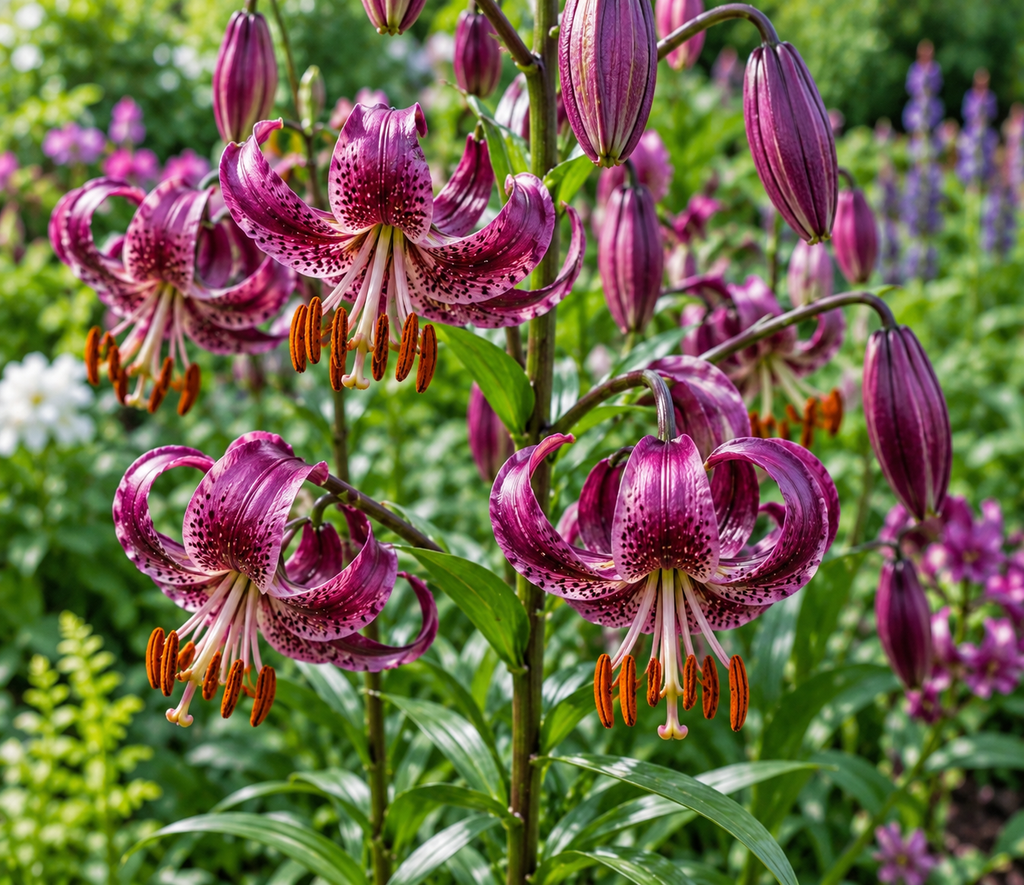
The species itself is the classic: a dusky mauve-purple turk’s cap with darker spots, often three to five feet tall. Some people find the scent musky or unpleasant up close, so avoid planting it directly beside a seating area. It tolerates lime-rich soil better than Orientals do.
8. Lilium martagon var. cattaniae
This is the one to look for if you want dark. The flowers are a deep wine-purple that can read nearly black in shade, and it usually blooms slightly later than the species. Availability is limited, and bulbs from reputable specialist growers are worth the extra cost. Bulbs that have dried out in a garden-center bin rarely establish well.
Purple Daylilies: Not True Lilies, but Far Easier
Daylilies belong to a different genus and grow from fleshy roots rather than scaly bulbs. Each flower lasts a single day, but a healthy clump produces new buds for weeks. They tolerate clay, drought, neglect and a wide range of climates, which is why many gardeners who fail with true lilies succeed with them.
One caution applies specifically to purple cultivars. Dark purple petals can bleach or fade in intense afternoon sun. If your bed gets baking afternoon heat, a position with a few hours of late-day shade often keeps the color richer.
9. ‘Bela Lugosi’
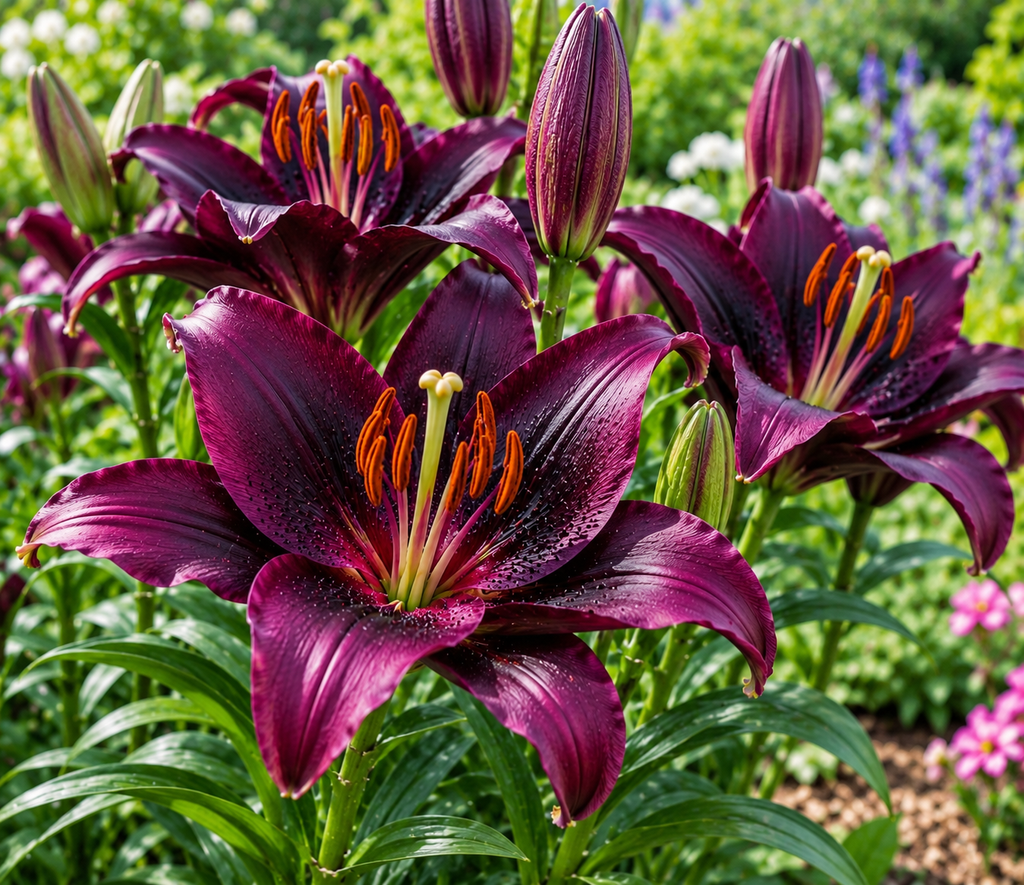
A well-known deep purple with a bright green throat, usually around 30 inches tall. It’s one of the more reliable “real purple” daylilies and is widely available. The color is velvety, and the green throat gives it definition.
10. ‘Little Grapette’
A compact grape-purple with a yellow-green throat, usually only a foot or so tall. It suits the front of a border, containers and gaps beside paths where taller varieties would flop onto a walkway.
11. ‘Purple de Oro’
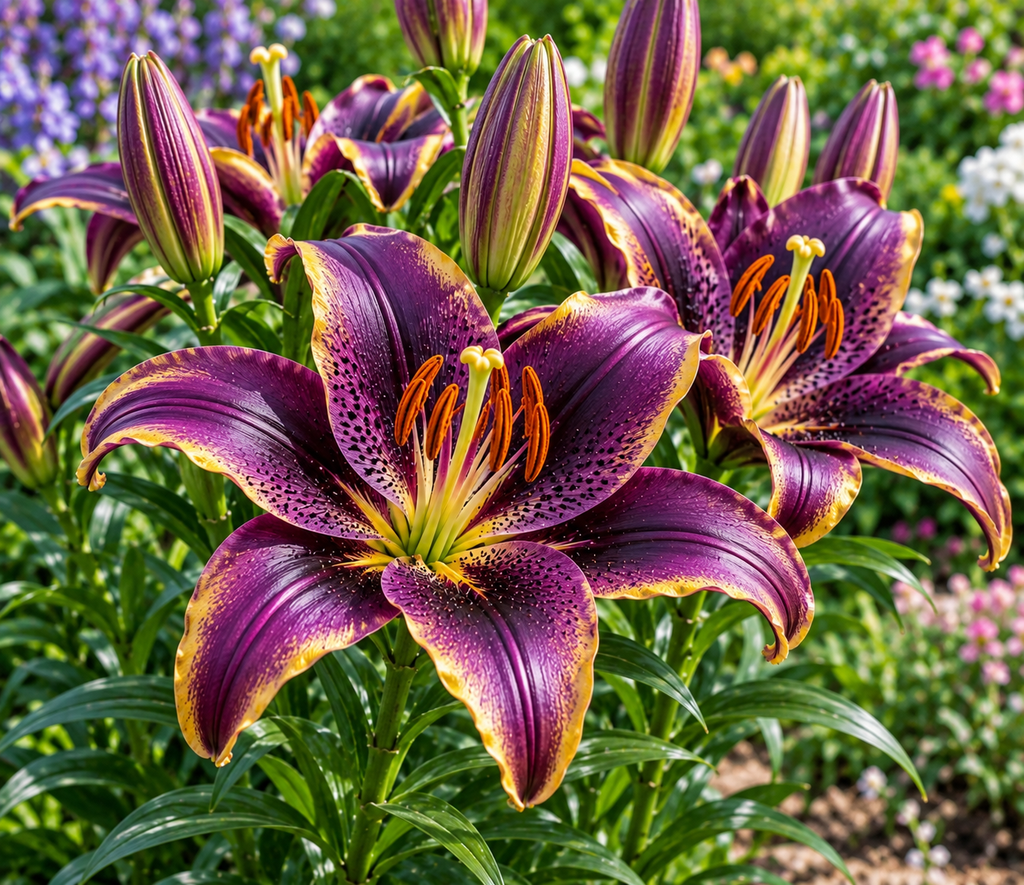
Purple petals edged in gold, with a tendency to rebloom. It is mid-height, roughly 18 to 24 inches, and a good choice if you want flowers into late summer without replanting.
12. ‘Prairie Blue Eyes’
This one is more lavender than deep purple, with a violet eye in the center, and grows around 30 inches. It’s a softer option for gardeners who find very dark flowers heavy.
Daylilies need dividing every three to five years when the clump thins in the center. Remove spent flower stalks once all buds on them have finished.
Purple Lily-Like Flowers for Beds Where True Lilies Struggle
If your soil stays wet, your climate has very mild winters, or you have deer and voles that dig, these alternatives can solve the problem. They share the lily family resemblance without the fussiness. Hardiness zones below are approximate and vary by cultivar.
13. Agapanthus (Lily of the Nile)
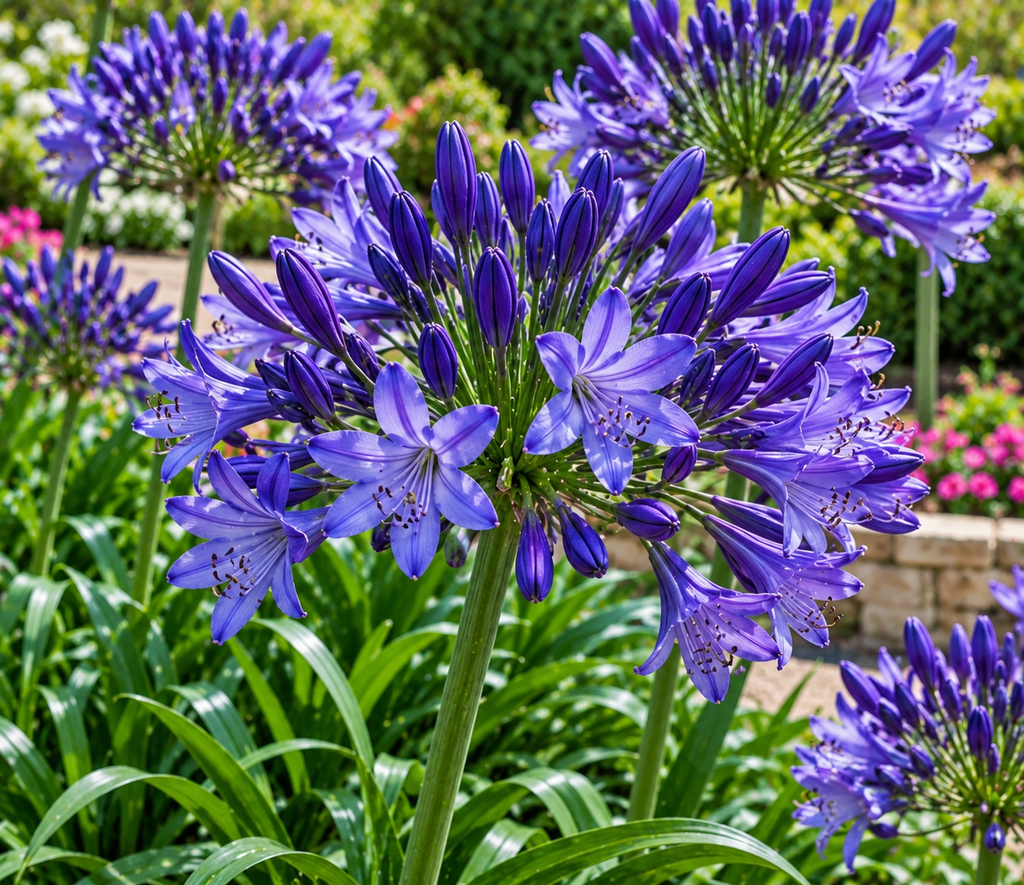
Round clusters of violet-blue trumpet flowers on tall stalks above arching, strap-shaped leaves. Most evergreen types are reliable outdoors only in mild climates (roughly zones 8 to 10), while some deciduous hybrids survive colder winters. In cold regions, they do well in containers brought in before frost. They flower best when slightly root-bound, so don’t overpot them. Choose ‘Midnight Blue’ or similar dark selections if you want depth of color.
14. Alstroemeria (Peruvian Lily)
The petals are streaked and freckled, and the flowers last a long time. Purple and lilac cultivars exist, but color names vary and many popular types are cut-flower selections that are not reliably hardy in cold climates. Check hardiness on the tag before planting in the ground. They can also cause skin irritation in some people, so wear gloves when handling and dividing them.
15. Liriope muscari (Lilyturf)
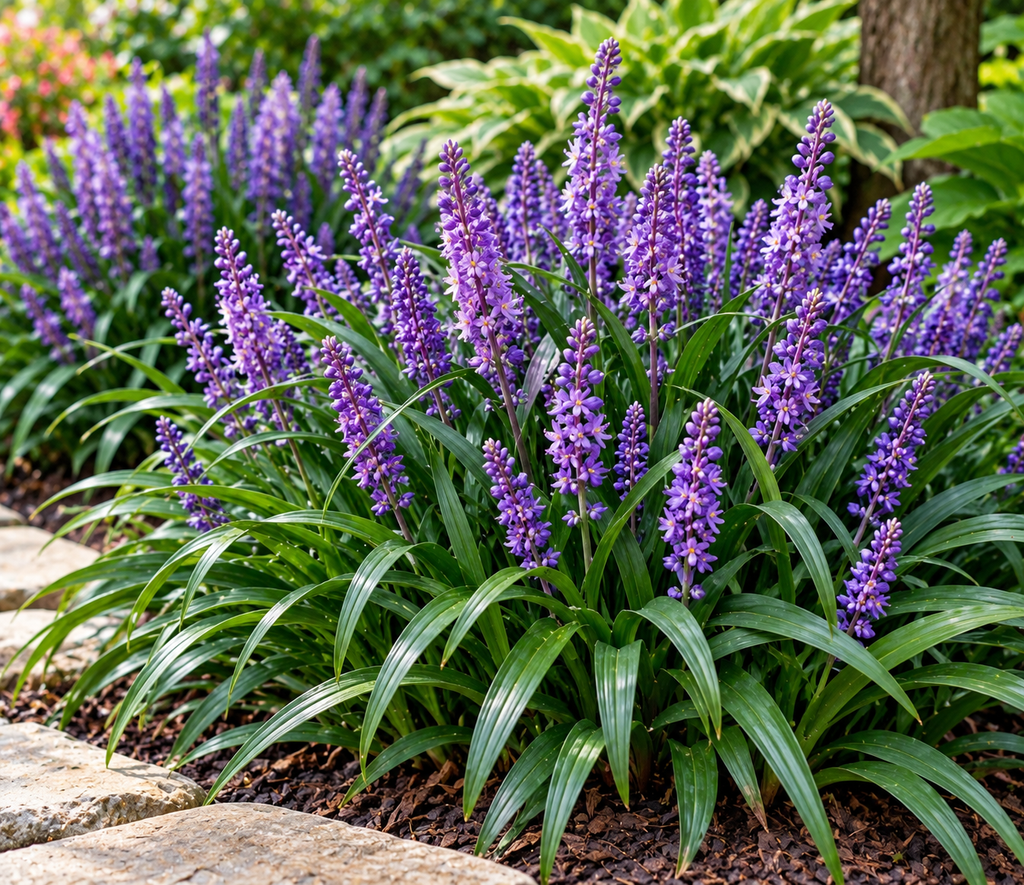
Lilyturf produces dense spikes of lavender-purple flowers in late summer, above grassy evergreen foliage in mild climates. It’s one of the few plants here that tolerates shade and dry soil. Stick with the clumping L. muscari. Liriope spicata spreads by runners and can become a nuisance, especially in lawns and narrow beds.
16. Tulbaghia violacea (Society Garlic)
Lilac-purple, star-shaped flowers on slender stems, usually one to two feet tall, for a long stretch of summer. The leaves smell strongly of garlic when crushed. It prefers full sun and is generally hardy only in warmer zones (about 7 or 8 and up, depending on the source), but it grows well in pots.
17. Hosta
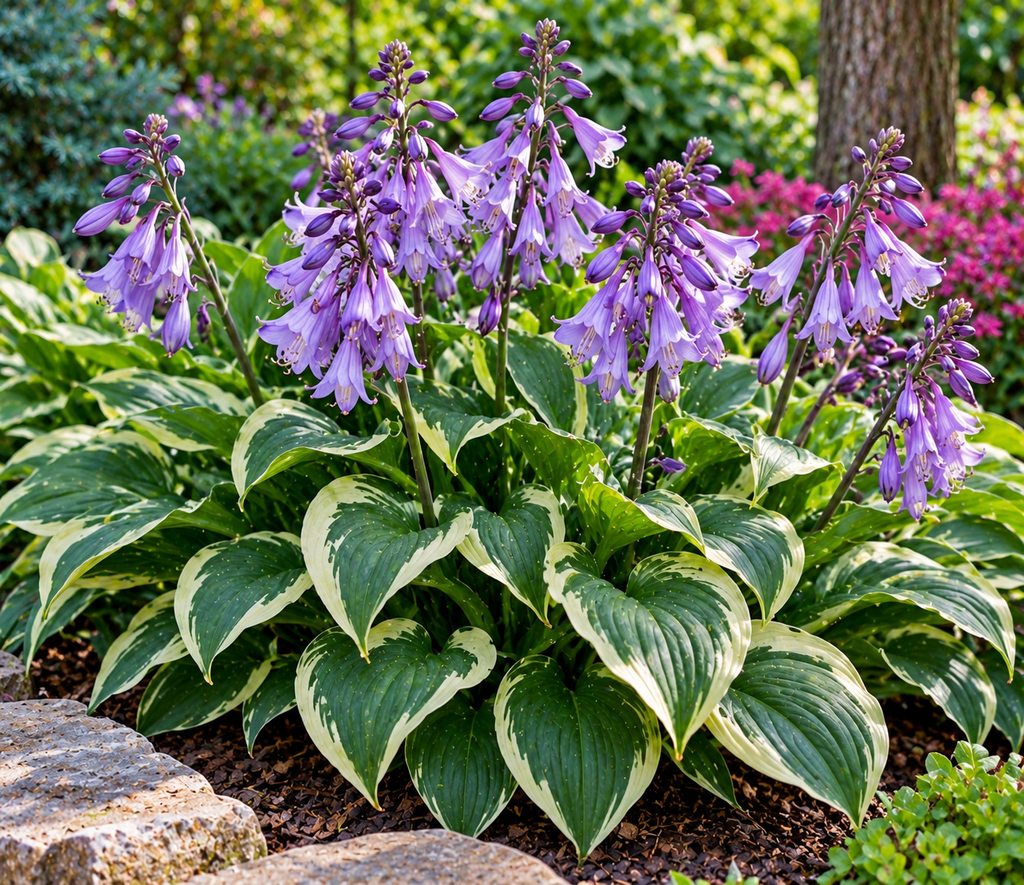
Hostas get overlooked as flowering plants. Many send up tall scapes of lavender-purple bells in July and August, and these flowers attract hummingbirds and bees in some gardens. They are the right answer for deep shade under trees, where nothing else here will bloom. Slugs and deer are the main hazard.
When Each Plant Blooms
Timing varies by climate and season by two to four weeks, so treat this as a rough sequence rather than a calendar.
| Plant | Typical bloom window | Light |
| Martagon lilies | June to early July | Part shade |
| Asiatic lilies | June to July | Full sun |
| Daylilies | June to August | Full sun to part shade |
| Oriental lilies | July to August | Sun, afternoon shade in heat |
| Agapanthus | July to August | Full sun |
| Tulbaghia | Summer, over a long period | Full sun |
| Hosta | July to August | Shade |
| Liriope muscari | August to September | Sun to shade |
A mix drawn from several rows gives you purple from June through September instead of one intense fortnight.
Where to Plant Purple Lilies So the Color Actually Shows
Placement decides whether dark flowers look dramatic or simply vanish.
Use a lighter backdrop. Maroon and near-black flowers stand out against silver foliage, pale walls, white fences or light gravel. Against dark mulch and glossy green shrubs, they merge into the background.
Bring dark varieties close. Very dark flowers are easier to appreciate up close, so place them near a path, steps or seating rather than at the far end of a long border.
Plant in groups. Odd-numbered clusters of three, five or seven bulbs look deliberate. Single bulbs scattered across a bed look like gaps.
Keep the roots cool. A familiar guideline holds up: lilies like their heads in sun and their feet in shade. Low perennials planted around the base shade the soil and hide the lower stems, which often look bare or untidy.
Keep scented varieties at arm’s length from windows if you dislike strong fragrance. One cluster near a seating area is plenty.
Plan for the end of the season. After flowering, lily stems need to stay until they yellow. Place bushy perennials in front so the browning foliage is hidden while the bulb recharges.
Planting Depth, Soil and Drainage
Drainage matters more than almost anything else. Lily bulbs sit in the soil for months with no protective skin, and standing water leads to rot.
Depth. A common rule is to plant bulbs at about three times their height, which usually means 4 to 6 inches deep for smaller Asiatic bulbs and deeper, around 6 to 8 inches, for large Oriental bulbs. Many lilies form roots on the stem above the bulb as well as below it, which is why deeper planting generally works better than shallow.
Spacing. Roughly 8 to 12 inches apart suits most types. Close enough to look full, far enough to allow airflow.
Heavy clay. Dig in compost and coarse grit, or plant on a slight mound or in a raised bed. If water pools in the planting area after heavy rain, choose a different spot or switch to daylilies or liriope.
Soil pH. Orientals generally prefer slightly acidic to neutral soil and can struggle in alkaline ground, while martagons tolerate lime better. Check the supplier’s notes for your specific cultivar, and consider a simple soil test if you are unsure.
Timing. Autumn planting lets bulbs root before winter, while early spring planting also works. Plant promptly after purchase. Lily bulbs lose moisture quickly and perform poorly if they sit in a warm garage.
Care. A 2-inch layer of mulch keeps roots cool and moist. A balanced fertilizer when shoots emerge in spring is usually sufficient, and heavy nitrogen tends to produce leafy growth at the expense of flowers. Aim for roughly an inch of water per week in dry spells, applied at soil level rather than over the foliage.
After flowering. Remove spent flowers so the plant doesn’t spend energy on seed pods. Leave the stem and leaves until they yellow naturally, usually six to eight weeks later, then cut back. Removing green foliage early starves the bulb and reduces next year’s flowers.
Companion Plants That Make Purple Lilies Look Better
The goal is contrast against the purple, plus a few plants that carry the bed once the lilies are over.
Silver and gray foliage. Artemisia ‘Powis Castle’ and lamb’s ear make dark maroon flowers pop and keep the base of the bed looking full.
Chartreuse and gold. Golden Japanese forest grass (Hakonechloa macra ‘Aureola’) or lime-green heuchera lights up dark blooms and works in partial shade, which suits martagons.
White flowers. Shasta daisy, white phlox or white campanula bring definition to deep purples, particularly at dusk when dark flowers lose visibility.
Soft purple and blue. Catmint (Nepeta), hardy geranium and salvia such as ‘May Night’ echo the lily tones, hide the lower stems and bloom around the same period.
Upright grasses. Calamagrostis ‘Karl Foerster’ adds vertical structure without competing with the flowers.
Yellow for contrast. Coreopsis ‘Moonbeam’ or yarrow offers a stronger, warmer contrast to purple if you want more energy in the bed.
Avoid planting lilies too close to aggressive spreaders, which compete for water and crowd the bulbs.
Problems Worth Knowing About Before Planting
Cats and true lilies
This one is serious. True lilies (Lilium) and daylilies (Hemerocallis) are considered highly toxic to cats. Even small exposures, such as chewing a leaf, eating a petal, licking pollen off fur or drinking vase water, can cause kidney failure. If a cat may have contacted any part of these plants, treat it as a veterinary emergency and contact a vet or animal poison service immediately, without waiting for symptoms. Dogs generally show milder digestive upset, but consult a vet if a dog eats a large amount.
If you have cats that go outdoors or visit your garden, consider choosing liriope, tulbaghia or hosta (check each against the ASPCA’s plant list for your situation) and avoid bringing cut lilies into the house.
Red lily leaf beetle
Bright scarlet beetles and their larvae, which cover themselves in dark slimy droppings, can strip leaves and buds. The beetle is established across much of Europe and parts of eastern North America and does not occur everywhere. Check the undersides of leaves from early spring as shoots emerge, and hand-pick adults and larvae. When disturbed, adult beetles often drop to the ground and land on their backs, so hold a hand underneath. Biological control using parasitic wasps has been introduced in some regions, so check with local extension services. If you consider an insecticide, follow the label exactly and avoid use on open flowers to protect pollinators.
Botrytis
Grey mold causes brown spotting on leaves and flowers in cool, wet weather. Good spacing, morning watering at soil level and prompt removal of affected leaves reduce the risk.
Deer, voles and squirrels
Deer commonly eat lily and daylily shoots and buds. Voles, chipmunks and squirrels may dig up or gnaw bulbs. Planting bulbs in wire baskets protects them from burrowing animals. No plant is truly deer-proof, but liriope, tulbaghia and agapanthus are generally browsed less than lilies and daylilies.
Pollen stains
Lily pollen stains skin, fabric and tablecloths badly. Pinching off the anthers before they open prevents the problem, which is worth doing for cut flowers. If pollen lands on fabric, avoid rubbing it. Lift it off with sticky tape or shake it loose before it is dampened.
Common Questions
Will lilies come back every year?
True lilies and daylilies are perennials and generally return if drainage is good and the bulbs aren’t eaten. Agapanthus, alstroemeria and tulbaghia may not survive a hard freeze outdoors in colder regions.
Why did my lily produce buds that never opened?
Bud drop usually points to stress. Common causes include sudden drought or heat, too much shade, and bulbs that were damaged or planted too shallowly. First-year plants from small bulbs sometimes put on foliage and skip flowers entirely.
Can I grow purple lilies in pots?
Yes. Asiatic and compact Oriental lilies do well in containers at least 12 inches deep, with several bulbs planted close together and a free-draining mix. Pots can freeze solid in winter, so in cold climates move them to an unheated shed or insulate them, and never let the mix sit waterlogged.
Are daylilies and lilies interchangeable in a design?
Not quite. Daylilies form a leafy clump from ground level and flower in succession, while lilies produce tall single stems that need companions to hide their lower portions.
Key Takeaways
Pick the group that matches the conditions, not the photo. Asiatic lilies suit sunny, well-drained beds and early dark color. Orientals offer fragrance and late-summer weight but need better drainage and slightly acidic soil. Martagons are the only true lilies that handle part shade. Daylilies and the lily-like plants are the practical choice for clay, wet spots and cold-winter containers.
Dark purple needs a light backdrop and a position close to where people will see it. Plant bulbs at roughly three times their height, in groups, with cool-rooted companions around the base, and leave the foliage until it yellows. If cats visit your yard or home, choose carefully, because true lilies and daylilies are a genuine hazard.

About Syprose Kiche
Syprose Kiche is the creator and writer behind My Besuited Home, a practical home and garden website covering DIY projects, gardening, lawn care, landscaping, home improvement, and outdoor living. She focuses on turning everyday homeowner questions into clear, practical guides backed by careful research and useful real-world considerations.