
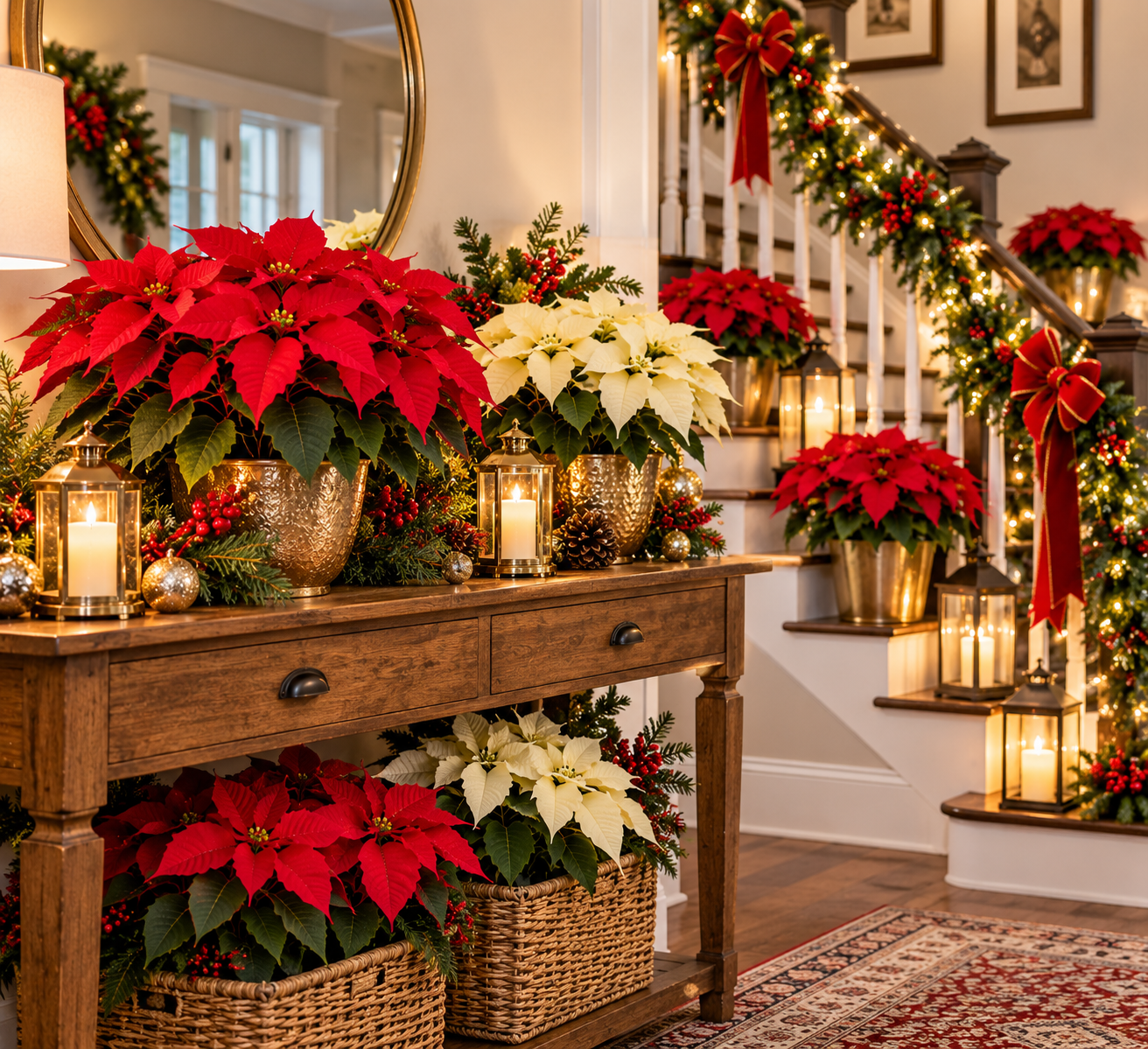
A poinsettia on a front step looks wonderful for roughly one cold night. Then the first hard chill arrives, the red bracts droop, and by morning the plant looks scalded. This is the most common way a poinsettia fails as decoration, and it happens because the plant is tropical while the decorating ideas people copy usually come from photos of cold-climate porches, where nobody mentions the pot goes back indoors at dusk.
Poinsettias can work outdoors, in window boxes, on tables, and in arrangements, but each placement has its own rules. The ideas below are organized around those rules: what each setup needs, what it can’t tolerate, and how to get the look without losing the plant in the first week.
Before You Decorate: What a Poinsettia Actually Is
The colorful part of a poinsettia flower isn’t a flower. The red, white, pink, or marbled parts are bracts, which are modified leaves. The true flowers are the small yellow clusters in the center, called cyathia. This matters for two practical reasons.
First, bracts are what you’re decorating with, and they stay colorful for weeks as long as the plant isn’t stressed. When the small yellow centers are fresh and tight, the plant is young in its display cycle. When they have dropped their pollen and look ragged, the plant is further along. Choose plants with tight, unopened centers.
Second, poinsettias (Euphorbia pulcherrima) come from Mexico and are sensitive to cold. Exposure to temperatures below roughly 50°F (10°C) can damage them, and a short trip from a shop to a car on a cold evening can be enough. Ask for the plant to be sleeved or bagged before it leaves the building, and don’t leave it in a cold car while you finish other errands.
The sap is milky, like other euphorbias, and can irritate skin in some people, particularly anyone with a latex allergy. Wear gloves if you’re cutting stems. As for pets, the ASPCA lists poinsettias as mildly toxic: they are likely to cause drooling, vomiting, or stomach upset if chewed, but they are not the deadly plant the old myth suggests. Still, it’s sensible to keep them out of reach of animals that chew plants.
Plan for the pot too. Most poinsettias come in a thin plastic nursery pot, sometimes inside a foil sleeve. If water collects in the foil, the roots sit in it, and root rot is the usual reason poinsettias collapse in the first few weeks. Every idea below either removes the foil or uses a container that lets the plant drain.
Front Porch and Outdoor Ideas
1. A Pot-in-Pot Porch Staircase
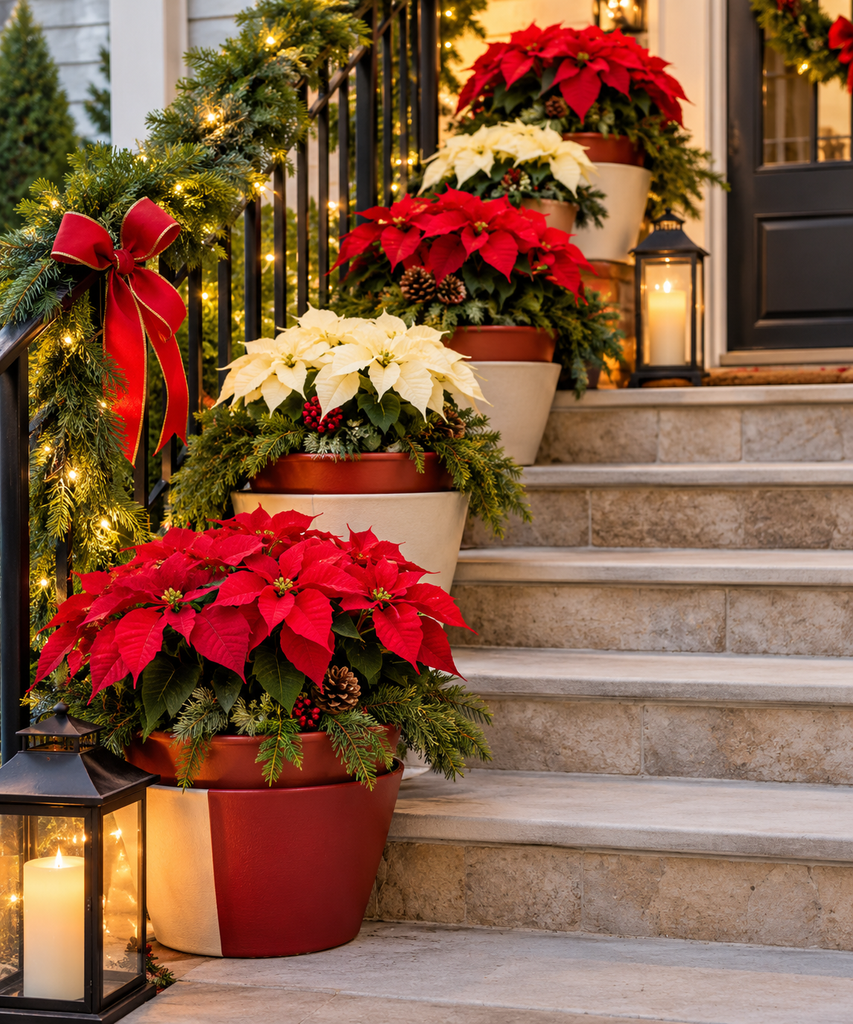
Place three or five poinsettias in plain nursery pots inside larger decorative containers, such as galvanized buckets, glazed ceramic pots, or wooden planters, and stagger them up the porch steps at different heights. The inner pot is what makes this workable. Because the poinsettia stays in its own pot, you can lift it out at night when the temperature drops or when frost is forecast, and put it back in the morning.
The practical trick is a saucer or pot feet inside the outer container, so the nursery pot doesn’t sit in standing water. If the outer container has no drainage holes, tip out any collected water after rain or watering.
This idea only works if you’re willing to carry plants in and out, or if your nights stay reliably above about 50°F. In colder climates, treat it as a daytime display and use evergreens as the permanent decoration around it.
2. Tall Planters Flanking the Front Door
A pair of tall planters beside the entrance gives you symmetry, which looks deliberate at any scale. The classic recipe is vertical, filler, and trailing: something upright like cut branches or small spruce tips in the center, poinsettias around them, and trailing greens at the edge, such as ivy or small cedar sprigs tucked into the soil.
The mistake is planting the poinsettia directly into the soil with the evergreens. A poinsettia wants to be kept evenly moist but not soggy. Evergreen cuttings in the same soil are essentially decorations, not rooted plants, and they don’t use water, so the soil stays wet longer than the poinsettia likes. Slot the poinsettia in its own nursery pot and fill around it with moss, bark, or extra soil.
If the porch is covered and sheltered from wind and frost, the planters can stay out for most of the display. If it isn’t, use the same take-it-in routine as above.
3. Window Boxes With Pots Dropped In
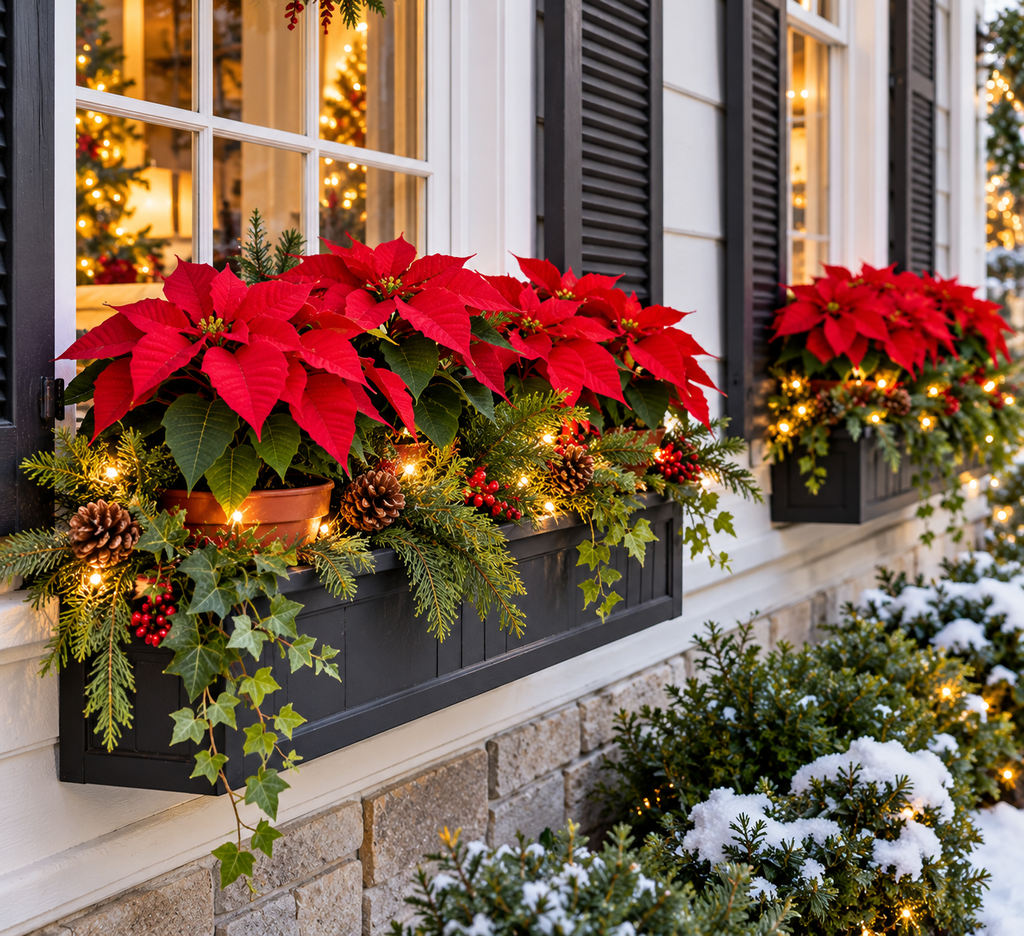
A window box is one of the better places to show off poinsettias, partly because the box shelters the plants slightly and partly because a window box is visible from inside and outside. The version that works is a window box filled with evergreen branches, pinecones, and berries, with potted poinsettias set into gaps. Think of the box as a frame, not a planter.
A few specifics help. Cut the evergreen stems at least 8 to 10 inches long so they can be pushed into soil or floral foam. Use damp sphagnum moss to hide the nursery pot rims. Choose compact poinsettias, since a large plant in a narrow box will tip.
This works best on a window that’s close enough to the house to benefit from warmth leaking through the glass, and on a south or east-facing wall that gets some daytime light. It won’t survive a hard freeze, so remove the poinsettias when temperatures dip. The evergreens and berries can stay for weeks.
4. A Wheelbarrow, Crate, or Bucket Display
A galvanized tub, wooden crate, or old wheelbarrow on the porch or patio gives you a rustic base that suits red and white poinsettias very well. Line the container with a plastic liner or tray to protect the poinsettia pots from direct contact with metal, which gets very cold overnight and can chill the roots.
Group three to five plants at slightly different heights by propping some pots on upturned smaller pots. Fill gaps with bark, pinecones, or bundles of birch branches. Because the plants share a container, check the soil in each nursery pot separately before watering. The pots in the center stay wetter than those near the edge.
5. In-Ground Planting in Mild Climates
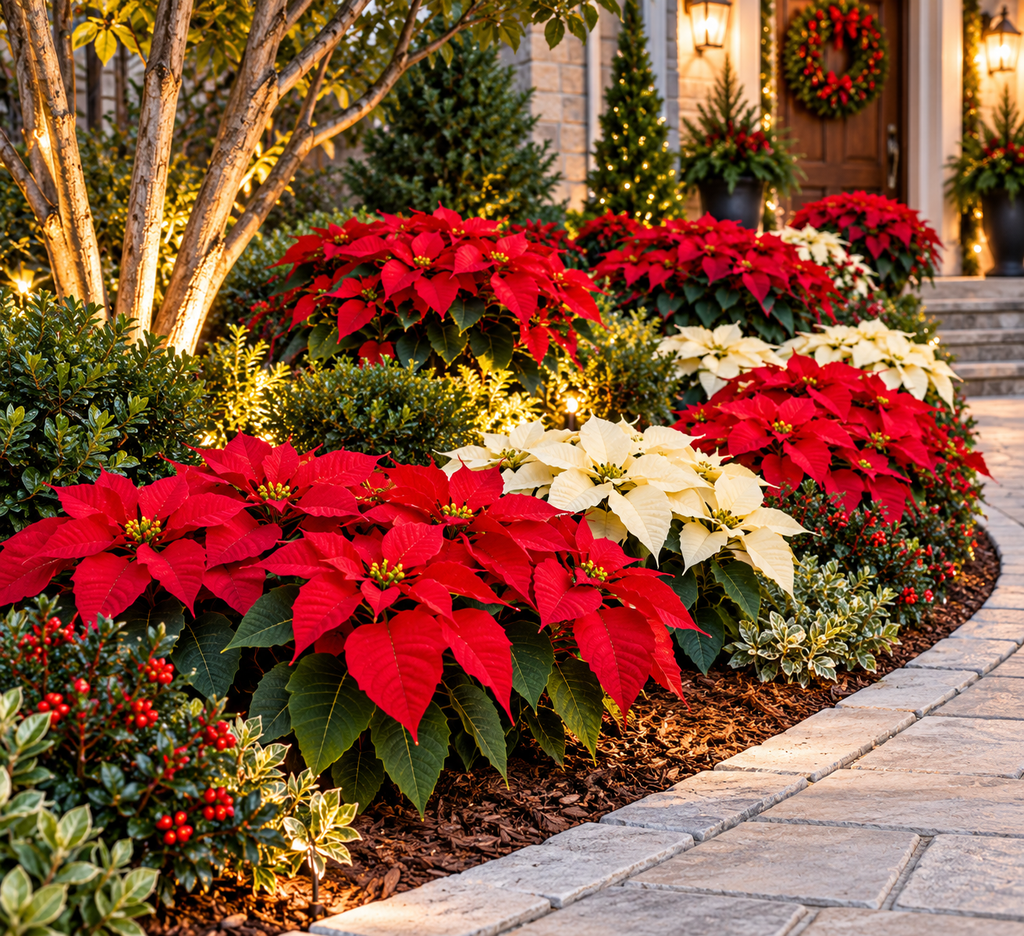
In frost-free or nearly frost-free climates, poinsettias can live outdoors as shrubs. They are generally considered hardy only in the warmest zones, roughly USDA zones 9 to 11, and even there a cold snap can burn the leaves. Where this applies, planting poinsettias into a bed beside the entrance or along a fence line gives you a seasonal feature that can last beyond one winter.
Pick a spot with morning sun and shelter from wind. Poinsettias do poorly in heavy, waterlogged soil, so raised beds or mounded soil help if your garden stays wet. Check your local frost dates and your nearest extension office before committing a store-bought poinsettia to the ground. A plant forced for holiday sale has been grown under controlled conditions, and it will take time to adjust.
If you’re in a colder area, ignore this one. A poinsettia planted outside in a freezing climate is simply a loss.
Indoor Containers
6. Baskets With a Waterproof Liner
A woven basket changes the look of a poinsettia more than almost anything else. The red is warm against natural fibers, and the basket softens the plastic pot. The only problem is water. Baskets leak.
Line the basket with a plastic bag or a shallow tray, remove the foil sleeve, and set the nursery pot inside. Water the plant at the sink, let it drain, then return it. This takes an extra minute and prevents the water stain on the table, which is usually the real reason people give up on baskets.
7. Ceramic Cachepots in Neutral Tones
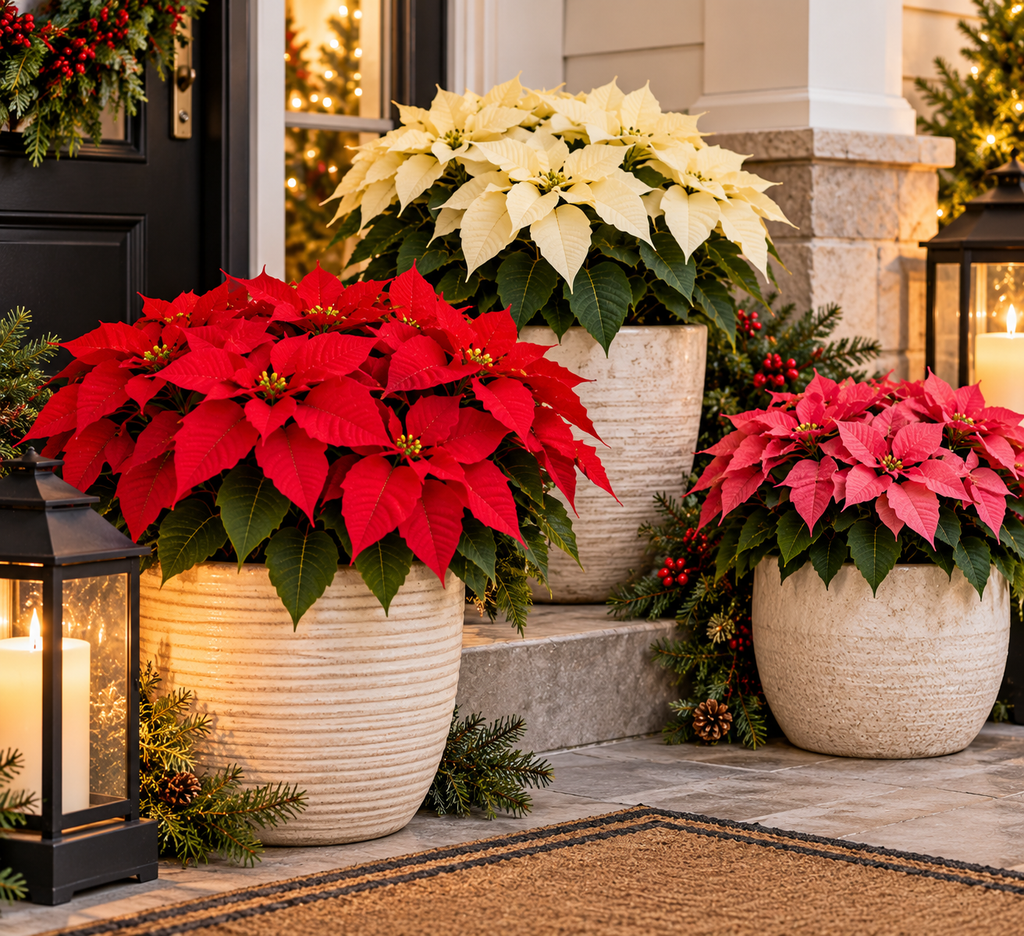
A cachepot is an outer pot that hides the nursery pot, and it’s the cleanest way to give a poinsettia a designed look. White, cream, gray, and matte black ceramic make red bracts look sharper. Pastel pots look better with pink or white varieties.
Check that the nursery pot sits at the right height. If it sinks too low, you’ll see only leaves. Put an upturned saucer or a few stones in the bottom of the cachepot to lift it so the bracts clear the rim. Skip cachepots with no drainage unless you plan to empty them after watering.
8. A Windowsill Grouping
A row of three or four small poinsettias along a sunny windowsill brings light and color together. Poinsettias do best in bright, indirect light, and they usually do better with at least about six hours a day than in a dim corner. A windowsill gives them that, but with two cautions.
The glass itself can be cold on winter nights, and bracts touching the window may chill or burn. Keep a hand’s width between the plant and the glass. And if the sill sits above a radiator or heating vent, the dry heat will wear the plant out quickly. Warm, moving air is more damaging to a poinsettia than low humidity.
Move them off the sill at night if the window is old and drafty.
9. A Console or Staircase Display
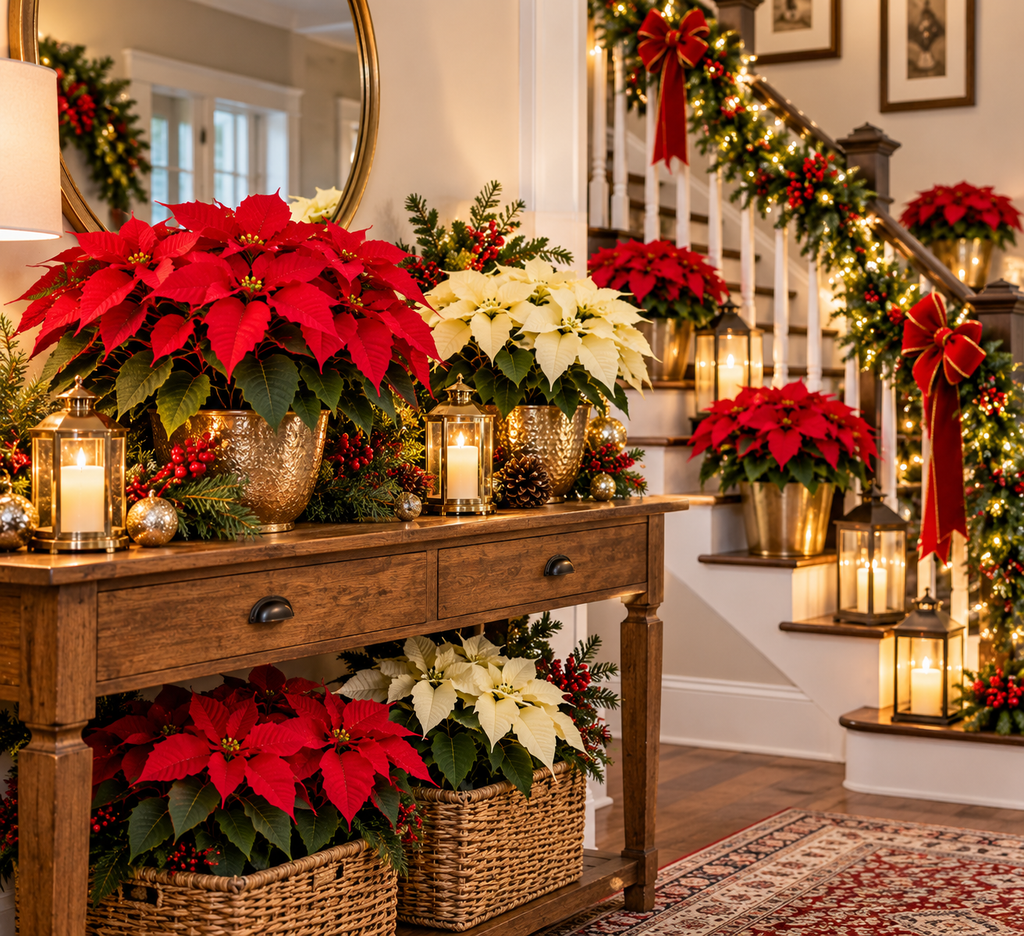
A hallway console, stair landing, or entry bench gives you a place for a long arrangement. The limit here is light. Poinsettias placed in a dim hall will hold their color for a while, but they won’t thrive over a longer period. A practical compromise is to rotate: keep a plant in the hallway for a week or two, then swap it with a plant that has been sitting in a brighter room.
Use a long wooden tray or tray-style planter to hold three or four pots so the group reads as one arrangement. Add a few stems of evergreen or eucalyptus laid along the front edge. The trailing greens soften the line and cover the pots.
Table Arrangements
10. A Trough Centerpiece for a Long Table
A narrow wooden trough or long planter box makes an excellent centerpiece for a dining table, because a row of poinsettias can run the length of the table without blocking sightlines. Choose small or medium plants in the 4-inch range so the arrangement stays below eye level for people seated across from each other.
Put the nursery pots in the trough with their rims hidden by moss, bark, or greenery. Keep the arrangement away from candle flames, and don’t place it where it will get the full blast of a heater. Water the plants before the meal, not during, to avoid dripping.
A practical rule: the arrangement should be no taller than about 12 inches if people need to talk across it.
11. A Cut Poinsettia Arrangement
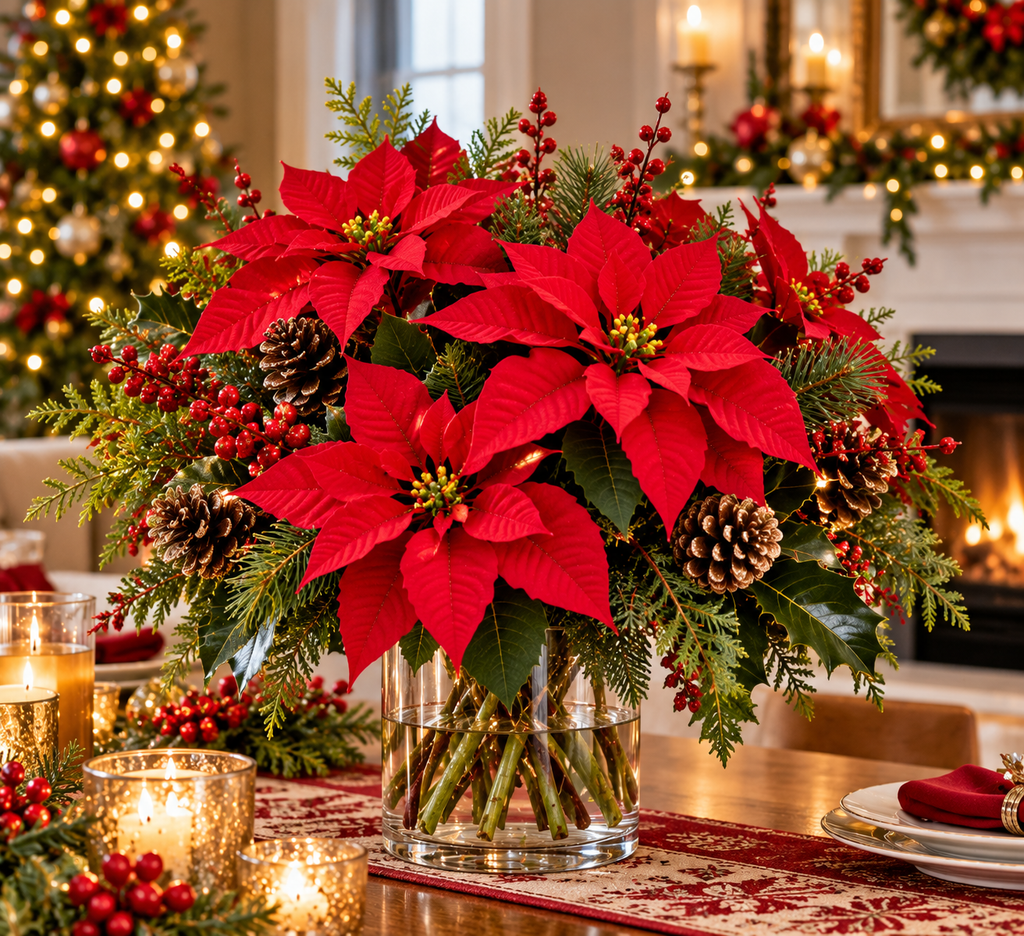
Cut poinsettias are possible, but they’re harder than people expect. The stem leaks the same milky sap that irritates skin, and the stem tends to wilt quickly if the sap isn’t sealed. A common florist method is to sear the cut end, either in boiling water for a short time or briefly over a flame, then place the stems in water. Treat this as a method to verify with a florist or a university extension source before you try it, because timing and technique matter and the sap can irritate.
Even with careful handling, cut poinsettias generally last a shorter time than a potted plant. If you want one on the table for a single evening, such as a dinner or a party, cut stems can work. If you want the display to last the season, use potted plants.
Pair cut poinsettia stems with sturdier materials that don’t wilt as fast, such as magnolia leaves, eucalyptus, or pine. They hold the shape of the arrangement even if the poinsettia bracts soften.
12. Mini Poinsettias as Place Settings
Miniature poinsettias in 2- to 3-inch pots can serve as place settings, favors, or small gifts. Wrap each pot in kraft paper or burlap, and tie it with twine, with a name tag if you like. They look generous and cost much less than a floral centerpiece.
The risk is the same as any small pot: it dries out faster. A small pot can go from moist to dry within a day or two in a warm room. Tell guests to remove the wrap and water lightly when they get home, and to take the plants home that evening if the room will be cold afterward.
Color Combinations and Evergreen Pairings
13. Red and White Combinations
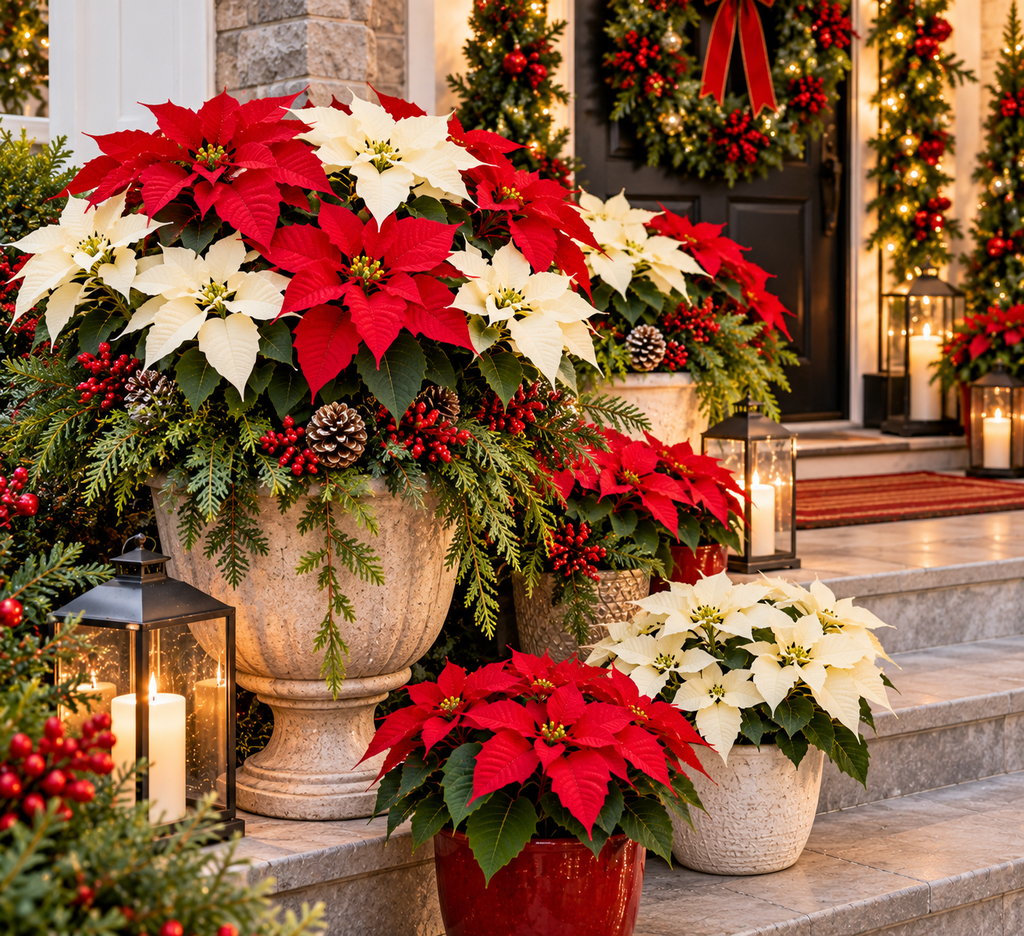
Red and white poinsettias together read as classic Christmas without needing much else. The principle that makes this work is proportion. A scattering of equal red and white plants tends to look busy. A group with two or three red plants and one or two white ones looks intentional, and a group of all white with a single red accent can look striking.
White bracts show damage more clearly than red. Brown edges, bruising, and cold marks are more visible on white, so keep white varieties in more sheltered locations. If you’re mixing them on a porch, the white plants will tell you first that the temperature has dropped too far.
For a cleaner look, repeat the colors elsewhere: red ribbon, white pillar candles, a white ceramic pot with a red poinsettia. Repetition is what ties the display together.
14. Poinsettias With Evergreens
Evergreens do the heavy lifting in cold weather. Fir, cedar, boxwood, pine, magnolia leaves, and holly all hold up for weeks outdoors, and they give a poinsettia a backdrop that makes the red look richer. The idea is to let evergreens provide structure and let the poinsettia act as an accent, not the other way around.
Several practical points apply:
- Fresh-cut evergreens last longer if the stems are put in water or damp floral foam. In a cold outdoor setting, they can last for weeks. Indoors near a heater, they dry out faster.
- Holly berries and mistletoe berries are toxic if eaten, so keep them out of reach of small children and pets.
- Pine and fir needles drop as they dry. A tray under the arrangement makes cleanup much easier.
A wreath on the door with a pair of poinsettia pots on either side is a simple way to link evergreens and poinsettias without much work.
15. Pink, Marbled, and Speckled Varieties
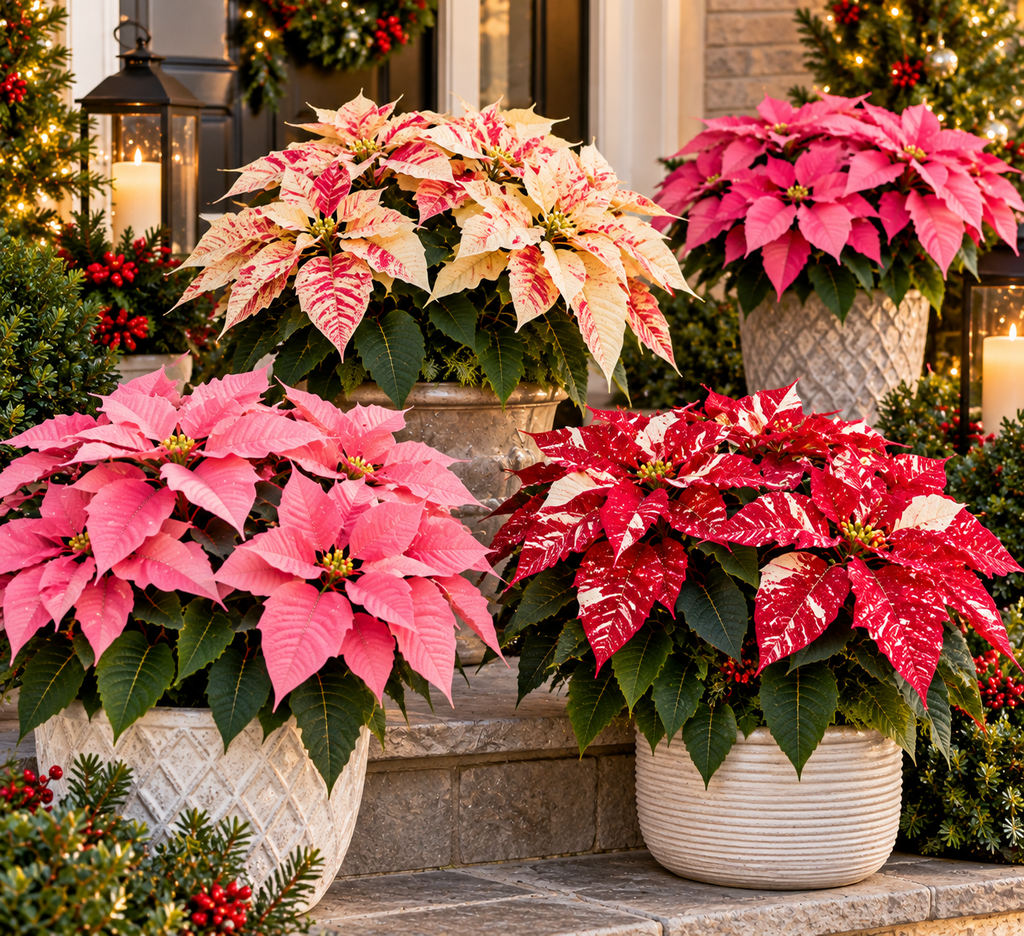
Not every poinsettia has to be solid red. Growers offer pink, cream, peach, speckled, and marbled varieties, and some have curled or ruffled bracts instead of flat ones. These work well in rooms where classic red feels too loud, and they pair well with neutral materials like linen, stoneware, and brass.
A few notes on choosing. Marbled and speckled plants look best in good light, because their patterns can fade into the background in a dim room. Pink and cream plants tend to show damage more easily, so handle them gently when moving. Colors can also vary in shops depending on lighting, so look at the plant in daylight if possible.
If you like the look but not the price, buy one unusual plant and use it as a focal point among simpler red ones.
Keeping Poinsettias Looking Good Through the Season
The decoration part is easy. The care part decides whether the display lasts into January.
Watering. Water when the top of the soil feels dry to the touch, and water thoroughly until it runs out of the bottom, then let it drain. The most common problem is overwatering, especially when plants are wrapped in foil or sitting in a decorative pot with no drainage. Wilting, yellowing lower leaves, and leaf drop are all warning signs, and they can mean either too much water or too little, so check the soil before reacting.
Light. Bright, indirect light suits them best. A spot near a sunny window is better than a dark corner, but direct midday sun through glass can scorch bracts.
Temperature. Daytime room temperatures in the mid-60s to low 70s °F (roughly 18 to 22°C) are generally recommended, and cooler nights are fine as long as they stay above about 50°F. Avoid drafts from doors, vents, and fireplaces.
Cold damage. Cold-damaged poinsettias often look fine at first, then wilt, blacken, or drop leaves a day or two later. If a plant has been exposed to cold, bring it into a warm room and avoid overwatering while it recovers.
When it’s time to let go. After a few weeks, bracts begin to fade, and many people simply replace the plant. Reblooming a poinsettia for the next year is possible but demanding, since it requires long uninterrupted nights, typically around 12 to 14 hours of darkness for several weeks starting in autumn, plus consistent care. If that sounds like too much, enjoy the plant for the season and compost it.
Questions Readers Often Ask
Can I leave a poinsettia outside in winter?
Only in warm climates. In most places, poinsettias should be outdoors only when nights stay above about 50°F, and brought in if frost or cold is forecast. If you can’t bring them in at night, use evergreens and berries as your permanent outdoor display and keep the poinsettias for sheltered or indoor spots.
Should I take off the foil wrapper?
Yes, or at least punch holes in the bottom so water can drain. Water trapped in foil is a leading cause of root rot. If you want to keep the foil for looks, lift the plant out at watering time and let it drain fully before putting it back.
Are poinsettias poisonous to pets and children?
They are generally listed as mildly toxic. Chewing the plant can cause drooling, vomiting, or stomach upset, and the sap may irritate skin or eyes. They aren’t considered as dangerous as the myth suggests, but if a pet or child eats a significant amount, or you see symptoms that concern you, contact a vet or poison control service.
How long will a poinsettia last as a decoration?
With reasonable light, steady temperature, and careful watering, a potted poinsettia can stay colorful for several weeks, often through the holidays and sometimes longer. Cut stems last much less time.
Can I plant my store-bought poinsettia in the garden?
Only if you live in a frost-free or nearly frost-free climate. Even there, pick a sheltered spot and be ready for the plant to take time adjusting. In cold areas, the plant will not survive outdoors over winter.
Key Takeaways
Choose the setup that fits your climate before you choose the colors. In cold regions, the pot-in-pot method (poinsettias in nursery pots, set inside decorative containers) is the most useful technique, because it lets you move plants in and out as the weather changes. Evergreens, berries, and branches can carry the outdoor display on their own, with poinsettias added for the days when temperatures allow.
Indoors, solve drainage first, then light, then look. A beautiful basket or cachepot is worthless if water pools inside it, and a perfect table centerpiece will fade quickly in a dim room. Keep plants away from drafts, heaters, and cold glass, water only when the soil is dry, and handle the plants gently, since the bracts bruise easily.
Poinsettias are short-term decorations that reward a little planning. Match each plant to the right spot, and the display can last through the holidays and beyond.

About Syprose Kiche
Syprose Kiche is the creator and writer behind My Besuited Home, a practical home and garden website covering DIY projects, gardening, lawn care, landscaping, home improvement, and outdoor living. She focuses on turning everyday homeowner questions into clear, practical guides backed by careful research and useful real-world considerations.