
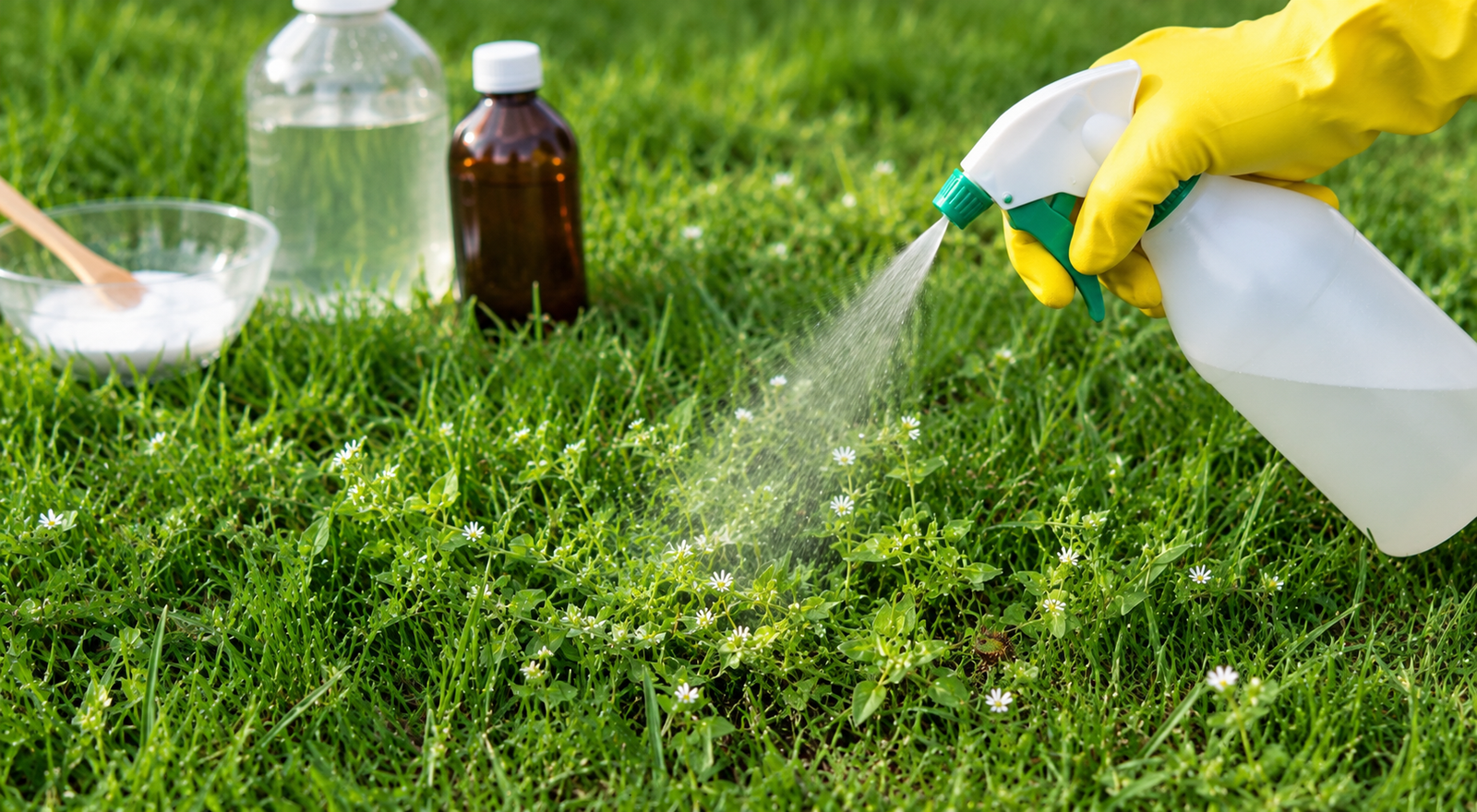
You step outside on a Saturday morning, coffee in hand, ready to admire your lawn. Instead, you spot it: a low, sprawling mat of tiny green leaves with little white star-shaped flowers, creeping across your grass like it pays rent there. That’s chickweed, and if you’ve got one patch, I promise you’ve got fifty more you just haven’t noticed yet.
Chickweed spreads fast, roots shallow, and seeds like it’s training for a competition. By the time most homeowners notice it, it’s already claimed a good chunk of the yard. The good news? You don’t need a truckload of chemicals to send it packing. I’ve pulled, smothered, and out-stubborned chickweed for over a decade in my own yard and in yards I’ve helped neighbors fix, and I’ve got a system that actually works without turning your lawn into a science experiment.
This guide walks you through exactly how chickweed gets into your lawn, how to kill it naturally, and — this part matters most — how to keep it from coming right back next spring.
What Is Chickweed and Why Is It Taking Over Your Lawn?
Chickweed (Stellaria media is the fancy name, if you want to sound smart at the garden center) is a cool-season annual weed. It loves the same conditions your grass slows down in: cool temps, damp soil, and thin or bare patches where sunlight hits the dirt directly.
Here’s the thing nobody tells you: chickweed isn’t really the problem. It’s a symptom. Chickweed is a freeloader. It moves into weak, thin, compacted lawns because that’s where it has room to spread without competition. A thick, healthy lawn practically chickweed-proofs itself. I’ve seen two yards on the same street, same soil, same weather — one covered in chickweed, one totally clean — and the only difference was mowing height and how often the owner watered.
A few reasons chickweed shows up in force:
- Your lawn is thin or has bare spots from foot traffic, shade, or old dead grass.
- You’re watering lightly and often instead of deeply and less frequently, which keeps the top inch of soil damp — chickweed’s favorite condition.
- Your soil is compacted, so your grass roots can’t compete for space and nutrients.
- You mowed too short last season, weakening the turf and opening it up to invaders.
One plant can produce over 2,500 seeds in a single season, and those seeds can sit in your soil for years waiting for the right conditions. That’s why chickweed seems to “come back” even after you think you’ve cleared it out. It’s not coming back. It never left. It was just waiting underground.
How to Identify Chickweed vs. Other Lawn Weeds
Before you go to war, make sure you’re actually fighting chickweed and not something else. I’ve had people ask me to help “kill their chickweed” and it turned out to be henbit or speedwell, which need slightly different approaches.
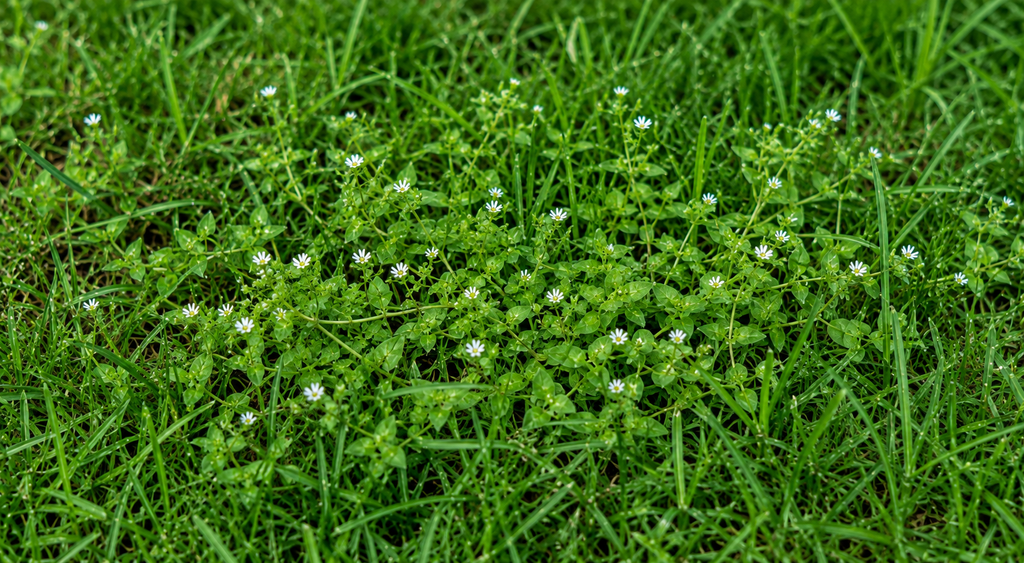
Common chickweed has:
- Small, oval-shaped leaves that grow in opposite pairs along a thin stem.
- A single line of fine hairs running down one side of the stem (this is the giveaway detail most people miss).
- Tiny white flowers with five deeply notched petals that make it look like there are ten petals instead of five.
- A sprawling, mat-forming growth habit that roots at the stem nodes as it spreads.
If you pull a piece up and the stem snaps cleanly with a slightly juicy, hollow feel, that’s another good sign you’re dealing with chickweed. Mouse-ear chickweed is a similar but fuzzier cousin, and while the removal strategy is nearly identical, mouse-ear tends to be a perennial, so it’s a bit more stubborn about coming back.
Pull It by Hand While the Soil Is Damp
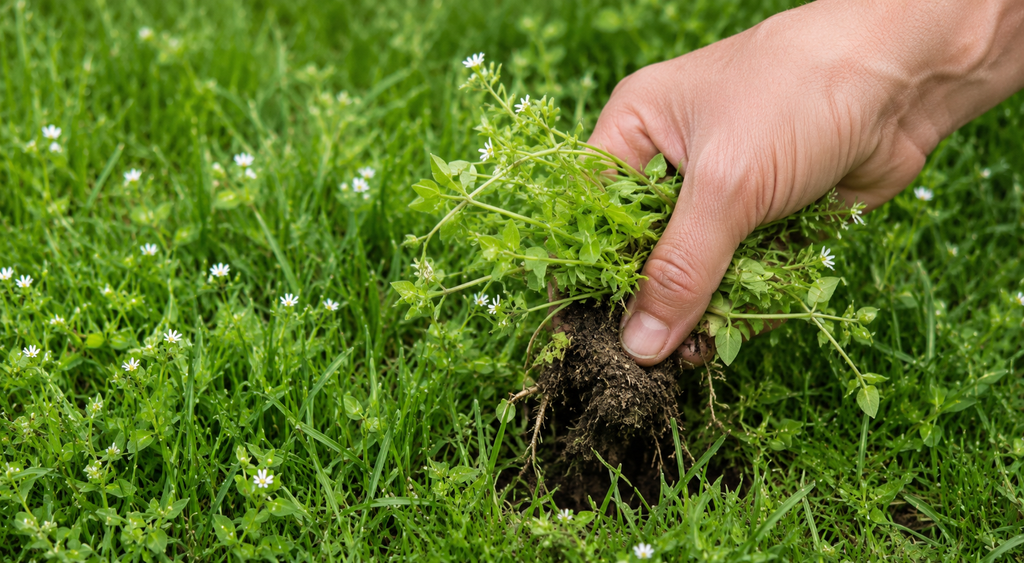
This is unglamorous, but it’s the fastest way to see results, especially for small to medium infestations. Chickweed has shallow roots, which actually works in your favor here.
- Wait until after rain or water your lawn the evening before, so the soil is soft.
- Grab the base of the plant close to the soil line, not just the leaves.
- Pull slowly and steadily instead of yanking. Yanking snaps the stem and leaves roots behind that’ll just resprout.
- Shake off excess soil and toss the whole plant in a bag, not your compost pile — chickweed seeds can survive composting if your pile doesn’t get hot enough.
- Go over the area again a week later to catch anything you missed the first time.
The summer my neighbor Doug and I decided to hand-pull an entire quarter-acre of chickweed in one weekend, we learned real fast that gloves are non-negotiable and that a foam kneeling pad is worth every penny. We got it done, but my lower back sent me a strongly worded complaint for a solid week afterward.
Hand-pulling works best when the infestation is still patchy. If chickweed has taken over more than 30% of your lawn, you’ll want to pair this with one of the smothering or overseeding methods below, because pulling alone won’t out-pace the seed bank.
Smother It with Corn Gluten Meal or Mulch
Corn gluten meal is one of my favorite natural tools because it does double duty: it’s a pre-emergent that stops weed seeds from developing roots, and it slowly releases nitrogen that feeds your grass. Win-win.
- Apply corn gluten meal in early spring, about 2-3 weeks before your last expected frost, or in early fall before chickweed germinates.
- Use roughly 20 pounds per 1,000 square feet, spread evenly with a broadcast spreader.
- Water it in lightly, then let the area dry out for a couple of days.
- Reapply about 6 weeks later for stubborn areas.
One thing to know: corn gluten meal prevents seeds from rooting, but it won’t kill established chickweed that’s already growing. So if you’ve got mature plants, pull those by hand first, then apply corn gluten meal to stop the next wave.
For bare or thin patches where chickweed loves to move in, a light layer of mulch or straw (about 2-3 inches) works as a physical barrier. Chickweed seeds need light to germinate, so blocking that light with mulch stops a huge percentage of new sprouts before they start. This is especially handy around garden beds and lawn edges where chickweed tends to creep in from the sides.
Use Boiling Water or Vinegar for Small Patches
For isolated patches — think driveway cracks, along sidewalks, or a small stubborn cluster in the corner of your yard — boiling water and household vinegar are legit natural weed killers. I wouldn’t use these on your actual lawn grass, though, because they’re not selective. They’ll kill whatever they touch, grass included.
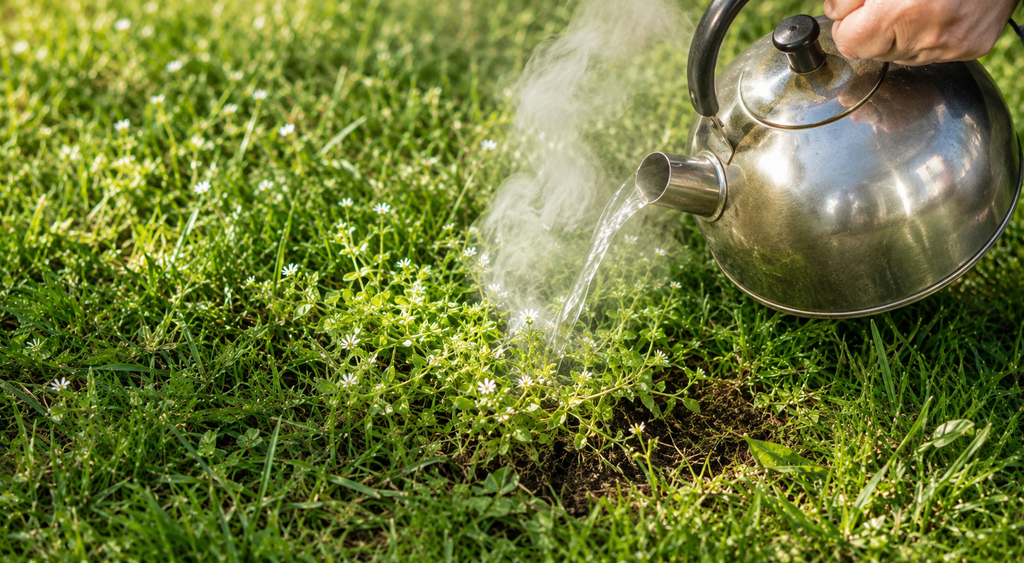
Boiling water method:
- Boil a full kettle of water.
- Carefully pour it directly onto the chickweed, focusing on the base of the plant.
- Wait 24-48 hours and check for browning and wilting.
- Pull the dead plant material once it’s fully wilted.
Vinegar method:
- Use horticultural vinegar (20% acidity) for the best results — household vinegar at 5% acidity works but needs more applications.
- Spray directly on the leaves on a sunny day, since heat helps the vinegar work faster.
- Avoid spraying on windy days so it doesn’t drift onto plants you actually want to keep.
- Reapply after a few days if regrowth appears.
Quick side note: neither of these methods kills the roots of established perennial weeds, but chickweed’s shallow root system means a couple of solid applications usually finishes the job.
Thicken Your Lawn So Chickweed Has Nowhere to Grow
Here’s my honest opinion: every natural chickweed remedy is a band-aid if you skip this step. I’ve found that people who treat symptoms without fixing the underlying thin lawn end up fighting the same battle every single spring, and it’s exhausting. A dense, healthy lawn is genuinely the best natural weed killer there is, because it blocks the sunlight chickweed seeds need to germinate in the first place.
- Overseed thin or bare patches in early fall or spring with a grass type suited to your climate.
- Mow at the taller end of your grass type’s recommended range. Taller grass shades the soil and starves out weed seedlings.
- Water deeply but infrequently, about 1 inch per week, instead of daily light sprinkles. This encourages deep grass roots and dries out the topsoil, which chickweed hates.
- Aerate compacted soil once a year so your grass roots can actually spread and compete.
- Feed your lawn with a balanced fertilizer in spring and fall to keep it dense and vigorous.
This is the slow, unsexy fix, but it’s the one that actually sticks. Pulling weeds gives you a clean lawn for a season. Building a thick lawn gives you a clean lawn for years.
Real Talk: What Actually Works and What’s a Waste of Time
I’ll be straight with you about a few things that get recommended constantly but don’t hold up well in practice.
Baking soda sprinkled on chickweed is one of those Pinterest tips that sounds clever but honestly does more harm than good. It changes your soil pH and can mess with your grass just as much as the weed. I’ve tried it, and the payoff wasn’t worth the soil damage.
Flame weeding looks satisfying in videos, but for chickweed specifically, it’s overkill. Chickweed roots are shallow enough that pulling or smothering gets the job done without the fire risk or the scorched grass around the target weed.
Also, don’t expect a single treatment round to be the end of it. Chickweed seeds can lie dormant in soil for years, so even a perfectly clean lawn today can sprout new chickweed next season if conditions line up right. That’s not a failure on your part. It’s just how the plant works. Stay consistent with the lawn-thickening steps and you’ll see the infestations shrink every year until it’s a total non-issue.
One more honest note: if you’ve got a serious, lawn-wide infestation and zero time to hand-pull or manage a multi-step natural plan, natural methods are going to take longer than a synthetic pre-emergent herbicide. I’m not against chemical options if that’s what someone needs, but for most home lawns, the natural approach works fine — it just asks for a little patience.
When to Treat Chickweed (Timing Matters More Than You Think)
Timing is honestly half the battle with chickweed. This weed germinates in cool weather, mainly in fall and again in early spring, so your prevention window is narrower than most people assume.
- Early fall (September-October): This is prime chickweed germination season. Apply corn gluten meal and overseed thin patches now.
- Late winter to early spring: Chickweed that survived winter starts actively growing again. This is your window for hand-pulling before it flowers and sets seed.
- Late spring into summer: Chickweed typically dies back on its own as temperatures rise, so this isn’t your main battle season, but it’s a great time to focus on lawn thickening for next year.
Missing the fall window is the single biggest reason people feel like they’re “always” fighting chickweed. Catch it before it germinates, and you cut your workload in half.
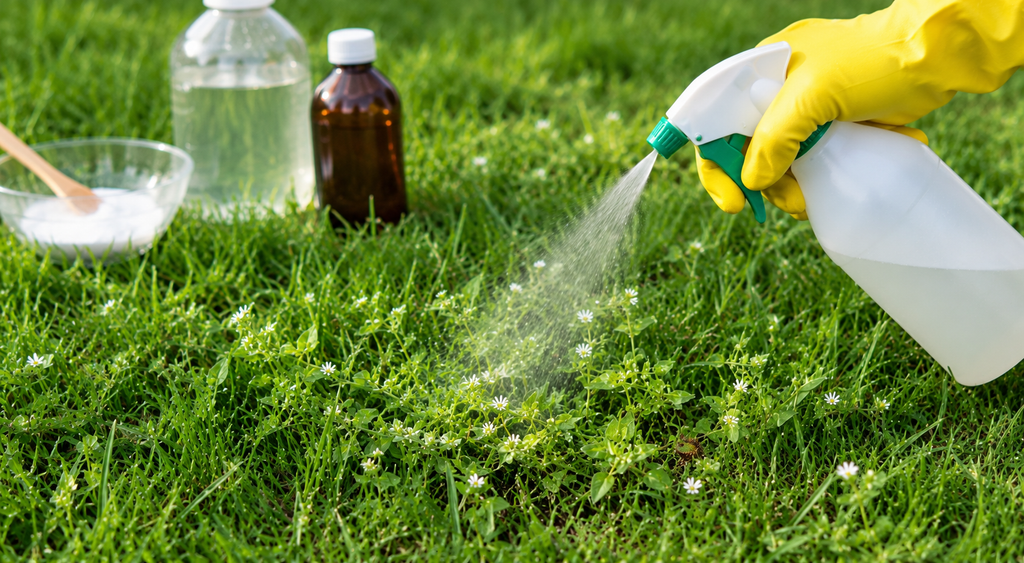
DIY Natural Chickweed Spray Recipes Worth Trying
If you want something a bit more targeted than plain vinegar, a couple of homemade sprays have earned a permanent spot in my garden shed. Neither one is magic, but both give you an extra edge on stubborn patches without introducing anything synthetic to your soil.
Vinegar and dish soap spray:
- Mix 1 gallon of horticultural vinegar with 1 tablespoon of plain dish soap. The soap acts as a surfactant, helping the vinegar stick to the waxy surface of chickweed leaves instead of beading up and rolling off.
- Add 2 tablespoons of salt if you’re treating a patch you don’t mind staying bare for a while, like a gravel path or driveway crack. Skip the salt near lawn grass, since it lingers in soil and can prevent anything from growing there for months.
- Pour into a spray bottle and apply directly to chickweed foliage on a dry, sunny afternoon.
- Check back in 24 hours. You should see wilting and browning starting already.
Citrus oil spray:
- Combine 2 tablespoons of d-limonene (a citrus-based oil available at most garden centers) with a quart of water and a small squirt of dish soap.
- Shake well before each use, since the oil separates from the water quickly.
- Spray directly on chickweed leaves, avoiding any nearby grass or plants you want to protect.
- This one tends to work a little slower than vinegar, so give it 2-3 days before judging results.
I’ll be honest, the citrus spray is my personal favorite because my yard smells like an orange grove for a day afterward, which is a nice bonus nobody asks for but everybody appreciates. That said, it’s pricier per application than plain vinegar, so I save it for smaller, high-visibility patches near the front porch rather than treating the whole yard with it.
Frequently Asked Questions About Natural Chickweed Removal
Does chickweed actually hurt my grass, or is it just ugly? Mostly it’s a competition problem. Chickweed steals water, sunlight, and nutrients from your grass roots, and a thick mat of it can smother out young grass seedlings trying to establish. It won’t kill an already-healthy lawn outright, but it will absolutely stunt new growth and thin out weak areas even further.
Can chickweed be a good thing at all? A little bit of chickweed is actually edible and shows up in salads in some parts of the world, and it’s a decent early-season food source for pollinators before your other flowers bloom. I’m not telling you to let it take over, but if you spot a small patch in an out-of-the-way corner, it’s not the end of the world to leave it be for a week or two.
How long does it take to get rid of chickweed naturally? For a small patch, hand-pulling and a follow-up spray can clear things out in about two weeks. For a lawn-wide infestation, expect one full growing season of consistent effort — pulling, smothering, overseeding — before you see a dramatic difference, and a second season before it’s mostly a non-issue.
Will one round of treatment keep chickweed from coming back next year? No, and anyone who tells you otherwise is selling something. Chickweed seeds can survive in soil for years, so ongoing prevention through mowing height, watering habits, and fall pre-emergent applications matters more than any single treatment.
Parting Wisdom
Chickweed isn’t a sign you’re a bad lawn owner. It’s a sign your lawn has a little room to spare, and chickweed noticed before you did. Pull what you can, smother what you can’t, and spend most of your energy thickening up your grass so there’s simply no vacancy left for chickweed to move into. Do that consistently for a season or two, and you’ll go from dreading your lawn to actually enjoying that Saturday morning coffee outside.
Have you battled chickweed in your own yard? Drop your story in the comments below — I’d love to hear what’s worked for you, or what totally flopped. And if you’ve got a lawn weed you can’t identify, describe it in the comments and I’ll help you figure out what you’re dealing with.

About Syprose Kiche
Syprose Kiche is the creator and writer behind My Besuited Home, a practical home and garden website covering DIY projects, gardening, lawn care, landscaping, home improvement, and outdoor living. She focuses on turning everyday homeowner questions into clear, practical guides backed by careful research and useful real-world considerations.