
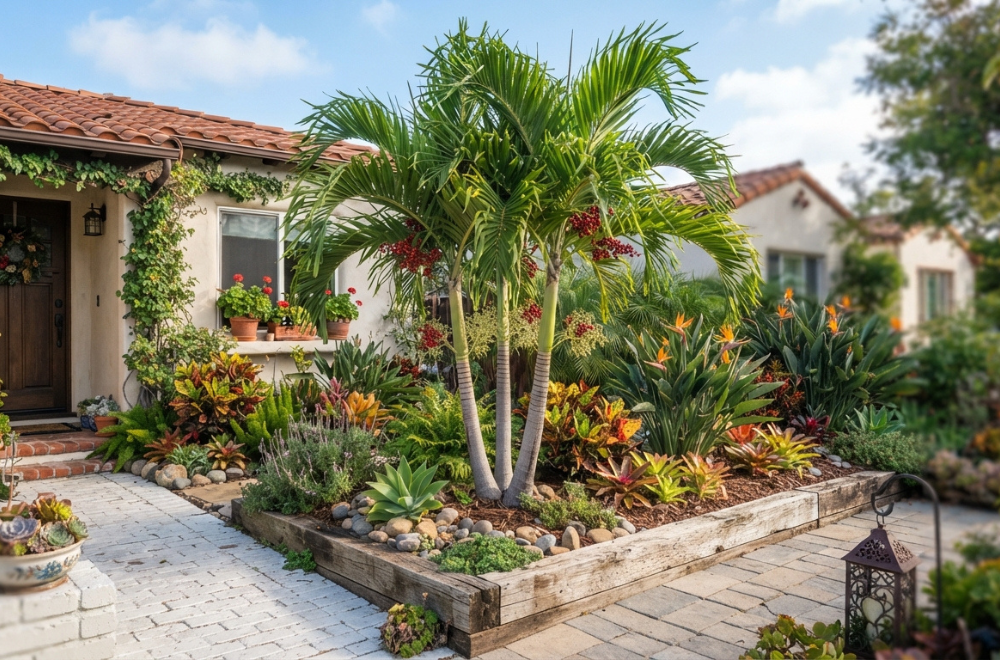
Your patio looks tired. Your living room corner has been empty since you moved in three years ago. You want that vacation-house feeling, but you’re not sure if you can actually keep a palm alive without a Florida zip code.
I get it. My first palm tree purchase was a $60 impulse buy from a grocery store parking lot, and it was dead within six weeks because I treated it like a cactus and forgot it was basically a rainforest plant in a pot. Since then I’ve grown, killed, replanted, and eventually mastered more palm varieties than I care to admit, both indoors and out.
This list covers 13 palm tree ideas for pretty much any space — small apartments, sunny backyards, shady porches, even that weird corner near your bathtub that gets weirdly good light. I’ll tell you which ones are foolproof, which ones are needy divas, and which ones I’d never buy again.
1. Areca Palm for Bright, Airy Corners
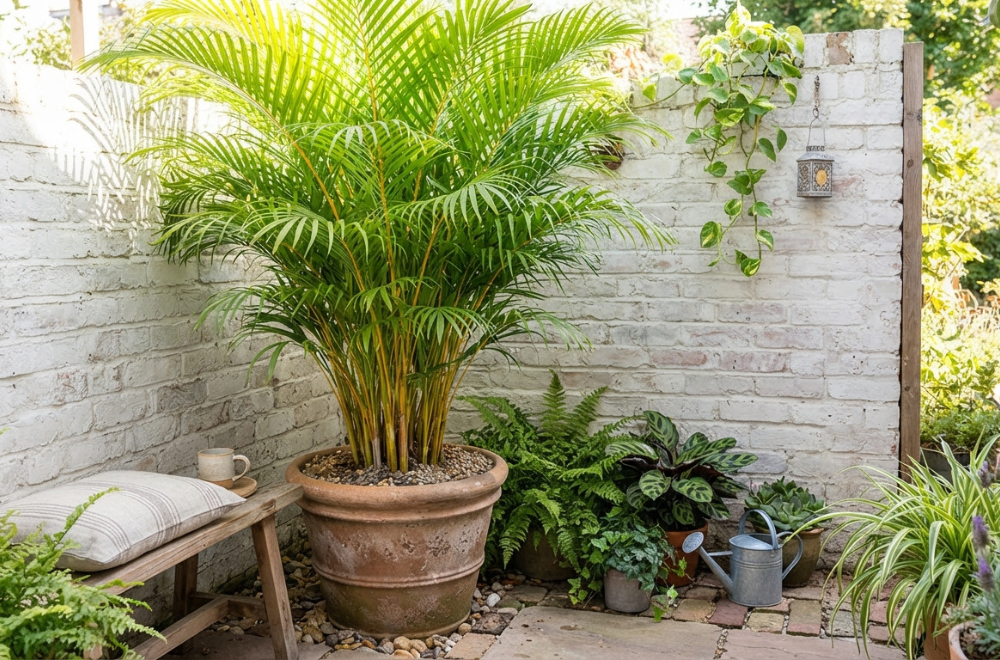
The areca palm is the plant equivalent of a golden retriever. Friendly, easy to please, and it makes any room look instantly more put-together.
I keep one in my dining room next to a big south-facing window, and it’s grown almost two feet in a year without much fuss from me. The feathery fronds catch light in a way that makes even a boring beige room feel like a plant magazine spread.
Areca palms want bright, indirect light and a good soak once the top inch of soil dries out. They’re also one of the better air-purifying houseplants, so if you’ve got a stuffy office or a bedroom that never gets fresh air, this is a smart pick.
One thing I’ll be upfront about: areca palms are picky about water quality. Mine got brown, crispy tips for months until I switched from straight tap water to filtered water. Turns out the fluoride and chlorine in my city’s tap water was the problem the whole time.
2. Kentucky Palm (Kentia Palm) for Low-Light Rooms
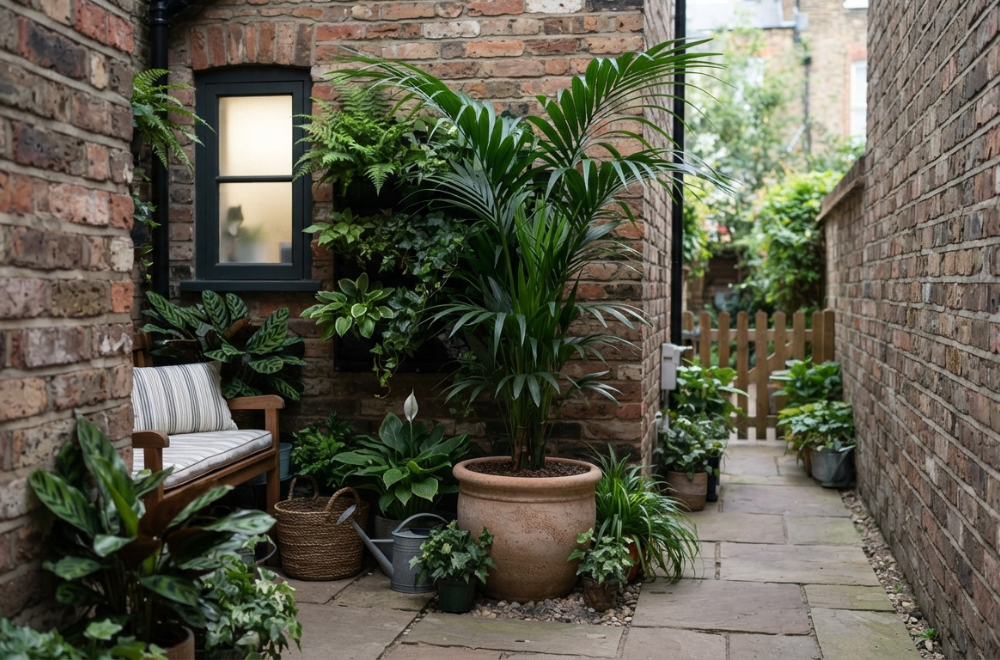
If you’ve got a room with a north-facing window or one dim corner that seems to kill every plant you put there, the kentia palm is your answer.
This is the palm hotels use in lobbies for a reason — it tolerates low light better than almost any other palm variety, and it grows slowly enough that you won’t need to repot it every year. I put mine in my home office, which gets maybe two hours of indirect light a day, and it’s thrived for three years now.
Kentia palms are also famously slow growers, which sounds like a downside but is honestly a gift if you’re forgetful. Water it every 7 to 10 days, let it dry out between waterings, and mostly leave it alone.
The one thing that’ll kill a kentia palm faster than neglect is overwatering. I nearly lost mine my first year because I was treating it like a needy tropical plant instead of the tough, patient thing it actually is. Yellow, mushy fronds are your warning sign to back off the watering can immediately.
3. Majesty Palm for a Statement Piece
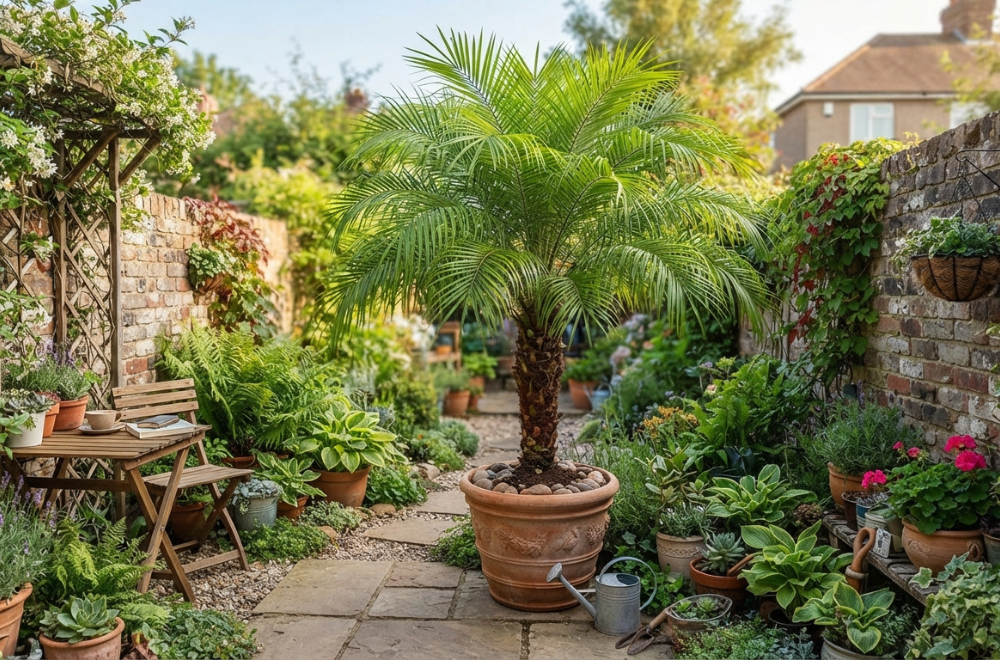
Majesty palms are the drama queens of the palm world. Big, full, arching fronds that make a statement the second you walk in the room. If you want a “wow” plant for an entryway or a living room with high ceilings, this is it.
I bought one for a client’s sunroom, and it filled an entire empty corner within a season. The fronds can stretch several feet long, giving that lush, jungle-vibe people search for when they type “how to make my house feel like a resort.”
Majesty palms need consistently moist soil and high humidity, which is where most people go wrong with them. They’re native to riverbanks in Madagascar, so a dry apartment with central heating running all winter is basically their nightmare scenario.
Real talk: I’ve seen more majesty palms die in average homes than any other palm on this list. Unless you’re willing to mist it regularly or run a humidifier nearby, I’d actually steer you toward a different variety. It looks amazing on Pinterest, but the upkeep is no joke.
4. Parlor Palm for Small Apartments and Tight Budgets
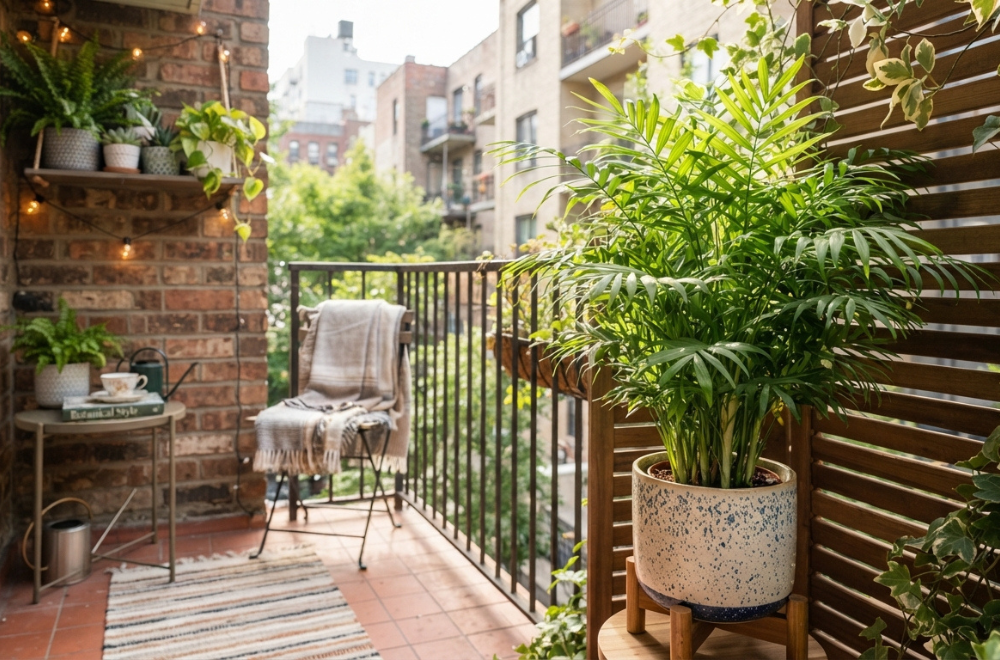
The parlor palm is the palm I recommend to literally everyone who says “I kill every plant I own.” It’s cheap, compact, and shockingly forgiving.
I’ve had a parlor palm sitting on my bathroom windowsill for going on four years now, and I honestly forget to water it half the time. It tops out around 4 to 6 feet indoors, which makes it perfect for apartments where a 10-foot majesty palm just isn’t happening.
Parlor palms tolerate low light, low humidity, and inconsistent watering better than any palm I’ve grown. That’s exactly why they were the “it” houseplant during the Victorian era — people kept them in gaslit parlors with terrible air quality, and they survived just fine.
If you’re searching for “best indoor palm for beginners” or “palm tree that doesn’t die easily,” stop scrolling. This is your plant.
5. Ponytail Palm for Quirky, Low-Maintenance Style
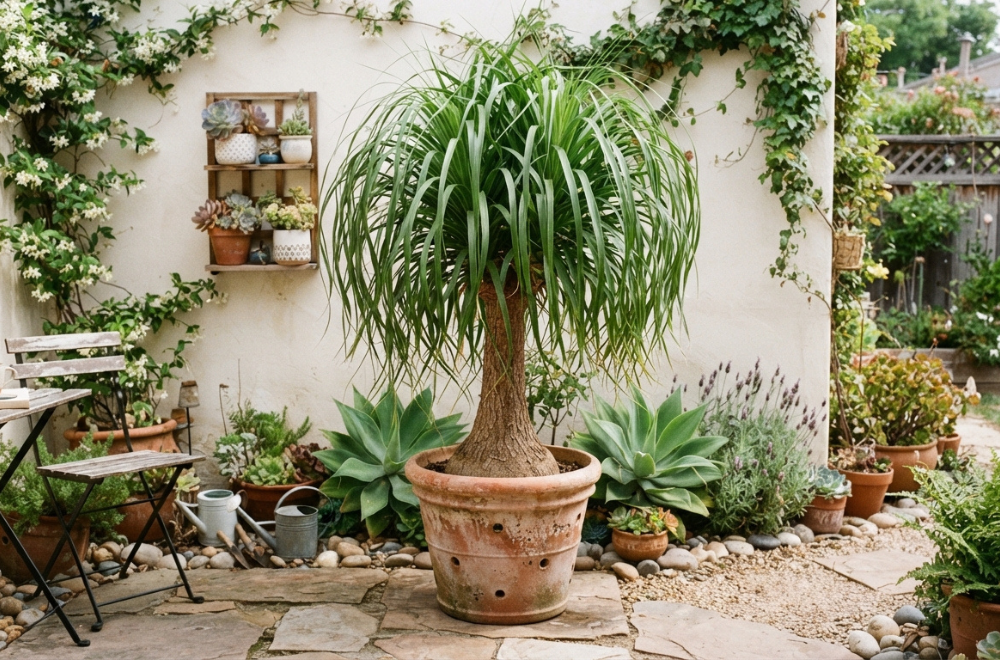
Technically, the ponytail palm isn’t even a true palm — it’s more closely related to a succulent. But it’s sold as one everywhere and it looks the part, so it’s earning a spot on this list.
That bulbous trunk stores water like a camel stores fat, which means you can genuinely neglect this thing for weeks and it’ll be fine. I keep mine on a sunny windowsill and water it maybe once every two to three weeks. The curly, ponytail-like leaves give it a fun, sculptural look that works great in a modern or minimalist space.
Ponytail palms grow slowly and can live for decades, even in a small pot. Mine has outlasted three apartments, two breakups, and one particularly rough winter when my heater broke for a week.
If you want something that looks tropical but behaves like a cactus, this is the loophole.
6. Bamboo Palm for Privacy Screening and Air Quality
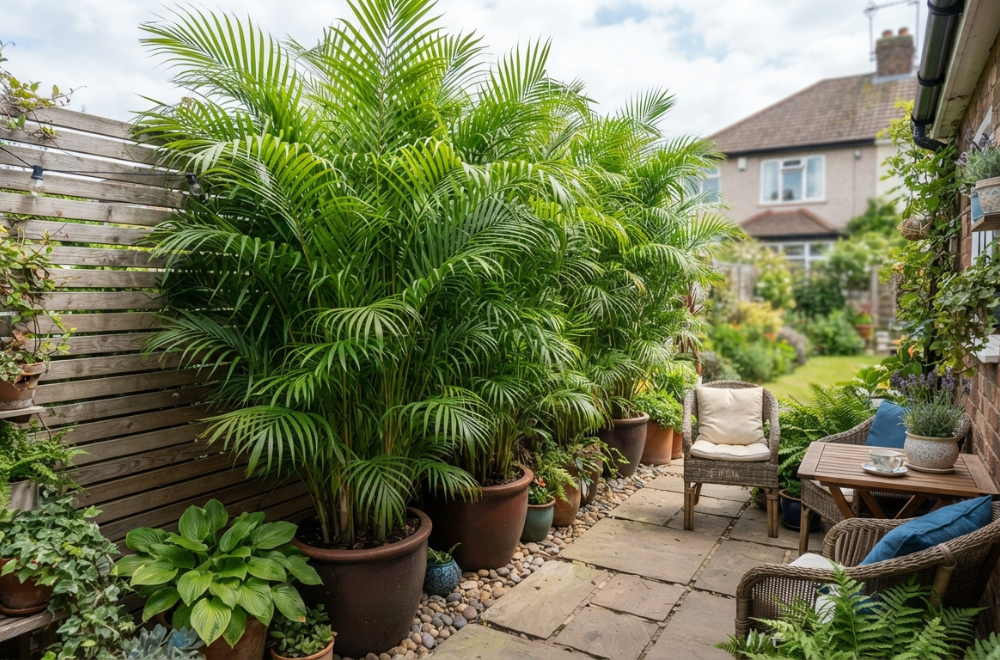
Bamboo palms have thin, cane-like stems that cluster together, giving you a natural privacy screen without the commitment of actual bamboo (which, fair warning, can take over your entire yard if you’re not careful).
I planted a row of bamboo palms along a client’s fence line to block a not-so-great view of the neighbor’s shed, and within two seasons it created a full, green privacy wall. Indoors, they’re one of NASA’s top-rated air-purifying plants, so if that’s a search term you’ve typed before, this is your answer.
Bamboo palms like bright, indirect light and consistently moist (not soggy) soil. They’re more humidity-loving than a parlor palm but way less fussy than a majesty palm.
Quick side note: bamboo palms attract spider mites more than most other palms on this list. Keep an eye out for fine webbing on the undersides of the fronds and wipe leaves down occasionally to prevent an infestation before it starts.
7. Sago Palm for Structured, Architectural Landscaping
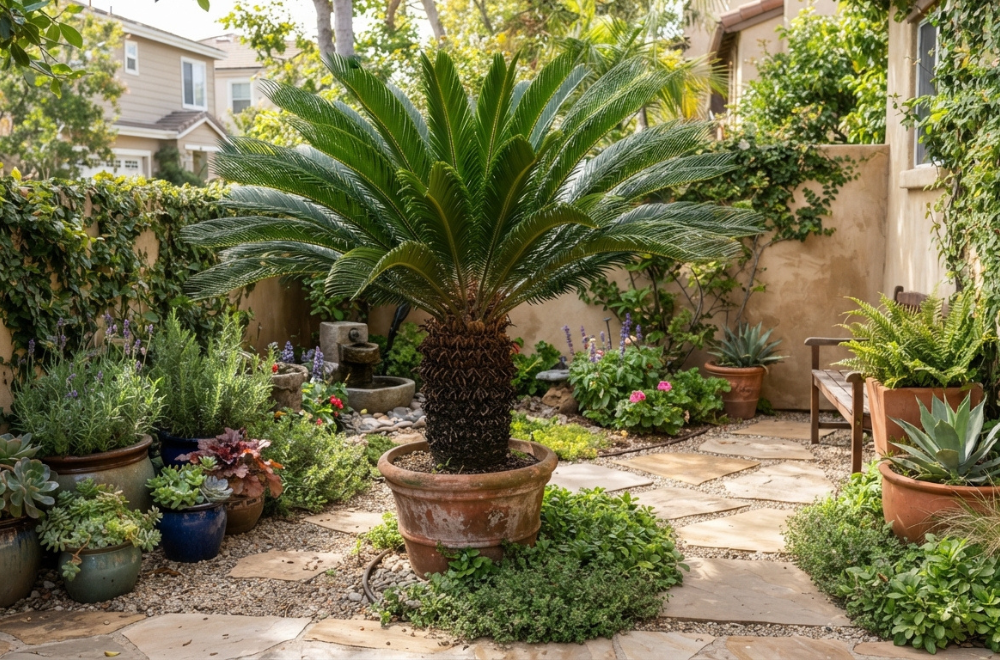
Sago palms aren’t true palms either (yes, “palm” is doing a lot of heavy lifting in the plant world), but their stiff, symmetrical fronds give a bold, sculptural look that real palms often can’t match.
I use sago palms a lot in xeriscaped front yards because they’re drought-tolerant once established and look sharp planted in pairs flanking an entryway. They grow painfully slowly, sometimes just a few inches a year, which means the one you plant now will still look great a decade from now with minimal shaping needed.
Here’s the part nobody tells you at the garden center: every single part of a sago palm is toxic, and I mean seriously toxic, to dogs and cats. The seeds are the worst offender. If you’ve got pets that like to chew on greenery, skip this one entirely or keep it somewhere they absolutely cannot reach.
8. Windmill Palm for Cold-Hardy Outdoor Landscaping
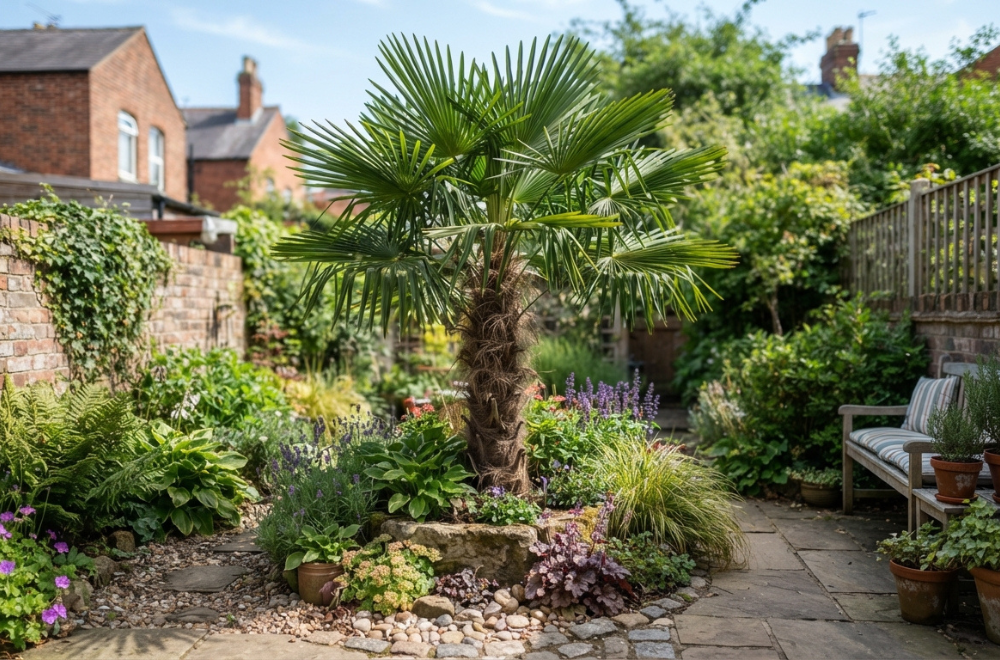
If you live somewhere that gets actual winter and thought palm trees were off the table, the windmill palm is going to change your mind.
This is one of the most cold-hardy palms you can plant outdoors, surviving temperatures down to around 5 to 10 degrees Fahrenheit once it’s established. I planted one in a client’s yard in a zone most people wouldn’t consider “palm tree territory,” and it’s shrugged off multiple hard freezes without complaint.
Windmill palms have a shaggy, fibrous trunk and fan-shaped fronds that give a distinctly tropical look, even surrounded by snow in January. They’re slow growers, topping out around 10 to 20 feet over many years, which makes them a manageable size for most residential yards.
If you’re typing “palm trees that survive winter” or “cold hardy palm zone 7,” this is the variety showing up in every search result for a reason.
9. Pygmy Date Palm for Poolside and Patio Charm
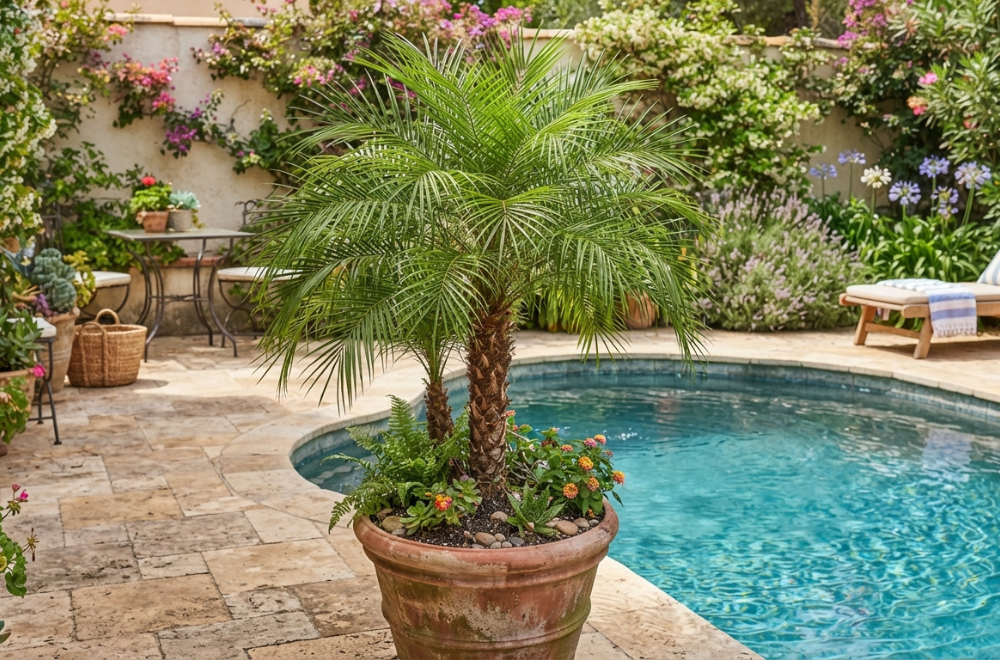
Pygmy date palms bring that resort-poolside look without needing 30 feet of clearance. They max out around 6 to 12 feet, making them a solid choice for patios, courtyards, and pool areas where space is limited.
I planted three of these in a staggered cluster around a backyard pool a few summers back, and the client still sends me photos every time she hosts a party. The feathery, arching fronds and shaggy trunk texture give you that vacation-rental vibe without the vacation-rental price tag.
Pygmy date palms handle full sun beautifully and are reasonably drought-tolerant once established, though they’ll look fuller and healthier with regular watering during hot months.
One warning: the frond tips are sharp, almost spine-like near the base. I’ve got a small scar on my forearm from pruning one without gloves, so trust me on this — always wear thick gloves and long sleeves when working around this palm.
10. Foxtail Palm for Fast-Growing Tropical Landscaping
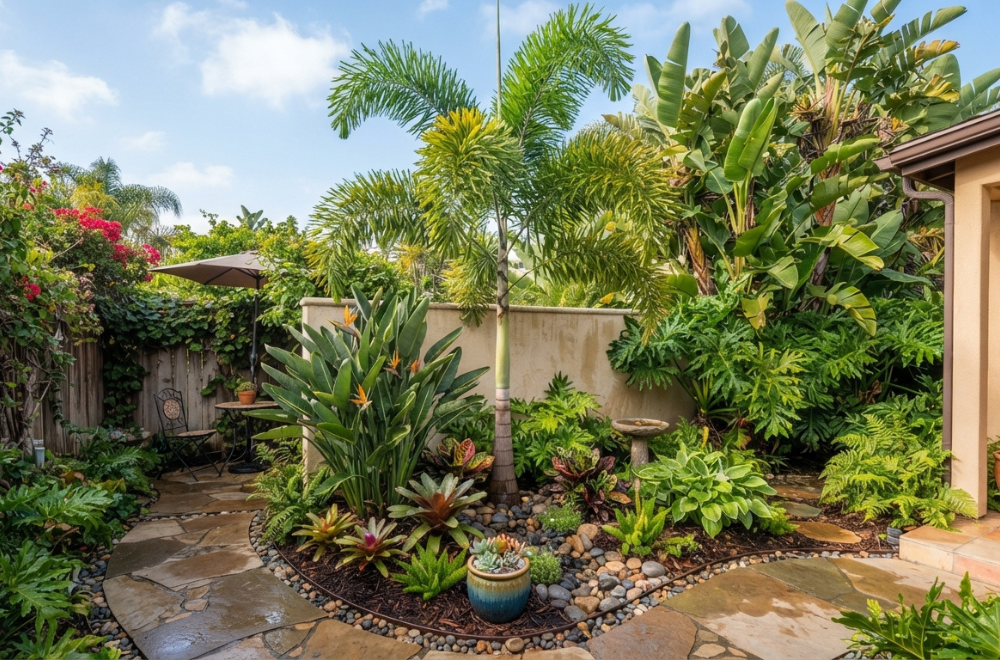
If you want a mature-looking palm without waiting a decade, the foxtail palm is one of the fastest growers on this list. Its plume-like fronds genuinely resemble a fox’s tail, which is a nice change from the usual flat, fan-shaped look.
I’ve used foxtail palms in landscaping projects where clients wanted instant impact, and they deliver. Under good conditions, they can grow several feet a year until they hit their mature height of 20 to 30 feet.
Foxtail palms want full sun, regular watering, and warm temperatures — they’re not cold-hardy, so this one’s strictly for USDA zones 10 and up unless you’re growing it in a large container you can move indoors.
They’re a fantastic option if you’re searching “fast growing palm trees for landscaping” and don’t want to stare at a stick in the ground for five years waiting for it to look like something.
11. Christmas Palm for Compact Tropical Curb Appeal
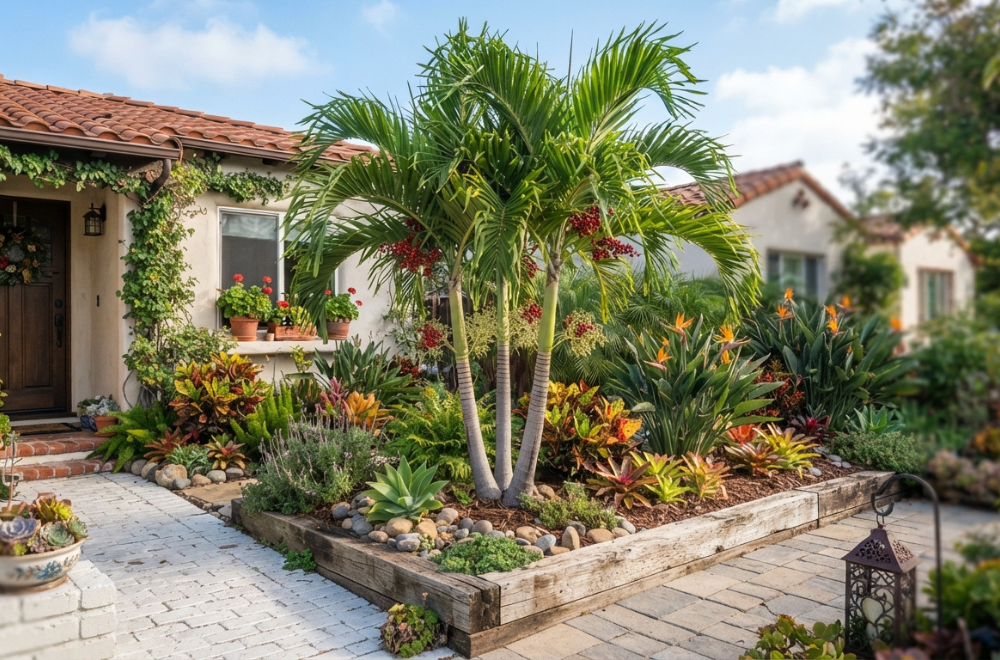
Christmas palms (sometimes called Manila palms) get their name from the bright red-orange fruit clusters that show up around the holidays, which is a genuinely fun bit of seasonal color most palms don’t offer.
I planted a pair flanking a client’s front door, and the compact size (usually 20 to 25 feet, though they stay smaller for years) made them perfect for a suburban front yard without overwhelming the house. They’re also fast growers compared to a lot of palms on this list.
Christmas palms need full sun and consistent watering, especially while young. They’re not particularly cold-tolerant, so stick to warmer zones or be ready to protect them during any surprise cold snaps.
If curb appeal and a bit of seasonal charm are what you’re after, this is a genuinely underrated pick that doesn’t get talked about nearly enough compared to the usual palm suspects.
12. Lady Palm for Shady Indoor and Outdoor Spots
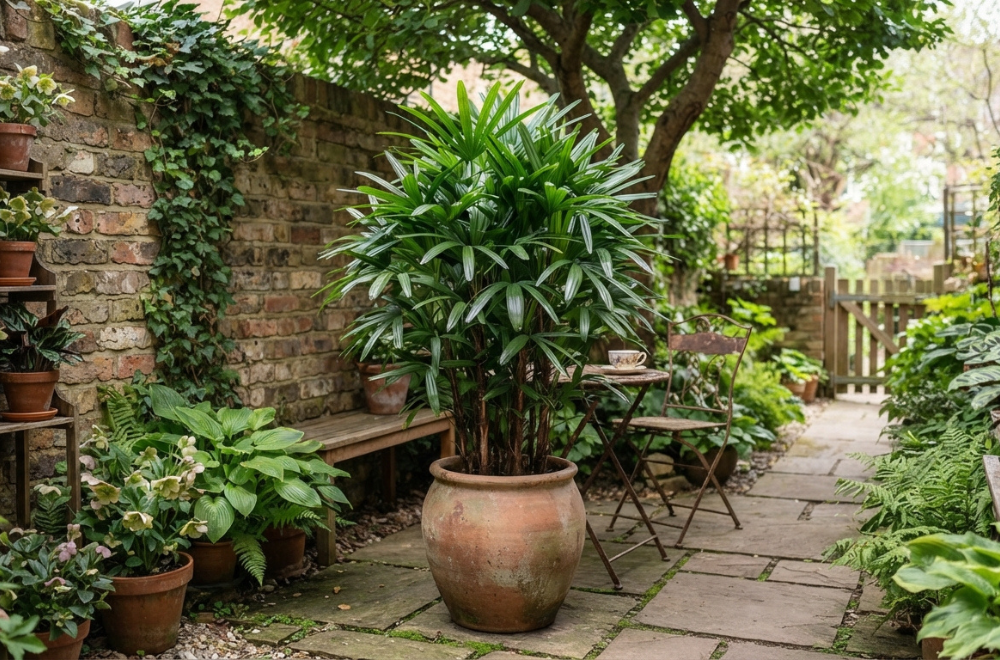
Lady palms are the palm I reach for when a spot gets almost no direct sun at all. Dense, fan-shaped fronds on multiple slender trunks give it a full, bushy look that works well as a privacy plant or an indoor statement piece in a dim room.
I’ve got one tucked into a shady side yard where literally nothing else survived, including two rounds of hostas and a fern I really thought was foolproof. It’s been thriving there for over two years now with almost zero direct sunlight.
Lady palms are slow-growing and tolerant of both low light and lower humidity indoors, making them one of the more forgiving options if your space isn’t exactly a greenhouse.
They’re pricier than a parlor palm or areca palm at the same size, mostly because they grow so slowly that nurseries have more time and cost tied up in each one. Worth it if you’ve genuinely got nowhere else that gets decent light.
13. Canary Island Date Palm for Big, Bold Landscaping Statements
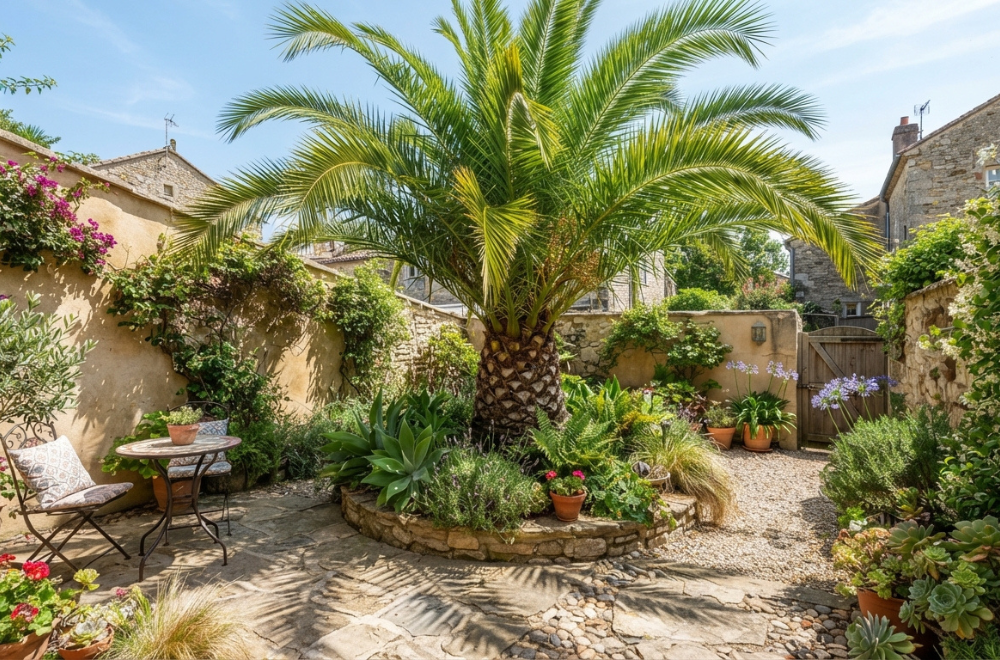
This is the palm you picture when someone says “iconic California street.” Canary Island date palms are massive, with thick trunks and huge, arching fronds that can eventually reach 40 to 60 feet tall.
I’ll be honest, this one isn’t for a small yard or a first-time palm owner. I helped install one for a commercial property, and it took a crane and a specialized crew — this isn’t a weekend DIY project like the container palms earlier on this list.
Canary Island date palms are relatively cold-hardy for their size, tolerating brief dips into the mid-20s once mature, and they’re extremely drought-tolerant once established. If you’ve got the space and the budget, nothing else on this list makes as bold a statement.
Bonus mention: if a full-size Canary Island date palm feels like too much commitment, ask your local nursery about a smaller cultivar or consider a pygmy date palm instead for a similar look at a fraction of the size and price.
Real Talk: What Actually Goes Wrong With Palm Trees
Palms have a reputation for being tough, low-maintenance plants, and for the most part, that’s true. But there are a few things nobody warns you about before you buy one.
- Overwatering kills more palms than underwatering. This surprises people every time. Palms like consistent moisture, sure, but “consistent” doesn’t mean “constantly soggy.” Root rot is the number one killer of indoor palms, and once it sets in, there’s usually no saving the plant.
- Brown tips don’t always mean the plant is dying. Most of the time it’s low humidity, tap water minerals, or normal aging of older fronds. I used to panic-google every brown tip until I realized it’s usually cosmetic, not fatal.
- Cold snaps can undo years of growth in one night. I’ve watched a beautifully established outdoor palm get wrecked by one unexpected freeze that the weather app barely mentioned. If you’re in a borderline zone, always have frost cloth on hand during the shoulder seasons.
- Some of these are genuinely not worth the trouble for beginners. The majesty palm looks stunning in photos, but if you’re not committed to humidity trays or a humidifier, skip it and grab a parlor palm or kentia palm instead. There’s no shame in picking the plant that’ll actually survive your specific home over the one that photographs best.
Final Thoughts
Palm trees have a way of making any space feel like a mini getaway, whether that’s a $12 parlor palm on your kitchen counter or a towering Canary Island date palm anchoring your front yard. The trick isn’t finding the “best” palm — it’s matching the palm to your actual light, space, and how much attention you’re realistically going to give it.
Start small if you’re new to this. A parlor palm or ponytail palm will teach you the basics without breaking your heart if things go sideways.
Which one of these are you thinking about adding to your space? Drop a comment below and let me know your zone or lighting situation — I’ll happily tell you if it’s a good match or if you’re setting yourself up for a fight.

About Syprose Kiche
Syprose Kiche is the creator and writer behind My Besuited Home, a practical home and garden website covering DIY projects, gardening, lawn care, landscaping, home improvement, and outdoor living. She focuses on turning everyday homeowner questions into clear, practical guides backed by careful research and useful real-world considerations.