
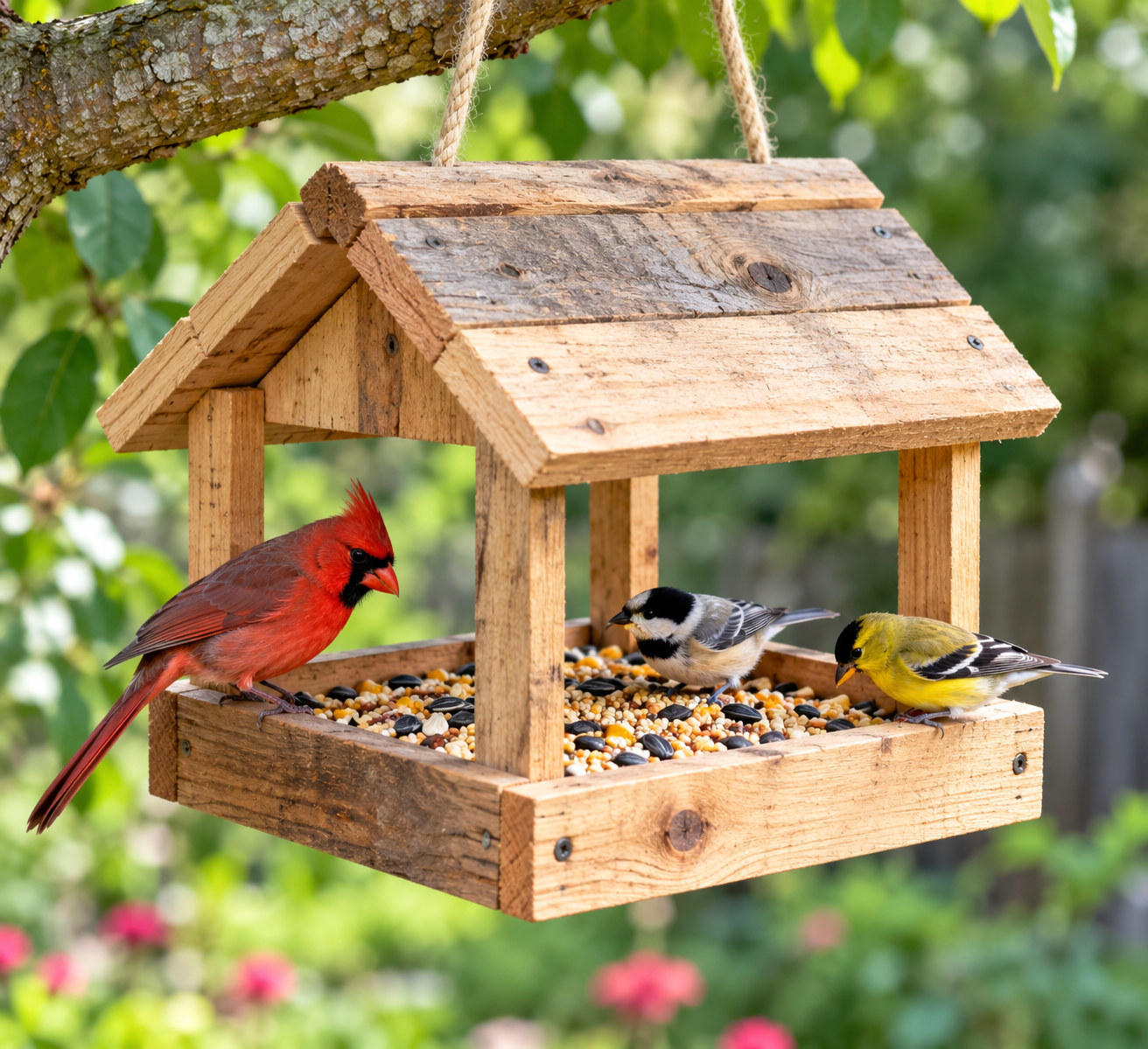
Most homemade bird feeders don’t fail because the birds ignore them. They fail because the seed gets wet, turns to mold, and either sickens the birds or sits untouched until it’s thrown out. A feeder with no drainage, a flat lid that collects rain, or a tray big enough to hold a puddle will cause trouble long before it attracts anything. A feeder built from a milk jug or a chipped teacup can work just as well as a store-bought one if it gets a few details right.
This list covers 17 feeders made from things that usually end up in a recycling bin or the back of a cupboard. Each one has a note on which birds it suits, where it tends to go wrong, and how to fix that. The first section covers the design rules that apply to nearly all of them, so you can adapt any feeder, or invent your own, without repeating the common mistakes.
What Makes Any Feeder Work (or Fail)
Four things decide whether a homemade feeder is worth hanging.
Drainage. Wet seed spoils quickly, especially in warm weather. Any feeder with a solid base needs small holes drilled or punched through it, roughly 1/8 inch, so rainwater can escape. Without them, a feeder works like a shallow bowl of seed soup.
Seed that fits the feeder. Tube and hopper feeders handle black-oil sunflower seed well, because the shells are thin and many species eat them. Open trays and platforms suit larger seeds, cracked corn, and fruit. Tiny seeds like nyjer (thistle) fall straight through large holes, so they need fine-mesh feeders or very narrow slits.
A way for birds to land and leave. Small perches or a lip around the edge give birds something to grip. Slick glass and plastic with no perch are hard for most species to use. Sharp edges, on cans especially, can injure feet and bills.
Easy cleaning. If you can’t reach every corner with a brush, you can’t keep the feeder safe. Feeders that spread disease are a real concern, and the species most affected are the ones that crowd at feeders. Simple, open designs are easier to keep clean than elaborate ones.
A few materials are worth avoiding. Thin fishing line and string can tangle around a bird’s leg or neck, so use wire or chain for hanging. Cotton batting and lint can do the same thing if used as nesting-style stuffing. Avoid red dyes in anything you put out. Avoid bread as a staple, since it fills birds up without giving them much nutrition. And skip any seed or spread that contains salt or sweetener.
Feeders That Hold Seed Well
1. Mason Jar Feeder
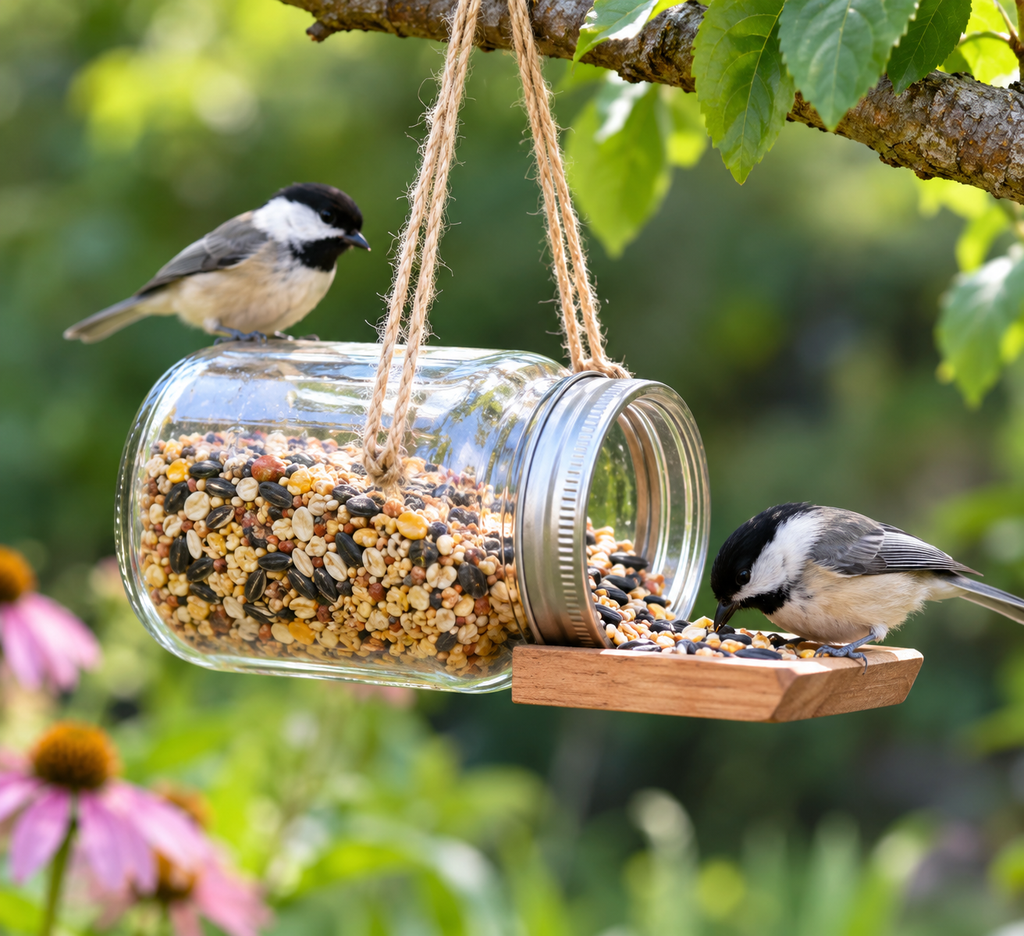
A glass jar with a screw-on lid is one of the most adaptable bases for a feeder, though it takes the most effort of the lot.
Drill four or five holes of about 1/2 inch through the metal lid with a step bit, then file or sand the rough edges. Fasten the lid’s centre to a small wooden board or sturdy dish with a lip, using a screw and washer. Fill the jar with seed, screw it onto the lid, and flip it so the seed trickles onto the board. Hang the whole thing with chain or wire.
Test the flow before you hang it. Pour a handful of seed through a bare lid over a tray. If it gushes, the holes are too large. If it jams, they’re too small. Sunflower seed needs bigger openings than millet.
The downside is that a glass jar in strong sun can heat up and damp the seed with condensation. Hang it in partial shade. Treat a cracked jar as finished, because the glass can shed fragments.
Suits: chickadees, finches, sparrows, nuthatches.
2. Wooden Scrap Feeder
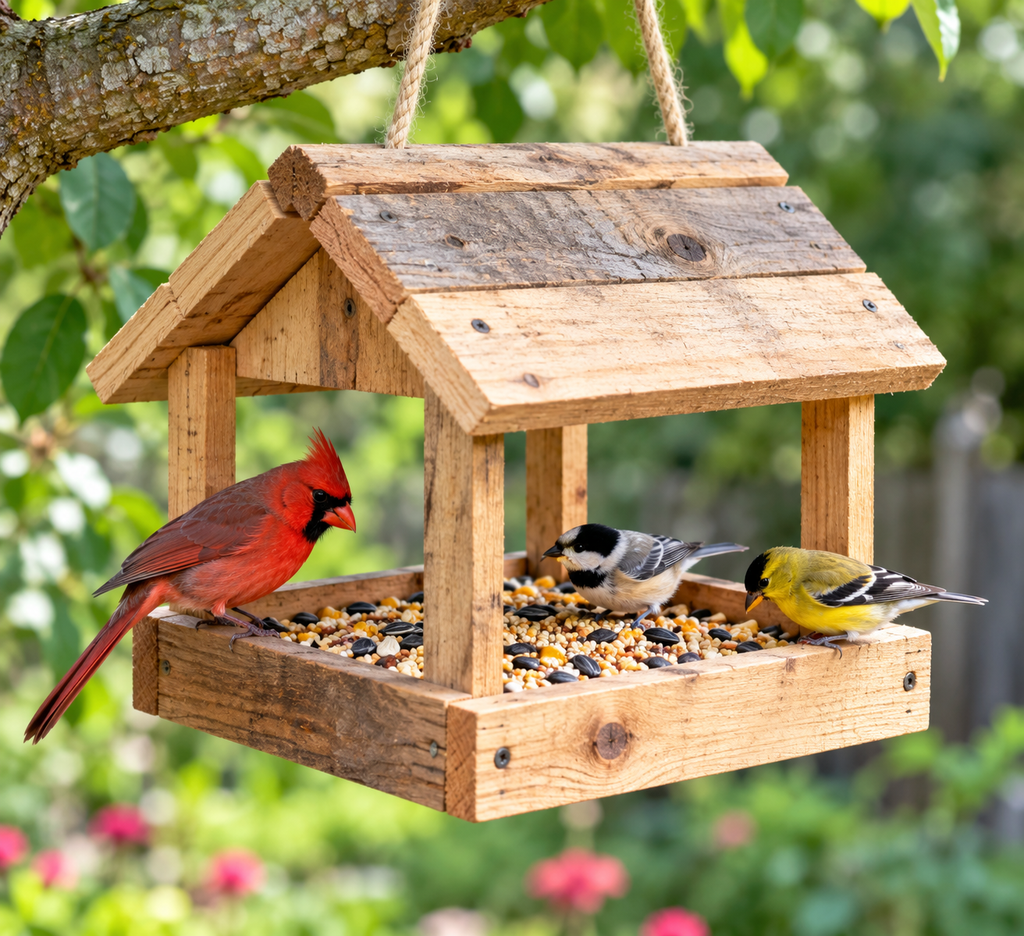
A wooden feeder sounds like the most skilled project on the list, but it can be simple. Cut a base about 8 by 10 inches from untreated scrap wood. Nail or screw thin strips around three sides as a lip, leaving a gap in one corner for seed hulls and water to run out. Drill drainage holes through the base, and add a pitched roof or a plain shelf held by screws above it if you want cover.
Use untreated wood. Pressure-treated lumber is made with preservatives you don’t want near food, and pallet wood is sometimes treated or contaminated, so check the markings before using it. Cedar and pine both weather without needing paint. If you want a finish, leave it bare.
A flat platform without a roof will hold rain, so either add a roof or plan to empty and refill the feeder after wet weather.
Suits: cardinals, finches, jays, sparrows (cardinals especially like a wide, stable platform).
3. Milk Carton Feeder
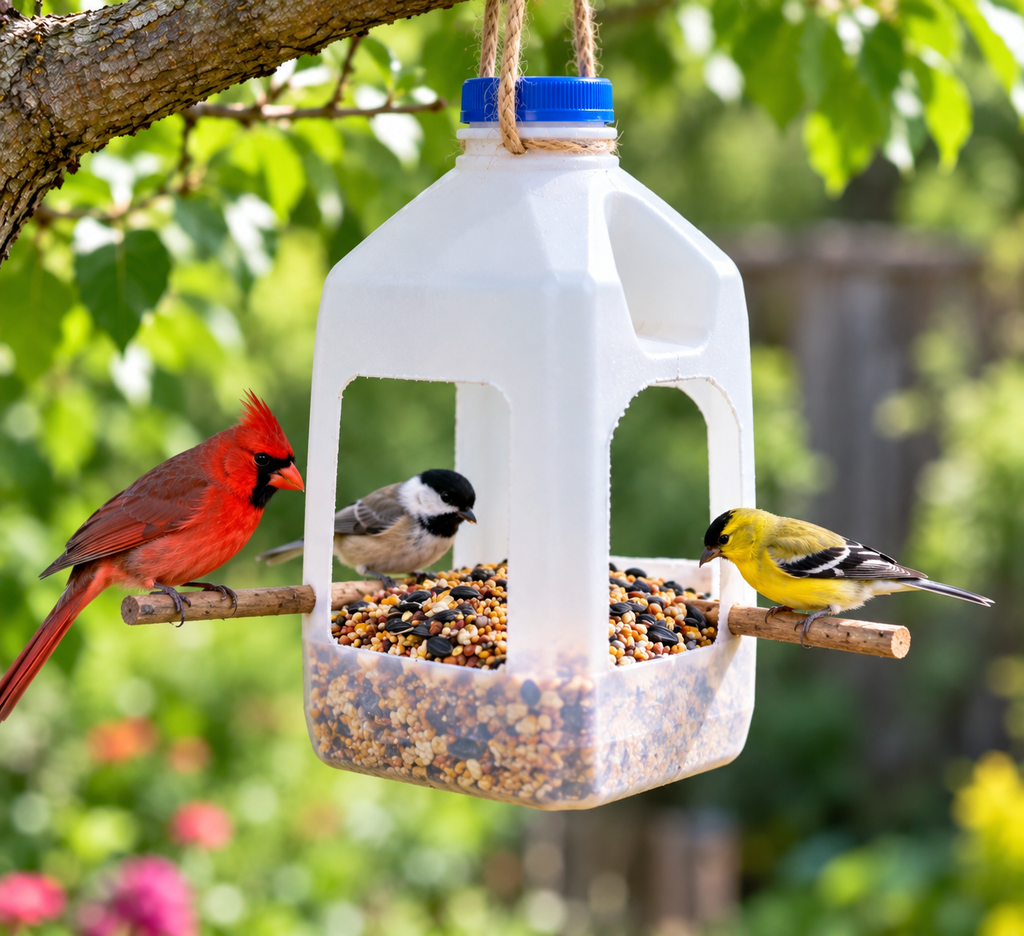
A clean cardboard milk or juice carton is roughly the size and shape of a small hopper feeder, and it already has a pitched top that works like a roof.
Rinse and dry the carton completely. Cut an opening about 3 inches wide on one or two sides, starting roughly 2 inches from the bottom so seed has a lip to rest against. Poke drainage holes in the base. Push a wooden dowel or skewer through the carton just beneath each opening to serve as a perch, and thread wire through the top to hang it.
Cardboard breaks down in rain, so this is a short-term feeder. Expect a few weeks, not a season, and replace it when it softens. A plastic jug lasts longer, and the same steps apply.
Suits: chickadees, sparrows, finches.
4. Plastic Bottle Feeder With Wooden Spoons
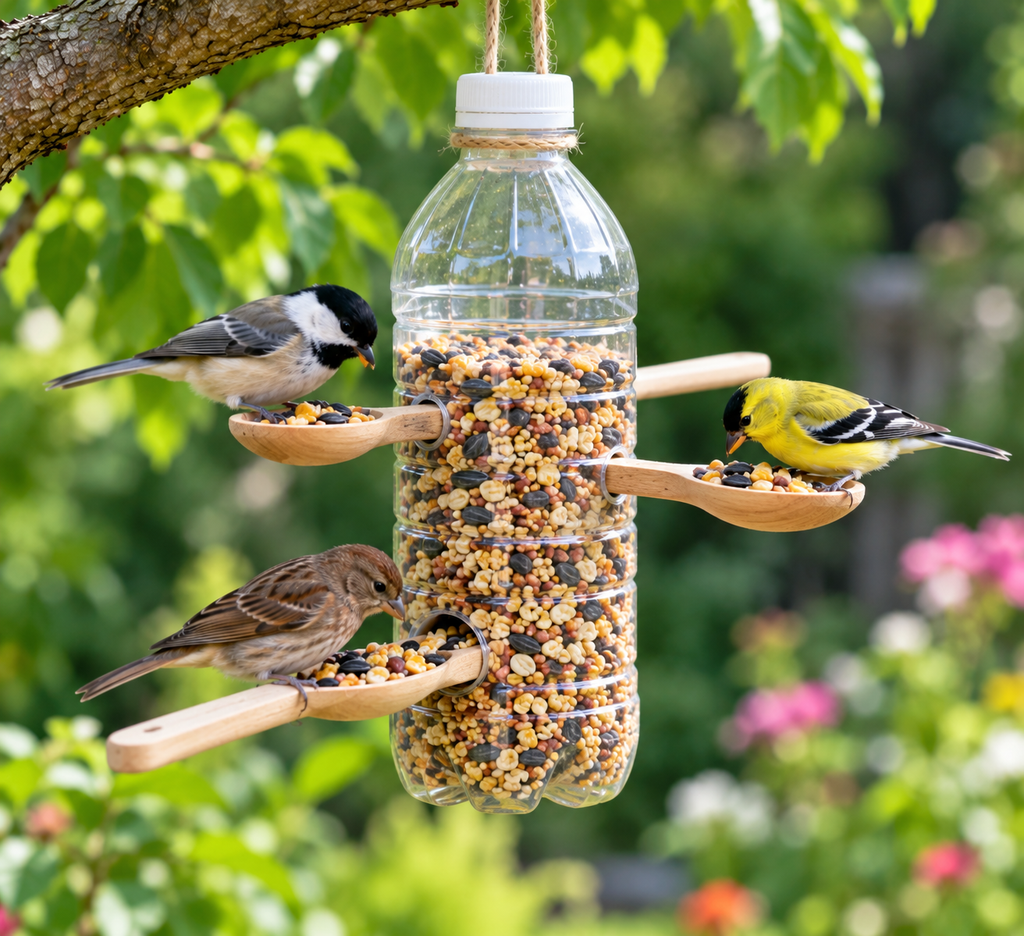
A clean two-litre soda bottle makes an effective gravity feeder with one small modification. Cut a slit about the width of a wooden spoon’s handle near the bottom of the bottle, then push the handle through so the bowl of the spoon sits inside and the handle sticks out at the other side. Seed slides down and settles in the bowl. Cut a second hole just above the spoon so the seed can reach it, and add another spoon on the opposite side if you like.
The wooden spoon works as both perch and feeding port. Use a plastic cap for the top and drill a small hole through it for hanging wire. Keep the bottle out of direct sun, because sun-warmed plastic can sweat and spoil seed.
Suits: finches, sparrows, chickadees.
5. Recycled Can Feeder
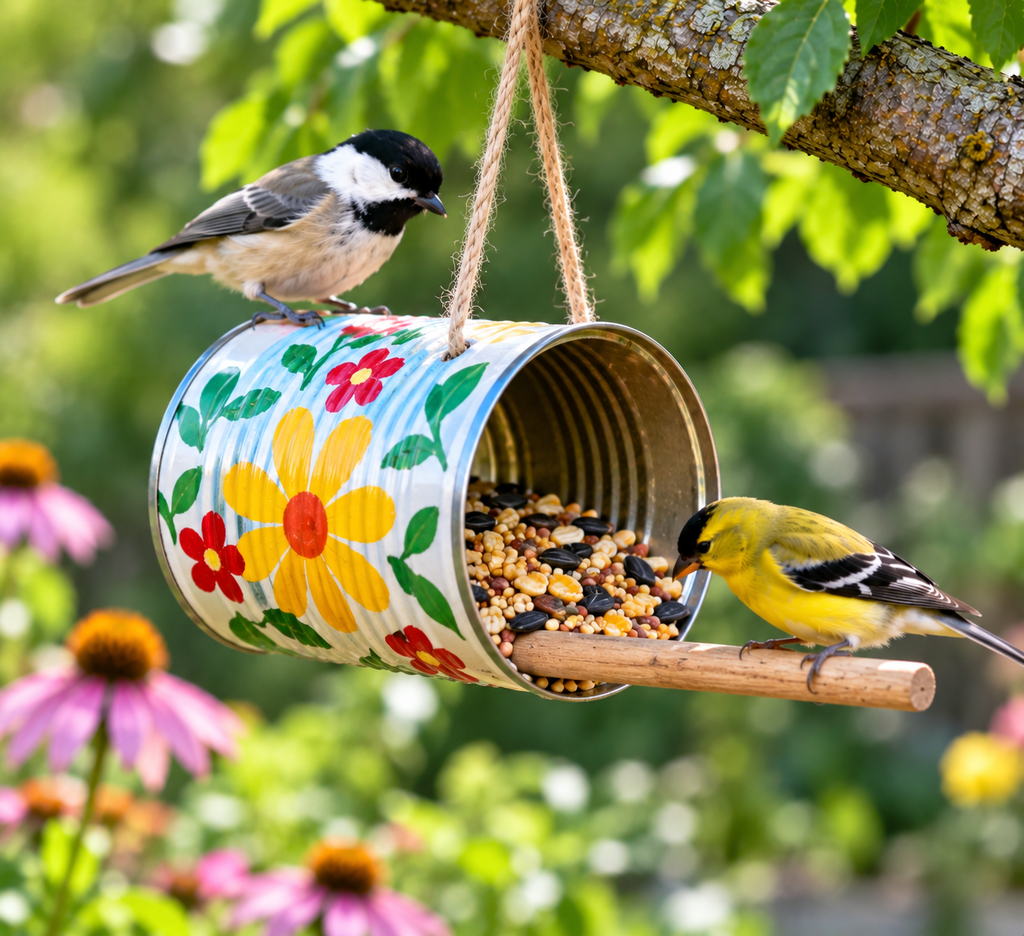
A tin can, such as the type soup comes in, holds seed well and lasts longer than cardboard. It’s also the project most likely to cut someone, so handle it carefully.
Remove the label, wash the can, and check the rim. Sand or tape any sharp edge. Punch drainage holes in the base with a nail. Lay the can on its side and fasten it to a wooden board or a fence post with screws, so the open end faces outward. You can also cut a small perch from a dowel and fix it below the opening.
Metal gets hot in direct sun. Place it in shade. Use only cans with smooth, rolled edges, and discard any that rust through.
Suits: finches, sparrows, chickadees.
6. Old Drawer or Crate Platform Feeder
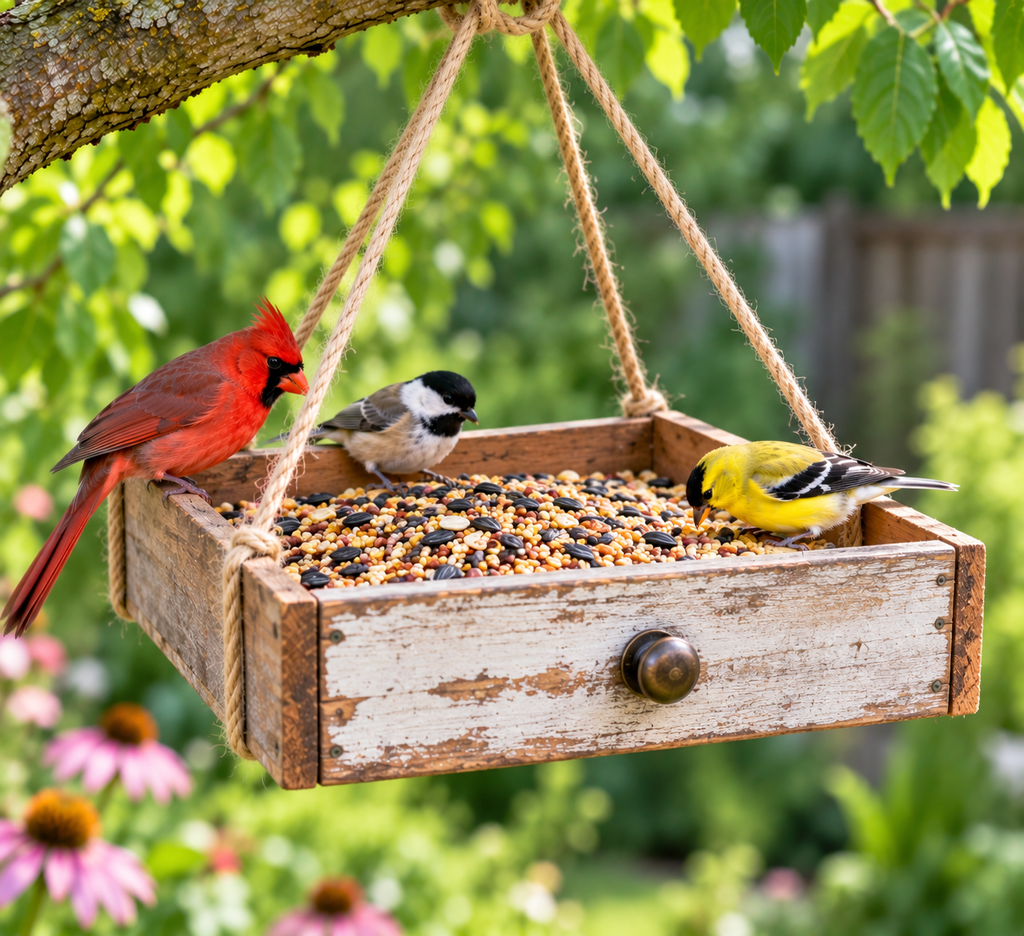
A shallow wooden drawer, a small crate, or a fruit box can make a ground-level or low platform feeder with almost no work. Remove any hardware, drill drainage holes through the base, and set it on legs or a few bricks about a foot off the ground, or mount it on a post.
This design suits birds that prefer to feed from a flat surface, including doves, juncos, and sparrows. It also exposes seed to rain, droppings, and wandering cats, so it demands more frequent cleaning than a hopper feeder. Put out only as much seed as will be eaten in a day or so.
Suits: doves, juncos, sparrows, towhees.
Feeders That Use Fruit, Jelly, or Spreads
7. Orange Bird Feeder
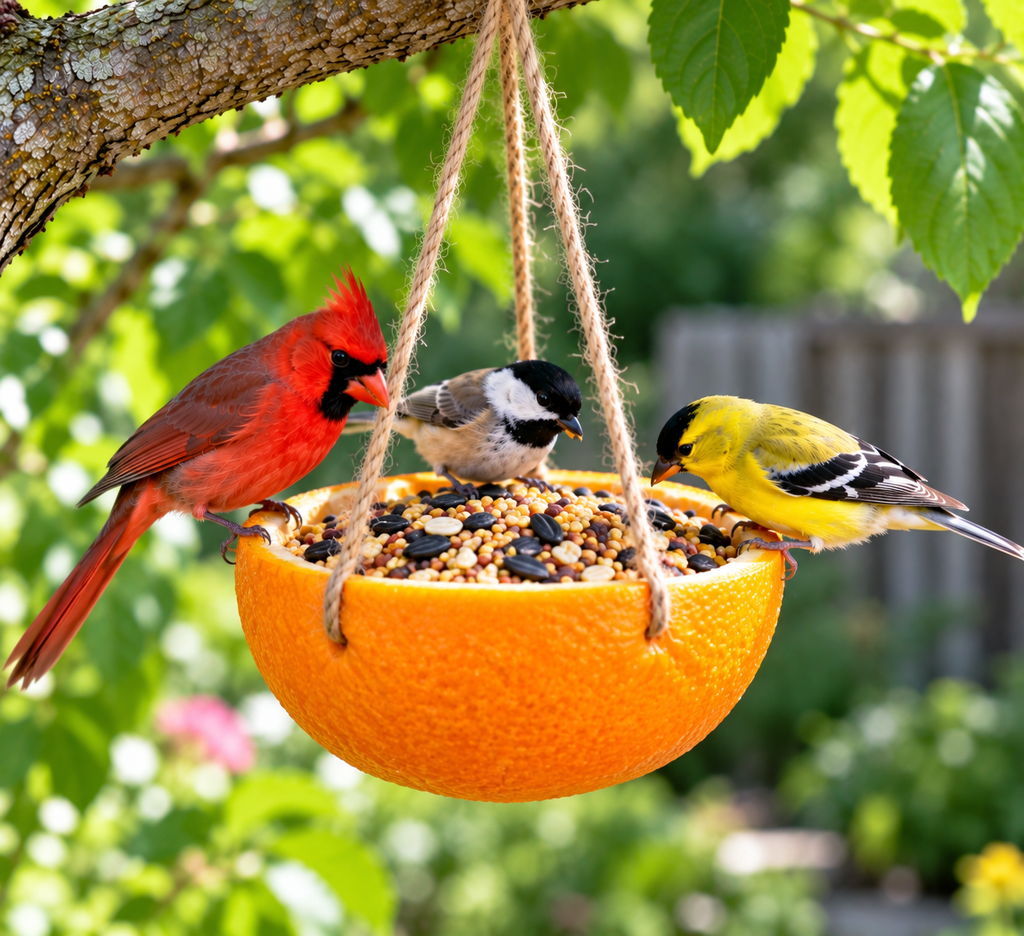
Cut an orange in half, scoop out the pulp, and hang the empty peel from three pieces of wire or chain threaded through small holes near the rim. Fill it with seed, or fill it with the fruit pulp and a small amount of grape jelly.
An orange half is a seasonal feeder in practice. It dries out within a few days in warm weather and begins to grow mould, so it’s best for short-term use. Depending on region, it can attract orioles, catbirds, and other birds that eat fruit. Birds of this type tend to be more common in spring and early summer, so the timing matters.
Offer jelly in small amounts. It’s high in sugar and sticky, and should be a treat. Avoid any jelly marketed as sugar-free. The sweeteners in some of those products are not meant for wild birds.
Suits: orioles, catbirds, mockingbirds, woodpeckers.
8. Teacup and Saucer Feeder
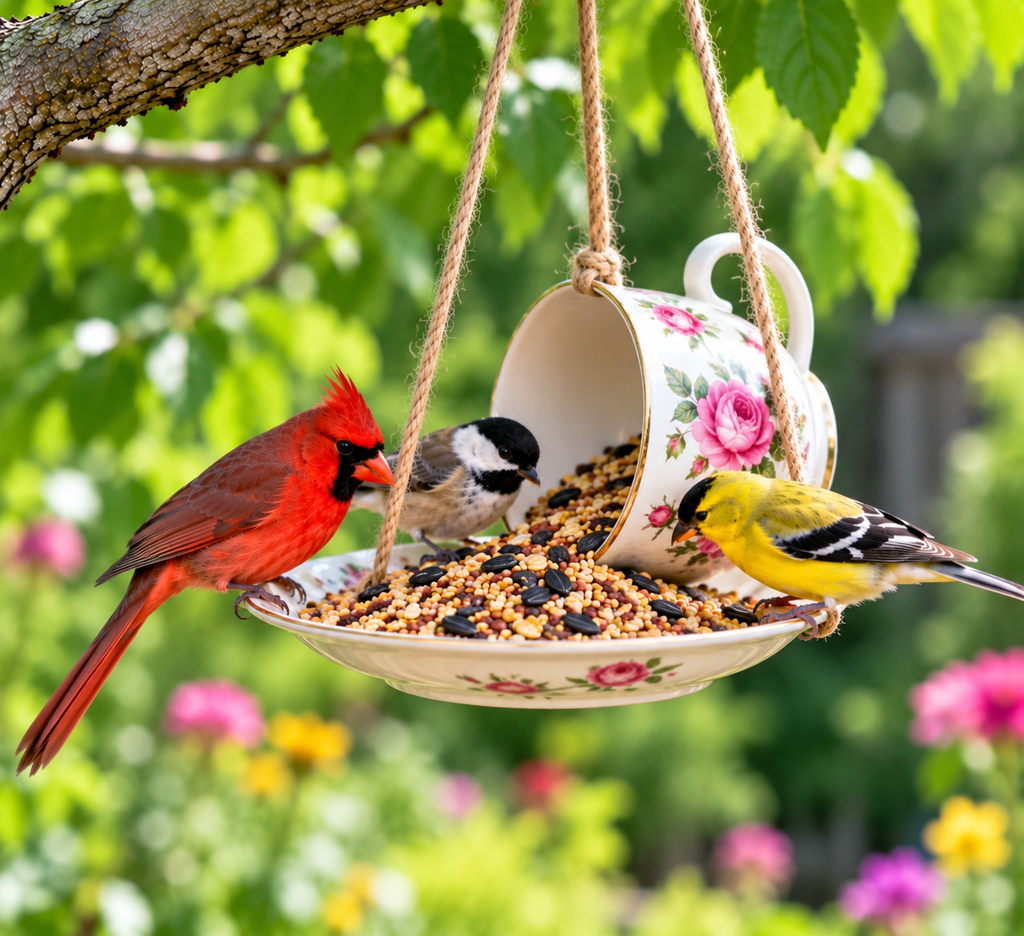
A chipped teacup is a perfect candidate, since it’s already something you’re about to throw away.
Glue the cup to the saucer with strong exterior adhesive, such as epoxy or a two-part waterproof glue, and let it cure fully according to the product label. Use a ceramic bit to drill a few drainage holes in the saucer, and a small hole through the cup handle if you plan to hang it. Fill the cup with seed or fruit and let the saucer catch any that spills.
Glazed ceramic can chip, so don’t use a cup with broken edges that would cut a bird or a person. The advantage of this feeder is looks. The drawback is that it holds only a small amount, so it needs refilling often, which makes it better as a decorative extra than the main feeder.
Suits: finches, chickadees, small songbirds.
9. Coconut Shell Feeder
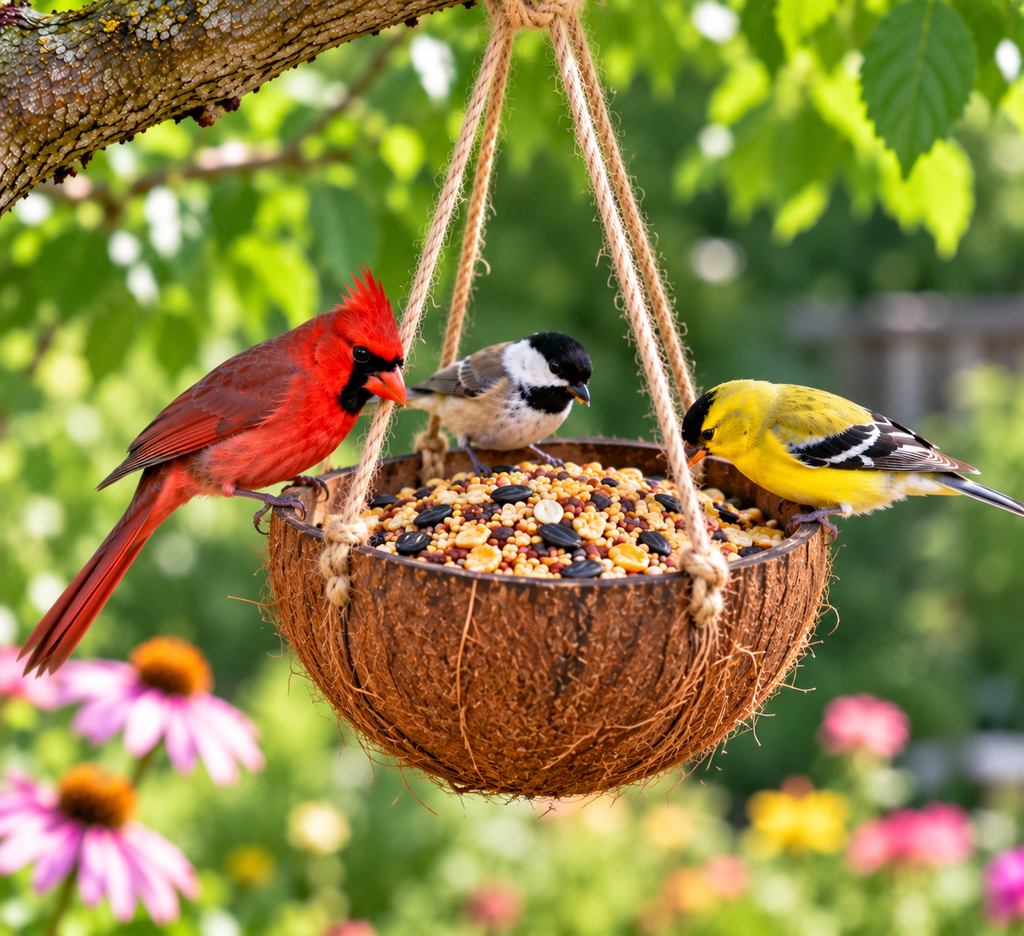
Half a coconut shell, emptied and dried, makes a natural bowl. Drill two small holes opposite each other near the rim and thread chain or wire through for hanging. Fill with seed, suet, or a mixture of the two.
The shell is sturdy and weathers well, though it can crack with age. Check it for splits before refilling.
Suits: chickadees, nuthatches, titmice, woodpeckers.
10. Terracotta Saucer and Flowerpot Feeder
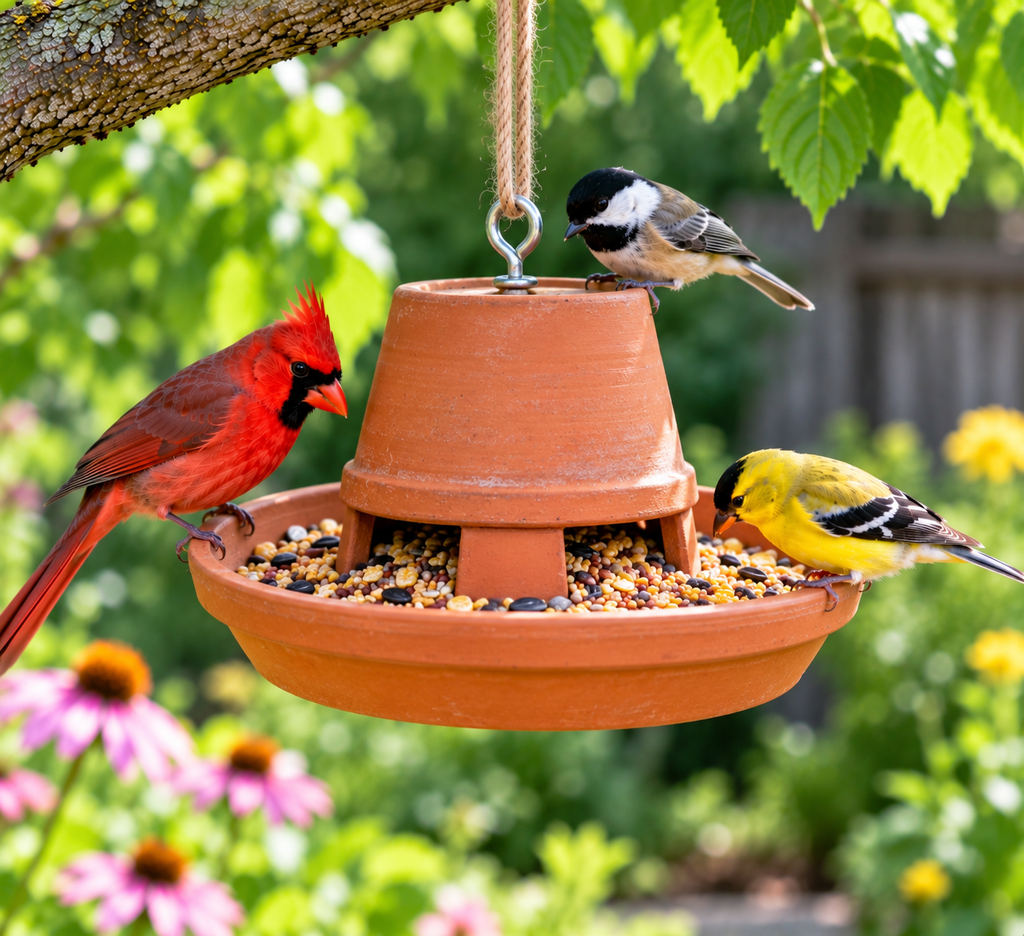
A clay flowerpot saucer is a ready-made tray with a rim. Terracotta is porous and breathes, but it also holds moisture, so drill drainage holes with a masonry bit before use. Hang it with three lengths of chain attached to small holes drilled in the rim, or sit it on top of an upturned flowerpot on a post.
Terracotta can crack in freezing weather if it absorbs water, so in cold climates, bring it in over winter or choose another material.
Suits: sparrows, finches, doves, juncos.
Feeders Made With Fat or Spreads
11. Peanut Butter Feeder
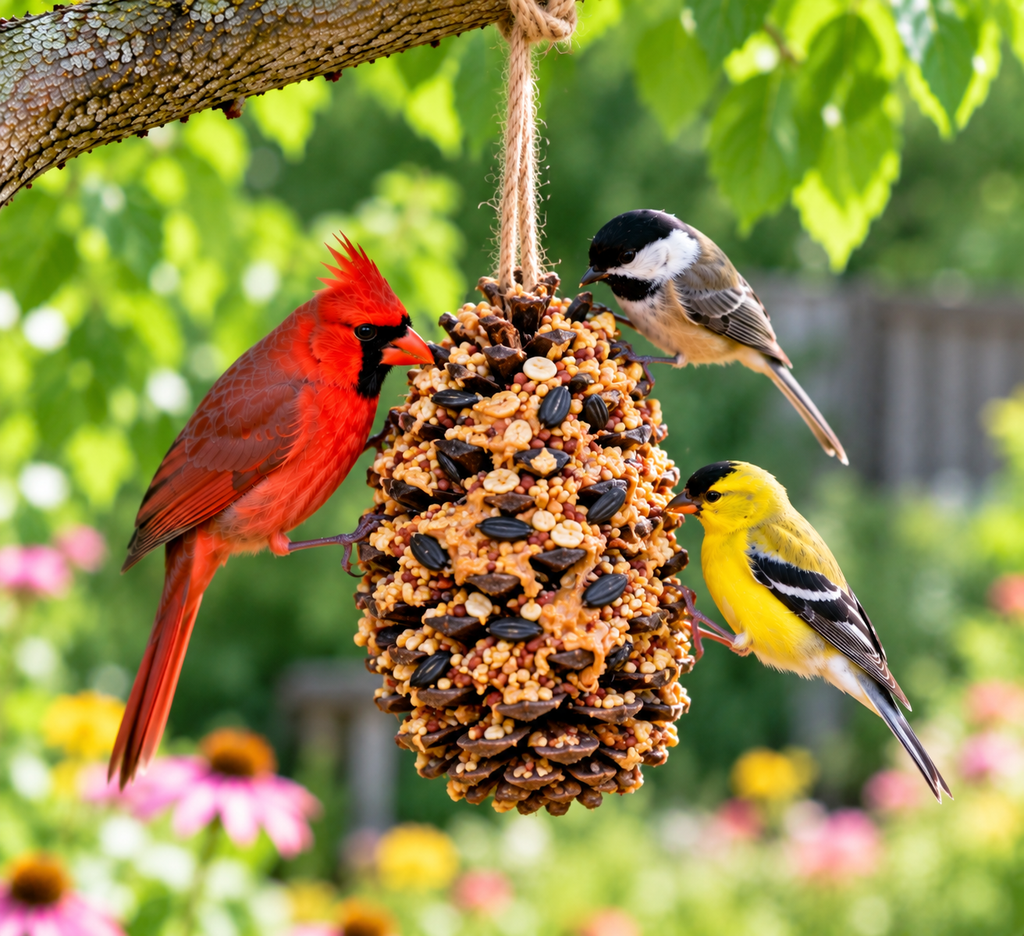
The easiest version needs only a log or thick branch. Drill holes 1/2 to 1 inch wide and about an inch deep into one side, then fill them with a mixture of peanut butter and cornmeal or oats, which stops it from being too sticky. Hang the log by an eye screw at the top.
Use plain, unsalted peanut butter, and never anything with xylitol or other sweeteners. Peanut butter softens in heat, which can smear onto feathers and go rancid, so it’s a cold-weather feeder. In summer, put out much smaller amounts, if any.
Suits: woodpeckers, nuthatches, chickadees, titmice, jays.
12. Pinecone Feeder
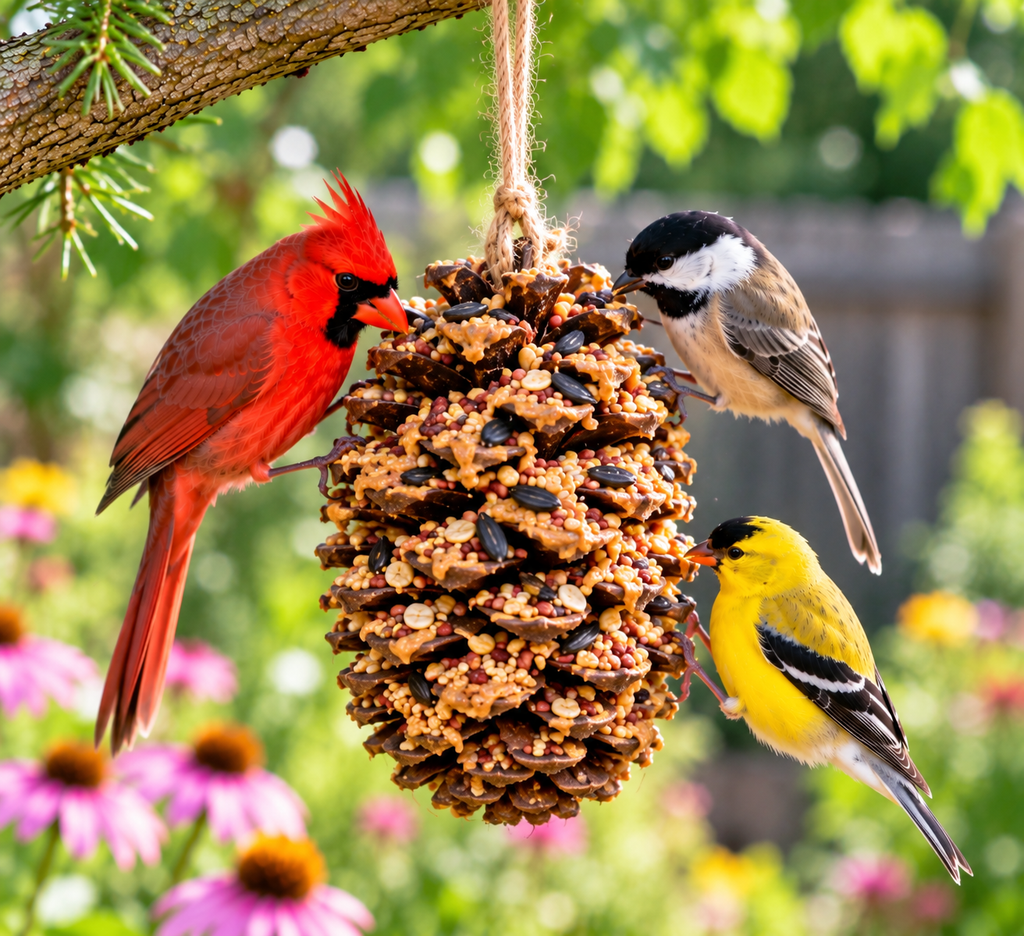
A pinecone with its scales open holds a surprising amount of spread. Tie wire around the top, roll the cone in a mixture of peanut butter or suet and seed, and hang it from a branch.
The cone works best when the scales are dry and open, so if a cone has closed in damp weather, warm it indoors for a while before using it. The same caution about heat and rancid fat applies. A pinecone also gets used up quickly, so this one is more of a snack than a station.
Suits: chickadees, nuthatches, woodpeckers.
13. Gelatin and Seed Ornaments
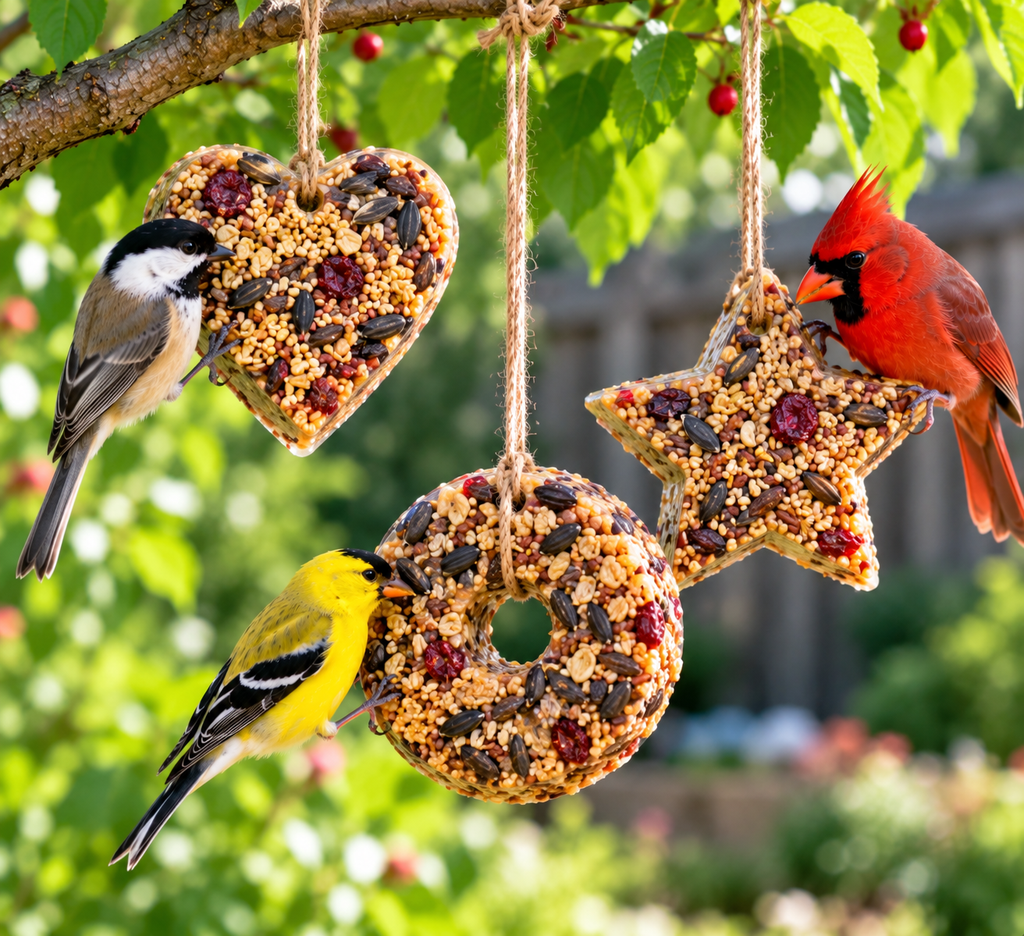
Unflavoured gelatin binds seed into shapes that hold together without needing a feeder at all. Dissolve about one packet of gelatin in a small amount of warm water (the packet instructions will give a ratio), stir in a cup or two of birdseed until it is coated, and press the mixture into cookie cutters or silicone moulds. Lay a loop of wire or hemp twine in the mould before it sets, and leave the shapes to dry for a day or more.
These are fragile in rain and soften in humid weather. They also don’t last. Think of them as a short-term seasonal treat. In a dry, cool climate they work well. In a wet one, they disintegrate quickly.
Suits: finches, chickadees, sparrows.
14. Cardboard Tube Feeder
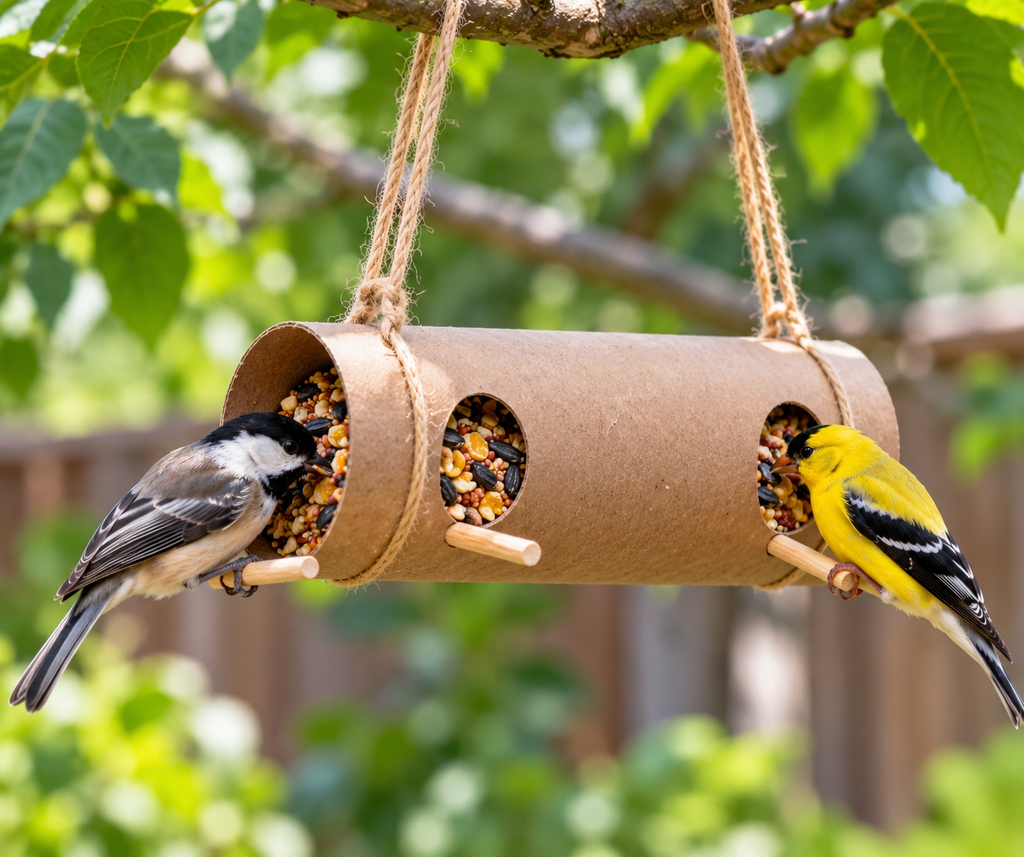
A cardboard tube from toilet paper or paper towel is quick to make. Coat it lightly with peanut butter or other fat, roll it in birdseed, and thread wire through the centre to hang it.
Because it’s cardboard, it breaks down fast in rain. It’s a project for dry weather, or one that kids can do indoors before hanging it somewhere sheltered.
Suits: chickadees, finches, sparrows.
Feeders That Go on Windows or Walls
15. DIY Window Feeder
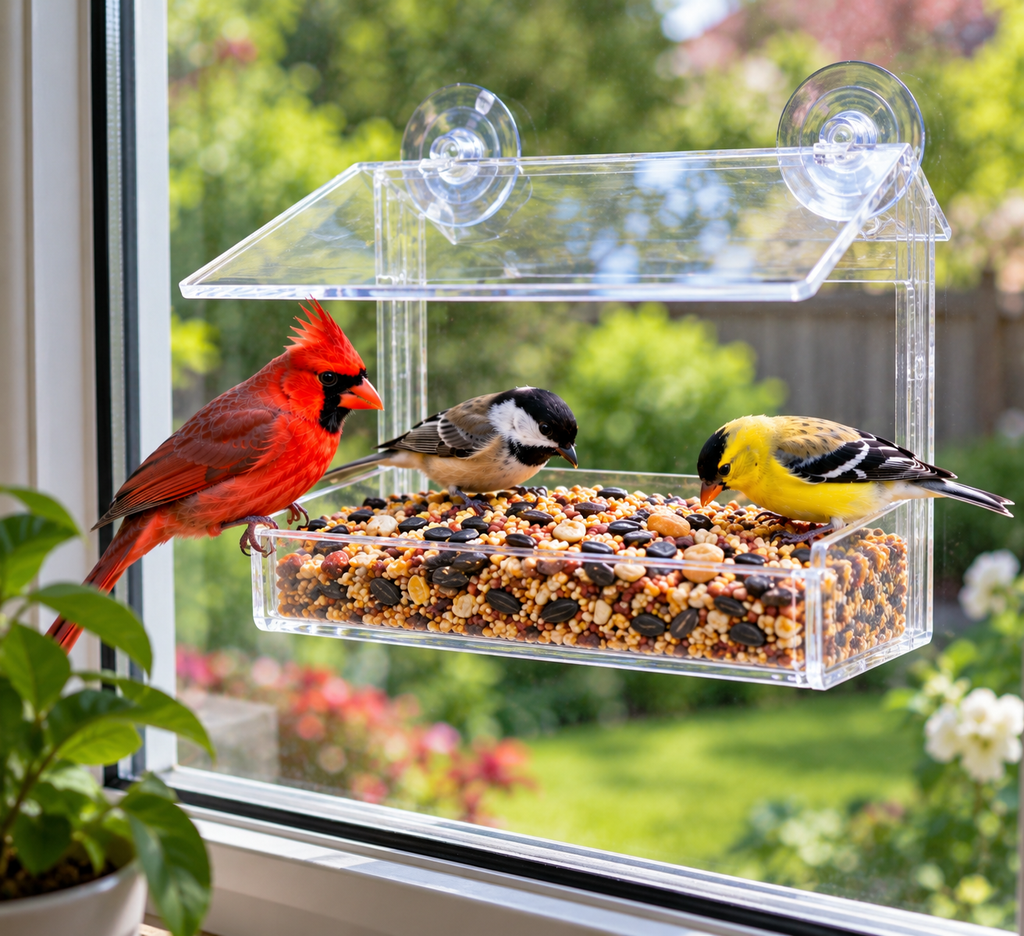
A window feeder uses suction cups to hold a small tray to the glass. You can make one from a small plastic or wooden tray, with a few drainage holes drilled in the base and strong suction cups attached through small holes at the back edge. Press the cups against clean, dry glass.
Window placement can reduce collisions, since a feeder directly on the glass leaves birds with little room to build speed. Collision risk is generally lower when feeders sit within about 3 feet of the glass or farther than about 30 feet away. Check this against a current source such as Cornell’s Lab of Ornithology before you decide on a position.
Suction cups lose their hold over time, especially with temperature swings, so check that the feeder is still secure. The tray also needs frequent cleaning because it sits so close to the glass.
Suits: chickadees, finches, titmice, sparrows.
16. Pie Tin or Cake Pan Hanging Tray
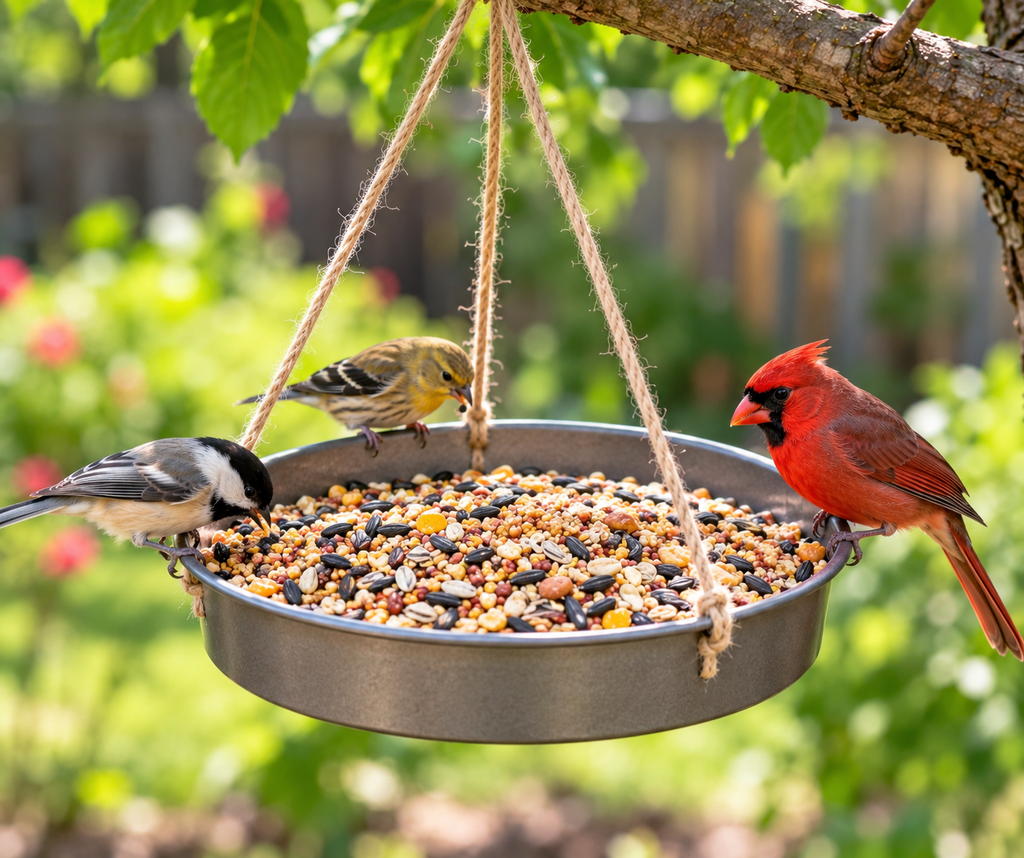
An aluminium pie tin makes a feeder that costs almost nothing. Punch drainage holes in the base, then three holes around the rim and thread chain or wire through each one, joining them at a hook above. Fill it with seed.
A bundt pan works in a similar way, and seed packed into the ridged centre stays in place better than on a flat tin. Aluminium is light and can swing in wind, so it suits sheltered spots better than exposed ones.
Suits: sparrows, finches, doves, chickadees.
17. Wine Bottle Feeder
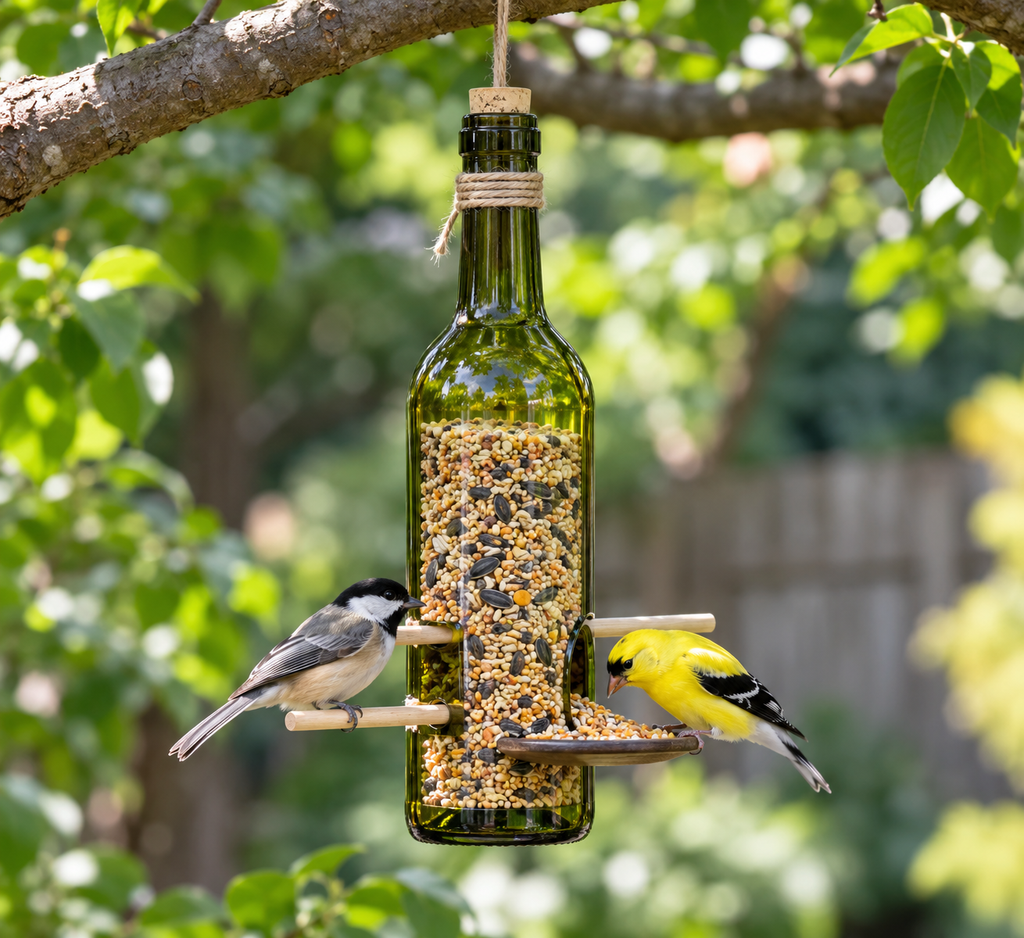
A wine bottle feeder gets the most attention online, and its design holds a lot of seed. Fill a clean bottle with seed, then push the neck into a feeder base or tray so seed flows out as birds eat it. Kits that fit this purpose are sold, but the principle is simple enough to improvise. You can also clamp a bottle upside down into a wooden stand with a ring that holds a dish beneath it.
Glass is the concern here. A bottle that breaks in cold weather or falls from a hook can leave dangerous shards in the area where birds feed. If the bottle sits in a base, check that it’s stable. If you’re going to use glass, hang the feeder somewhere that wind or a squirrel won’t knock it down.
Suits: finches, chickadees, sparrows.
Which Seed Goes in Which Feeder
| Seed or food | Best for | Notes |
| Black-oil sunflower | Tube, hopper, platform, jar | Widely eaten; thin shell |
| Safflower | Hopper, platform | Often used to deter squirrels and some larger birds |
| White millet | Platform, ground tray | Suits doves, juncos, sparrows |
| Nyjer (thistle) | Fine-mesh or narrow-slit feeders only | Falls through large holes |
| Cracked corn | Platform | Spoils fast when wet |
| Unsalted peanuts or peanut butter | Logs, pinecones, platforms | Cold weather is best |
| Suet | Cage, coconut, log | Melts and spoils in heat |
| Orange or grape jelly | Fruit feeders | Small amounts; seasonal |
Cheap mixed seed often contains filler such as milo and wheat that many birds pick through and throw to the ground. If the ground below your feeder is covered in discarded seed, the mix may be the cause.
Where to Hang a Feeder
Placement affects how many birds visit, how safe they are, and how much trouble you’ll have with squirrels.
- Cover nearby. Birds feel safer when they can reach shrubs or trees quickly, but a feeder directly in a bush makes it easy for cats to ambush. A distance of around 10 feet from dense cover is a commonly cited compromise.
- Squirrel strategy. A rule of thumb often repeated is to keep feeders at least 5 feet off the ground and about 8 feet from anything a squirrel can jump from. A baffle on the pole or above a hanging feeder helps considerably. A feeder hung from a thin wire between two points, with a plastic dome above it, is harder for squirrels to reach.
- Sun and shade. Partial shade protects seed from overheating and condensation. Full sun encourages spoilage, especially in metal and glass.
- Away from the glass or close to it. For windows, see the distance guidance under the window feeder above.
- Easy to reach. A feeder you can’t reach conveniently won’t be cleaned as often as it should be.
Cleaning and Keeping Feeders Safe
Dirty feeders can spread disease between birds, and a homemade feeder needs the same upkeep as a bought one.
A commonly recommended routine is to clean feeders about every two weeks, and more often in wet or hot weather. Scrub off debris with a brush and hot soapy water, soak in a diluted bleach solution, rinse thoroughly, and let the feeder dry completely before refilling. A mix of about one part household bleach to nine parts water is the proportion often cited by ornithology organisations. Check the current recommendation from a source like Cornell’s Lab of Ornithology or your local wildlife agency. Work outdoors or in a ventilated area, wear gloves, and never mix bleach with ammonia or other cleaners.
Throw away damp, clumped, or mouldy seed. Cardboard, gelatin, and fruit feeders can’t be properly sanitized, so replace them rather than reuse them. If you see sick birds, such as ones that appear fluffed up, lethargic, or have swollen or crusty eyes, take your feeders down for a couple of weeks and clean them, and contact a local wildlife rehabilitator or your state or provincial wildlife agency.
Troubleshooting a Feeder That Isn’t Working
Nothing is visiting. New feeders often take days or even a couple of weeks to be noticed. Birds need to find them, and they take time to trust new objects. Check placement, seed quality, and whether there’s enough cover nearby. A feeder with the wrong seed for local species will sit untouched.
Seed is clumping. Drainage is probably blocked or missing. Drill larger holes, empty it more often, or switch to a design with a roof.
Squirrels or larger birds dominate. Switch to safflower, add a baffle, move the feeder, or choose a cage design that keeps larger animals out.
Seed everywhere on the ground. This is common with mixed seed and with platform feeders. Switch to a seed that birds eat entirely, such as black-oil sunflower, or use a tray beneath the feeder.
Mould or a sour smell. Throw out the seed, clean the feeder, and put out smaller quantities more often.
Questions Readers Often Ask
Is it safe to use a feeder made from reused plastic or cardboard?
Yes, with limits. Clean, food-grade containers are fine, but cardboard degrades in rain and can’t be properly cleaned, so use it briefly. Avoid containers that held chemicals, cleaning products, or anything toxic.
Can I feed birds in summer?
Yes, but fat-based foods are risky in heat because they melt and spoil. Stick to seed, keep feeders in shade, and clean them more often.
How much seed should I put out?
Enough for a day or two. Overfilling is the most common reason seed spoils, particularly in open trays.
Do I need to stop feeding at any time of year?
That depends on your region. Some wildlife agencies suggest taking feeders down if disease appears or if feeding attracts bears, rodents, or other unwelcome visitors. Check local guidance.
Key Takeaways
The feeder’s shape matters less than whether it drains, whether it matches the seed, and whether you can clean it. Start with one or two designs, hang them where you can watch and refill them easily, and give birds a couple of weeks to find them. Use fruit, gelatin, and cardboard feeders as short-term extras, and keep metal and glass out of strong sun. A feeder that’s cleaned regularly and filled with fresh seed will outperform a prettier one that’s neglected.

About Syprose Kiche
Syprose Kiche is the creator and writer behind My Besuited Home, a practical home and garden website covering DIY projects, gardening, lawn care, landscaping, home improvement, and outdoor living. She focuses on turning everyday homeowner questions into clear, practical guides backed by careful research and useful real-world considerations.