
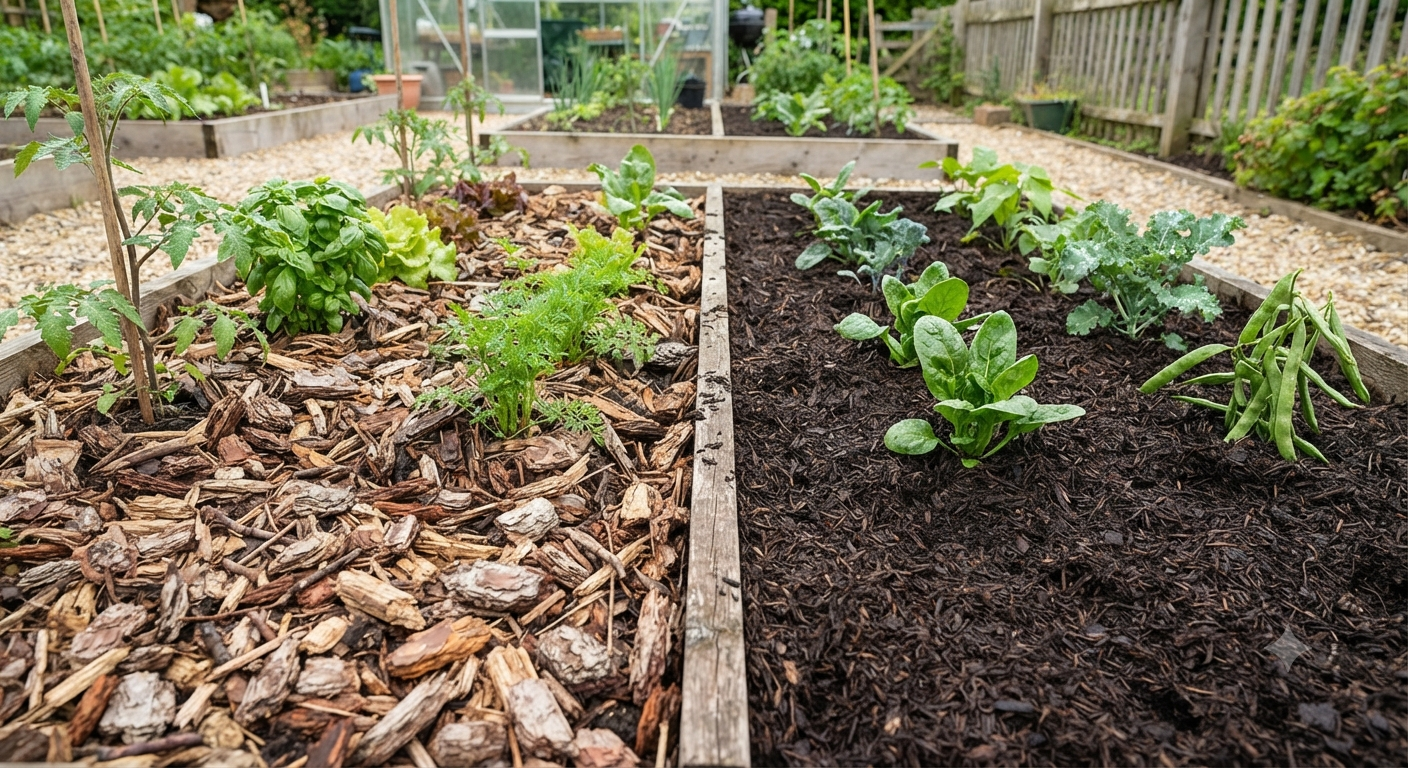
Standing in the garden center parking lot with a truck bed full of bags, staring at “cedar mulch” on one side and “hardwood wood chips” on the other, is one of those moments that makes gardening feel way more complicated than it needs to be. Both bags promise the same thing: fewer weeds, happier plants, less watering. So why do they look so different, cost so differently, and get recommended for totally different jobs?
I’ve hauled both of these materials by the truckload over the years, and I’ve made plenty of expensive mistakes figuring out which one goes where. The short version: wood chips and mulch aren’t the same thing, even though garden centers (and honestly, a lot of gardening blogs) use the terms like they’re interchangeable. Picking the wrong one can mean stunted vegetables, a soggy flower bed, or a lawn full of weird orange fungus that looks like something from a horror movie.
Let’s sort out exactly what each material does, where it shines, where it flops, and how to pick the right one without wasting a weekend or a paycheck.
What’s the Real Difference Between Wood Chips and Mulch?
Here’s where a lot of confusion starts. “Mulch” is actually the umbrella term. It just means any material you spread over soil to protect it. Wood chips are one type of mulch, but so are straw, shredded bark, compost, pine needles, and even gravel.
When people ask “wood chips vs mulch,” what they usually mean is wood chips versus shredded or dyed bark mulch, since that’s what most bags at the store are labeled as. That’s the comparison I’m making throughout this article, because that’s the actual decision most home gardeners are trying to make.
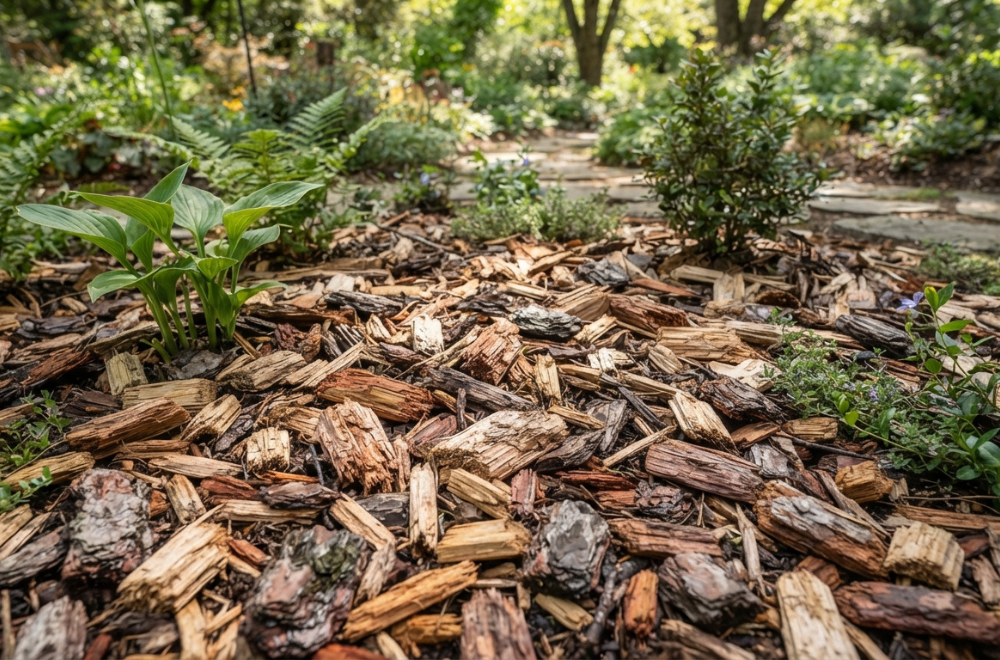
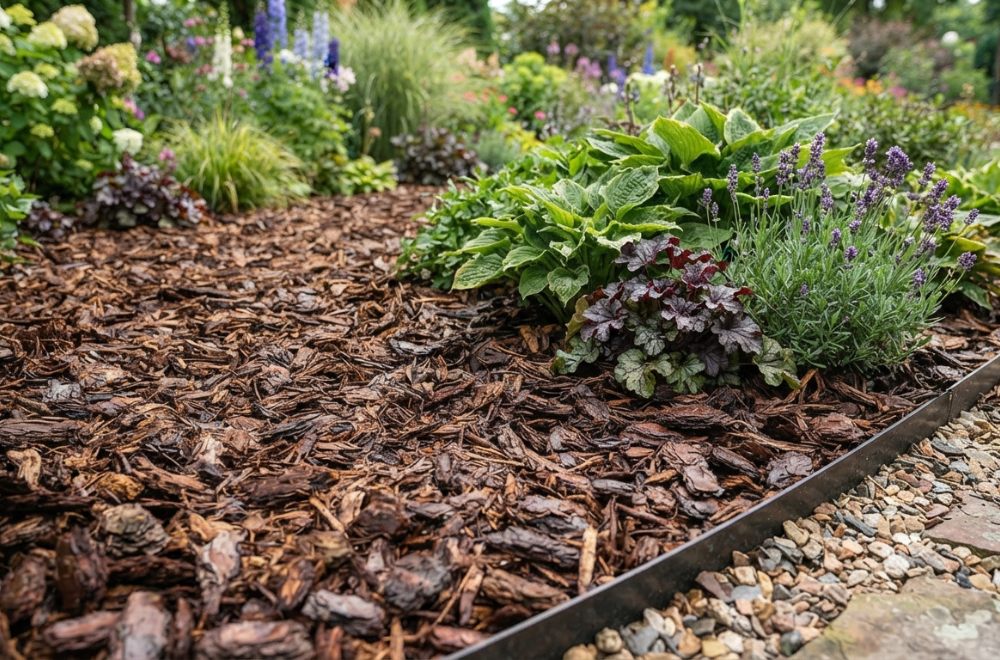
Wood chips come from chipped-up branches, trunks, and sometimes whole trees. They’re chunky, irregular, and often include bark, leaves, and small twigs mixed in. Bark mulch, on the other hand, is made specifically from the bark of trees, shredded into smaller, more uniform pieces. It’s often dyed black, brown, or red, which is why you see those color-coordinated flower beds outside office buildings.
The size, texture, and decomposition rate of these two materials are different enough that they behave completely differently in your garden. That’s the whole ballgame here.
Wood Chips: Pros and Cons for Your Garden
Why Wood Chips Are Worth Considering
Wood chips are my go-to for pathways, around trees, and in perennial beds I don’t plan on digging into every year. They last a long time. I’m talking two to three years before you need to top them off again, compared to bark mulch which often needs replacing annually.
They also do an incredible job suppressing weeds once you get a thick layer down, at least three to four inches. The chunky texture creates air pockets that let water and oxygen through to the soil while still blocking out the sunlight weed seeds need to germinate.
Here’s my favorite part: wood chips are often free. Tree service companies frequently give away chips just to avoid dumping fees. I’ve gotten multiple truckloads delivered to my driveway for nothing but the cost of a tip for the crew. Check sites like ChipDrop or just call a local arborist directly.
Wood chips also feed the soil food web in a way bark mulch doesn’t quite match. As they slowly break down, they support fungal networks that trees and shrubs actually rely on. If you’ve got an area with established trees or a woodland-style garden, wood chips mimic what naturally happens on a forest floor.
Where Wood Chips Fall Short
The biggest wood chip myth I hear constantly is that they attract termites. I get asked about this all the time, and here’s the truth: termites are drawn to moisture and cellulose in general, not specifically wood chips. Keep chips a few inches away from your house foundation and this isn’t really a concern. Termites are far more interested in the wood framing of your house than a pile of decorative mulch.
The real issue with wood chips is nitrogen. As they decompose, the microbes breaking them down pull nitrogen from the surrounding soil to fuel that process. If you till fresh wood chips directly into your soil, you can temporarily starve your plants of nitrogen. Keep chips on top of the soil as a surface layer instead of mixing them in, and this problem mostly disappears.
Mulch (Bark, Straw, and Compost Types): Pros and Cons
Why Bark Mulch Still Has a Place
Bark mulch’s biggest strength is how it looks. It’s finer, more uniform, and comes in those tidy colors that make a flower bed look intentional and put-together. If curb appeal matters to you, and for a lot of homeowners it genuinely does, dyed bark mulch just reads as “cared for” in a way raw wood chips don’t.
It also breaks down faster, which sounds like a con, but it’s actually a benefit in annual flower beds or vegetable gardens where you’re reworking the soil every season anyway. That faster decomposition adds organic matter back into your soil more quickly than chunky wood chips would.
Bark mulch is also easier to spread evenly. It’s lighter, more uniform in size, and doesn’t have the occasional two-foot branch chunk that wood chip piles sometimes include. If you’re mulching a small, detailed flower bed, this matters more than you’d think.
Straw and compost, which technically fall under the mulch umbrella too, are fantastic for vegetable gardens specifically. Straw keeps soil temperature stable and doesn’t rob nitrogen the way wood-based products can, and it’s easy to work into the soil at the end of the season.
Where Mulch Comes Up Short
Bark mulch breaks down fast, which means you’re buying and hauling bags every single year. That cost adds up. I priced it out for my own front beds a few years back, and buying bagged bark mulch annually cost me almost four times what a delivered load of wood chips would have cost for the same coverage, spread over a two-year period.
Dyed mulch is my other pet peeve. I’ve found that the bright red and black dyed mulches are a total waste of money, even if they look sharp on Pinterest. Cheaper dyed mulches are sometimes made from recycled pallet wood or construction debris, and you genuinely don’t know what chemicals went into that dye or that wood before it landed in a bag. Stick with natural, undyed bark if you go this route, or check that the dye is a plant-based, non-toxic type.
Bark mulch also tends to float and wash away in heavy rain, especially on any kind of slope. I’ve watched a full bag of mulch redistribute itself across my entire driveway after one bad thunderstorm.
Wood Chips vs Mulch for Vegetable Gardens
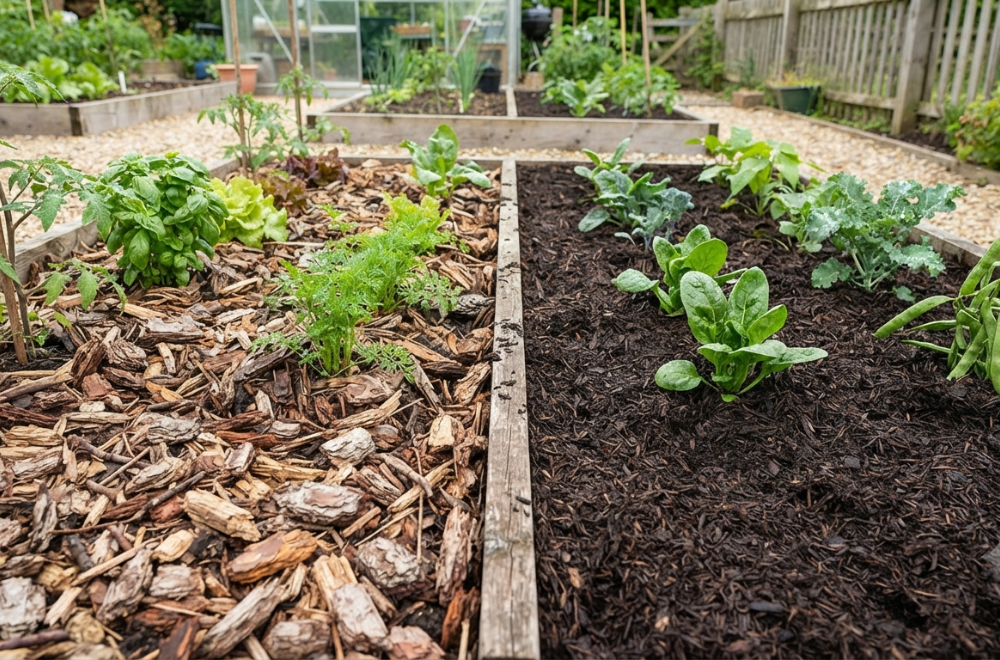
This is where I get the most questions, so let’s be direct about it. For vegetable gardens, I lean toward straw, shredded leaves, or compost over both wood chips and bark mulch.
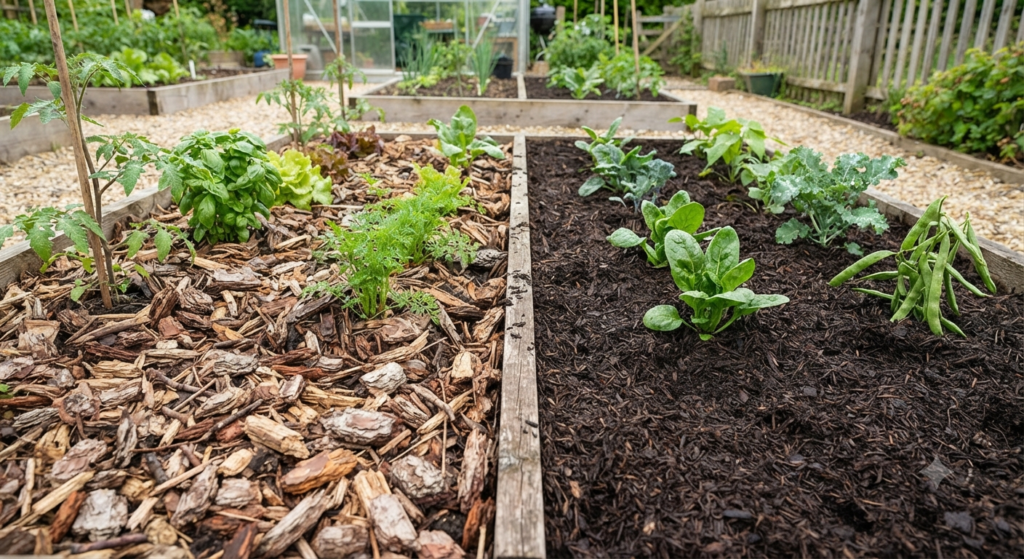
Wood chips are too chunky and slow-decomposing for annual beds where you’re planting and replanting multiple times a year. They also carry that nitrogen drawdown risk if they end up mixed into your soil during planting, which happens easily in a vegetable bed where you’re digging constantly.
Bark mulch works better than wood chips here, but it’s still not ideal. It can be too acidic for some vegetables if it’s fresh, and the fine texture can crust over and actually repel water instead of letting it soak through, especially after it’s been down a few months.
If you insist on using wood chips near vegetables, keep them in the walking paths between rows instead of directly around your plants. This gets you the weed suppression benefit without the nitrogen competition or soil acidity concerns.
Wood Chips vs Mulch for Flower Beds and Landscaping
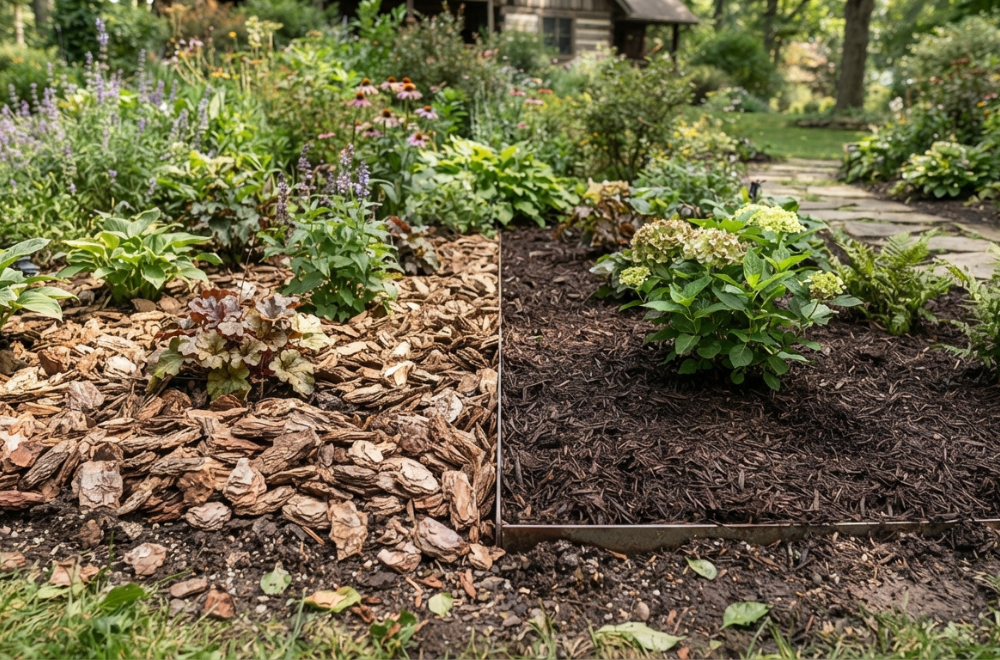
For ornamental beds, shrub borders, and general landscaping, this decision comes down to how often you’re willing to redo the work and what look you’re going for.
Wood chips are my pick for anything low-maintenance: foundation plantings, areas around established shrubs, woodland gardens, or pathways. Set it and forget it for a couple of years.
Bark mulch wins for high-visibility spots where appearance matters more than long-term cost. Front entryways, beds along a walkway, anywhere guests are going to see up close. The finer texture and color consistency genuinely look better in these spots.
A quick side note here: if you’re mixing wood chips and bark mulch in different zones of the same yard, that’s completely fine, and honestly what most experienced landscapers actually do. There’s no rule that says your whole property has to match.
Which Is Cheaper: Wood Chips or Mulch?
Upfront, bagged bark mulch and bagged wood chips cost roughly the same per bag at most garden centers. But wood chips bought in bulk, or sourced free from a tree service, are dramatically cheaper for larger areas.
Do the math on square footage before you buy. A cubic yard of bulk wood chips typically covers about 100 square feet at three inches deep, and bulk delivery usually runs less per yard than the equivalent volume in bags, sometimes by half or more.
Factor in replacement frequency too. Bark mulch needing yearly replacement versus wood chips lasting two to three years means the real cost gap is bigger than it looks on a single receipt.
How to Apply Wood Chips or Mulch the Right Way
Buying the right material is only half the battle. I’ve seen people spend good money on quality wood chips and still end up with weeds, root rot, or a patchy bed because of how they applied it. Here’s the process I use every single time, whether I’m working with wood chips or bark mulch.
- Clear the area first. Pull existing weeds, roots and all. Mulch on top of weeds just delays the problem, it doesn’t solve it.
- Water the soil before you mulch, not after. Get the ground properly moist first. Mulch on top of dry soil traps that dryness underneath, and you’ll be fighting it for weeks.
- Lay down a weed barrier only if you’re using it in a path, not a planting bed. Landscape fabric under mulch in a flower bed sounds like a smart shortcut, but it actually blocks the material from breaking down into the soil, and it makes it nearly impossible to plant anything new later without cutting through fabric. Skip it in beds where you plan to add or move plants.
- Spread to the right depth. Aim for three to four inches for wood chips, and two to three inches for bark mulch since it compacts more densely. Thinner than that and weeds still get through. Thicker than that and you risk suffocating plant roots or trapping too much moisture.
- Keep a gap around every stem and trunk. A few inches of bare soil right around the base of any plant, shrub, or tree prevents rot and keeps pests from having a cozy hiding spot right against the bark.
- Rake it level and check back in a month. Both materials settle over the first few weeks, especially after rain. A quick once-over with a rake keeps things looking tidy and evenly distributed.
Wood Chips vs Mulch: Quick Comparison at a Glance
Sometimes you just want the short version without scrolling back through paragraphs. Here’s how these two stack up across the categories that actually matter for most home gardeners:
- Longevity: Wood chips last two to three years. Bark mulch typically needs replacing every twelve months.
- Cost over time: Wood chips are cheaper long-term, especially if sourced free or in bulk. Bark mulch costs more annually due to replacement frequency.
- Appearance: Bark mulch offers a cleaner, more uniform, more “landscaped” look. Wood chips look more natural and rustic.
- Weed suppression: Both work well at proper depth, though wood chips hold up slightly longer since they break down more slowly.
- Best use case: Wood chips for pathways, tree rings, and low-maintenance perennial beds. Bark mulch for high-visibility flower beds and front entryways.
- Vegetable gardens: Neither is ideal. Straw, shredded leaves, or compost are better choices for annual food-growing beds.
A Few Reader Questions I Get Asked Constantly
Do wood chips kill grass? Only if you pile them thick enough to block sunlight completely, which is honestly the point if you’re trying to convert a patch of lawn into a garden bed. A thick layer of wood chips is one of the easiest ways I know to smother grass before starting a new bed, no chemicals needed.
Can I use fresh wood chips right away, or do they need to sit first? You can use them right away as a top layer. The nitrogen drawdown issue I mentioned earlier really only becomes a problem when fresh chips get mixed into the soil, not when they sit on top of it.
Is it okay to mix wood chips and bark mulch together? Sure, though I don’t usually bother. If you’ve got leftover bags of both, layering wood chips on the bottom and a thin top layer of bark mulch for looks isn’t a bad way to stretch your materials and still get a tidy appearance.
How often should I top off my mulch or wood chips? Check the depth every spring. If it’s dropped below two inches, add more. You rarely need to remove the old layer first, just top it up.
The “Real Talk” Section: What Actually Goes Wrong
I want to be straight with you about the stuff nobody puts in the glossy garden magazine spreads.
- Mulch volcanoes are a real problem, and I’ve made this mistake myself. Piling mulch or wood chips high against a tree trunk, shaped like a little volcano, traps moisture against the bark and invites rot and pests. Keep mulch a few inches away from any trunk, no matter which material you use.
- Artillery fungus is genuinely gross and shows up on bark mulch more than wood chips. This fungus shoots tiny black spore masses onto nearby surfaces, and they stick to house siding like tar. If you’ve ever seen little black dots that won’t scrub off a white wall near a mulched bed, that’s probably it. It thrives in decomposing bark mulch, especially in shady, damp spots.
- Both materials can shift and wash out in heavy storms, but bark mulch is worse for this since it’s lighter and finer. If you’re on a slope, consider a coarser wood chip or even a jute netting underneath to hold everything in place.
- Fresh wood chips smell awful for the first week or two, sometimes like sour vinegar. This is normal, it’s just the decomposition process kicking off, but it catches people off guard every single time. Let a fresh pile sit and “cure” for a few weeks before spreading it if the smell bothers you.
- Neither material is a substitute for actual weed removal. I’ve watched people dump six inches of mulch on top of an established weed patch expecting a miracle. Persistent weeds like bindweed or Bermuda grass will punch straight through both wood chips and bark mulch eventually. Pull the roots first, then mulch.
- Cheap dyed mulch sometimes comes from questionable sources. As I mentioned earlier, some bagged dyed mulch is made from recycled construction wood, pallets, or demolition debris. Not exactly what you want breaking down next to your tomato plants or your kid’s sandbox.
Final Thoughts and Parting Wisdom
If I had to sum up a decade of trial and error into one piece of advice, it’s this: match the material to the job, not to whatever looks nicest at the store. Wood chips for the long haul and low-maintenance zones. Bark mulch for the spots you want looking sharp right now. Straw and compost for anything you’re actively growing food in.
Neither one is objectively “better.” They’re just built for different jobs, and the real mistake is treating them like they’re interchangeable.
What’s your experience been? Have you had a mulch volcano disaster, a wood chip windfall from a tree crew, or a dyed mulch regret sitting in your side yard right now? Drop it in the comments below. I read every one, and I’m always curious what’s working (or not working) in other people’s yards.

About Syprose Kiche
Syprose Kiche is the creator and writer behind My Besuited Home, a practical home and garden website covering DIY projects, gardening, lawn care, landscaping, home improvement, and outdoor living. She focuses on turning everyday homeowner questions into clear, practical guides backed by careful research and useful real-world considerations.