
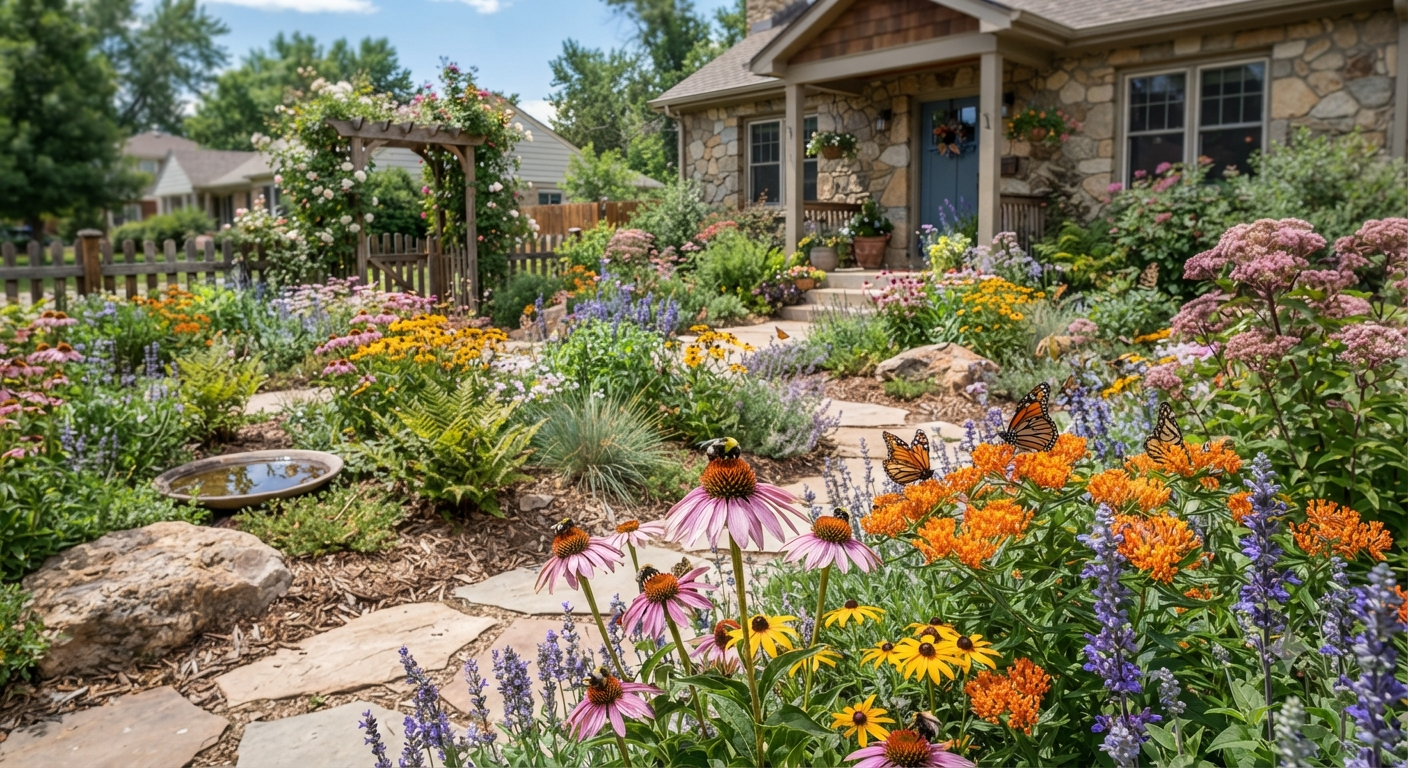
Your front yard is a green desert and you know it. Mow, water, fertilize, repeat. Meanwhile your neighbor two houses down has bees humming around her porch every afternoon and you’re standing there with a bag of grass seed wondering where you went wrong.
Here’s the thing nobody tells you when you start looking into pollinator gardens: most of the advice online is written by people who’ve never actually dealt with an HOA letter, a picky spouse who wants the place to “look neat,” or a patch of clay soil that laughs at your good intentions. I’ve built pollinator beds in three different front yards over the past decade, and I’ve killed more milkweed than I’d like to admit before figuring out what actually works.
This isn’t a list of vague inspiration photos. These are 11 ideas I’ve either built myself or watched work in real front yards, with the practical stuff included — what to plant, what to skip, and how to keep it from looking like a weed patch to the neighbors.
Why Front Yard Pollinator Gardens Matter More Than You Think
Bees, butterflies, and native moths are running out of food. Most suburban yards are turf grass and a few ornamental shrubs that offer pollinators absolutely nothing. A front yard pollinator garden fixes that, and it does it right where passing bees, birds, and butterflies actually travel — along the street, not tucked behind a privacy fence.
There’s also a selfish reason to do this. Pollinator gardens need less water, less mowing, and way less chemical babysitting than a lawn. My water bill dropped noticeably the summer I converted a third of my front bed to native flowering plants.
1. Start With a “Pollinator Strip” Instead of a Full Yard Overhaul
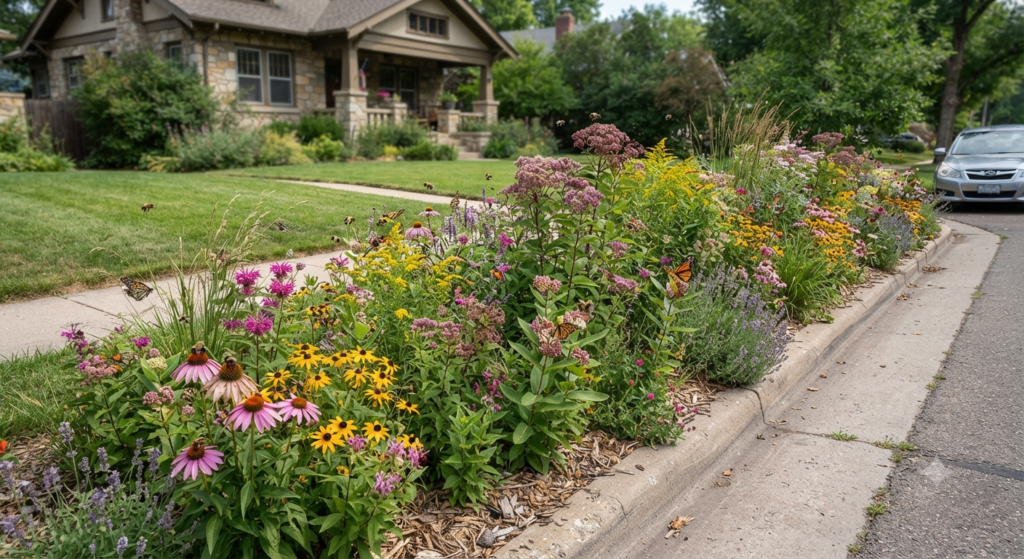
You don’t need to rip out your whole lawn on day one. I always tell people to start with a strip — 3 to 6 feet deep, running along a walkway, fence line, or the edge of the driveway.
This approach solves two problems at once. First, it keeps the project manageable so you don’t burn out halfway through (which is exactly what happened to me the first time I tried converting an entire quarter-acre lawn in one weekend). Second, a defined strip with a clean edge reads as “intentional garden” instead of “yard the owners gave up on,” which matters if you’ve got neighbors who judge these things.
Use a garden hose or spray paint to mark the strip before you dig anything. Curve it slightly instead of making it a straight line — straight edges next to a lawn look unfinished, while a soft curve immediately looks designed.
Once the strip is marked, kill the grass underneath with cardboard and mulch (lay flattened boxes down, cover with 3 inches of mulch, wait six to eight weeks) rather than spraying herbicide. It’s slower, but you’re not poisoning the soil you’re about to plant pollinator-friendly flowers in.
2. Anchor the Bed With Native Perennials, Not Annuals
This is where most people waste money. Garden centers push flats of petunias and marigolds every spring because they’re a guaranteed repeat sale — you have to buy them again next year. Native perennials cost more upfront but come back on their own, and they’re what local pollinators actually evolved to use.
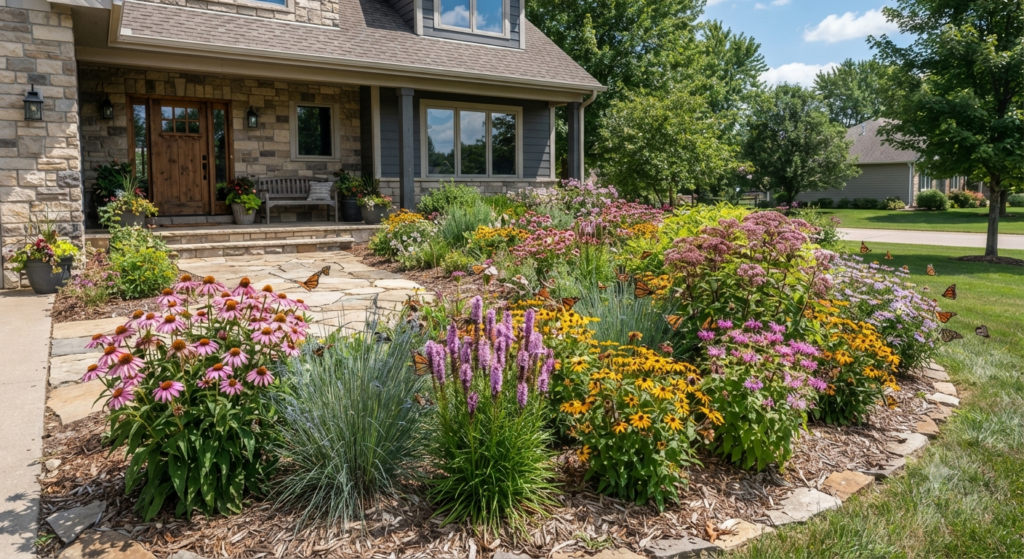
For most temperate front yards, I lean on a core group: coneflower, black-eyed Susan, bee balm, and butterfly weed. These aren’t fussy. They tolerate average soil, don’t need constant watering once established, and bloom reliably in year two.
Here’s my rule of thumb for placement: taller natives like Joe Pye weed or ironweed go in the back third of the bed, mid-height bloomers like coneflower and bee balm fill the middle, and low growers like creeping thyme or wild strawberry edge the front where they soften the border against the lawn.
Give new perennials a full growing season before judging them. The old gardening saying is real: first year they sleep, second year they creep, third year they leap. I nearly ripped out a whole bed of coneflower after year one because it looked sparse, and by year three it was the best-performing patch in the yard.
3. Plant in Drifts, Not Polka Dots
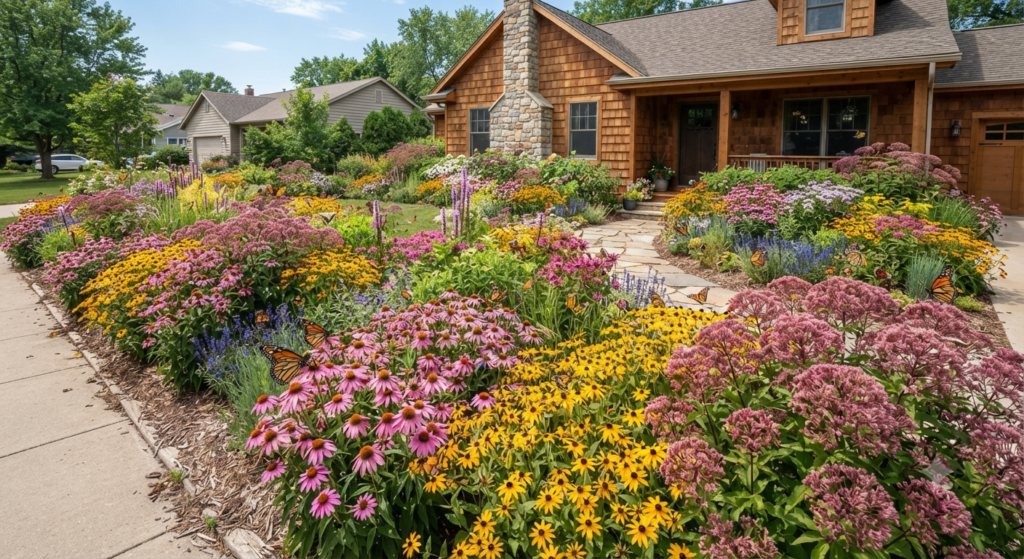
One of each flower scattered across the bed looks chaotic and, honestly, does less for pollinators. Bees and butterflies forage more efficiently when they can visit a cluster of the same flower in one spot instead of hopping around a mixed salad of single plants.
Plant in groups of five, seven, or nine of the same species. Odd numbers read more naturally to the eye than even ones — a design trick that applies to pollinator gardens just as much as it does to furniture arranging.
Drift planting also solves the “front yard looks messy” complaint before it starts. A cluster of nine purple coneflowers reads as a deliberate design choice. Nine different single flowers scattered around reads as neglect, even if the plant selection is identical.
If budget is tight, buy fewer species in bigger clusters rather than one of everything. I’d rather see three species with seven plants each than seven species with three plants each — the visual impact and pollinator traffic are both better.
4. Keep a Neat Border So the HOA Doesn’t Call
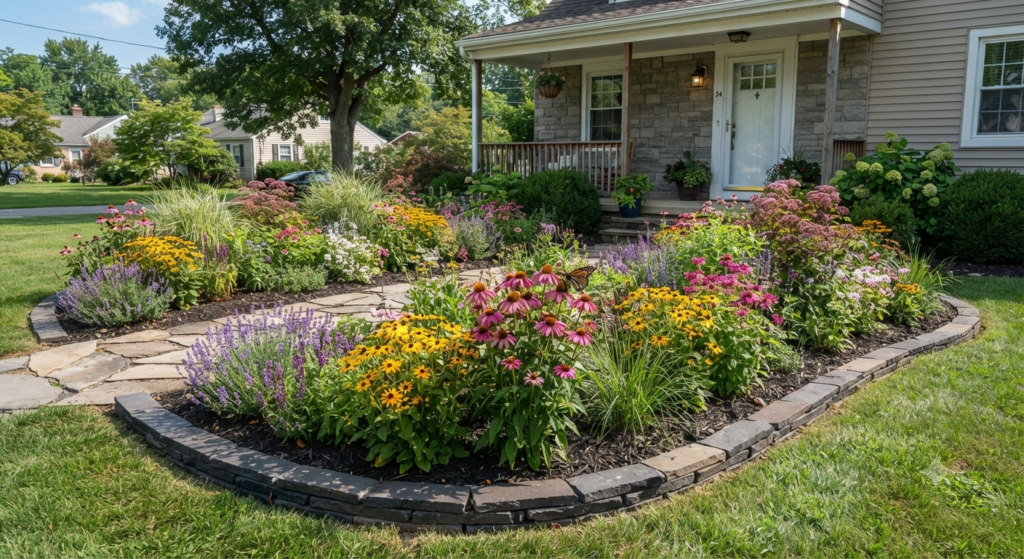
I’m not going to pretend HOA rules don’t exist, because for a lot of readers they absolutely do, and pretending otherwise just gets people fined. The fix is simple: give your wild-looking pollinator bed a crisp, defined edge.
A mowed strip of lawn, a low steel edging border, or a row of flat stones around the perimeter signals “this is designed” rather than “this got away from me.” I learned this after a neighbor complained about my first pollinator bed looking like an abandoned lot — the plants themselves were fine, I just hadn’t given the whole thing a frame.
Keep anything taller than knee-height set back from the sidewalk and street corners for visibility reasons, not just aesthetics. Cities have sightline rules for corner lots, and a six-foot stand of Joe Pye weed blocking a stop sign is a real problem, not a hypothetical one.
Mow or trim the lawn edge on a regular schedule even if you never touch the pollinator bed itself. A tidy lawn border does more to make a wild garden look intentional than almost anything you plant inside it.
5. Build a Butterfly Waystation Around Milkweed
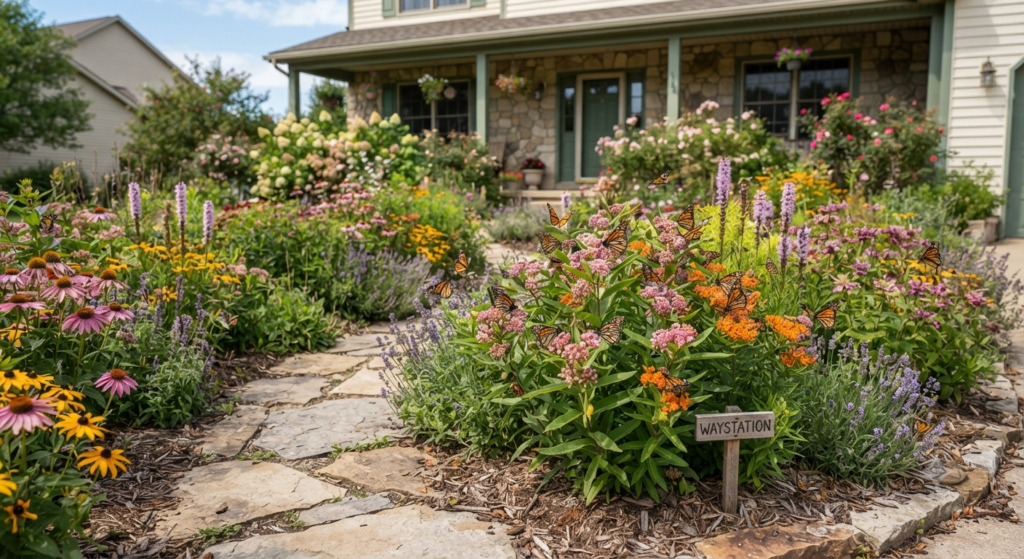
If monarch butterflies matter to you (and honestly, they should — their numbers have dropped hard), milkweed is non-negotiable. It’s the only plant monarch caterpillars eat, full stop.
Butterfly weed (a type of milkweed with orange flowers) is my go-to for front yards specifically because it’s tidier and less aggressive than common milkweed, which can spread by underground runners and take over a bed faster than you’d like. I made that mistake with common milkweed in a small bed and spent two seasons pulling out runners from spots I never planted it.
Pair milkweed with nectar-rich companions like zinnias, lantana, or asters so you’re feeding adult butterflies as well as caterpillars. A true waystation needs both a host plant for eggs and larvae, and nectar sources for adults passing through.
Don’t panic when the caterpillars strip your milkweed down to bare stems. That’s the plant doing exactly what it’s supposed to do. It’ll leaf back out, and a chewed-up milkweed plant is a sign your garden is actually working, not a sign something’s wrong.
6. Use a Rain Garden Section for Wet Spots
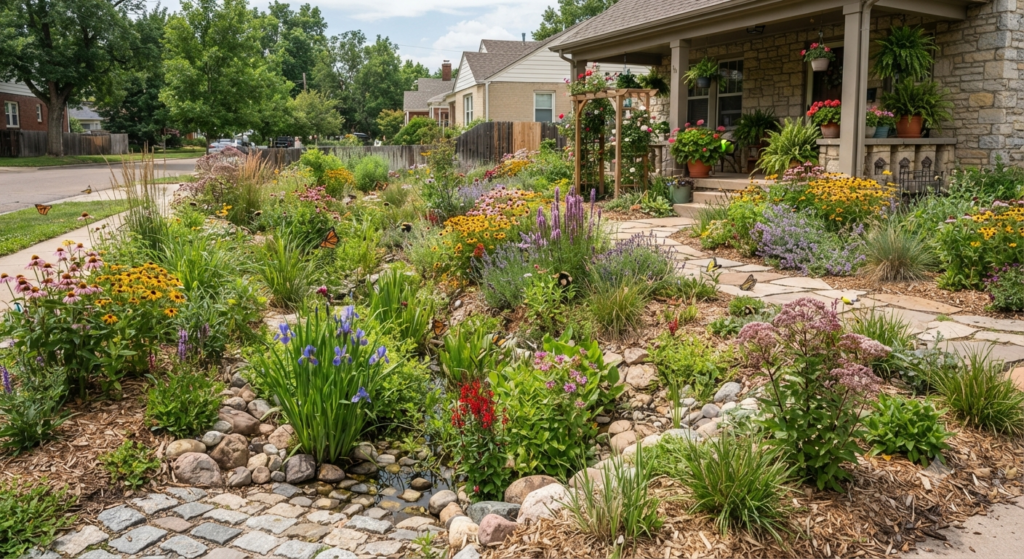
Every front yard has that one low spot where water pools after a storm and nothing grows right. Instead of fighting it with fill dirt, turn it into a mini rain garden with pollinator plants that actually like wet feet.
Swamp milkweed, cardinal flower, and blue flag iris all tolerate periodic flooding and still pull in bees and hummingbirds. This solved a genuine problem spot in my own front yard that used to just be a mud puddle every spring — now it’s the section visitors ask about first.
Dig the low spot slightly deeper if it’s not already forming a natural basin, and mix in compost so water infiltrates instead of just sitting on the surface for days. You want it to drain within 24 to 48 hours after a heavy rain, not become a standing puddle that breeds mosquitoes.
This is one of those ideas that solves a landscaping headache and adds pollinator habitat at the same time, which is why I recommend it to almost everyone who mentions a drainage problem near their front walkway.
7. Add a Shallow Water Source
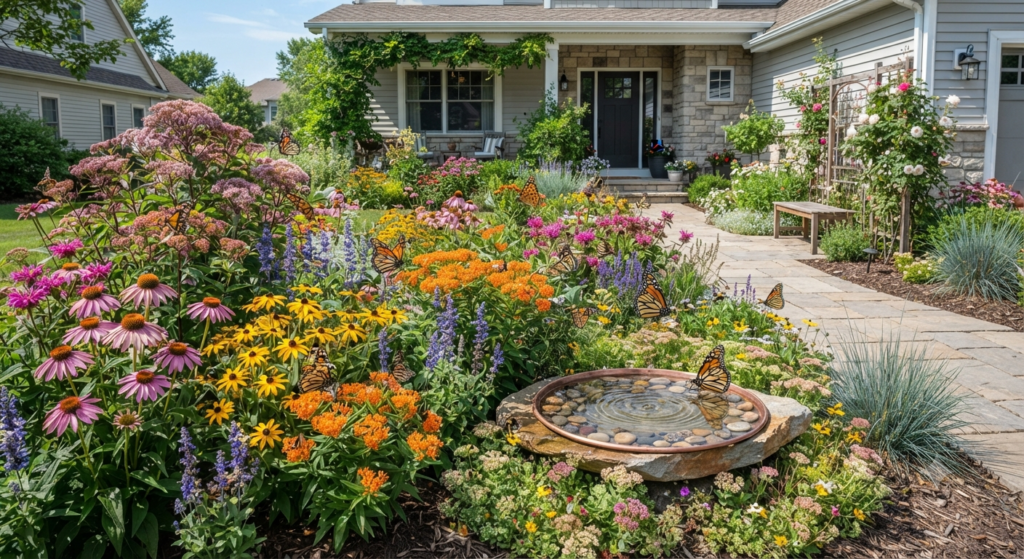
Pollinators need to drink, and a birdbath alone often has water too deep for bees and butterflies to land on safely. Set out a shallow dish — a plant saucer works fine — and fill it with pebbles or marbles that stick up above the waterline.
The pebbles give insects a landing pad so they can drink without drowning. I use an old terracotta saucer with a handful of aquarium gravel, refresh the water every couple of days, and it gets constant bee traffic all summer.
Place it near the pollinator bed but not directly in full blazing afternoon sun, or you’ll be refilling it constantly. A spot with morning sun and afternoon shade keeps the water from evaporating in a few hours.
Quick side note: mosquitoes will also try to use standing water as a nursery, so dump and refresh it every two to three days no matter what. This isn’t optional maintenance — skip it and you’ll trade a bee garden for a mosquito problem.
8. Layer in Spring, Summer, and Fall Bloomers
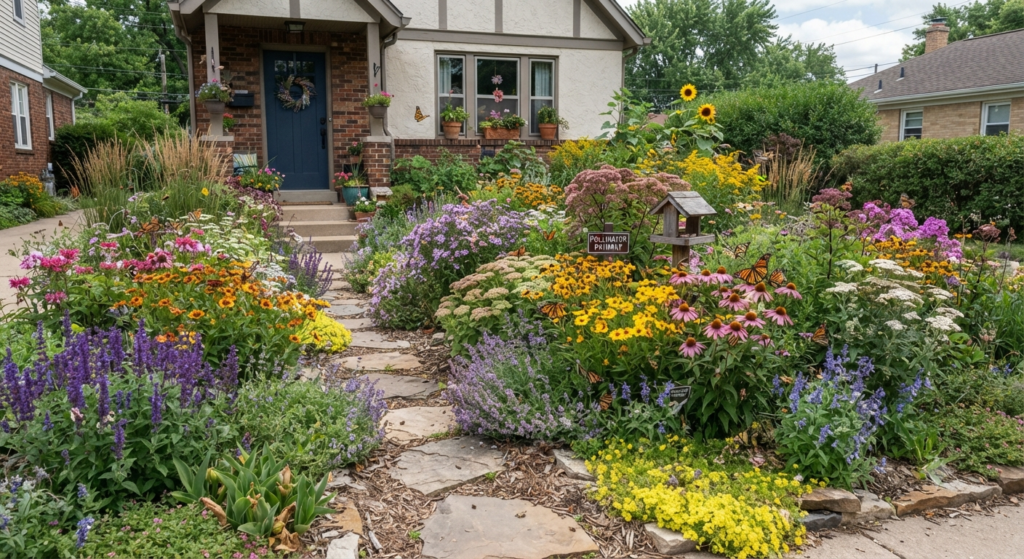
A common rookie mistake — one I made myself the first time around — is planting everything that blooms in June and having a completely empty, foodless garden by August. Pollinators need a continuous buffet from early spring through the first hard frost.
Break your plant list into three bloom windows. Spring: crocus, wild columbine, and creeping phlox. Summer: coneflower, bee balm, and black-eyed Susan. Fall: asters, goldenrod, and sedum, which are genuinely some of the best late-season food sources for bees stocking up before winter.
Goldenrod gets an unfair reputation as an allergy trigger, but that’s actually ragweed, which blooms at the same time. Goldenrod pollen is heavy and sticky and relies on insects to move it, not wind, so it’s not the culprit sneezing people blame it for.
Aim for at least three species blooming at any point in the growing season. If you map it out on paper before buying anything, you’ll avoid the gap-in-August problem that leaves your garden looking green but empty of activity for weeks at a time.
9. Skip the Store-Bought “Bee Houses” (Mostly)
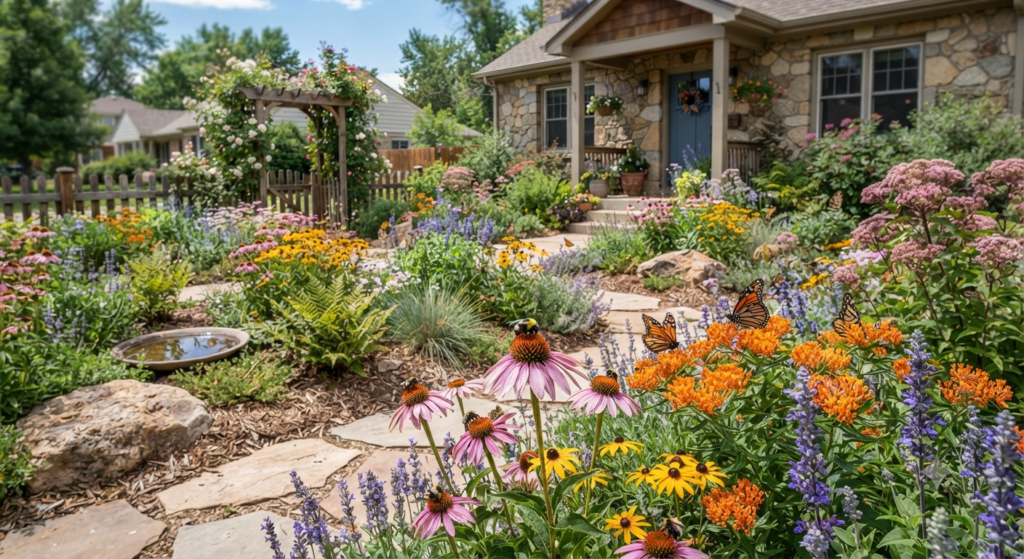
Those decorative bundled-tube bee hotels sold at garden centers look charming on Pinterest, and I’ve found that most of them are close to useless, or actively harmful if they’re never cleaned out. The tubes trap moisture, breed mold and parasites, and can end up killing more native bees than they house.
What actually works is leaving a small patch of bare, undisturbed soil somewhere in the yard, since the majority of native bee species nest in the ground, not in tubes at all. A sunny, dry patch with no mulch on it is genuinely more useful habitat than a $40 decorative bee house.
If you do want a bee house, build a simple one from untreated wood with removable paper tube liners you can swap out yearly, and mount it under an eave where rain can’t get in. Skip the mass-produced bundled-reed versions entirely.
Leaving a few dead plant stems standing over winter instead of cutting everything back to bare dirt in the fall also gives cavity-nesting bees a place to overwinter. It looks a little untidy in November, but it’s doing real work.
10. Mix in Fragrant Herbs as Dual-Purpose Plants
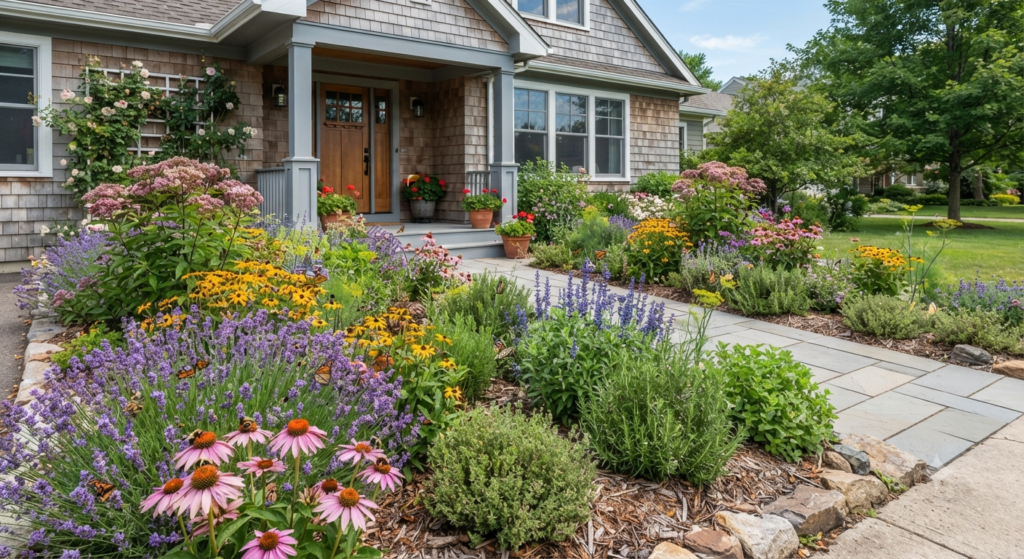
Lavender, oregano, thyme, and chives all flower, all attract bees in serious numbers, and all double as something you can actually cook with. This is one of my favorite tricks for front yards where every square foot needs to earn its keep.
Let a few oregano or chive plants go to flower instead of trimming them back constantly for the kitchen. The flowers pull in bees hard, and you can still harvest plenty of leaves from plants you’re not deadheading.
Lavender in particular does double duty as a low, tidy border plant along a front walkway, which again helps with that “this looks designed” problem HOAs and picky neighbors care about. It also tolerates poor, dry soil better than almost anything else on this list, so it’s a good pick for that rough strip along a sidewalk where nothing else wants to grow.
Rosemary works in warmer climates too, though it won’t survive a hard winter everywhere, so check your zone before committing a big section of the bed to it.
11. Bonus: Let a “Messy Corner” Exist on Purpose
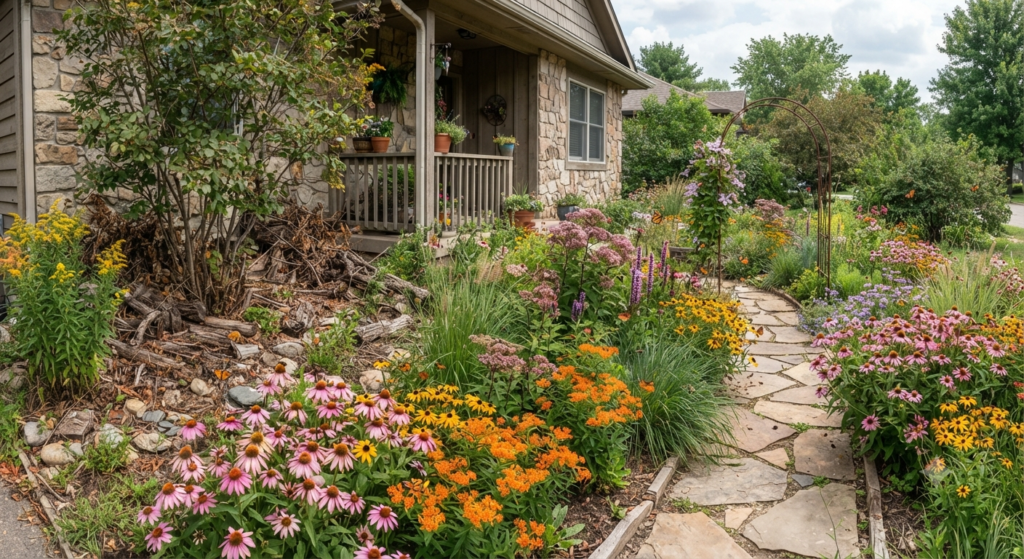
Every pollinator garden benefits from one intentionally wilder corner — a spot with a small brush pile, some bare soil, and a few plants left to seed out and flop over naturally. This is the section that does the most for overwintering insects and beneficial bugs, even though it’s the least photogenic part of the yard.
Tuck it toward the back or side of the property, not right at the sidewalk, so it reads as a deliberate feature rather than the whole yard going wild. A few logs or a small stack of branches gives shelter to beetles and other insects that eat garden pests, which means less work for you controlling aphids later in the season.
I keep mine behind a low shrub so it’s mostly out of sight from the street but still doing its job. It’s not much to look at, but it’s consistently the busiest square foot of insect activity in my entire yard.
Real Talk: What Can Go Wrong With a Pollinator Garden
I want to be straight with you about the parts nobody puts in the glossy magazine spreads.
- It looks rough for the first year. New perennials are small, gaps are everywhere, and it will not look like the finished photos you’re picturing. Anyone who tells you differently is selling something.
- Some plants will absolutely try to take over. Bee balm, mint (don’t plant mint, honestly, just don’t), and common milkweed spread aggressively by runners. Stick to clumping natives if you don’t want to be constantly pulling volunteers out of your lawn.
- Wasps show up too, not just bees. A flowering garden attracts all kinds of pollinators, including wasps, which some people are genuinely allergic to. If anyone in your household has a serious allergy, plan pathways and seating areas with some distance from the densest bloom clusters.
- Watering the first season is non-negotiable. “Native and low-water” applies once plants are established, usually after one full growing season. Skip watering in year one and you’ll lose a chunk of what you planted, no matter how drought-tolerant the tag claims it is.
- HOAs and picky neighbors are a real obstacle, not a paranoid worry. Read your HOA rules before you rip out any lawn. A defined border and a visible sign explaining it’s a certified pollinator or wildlife habitat (several organizations offer cheap ones) heads off a surprising number of complaints before they start.
- Not every “pollinator plant” sold at big box stores is what it claims to be. A lot of nursery-grown natives are treated with systemic pesticides before you even buy them, which can harm the exact insects you’re trying to attract. Ask before you buy, or source from a native plant nursery that can confirm their growing practices.
Final Thoughts
A front yard pollinator garden isn’t about achieving some perfect, Instagram-ready flower bed on day one. It’s a slow trade — a little bit of lawn, a little bit of tidy control, in exchange for a yard that’s actually doing something for the bees, butterflies, and birds passing through your neighborhood.
Start small, pick two or three ideas from this list instead of trying all eleven at once, and give it real time before you judge whether it’s working.
What’s stopping you from converting a strip of your own front yard — space, time, or an HOA letter waiting to happen? Drop your situation in the comments below, and I’ll do my best to help you work around it.

About Syprose Kiche
Syprose Kiche is the creator and writer behind My Besuited Home, a practical home and garden website covering DIY projects, gardening, lawn care, landscaping, home improvement, and outdoor living. She focuses on turning everyday homeowner questions into clear, practical guides backed by careful research and useful real-world considerations.