
My neighbor Carla used to replant her entire flower bed every single spring. Same routine, every April: rip out the frost-killed annuals, haul bags of potting soil from the garden center, and drop close to $200 on plants that would be dead again by November. She did this for six years before she finally asked me why my garden looked fuller every summer while hers stayed exactly the same size.
The answer is embarrassingly simple. I plant perennials. She plants annuals.
Annuals are the plants that live fast and die young — one glorious season, then compost. Perennials are the plants that tuck themselves back into the soil every fall and show up again in spring, usually a little bigger and a little more impressive than the year before. Plant them once, and you’re basically done. No repurchasing, no replanting, no April scramble.
Below are the ten perennials I’d plant again in a heartbeat if I had to start my garden from scratch. I’ve grown every single one of these, and I’ll tell you exactly where they thrive, where they struggle, and which ones are secretly high-maintenance divas pretending to be easy.
What Makes a Perennial “Come Back Bigger”?
Before we get into the list, here’s a quick distinction that trips people up at the garden center. Not every perennial spreads or gets bigger over time. Some just come back at the same size every year, which is fine, but it’s not what we’re after here.
The plants on this list do one of three things: they clump wider each season, they self-seed into new patches, or they send out runners that colonize empty space. That’s the “bigger and better” part of the promise. If you want a garden that fills in on its own without you buying more plants, these are the ones to look for.
I’m also sticking to perennials that are genuinely low-maintenance. I love peonies, but anyone who tells you they’re “low-maintenance” has never dealt with ants, floppy stems, and a three-week bloom window. That’s not this list.
1. Coneflower (Echinacea purpurea)
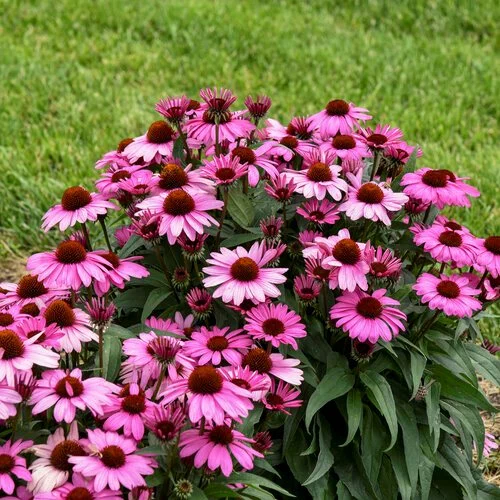
Coneflower is the plant I recommend to literally everyone, including people who tell me they kill everything. It’s drought-tolerant once established, doesn’t care about mediocre soil, and the purple-pink blooms show up right when your garden needs a mid-summer boost.
What makes coneflower earn a spot on this list is how it multiplies. Established clumps get wider every year, and the seed heads — if you leave them standing through fall — will drop seed and pop up new plants nearby. I started with three coneflower plants six years ago. I now have something closer to twenty, scattered across two beds, and I didn’t buy a single one of them.
Goldfinches go absolutely nuts for the seed heads in late fall and winter, so resist the urge to deadhead everything. I leave mine standing until early spring, partly for the birds and partly because I’m lazy, and it works out great either way.
Plant coneflower in full sun with decent drainage. It’ll tolerate poor soil better than rich soil, honestly — too much fertility makes the stems floppy and weak.
2. Black-Eyed Susan (Rudbeckia hirta)
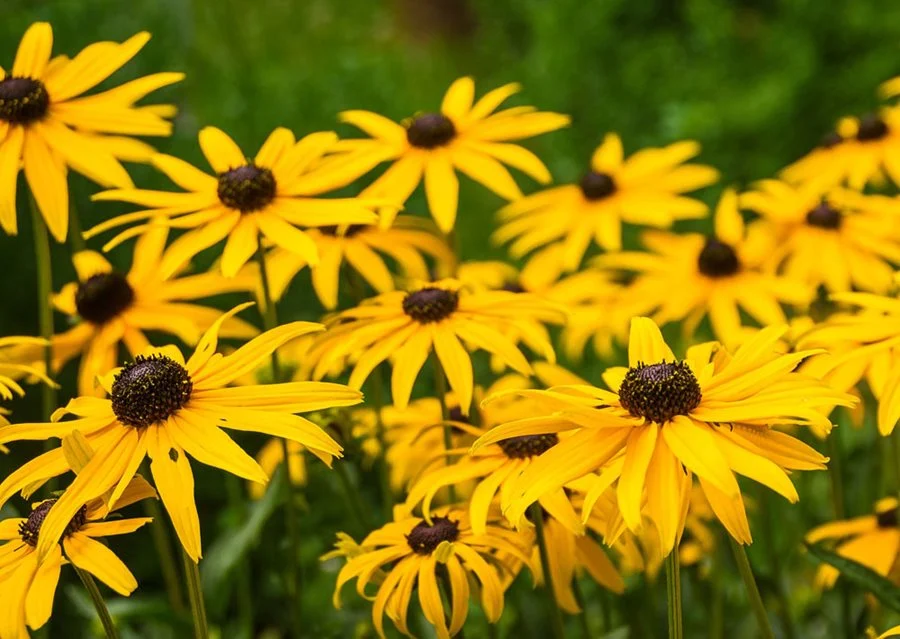
Black-eyed Susan is coneflower’s cheerful yellow cousin, and it spreads even more aggressively. If coneflower multiplies steadily, black-eyed Susan multiplies like it’s trying to win an argument.
I planted a single 4-inch pot of black-eyed Susan along my mailbox eight years ago. Within three seasons it had filled a six-foot stretch of bed on its own, no help from me. It self-seeds readily and also spreads by rhizome, so you get expansion from two directions at once.
The bloom itself is that classic golden-yellow daisy shape with a dark chocolate-brown center, and it flowers from midsummer clear through the first hard frost. Pollinators love it, deer mostly leave it alone, and it handles heat and drought like it was born for it — which, honestly, it was, since it’s native to most of North America.
One thing worth knowing: black-eyed Susan can look a little scraggly by late season if you don’t cut it back after the first flush of blooms. A quick trim in midsummer keeps the plant tidy and often triggers a second round of flowers.
3. Daylily (Hemerocallis)
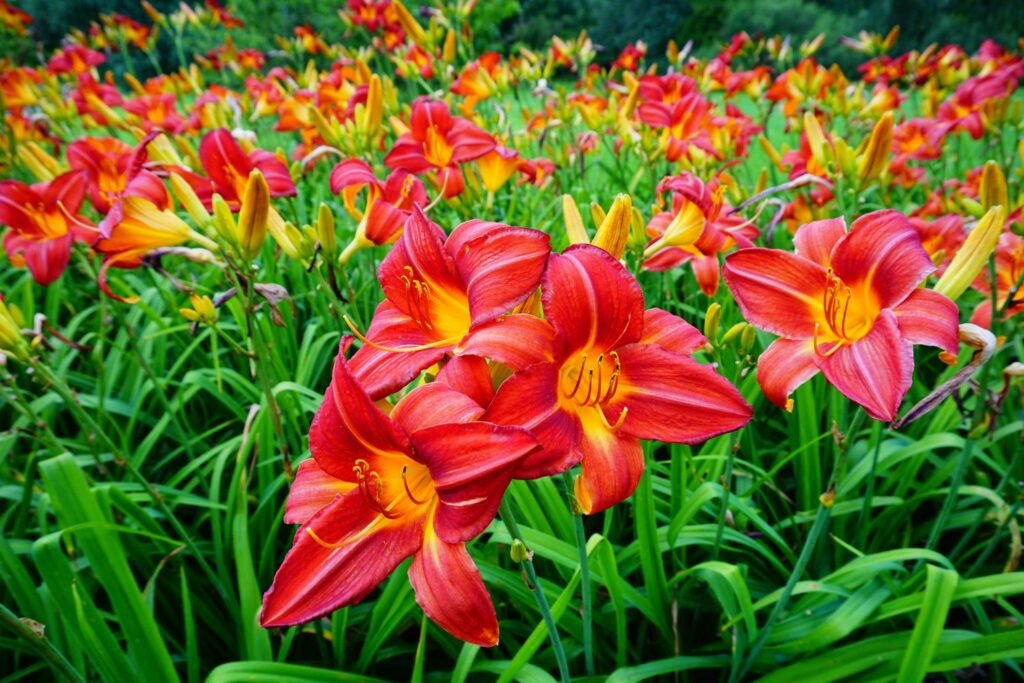
Daylilies are the plant equivalent of a reliable friend who shows up every single year without you having to ask twice. They tolerate neglect, bad soil, drought, and my personal favorite — total ignorance from the gardener.
Each daylily flower only lasts one day, hence the name, but a mature clump produces so many buds that you get weeks of continuous bloom. And the clumps genuinely do get bigger every year. I divided a single daylily clump five years ago into three sections, and each of those sections is now a fully mature plant on its own.
Daylilies come in an overwhelming range of colors, from classic orange to deep burgundy to pale yellow, so you can build an entire color scheme out of daylilies alone if you want to. They also handle roadside planting strips, slopes, and other rough spots where fussier plants would sulk.
Divide daylily clumps every three to four years if you want to keep them vigorous, or don’t — they’ll still bloom even when overcrowded, just slightly less enthusiastically. This is about as forgiving as perennial gardening gets.
4. Hosta
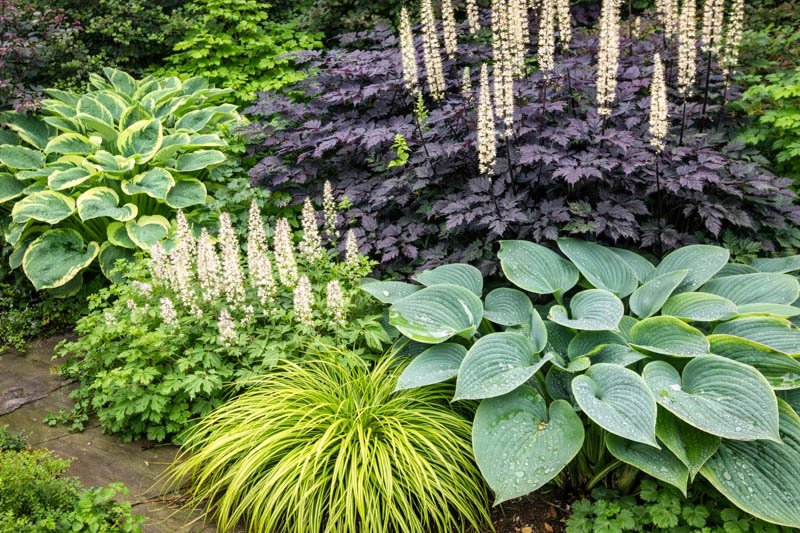
If your yard has shade, hosta is your best friend. I say this as someone who spent two full seasons trying to force sun-loving plants into a heavily shaded side yard before finally admitting defeat and switching to hosta. My only regret is not doing it sooner.
Hosta is grown mainly for its foliage rather than its flowers, and that foliage gets noticeably bigger and fuller every single year. A hosta that starts as a modest 12-inch clump can become a 3-foot mound of leaves within four or five seasons, depending on the variety. Some of the giant cultivars, like ‘Empress Wu,’ eventually sprawl to 6 feet across.
The leaf variety alone is worth the price of admission — blue-green, chartreuse, variegated white-and-green, deeply ribbed, glossy, matte. You can build a striking shade garden using nothing but different hosta cultivars and it won’t look boring.
The one real threat to hostas is slugs, which treat the leaves like an all-you-can-eat buffet. I’ll get into that more in the Real Talk section below, because it’s worth knowing before you commit to a whole shade bed full of them.
5. Peony (Paeonia lactiflora)
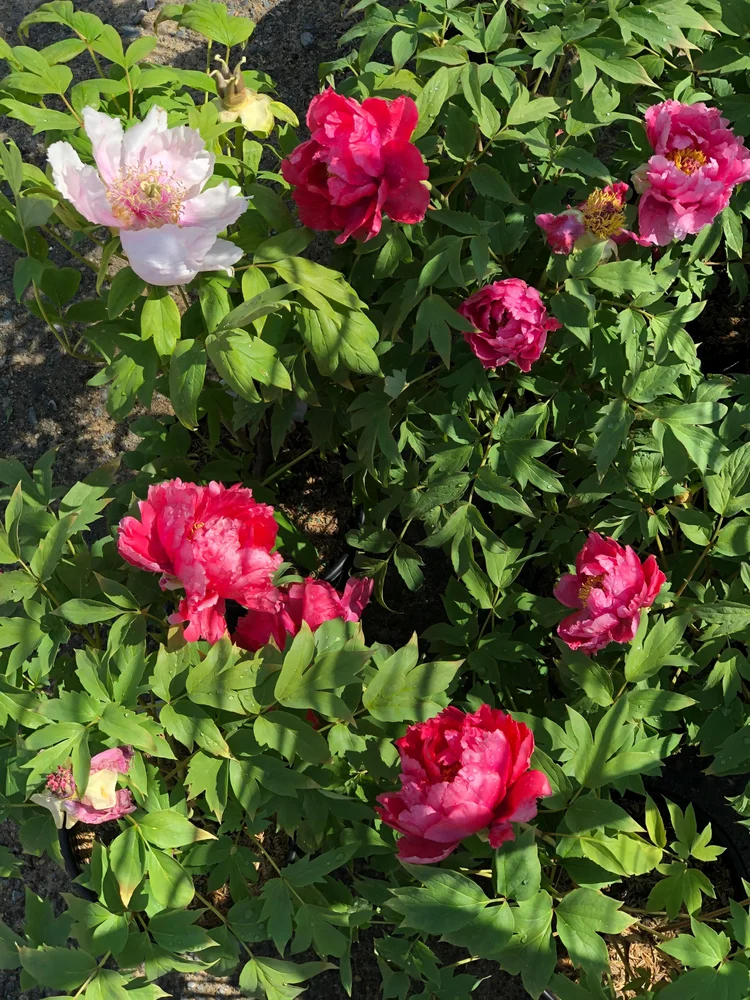
I know I just said peonies aren’t low-maintenance in the intro, and I’m sticking to that — but I’m including them anyway because they earn their spot on pure longevity and payoff. A well-sited peony can live for 50 years or more, getting larger and producing more blooms with each passing decade. My grandmother’s peony bush is older than I am and still puts on a better show every May than anything else in her yard.
Peonies want full sun, well-drained soil, and to be left alone once planted. They genuinely dislike being moved or divided, so pick your spot carefully the first time. Plant the roots too deep and you’ll get lush foliage and zero flowers, which is one of the most common peony mistakes I see.
The blooms themselves are enormous, fragrant, and honestly a little over the top in the best way. A mature clump can produce dozens of flowers in a single season, and the display gets more impressive every year as the root system expands underground.
Quick side note: if you want cut flowers for the house, harvest peony buds when they feel like a firm marshmallow, not a hard pebble. Cut too early and they’ll never open in the vase.
6. Russian Sage (Perovskia atriplicifolia)
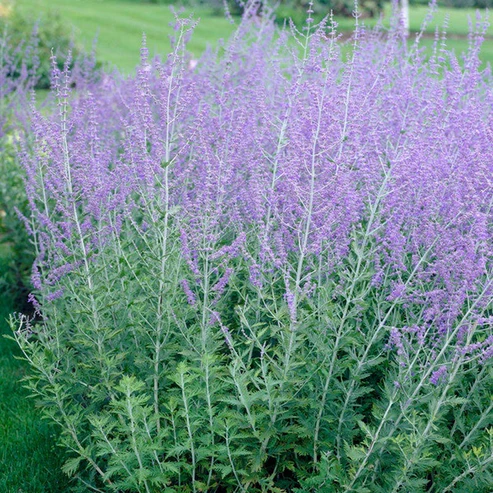
Russian sage is what I plant when I want something that looks delicate but is actually nearly indestructible. The silvery foliage and airy purple-blue flower spikes give it a soft, almost dreamy texture in the garden, but underneath that looks-can-be-deceiving exterior is a plant that shrugs off drought, poor soil, heat, and general neglect.
Established Russian sage clumps expand steadily each year, and the plant gets sturdier and more floriferous as it matures. Mine went from a scrappy 18-inch start to a 4-foot-wide, 3-foot-tall mounding shrub within four seasons.
It blooms from midsummer into fall, which fills a gap a lot of gardens have once the early perennials finish their show. Bees and butterflies treat it like a five-star restaurant, and deer generally steer clear of the aromatic foliage.
Give Russian sage full sun and good drainage. It genuinely does not want rich, moist soil — too much fertility or water makes it floppy and shortens its lifespan. This is a plant that thrives on being ignored, which is exactly what makes it perfect for low-maintenance gardening.
7. Sedum (Hylotelephium spectabile, formerly Sedum spectabile)
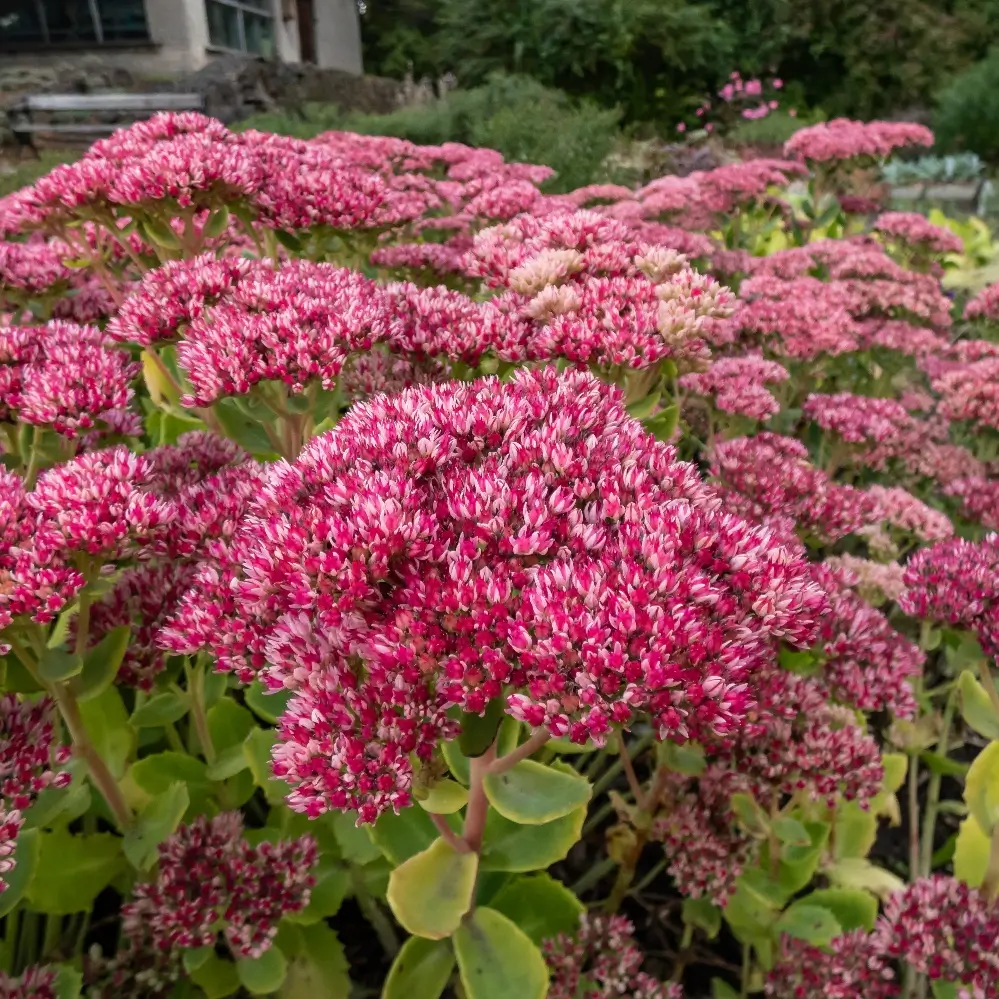
Sedum, sometimes sold as “stonecrop,” is the plant I recommend for anyone who’s convinced they can’t keep anything alive. The thick, succulent-like leaves store water, which means sedum shrugs off drought that would kill most other perennials outright.
The clumps bulk up substantially every year, going from a small rosette to a dense, rounded mound over a few seasons. Varieties like ‘Autumn Joy’ produce broad flower heads that start pale green in summer, shift to pink, and finish deep rust-red by fall — one plant giving you three different looks across the season without any effort on your part.
Sedum also happens to be one of the best late-season pollinator plants around. When most everything else has finished blooming, sedum is still going strong into October, and it’s often one of the last reliable nectar sources for bees before winter.
I leave the dried flower heads standing through winter for structural interest in the garden — they look genuinely striking dusted with frost or snow, and they give birds something to perch on when everything else is bare.
8. Catmint (Nepeta)
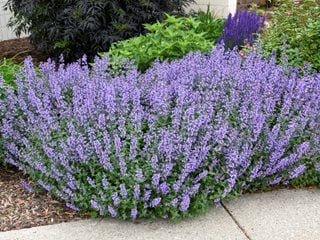
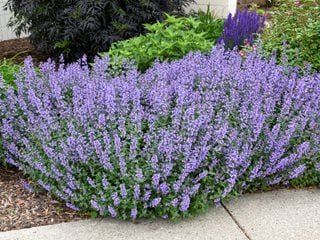
Catmint gets confused with catnip constantly, and while they’re related, catmint is the better landscape plant. It forms a mounding clump of gray-green foliage covered in small lavender-blue flowers from late spring through fall, and it gets fuller and more floriferous every year without turning into a thug like some spreaders on this list.
I use catmint as a border plant along my front walkway, and it’s done exactly what I wanted: filled in, stayed tidy-ish, and bloomed for months with almost zero input from me. Bees adore it, deer and rabbits avoid it, and it tolerates heat and drought better than almost anything else I’ve grown.
One trick that makes a real difference: shear catmint back hard by about a third after its first big bloom flush. It looks a little brutal for about a week, but it comes back denser and blooms again within a few weeks. Skip this step and the plant gets leggy and flops open in the middle by midsummer.
Catmint spreads slowly by both seed and expanding root clump, so you’ll get a bigger patch every year, but it won’t take over the neighborhood the way mint (the herb) famously does.
9. Ornamental Grasses (Panicum, Miscanthus, Schizachyrium)
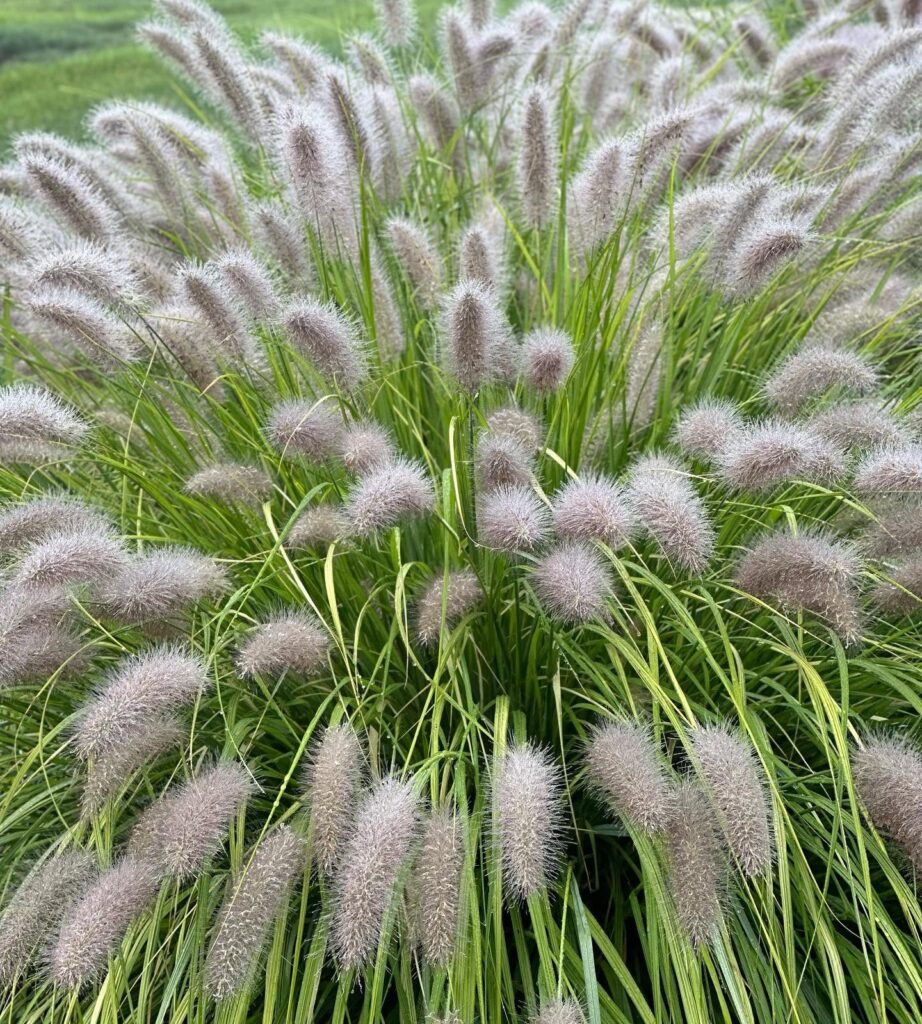
Ornamental grasses don’t get nearly enough credit in perennial gardening conversations, probably because people associate “grass” with the boring stuff they mow. Give switchgrass, maiden grass, or little bluestem a try and you’ll understand why I keep adding more of them to my yard every year.
These grasses form clumps that expand outward season after season, getting visibly larger and more architectural with age. A three-year-old clump of switchgrass can easily triple in size compared to what you planted, and the seed heads that form in late summer catch the light in a way that honestly makes flowering plants look a little basic by comparison.
They provide four-season interest too, which is rare. Green and upright in summer, golden and textured in fall, and standing through winter with a dusting of frost or snow that looks like something out of a magazine spread. Birds use the seed heads for food and the stalks for winter shelter.
Cut ornamental grasses back to a few inches above the ground in late winter, right before new growth starts, and that’s essentially the only maintenance they need all year.
10. Bee Balm (Monarda didyma)
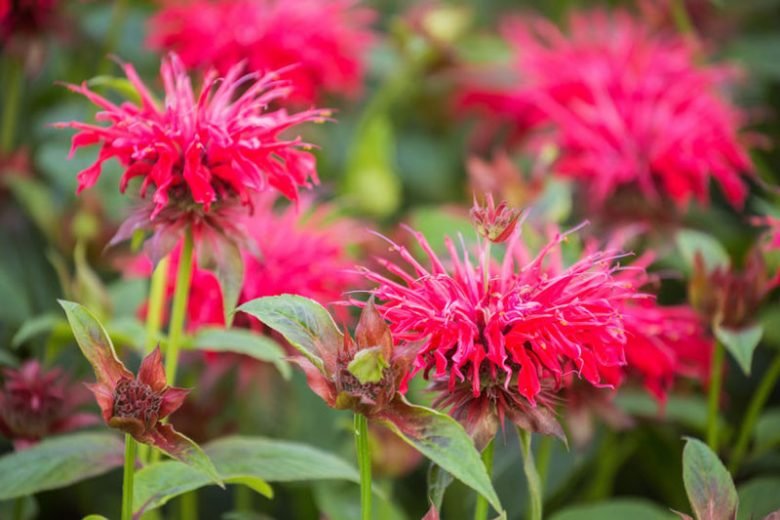
Bee balm earns its spot for one simple reason: hummingbirds. If you want hummingbirds visiting your yard all summer, plant bee balm and watch what happens within a week or two.
The clumps spread by underground rhizomes, expanding into a wider patch every year — sometimes a little too enthusiastically, which I’ll cover below. The shaggy, spiky red, pink, or purple blooms sit atop tall stems and have a genuinely striking, almost fireworks-like shape that stands out in any bed.
Bee balm also happens to be in the mint family, and the crushed leaves smell like a mix of oregano and citrus. I’ve used mine to make a simple herbal tea a few times, which felt very “self-sufficient homesteader” even though I definitely still buy groceries like a normal person.
Give bee balm full sun to part shade and consistent moisture. It’s more water-loving than most of the other plants on this list, so it’s not the best choice if your yard runs dry in summer without irrigation.
Real Talk: What Can Go Wrong With Low-Maintenance Perennials
Low-maintenance doesn’t mean zero-maintenance, and I want to be straight with you about the downsides before you plant a whole yard full of these.
- Some of these plants spread too well. Black-eyed Susan and bee balm, especially, can turn from “filling in nicely” to “taking over the bed” within a few seasons if you don’t divide them occasionally. I’ve had to pull entire wheelbarrows of black-eyed Susan out of a bed that got away from me. If aggressive spreaders make you nervous, plant them somewhere contained, like inside a buried edging barrier.
- Slugs will destroy hostas if you let them. This is the single biggest hosta complaint I hear, and it’s a real one. If your shade garden has moisture and slugs, expect Swiss-cheese leaves by midsummer unless you take action — beer traps, diatomaceous earth, or slug-resistant varieties with thicker leaves.
- Peonies punish impatience. Plant the crown too deep, and you’ll wait years for flowers that never come. Move an established peony because you changed your mind about the layout, and it might sulk for two or three seasons before blooming again. Peonies reward people who plan ahead and then leave well enough alone.
- Deadheading habits matter more than people think. If you’re the type who can’t stand seed heads and cuts everything back the second it fades, you’ll lose some of the self-seeding magic that makes coneflower and black-eyed Susan multiply for free. Leave some seed heads standing, even if it looks a little messy through winter.
- Not every “perennial” at the garden center is actually hardy in your zone. I’ve bought plants tagged as perennials that turned out to be annuals here in my growing zone, simply because they’re perennial somewhere warmer. Always check the hardiness zone rating against your own before you buy, or you’ll end up with an unpleasant surprise come spring.
Final Thoughts
Building a low-maintenance garden isn’t about finding plants that need zero care — it’s about picking the right plants for your space and letting them do what they’re naturally good at. Every plant on this list has earned its spot in my yard by getting better with age instead of needing to be replaced.
Start with two or three from this list, pay attention to what your yard actually offers in terms of sun and moisture, and let them establish before adding more. In a few years, you’ll have a garden that looks like it took a professional landscaper to design, and you’ll know it was really just perennials doing what perennials do.
Which of these do you already have growing, and which one are you thinking about adding next? Drop a comment below and let me know — and if you’ve had a perennial disaster story of your own, I want to hear that too.

About Syprose Kiche
Syprose Kiche is the creator and writer behind My Besuited Home, a practical home and garden website covering DIY projects, gardening, lawn care, landscaping, home improvement, and outdoor living. She focuses on turning everyday homeowner questions into clear, practical guides backed by careful research and useful real-world considerations.