
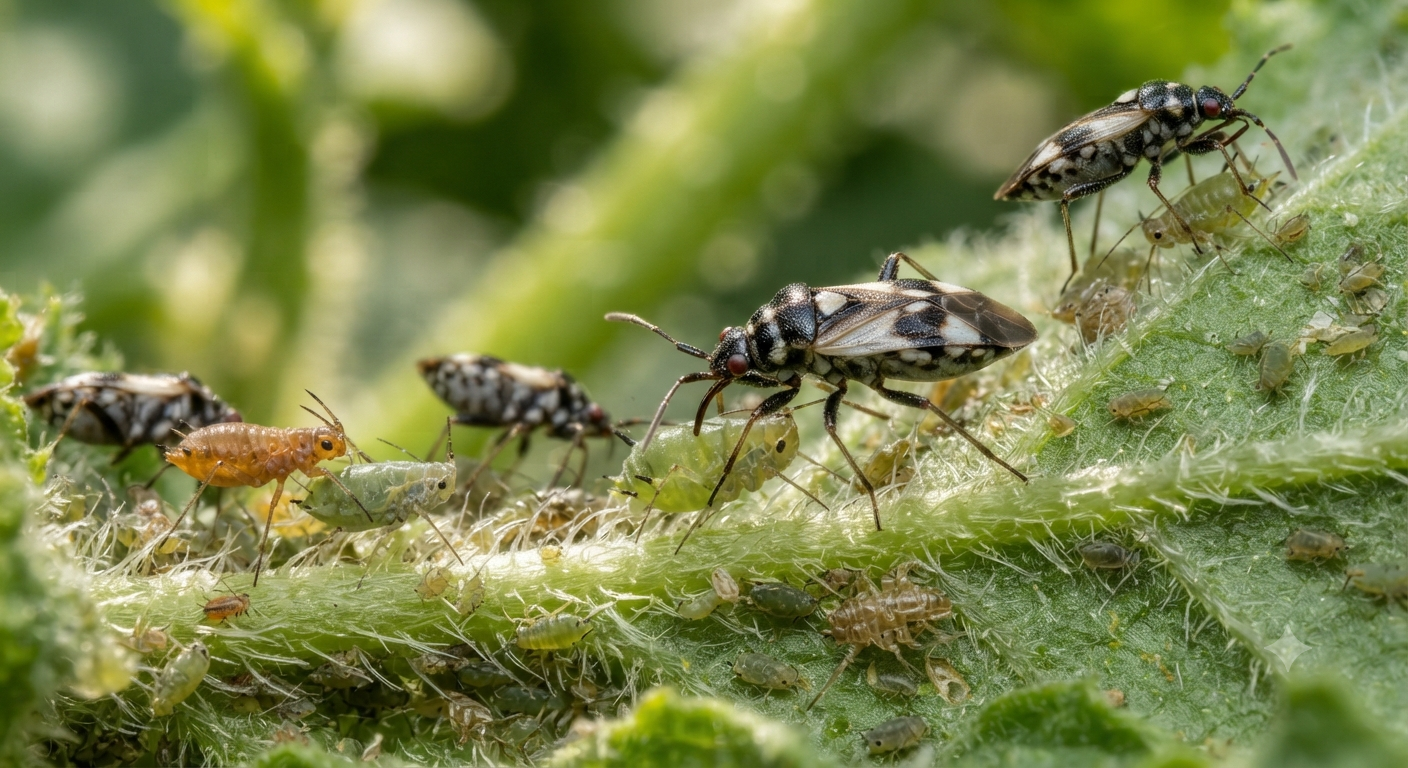
You walk out to check on your tomatoes and there they are: aphids, packed onto every new shoot like commuters on a rush-hour train. Your first instinct is to sprint for the spray bottle. I get it. But that spray bottle is about to undo months of work, because most broad pesticides don’t know the difference between the aphid wrecking your plants and the ladybug that would’ve eaten forty of them before lunch.
My garden used to be a war zone. Every bug was the enemy, and I sprayed first and asked questions never. It took a ruined pepper harvest and a very dead population of pollinators before I figured out I was fighting the wrong battle. Once I started building a garden that beneficial insects actually wanted to live in, my pest problems didn’t disappear overnight, but they stopped being emergencies. They became background noise.
This isn’t about buying a bag of ladybugs and calling it done. It’s about understanding which bugs are doing the dirty work in your yard, what they eat, and how to keep them around long enough to matter. Here are the 11 insects worth knowing, plus the plants and habits that keep them on your payroll.
Why Natural Pest Control Beats Spraying Everything in Sight
Pesticides are lazy math. They kill the bad bugs and the good bugs in one pass, and the bad bugs almost always bounce back faster because their predators are gone. I’ve watched this happen in my own beds. Spray for aphids, and two weeks later you’ve got triple the aphids because every lacewing and ladybug larvae that would’ve eaten them is dead too.
Beneficial insects work differently. They’re patient. They don’t wipe out a pest population overnight, they manage it, generation after generation, for free, forever, as long as you give them a reason to stick around. That’s the whole strategy here: build the habitat, and the pest control shows up on its own.
1. Ladybugs (Lady Beetles)
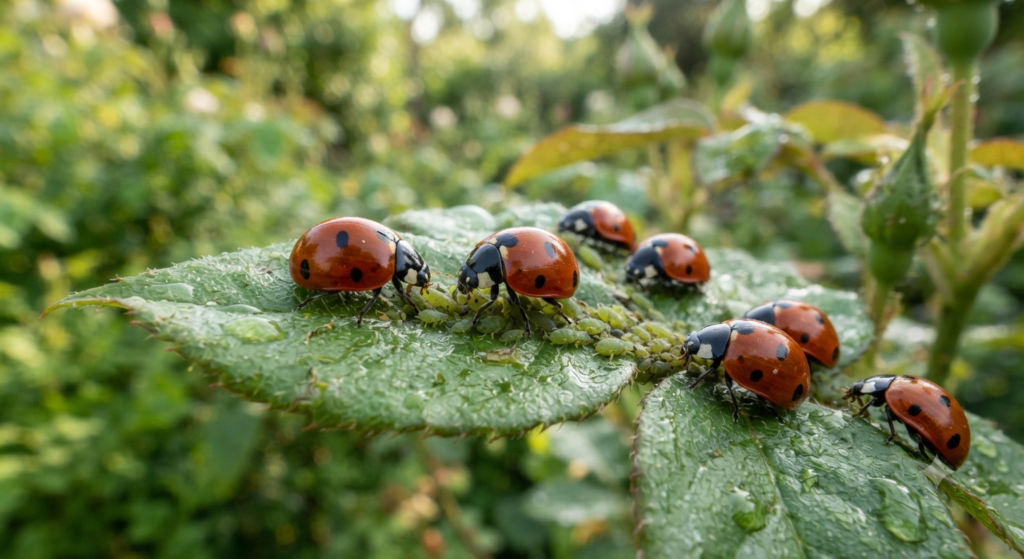
Ladybugs are the celebrity of the beneficial insect world, and honestly, they’ve earned it. A single ladybug can eat 50 aphids a day, and over its lifetime that number climbs into the thousands. The larvae are even hungrier than the adults, though they look nothing like the cute red dome you’re picturing. They look like tiny black-and-orange alligators, and if you don’t recognize them, you might accidentally squish your own pest control.
I made that mistake my second year gardening. I saw these spiky little creatures crawling on my roses and assumed they were some new invasive threat. I sprayed them. Turns out I’d just murdered a dozen aphid-eating machines. Lesson learned: look up what ladybug larvae actually look like before you declare war on every bug you don’t recognize.
To attract ladybugs, plant dill, fennel, yarrow, and cosmos. They’re drawn to pollen and nectar as much as they’re drawn to aphids, so a diverse flower bed does more work than a single “ladybug plant.” Skip the mail-order ladybug releases if you can help it. Most released ladybugs just fly off within 48 hours because your yard doesn’t have enough food or shelter to keep them interested yet. Build the habitat first, and the local ladybug population will find you.
2. Lacewings
If ladybugs are the celebrities, lacewings are the underrated workhorses. The adults are pretty, delicate, pale green things with lacy wings, but it’s the larvae you want in your garden. They’re sometimes called “aphid lions,” and that nickname is not an exaggeration. A single lacewing larva can eat several hundred aphids, mites, and small caterpillars before it pupates.
Lacewings go after a wider menu than ladybugs, too. They’ll take out whiteflies, thrips, and mealybugs, which makes them especially useful if you’re growing anything in a greenhouse or under row cover where whiteflies love to hide.
Attracting lacewings means planting angelica, dill, and yarrow, plus keeping a shallow water source nearby, since adult lacewings drink nectar and honeydew but need moisture to survive dry spells. I keep a chipped ceramic saucer with a few pebbles in it near my herb bed for exactly this reason. It costs nothing and the lacewings notice.
One quick side note: lacewing eggs look like tiny threads with a bead on top, usually stuck to the underside of a leaf. They look weird enough that people assume they’re a plant disease and wipe them off. Don’t. That’s next month’s pest control hatching.
3. Parasitic Wasps
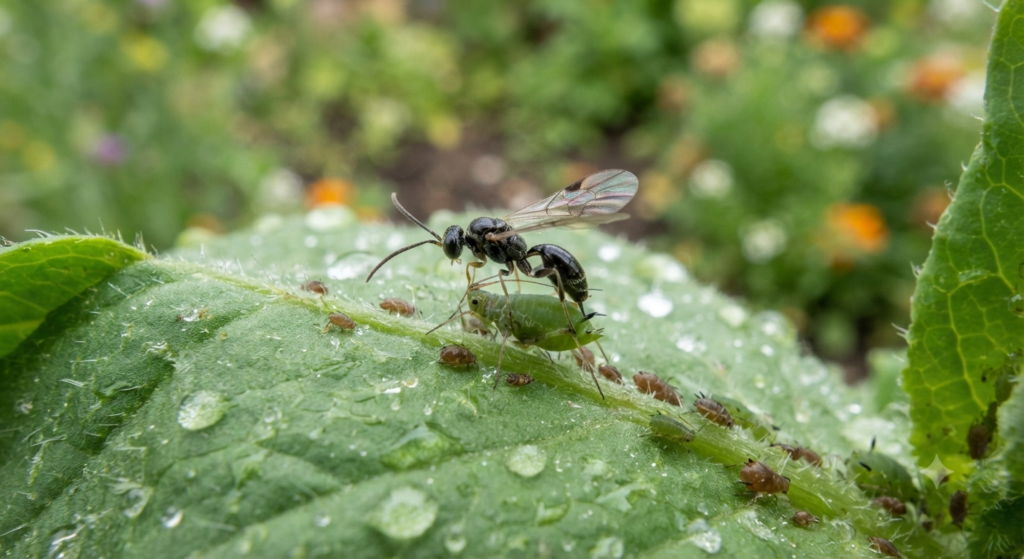
I know “wasp” sends people running, but parasitic wasps are nothing like the yellow jacket that ruined your last picnic. Most species are so small you’d need a magnifying glass to get a good look, and they have zero interest in stinging you. Their whole life mission is laying eggs inside or on pest insects like caterpillars, aphids, and whiteflies. When the eggs hatch, the wasp larvae eat their host from the inside out.
It sounds brutal because it is, but that brutality is exactly what keeps hornworms off my tomatoes every August. If you’ve ever found a tomato hornworm covered in little white rice-shaped cocoons, that’s a parasitic wasp already at work. Leave it alone. That hornworm is finished either way, and the wasps that emerge will go hunt down more of its friends.
Plant dill, parsley, yarrow, and sweet alyssum to keep parasitic wasps fed on nectar between hunting trips. Letting a few herbs bolt and flower instead of cutting them back constantly does more for your pest control than any product you can buy at the garden center.
4. Praying Mantis
Praying mantises are the generalists of the bunch, meaning they’ll eat pretty much anything that moves and fits in their mouth, including beetles, moths, crickets, and unfortunately sometimes other beneficial insects. That’s the tradeoff with mantises: they’re not picky, and they’ll happily eat a ladybug if it’s convenient.
Still, having a few mantises around helps knock back larger pest populations that smaller insects can’t handle, like grasshoppers and big caterpillars. Kids also love finding them, which is a nice bonus if you’re trying to get young family members interested in the garden instead of their phones.
Mantis egg cases (called oothecae) look like a hardened foam blob stuck to a stem or fence post. If you find one over winter, leave it exactly where it is. Moving it or “protecting” it indoors usually kills the eggs because the temperature swings they need to hatch properly get thrown off.
5. Ground Beetles
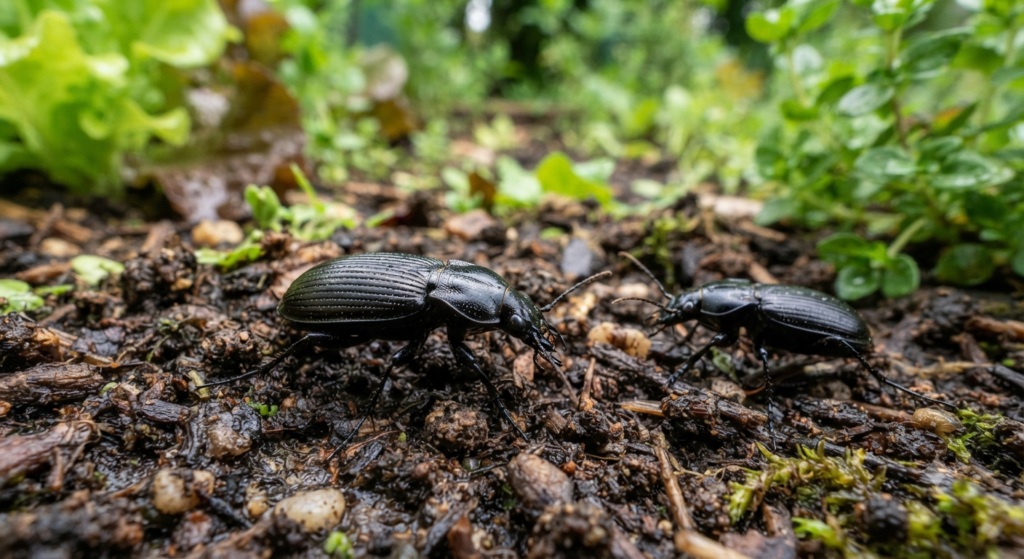
Ground beetles don’t get much credit because they work the night shift and hide under mulch during the day, but they’re some of the best slug and cutworm control you’ll ever find. Some larger species will even go after snails, cabbage maggots, and Colorado potato beetle larvae.
They need permanent ground cover to thrive, so if your beds are bare dirt between plants, you’re not giving ground beetles anywhere to live. A layer of mulch, some low groundcover plants, or even a strategically placed flat stone gives them daytime shelter.
I keep a few rotting logs at the back edge of my property specifically for ground beetles and other decomposer insects. It’s not pretty, and my neighbor asked me once if I was planning to burn it. I wasn’t. That messy log pile is doing more pest control than my entire tool shed.
6. Hoverflies (Syrphid Flies)
Hoverflies are the great impersonators of the insect world. The adults look like small, harmless bees, complete with yellow and black stripes, which is a clever trick to avoid predators. But the larvae are the real MVPs here. A single hoverfly larva can eat several hundred aphids over its short life, working through colonies faster than almost anything else on this list.
Adults feed on pollen and nectar, especially from flat, open flowers where the nectar is easy to reach. Alyssum, cosmos, and yarrow are all reliable hoverfly magnets in my experience. I’ve had entire rows of alyssum absolutely humming with hoverflies by midsummer, right around the time aphids start showing up on my kale.
7. Minute Pirate Bugs
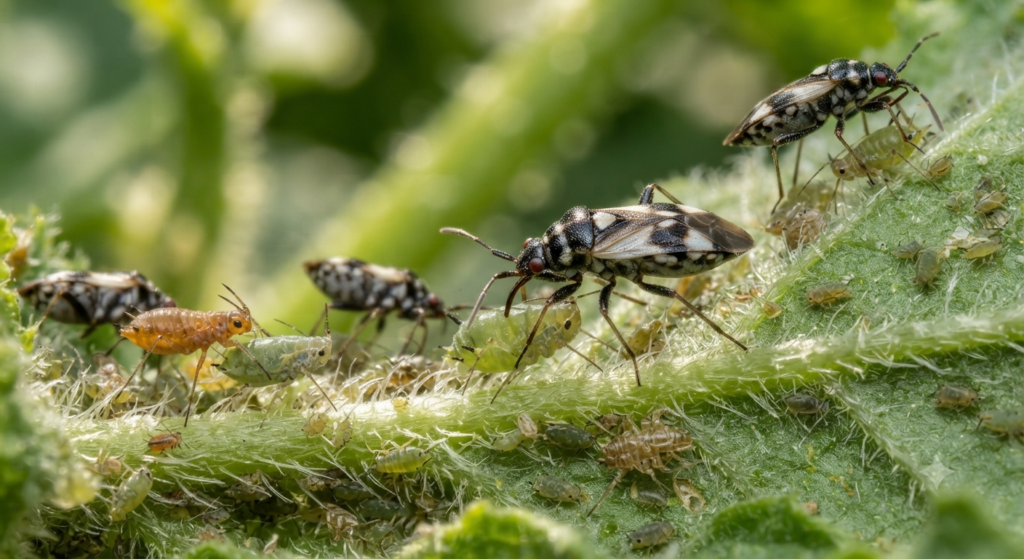
These are tiny, fast-moving, black-and-white insects that most people never notice until they learn what to look for. Don’t let the small size fool you. Minute pirate bugs are aggressive predators of thrips, spider mites, and insect eggs, and a single one can eat dozens of thrips in a day.
They’re especially valuable for strawberry growers and anyone dealing with thrips damage on flowers, since thrips are notoriously hard to control once they establish. Minute pirate bugs like a diverse habitat with a mix of flowering plants, so a monoculture bed isn’t going to keep them fed.
8. Spiders
I know spiders aren’t technically insects, but leaving them off this list would be doing you a disservice, since they’re some of the most effective general predators in any garden. Orb weavers, wolf spiders, and jumping spiders all eat a wide range of pest insects, and a healthy spider population is one of the clearest signs that your garden ecosystem is functioning well.
If you’re someone who panics at the sight of a spider web strung between your tomato cages, I understand the instinct, but try to resist knocking it down. That web is a pest control device working around the clock for free. I used to clear every web I found until I noticed my cucumber beetle problem got noticeably worse the same summer I got web-happy with a broom.
9. Assassin Bugs
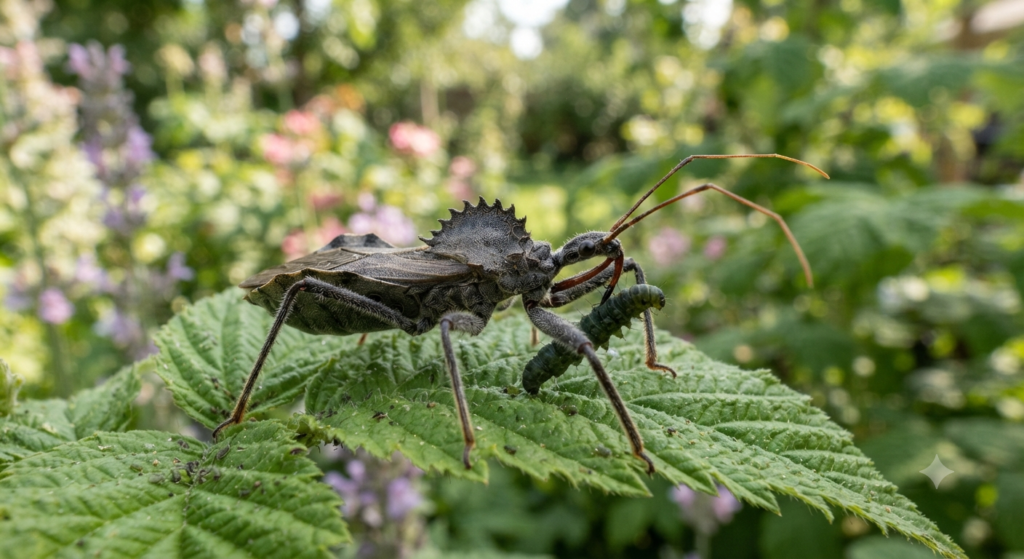
Assassin bugs earn their name honestly. They ambush prey, inject a paralyzing toxin, then drink the liquefied insides. Dramatic, sure, but effective against caterpillars, beetles, and other soft-bodied pests that give gardeners the most trouble.
One caution here: assassin bugs will bite humans if handled carelessly, and it hurts more than you’d expect from something so small. I found this out the way most people do, by picking one up without thinking. Admire them from a distance and let them do their job undisturbed.
They’re attracted to dense, varied plantings where prey insects are abundant, so a garden with a good mix of flowers, herbs, and vegetables will naturally draw them in over time.
10. Big-Eyed Bugs
Big-eyed bugs are small, quick, and easy to mistake for a plant pest because of their oval shape, but they’re actually one of the best natural controls for spider mites, aphids, and small caterpillar eggs. Both the adults and nymphs are predatory, which means you get double the pest control from a single generation.
They thrive in ground cover and low-growing plants, particularly in areas that aren’t disturbed too often by tilling or heavy foot traffic. If you’ve got a section of your yard with clover or a native groundcover mix, you’ve probably got big-eyed bugs already, whether you’ve noticed them or not.
11. Braconid Wasps
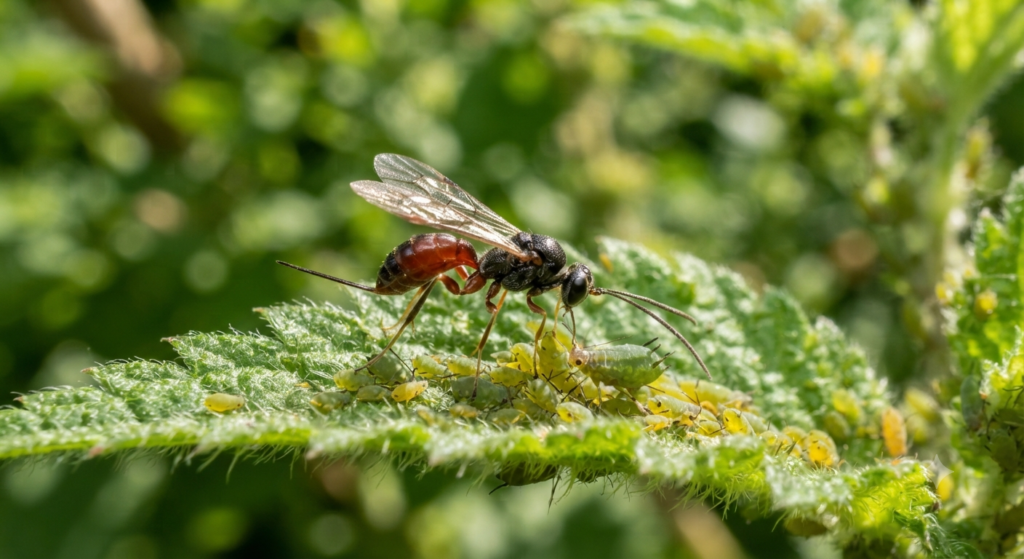
Braconid wasps deserve their own spot separate from the general parasitic wasp category because they’re such specialized hornworm and caterpillar hunters that most vegetable gardeners will run into them eventually. They’re tiny, non-stinging, and lay their eggs in a way that produces those small white cocoons I mentioned earlier under the mantis section.
If you garden with tomatoes long enough, you will eventually find a hornworm that looks like it’s wearing a coat of rice grains. That’s a braconid wasp’s handiwork, and it’s one of the most satisfying things to find in the garden once you know what you’re looking at, because it means the problem is already solving itself.
Best Plants for Attracting Beneficial Insects
If you only remember one section from this whole article, make it this one. Beneficial insects don’t show up because you asked nicely. They show up because there’s food and shelter waiting for them, and the fastest way to provide both is with the right plants.
Umbel-shaped flowers, meaning flat clusters of tiny blooms like dill, fennel, yarrow, and Queen Anne’s lace, are basically a buffet table for parasitic wasps and hoverflies. The tiny individual flowers are the perfect size for insects with short mouthparts, which rules out a lot of the bigger, showier garden center flowers. Sweet alyssum is another workhorse. It’s cheap, it reseeds itself, and it blooms nearly nonstop from spring through frost, which keeps nectar available even during the slow stretches when most of your vegetables aren’t flowering.
I plant a border of alyssum and dill around my vegetable beds every year now, and it’s the single change that made the biggest difference in my pest pressure. It’s not flashy. It’s a few dollars of seed. But it turned my garden from a place bugs passed through into a place they actually wanted to stay.
Real Talk: Where Beneficial Insect Gardening Goes Wrong
Here’s the part nobody wants to hear. Buying a container of ladybugs from the garden center is mostly a waste of money. I did it exactly once, released them at dusk like the instructions said, and watched most of them fly straight over my fence the next morning. Without an established food source and shelter already in place, purchased beneficial insects just leave. You’re basically feeding your neighbor’s garden.
Another mistake I made for years: treating “beneficial insect friendly” as the same thing as “pesticide-free.” It’s not enough to stop spraying. Even organic pesticides like pyrethrin and neem oil can harm beneficial insects if you apply them broadly or during the day when pollinators are active. If you have to treat a serious infestation, spot-treat the affected plant in the evening and skip flowering plants entirely.
People also underestimate how long this takes to work. I didn’t see a real shift in my pest pressure until the second full season after I started planting for beneficial insects. If you’re expecting your aphid problem to vanish in three weeks, you’re going to be disappointed and probably reach for the spray bottle out of frustration. Give it time.
And one thing that’s genuinely not worth the effort: those “beneficial insect houses” sold as decorative bug hotels. I bought one, mounted it proudly on a fence post, and in two years exactly one solitary bee moved in. A messy brush pile or a few hollow plant stems left standing over winter does more good than most of these products, and it costs nothing.
Building a Garden That Beneficial Insects Actually Want
If there’s one takeaway here, it’s that beneficial insects aren’t something you buy, they’re something you build a home for. Plant a mix of flowering herbs like dill, fennel, yarrow, and alyssum. Leave some plant debris and hollow stems standing through winter instead of cutting everything back to bare dirt. Skip the broad-spectrum sprays, even the organic ones, unless you’ve got no other option. Add a shallow water source. Then be patient, because this is a slow trade, not a quick fix.
My garden isn’t pest-free. It never will be, and honestly, I’ve stopped wanting it to be, because a garden with zero pests is a garden with nothing for the beneficial insects to eat either. The goal isn’t zero bugs. It’s balance.
What’s the most surprising beneficial insect you’ve found working in your own garden? Drop a comment below and let me know, I’m always curious what other gardeners are seeing in their beds this season.

About Syprose Kiche
Syprose Kiche is the creator and writer behind My Besuited Home, a practical home and garden website covering DIY projects, gardening, lawn care, landscaping, home improvement, and outdoor living. She focuses on turning everyday homeowner questions into clear, practical guides backed by careful research and useful real-world considerations.