
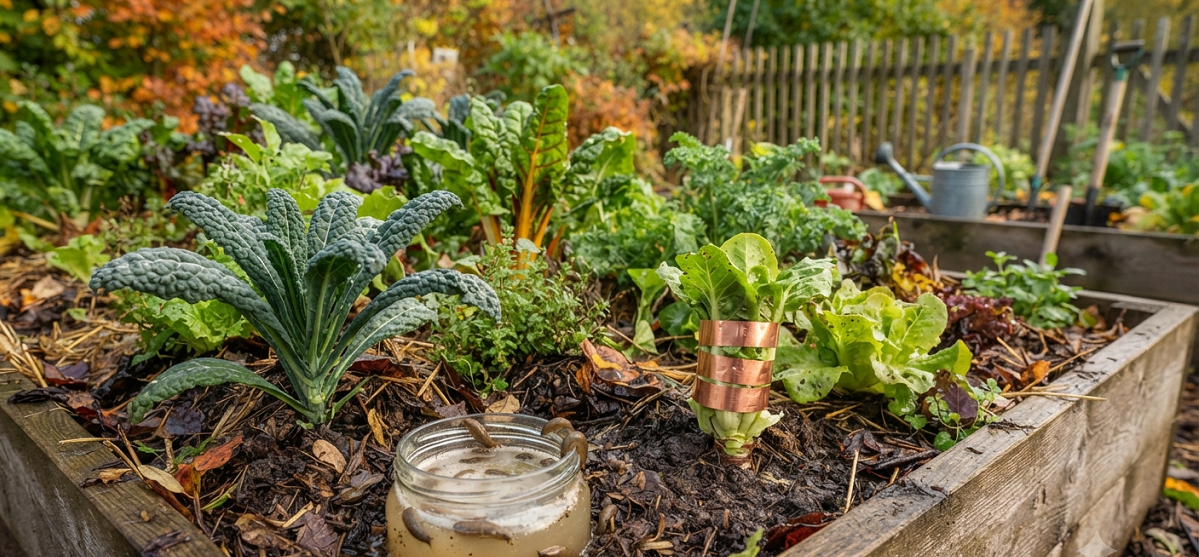
Your fall greens are finally thriving, and then you spot it: a cabbage looper chewing lace through your kale, or a squadron of aphids setting up camp on your broccoli. Autumn pests don’t get the same press as their summer cousins, but they’ll wreck a cool-season garden just as fast if you let them.
Here’s the good news. You don’t need a shed full of chemical sprays to fight back. Some of the best pest control I’ve ever used costs almost nothing and involves stuff you probably already have lying around the garage.
I’ve been growing vegetables through fall for over a decade now, in three different climates, with three completely different pest problems each time. What I’m sharing below isn’t theory from a gardening magazine. It’s what actually kept my kale, broccoli, and carrots alive when the bugs showed up uninvited.
I still remember the year a family of slugs decided my entire lettuce bed was an all-you-can-eat buffet. I woke up one morning to find nothing but stems and slime trails where a dozen healthy seedlings had been the night before. That single bad morning is the reason I now treat fall pest prevention as seriously as I treat watering or feeding my plants.
Why Autumn Pest Control Is Different From Summer
Most people assume pests disappear once the heat breaks. That’s a myth that costs a lot of gardeners their fall harvest.
Cooler temperatures actually favor certain pests. Cabbage worms, aphids, and slugs all thrive in the mild, damp conditions of September and October. Meanwhile, the beneficial insects that kept things balanced in July — ladybugs, lacewings, parasitic wasps — start thinning out as the season winds down.
That means your garden loses some of its natural defense system right when a fresh wave of pests moves in. You have to pick up some of that slack yourself.
The seven methods below are the ones I reach for first. None of them involve synthetic pesticides, and every single one is safe to use around kids, pets, and the vegetables you’re planning to eat in a few weeks.
1. Row Covers: Your First Line of Defense
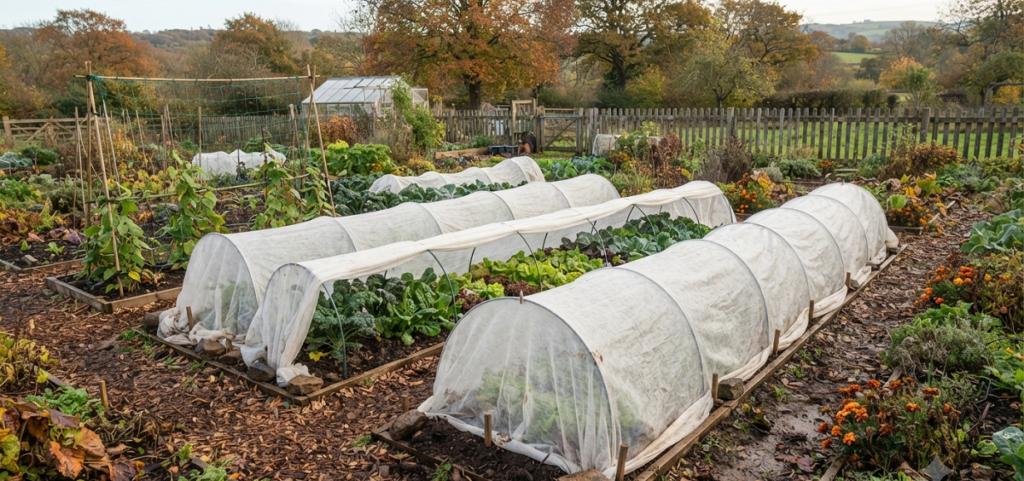
If I could only recommend one pest control method for fall vegetable gardens, it would be floating row covers. This is lightweight fabric that drapes directly over your plants, letting in light, air, and water while physically blocking insects from landing on your crops.
Row covers work because most fall pests, like cabbage moths and flea beetles, find their targets by sight and smell. If they can’t physically reach the leaves, they can’t lay eggs on them, and they can’t chew through them either. It’s about as low-tech as pest control gets, and that’s exactly why it’s so reliable.
I use row covers on every brassica bed I plant in September. Cabbage, broccoli, kale, and Brussels sprouts are magnets for cabbage worms and loopers, and once those caterpillars get established, you’re picking holes out of every leaf for weeks. A cover installed at planting time stops the problem before it starts.
One thing I’ll say bluntly: don’t wait until you see damage to put the cover on. By then, the eggs are already there, sitting on the underside of your leaves, and the cover just traps the problem inside with your plants. Install it the day you transplant or seed, and secure the edges with soil, rocks, or landscape staples so nothing sneaks underneath. Leave a little slack in the fabric so plants have room to grow without pushing against it.
Weight matters too. A lightweight summer-weight cover is fine for keeping bugs off, but once nighttime temperatures start dropping, I switch to a slightly heavier fabric that doubles as light frost protection. That’s two problems solved with one purchase, which is exactly the kind of efficiency I look for in a fall garden.
2. Companion Planting for Natural Pest Deterrence
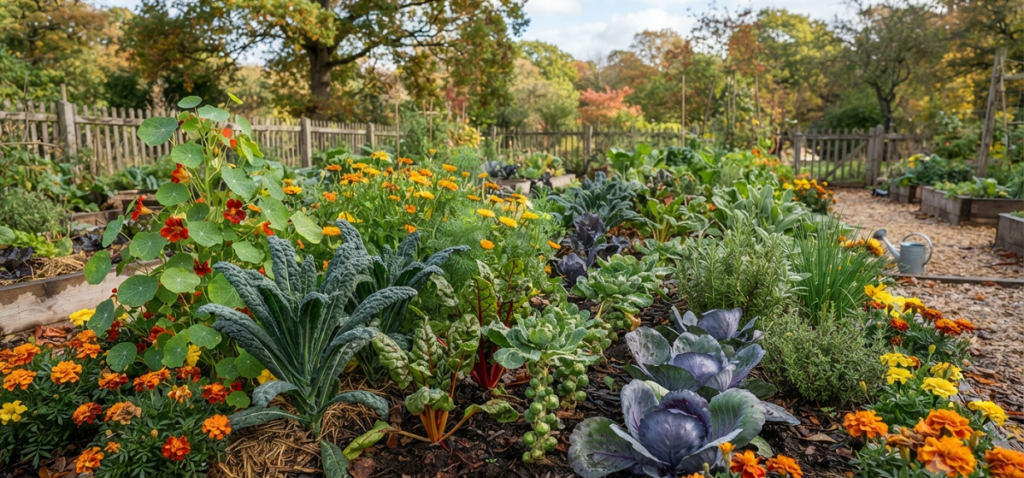
Certain plants genuinely repel certain bugs, and pairing them strategically in your fall vegetable garden is one of the cheapest pest control strategies out there. You’re not buying anything new. You’re just being smarter about what goes where.
Marigolds are the classic example, and for good reason. Their scent throws off aphids and nematodes, and I plant a border of them around almost every vegetable bed I put in, fall or spring. Nasturtiums work similarly, and they have a bonus trick: aphids actually prefer nasturtiums over your vegetables, so the flowers act as a decoy crop that pulls pests away from your kale and lettuce.
Garlic and chives planted near your brassicas can help confuse cabbage moths, who rely heavily on scent to find host plants. I’ve had good results tucking a few garlic cloves in between rows of cabbage and broccoli. It’s not a guarantee, but it stacks the odds in your favor.
Here’s my honest opinion on companion planting: it’s not a silver bullet, and anyone who tells you a few marigolds will solve a serious pest infestation is overselling it. What companion planting actually does is reduce pest pressure and buy you time, which matters a lot when combined with the other strategies on this list. Think of it as one layer in a system, not a standalone fix.
3. Homemade Insecticidal Soap Spray
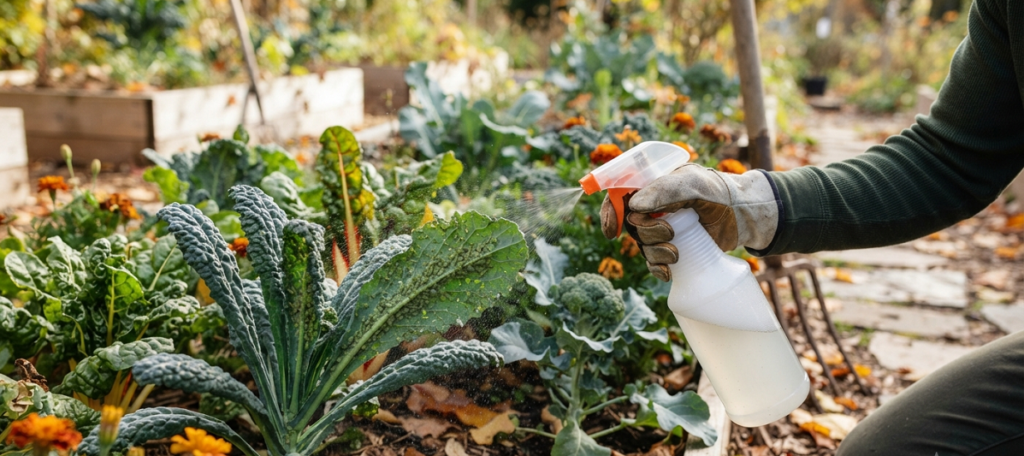
Store-bought insecticidal soap works fine, but I’ve been mixing my own for years, and it costs a fraction of the price. All you need is a mild liquid soap (not detergent — that distinction matters) and water.
The basic ratio I use is about 2 tablespoons of pure liquid castile soap per gallon of water. Shake it up in a spray bottle and apply it directly to the pests, focusing on the undersides of leaves where aphids, whiteflies, and spider mites like to hide.
Insecticidal soap works by breaking down the outer coating of soft-bodied insects, which causes them to dehydrate. It’s harmless to bees, birds, and pets once it dries, and it doesn’t leave residue that lingers in your soil the way synthetic pesticides can.
A few tips I’ve picked up through trial and error: spray in the early morning or evening, never in direct sun, because soap can scorch leaves in intense heat. Test it on one or two leaves first before spraying your whole crop, since some plants (particularly certain herbs) are more sensitive than others. And reapply every five to seven days if the infestation is heavy, since the soap only kills on contact and has no lasting residual effect.
I’ll admit this method takes more effort than a one-and-done spray from a store. You have to stay on top of it. But for small to mid-size aphid and whitefly outbreaks, it’s been one of the most reliable tools in my fall garden routine.
4. Diatomaceous Earth for Crawling Pests
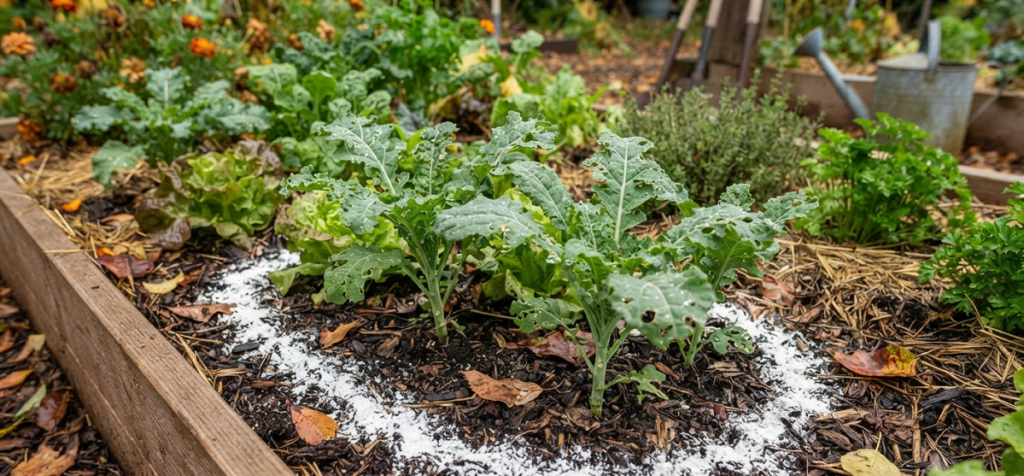
Diatomaceous earth, or DE, is a powder made from the fossilized remains of tiny aquatic organisms called diatoms. It sounds strange, but it’s one of the most effective organic controls I’ve used against slugs, ants, and beetles.
The powder works mechanically, not chemically. Under a microscope, DE particles are sharp and abrasive. When crawling insects walk through it, it scratches their exoskeletons and absorbs the waxy coating that keeps them from drying out. They essentially dehydrate to death within a day or two.
Sprinkle food-grade diatomaceous earth in a thin ring around the base of vulnerable plants, especially anything slugs love, like lettuce, spinach, and young brassica seedlings. You can also dust it directly on leaves if you’re dealing with flea beetles or Japanese beetles.
Here’s the catch, and it’s an important one: DE only works when it’s dry. Rain or heavy dew washes it away and neutralizes its effect completely. Fall gardens deal with a lot more moisture than summer ones, so you’ll need to reapply after every rain if you want it to keep working. I keep a shaker jar of DE on my potting bench specifically so I can reapply quickly without digging through the shed.
One more thing worth mentioning: DE doesn’t discriminate. It’ll harm beneficial insects too if they crawl through it, so apply it carefully and only where you’re actually seeing damage, rather than blanket-dusting your whole garden.
5. Beer Traps and Copper Tape for Slugs
Slugs are the autumn pest nobody warns you about until it’s too late. Cool, damp fall conditions are basically a slug’s dream weather, and they’ll shred a bed of lettuce or young seedlings overnight if you’re not paying attention.
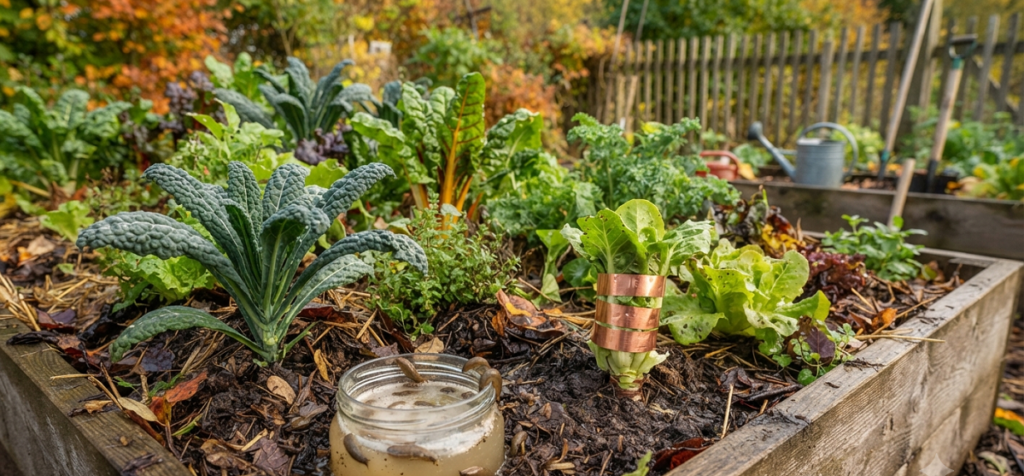
Beer traps are the classic solution, and honestly, they work better than they have any right to. Bury a shallow container, like a yogurt cup or tuna can, so the rim sits level with the soil. Fill it with cheap beer. Slugs are drawn to the scent of fermenting yeast, crawl in, and drown. It’s not glamorous, but it’s cheap and effective, and I’ve cleared out entire slug populations from a bed within a week using this method.
Copper tape is another option I like, particularly for raised beds and containers. Slugs get a mild electric shock when their slime touches copper, and they’ll avoid crossing it entirely. Wrap a strip of copper tape around the outer rim of a raised bed or pot, and it creates a barrier they simply won’t cross.
I’ve found that beer traps work best for open garden beds where slugs are already established, while copper tape shines as a preventive measure for containers and raised beds where you’re trying to keep slugs out entirely. Using both together covers your bases.
A quick side note here: eggshells and coffee grounds get recommended constantly as slug deterrents, and in my experience, they’re mostly folklore. I’ve tested both extensively, and neither made a meaningful dent in slug activity in my garden. Save your time and go with beer traps or copper tape instead.
6. Encouraging Beneficial Insects and Birds
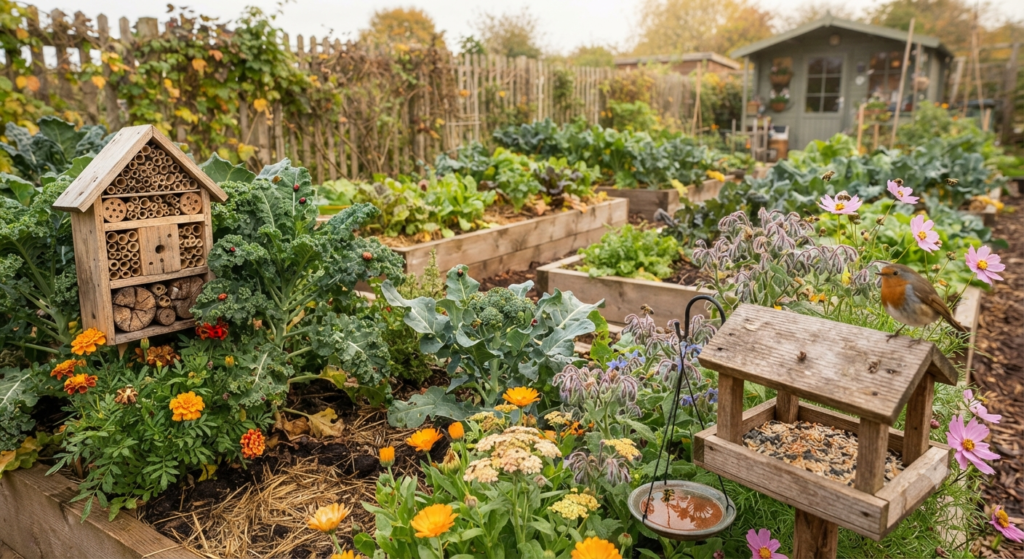
Building a garden that attracts natural predators is a long game, but it pays off every single season once it’s established. Ladybugs, lacewings, and parasitic wasps eat aphids and caterpillar eggs by the hundreds, and birds will happily clean out slugs, grubs, and beetles if you give them a reason to stick around.
Planting flowers like alyssum, yarrow, and dill near your vegetable beds gives beneficial insects a food source (nectar and pollen) even when your vegetables aren’t flowering. This keeps them hanging around your garden instead of moving elsewhere in search of food, which means they’re on patrol when pest populations start climbing.
A shallow birdbath or small water feature will pull songbirds into your yard, and birds are surprisingly effective at cleaning out caterpillars and grubs before they become a real problem. I added a simple bath to my garden a few years back mostly for the birds themselves, and I noticed a real drop in caterpillar damage within that same season.
Avoiding broad-spectrum pesticides, even organic-approved ones, matters here too. Sprays that kill indiscriminately take out the good insects right alongside the bad ones, which sets you back to square one. If you’re leaning on beneficial insects as part of your pest strategy, be selective and targeted with anything else you apply, and avoid spraying open flowers where pollinators and predatory insects are actively feeding.
7. Crop Rotation and Fall Cleanup
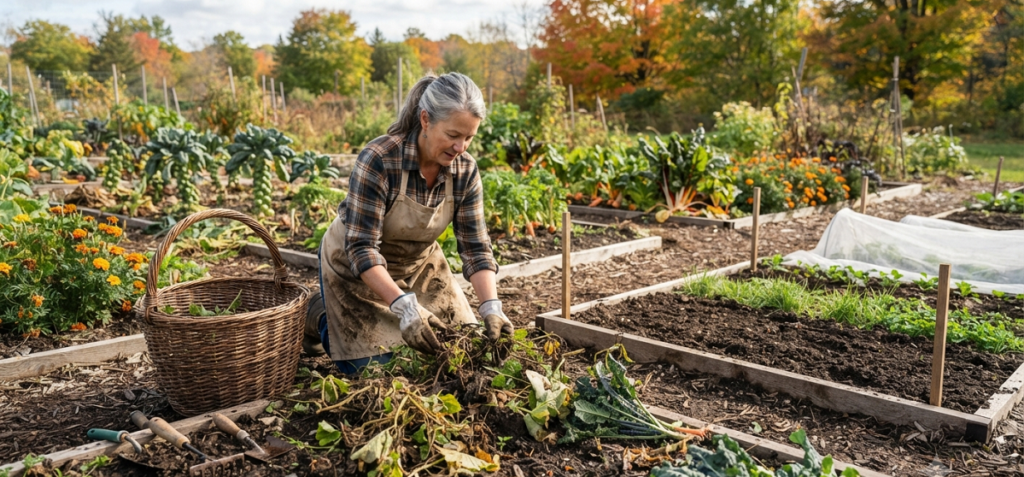
This one isn’t glamorous, and it won’t give you the instant satisfaction of watching a slug drown in a beer trap. But crop rotation and end-of-season cleanup prevent more pest problems than almost anything else on this list, simply by breaking the cycle before it starts.
Many pests overwinter in the soil or in leftover plant debris, right where their favorite crop grew all season. If you plant brassicas in the exact same bed year after year, you’re essentially rolling out a welcome mat for cabbage worms and root maggots that survived the winter nearby. Rotating your crops so related vegetables don’t repeat in the same spot for two to three years disrupts that cycle significantly.
Fall cleanup matters just as much. Pulling spent plants, raking up fallen leaves, and clearing out weedy corners removes the hiding spots and egg-laying sites that pests rely on to survive winter. I make a point of clearing every bed completely by late November, composting healthy plant material and bagging up anything that showed clear signs of disease or heavy infestation (compost piles don’t always get hot enough to kill pest eggs, so I don’t take chances there).
It takes an afternoon of work, and it’s not the part of gardening anyone posts about online. But I’ve noticed a direct, measurable difference in pest pressure the following spring in beds where I did thorough fall cleanup versus ones where I got lazy and left debris sitting through winter.
Real Talk: What’s Not Worth Your Time (and What Can Go Wrong)
Not every eco-friendly pest control method lives up to the hype, and I’d rather tell you that upfront than let you waste a weekend on something that won’t move the needle.
Essential oil sprays get recommended everywhere online, and I’ve tried a dozen different blends over the years. In my experience, they offer mild, short-lived deterrence at best. They break down fast in sunlight and rain, and you’d need to reapply constantly to see any real effect. I’ve found that essential oil sprays are a total waste of money if you’re expecting them to control an actual infestation, even if the recipes seem appealing on Pinterest.
Diatomaceous earth loses effectiveness fast in wet weather, which is a real problem in a season known for rain and heavy dew. If you’re in a particularly damp climate, you may find yourself reapplying it every few days, which gets tedious and expensive over time.
Beer traps need to be emptied and refilled regularly, or they turn into a soggy mess that actually attracts more pests than it removes. I check mine every two to three days during peak slug season.
Row covers can trap heat on unseasonably warm fall days, so keep an eye on the weather and vent them if temperatures spike. They can also trap pests inside if you don’t inspect your plants before covering them, so always check the undersides of leaves first.
And here’s the biggest mistake I made early on: I assumed “eco-friendly” automatically meant “harmless to everything.” It doesn’t. Diatomaceous earth kills beneficial insects just as easily as pests. Insecticidal soap can burn tender seedlings in direct sun. Even beneficial-insect gardens can attract pests you didn’t want if you’re not paying attention to what you’re planting. Every method on this list needs to be used thoughtfully, not blindly.
Final Thoughts
Autumn pest control isn’t about finding one perfect solution. It’s about layering a few of these methods together so your garden has backup defenses when one method falls short. I typically combine row covers with companion planting and regular monitoring, and I only bring out the sprays and traps when I actually spot a problem.
Start small. Pick two or three methods from this list that match the pests you’re actually dealing with, rather than trying to implement all seven at once. Your fall harvest, and the bugs you’re trying to keep off it, will tell you pretty quickly what’s working.
What’s been chewing through your fall garden this year? Drop a comment below and let me know what pests you’re battling. I’m always curious to hear what’s working (and what isn’t) in other people’s gardens.

About Syprose Kiche
Syprose Kiche is the creator and writer behind My Besuited Home, a practical home and garden website covering DIY projects, gardening, lawn care, landscaping, home improvement, and outdoor living. She focuses on turning everyday homeowner questions into clear, practical guides backed by careful research and useful real-world considerations.