
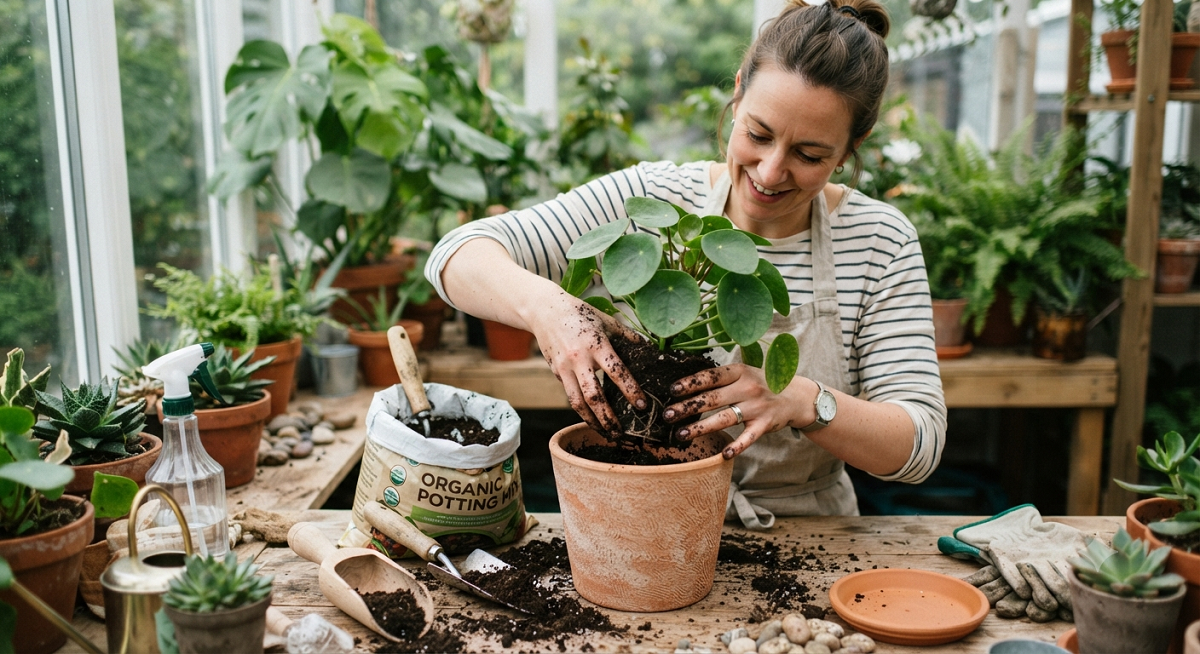
Every September, my phone starts buzzing with the same panicked text from my neighbor Claudia: “Why are there tiny bugs flying around my pothos every time I water it?” My answer is always the same. Fall is moving day for bugs, and your houseplants just became the warmest, safest apartment building on the block.
Here’s what’s happening. As temperatures drop outside, every insect that spent the summer lounging on your patio starts hunting for somewhere cozy to ride out the cold. Your living room, with its heated air and rows of moist potting soil, looks like a five-star resort. Fungus gnats move in. Spider mites wake up. Mealybugs throw a housewarming party on the underside of your favorite fiddle leaf fig.
I’ve been growing houseplants for over a decade, and I’ve hosted more accidental bug colonies than I’d like to admit. The good news? Fall insect invasions are almost entirely preventable once you understand why they happen. This isn’t about spraying chemicals on everything and hoping for the best. It’s about a handful of smart habits that make your plants a much less appealing target in the first place.
Let’s get into exactly what to do, starting with the single biggest mistake I see people make every autumn.
Why Houseplants Get Bugs in Fall (And Why It’s Not Your Fault)
Bugs don’t invade your plants because you’re a bad plant parent. They invade because fall creates a perfect storm of conditions that outdoor insects find irresistible.
Outdoor temperatures start swinging low at night, and insects like aphids, gnats, and mites are cold-blooded. They can’t regulate their own body heat, so they go looking for warmth. Your house, sitting at a steady 68 to 72 degrees, is basically a heated shelter compared to the 40-degree nights outside.
At the same time, a lot of people bring their summer patio plants back indoors in September and October. That’s the real culprit in most cases. Those plants have been sitting outside all summer, and they’ve picked up hitchhikers: eggs, larvae, and full-grown insects tucked into the soil and leaf undersides. You don’t notice them on the patio because natural predators like ladybugs and lacewings keep the population in check outside. Bring that plant inside, and all the predators stay behind. The bugs don’t.
Add in the fact that we tend to water more heavily once the heating system kicks on and dries out indoor air, and you’ve got consistently damp soil, which is exactly what fungus gnats need to breed. It’s not one single mistake causing the problem. It’s a combination of factors that all peak at the same time every year.
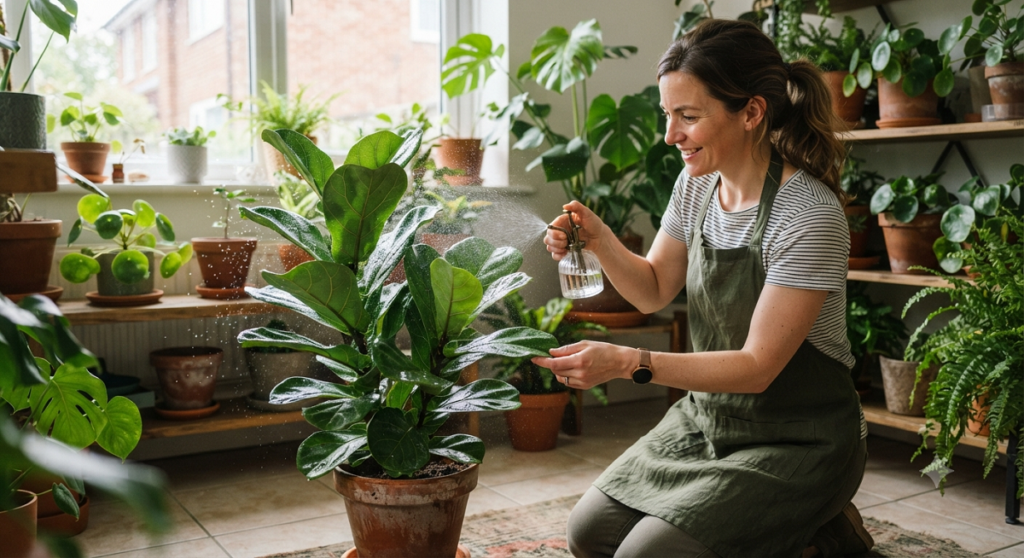
Inspect Every Plant Before It Comes Back Indoors
This is the step almost everyone skips, and it’s the one that would prevent most invasions before they start.
- Check the undersides of every leaf. Bugs like spider mites and mealybugs love hiding on the bottom of leaves where it’s shadier and harder to spot. Flip over at least ten leaves per plant and look for tiny webs, white cottony clusters, or small moving dots.
- Inspect the soil surface for movement. Set the pot down and just watch it for thirty seconds. If you see small black flies hopping around near the surface, you’ve likely already got fungus gnats established.
- Check the stems and crevices where leaves meet the stalk. This is prime real estate for scale insects, which resemble small brown or tan bumps that don’t move. They’re easy to mistake for part of the plant itself.
- Gently tap the plant over a white sheet of paper. Any bugs that fall off will show up clearly against the white background. This trick works especially well for spider mites, which are almost invisible to the naked eye otherwise.
- Smell the soil. I know this sounds strange, but sour or overly earthy smells can indicate the soil has stayed wet too long, which is a fungus gnat breeding ground waiting to happen.
If you find anything suspicious, don’t bring that plant straight into the house with the rest of your collection. Quarantine it in a separate room for two weeks before it joins the group. I learned this one after ignoring a slightly off-looking jade plant a few years back, and within three weeks my entire windowsill had spider mites.
Repot With Fresh Soil Before the Cold Sets In
Old potting soil is basically an insect nursery by the end of summer. It’s been sitting there for months, collecting fungus gnat eggs, absorbing extra moisture from summer watering, and slowly breaking down into the kind of soggy, organic mush that gnats find absolutely irresistible.
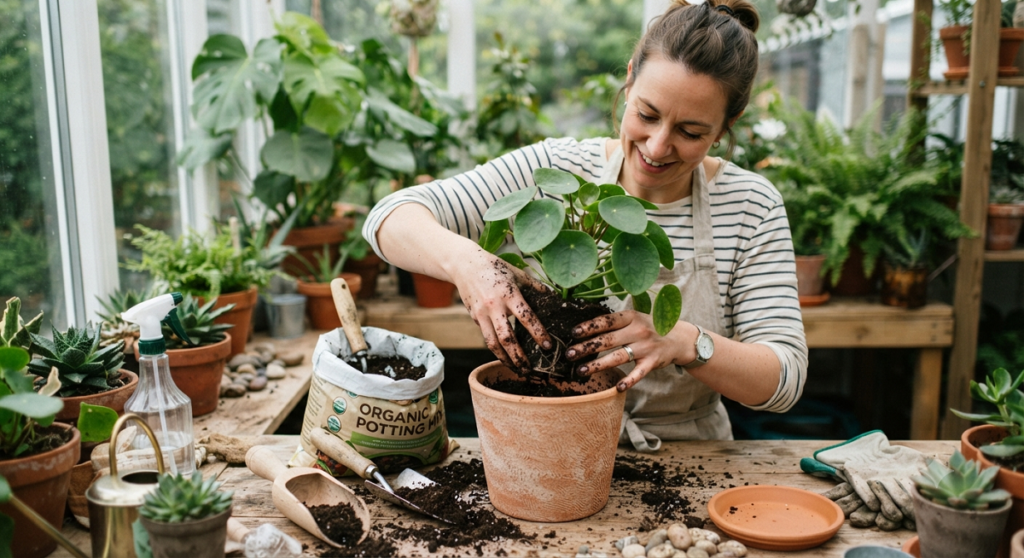
Repotting with fresh, sterile potting mix in early fall does two things at once. It physically removes any eggs or larvae already living in the old soil, and it gives your plant a clean start with better drainage, which means less standing moisture for bugs to exploit.
You don’t need to repot into a bigger container if the plant doesn’t need more room. Just gently remove as much of the old soil as you can, rinse the roots under lukewarm water, and repot into the same container with fresh mix. This is also a great time to check the roots themselves for any early rot, which tends to show up right around the same time as pest problems.
Skip the bargain bin soil for this one. Cheap potting mixes are often packed with undecomposed organic material that holds way too much moisture. Spend a few extra dollars on a quality mix with good drainage, ideally one that includes perlite or pumice.
Water Less Often Once the Heating System Kicks On
This is where I see the most well-meaning plant owners go wrong every single fall.
Once the furnace or heat pump turns on, indoor air gets noticeably drier. People notice their plants drooping and assume they need more water, so they increase watering frequency right as their plants are actually using less water because of shorter days and slower growth.
The result is soil that stays wet for days longer than it should, and that’s the exact environment fungus gnats need to complete their life cycle. Adult gnats lay eggs in moist soil, the larvae feed on fungus and organic matter near the surface, and the whole cycle repeats every few weeks if conditions stay damp.
Instead of watering on a fixed schedule, stick your finger about two inches into the soil before every watering. If it’s still damp, wait. Most houseplants need noticeably less water from October through February simply because they’re growing more slowly and getting less light.
Bottom watering, where you set the pot in a shallow tray of water and let the soil absorb moisture from below, is also worth trying. It keeps the top layer of soil drier, which makes it far less appealing to egg-laying gnats, while still getting water down to the roots where it matters.
The Most Common Fall Houseplant Pests (And How to Tell Them Apart)
Not every bug problem needs the same fix, so it helps to know exactly what you’re dealing with before you start treating anything.
- Fungus gnats are the ones most people notice first. They look like tiny fruit flies hovering near the soil surface, and they’re more annoying than destructive in small numbers. The real damage comes from their larvae, which live in the top inch of soil and feed on root hairs and organic matter. A heavy infestation can genuinely stunt a plant’s growth over time.
- Spider mites are trickier because they’re nearly impossible to see with the naked eye. The first sign is usually fine, faint webbing between leaves and stems, followed by small yellow or bronze speckling on the leaf surface. Dry indoor air from winter heating makes spider mites thrive, so they tend to explode in population right around the same time your furnace kicks on for the season.
- Mealybugs show up as small, white, cottony clusters tucked into leaf joints and along stems. They’re slow-moving and easy to spot once you know what to look for, but they multiply fast and secrete a sticky substance called honeydew that can lead to sooty mold if left untreated.
- Scale insects are the ones people mistake for part of the plant most often. They look like small brown, tan, or waxy bumps stuck firmly to stems and leaf undersides. Unlike most other houseplant pests, adult scale insects don’t move at all, which is exactly why they go unnoticed for so long.
Knowing which pest you’re up against changes your approach. Fungus gnats respond well to drying out the soil and sticky traps. Spider mites hate humidity, so raising moisture levels around the plant helps. Mealybugs and scale usually need direct treatment, like dabbing them with a cotton swab dipped in rubbing alcohol, since they’re protected by a waxy coating that makes sprays less effective on contact.
Use Sticky Traps as an Early Warning System
Yellow sticky traps are cheap, they work, and I genuinely think every houseplant owner should have a few tucked into their pots by mid-September, before any problem even shows up.
Fungus gnats, whiteflies, and other flying pests are strongly attracted to the color yellow. A small sticky card stuck into the soil near the base of the plant catches adult insects before they can lay another generation of eggs. It’s not going to solve a full-blown infestation on its own, but it’s an incredible early detection tool.
Check your traps once a week. If you’re seeing zero to two bugs stuck to the card, you’re in good shape. If you’re seeing a dozen or more, it’s time to move on to a more active treatment before things get out of hand.
I like keeping traps up through the entire fall and winter season, not just when I suspect a problem. They’ve caught issues for me multiple times before I ever noticed a single visual sign on the actual plant.
Wipe Down Leaves Regularly With Diluted Neem Oil
Dust and grime on leaf surfaces aren’t just unattractive. They create a comfortable, sheltered environment for pests like spider mites and scale to settle in and multiply undisturbed.
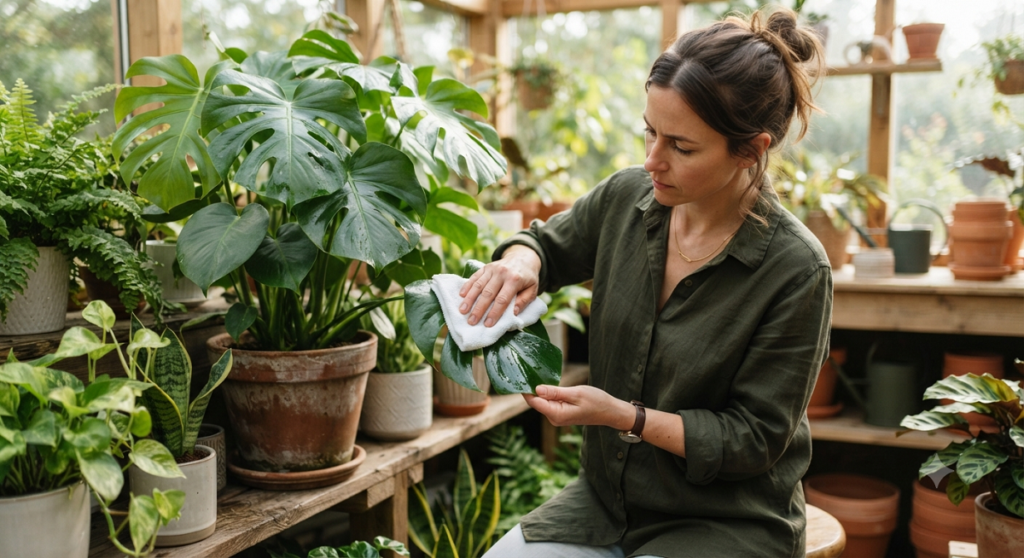
Once a week, wipe down the leaves of your larger houseplants with a soft cloth dampened in a diluted neem oil solution. Mix about one teaspoon of neem oil with a quart of water and a small squirt of dish soap to help it bind. This does double duty: it physically removes dust and any early-stage pests, while leaving behind a residue that most common houseplant insects find repellent.
Don’t skip the undersides of the leaves. That’s where the real action happens. Most people wipe the tops and call it done, then wonder why mealybugs show up two weeks later on the exact spot they missed.
For plants with fuzzy or delicate leaves, like African violets, skip the wiping and use a soft, dry brush instead. Water on fuzzy leaves can cause spotting, and neem oil residue tends to sit unevenly on textured surfaces.
I do this on a Sunday afternoon with a podcast going, and it takes maybe twenty minutes for a dozen plants. It’s become one of those small habits that pays for itself many times over by December.
Raise Humidity to Make Spider Mites Miserable
Spider mites are the one pest that actually benefits from the exact conditions your house creates once the heat turns on. Dry air is their favorite thing in the world, so raising humidity around your plants is one of the simplest ways to make your home a lot less hospitable to them.
A small humidifier placed near a cluster of houseplants can raise the surrounding humidity significantly without affecting the rest of the room. I run mine on a low setting from October through March, and it’s made a noticeable difference in how often I deal with mite outbreaks compared to years when I skipped it.
Grouping plants together also raises local humidity naturally, since plants release moisture through their leaves in a process called transpiration. A cluster of six or seven plants creates a slightly more humid microclimate than a single plant sitting alone on a shelf.
Pebble trays work too, though I’ll admit they’re a bit of a hassle to maintain. Fill a shallow tray with pebbles, add water just below the top of the stones, and set your pots on top. As the water evaporates, it raises humidity right around the plant without letting the roots sit in standing water.
Skip misting as your main humidity strategy, though. I know it’s the most commonly repeated advice out there, but the humidity boost from misting lasts maybe twenty minutes before it evaporates completely. It’s not doing nearly as much as people think, and wet leaves can actually invite fungal issues if the room doesn’t have good airflow.
Isolate New Plants for at Least Two Weeks
Every plant that enters your home from a nursery, a big box store, or a friend’s cutting swap should spend its first two weeks in isolation, away from your existing collection.
Nurseries and garden centers, even good ones, are high-traffic environments where pests move between plants constantly. A plant that looks completely healthy on the shelf can be carrying spider mite eggs or gnat larvae that simply haven’t become visible yet.
Set up a small quarantine spot, even just a corner of a spare room or a closet with a grow light, and keep new arrivals there for two full weeks. Check them every few days using the same inspection process from earlier in this article. If nothing shows up after two weeks, it’s safe to move the plant into your main collection.
This single habit has saved my plant collection more times than any spray or treatment ever has. It’s boring advice, I know, but boring advice is usually the advice that actually works.
Real Talk: What’s Not Worth the Effort (And What Can Go Wrong)
I want to be straight with you about a few things that sound good in theory but rarely deliver in practice.
Diatomaceous earth gets recommended constantly for fungus gnats, and I’ve found it’s a total waste of money for most indoor situations. It works by drying out insect exoskeletons, but it only works when it’s dry, and houseplant soil is supposed to stay at least somewhat moist. The moment you water, it loses most of its effectiveness, and you’re reapplying constantly for marginal results.
Overusing pesticides, even “natural” ones like neem oil, can backfire badly. Spraying every single day instead of weekly stresses the plant, can burn leaf tissue in direct sunlight, and won’t actually speed up the process. Insects have life cycles that take time to break, and no amount of extra spraying changes that math.
Ignoring a small problem because it seems minor is probably the most common mistake I see. A few fungus gnats in September becomes a full infestation by November if the soil conditions stay favorable. These populations grow exponentially, not slowly, so what looks manageable in week one can be completely out of control by week four.
And here’s the one nobody wants to hear: sometimes a plant is too far gone. If you’ve got severe scale or mealybug coverage on a small plant and treatment after treatment isn’t working, it may genuinely be less work and less risk to your other plants to just let that one go. I’ve held onto a few lost causes out of guilt, and every single time, the infestation eventually spread to healthy neighbors nearby.
Quick side note: cinnamon gets passed around a lot as a natural fungus gnat deterrent, and while it does have mild antifungal properties, don’t expect it to solve an active infestation on its own. Treat it as a minor supporting player, not the main event.
Final Thoughts
Preventing fall insect invasions really comes down to controlling moisture, inspecting before you introduce new plants to your collection, and catching small problems while they’re still small. None of this requires expensive equipment or a chemistry degree. It just requires a little consistency during the exact weeks most people are distracted by pumpkin spice everything and forget to check their plants.
My parting advice: set a recurring reminder on your phone for every Sunday in September and October to do a five-minute plant check. That single habit will catch ninety percent of problems before they ever become a real infestation.
What’s your biggest houseplant bug battle been this year? Drop a comment below and let me know what’s working (or what completely failed) for you. I read every single one.

About Syprose Kiche
Syprose Kiche is the creator and writer behind My Besuited Home, a practical home and garden website covering DIY projects, gardening, lawn care, landscaping, home improvement, and outdoor living. She focuses on turning everyday homeowner questions into clear, practical guides backed by careful research and useful real-world considerations.