
My tomatoes were crispy. My lettuce had bolted. My neighbors thought I was cursed.
Every summer I’d watch the humidity climb into the 80s here in the mid-Atlantic, and half my garden would throw up its hands and quit. I’d planted what looked good on seed catalogs. I’d planted what won awards. I’d planted what my mother grew in her dry, breezy Pennsylvania yard, and I paid for that mistake every single sweltering July.
Here’s what nobody tells you when you’re starting out: fighting your climate is a losing game. The moment I stopped arguing with the humidity and started planting for it, my garden went from a pity project to something my neighbors actually asked about.
If you live somewhere muggy — the Gulf Coast, the Pacific Northwest, Florida, the Southeast, really anywhere that gets sticky summers — this list is for you. These are the vegetables that genuinely love the moisture in the air. Not “tolerate.” Love.
1. Okra — The Undisputed King of the Humid Garden
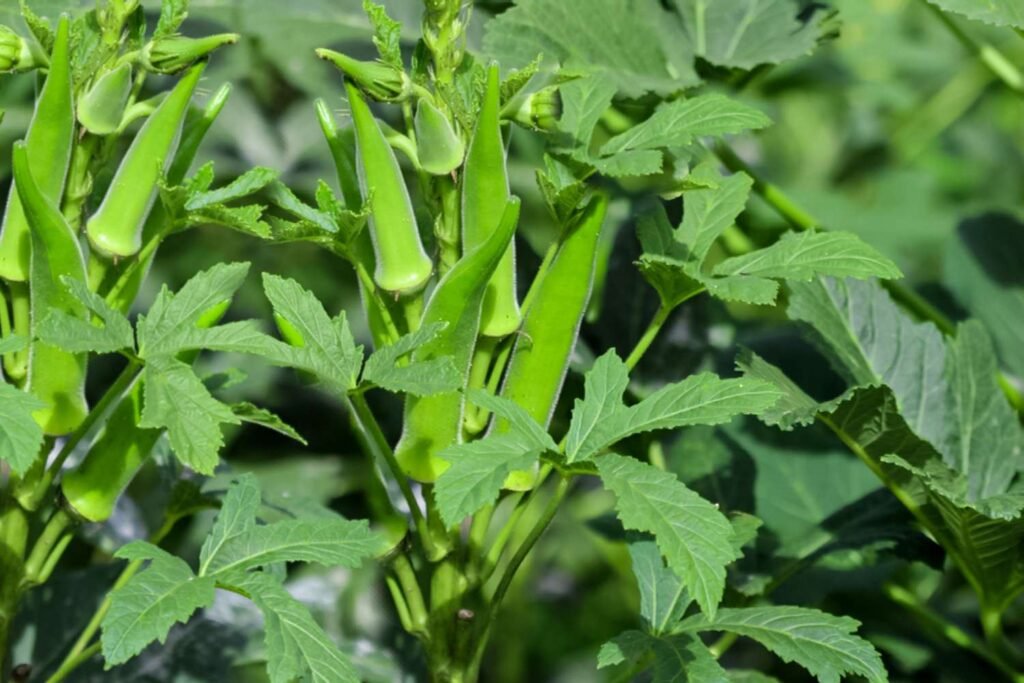
If okra were a person, it would be happiest sitting on a porch in Louisiana in August, sweating and thriving. This plant was built for heat and humidity. It originated in Africa, moved through the Middle East, and arrived in the American South for a reason: the conditions here suit it perfectly.
I’ll be honest — I ignored okra for the first five years I gardened because it wasn’t glamorous. It wasn’t on any foodie Instagram account I followed. That was a mistake. The summer I finally gave it a raised bed, it was the only thing in my garden that looked downright smug during a three-week heat dome.
Okra’s fuzzy stems and leaves actually help it manage moisture by creating a slight barrier against excess water sitting on the plant. Meanwhile, the roots go deep and handle standing water better than most garden vegetables. It wants full sun, and it wants to be hot and humid — which means it asks for almost nothing you have to manufacture if you’re in the right climate.
Plant it after your last frost when soil temps hit at least 65°F. Direct sow, because okra hates having its roots messed with. Harvest pods every two to three days when they’re 3–4 inches long. Let them get longer and they turn woody and basically inedible. I learned that one the hard way after a vacation.
2. Sweet Potatoes — A Set-It-and-Forget-It Crop for Humid Climates
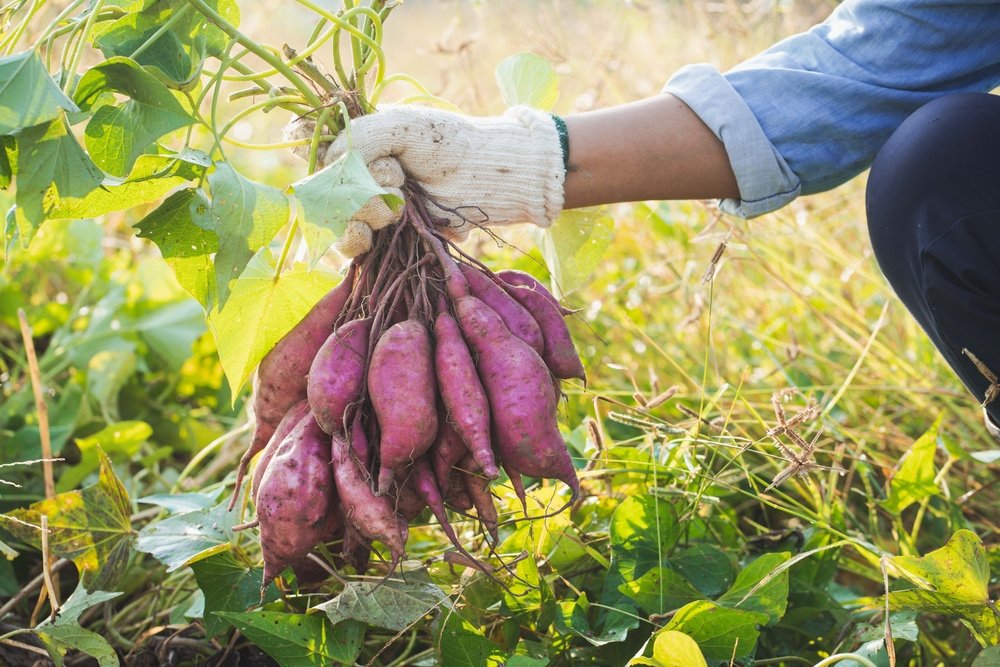
Sweet potatoes are one of the most forgiving crops I’ve ever grown in a humid climate, and I genuinely don’t understand why more people don’t grow them. You slip the slips into the ground after your last frost, you water them in, and then the humidity basically does the heavy lifting for you.
The vines spread aggressively — and I mean aggressively. The summer my sweet potatoes escaped their bed and started heading toward the driveway, my husband suggested we just let them go and see what happened. We did not let them go. But the point stands: in humidity and heat, these plants want to take over.
Sweet potatoes love warm, moist air. The vines photosynthesize well in the kind of steamy conditions that make other crops sulk. The tubers develop underground where consistent soil moisture (aided by surface humidity reducing evaporation) helps them size up properly.
Give them a long growing season — at least 90–120 days. They want loose, well-draining soil so the tubers can expand. Harvest after the first frost warning, cure them at 80–85°F for a week, and then store them somewhere cool. Skip the curing step and you’ll wonder why your sweet potatoes taste wrong. I skipped it once. Once.
3. Taro — The Most Underrated Humid-Climate Vegetable Nobody’s Growing
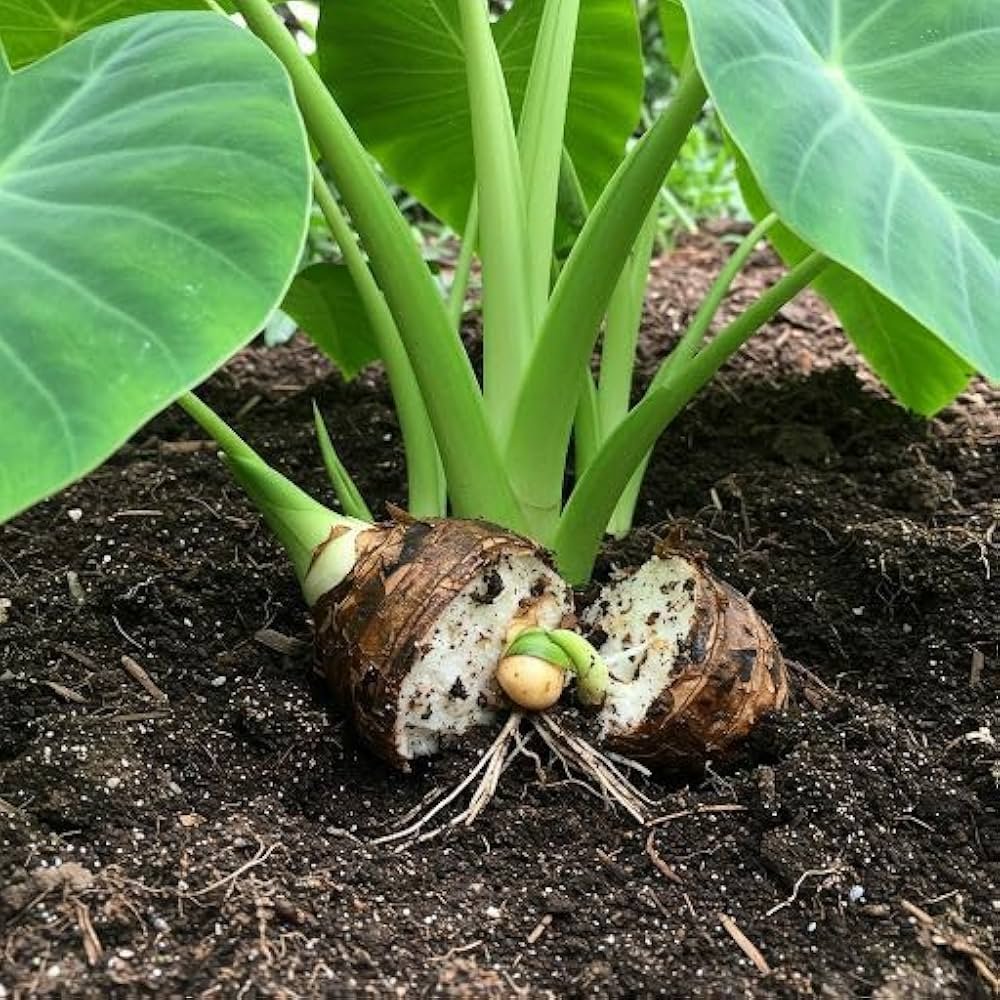
Most American gardeners walk right past taro at the nursery without a second glance. I did too, until a neighbor who grew up in the Philippines handed me a few corms and told me to just put them in the wet corner of my yard where nothing else grew.
That corner now produces more taro than my family can eat.
Taro (Colocasia esculenta) is one of the oldest cultivated crops on Earth, grown across tropical Asia, Africa, and the Pacific Islands. It doesn’t just tolerate humidity — it requires it. In dry conditions, it stalls out. Give it wet, humid air and heavy, moisture-retentive soil, and it will produce enormous edible corms and, in some varieties, edible leaves.
In the U.S., you can grow it as an annual in zones 8–11, or as a perennial further south. It wants partial to full sun, consistently moist soil (even boggy conditions are fine), and warm temperatures. It’s also genuinely beautiful — those big elephant-ear leaves make it a dual-purpose plant that looks intentional even in an ornamental bed.
One critical note: taro must be cooked before eating. The raw corms and leaves contain calcium oxalate crystals that will make your mouth feel like it’s on fire. Don’t skip the cooking step.
4. Bitter Melon — The Humid Garden Overachiever
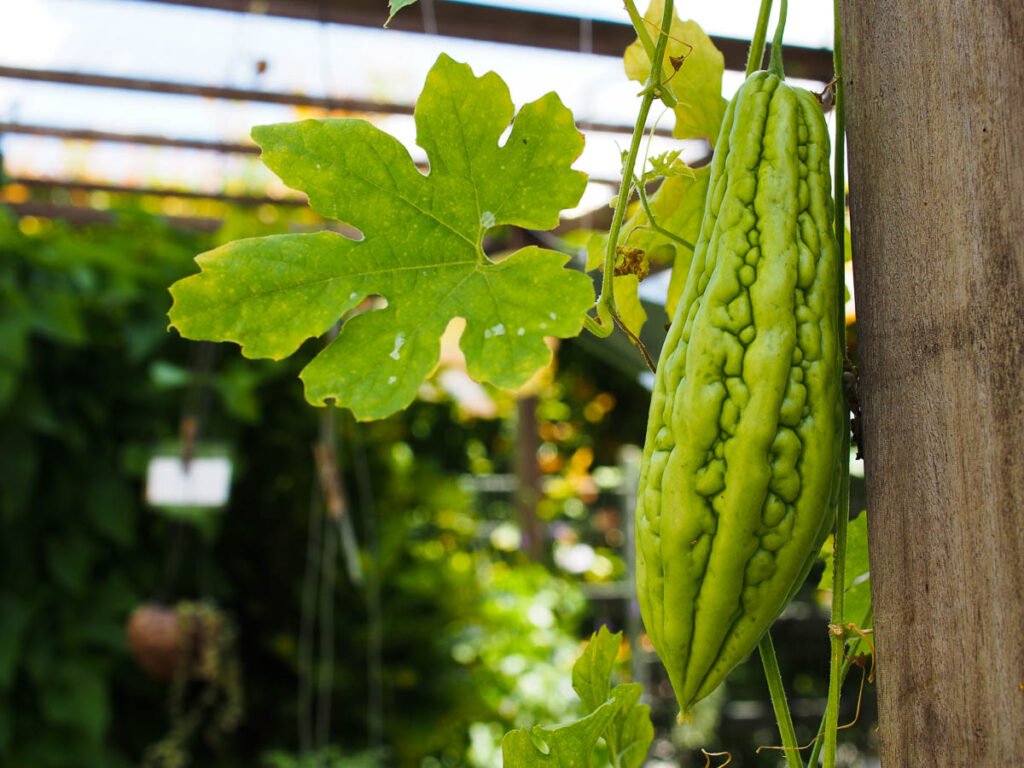
Bitter melon (Momordica charantia) might be the most productive vine I’ve ever grown in a humid summer. It’s enormously popular across South and Southeast Asia, the Caribbean, and parts of Africa — all high-humidity regions — for a reason. The plant genuinely thrives where the air is thick and wet.
I planted it for the first time after finding it at a Caribbean grocery store and being curious about what it actually tasted like fresh. The answer: very bitter. Aggressively bitter. It’s an acquired taste that I now love, especially stir-fried with eggs and soy sauce. If you don’t like bitter flavors, grow it anyway and give the harvest to someone who does — because the plant itself is a joy.
Bitter melon is a climbing vine that needs a trellis. It grows fast in humid conditions, produces beautiful yellow flowers that attract pollinators, and then sets fruit prolifically. Harvest the green fruits before they turn yellow if you want the classic bitter flavor; let them go yellow-orange and they get sweeter but also a bit mushy.
It’s also reportedly very low-maintenance in terms of pests and disease in humid climates, because it’s adapted to those conditions. My bitter melon has never once had the fungal issues that plague my cucumbers.
5. Water Spinach (Kangkong) — Fastest Growing Leafy Green in Humid Weather
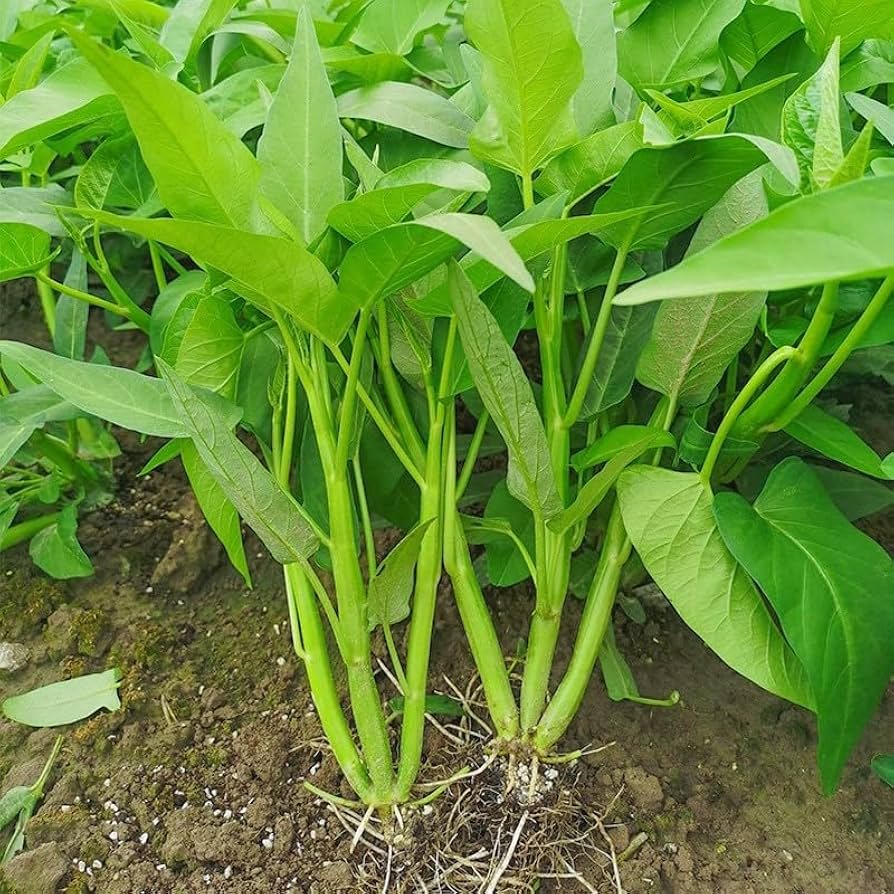
Water spinach, called kangkong in Southeast Asia and Ipomoea aquatica botanically, is one of those vegetables that makes me feel like a genius gardener even though it requires almost zero skill. It grows so fast in hot, humid conditions that you can harvest it within three to four weeks of planting. I’m not exaggerating.
It’s called water spinach because it grows naturally along waterways, ponds, and swampy areas across tropical Asia. Humidity and warmth don’t just help it — they’re essentially its native operating conditions. In a dry climate, it struggles. In a muggy summer garden with moist soil, it practically grows faster than you can eat it.
The flavor is mild, slightly earthy, and similar to regular spinach but with hollow stems that stay crisp when cooked. It’s incredible stir-fried with garlic and shrimp paste (the classic Southeast Asian preparation), but also just sautéed simply in olive oil.
In the U.S., it’s worth knowing that water spinach is classified as a noxious weed in some states — including Florida and Texas — because it can escape into waterways and cause ecological problems. Check your local regulations before planting, and never plant it near natural water sources. Grow it in containers or confined raised beds if you’re in a warm climate to be safe.
6. Lemongrass — A Perennial Payoff for Humid-Climate Gardeners
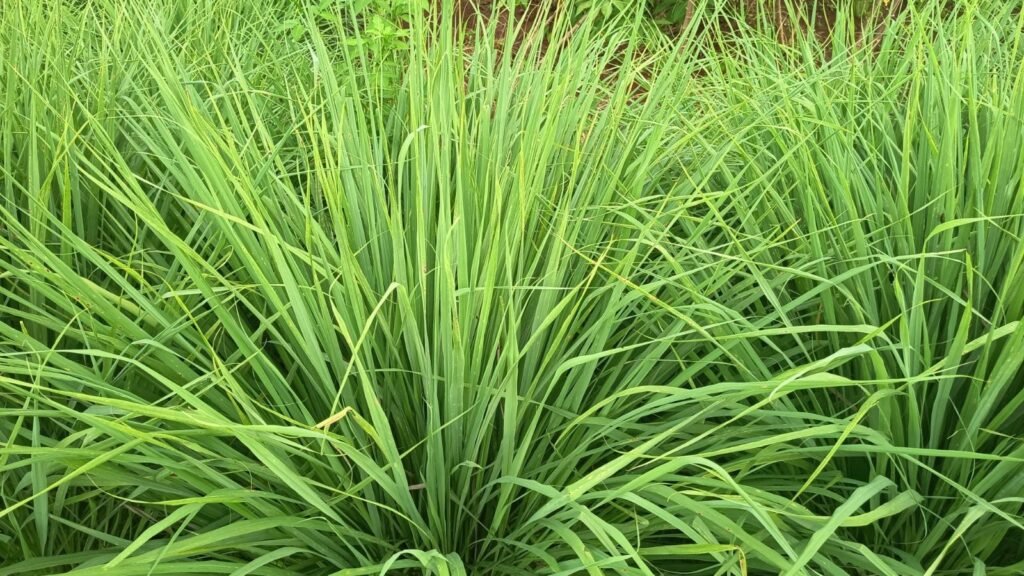
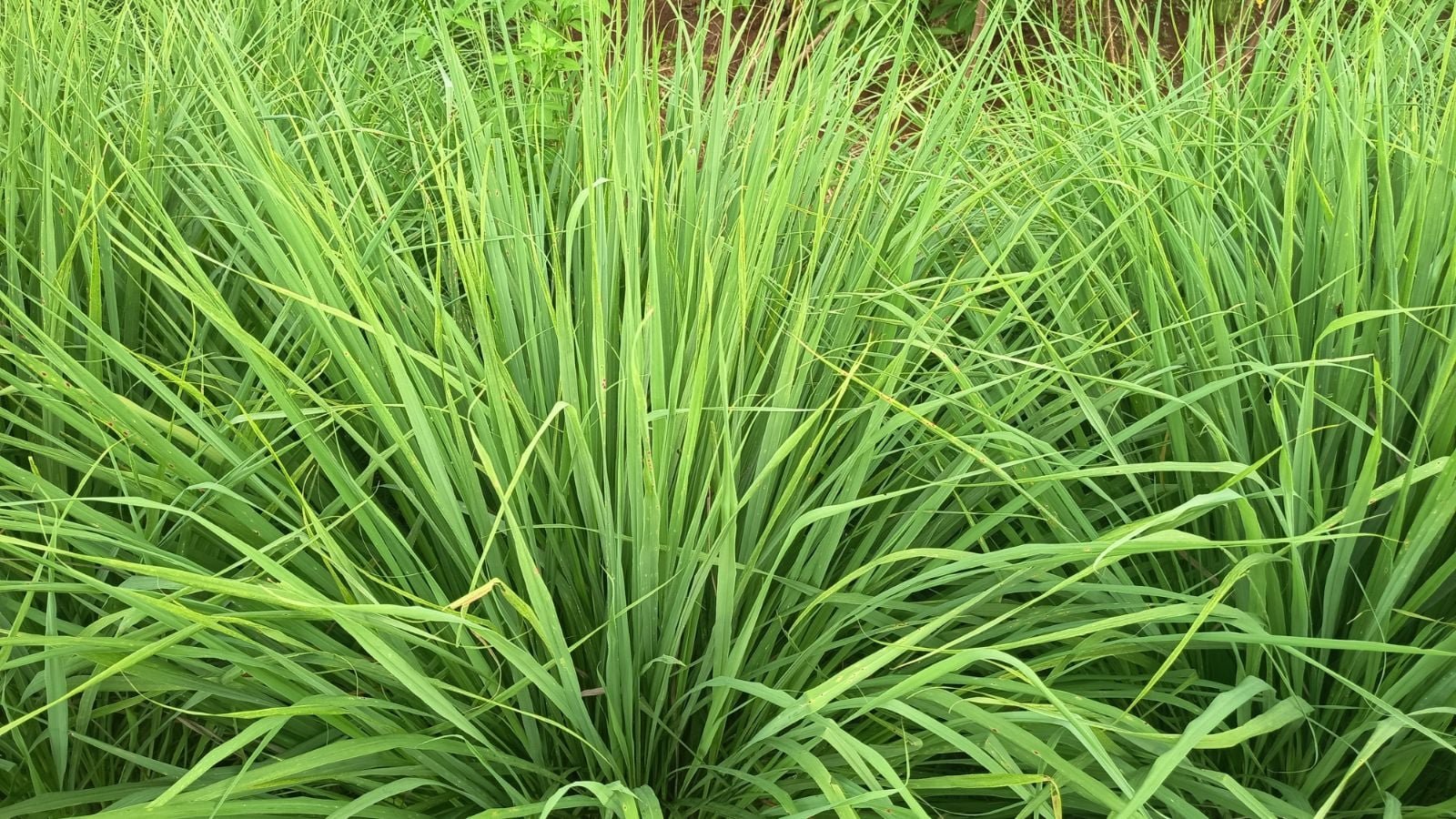
Lemongrass is one of the best long-term investments I’ve ever made in my garden. I planted three starts eight years ago. I now have a clump so large that I have to divide it every two years and give sections away. In a humid climate, it just keeps expanding.
Native to tropical and subtropical Asia, lemongrass (Cymbopogon citratus) is perfectly adapted to heat and humidity. It grows as a perennial in zones 9–11 and as a warm-season annual anywhere else. The stalks are what you use in cooking — for curries, soups, teas, and marinades — and the plant produces them abundantly in muggy conditions.
Beyond the culinary uses, lemongrass has a practical benefit in a humid garden: its strong citrusy scent reportedly deters mosquitoes, though I’ll be honest that my garden remains a mosquito buffet regardless. I still love the plant.
It wants full sun, well-draining soil, and regular moisture — and in a humid climate, you barely have to water it once it’s established. Cut the outer stalks at the base, peel off the outer layers to get to the tender inner stalk, and freeze what you don’t use immediately. It freezes beautifully.
7. Edamame (Soybeans) — The Humid-Summer Protein Machine
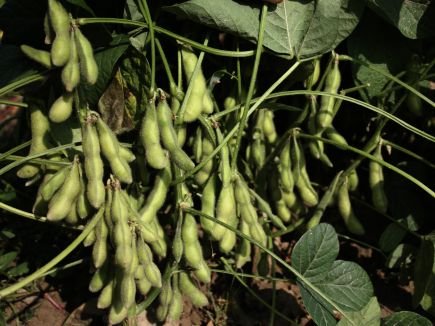
Edamame is one of those crops that I slept on for years because I assumed it was complicated or required special equipment. It is not complicated. It requires no special equipment. And in a humid climate, it absolutely takes off.
Soybeans were domesticated in East Asia — a region famous for hot, humid summers — and they carry that heritage in how they grow. They want warm soil, warm air, regular moisture, and decent humidity. Check, check, check, and check for most mid-Atlantic, Southeastern, and Gulf Coast gardens from June through August.
Plant them after your last frost in full sun. Direct sow — like most legumes, they hate transplanting. Space them about 6 inches apart and let them grow into compact, bushy plants that require no staking or trellising. They’ll fix nitrogen in the soil as a bonus, improving your garden bed for whatever you plant next.
Harvest when the pods are plump and green but before they start to yellow. This is a narrow window — about a week — so check them daily once the pods look full. Blanch them in boiling salted water for five minutes, drain, and eat them straight out of the pod. My kids, who claim to hate vegetables, have eaten enormous quantities of edamame this way.
8. Malabar Spinach — When Regular Spinach Gives Up, This One Takes Over
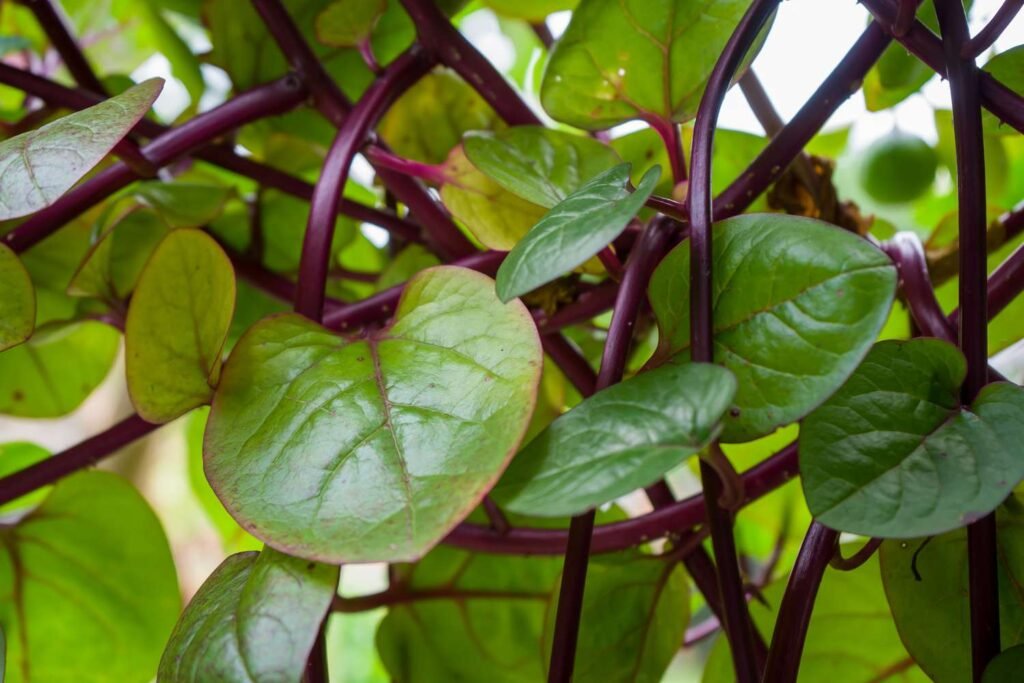
Regular spinach and I have a complicated relationship. The moment summer hits and humidity rises, it bolts, turns bitter, and makes me feel like a failure. Malabar spinach (Basella alba or Basella rubra) fixed that problem.
Malabar spinach isn’t actually a spinach at all — it’s a climbing vine from tropical Asia and Africa with succulent, glossy leaves that taste like mild spinach when cooked and have a slightly mucilaginous texture (think: like okra) when eaten raw. It is completely unbothered by heat and humidity. In fact, the hotter and stickier it gets, the faster it grows.
I use it exactly the way I’d use spinach: sautéed in pasta, wilted into soups, stirred into egg dishes. The texture is different but in a good way — the leaves hold up to heat better than regular spinach and don’t turn to mush. The red-stemmed variety (Basella rubra) is also genuinely beautiful and works as an ornamental vine on a fence or trellis.
It grows so fast in peak humidity that I harvest leaves twice a week to keep up. It’s a cut-and-come-again plant, so the more you harvest, the more it produces. If you’ve given up on leafy greens in summer because nothing survives your humidity, plant Malabar spinach and prepare to be surprised.
9. Armenian Cucumber — The Cucumber That Actually Likes Muggy Weather
Regular cucumbers in a humid climate are practically an invitation for powdery mildew, downy mildew, and every other fungal problem that thrives in wet air. I’ve spent summers babying cucumber plants only to watch them die from the neck up by mid-July. I’m done with that particular heartbreak.
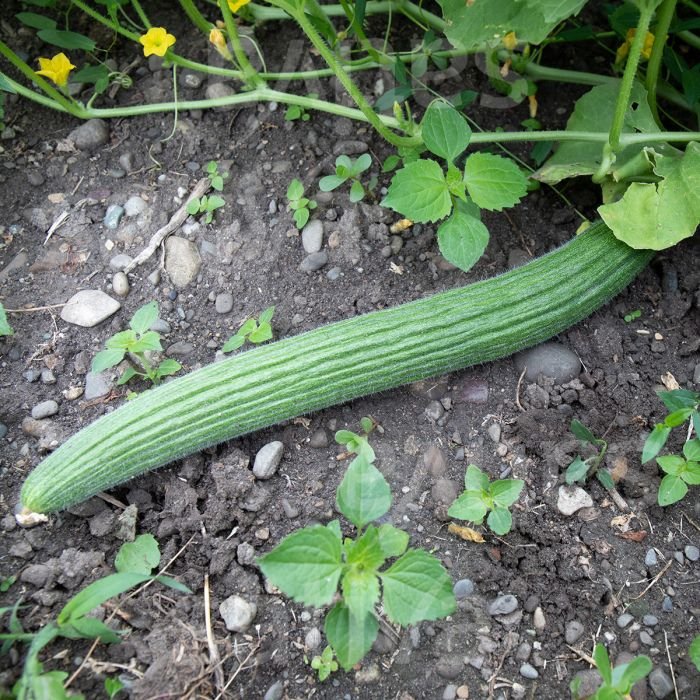
Armenian cucumber (Cucumis melo var. flexuosus) is technically a melon, not a cucumber, but it tastes and acts like one. And unlike its botanically-true cucumber cousins, it has substantially better disease resistance in humid conditions. It’s been grown for centuries across the Middle East, North Africa, and Central Asia — regions that get hot summers with varying humidity — and it brought that toughness with it.
The fruits are long, pale green, and ridged, with thin skin you don’t need to peel and a mild, refreshing flavor that’s almost cucumber-like with a hint of melon sweetness. They can get enormous — up to three feet long if you let them — but harvest them at 12–15 inches for the best texture and flavor.
Give it a sturdy trellis, full sun, and consistent water. It will reward you with far more fruit than a regular cucumber and far fewer trips to the compost bin with disease-riddled vines.
10. Yard-Long Beans — The Tropical Bean That Laughs at Humidity
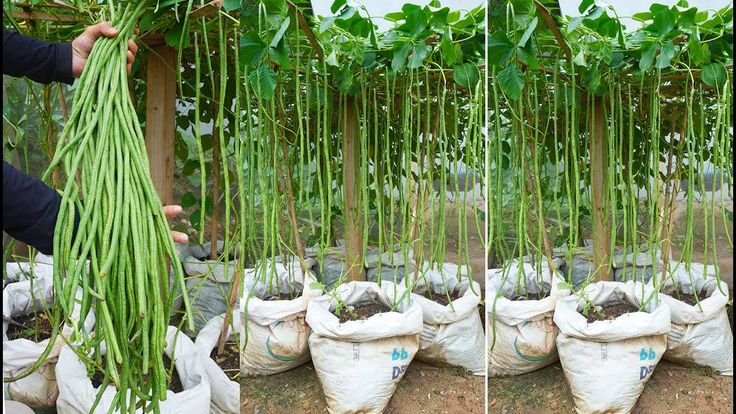
Yard-long beans (Vigna unguiculata subsp. sesquipedalis) — also called Chinese long beans, asparagus beans, or snake beans — are the bean I wish someone had told me about in my first year of gardening. They are outrageously productive in hot, humid weather and essentially pest-free in my experience.
They’re a staple across Southeast Asia, southern China, and parts of Africa and the Caribbean, all of which should tell you everything you need to know about their climate preferences. They don’t just survive humidity — they set fruit prolifically in it, which is more than I can say for regular green beans that stall out when temperatures climb above 90°F.
The beans grow in pairs from each node on the vine, and they really do get close to a yard long if you let them. Harvest them at 12–18 inches for the best eating quality. They’re slightly denser and more flavorful than regular green beans, and they hold up beautifully in stir-fries, braises, and even pickling.
Grow them on a trellis of at least 6 feet because these vines want to climb. Full sun, average soil, and don’t over-fertilize with nitrogen or you’ll get lots of vine and not many beans. They’re some of the most low-drama plants in my entire garden.
11. Callaloo (Amaranth Greens) — The Humidity-Proof Leafy Green
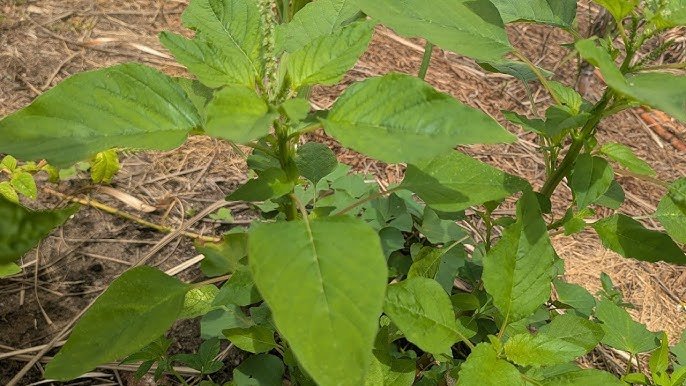
Callaloo — which refers to Amaranthus species used as leafy greens across the Caribbean, West Africa, and parts of Asia — is my secret weapon for keeping the salad bowl stocked all summer long. While Swiss chard wilts and kale sulks, callaloo just keeps growing.
Amaranth is one of the most ancient cultivated plants on Earth, grown as both a grain and a vegetable across tropical regions for thousands of years. The leafy varieties have been bred specifically for edible greens, and they’re completely adapted to humid, warm conditions. They’re drought-tolerant too once established, which makes them remarkably flexible, but they genuinely flourish when the air is moist.
The flavor is mild, slightly earthy, and similar to spinach. The leaves are soft and cook down quickly. They’re fantastic in soups (the classic Trinidadian callaloo soup is made with these greens plus coconut milk and scotch bonnet pepper), sautéed as a simple side dish, or added to dals and stews.
Callaloo self-seeds freely, which means once you plant it, you may never have to buy seeds again. My patch has been self-sustaining for four years. I pull plants I don’t want, let a few go to seed in late summer, and find new seedlings every spring right where I want them.
Real Talk: What to Watch Out For in the Humid Garden
Here’s the part the seed catalogs don’t show you.
Fungal disease is still a risk. Just because these vegetables are adapted to humidity doesn’t make them immune to fungal problems. Good air circulation matters. Don’t plant things too close together. Water at the soil level, not overhead, whenever possible. Mulch heavily to prevent soil splash onto leaves, which is one of the main ways fungal spores spread.
Pest pressure goes up with humidity. Slugs, in particular, absolutely thrive in humid conditions, and they will eat your Malabar spinach and taro seedlings if you let them. I’ve found that iron phosphate slug bait (the kind safe for pets and wildlife) is genuinely effective and worth the investment.
Some of these vegetables are hard to find at mainstream garden centers. Taro corms, bitter melon seeds, callaloo seeds, and water spinach starts are often unavailable at big-box stores. I get them from Asian grocery stores (taro corms and lemongrass stalks can be sprouted from grocery store purchases), Caribbean food markets, and online seed companies like Baker Creek, Kitazawa Seed, and Truelove Seeds. Don’t give up just because Home Depot doesn’t carry them.
The “plant what your climate wants” lesson took me years to learn. I wasted a lot of summers — and a lot of money on seeds and amendments — trying to make cool-season crops work through a muggy August. These 11 vegetables won’t fix every garden problem. But they’ll give you a fighting chance at actually enjoying your summer harvest instead of just surviving it.
Parting Wisdom
Your climate isn’t a problem to solve. It’s a set of conditions to work with.
The gardeners I know who are most successful aren’t the ones fighting hardest against their environment. They’re the ones who’ve figured out what their particular patch of ground wants to grow, and they lean into it hard. Humid summers aren’t a curse — they’re an invitation to grow some of the most productive, flavorful, and underappreciated vegetables in the world.
Start with one or two plants from this list this season. Okra if you want the easiest win. Armenian cucumber if you’re done with mildew. Malabar spinach if you just want salads in August without the heartbreak. See what happens. I think you’ll be surprised how much more fun gardening gets when you stop swimming upstream.
What’s the crop that’s given you the most trouble in humid weather? Drop it in the comments below — I’d love to hear what you’re struggling with, and the folks reading along might have a suggestion you haven’t tried yet.

About Syprose Kiche
Syprose Kiche is the creator and writer behind My Besuited Home, a practical home and garden website covering DIY projects, gardening, lawn care, landscaping, home improvement, and outdoor living. She focuses on turning everyday homeowner questions into clear, practical guides backed by careful research and useful real-world considerations.