

My back garden used to look like a war zone every spring. Snapped stems, uprooted seedlings, and that one ornamental grass I’d babied for two seasons, completely horizontal against the fence. If you’re gardening in a wind-exposed spot — whether that’s a coastal property, a hillside, an open field, or just a suburban corner that happens to be a wind tunnel — you already know the pain.
The good news? After more than a decade of trial, error, and a truly embarrassing number of dead plants, I’ve figured out which ones actually thrive in blustery conditions. These aren’t plants that “tolerate” wind. These are plants that genuinely don’t care. They dig in, flex, bounce back, and often look even better after a storm than before.
Here are 13 of the best wind-resistant plants for exposed gardens — low maintenance, storm-ready, and tested by someone who has made every mistake so you don’t have to.
1. Hawthorn (Crataegus monogyna) — The Wind-Resistant Hedge Champion

If there’s one plant I’d put my money on in a genuinely brutal, exposed site, it’s hawthorn. This thing is essentially unkillable. Farmers have been using it as a windbreak hedge for centuries, and there’s a reason for that — hawthorn is dense, thorny, and deeply rooted. Once it’s established, it laughs at gales.
I planted a hawthorn hedge along the northern boundary of my allotment about eight years ago. By year three, it had cut wind speed to that part of the plot by what felt like half. Vegetables that had previously been hammered every August were suddenly standing tall. The hedge paid for itself in saved plants within one growing season.
It’s deciduous, so you won’t get year-round screening, but the structural density of the branches still deflects wind even in winter. In spring, the white blossom is genuinely beautiful — not just “useful” beautiful, but stop-and-stare beautiful. And in autumn, the berries feed every bird in the postcode.
Hawthorn tolerates poor soil, clay, chalk, exposed coastal conditions, and hard pruning. It’s one of the few plants that improves with a good hack back. Plant bare-root whips in autumn for the cheapest option, and don’t baby them — they prefer toughening up from the start.
2. Scots Pine (Pinus sylvestris) — The Best Windbreak Tree for Large Gardens
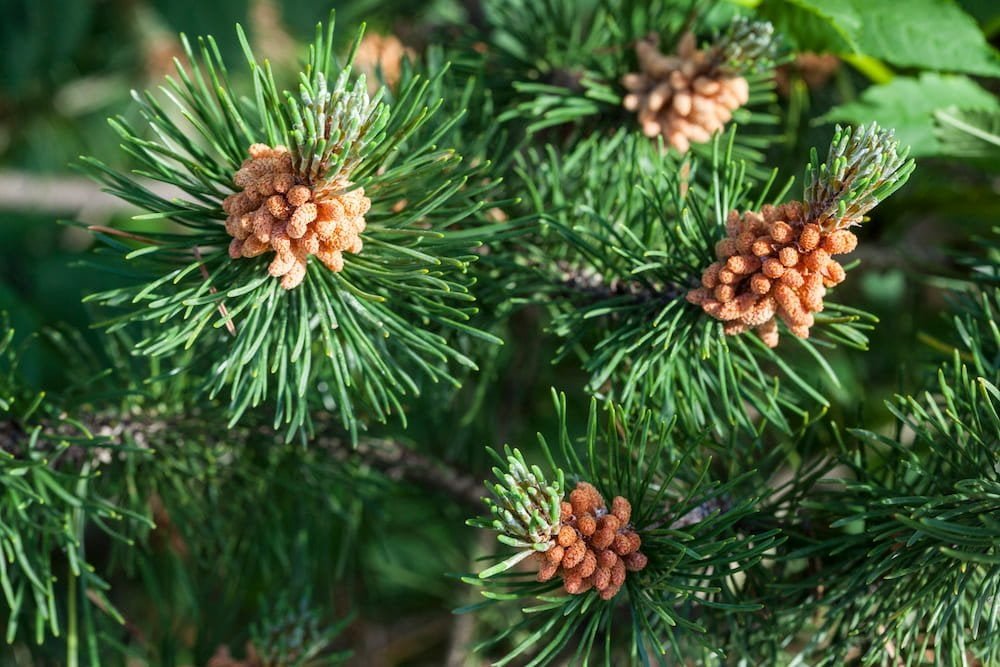
If you have the space, Scots pine is one of the most effective windbreak trees you can plant. It’s deep-rooted, flexible in high winds (those branches sway rather than snap), and it holds its foliage year-round, so it screens and deflects wind in all seasons. I’ve seen mature specimens on exposed Scottish hillsides that look like they’ve been sculpted by the weather — and they’re still standing after 50 years.
For large exposed gardens, a staggered row of Scots pine on the windward boundary is transformative. It won’t work in a small urban garden — this is a big tree — but for rural properties, smallholdings, or anyone with a generous boundary, it’s the gold standard.
The bark turns a gorgeous orange-red with age. The structure is architectural. And wildlife absolutely loves it — red squirrels, crossbills, and a dozen moth species rely on mature pines. So you’re building something that matters ecologically, not just aesthetically.
Plant young trees, not large specimens. Smaller trees establish faster and handle transplant stress better. Stake loosely for the first year, then remove the stake so the trunk thickens properly through natural movement. A pampered, rigidly staked tree will be weaker than one that’s had to work.
3. Lavender (Lavandula angustifolia) — Wind-Hardy and Drought-Tolerant Perennial
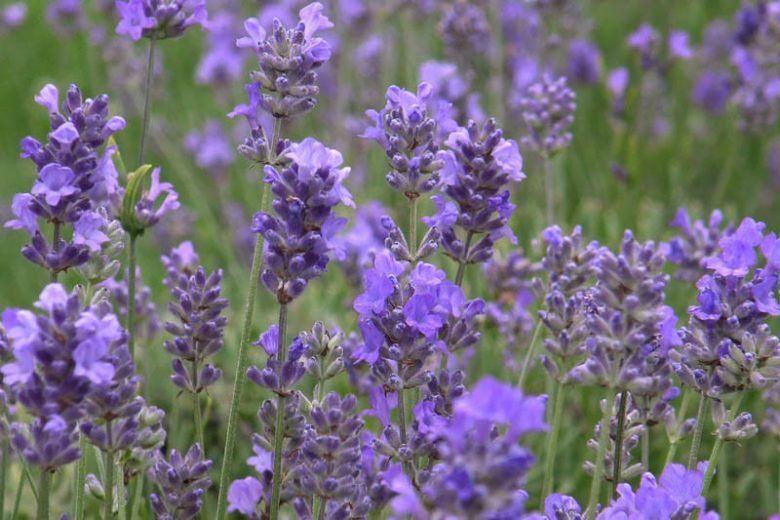
Here’s one that surprises people. Lavender is often thought of as a delicate, Mediterranean plant that needs babying. In reality, it evolved on dry, rocky hillsides swept by Mediterranean winds. It is, by nature, a wind-adapted plant.
The key is drainage. Lavender hates wet roots far more than it hates wind. Get the drainage right — raised beds, gritty soil, south-facing slope — and lavender will shrug off conditions that would flatten most perennials. I grow ‘Hidcote’ and ‘Vera’ along a path that gets hammered by westerlies from October to March. Both are still going strong after six years.
Lavender is also genuinely low maintenance in a way that most “low maintenance” plants aren’t. No feeding. Minimal watering once established. One annual haircut after flowering to keep it from going woody. That’s it. And it earns its keep with months of fragrance, non-stop pollinator activity, and that classic purple-silver colour that works in almost any planting scheme.
One word of warning: don’t skimp on the post-flowering trim. I made that mistake in year two and ended up with a sprawling, woody mess. Cut back by about a third each year, always into green growth, never into old wood. Keep up with that habit and you’ll have a healthy plant for a decade or more.
4. Sea Holly (Eryngium spp.) — Architectural Wind-Resistant Perennial for Dry Gardens
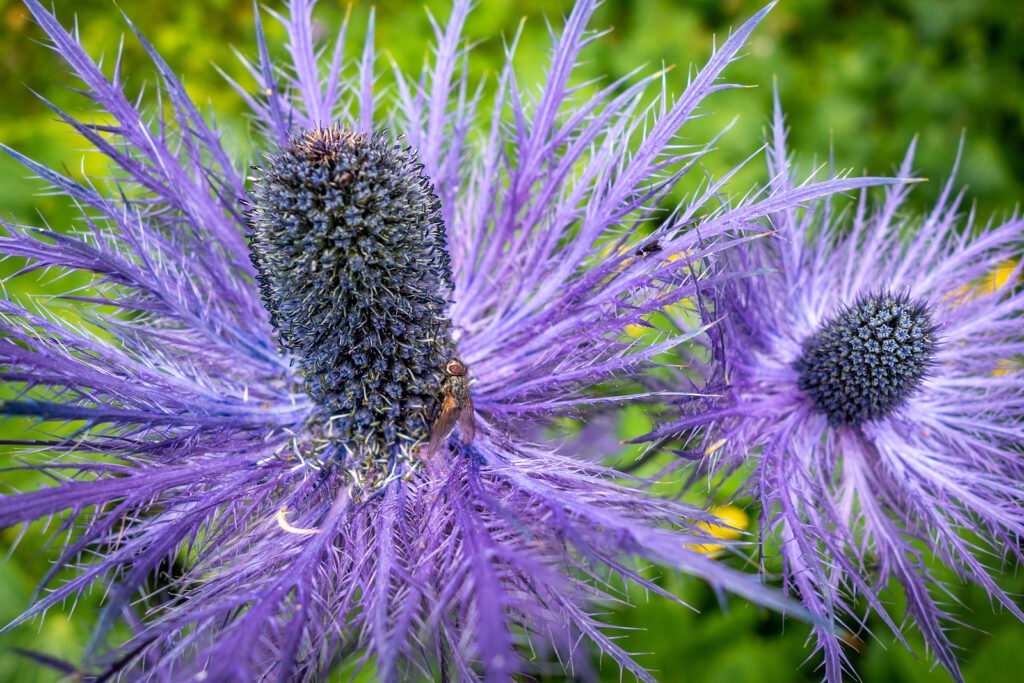
Sea holly is built for punishment. It grows wild on exposed coastal sand dunes and shingle banks — places where wind, salt spray, and drought combine to destroy most plants. In a garden setting, those conditions translate to: thrives in exposed spots, tolerates poor soil, and requires almost zero intervention.
The architectural quality of eryngium is genuinely underrated. The spiky, metallic-blue flower heads on silver stems are unlike anything else in the garden. They photograph beautifully, they dry well for indoor arrangements, and they remain structurally interesting even after the flowers fade. In a windy border, where soft, floppy plants get battered and look terrible, eryngium just gets on with it.
Eryngium x zabelii ‘Big Blue’ and Eryngium giganteum (Miss Willmott’s Ghost) are my two favourites. The latter is biennial, so it self-seeds around — which sounds annoying but is actually excellent. You end up with a naturalistic drift of silver-blue plants appearing where the conditions suit them best.
Plant sea holly in full sun and free-draining soil. It absolutely does not want rich, moist conditions — that’s when it becomes leggy and flops. Treat it mean, give it sun and grit, and it will reward you with years of structural beauty and not a single plant support in sight.
5. Heather (Calluna vulgaris) — Low-Growing Wind-Resistant Ground Cover
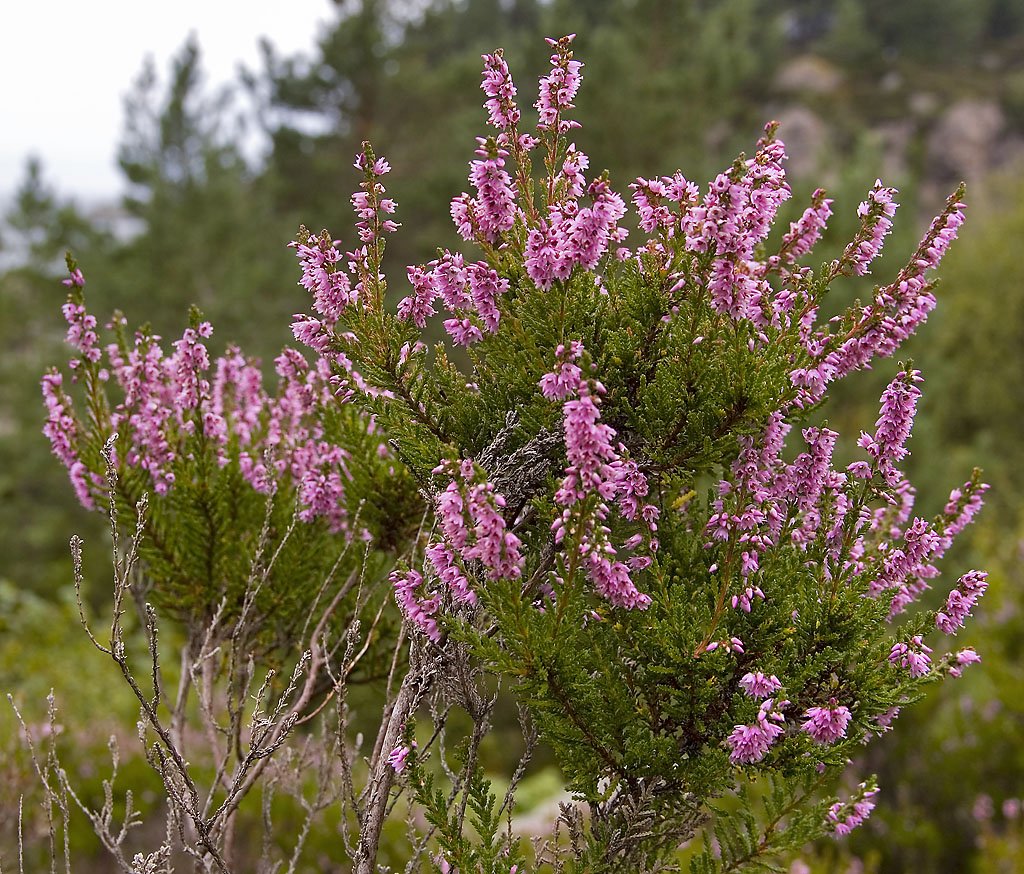
For ground cover in a windy garden, heather is one of my top picks. It’s naturally low-growing, which means wind passes over the top rather than catching it. It’s fibrous and dense, which means it holds moisture and suppresses weeds. And it’s virtually indestructible in the right conditions.
The right conditions are important here. Heather demands acidic soil (pH 4.5–6), full sun, and reasonable drainage. Get those three things right and you’ll have a plant that covers ground, feeds early bees, looks great from late summer through autumn, and costs you nothing in maintenance except an occasional light shear.
Heather is especially good on exposed banks and slopes where it knits together into a carpet that holds the soil against wind erosion. I’ve used it on a north-facing bank with poor sandy soil — exactly the conditions most plants hate — and it’s now a solid mat of coverage that hasn’t needed any attention in four years.
The variety ‘Beoley Gold’ has golden foliage that turns amber in winter. ‘Darkness’ has deep pink flowers against dark green leaves. Mix a few varieties and you get a long season of interest with no effort whatsoever.
6. Crocosmia — The Tough, Colourful Storm-Ready Bulb
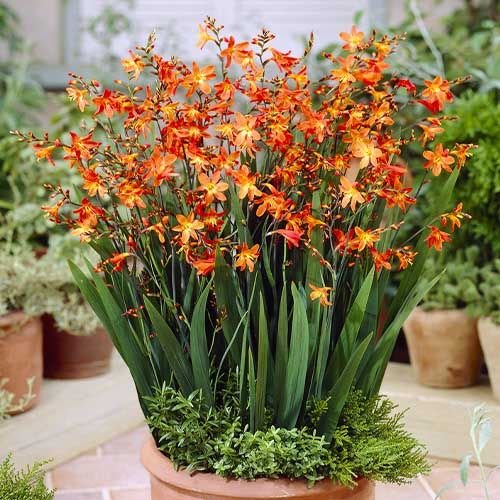
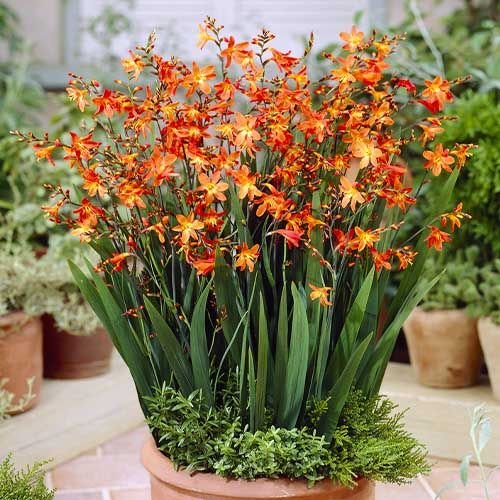
Crocosmia gets overlooked in conversations about wind-resistant plants, and I genuinely don’t understand why. The arching, sword-like foliage deflects wind brilliantly — it bends rather than snapping — and the corms are so vigorous that even if a stem does get flattened, the plant simply keeps sending up new growth.
‘Lucifer’ is the variety everyone knows, and it deserves its fame: intense red-orange flowers, up to 1.2m tall, rock-solid performance even in exposed sites. But ‘Emily McKenzie’ (orange with a mahogany throat) and ‘Severn Sunrise’ (soft apricot-pink) are equally tough and give you a longer season.
I have a patch of ‘Lucifer’ in the most exposed corner of my garden. It gets full western exposure and I have never staked it, never fed it, and only divided it once every four years to stop it from overcrowding. It flowers reliably every July and August, acts as a magnet for hummingbird hawkmoths, and comes back stronger every year.
The one thing to know: crocosmia can spread vigorously. In ideal conditions, it’ll colonise more space than you planned for. That’s not necessarily a problem, but if you want to keep it contained, plant it inside a root barrier or divide it regularly. In a windy, difficult spot where you just want ground covered and colour delivered, let it run.
7. Ornamental Grasses — Best Wind-Resistant Grasses for Exposed Gardens
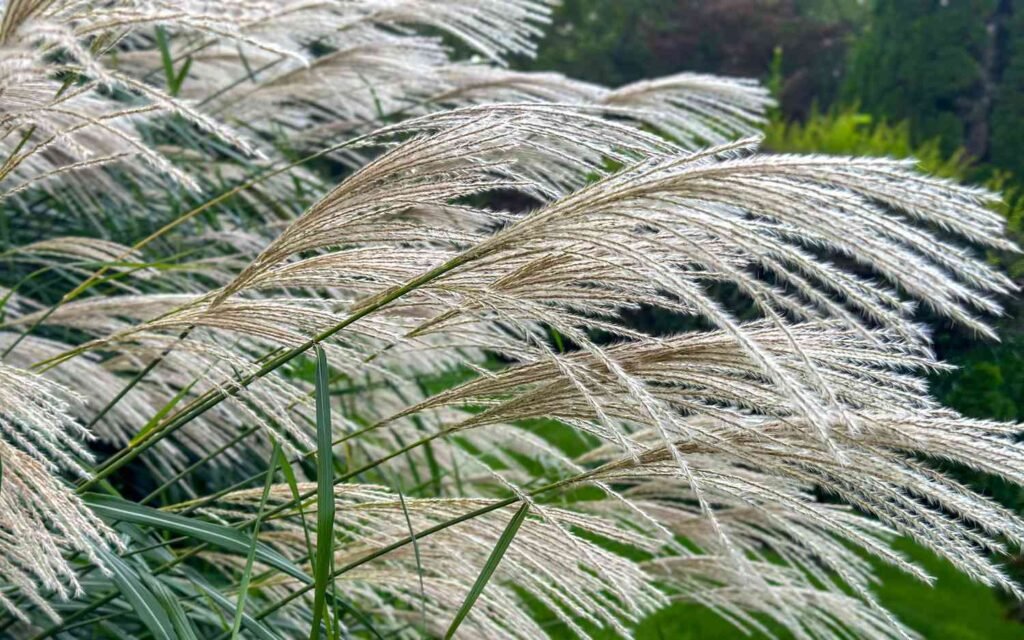
I’m slightly reluctant to put this as a single entry because ornamental grasses are a huge category, but the principles apply across all the wind-hardy varieties: they evolved to move in wind. That swaying motion that looks so beautiful in a garden is literally the plant’s strategy for surviving gale-force conditions.
The best options for windy sites are Miscanthus sinensis (tall, architectural, superb autumn colour), Pennisetum alopecuroides (compact, great for borders), Stipa gigantea (golden oats — my personal favourite, the flower heads catch light like nothing else), and Deschampsia cespitosa for shadier spots.
I planted Stipa gigantea in a border that gets brutal westerlies. It sways dramatically in even light winds, which sounds like a problem but is actually spectacular — the tall flower stems move like a field of wheat and the whole thing catches the afternoon sun. It has never needed staking. It has never fallen over. It has asked me for nothing except an annual haircut in late winter before the new growth starts.
Avoid planting ornamental grasses in heavy clay without improving drainage first. They also hate being divided in autumn — do it in spring when the soil has warmed up. Other than that, they’re remarkably forgiving plants that look expensive and high-maintenance while actually being neither.
8. Rugosa Roses (Rosa rugosa) — Wind-Tolerant Roses That Actually Survive
I’ve tried growing hybrid tea roses in my exposed garden. I am done with that. The staking, the spraying, the blackspot, the wind-battered petals. Never again.
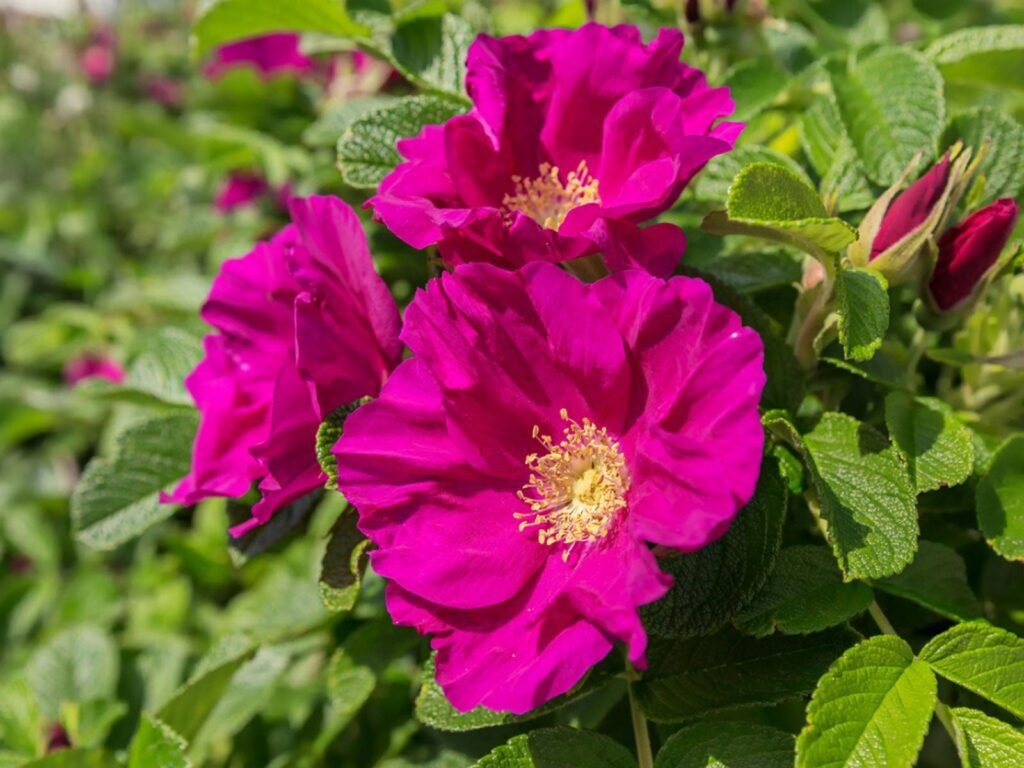
Rugosa roses are a completely different category. They’re native to coastal areas of eastern Asia, they naturalise on sand dunes in the UK, and they handle wind, salt spray, and poor soil the way other plants handle luxury conditions. The foliage is deeply textured and disease-resistant. The flowers are large, fragrant, and produced continuously all summer. The hips that follow are enormous — some of the best in the genus — and they’re packed with vitamin C.
‘Roseraie de l’Haÿ’ (deep crimson, intensely fragrant, no hips) and ‘Blanc Double de Coubert’ (white, highly fragrant) are my two recommendations. Both are vigorous, both are thorny enough to form an effective barrier planting if needed, and both will grow in coastal conditions that other roses can’t handle.
The only maintenance they need is an annual removal of dead wood and a light tidy in early spring. No spraying. No complicated pruning. No feed unless you particularly want to. They just grow.
9. Snowberry (Symphoricarpos albus) — Underrated Wind-Hardy Shrub for Shady Spots
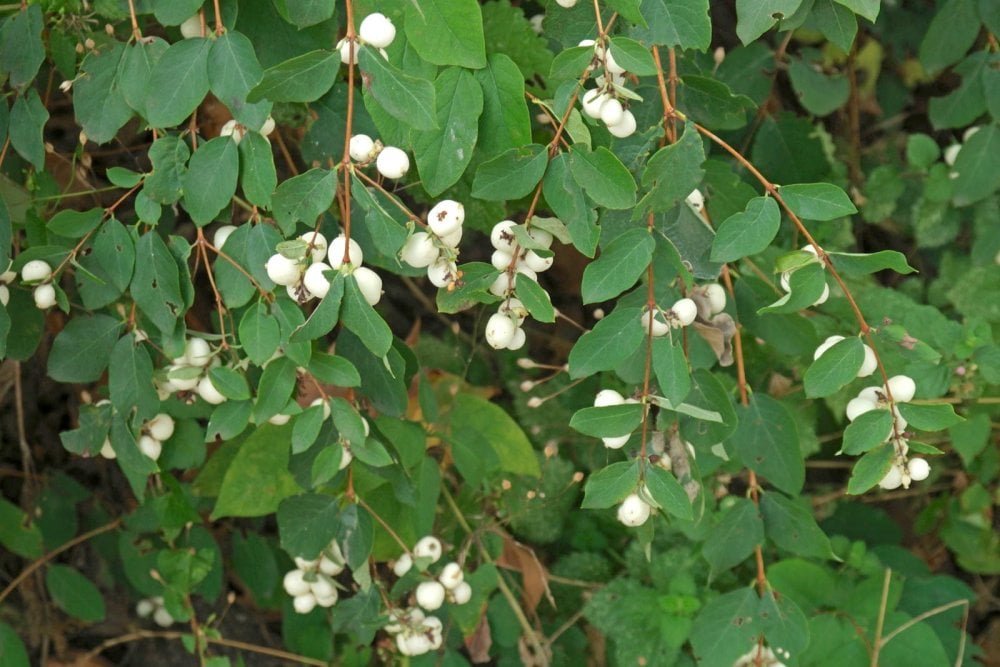
Most wind-resistant shrub lists ignore snowberry, and it drives me slightly mad. This plant is genuinely bulletproof. It tolerates deep shade, poor soil, dry conditions, chalk, clay, coastal exposure, and hard pruning. It suckers freely to form a dense thicket — which is excellent for windbreaks — and in autumn it produces those otherworldly white berries that look like they’ve been made of porcelain.
It’s not a glamorous plant. It won’t win any awards for exotic appeal. But if you have a difficult shady spot in a windy garden where you need coverage and stability, snowberry will deliver when almost nothing else will.
I use it as an understorey plant beneath a group of birch trees on a windward boundary. The combination of tree canopy above and snowberry thicket below creates an effective layered windbreak that’s almost completely self-sufficient. I cut it back hard every three years to stop it from spreading beyond its allotted space, and that’s the extent of the work.
Birds love the berries in winter. The flowers — small and pink — are pollinator-friendly. And the autumn and winter interest is genuinely architectural in a subtle way.
10. Pittosporum — Best Evergreen Windbreak Shrub for Milder Climates
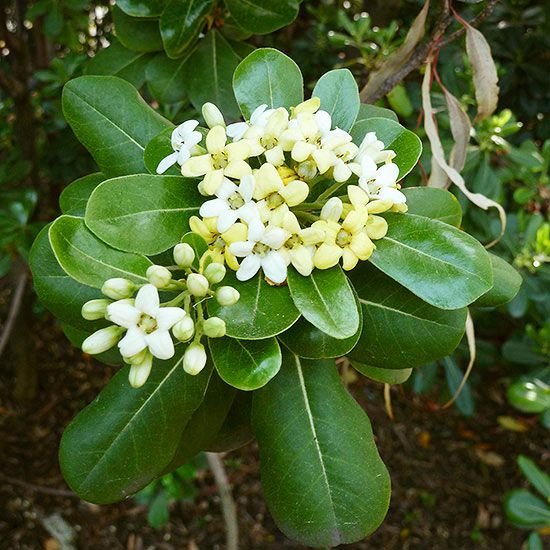
If you’re in a milder coastal area (USDA zone 8 or above, or equivalent mild maritime climate), pittosporum is one of the best evergreen windbreak shrubs you can grow. It’s dense, fast-growing, and maintains its foliage year-round, making it effective as a wind screen in all seasons.
Pittosporum tenuifolium is the species most commonly used for hedging in the UK’s milder counties and coastal Ireland. The small, wavy-edged leaves catch the light beautifully, and varieties like ‘Tom Thumb’ (dark purple) and ‘Garnettii’ (green and white) give you ornamental interest on top of the practical windbreak function.
One honest note: pittosporum is not as hardy as hawthorn or holly. A severe frost following a mild winter can knock it back badly. I lost a well-established specimen in an unusually cold February — something that felt deeply unfair after five years of growth. In colder inland areas, I’d go with something more reliably hardy. But in coastal or mild-climate gardens, it’s hard to beat for quick coverage, year-round screening, and low maintenance.
11. Gorse (Ulex europaeus) — The Native Wind-Breaker for Challenging Sites
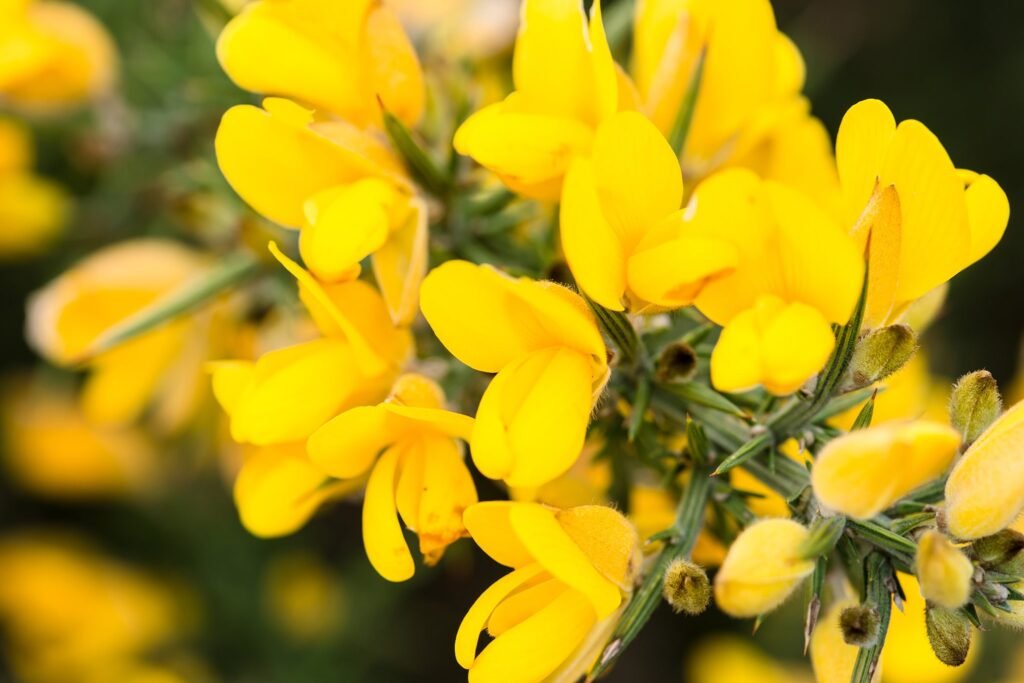
Gorse is one of those plants that divides opinion, and I’m firmly in the “it’s brilliant” camp. Yes, it’s spiny. Yes, it spreads. But on a truly challenging exposed site — thin soil, coastal spray, steep bank, high wind — gorse is one of the few plants that will establish quickly, hold soil, and look spectacular in flower.
The coconut-scented yellow flowers are stunning from late winter through spring, and on mild days throughout the year. The dense, thorny structure creates an impenetrable windbreak that also doubles as wildlife habitat — yellowhammers and linnets nest in gorse, and it’s a crucial early pollen source for bees.
I planted gorse along an exposed bank at the end of my property where I couldn’t get anything else established. Within three years it was a solid mass of growth. It’s never needed watering, feeding, or any attention. The bank that was previously bare, eroding, and useless is now a flowering, wildlife-filled feature.
The key is to plant small — young pot-grown plants establish far better than large specimens. And plant in autumn or early spring before any drought stress. After that, gorse essentially looks after itself.
12. Sedum/Stonecrop — Wind-Resistant Perennial for Rock Gardens and Dry Borders
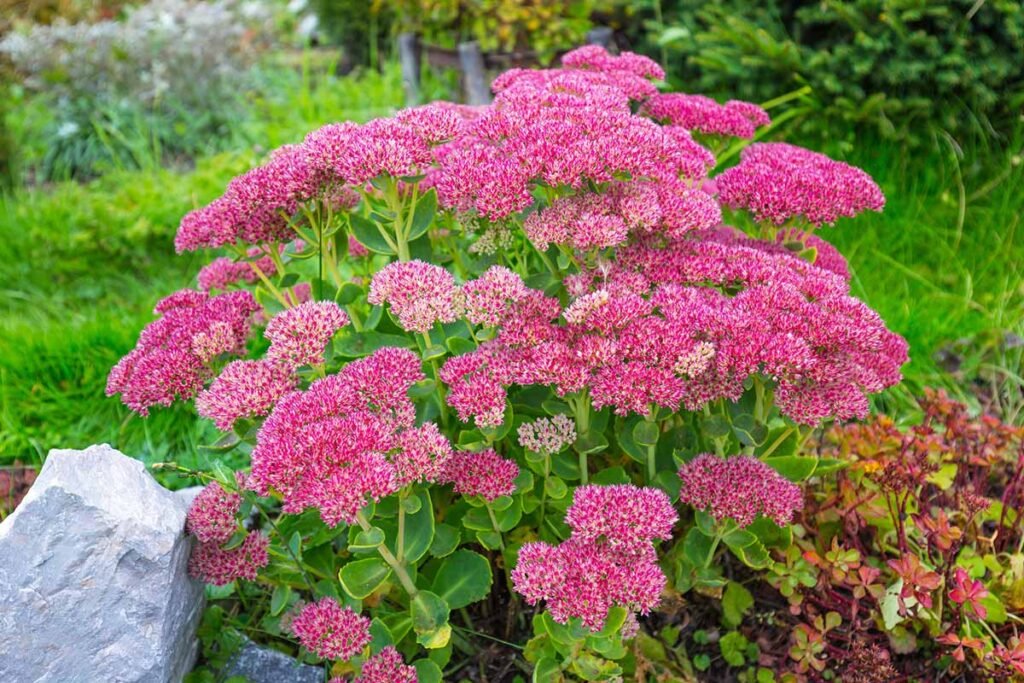
For a lower-growing option in exposed conditions, sedums are an excellent choice. They’re succulent, which means they store water in their leaves — making them naturally drought-tolerant — and they’re low enough to sit below the worst of the wind. The mat-forming varieties are especially useful as ground cover on exposed banks and rockeries.
Sedum spectabile (now reclassified as Hylotelephium spectabile) — particularly ‘Autumn Joy’ — is my go-to for border edges in exposed spots. The flat-headed flowers start green, turn pink, then rust through autumn and winter. They’re beloved by butterflies and late-season bees. The dried seed heads look architectural even after the first frosts. And the whole plant asks for nothing except a cut-back in late winter.
For rock garden or alpine-style planting, Sedum spurium forms dense carpets of succulent foliage and flowers in summer, holding soil effectively and requiring no attention at all once established. I’ve had it in a dry stone wall pocket for eight years. It has never been watered, never been fed, and it keeps expanding.
13. Holly (Ilex aquifolium) — The Classic Evergreen Wind-Resistant Hedge Plant

Holly is the old reliable. It’s been used as a windbreak hedge for centuries in the British Isles, and there’s a reason it’s still recommended today — it’s dense, evergreen, and genuinely tough enough to handle exposed coastal conditions, frost, poor soil, and heavy shade.
As a hedge, holly is slower to establish than hawthorn or privet, but the result is worth the wait: a thick, impenetrable evergreen screen that needs clipping only once a year (in late summer) and provides year-round wind protection, wildlife habitat, and — on female plants — those classic red berries through winter.
You need both male and female plants to get berries. ‘Holly King’ and ‘Golden King’ (confusingly, ‘Golden King’ is female) are reliable producers. Or just plant the straight species Ilex aquifolium — hardier and often more vigorous than named varieties.
Quick side note: Holly clippings are brilliantly useful — lay them around the base of plants you want to protect from slugs and rabbits. The spines deter both remarkably effectively.
Real Talk: What Doesn’t Work in Windy Gardens (And What’s a Total Waste of Money)
I need to be straight with you here.
Tall, single-stemmed perennials are a nightmare in exposed sites. Delphiniums, tall dahlias, and dinner-plate-sized alliums all require constant staking in a windy garden, and even then, they usually end up battered. I’ve spent entire summers propping things up that should have been relaxing to grow. If you love these plants, grow them in a protected spot or inside a walled kitchen garden. Don’t fight the wind for them in an exposed border.
Ornamental cherry trees (Prunus spp.) are a particular heartbreak in windy spots. The blossom, which is their whole reason for being, gets stripped by the first spring gust before you’ve had a chance to enjoy it. I planted one, watched it flower beautifully for exactly two days before a March gale turned it into bare sticks, and dug it out the following year. Use a crab apple instead — tougher, the fruit feeds birds, and the blossom is more resilient.
Plant supports (those wire cages and bamboo tripods) are a short-term fix, not a solution. In a really windy garden, they become projectiles. Use them sparingly for plants you truly love, and invest the rest of that energy into choosing plants that don’t need them.
Expensive specimen shrubs from garden centres are a false economy on exposed sites. Big, established plants from containers don’t establish as well as smaller, younger ones in windy conditions. They’ve been grown in a sheltered nursery and the root ball has never had to brace against anything. Buy small, plant well, and let them toughen up naturally. You’ll have a stronger plant in three years than a specimen that’s been wind-rocked loose from the start.
Parting Wisdom: Work With the Wind, Not Against It
After all the failed attempts, the snapped stems, and the plants I’ve had to quietly remove and never speak of again, the lesson I keep coming back to is this: the wind is not the enemy — fighting the wind is.
Every time I’ve tried to grow a plant that wasn’t suited to an exposed position, I’ve lost. Every time I’ve chosen plants that evolved in windy conditions — coastal, moorland, or mountain species — they’ve succeeded beyond what I expected. The wind becomes irrelevant. Sometimes it even becomes an asset, as with those ornamental grasses that turn every gust into a performance.
Start with a windbreak — even a single row of hawthorn, gorse, or pine along your most exposed boundary — and you’ll transform the growing conditions for everything else. Then fill in with the tough, flexible, well-adapted plants on this list. Within a few years, you’ll have a garden that looks better because of its exposed position, not in spite of it.
Now I want to hear from you — which of these have you grown in a windy spot? Have you had success with something I haven’t mentioned? Or a spectacular failure you want to warn the rest of us about? Drop your experience in the comments below. Every garden is different, and the more knowledge we share, the better gardeners we all become.

About Syprose Kiche
Syprose Kiche is the creator and writer behind My Besuited Home, a practical home and garden website covering DIY projects, gardening, lawn care, landscaping, home improvement, and outdoor living. She focuses on turning everyday homeowner questions into clear, practical guides backed by careful research and useful real-world considerations.