
Waking up to find your hostas have been mowed down to the nub by a four-legged “forest rat” is a rite of passage for gardeners, but it sure doesn’t feel like one. You put in the work, you spend the money at the nursery, and then you basically provide a five-star salad bar for the local deer population. It’s infuriating. I’ve been there, standing in my bathrobe at 6:00 AM, shaking a fist at a doe who is staring me dead in the eye while chewing on my prized lilies.
My own backyard used to be a buffet. I remember the year I tried to surround my flower beds with “scented” soap bars I saw on a DIY blog. By July, my yard smelled like a department store, but the deer had eaten the soap and the petunias. I’ve learned the hard way that if a plant is soft, sweet, and delicious, a fence is your only prayer. But if you pick the right “distasteful” greenery, you can actually have a garden that doesn’t get decimated every Tuesday. We’re going to talk about the plants that deer think taste like dirt.
1. Lavender (Lavandula) for Scented Borders
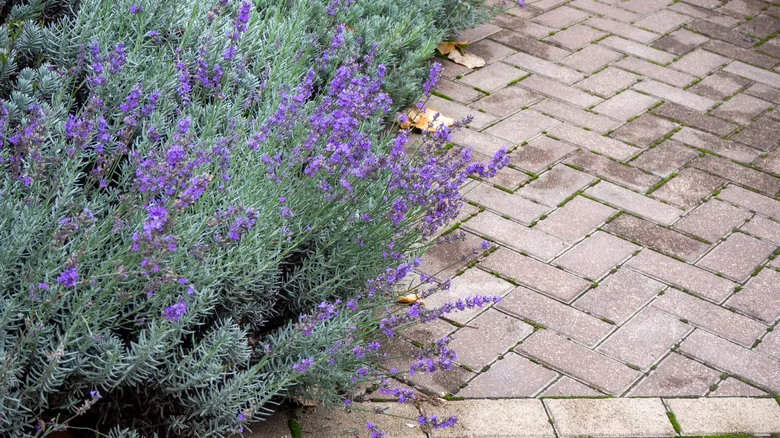
Lavender is my absolute favorite “front-line” plant. To us, it smells like a spa day and relaxation; to a deer, it smells like a bottle of cheap perfume they want nothing to do with. The oils in the foliage are way too strong for their sensitive noses. I’ve found that planting a thick row of lavender along the edge of a property acts like a “stink barrier” that keeps them from wandering further into the yard.
I’m very opinionated about which variety you should buy. Skip the fancy Spanish lavenders with the little “rabbit ears” on top—they’re finicky and die the moment the temperature drops below freezing. Stick with ‘Phenomenal’ or ‘Munstead.’ These are the workhorses. I once planted a whole row of the Spanish stuff near my driveway, and one humid week in August turned them all into grey mush. Stick to the hardy French and English hybrids.
When it comes to planting, remember that lavender hates “wet feet.” If your soil is heavy clay, you’re wasting your money. You’ve got to amend that dirt with a lot of sand or fine gravel. I like to plant mine in a slightly raised mound so the water runs right off. It’s a bit of extra digging, but it’s better than watching a $20 plant rot in the ground because of a summer rainstorm.
One last thing: don’t prune them back into the “old wood.” If you cut into the leafless, woody stems at the bottom, the plant usually won’t grow back. I made that mistake my third year in and ended up with a row of dead-looking sticks. Just give them a light “haircut” after they finish blooming in the summer. It keeps them bushy and prevents them from getting that leggy, exhausted look.
2. Bleeding Heart (Lamprocapnos spectabilis) for Shade
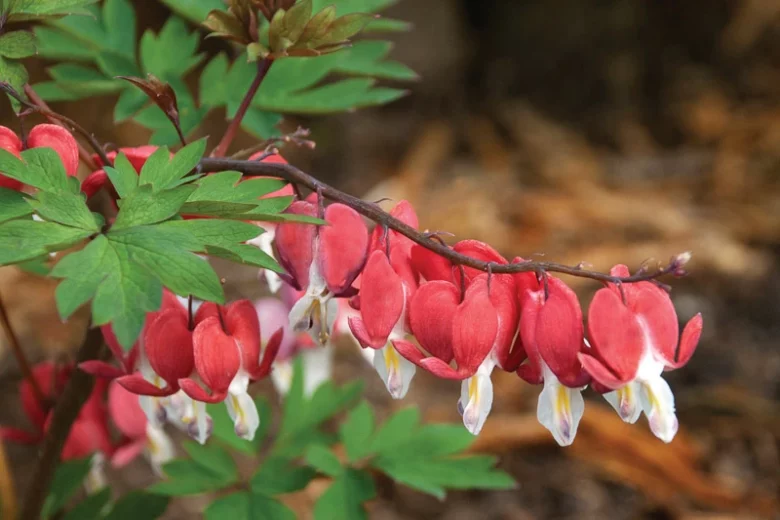
If you have a shady spot where the deer love to lounge and snack, Bleeding Hearts are a lifesaver. These are classic “old lady” garden plants, and for good reason. They are incredibly tough and have a toxic sap that makes deer steer clear. The heart-shaped flowers look delicate, but the plant itself is as rugged as a pair of old work boots.
I’ve found that the traditional pink and white variety is the way to go. There are “gold-leafed” versions that look pretty on Pinterest, but in my experience, they scorch the second a stray beam of sun hits them. Stick to the classic green foliage. I remember the summer my zucchini took over the entire ZIP code; I had planted them too close to my Bleeding Hearts, and the squash vines actually tried to climb them. The Bleeding Hearts didn’t even flinch.
You have to be prepared for the “summer vanish.” These plants are ephemeral, which is a fancy way of saying they go dormant when it gets hot. By August, your beautiful Bleeding Heart will turn yellow and disappear completely. Don’t panic and think you killed it! It’s just sleeping. I usually plant some ferns or hostas (the big, blue, leathery ones that deer like less) nearby to cover the hole it leaves behind.
Give them plenty of compost. They love rich, leafy soil that stays moist but not soggy. If you treat them right, they will come back bigger and better every year. I’ve had one in my North-facing bed for over a decade, and the deer haven’t even sniffed it. It’s one of the few plants I can truly say is “set it and forget it” for the shade.
3. Foxglove (Digitalis) for Tall Flower Spikes
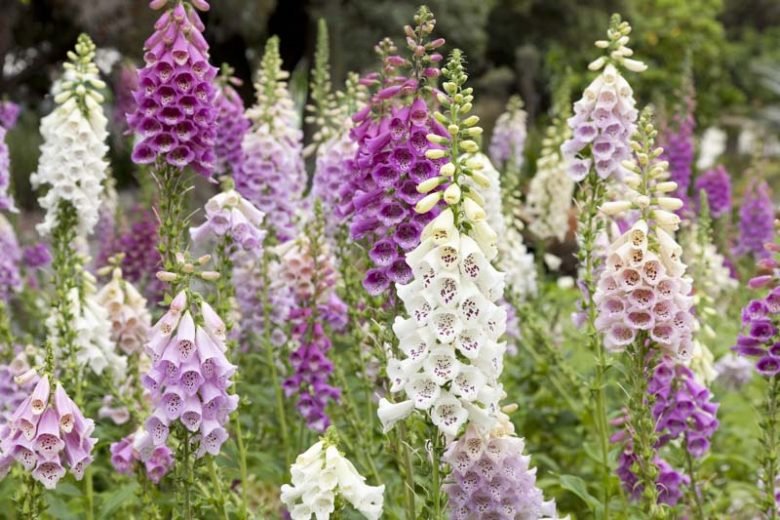
Foxgloves are the heavy hitters of the deer-resistant world. They are beautiful, tall, and absolutely lethal if eaten. Deer are smart enough to know that this plant contains digitalis, which messes with the heart. They won’t touch it. It’s the perfect plant for the back of a flower bed where you want some height but don’t want to worry about it being nibbled.
I’m very opinionated about the “bi-annual” nature of these plants. Most people buy them in bloom, they die after the season, and the person thinks they failed. Most foxgloves spend the first year as a green clump and the second year blooming. I’ve found that the ‘Camelot’ series is a great cheat code because they often bloom the first year you put them in the ground.
Be careful if you have pets or small children who like to put things in their mouths. Since every part of the plant is poisonous, you’ve got to use common sense. I once had a neighbor who tried to pull them out because she was worried about her dog, but honestly, even dogs seem to know to leave them alone. They have a fuzzy texture that isn’t exactly appetizing.
The best part about foxgloves is that they self-seed. If you leave the flower stalks up until they dry out, they will drop thousands of tiny seeds. By the next year, you’ll have a whole carpet of little baby foxgloves. I usually thin them out and move them to different parts of the yard. It’s the closest thing to free landscaping you’re ever going to get.
4. Peonies (Paeonia) for Fragrant Spring Blooms
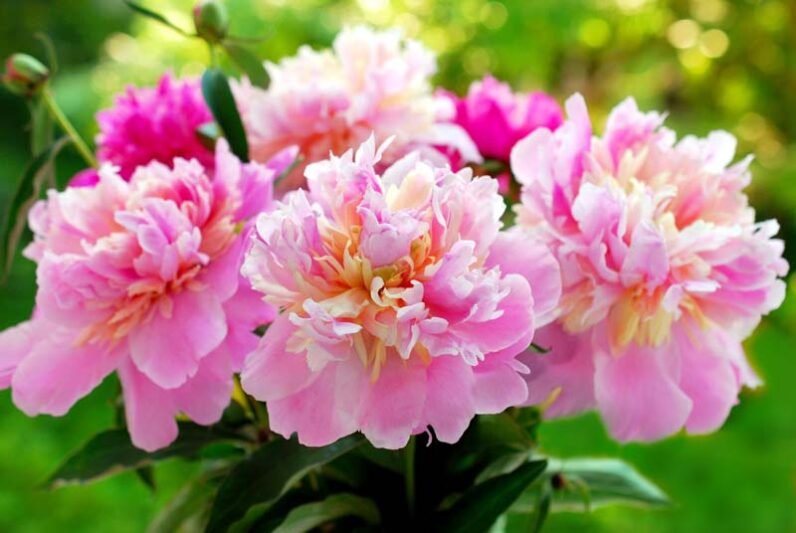
Peonies are the crown jewels of the spring garden, and thankfully, deer find them repulsive. Maybe it’s the thick, sappy stems or the way the leaves taste, but they are almost entirely deer-proof. I’ve had deer walk right past a row of blooming peonies to get to a patch of clover. They are a “long-game” plant; they can live for 50 years if you don’t mess with them.
I’ve found that the biggest mistake people make is planting them too deep. If those little “eyes” (the pink buds on the roots) are more than two inches underground, the plant will grow leaves but never give you a single flower. I once spent four years waiting for a ‘Sarah Bernhardt’ to bloom before I realized I’d buried it like a treasure chest. I had to dig it up and lift it, and it bloomed the very next year.
Ants are a package deal with peonies. You’ll see them crawling all over the buds, and people usually freak out and spray them with poison. Don’t do that! The ants are just eating the sticky nectar on the outside of the bud. They don’t hurt the flower, and some people say they actually help it open. I’ve always found that if I bring the flowers inside, a quick dip in a bucket of water gets rid of the ants without ruinng the petals.
Support is mandatory. Peonies have “big heads” and “weak necks.” The first spring rain will knock those heavy flowers right into the mud if you don’t have a cage around them. I’ve found that those cheap green circular cages are a total waste of money—they’re too flimsy. Buy the heavy-duty ones or make your own out of rebar. You want something that can hold up a five-pound flower after a thunderstorm.
5. Hellebores (Helleborus) for Late Winter Color
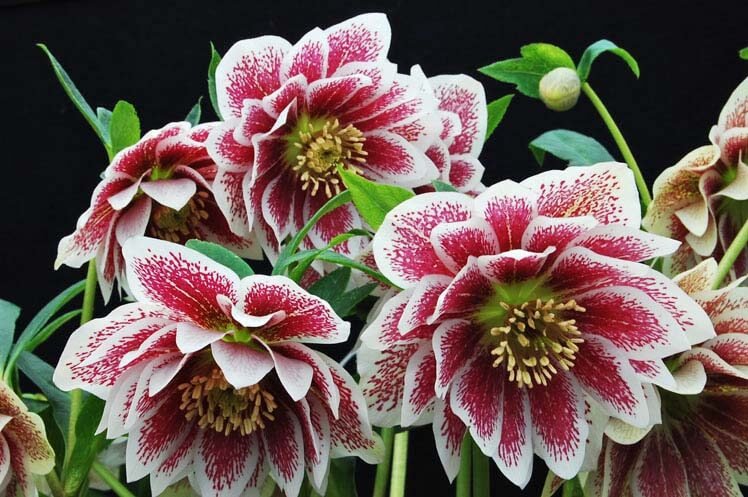
If you want something that blooms when there is still snow on the ground, you need Hellebores, also known as Lenten Roses. They have leathery, evergreen leaves that are tough as nails. Deer hate the texture and the taste. They are one of the first things to wake up in my garden, sometimes as early as February, and they stay green all year long.
I’m obsessed with the ‘Ivory Prince’ variety. It has upward-facing flowers, which is a big deal because most Hellebores have flowers that face the ground, meaning you have to get on your hands and knees to actually see the “face” of the bloom. I once spent twenty minutes trying to take a photo of a downward-facing variety and ended up with a face full of mulch. Pick the upward-facing types for your sanity.
One “Real Talk” tip: the old leaves from last year will look pretty ragged by late winter. They get brown spots and start to flop. I always take my shears and cut the old foliage completely off right when the new flower buds start to poke out of the ground. It makes the plant look a thousand times cleaner and prevents disease from spreading to the new growth.
Hellebores are slow growers. Don’t expect a tiny four-inch pot to fill a whole space in one season. It takes about three years for them to really “clump up” and look impressive. But once they do, they are basically immortal. I’ve never seen a pest touch them, and they don’t mind the dry shade under big trees where nothing else will grow.
6. Ornamental Alliums (Allium) for Unique Shapes
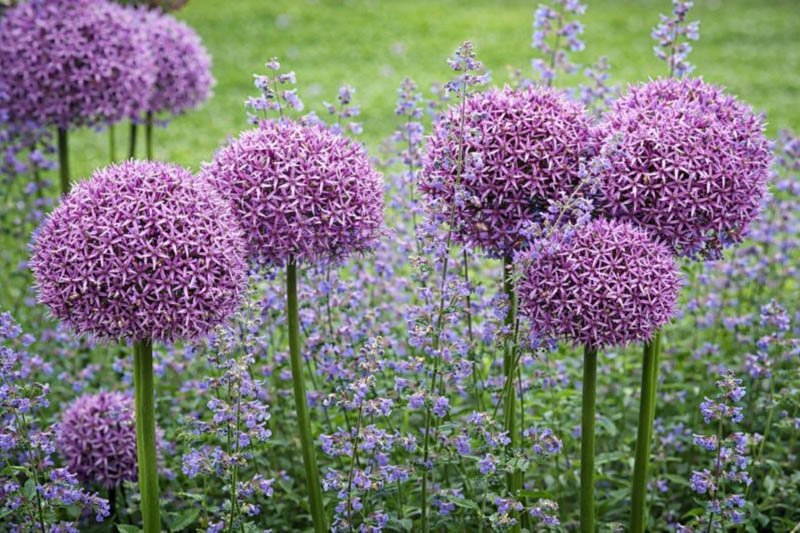
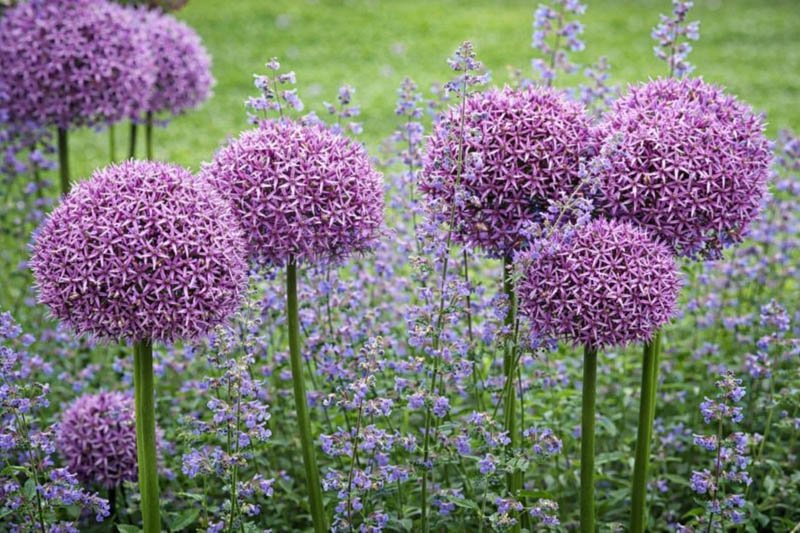
Alliums are basically fancy onions that happen to have giant purple lollipop flowers. Since they are in the onion family, they smell and taste like… well, onions. Deer and rabbits hate them. I’ve found that planting these bulbs in the middle of a “tasty” bed can actually help protect the other plants. It’s like putting a “Do Not Enter” sign in the middle of the buffet.
I love the giant varieties like ‘Globemaster’ or ‘Ambassador.’ They can get as big as a volleyball. I once planted a dozen of these along my front walkway, and the neighborhood kids thought I’d planted purple Truffula trees from Dr. Seuss. They add a weird, architectural vibe that you just don’t get from other flowers.
The only downside to Alliums is that their leaves start to turn brown and ugly before the flower even finishes blooming. It’s a design flaw, honestly. I’ve found that the best way to handle this is to plant them behind something that will hide the yellowing leaves, like catmint or hardy geraniums. You want the “ball” of the flower to look like it’s floating above the other plants.
Don’t cut the flower heads off when they turn brown! Dead Alliums look like cool, dried starbursts. I often spray paint them gold or silver while they are still in the ground to add some weird “art” to the garden in late summer. Or, you can just leave them natural—the birds actually like to perch on the stems. They are a “two-for-one” plant: great when they’re alive and still pretty when they’re dead.
7. Catmint (Nepeta) for Long-Lasting Blue Tones
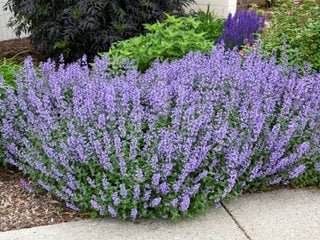
If you want a plant that blooms from May until October and requires zero effort, buy Catmint. It’s in the mint family, so it has that herbal scent that deer find offensive. It creates a soft, hazy mound of blue-purple flowers that looks like lavender but is much easier to grow. I’ve found that it’s the best “filler” plant for the front of a flower bed.
I’m a big fan of ‘Walker’s Low.’ Despite the name, it actually gets about two feet tall and three feet wide. I once planted it too close to my sidewalk and it eventually “ate” the path, forcing guests to walk through the grass. Give it room to spread. It’s also a magnet for bees and butterflies. My backyard sounds like a tiny airport in July because of all the pollinators hovering over the catmint.
A quick “pro” tip: when the first wave of flowers starts to look ragged in July, take your hedge shears and chop the whole plant back by half. I know it feels like you’re killing it, but I promise it will grow back and re-bloom in about two weeks. If you don’t shear it, it gets “floppy” and looks like a cat sat in the middle of it (which, to be fair, might actually happen if you have cats).
Don’t confuse this with Catnip. Catnip is a weedier, uglier cousin that will actually attract every neighborhood cat to your yard to roll around and act crazy. Catmint is the “civilized” version. It’s tidy, it’s beautiful, and it stays in a nice clump. It’s one of the few plants I’d recommend to someone who says they “kill everything.”
8. Russian Sage (Salvia yangii) for Heat Tolerance
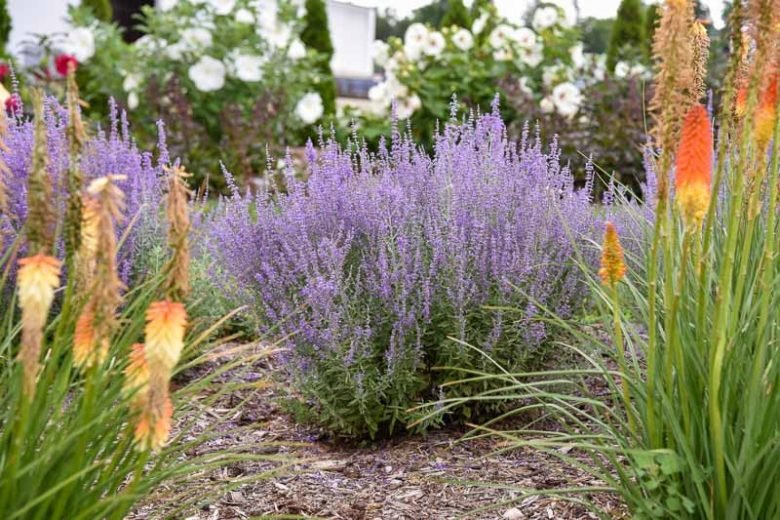
Russian Sage is for that one spot in your yard where the sun is brutal, the soil is dry, and nothing else survives. It has silvery-white stems and airy blue flowers. Deer don’t like it because the leaves have a very strong, pungent smell when brushed—kind of like a cross between sage and gasoline. It’s a great “structural” plant for the middle of a bed.
I’ve found that people often make the mistake of not pruning this enough. If you don’t cut it back hard in the spring, it gets very woody and starts to fall over. I cut mine down to about six inches every March. It feels aggressive, but by June, it’s three feet tall and standing perfectly straight. I once left mine unpruned for two years, and it ended up looking like a pile of grey driftwood.
This plant needs full sun. If you put it in the shade, it will reach for the light and get “leggy” and sad. It also doesn’t need any fertilizer. In fact, if you give it too much “good” soil, it gets lazy and flops over. It thrives on neglect. I have a patch of it next to my gravel driveway that I haven’t watered in years, and it’s the healthiest plant on the property.
One quick side note: the ‘Denim ‘n Lace’ variety is a total game changer. It stays much shorter and more compact than the older types. If you have a smaller suburban yard, go for the newer, smaller varieties so you aren’t constantly fighting a five-foot-tall silver bush that’s trying to swallow your mailbox.
9. Bee Balm (Monarda) for Hummingbirds
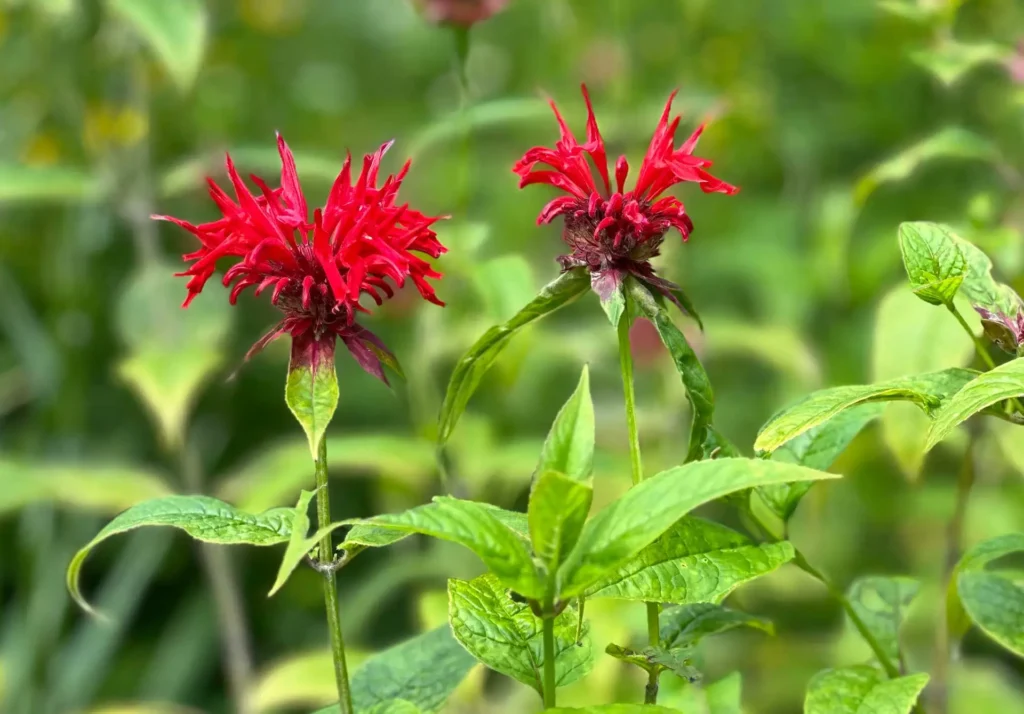
If you want to see hummingbirds in your yard, you need Bee Balm. It has these wild, shaggy-looking flowers that look like something out of a 1980s hair-metal band. Deer avoid it because it’s in the mint family and has a very strong, spicy scent. I’ve found that the red varieties like ‘Jacob Cline’ are the best for attracting birds.
The “Real Talk” with Bee Balm is powdery mildew. It’s a white, dusty-looking fungus that covers the leaves and makes the plant look like it’s been dipped in flour. It usually happens in late summer when it’s humid. I’ve found that the best way to prevent this is to give the plant plenty of space for airflow. Don’t jam it into a corner. I also look specifically for “mildew-resistant” varieties at the nursery.
Bee Balm likes to “travel.” It spreads through underground runners, and if you aren’t careful, a small clump will turn into a three-foot patch in a couple of years. I don’t mind it because it’s easy to pull out where you don’t want it, but if you’re a “tidy” gardener who wants everything to stay in its assigned seat, this might drive you crazy.
I love the way it smells. If you crush a leaf between your fingers, it smells exactly like Earl Grey tea (that’s the bergamot scent). I often plant it near a bench or a porch so I can catch the scent when I’m sitting outside. It’s a tough, native plant that does a lot of work for the ecosystem while keeping the deer at bay.
10. Lamb’s Ear (Stachys byzantina) for Soft Texture
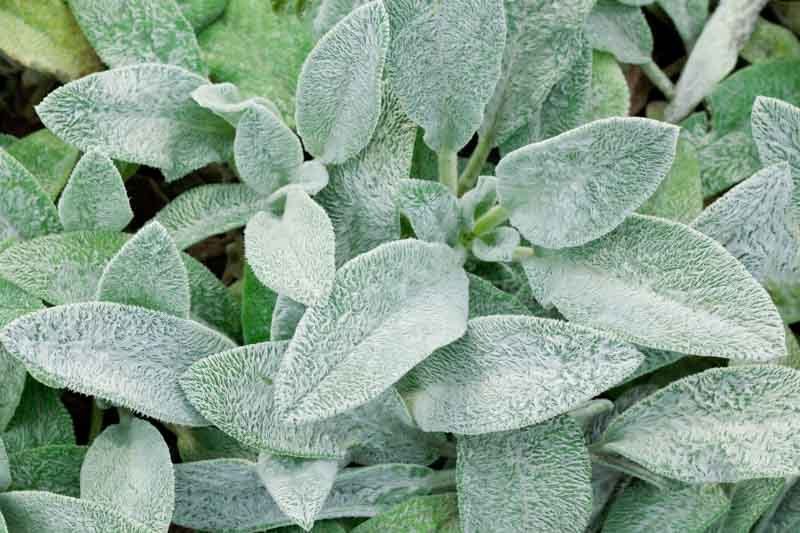
Lamb’s Ear is the only plant on this list that I’d recommend for its “touchability.” The leaves are covered in thick, silvery-white fur that feels exactly like a lamb’s ear (or a very soft puppy). Deer hate the “fuzzy” texture in their mouths. It’s like us trying to eat a sweater—it’s just not happening. It makes a fantastic low-growing border or groundcover.
I’m very opinionated about the “flowering” part of Lamb’s Ear. Most varieties send up tall, weird-looking flower stalks that eventually fall over and look messy. I’ve found that the variety ‘Helen von Stein’ is a total waste of time if you want flowers, but it’s perfect if you want leaves. It has massive, giant leaves and rarely blooms, which keeps the plant looking tidy all summer long.
Avoid “wet” spots for this one. Because the leaves are so fuzzy, they trap moisture. If they stay wet for too long, they will rot and turn into a black, slimy mess. I’ve found that it’s best to water this plant from the bottom, right at the soil level, rather than spraying the leaves with a hose. I once lost a whole border of Lamb’s Ear during a particularly rainy June because the “fur” never had a chance to dry out.
It’s a great plant for kids. My grandkids love to go out and “pet” the plants. It’s a nice way to get them interested in the garden without worrying about them getting poked by a rose thorn. Just make sure you plant it in a sunny, well-drained spot, and it will spread into a beautiful silver carpet that the deer will leave completely alone.
11. Spirea (Spiraea) for Flowering Shrubs
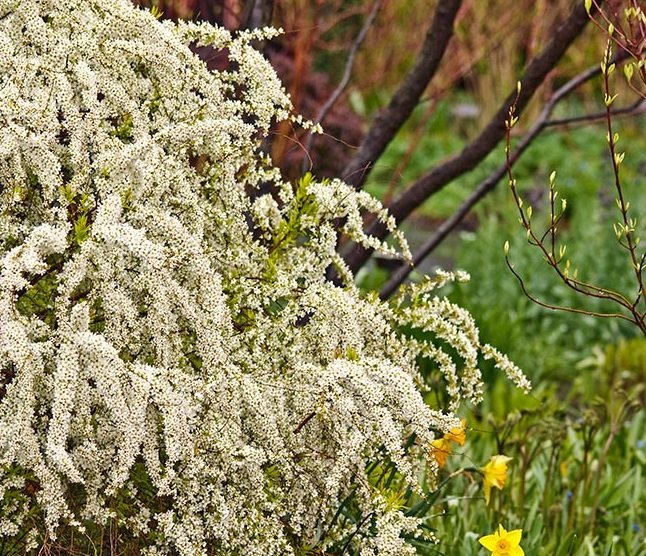
If you need a shrub that isn’t a boxwood or a holly, Spirea is a solid choice. It’s a deciduous shrub (meaning it drops its leaves in winter) that produces clusters of tiny pink or white flowers. For some reason, deer just don’t find it tasty. I’ve seen them eat the burning bush and the azaleas right next to a spirea, but they never touch the spirea.
I’m a huge fan of the ‘Goldflame’ or ‘Double Play Gold’ varieties. They have bright yellow-green leaves that add a “pop” to the garden even when the flowers aren’t in bloom. I once tried to use these to hide a load-bearing stud I’d accidentally knocked out during a “quick” porch repair (long story), and while they didn’t fix the porch, they did a great job of distracting the building inspector.
Pruning is the key to keeping these looking good. If you don’t prune them, they turn into a “twiggy” mess with a lot of dead wood in the center. I like to give them a “renewal” pruning every few years, where I cut the oldest branches all the way to the ground. This encourages new, vibrant growth from the base.
They are incredibly hardy. I’ve seen them survive in parking lot islands and highway medians. If they can handle the salt and the heat of a highway, they can definitely handle your backyard. They aren’t “showstoppers” like a hydrangea, but they are reliable, hardworking plants that won’t get eaten.
12. Butterfly Bush (Buddleia) for Late Summer Color
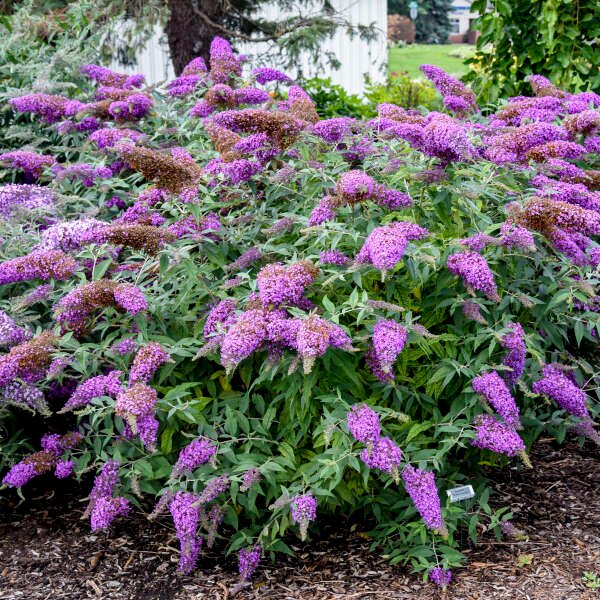
The Butterfly Bush is exactly what it sounds like: a magnet for every butterfly in the county. It has long, cone-shaped flower clusters that smell like honey. Deer usually avoid them because the foliage is a bit fuzzy and has a bitter taste. I’ve found that they are the best way to get “height” in a sunny bed without building a fence.
I’ve found that “Pugster” or “Lo & Behold” varieties are much better for modern yards. The old-fashioned Butterfly Bushes could get ten feet tall and very “weedy” looking. These newer dwarf versions stay around two or three feet tall but still have giant flowers. I once planted an old-school variety near my back door, and within three years, I had to use a machete just to get to the grill. Stick to the dwarfs.
One “Real Talk” warning: these plants are considered “invasive” in some parts of the country because they spread seeds everywhere. I always look for the “sterile” varieties that don’t produce seeds. It’s better for the environment and it saves you from pulling up a thousand baby bushes the following spring.
Be patient in the spring! Butterfly Bushes are “late sleepers.” Mine usually don’t show any green until almost June, long after everything else has leaves. I’ve seen many people dig them up thinking they died over the winter, only to realize too late that the stems were still green inside. Give them until the end of May before you give up on them.
13. Ferns (Various) for Lush Greenery
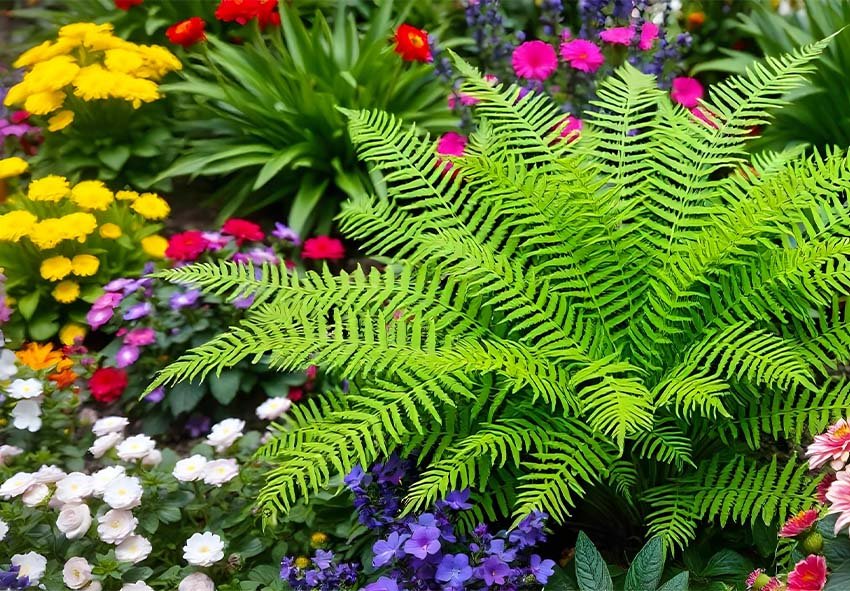
If you have a damp, shady area, ferns are your best friend. Most ferns are completely deer-proof because they have a high tannin content that makes them taste terrible. They add a lush, “prehistoric” feel to the garden that you can’t get from anything else. From the giant Ostrich Fern to the delicate Maidenhair, there is a fern for every shady spot.
I’m very opinionated about “Ostrich Ferns.” They are stunning, but they spread like crazy. If you give them a moist spot, they will take over your entire shade garden. I used them to fill a “dead” space under my deck, and now I have a literal forest of five-foot-tall ferns. If you have a small space, go with “Japanese Painted Ferns” instead—they stay in a tidy clump and have beautiful silver and purple fronds.
Ferns need moisture. If they dry out, they turn into crispy brown skeletons in about ten minutes. I’ve found that mulching them with shredded leaves or pine bark is the best way to keep the soil damp. If you’re going through a drought, you’ve got to get out there with the hose. I once went on vacation during a heatwave and came home to a “fern cemetery.” It took them two years to recover.
In the spring, you’ll see the “fiddleheads” (the curled-up new leaves) poking out of the ground. It’s one of my favorite sights in the garden. Just be sure to cut off all the dead, brown fronds from last year before the new ones start to unfurl. It keeps the plant looking fresh and prevents slugs from hiding in the old debris.
Real Talk: The “Deer Resistant” Lie
I’m going to be honest with you: “Deer Resistant” does not mean “Deer Proof.” If a deer is hungry enough—usually in a very cold winter or a very dry summer—they will eat a plastic lawn chair if they have to. I’ve seen deer eat prickly hollies and fuzzy lamb’s ear when they were truly desperate.
I’ve found that those “deer repellent” sprays are a total waste of money if you only apply them once. You have to be relentless. You’ve got to spray after every rain, and you’ve got to switch brands every few weeks so the deer don’t get used to the smell. I once spent $100 on a giant gallon of “Rotten Egg” spray, and after a week, the deer just learned to hold their breath while they ate my azaleas.
The best strategy is “diversity.” Don’t plant twenty of the same thing. If you have a mix of scents, textures, and heights, the deer are less likely to settle in for a long meal. They like a “predictable” buffet. If you keep them guessing with aromatic herbs and fuzzy leaves, they’ll usually move on to your neighbor’s yard (sorry, Dave).
And please, stop feeding them. I know they’re cute, but if you put out corn or salt licks, you are basically inviting them to stay for the night and browse your flower beds for “dessert.” If you want to see wildlife, get a bird feeder. If you want a garden, treat the deer like the beautiful, hungry pests they are.
Parting Shot!
At the end of the day, gardening is about trial and error. You’re going to lose a few plants along the way—that’s just part of the deal. But if you start with these thirteen, you’re giving yourself a fighting chance against the “local residents.”
What’s the one plant in your yard that the deer just won’t leave alone, and are you brave enough to rip it out and replace it with something they hate? Drop a comment below and let’s swap some battle stories!

About Syprose Kiche
Syprose Kiche is the creator and writer behind My Besuited Home, a practical home and garden website covering DIY projects, gardening, lawn care, landscaping, home improvement, and outdoor living. She focuses on turning everyday homeowner questions into clear, practical guides backed by careful research and useful real-world considerations.