
Most gardens look like a crime scene once the first hard frost hits. Everything turns a depressing shade of “dead brown,” and suddenly your yard feels as exposed as a plucked chicken. If you can see straight through your property line into your neighbor’s messy garage the moment November rolls around, you’ve got a structural problem. You’re missing the “bones” of the garden—the greenery that doesn’t quit when the thermometer drops.
I remember the year I got a little too excited about “perennial meadows.” It looked like a dream in July, but by January, my front yard looked like a discarded pile of hay. My wife told me the house looked abandoned. I’ve learned that for every “pretty” seasonal flower you plant, you need a solid, reliable evergreen to hold the fort. I’ve killed enough “hardy” plants to know which ones actually survive a real winter and which ones are just expensive compost. Let’s get some color back into your winter wasteland.
1. Boxwood Shrubs for Formal Edging
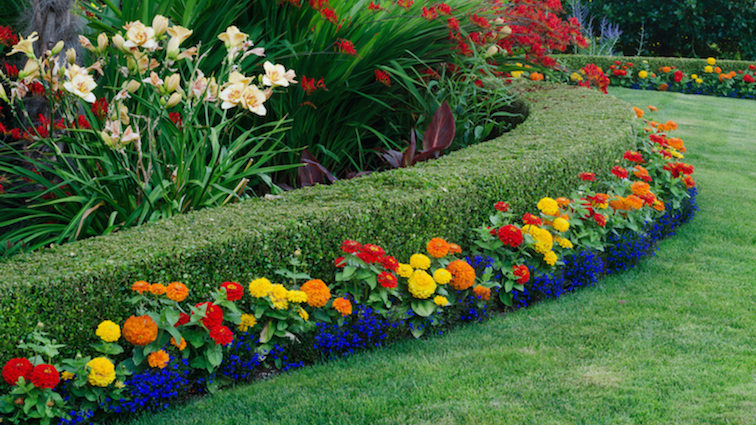
Boxwoods are the undisputed champions of the “structured” garden. If you want those crisp, clean lines that make a house look expensive, this is your plant. They are the ultimate “set it and forget it” shrub for borders, provided you don’t buy the cheapest ones at the big-box store that smell like cat pee. (Yes, English Boxwoods can actually smell like that—I found out the hard way before a garden party.)
I’ve found that the ‘Green Velvet’ or ‘Winter Gem’ varieties are the best for most backyards. They hold their green color through the biting wind, whereas other types can turn a sickly orange-bronze when it gets too cold. I use them to frame my walkway, so even when there’s six inches of snow, I can still see where the path is supposed to be. They grow slow, which is a blessing because you aren’t out there pruning every single weekend.
The mistake people make is planting them too close together. They look like cute little meatballs when you buy them in a one-gallon pot, but they need room to breathe. If you jam them together to get an “instant” hedge, you’re just inviting root rot and fungal issues. Give them at least two to three feet of space. I once ignored this advice and ended up with a solid wall of dead, brown sticks because the middle of the hedge couldn’t get any airflow.
When it comes to maintenance, just give them a light “haircut” in late spring. Don’t go crazy with the electric shears unless you want that stiff, plastic look. I prefer hand pruners to keep them looking natural but tidy. If you live in an area with heavy snow, try to shake the “hat” of snow off them after a storm so the branches don’t splay open and break.
2. Best Holly Varieties for Winter Berries
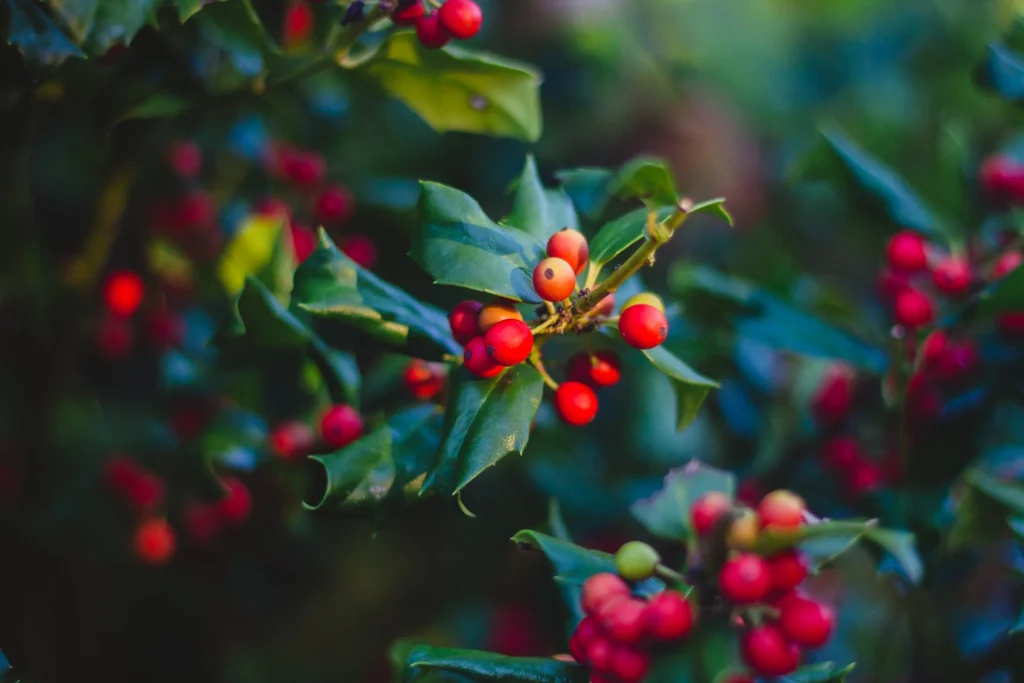
Hollies are the overachievers of the winter garden. They give you that deep, glossy green foliage, and if you play your cards right, you get bright red berries that make your yard look like a Christmas card. But here’s the thing: most hollies are “dioecious,” which is a fancy way of saying you need a male plant and a female plant if you want those berries. I spent three years wondering why my ‘Blue Princess’ holly was barren before I realized she needed a ‘Blue Prince’ within shouting distance.
For a mid-sized shrub, I love the ‘Blue Maid’ or ‘Blue Princess.’ They have a slightly bluish tint to the leaves that looks incredible against a white house. If you want something that grows tall and skinny to hide a neighbor’s ugly fence, look for ‘Sky Pencil’ holly. It grows straight up like a green pillar. I put three of them next to my carport to block the view of my neighbor’s “project truck” that hasn’t moved since 2012.
Be careful where you plant these. Those leaves are sharp. Don’t put a prickly holly right next to a narrow walkway where it’s going to snag your sweater or poke your guests. I’ve found that placing them a few feet back from the path acts as a great “keep off the grass” deterrent for the neighborhood kids, though. It’s functional landscaping at its finest.
Hollies are tough, but they hate “wet feet.” If you plant them in a spot where water sits after a rain, they will drop their leaves faster than a politician drops a campaign promise. Ensure your soil drains well. I like to mulch mine with pine needles or acidic bark to keep the soil pH exactly where they like it.
3. Winter Creeper for Ground Cover and Walls
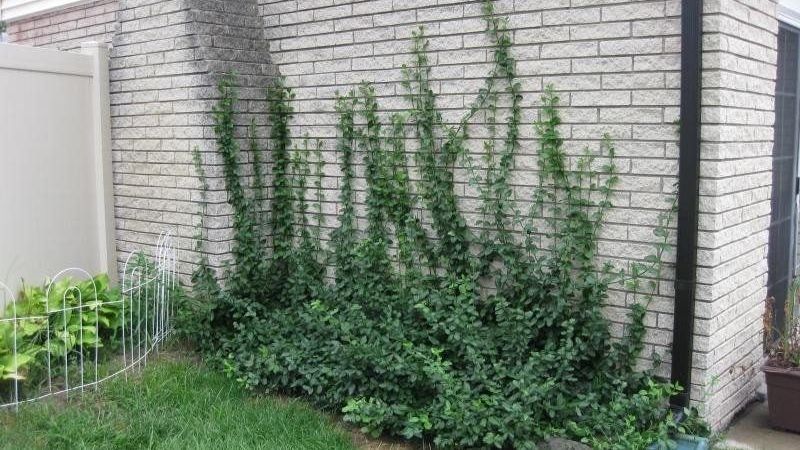
The name “Winter Creeper” (Euonymus fortunei) sounds like a bad horror movie, but it’s actually one of the most versatile evergreens you can own. It can be a low-growing ground cover, or it can climb a wall if you give it something to grab. I’m partial to the variegated versions like ‘Emerald ‘n Gold.’ In the middle of a gray winter, those yellow-and-green leaves look like sunshine on the ground.
I’ve found that this plant is nearly impossible to kill. I once accidentally ran over a patch of it with my mower deck set too low, and it bounced back within a month. It’s perfect for those “problem areas” where grass refuses to grow, like under a large tree or on a steep slope. It knits the soil together so well that you’ll never have to worry about erosion again.
One warning: it can be a bit of a bully. If you don’t keep an eye on it, it will start climbing up your trees or into your siding. It’s not as destructive as Ivy, but it’s persistent. I spend about twenty minutes every autumn just trimming the edges back so it knows who is boss. If you let it go for three years, you’ll need a machete to find your porch again.
In the winter, the leaves often take on a pinkish or reddish hue, which is a neat trick. It’s like the plant is blushing from the cold. It adds a layer of color that most other evergreens can’t match. It’s a cheap way to fill a lot of space quickly, making it a “budget-friendly” hero for new homeowners.
4. Rhododendrons for Spring Blooms and Winter Green
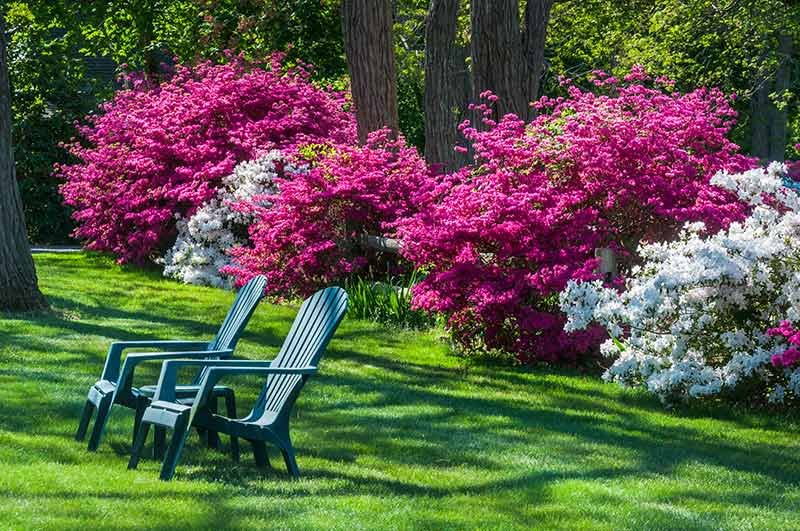
Rhododendrons are the “grand dames” of the garden. They have massive, leathery leaves that stay green all year, and then they explode into giant clusters of flowers in the spring. I’ve found that they are the perfect “cornerstone” plant for the front of the house. They have a presence that smaller shrubs just can’t match.
The funny thing about Rhodies is that they act like a thermometer. When it gets really cold—I’m talking below freezing—the leaves curl up into tight little cigars. The first time I saw this, I thought I’d killed my prize ‘PJM’ Rhododendron. I was out there in a parka trying to water it in the snow. Turns out, it’s just the plant’s way of protecting itself from moisture loss. As soon as it warms up, they pop right back open.
These plants love shade. If you put them in full, blistering afternoon sun, they will look scorched and sad. I keep mine on the north side of the house or under the canopy of some tall oaks. They also need acidic soil. If your Rhodie starts looking yellow with green veins, it’s telling you the soil is too alkaline. Throw down some elemental sulfur or use a fertilizer specifically for “acid-loving” plants.
I’m very opinionated about “pruning” Rhododendrons. Don’t do it unless you absolutely have to. They have a naturally beautiful, rounded shape. If you start hacking at them with shears, you’ll ruin the next year’s flower buds. If a branch is truly in the way, cut it back to a joint right after the flowers fade in late spring. Otherwise, just let them be “big and bold.”
5. Mountain Laurel for Native Beauty
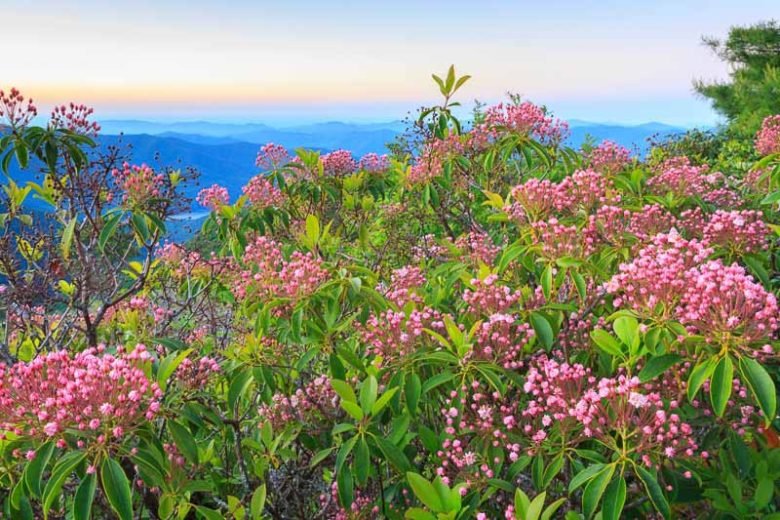
If you want something that feels a bit more “wild” and native, Mountain Laurel (Kalmia latifolia) is your best bet. It’s the state flower of Pennsylvania and Connecticut for a reason—it’s tough, beautiful, and thrives in the woods. The flowers look like little geometric origami bowls, and the evergreen leaves are thick and shiny.
I’ve found that Mountain Laurel is a bit fussier than a Boxwood, but it’s worth the extra effort. It hates “heavy” clay soil. If you have that thick, orange gunk for soil like I do, you need to plant it high—almost in a mound—and mix in a lot of compost and peat moss. I lost two of these to “root rot” before I realized they want to be treated like they’re living on a rocky mountainside, not a swamp.
There are some incredible new cultivars out there. ‘Olympic Fire’ has bright red buds that open into pink flowers, and ‘Minuet’ is a dwarf version that stays small enough for a tiny patio garden. They are slow growers, so buy the biggest one you can afford. This isn’t a plant where you want to wait ten years for it to “fill in.”
In the winter, the gnarled, twisty branches of an older Mountain Laurel add a lot of “character” to the garden. It looks like a piece of living art. I like to light mine from below with a small LED spotlight. The way the light hits those shiny leaves and the textured bark makes the whole yard look like a high-end estate.
6. Dwarf Conifers for Year-Round Texture
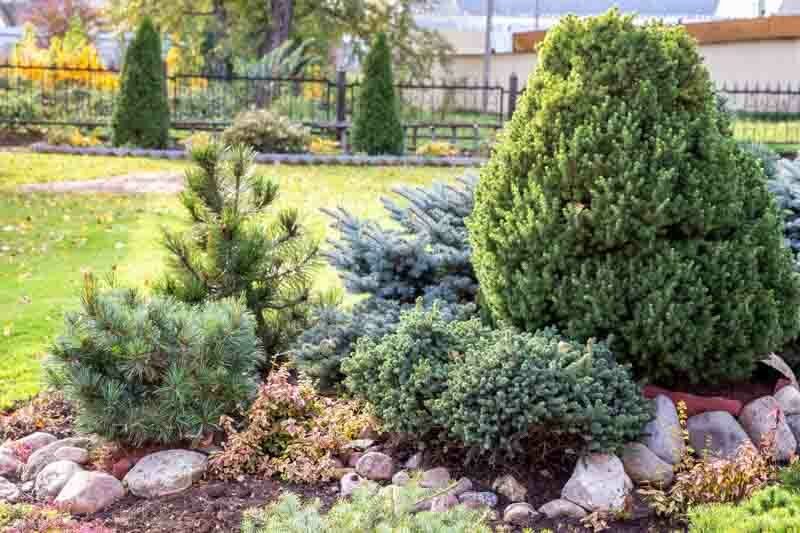
Don’t overlook the “miniature” versions of big trees. Dwarf Alberta Spruce or Bird’s Nest Spruce are fantastic for adding a different texture to your shrub beds. Most evergreens have broad leaves, so adding the “needle” texture of a conifer makes the whole garden look more professional. It’s that “contrast” that Pinterest designers are always talking about.
Dwarf Alberta Spruce grows in a perfect cone shape without you ever touching it. It’s like a permanent, tiny Christmas tree. I have two of them flanking my front door. In December, I wrap them in tiny white lights, and in July, they just look like cool, architectural green points. They are very slow growers—maybe an inch a year—so they won’t outgrow their space for a long time.
One “Real Talk” warning: Spider mites love these things. If you notice your spruce starting to turn brown on one side, give it a shake over a white piece of paper. If you see tiny specks crawling around, you’ve got mites. I’ve found that a strong blast of water from the hose every week is usually enough to knock them off without using nasty chemicals.
Bird’s Nest Spruce is another favorite. It stays low and flat with a little “dip” in the middle that looks exactly like—you guessed it—a bird’s nest. It’s a great way to fill in the space in front of taller shrubs. It’s incredibly hardy and can handle the salt from the driveway if you live in a place where they pretreat the roads for ice.
7. Juniper Shrubs for Bulletproof Landscaping
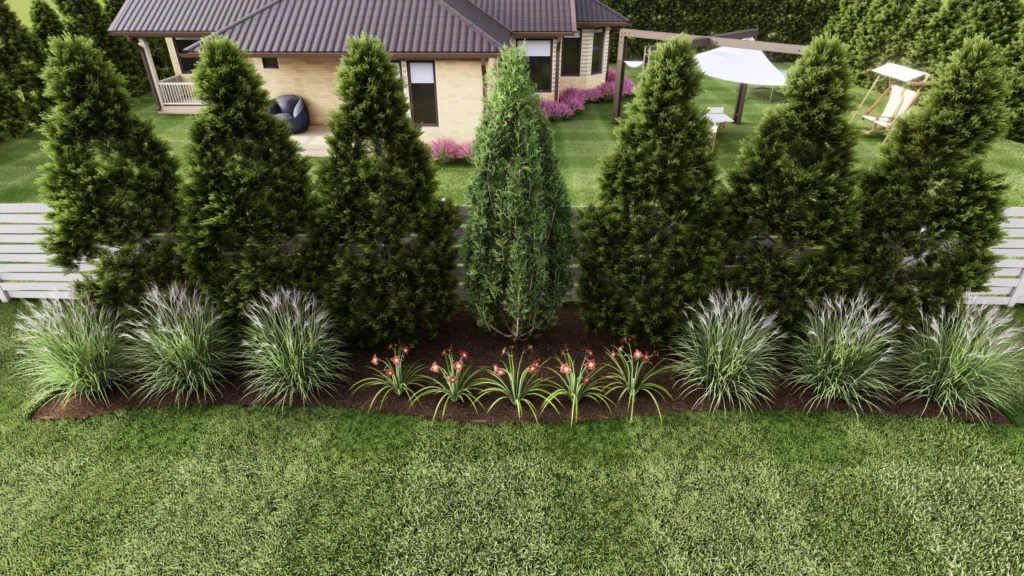
If you have a spot that is hot, dry, and has terrible soil, plant a Juniper. These things are the tanks of the plant world. They can handle drought, wind, and salt spray better than almost anything else. I’ve found that Junipers are the best choice for those “strip” gardens between the sidewalk and the street.
I’m a fan of ‘Blue Star’ Juniper for its color. It’s a low-growing mound of silvery-blue needles that looks amazing next to purple-leafed plants. If you need something taller, ‘Spartan’ or ‘Blue Point’ Junipers make great privacy screens. They have a bit of a “Mediterranean” vibe that can make a boring backyard feel a bit more exotic.
The only downside to Junipers is that they can be “scratchy.” Wearing short sleeves while pruning a Juniper is a mistake you only make once. Your arms will be itchy for hours. Also, they have a distinct scent—some people love it (it smells like gin), and some people hate it. I personally love it, especially after a summer rain.
Don’t overwater them. Seriously. If you put a Juniper on an automatic irrigation system that runs every day, you’re going to kill it. They want to dry out between waterings. I’ve found that the more I ignore my Junipers, the better they do. It’s the perfect plant for the “lazy” gardener.
8. Pieris Japonica (Andromeda) for Early Interest
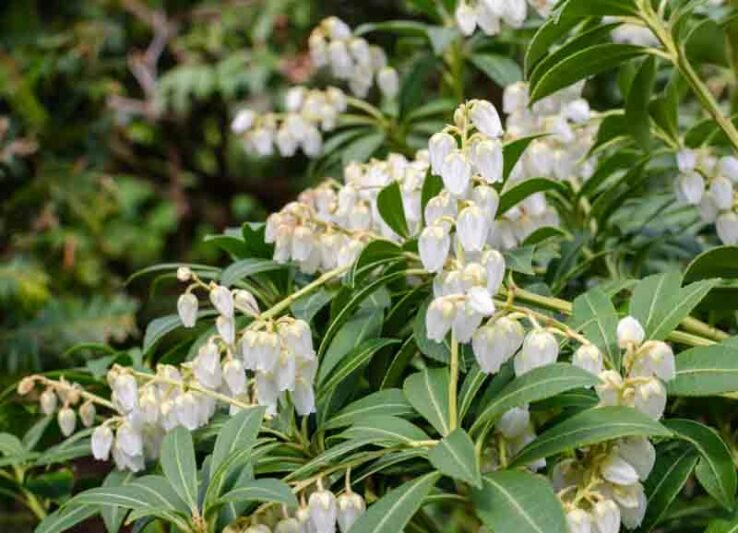
Pieris is one of those plants that looks like it should be hard to grow, but it’s actually quite easy. It’s often called “Andromeda,” and it has these long, drooping clusters of bell-shaped flowers that appear very early in the spring—sometimes while there’s still snow on the ground. The new leaf growth is often a bright, flaming red before it turns to dark green.
I’ve found that ‘Mountain Fire’ is the best variety for that red foliage pop. In the winter, the flower buds are already formed and hang from the branches like tiny beads. It gives you something to look at during those bleak February days when you’re craving spring. It’s like a little promise that the garden is still alive.
These shrubs prefer the same conditions as Rhododendrons: acidic soil and partial shade. I once tried to plant one in a sunny, limestone-heavy spot near my foundation, and it turned yellow and died within a season. Learn from my $40 mistake—give them some afternoon shade and some peat moss in the planting hole.
They are relatively “deer resistant,” too. In my neighborhood, the deer eat almost anything that isn’t made of plastic, but they usually leave my Pieris alone. They might take a nibble if they are starving, but it’s not their first choice. If you’re tired of the local wildlife treating your garden like a buffet, this is a solid pick.
9. Camellias for Winter Blooms in the South
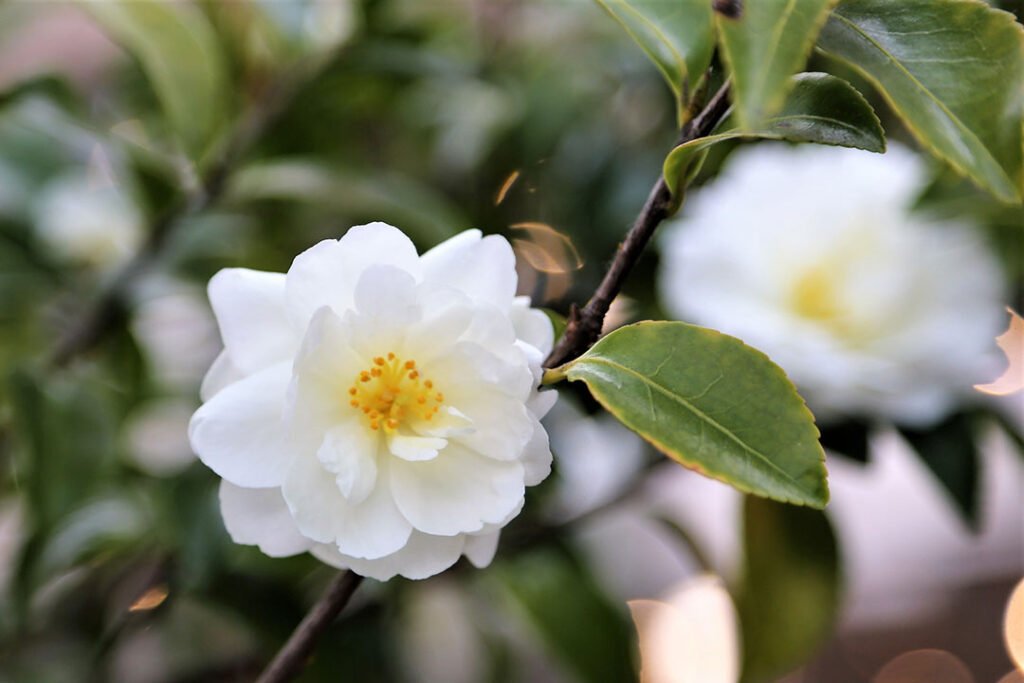
If you live in a slightly warmer climate (Zone 7 or higher), you absolutely need Camellias. They are the “Roses of Winter.” While everything else is dormant, Camellias are putting on a show with massive, ruffled flowers that look like they belong in a ballroom.
There are two main types: Camellia sasanqua (which blooms in the fall) and Camellia japonica (which blooms in late winter/early spring). I’ve found that having both extends your “color season” by months. I have a ‘Yuletide’ Sasanqua that blooms bright red with yellow centers right around December, and it’s a showstopper.
They like “dappled” shade. If you put them in deep, dark shade, they won’t bloom well. If you put them in full sun, the leaves will get yellow and scorched. I found the perfect spot for mine under a pine tree—the pine needles keep the soil acidic, and the “filtered” light is exactly what they crave.
The biggest “Real Talk” tip for Camellias is to watch out for “bud drop.” If the soil gets too dry while the buds are forming, the plant will just drop them all on the ground before they open. It’s heartbreaking. Even in the winter, if you have a long dry spell, give your Camellias a good soak. They’ll thank you with flowers.
10. Yew Shrubs for the Darkest Corners
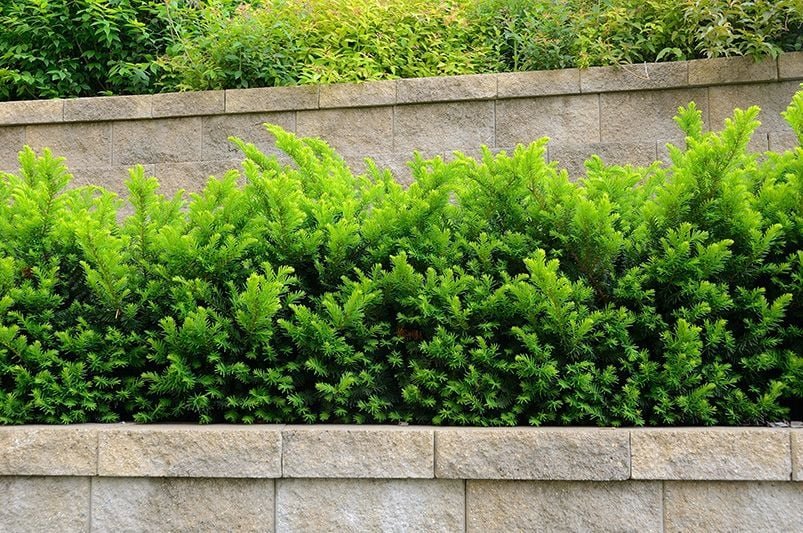
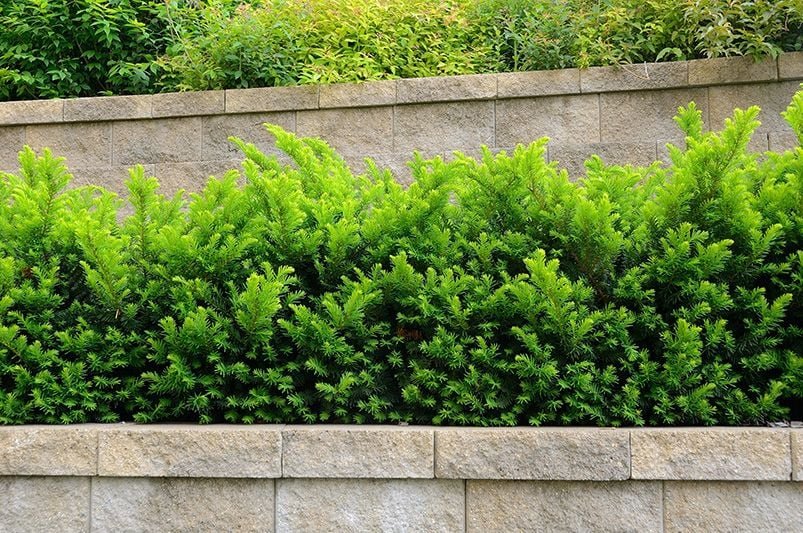
Yews (Taxus) are the “goth” kids of the evergreen world. They love the shade. In fact, they can grow in spots where almost nothing else will survive. They have dark, soft needles and produces bright red berries (which are toxic, so keep the kids and dogs away).
I’ve found that Yews are the most “resilient” plants for heavy pruning. You can cut a Yew back to bare wood, and it will actually sprout new green needles. You can’t do that with a Juniper or a Pine—if you cut those back to the “dead zone” in the middle, they stay dead. This makes Yews the best choice for topiary or for people who are “pruning-challenged.”
‘Hicks’ Yew is my go-to for a tall, narrow hedge. It stays skinny and upright, making it perfect for hiding a utility box or a blank wall. If you want something lower, ‘Densiformis’ Yew is a great wide spreader. It’s a very “tidy” looking plant that makes the whole garden look well-maintained.
One thing to watch out for: Deer love Yews. To a deer, a Yew is basically a giant Snickers bar. If you have a high deer population and you don’t want to use repellent sprays every week, you might want to skip the Yew. I’ve seen a beautiful 6-foot Yew hedge turned into a row of naked sticks in a single night by a hungry family of deer.
11. Japanese Skimmia for Winter Fragrance
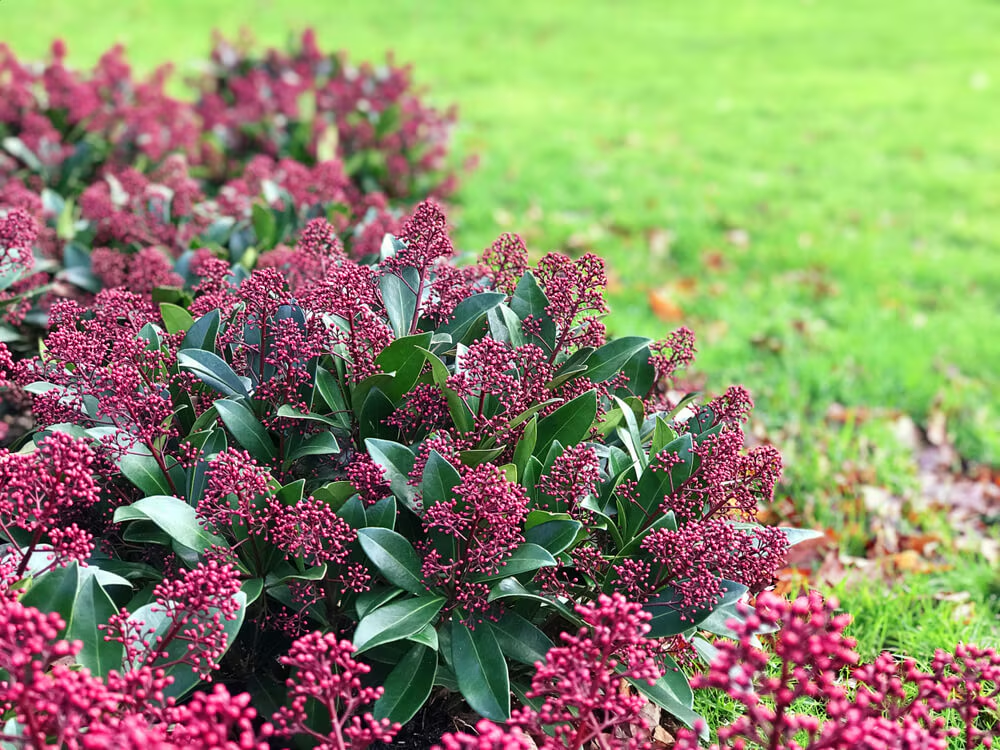
Skimmia is a “hidden gem” that more people should plant. It’s a low-growing evergreen shrub that has everything: shiny leaves, fragrant spring flowers, and bright red berries in the winter. Like the Holly, you need a male and a female to get the berries, but even the male plants are worth it for the huge, scented flower clusters.
I’ve found that Skimmia is the king of the “small space” evergreen. It doesn’t get huge, so it’s perfect for a container on the porch or a small bed near the front door. The scent of the flowers in the spring is incredible—it’s like a mix of orange blossom and jasmine. I keep one right by my back steps so I can smell it every time I take the trash out.
They absolutely hate the sun. If they get even a few hours of direct afternoon light, the leaves turn a pale, sickly yellow. They are true shade lovers. I have mine tucked under a heavy canopy of hostas and ferns. In the winter, when the perennials die back, the Skimmia takes center stage.
They are very slow-growing, which means you don’t have to do much work. No pruning, no fussing. Just keep them moist and in the shade. It’s a sophisticated-looking plant that makes people ask, “What is that?” It’s fun to have something in the garden that isn’t in every single yard on the block.
12. Firethorn (Pyracantha) for Security and Color
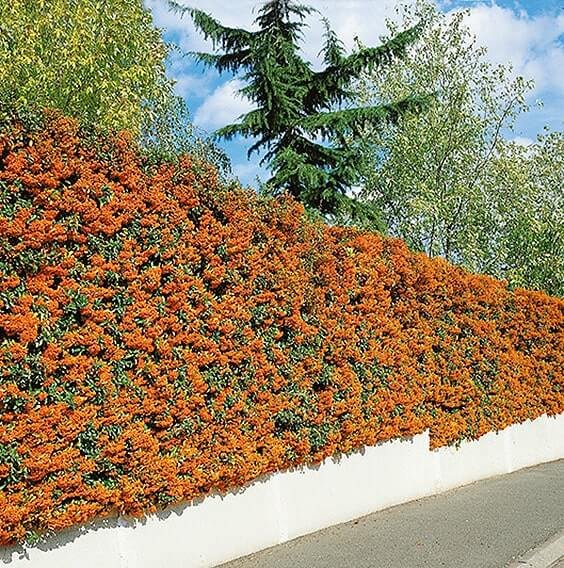
If you want a plant that says “don’t touch me” while looking absolutely beautiful, Firethorn is your winner. It has small evergreen leaves, but the real draw is the massive clusters of orange or red berries that cover the plant in the fall and winter. And the thorns? They are legendary.
I’ve found that Pyracantha is the best “security” plant you can buy. Plant this under a first-floor window, and I guarantee no one is climbing in there. I once got tangled in a Firethorn while trying to retrieve a lost frisbee, and I’m pretty sure I left a piece of my soul (and my favorite shirt) in those branches.
You can grow it as a messy, wild shrub, but I think it looks best when it’s “espaliered”—trained to grow flat against a wall or a fence. It looks incredibly high-end and saves a lot of space. The birds also love the berries, so it’s a great way to attract winter wildlife to your yard.
Be prepared for some “Real Talk” pruning. You have to stay on top of it, or it will become an unruly monster. And for the love of all that is holy, wear thick leather gloves when you trim it. Regular gardening gloves are no match for those thorns. If you’re willing to put in the work, though, there isn’t a plant that provides a more dramatic winter display.
13. Abelia for Multi-Season Interest
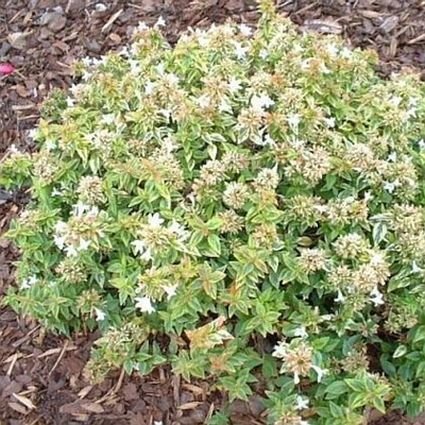
Abelia is a bit of a “sleeper” hit. It’s semi-evergreen, meaning it might drop some leaves in a really harsh winter, but in most years, it stays green (or bronze, or variegated) all year long. It has long, arching branches and produces tiny, bell-shaped flowers from mid-summer all the way into the fall.
I’ve found that ‘Kaleidoscope’ Abelia is the most fun variety to grow. The leaves change colors throughout the year—yellow, green, orange, and red. In the winter, it turns a deep, rich burgundy that looks fantastic against the tan of the dormant grass. It’s a tough plant that can handle a lot of different soil types.
It’s also great for pollinators. Butterflies and bees love the flowers. I’ve found that even though it’s a “shrub,” it has a very airy, graceful feel to it. It’s not a “heavy” block of green like a Boxwood. It’s great for softening the corners of a deck or a patio.
One side note: Abelia is very “vigorous.” You might find some long, spindly “water sprouts” shooting up from the center of the plant. Just snip those off to keep it looking tidy. It’s a very forgiving plant—you can’t really mess it up.
14. Inkberry Holly for a Native Alternative
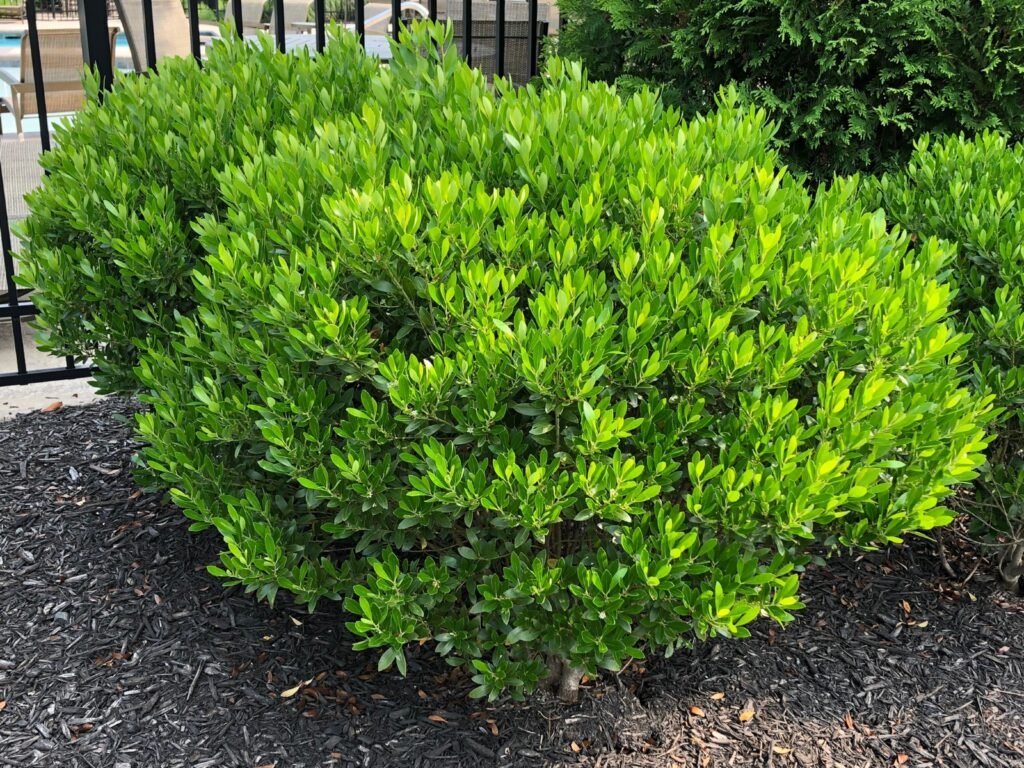
If you love the look of Boxwood but want to plant something native to North America, Inkberry (Ilex glabra) is your answer. It’s a type of holly, but it doesn’t have the prickly leaves. It has smooth, dark green foliage and produces small black berries (hence the name “Inkberry”).
I’ve found that ‘Shamrock’ or ‘Strongbox’ are the best varieties. Some of the older wild types can get “leggy”—meaning they lose their bottom leaves and look like they’re wearing high-water pants. The newer cultivars stay nice and bushy all the way to the ground.
Inkberry is incredibly tough. It can handle “wet feet” better than almost any other evergreen, so if you have a low spot in your yard that stays soggy, this is your plant. It’s a great “workhorse” for the garden. It might not be the flashiest plant on the list, but it’s one of the most reliable.
I use Inkberries to create a low hedge around my vegetable garden. It provides a green frame all winter long, and since it’s native, I know I’m helping out the local ecosystem. It’s a “win-win” for the gardener and the birds.
15. Osmanthus (False Holly) for Incredible Scent
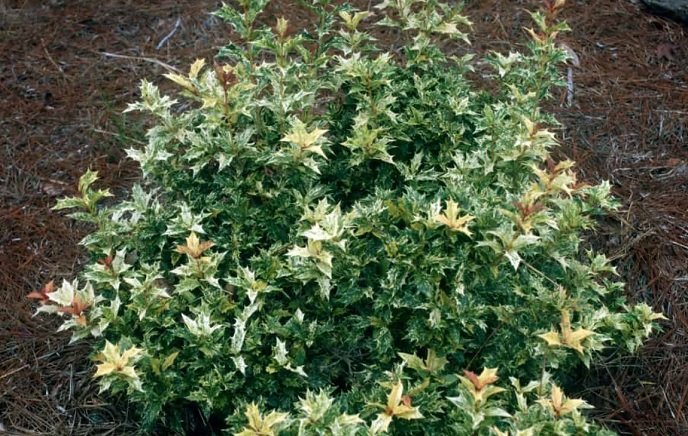
Last but not least, we have Osmanthus. It looks a lot like a holly, but the leaves are actually “opposite” on the stem rather than “alternate” (a little trivia for your next garden club meeting). The real reason to grow it, though, is the smell. The tiny white flowers smell like apricot or expensive perfume.
I’ve found that ‘Goshiki’ Osmanthus is a “total waste of money” if you want a fast hedge, but it’s a masterpiece if you want a focal point. Its name means “five colors,” and the variegated leaves are mottled with cream, pink, orange, and green. It’s one of the most beautiful foliage plants I’ve ever seen.
If you want a “privacy” version, go with ‘Fragrant Tea Olive.’ It grows larger and has a scent that will fill your entire backyard. I have one planted near my bedroom window, and on cool autumn nights, the smell is enough to make you never want to go inside.
It’s a tough, long-lived shrub that doesn’t suffer from many pests or diseases. It likes well-drained soil and partial sun. It’s a bit of a “slow starter,” but once it gets established, it’s bulletproof. It’s the kind of plant that gets better with age, just like a good pair of gardening boots.
Real Talk: What’s Not Worth the Effort
Before you go running to the nursery with your credit card, let’s talk about what can go wrong. First on my “Avoid” list: Leyland Cypress. I know, I know—everybody buys them because they grow three feet a year and provide an “instant” screen. But they are a total nightmare. They get too big, they are prone to diseases that turn them brown from the inside out, and they often blow over in high winds because their roots can’t keep up with their height. Don’t do it.
Also, be wary of “Winter Interest” plants that only look good in a catalog. Those “Red Twig Dogwoods” look amazing in a professional photo against a snowy background, but for nine months of the year, they just look like a bunch of messy sticks. If you don’t have the space for a plant that looks good 365 days a year, stick to the evergreens on this list.
And please, stop buying those “blue” Junipers and then trying to prune them into perfect spheres. It looks unnatural and it stresses the plant out. Pick a plant that grows in the shape you want. If you want a ball, buy a Boxwood. If you want a pillar, buy a Sky Pencil Holly. Don’t fight the plant’s natural “DNA”—you’ll lose every time, and you’ll have the sore wrists to prove it.
Parting Wisdom
Building a winter-proof garden isn’t about finding one “magic” plant; it’s about mixing textures, heights, and shades of green so your yard feels like a home even when the sun sets at 4:30 PM. Once you get these “bones” in place, the rest of the gardening year becomes a whole lot easier.
Which of these evergreens are you thinking about adding to your “winter survival” list, or do you have a favorite that I totally missed? Drop a comment below and let’s talk shop!

About Syprose Kiche
Syprose Kiche is the creator and writer behind My Besuited Home, a practical home and garden website covering DIY projects, gardening, lawn care, landscaping, home improvement, and outdoor living. She focuses on turning everyday homeowner questions into clear, practical guides backed by careful research and useful real-world considerations.