
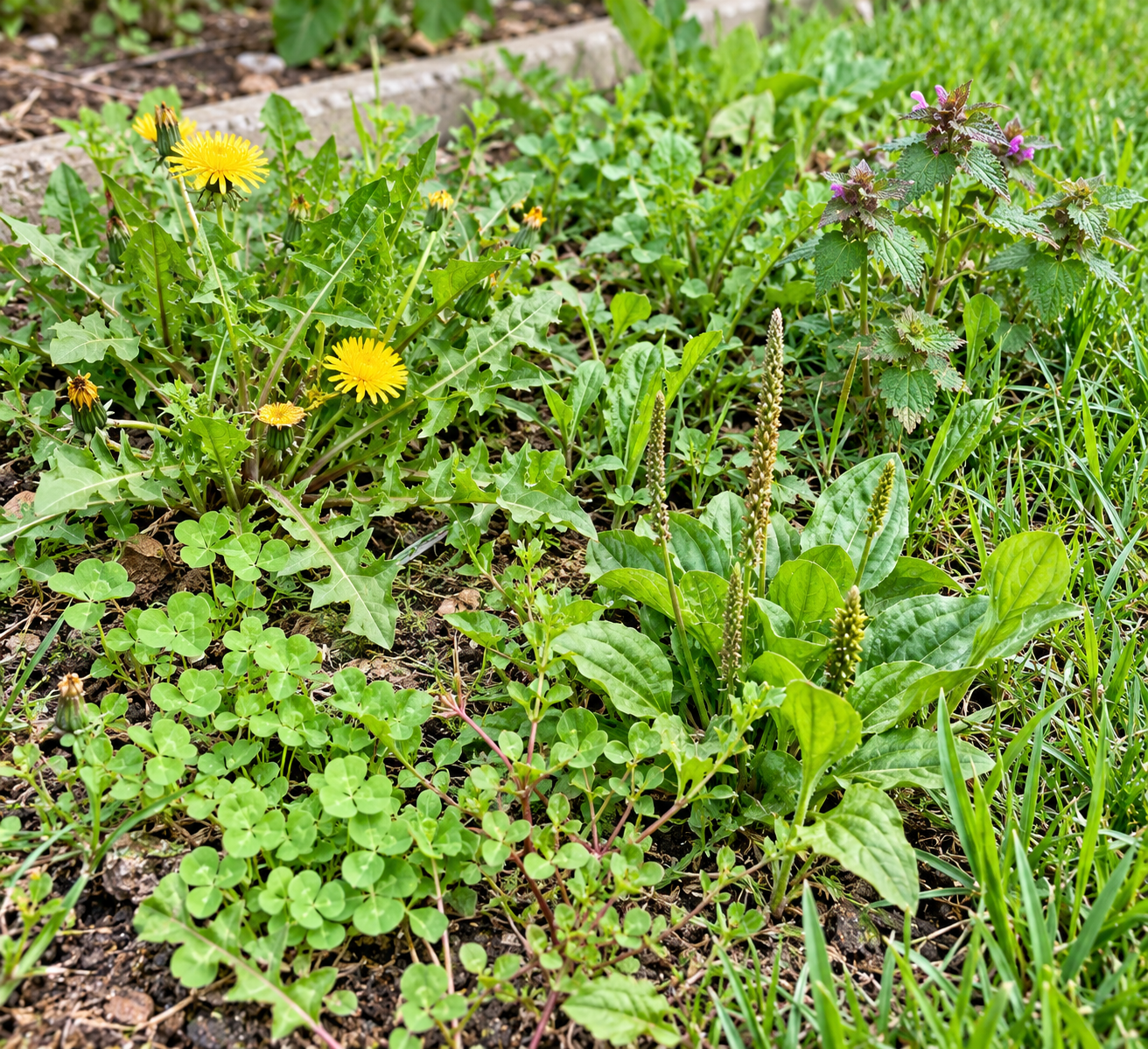
The leaves curl, turn tan, and go crisp by the next morning. The patch looks dead. Then, ten days to three weeks later, a green shoot pushes up from the exact same spot, often looking healthier than before.
That isn’t a failed batch of vinegar or bad luck. It’s what vinegar does, and what it can’t do. Once you know the difference, you can decide which weeds are worth spraying and which need a different approach.
What Vinegar Actually Does to a Weed
The active ingredient in vinegar is acetic acid. It’s a contact herbicide, meaning it damages the plant tissue it physically touches. It breaks down cell membranes, the leaf loses moisture, and the foliage dries out.
The limitation is that acetic acid doesn’t travel through the plant. Montana State University Extension describes it as a non-selective contact herbicide with no translocation to the roots and no soil residual activity. Whatever the spray doesn’t land on stays alive, and that includes the whole root system underground.
For a seedling, this works. A seedling is basically leaves and a thread of root, so killing the leaves kills the plant. A mature dandelion or thistle is different. Most of that plant is underground, with stored energy ready to push out new leaves. Burning the top off is closer to mowing than to killing.
Why Household Vinegar Rarely Finishes the Job
Standard grocery-store vinegar is about 5% acetic acid. Guidance based on university extension research puts it at young, shallow-rooted weeds, ideally within the first two weeks after they emerge. University of Maryland Extension frames the workable window similarly: 5 to 10% acetic acid gives viable control of very small weeds with only one or two leaves.
A weed that has had a few weeks of warm weather is past that window. Its leaves are bigger, its root is deeper, and a light spray of 5% vinegar will brown the surface and leave the plant functional underneath.
Even the stronger products have limits. Horticultural vinegar at 20% acetic acid will kill small annual weeds but has limited effect on larger ones, only kills some perennials, and doesn’t work well on grassy weeds. Results in the research vary. University of Illinois Extension notes that studies indicate 10 to 20% acetic acid gives 80 to 100% control, but extension sources also stress that this applies mainly to young plants. A bottle labeled “30% weed killer” is not the same as a systemic herbicide.
The Perennial Problem
Weeds fall into two broad groups here, and the difference explains most vinegar disappointment.
Annuals live one season. Crabgrass, chickweed, and many common garden weeds start from seed each year. If you kill the plant while it’s young, it’s finished. Vinegar can work on these.
Perennials survive from year to year by storing energy in roots, rhizomes, or tubers. Dandelion, Canada thistle, bindweed, quackgrass, plantain, and horsetail are the familiar ones. They’re built to lose their tops and come back.
The classic demonstration comes from Washington State University. In a trial, Canada thistle treated with 5% vinegar showed 100% shoot burndown, but the roots weren’t affected, so the shoots always regrew. A near-perfect kill of the visible plant can still mean no kill of the actual plant.
This is why vinegar can look more effective than it is. You judge success by what you can see, and the part you can see is the part vinegar kills.
Other Reasons They Return
Perennial roots account for most regrowth, but they aren’t the only reason.
- Seeds in the soil. Vinegar doesn’t affect weed seeds, and it leaves no residue to prevent new ones from germinating. A single weedy patch can hold years’ worth of seed. You kill what’s up, and the next flush of seedlings comes in behind it. This can feel like regrowth when it’s actually a second generation.
- Bare ground. Weeds are good at occupying empty soil. If the spot is bare after treatment, something will fill it. Browned weeds left standing can also shade the soil without improving anything.
- Rain right after spraying. Vinegar needs to stay on the leaf. One gardening source advises against applying it before watering or when rain is expected, since water breaks the acetic acid down. A light spray followed by a shower can leave the weed barely touched.
- Too little coverage. Contact herbicides only work where they land. Dense clumps of grass-type weeds and plants with waxy or hairy leaves shed or repel spray, so the center of the plant often survives.
- Heavy weeds in cracks and edges. Weeds growing from a crack in a driveway or patio often have a deep crown anchored below the surface. The top dies, and the crown pushes up again.
Which Weeds Are Worth Spraying
A practical way to decide:
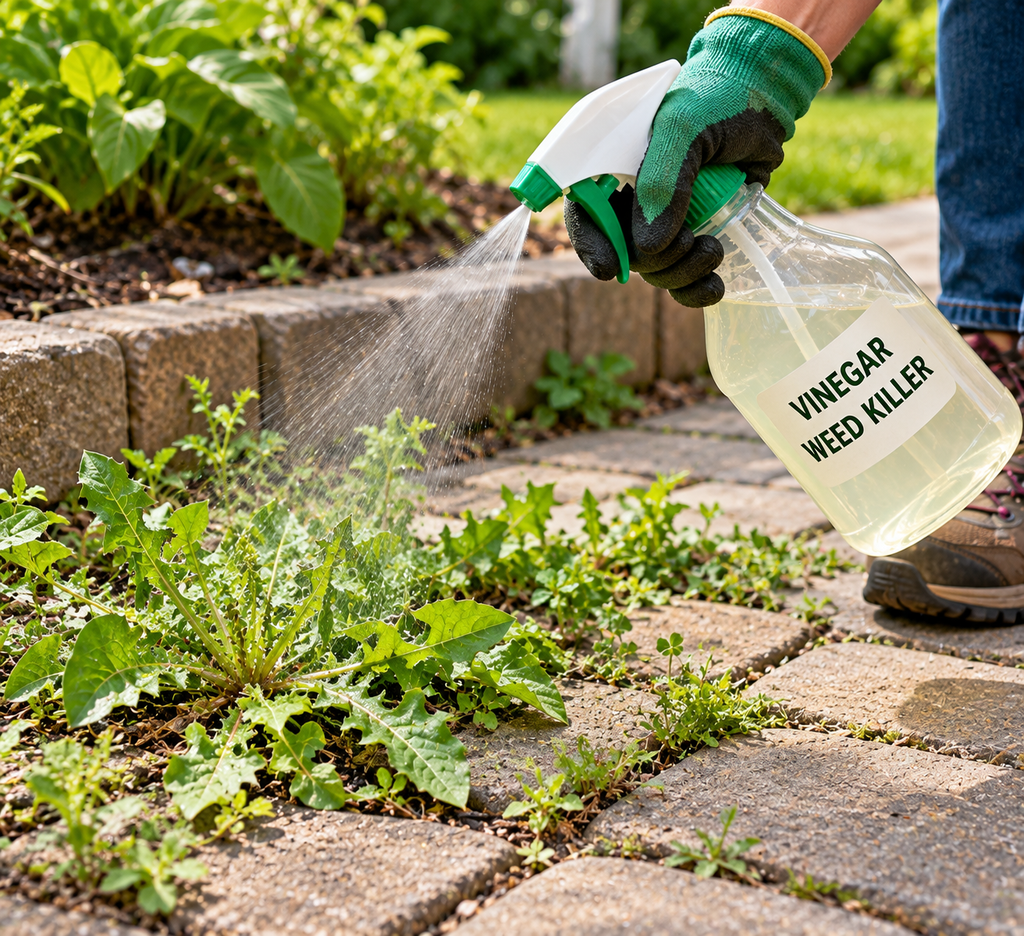
- Seedlings and tiny annuals, especially in paving cracks or gravel: Vinegar is a reasonable choice. Spray when the weeds are small, in dry, sunny weather, and expect to repeat the treatment as new ones emerge.
- Mature annuals: Vinegar may brown them, but the larger the plant, the less reliable the result. Pulling is often more certain.
- Established perennials: Vinegar will only set them back. Plan on repeat applications, which gradually drain the root’s stores, or choose another method.
- Weeds in lawns: Vinegar is non-selective. It can harm all plants, including the lawn, turning grass brown. Spraying a dandelion in turf usually leaves a brown patch around it.
What Works When Vinegar Doesn’t
Remove the Root
For perennials with taproots, pulling or digging is the most direct fix, but only if you get the root. Dandelion taproots can regrow from pieces left behind, so the goal is to remove as much of it as possible. Watering the day before softens the soil, and a long, narrow weeding tool lets you reach below the crown.
Rhizomatous weeds like quackgrass and bindweed are harder. Small fragments of rhizome can resprout, so dig with a fork rather than a shovel to avoid chopping them into more pieces, and expect to return several times.
Repeat Cutting or Spraying
If you can’t dig a weed out, wearing down the roots takes persistence. Each time new leaves appear, they use stored energy. Removing them again and again, by cutting or by spraying, eventually empties the reserve. Vinegar can serve this purpose, but it needs to be applied each time new growth appears, often over a whole season. One gardening writer notes that several treatments will likely be necessary to permanently control most perennial weeds.
Smother the Area
For beds with a large weed problem, covering the area can work better than spraying. Layer overlapping cardboard or several sheets of newspaper over mowed weeds, then add a thick layer of mulch on top. Light is blocked, and most weeds run out of reserves. Strong perennials like bindweed may still push through at the edges, so check the borders.
Use a Systemic Herbicide for Stubborn Cases
Systemic herbicides, such as glyphosate products, are absorbed by the leaves and move to the roots. That’s the capability vinegar lacks. They aren’t right for every yard or every gardener, and they carry their own cautions, so follow the product label exactly. For small patches of deep-rooted weeds, though, they may be the only chemical option that reaches the whole plant.
Keep the Soil Covered
Prevention matters as much as removal. A few inches of mulch over bare soil blocks light and makes it harder for seeds to germinate. In lawns, thick, healthy turf leaves little room for weeds, so cutting too short and mowing on a dull blade both hurt your lawn’s defense.
Safety With Vinegar Herbicides
It’s easy to treat vinegar as harmless because it’s food. The stronger products are not.
Horticultural vinegar at 20% or above is a concentrated acid. Oregon State’s extension service points out that 20% is four times stronger than household vinegar and can be challenging to use. It can burn skin and cause serious eye injury, so wear eye protection, chemical-resistant gloves, long sleeves, and closed shoes. Read the label of any product before use, since it sets the legal rules for how to apply it.
A few other points:
- Spray on a calm day. Drift lands on ornamentals, vegetables, and the lawn.
- Keep pets and children away until the spray has dried, or longer if the label says so.
- Don’t mix vinegar with bleach or other cleaners. Mixing acids with chlorine bleach releases toxic gas.
- Store concentrated acetic acid in its original container, out of reach.
- Because vinegar is non-selective, avoid spraying near plants you want to keep, and be careful on windy days.
Whether a particular concentration is legal or labeled for home use varies by product and state, so check the label and your local extension office for specifics.
Common Questions
Does adding salt or dish soap make vinegar kill roots?
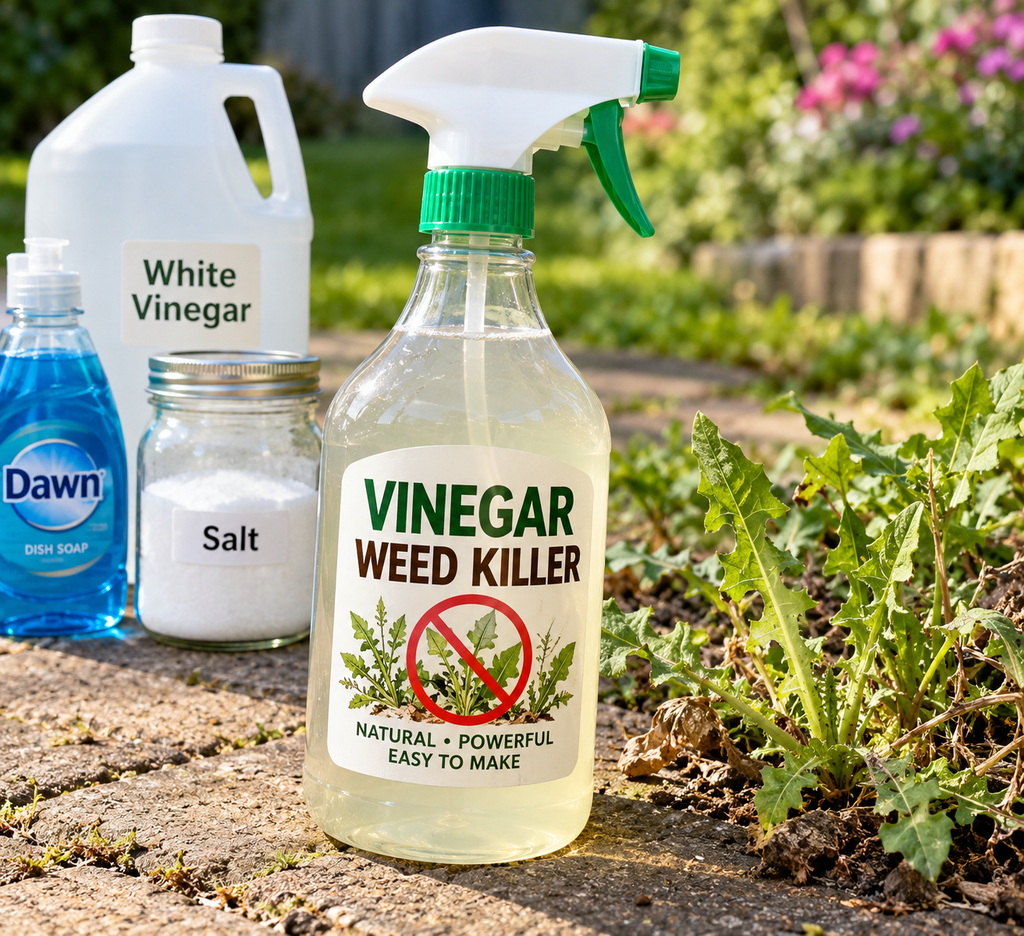
Soap helps the spray cling to waxy leaves, which improves leaf burn. It doesn’t change the fact that acetic acid stays in the foliage. Salt is a different problem: it can persist in soil and harm nearby plants for a long time, which is why it’s best avoided in garden beds.
Will vinegar damage my soil?
Acetic acid breaks down quickly. One extension-style source notes that it can lower soil pH slightly, but residue is gone after the first irrigation or rain. Salt, if added, is the larger concern.
How long should I wait before spraying again?
There’s no single timeline. Many sources suggest checking treated areas after a few days and respraying when new green growth appears. For perennials, repeated sprays over weeks or months are typical.
Key Takeaways
Vinegar burns leaves. It doesn’t kill roots, and that’s why established weeds return. It works best on small annuals sprayed within their first couple of weeks, in dry, sunny weather. For perennials, plan to dig out the root, wear it down with repeated treatment, smother it, or use a systemic product according to its label.
If weeds in a specific spot keep returning, identify the plant first. It will tell you whether you’re dealing with seeds, a taproot, or a spreading rhizome, and that decides the method.

About Syprose Kiche
Syprose Kiche is the creator and writer behind My Besuited Home, a practical home and garden website covering DIY projects, gardening, lawn care, landscaping, home improvement, and outdoor living. She focuses on turning everyday homeowner questions into clear, practical guides backed by careful research and useful real-world considerations.