
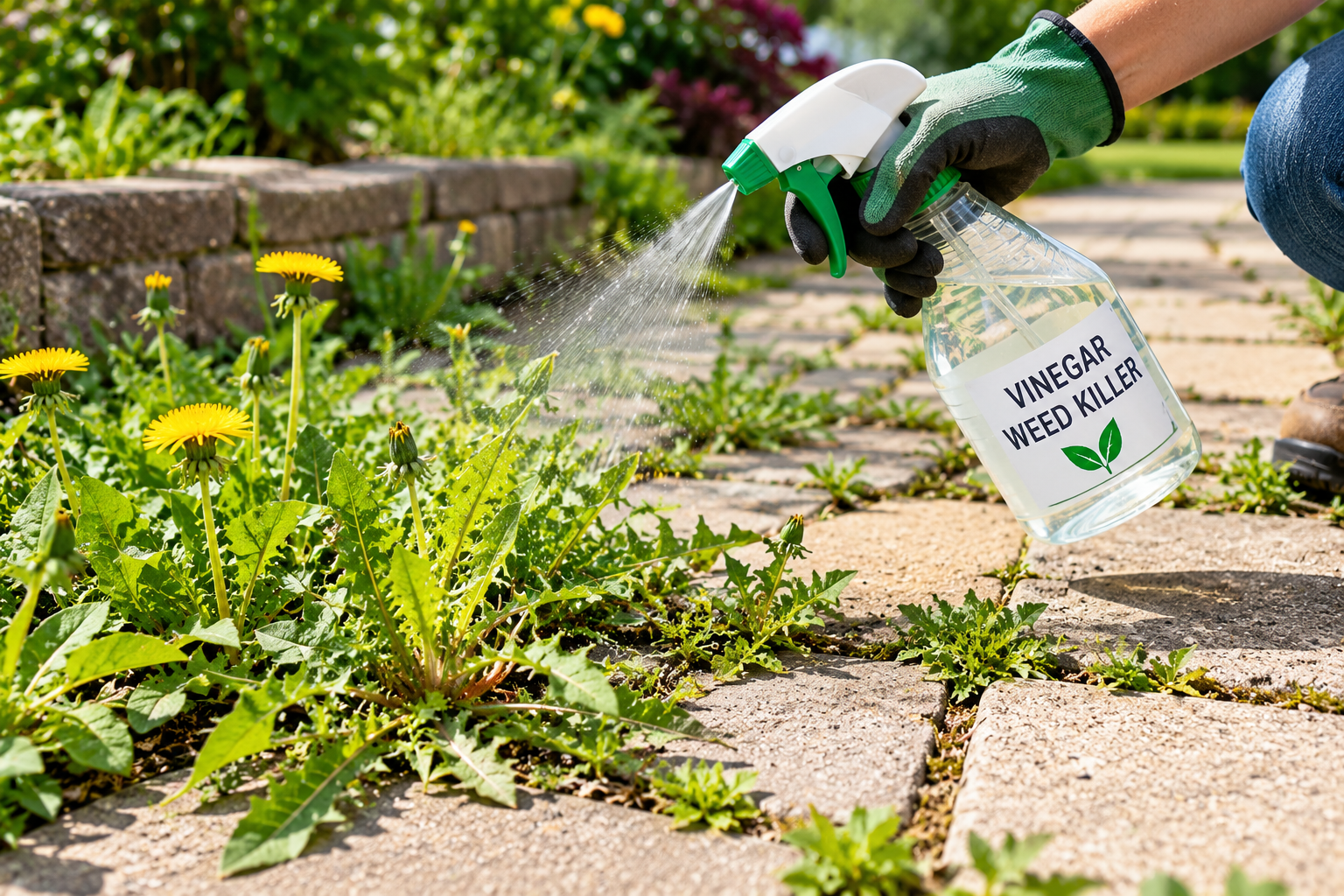
Most vinegar weed killer recipes online come with salt, and that is where problems start. Vinegar breaks down quickly after it touches the ground. Salt does not. Sodium stays in the soil, washes sideways with rain, and can leave a bare patch that stays bare long after the weeds are gone. If the weeds are in a garden bed, a lawn edge, or anywhere near something you want to keep alive, salt turns a cheap fix into a long-term soil problem.
Vinegar alone, with a little soap to help it cling, does most of what the salty versions do. It also has real limits, and they matter more than the recipe. This guide covers the mix, why it works, which weeds it can and cannot handle, and where it can cause harm.
What Vinegar Does to a Weed
Vinegar is a dilute solution of acetic acid. When it lands on leaves, the acid breaks down the cell membranes in the plant tissue. The cells leak, the leaf dries out, and the foliage browns, often within hours on a hot, sunny day.
That is a contact effect. The vinegar burns what it touches, and very little of it moves down into the root system. That one fact explains most of the results people report:
- Young annual weeds (seedlings, small chickweed, young crabgrass) often die, because there is little root system to regrow from.
- Established perennials (dandelions, bindweed, thistle, dock) usually lose their leaves and then grow new ones from the roots.
Research from the USDA Agricultural Research Service on vinegar as a herbicide found that acetic acid could control small weeds but did much less against larger, older ones, and that perennials with established roots tended to recover. The exact percentages depend on the study and the weed species, so check the original source before quoting a figure in anything you publish.
So set your expectations by weed type before you mix anything. Vinegar is a good tool for seedlings and cracks in paving. It is a poor tool for deep-rooted perennials.
Why Leave the Salt Out
Salt appears in many recipes because it dries out plant tissue and adds to the burn. It also causes several problems vinegar does not:
It persists. Acetic acid is broken down by soil microbes fairly quickly. Sodium stays until enough water leaches it away, which can take a long time in clay soil or in dry climates with little rain.
It travels. Rain and irrigation move salt through the soil. Roots of nearby shrubs, trees, and lawn grass can take it up well beyond the spot you sprayed. Damage often shows up as leaf-edge scorch on plants you never touched.
It affects soil structure. High sodium levels can cause fine soil particles to disperse, which makes soil crust over and drain poorly.
It makes the problem permanent. If you want to plant something in that spot later, sodium-contaminated soil may need to be flushed or replaced.
The one case where salt makes some sense is a gravel driveway or paved area you never intend to plant, far from tree roots and drainage paths. Even there, runoff can carry salt to places you did not intend, so many extension sources advise against it. If you do not want a salt-free recipe to be a compromise, stay salt-free everywhere and accept that you will re-spray occasionally.
Epsom salt is sometimes suggested as a gentler substitute. It is magnesium sulfate, not sodium chloride, but it is also not a proven herbicide, and adding it simply puts a mineral fertilizer into the soil. It is not recommended here.
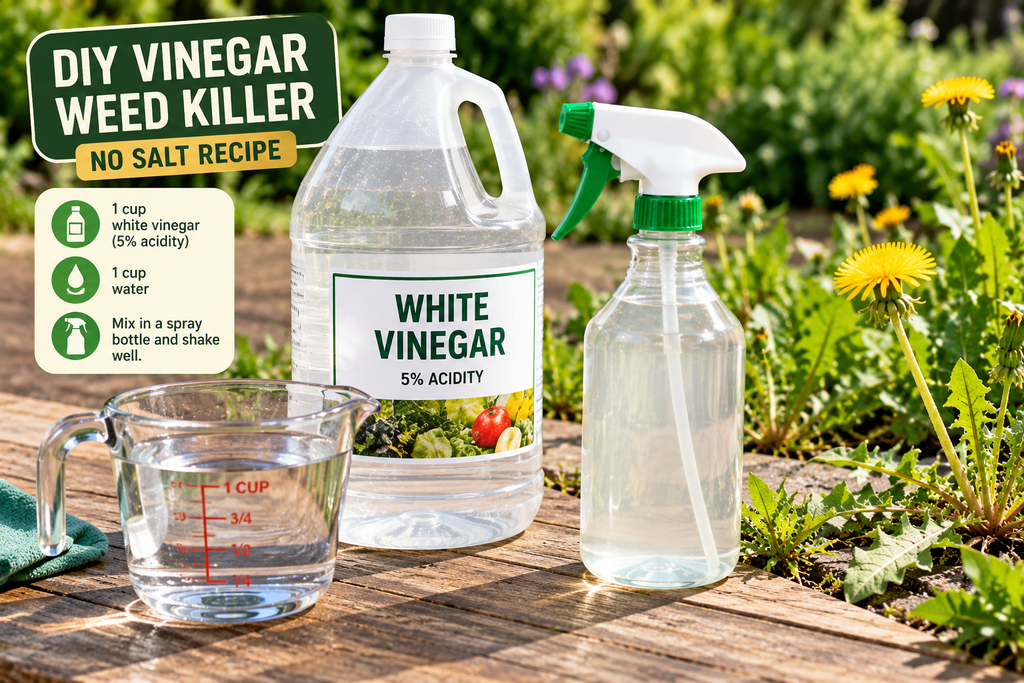
The Basic Recipe
You will need:
- 1 gallon (about 4 liters) of white distilled vinegar
- 1 tablespoon of liquid dish soap
- A dedicated sprayer (a pump-up garden sprayer works best; a trigger bottle is fine for small areas)
Method:
- Pour the vinegar into the sprayer.
- Add the dish soap and swirl gently. Shaking hard produces foam that clogs the nozzle.
- Label the sprayer clearly as weed killer so no one uses it on plants or for any other purpose.
Standard grocery vinegar is usually around 5 percent acetic acid. Some “cleaning vinegar” is a little stronger, often around 6 percent. Both are worth trying on seedlings and small weeds. Check the label for the actual strength, because brands differ.
Why the Soap Matters
Many leaves have a waxy surface, and water-based liquids bead up and roll off. A small amount of soap lowers the surface tension so the vinegar spreads over the leaf and stays in contact long enough to do damage. Without it, results on waxy or hairy leaves are noticeably weaker.
One tablespoon per gallon is a commonly cited starting point, not a figure from a controlled test. Too much soap adds nothing and can leave a film. Use a plain liquid dish soap rather than one with added degreasers or antibacterial agents if you can.
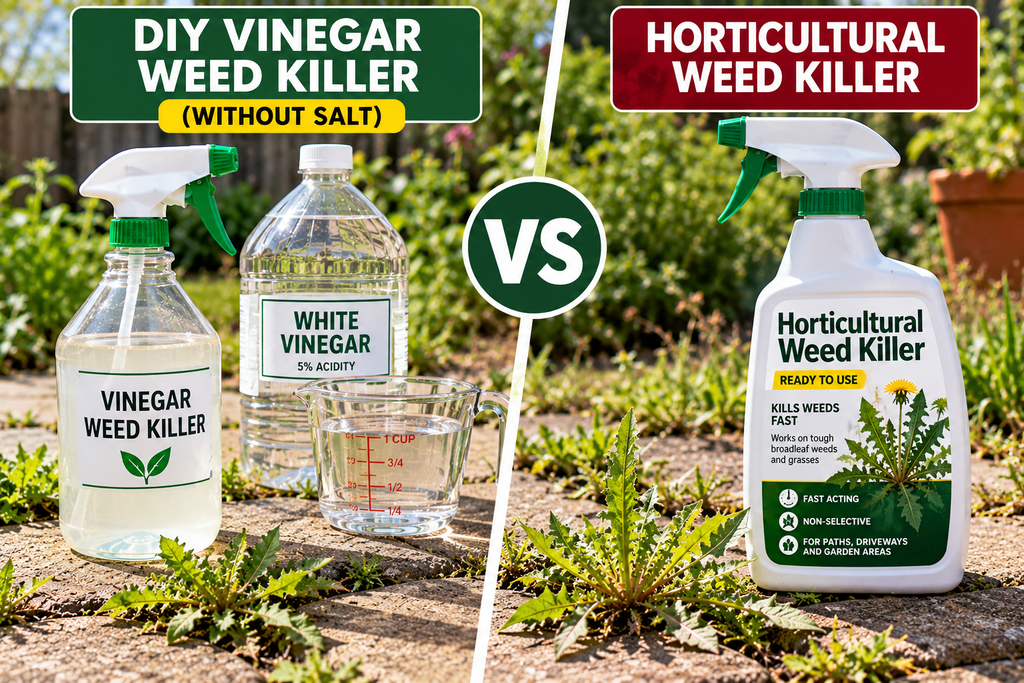
Household Vinegar vs. Horticultural Vinegar
This is the choice that changes both results and risk.
Household vinegar (about 5%) is safe to handle with ordinary care and works on small, young weeds. You will often need a second application a few days later.
Horticultural vinegar (typically 20% to 30%) is sold as a herbicide in many places. It burns foliage faster and more completely, and it handles somewhat larger weeds better. It is also a hazardous liquid. At these strengths acetic acid is corrosive, and splashes can burn skin and cause serious, lasting eye damage. Breathing the mist can irritate the nose and lungs.
If you use a concentrated product:
- Follow the product label exactly. In many places, anything sold as a herbicide has legal use directions.
- Wear chemical splash goggles (not just glasses), waterproof gloves, long sleeves, and closed shoes.
- Keep it away from children and pets, and store it in its original labeled container.
- Do not decant it into a drink bottle or any unmarked container.
- Rinse any skin contact right away with plenty of water, and seek medical help for eye contact.
For a typical home garden with a modest number of small weeds, 5 percent vinegar with repeat applications is the lower-risk path. Reserve strong products for jobs where you will actually use the protective gear.
When and How to Spray
Timing affects results more than most people expect.
Pick a hot, dry, sunny day. Heat and sunlight speed up the leaf damage. Spraying on a cool, overcast day often produces a weak result.
Avoid wind. Vinegar is non-selective, so drift onto a rose or vegetable plant will burn it just like a weed. Spray close to the target on a calm day.
Check the forecast. Rain within several hours washes the vinegar off before it works. Dry weather for at least a day is ideal.
Spray early in the weed’s life. Seedlings and young weeds are far more vulnerable. This is the single biggest factor in whether vinegar works for you.
Wet the foliage thoroughly. Drench the leaves without letting the liquid run off. Partial coverage gives partial results.
Shield nearby plants. Hold a piece of cardboard or an upturned plastic pot beside the weed while you spray, or use a spray bottle with a tight stream rather than a wide mist.
You should see wilting and browning within a few hours in strong sun. If the weed looks dead by evening, check it again in a few days before declaring success.
Which Weeds Respond and Which Come Back
This table covers common situations. Actual results vary with weed size, weather, and vinegar strength.
| Weed type | Typical response to vinegar | What to expect |
| Seedlings of any kind | Good | Often killed in one or two applications |
| Small annual weeds (chickweed, young crabgrass, purslane) | Good to fair | May need a second spray; mature plants resist |
| Moss and algae on paving | Fair | Burns the surface growth; it can return in damp shade |
| Dandelions, plantain, dock | Poor to fair | Leaves burn back, taproot regrows |
| Bindweed, Canada thistle, Bermuda grass | Poor | Roots and underground stems regrow repeatedly |
| Woody weeds and tree seedlings | Poor | Leaves burn; stems and roots survive |
A weed that “died” and then reappeared in a week or two is usually a perennial regrowing from its root. Repeating sprays can weaken it over a season, because each round forces the plant to spend stored energy on new leaves, but it is slow. For deep-rooted weeds, digging out the root is usually faster and more certain, especially when the soil is damp.
Where Vinegar Works Best, and Where It Causes Trouble
Good places to use it:
- Cracks in a patio, path, or driveway
- Gravel areas
- The base of a fence or wall where seedlings sprout
- Bare soil you are preparing to plant, before sowing
- Edges where you can spray precisely
Places to avoid:
- Lawns, unless you are prepared to lose grass. Vinegar kills turf as readily as weeds.
- Close to garden plants. Even light drift browns leaves.
- Near metal fixtures, concrete, or natural stone. Acids can etch some stone and corrode metal, particularly with concentrated products.
- Anywhere runoff reaches a pond, stream, or drain.
On soil, acetic acid temporarily lowers pH at the spot where it lands, but microbes break it down and the effect fades. That is the main practical advantage over salt. A bed sprayed with vinegar can usually be planted again within a short time, though if you used a strong product it is sensible to wait until the area has had rain or a thorough watering first.
Mistakes That Waste Time or Cause Damage
Mixing vinegar with other cleaning products. Never combine vinegar with bleach. The reaction releases chlorine gas, which is toxic. Mixing vinegar with hydrogen peroxide produces peracetic acid, which is corrosive and irritating. Keep each product separate and mix nothing beyond vinegar and a little dish soap unless a product label says otherwise.
Using too little. A light misting often only scorches the leaf tips, and the weed carries on. Wet the foliage properly.
Spraying large weeds and expecting results. A knee-high weed with a thick stem has the resources to bounce back.
Spraying right before rain. The treatment is wasted.
Using the same sprayer for everything. Residue from vinegar and soap can damage plants later if you reuse the sprayer for foliar feeding or pest sprays. Keep it dedicated.
Assuming “natural” means harmless. Vinegar is a food ingredient, but a strong solution still burns skin and eyes. Treat concentrated products with the same care as any other herbicide.
Giving up after one round. The first spray rarely finishes the job. Plan on two or three over a couple of weeks.
Pets, Children, and Edible Plants
Household-strength vinegar is less hazardous than most commercial herbicides, but a few precautions are sensible.
Keep children and pets out of the area until the spray has dried, since wet vinegar can irritate paws and skin. Do not spray on or immediately beside vegetables, herbs, or fruit you plan to eat. If a splash lands on edible leaves, wash them well or discard them. Because vinegar is non-selective and drifts easily, clear weeds around edible beds by hand instead.
Store the mixed spray in a clearly labeled container, out of reach, and avoid leaving it in a sprayer on a hot day for extended periods, as heat can build pressure in a sealed tank.
Other Ways to Handle Weeds Without Salt
Vinegar is one option among several, and for many situations it is not the best one.
Boiling water. Pouring boiling water over weeds in pavement cracks kills the top growth and often some of the root. It is cheap and leaves no residue, but it also kills any plants it touches, and carrying hot water carries a scald risk.
Hand-pulling after rain. Damp soil releases roots more fully. For taprooted weeds, a long, narrow weeding tool lets you reach under the crown. Getting the whole root out is what prevents regrowth.
Mulch. A thick layer of wood chips, bark, or straw over bare soil blocks light and stops many seeds from sprouting. A layer of about 5 to 8 cm (2 to 3 inches) is a common recommendation for garden beds. Put it down after weeding, not instead of weeding.
Cardboard or landscape fabric under mulch. This smothers existing weeds in a bed you are clearing. It works slowly but thoroughly on shallow-rooted weeds.
Flame weeders. These are effective on paved areas but carry a fire risk, especially in dry weather or near dry vegetation. Check local restrictions first.
Commercial herbicides. For persistent perennials such as bindweed, a systemic herbicide that travels to the roots may be the only reliable chemical option. These require careful label reading and are a separate topic from home-made solutions.
A realistic approach combines methods. Use vinegar on seedlings and paving cracks, hand-dig the deep-rooted weeds, and mulch beds to reduce what returns.
Questions Readers Often Ask
Will vinegar weed killer harm my soil?
Household-strength vinegar breaks down fairly quickly and has only a short-lived effect on soil acidity. Repeated heavy use of strong vinegar in the same spot is less well studied, so avoid soaking the ground. It is far gentler on soil than salt.
How long before I see results?
In strong sun, leaves usually wilt within hours. On a cooler day, it can take a day or more. Full results on larger weeds may need repeat sprays.
Why did the weeds grow back?
Most likely they are perennials regrowing from their roots, or the original spray missed part of the plant. Spraying young weeds and repeating treatment is more effective than one heavy application.
Can I use apple cider vinegar instead?
Yes, if its acetic acid strength is similar, but it costs more and has no advantage as a weed killer. White vinegar is the practical choice.
Is vinegar weed killer safe for lawns?
No. It is non-selective and will brown grass. If weeds are growing in a lawn, pull them by hand or choose a selective product designed for turf.
Does it prevent weeds from coming back?
No. It only treats what is growing. Seeds in the soil will still germinate, so mulching and regular weeding matter just as much.
What to Do Next
Start with a small test. Mix a quart of white vinegar with a teaspoon of dish soap, spray a few young weeds on a dry, sunny morning, and check them that evening and again in three days. That tells you how well the method works on your weeds and in your conditions before you treat a larger area. For anything with a deep taproot, dig it out, and keep the spray for seedlings and paving cracks, where it does its best work.

About Syprose Kiche
Syprose Kiche is the creator and writer behind My Besuited Home, a practical home and garden website covering DIY projects, gardening, lawn care, landscaping, home improvement, and outdoor living. She focuses on turning everyday homeowner questions into clear, practical guides backed by careful research and useful real-world considerations.