
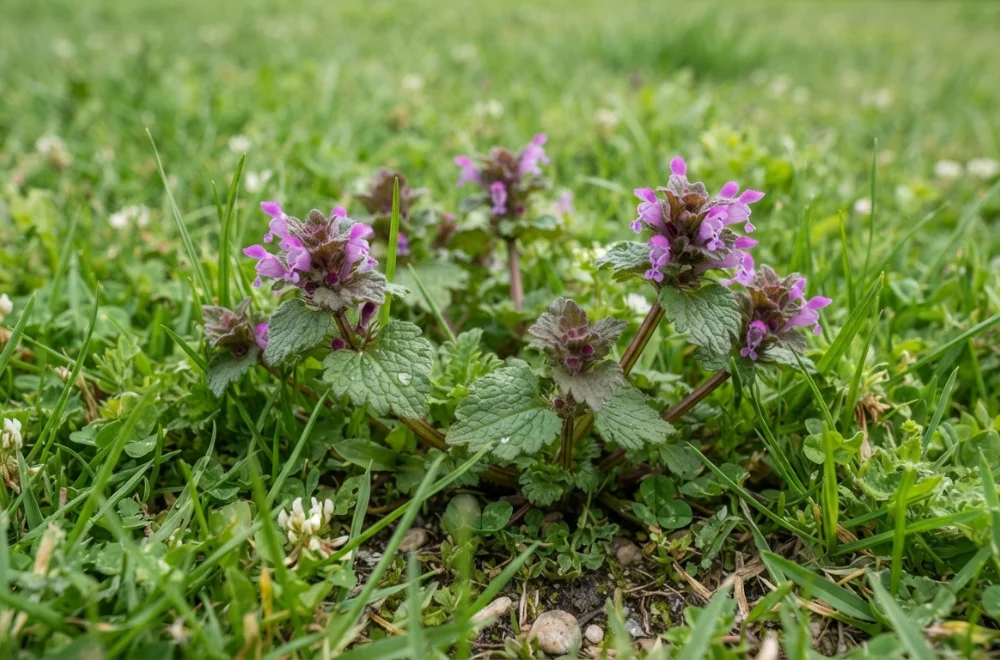
A homeowner sprays dandelions along the driveway every May, and every May they’re back. Same patch, same yellow flowers pushing through the same cracks. It’s tempting to blame the herbicide, or the weather, or bad luck. More often, the problem is the calendar. Spring feels like the natural time to fight weeds — it’s when you notice them, when garden centers stock the shelves, when the whole yard is waking up. But for a lot of the toughest lawn weeds, spring is actually the weakest moment to attack them, and the plant’s own biology explains why.
The honest answer to “fall or spring” is that it depends entirely on which weed you’re looking at. Neither season is universally better. What matters is matching the season to the weed’s life cycle and to what a herbicide is actually capable of doing to it at that point in the year.
The Short Version, for People in a Hurry
Fall is the better season for killing weeds that are already established and come back year after year from the same root system — dandelion, clover, ground ivy, plantain, thistle. Spring is the better season for stopping weeds that haven’t sprouted yet and will only be a problem for one growing season — crabgrass, spurge, foxtail. Those are two different jobs, using two different types of product, aimed at two different kinds of plant. A single “best season” doesn’t exist because the weeds themselves aren’t playing the same game.
The rest of this article walks through why that split exists, how to tell which category your weeds fall into, and what a realistic year-round approach looks like.
What a Perennial Weed Is Doing to Prepare for Winter
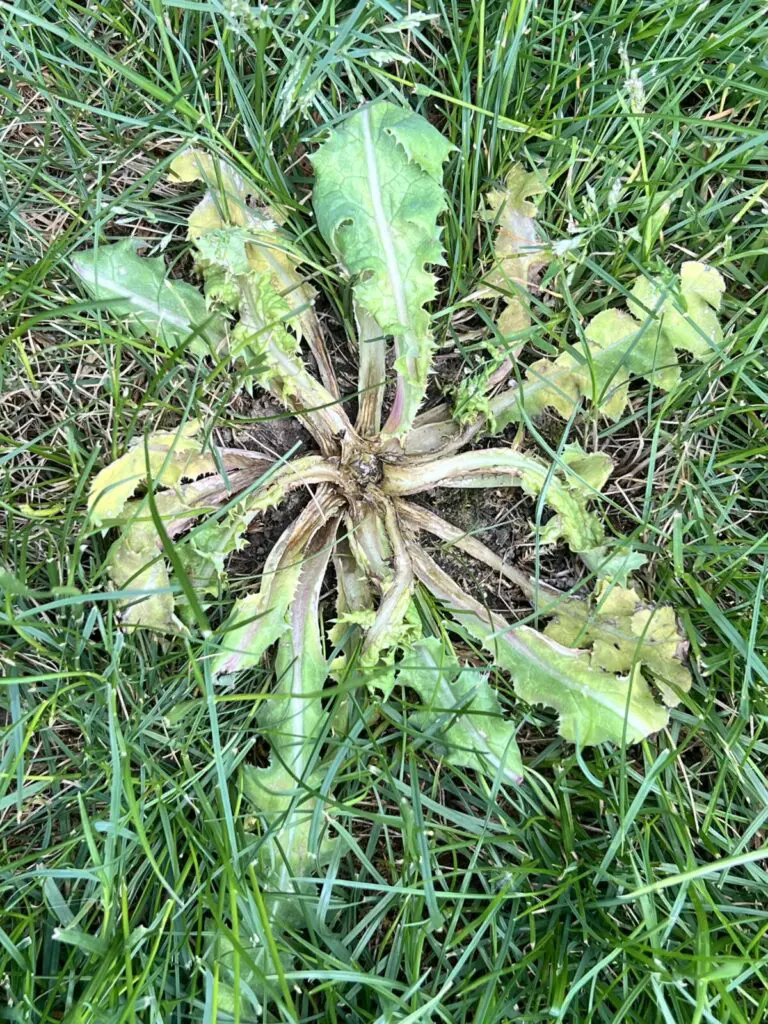
Dandelions, white clover, ground ivy, broadleaf plantain, and Canada thistle are perennials. They don’t need to grow from seed every year — they survive underground through a taproot, a rhizome, or a dense root crown, and they resprout from that structure each spring whether or not last year’s seeds ever germinated. That’s what makes them so frustrating to pull by hand: even a fragment of taproot left behind can regenerate the whole plant.
Killing a perennial weed for good means killing its root system, not just the leaves you can see. This is where timing changes everything. Broadleaf herbicides that are absorbed through the leaf and carried through the plant — glyphosate, 2,4-D, dicamba, and similar systemic products — move through the phloem, the same internal plumbing the plant uses to shuttle sugars around. In spring and early summer, that traffic is mostly one-directional: the plant is pulling stored energy up out of its roots to fuel new leaves and flowers. A herbicide sprayed on the foliage at that point tends to stay in the foliage. It’ll often scorch or curl the leaves, which can look like success, but the root system underneath is largely untouched, and the plant regrows from it within weeks.
In the fall, perennial plants are preparing for winter by translocating photosynthate and storage products down into the roots rather than up into new growth. A systemic herbicide applied to the leaves at that point rides along with that downward flow. Since most postemergence herbicides are systemic, they translocate throughout the plant via the phloem, and when applied in fall, more of the herbicide moves into the roots or other underground structures, which reduces the chance of regrowth compared with a spring application, when the plant is moving stored products from roots up into leaves and flowers instead of the reverse. Multiple university extension programs describe the same pattern independent of each other — Purdue’s turf science program, Michigan State, Iowa State, and North Dakota State all point to late summer through October as the window when translocation is working in the herbicide’s favor rather than against it.
Mid-September through mid- to late October tends to be the practical window for controlling dandelion, clover, and chickweed with a broadleaf herbicide application, though the exact dates shift by region and by how far south or north the lawn sits. The general marker to watch for isn’t a date on a calendar — it’s the point where nighttime temperatures have dropped enough that the lawn itself is still green and actively growing, but the perennial weeds have visibly stopped putting out fresh leaves and started looking a little tired. That’s the cue that the plant has flipped into storage mode.
There’s a practical side benefit to fall timing too: nearby ornamentals and vegetable beds are largely dormant or already harvested by then, which lowers the risk of herbicide drift damaging something you actually wanted to keep, and cool-season lawns are actively filling in bare patches during fall’s mild weather, so any spots opened up by dying weeds get recolonized by grass instead of by the next weed in line.
Why Spring Isn’t the Wrong Season — It’s the Wrong Tool for the Wrong Weed
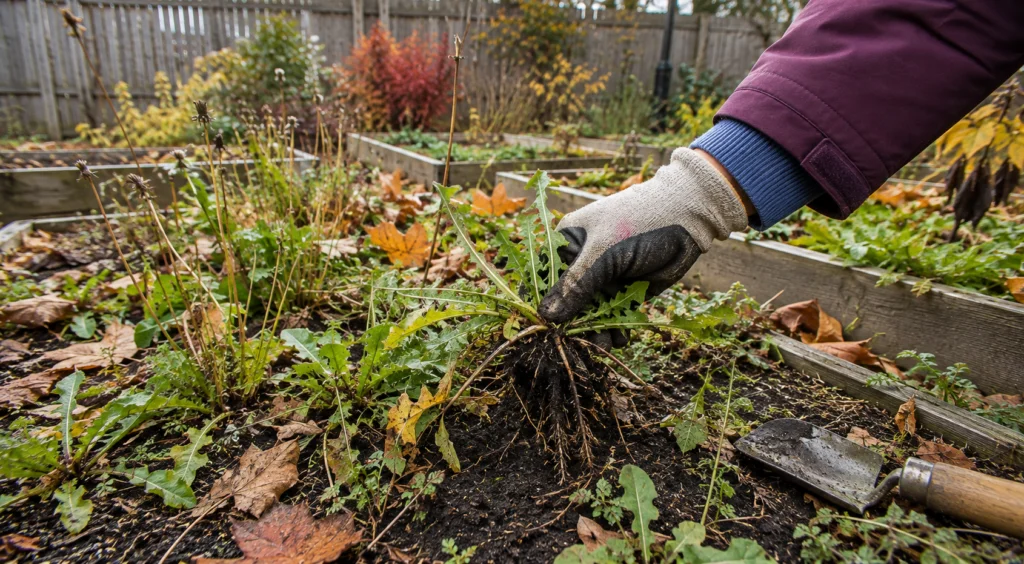
None of this means spring weed control is a waste of effort. It means spring is suited to a different category of weed and a different type of product: annuals, controlled with pre-emergent herbicides rather than the post-emergent, systemic sprays that work best in fall.
Crabgrass, one of the most common lawn complaints in North America, is an annual grass. Every plant that shows up this summer grew from a seed that was sitting dormant in the soil since last fall. Because it starts the season from seed rather than from roots or shoots, it doesn’t respond to the systemic, translocation-based logic that makes fall applications effective against perennials. Once a crabgrass seedling has emerged and is growing, killing it is a much less reliable, much messier project than simply keeping the seed from germinating in the first place.
That’s the entire premise of a pre-emergent herbicide: it doesn’t kill an existing plant. It forms a thin chemical barrier at the soil surface that stops a germinating seed from developing normal root hairs, so the seedling dies before it ever becomes visible. For that barrier to do anything, it has to already be in place before the seed sprouts. Applied after crabgrass is up and growing, a pre-emergent product does essentially nothing.
Crabgrass germination is triggered by soil temperature, not air temperature and not a date on a bag. Crabgrass starts to germinate when soil temperature at a 2-inch depth consistently hits around 55°F, and once the soil holds in that range for several days, seeds begin activating. The general guidance from extension offices is to apply a spring pre-emergent when soil temperature is between 50 and 55°F, using the forsythia bush’s yellow bloom as a rough natural signal that the window is opening, since forsythia tends to flower right around that soil temperature threshold. A soil thermometer — even an inexpensive meat thermometer pushed a couple of inches into the lawn — gives a more precise answer than watching for flowers, but the forsythia trick is a reasonable backup if you don’t want to buy a gauge.
Timing this correctly matters more than people expect. Apply too early, weeks before the soil actually warms up, and the herbicide’s active ingredient can break down before crabgrass seeds germinate, leaving the lawn unprotected right when it needs it. Apply too late, after a warm stretch has already triggered germination, and the barrier goes down over seedlings that have already sprouted, which the product won’t touch. In a genuinely cool or dry spring, waiting slightly longer than usual before applying can actually provide better season-long control, because crabgrass germination gets pushed later too — which is part of why “apply on this exact date every year” advice is less reliable than watching the soil itself.
Other summer annuals — spotted spurge, foxtail, and annual grassy weeds that fill in bare or thin patches through the hot months — respond to the same spring pre-emergent logic as crabgrass, since they’re all germinating from seed around the same soil-temperature window.
Fall Isn’t Only for Perennials, Either
The picture gets a little more layered because fall has its own pre-emergent job, separate from the systemic spray-and-translocate approach used on perennials. A second group of weeds — winter annuals like annual bluegrass (Poa annua), henbit, common chickweed, and hairy bittercress — germinate in the fall, survive winter as small rosettes, then bolt and become obvious and problematic in late winter and early spring.
A fall pre-emergent application, timed for when soil temperature drops to around 70°F in late summer to early fall, targets exactly these winter weeds before they germinate, the same way a spring pre-emergent targets crabgrass before it germinates. Texas A&M AgriLife Extension recommends starting the fall pre-emergence regimen once soil temperatures reach approximately 70 degrees, a threshold based largely on when annual bluegrass begins to germinate, which typically lands in September or October depending on the region.
So a genuinely thorough fall lawn care routine can actually involve two separate products doing two separate jobs at two separate points in the season: a pre-emergent granule put down in early-to-mid fall while soil is still around 70°F, followed weeks later by a post-emergent systemic spray on whatever perennial broadleaf weeds are still visibly green and actively pulling energy into their roots. They’re not redundant — one is preventing next spring’s winter annuals, the other is finishing off this year’s dandelions and clover.
Mixing Up Pre- and Post-Emergent Products Undoes Both
One detail that trips up a lot of weed control plans: pre-emergent and post-emergent products can actively interfere with each other if they’re used in the wrong order on the same patch of lawn. A pre-emergent herbicide works by preventing seeds from germinating properly — some varieties do this by disrupting cell division in the emerging root. If grass seed is put down on top of a pre-emergent barrier that’s still active, the new grass seed won’t germinate any better than the weed seed it was meant to stop. This matters for anyone planning to overseed a lawn in early fall around the same time a pre-emergent would normally go down for winter annuals — the two jobs conflict, and most product labels specify a waiting period, often 60 to 90 days, between a pre-emergent application and overseeding.
The reverse problem shows up with post-emergent sprays and newly seeded grass. A systemic broadleaf herbicide applied too soon after grass seed germinates can damage or kill the young seedlings along with the weeds, since immature turfgrass often hasn’t developed the tolerance mature grass has to the same active ingredients. Most labels call for several mowings — generally three to four — before a post-emergent spray is safe to use on a newly established area. Anyone renovating a lawn in fall needs to sequence these three things deliberately: seeding, pre-emergent, and post-emergent spraying don’t layer neatly on top of each other without some gap in between.
A Decision Rule That Actually Works
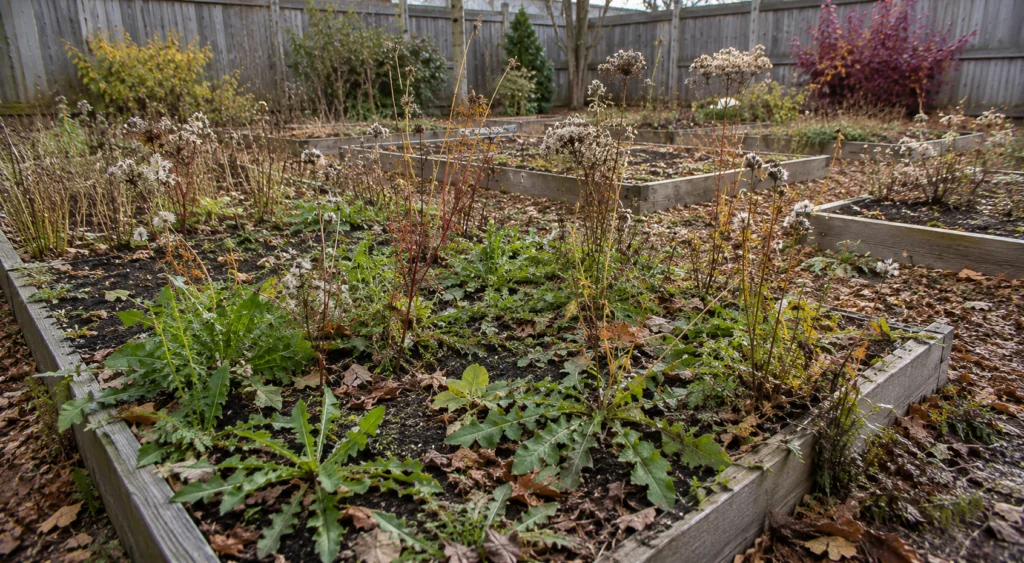
Rather than memorizing a list of individual weed names, it’s more useful to ask two questions about whatever is growing in the lawn:
Does it come back from the same root every year, or does it grow fresh from seed each time? If pulling it out (roots and all) permanently ends that particular plant, it’s an annual, and a pre-emergent applied before its germination window is the more effective tool. If the same plant seems to shrug off hand-pulling and reappear from the same spot regardless of whether it ever produced visible seed, it’s a perennial, and a fall systemic application aimed at the root system is the better bet.
Is it visible right now, or hasn’t it germinated yet? Pre-emergent herbicides only work on seeds that haven’t sprouted. If the weed is already up and growing, a pre-emergent product is a wasted purchase — a post-emergent herbicide, timed to the plant’s growth stage, is what’s needed instead.
Put those two questions together and most lawn weed situations sort themselves into one of four categories:
- Perennial, already growing (dandelion, clover, ground ivy, plantain): fall post-emergent systemic spray, timed to when the plant is visibly still green but the season has cooled.
- Summer annual, not yet germinated (crabgrass, spurge, foxtail): spring pre-emergent, timed to soil temperature around 50–55°F.
- Winter annual, not yet germinated (annual bluegrass, henbit, chickweed): fall pre-emergent, timed to soil temperature around 70°F, applied before the spring pre-emergent’s effects have worn off and before the summer annual germination window opens the following year.
- Any annual already visible and growing: a targeted post-emergent spray for that specific weed, accepting that a pre-emergent would have been the more efficient option had it gone down on time.
Where Popular Advice Falls Apart
A lot of generic lawn care content treats “apply weed killer” as a single undifferentiated task, which leads to a specific and common mistake: buying one all-purpose broadleaf herbicide in spring, spraying it across the whole yard, and being disappointed months later when the same dandelions and the same crabgrass both reappear. What actually happened is that the spring application partially set back the dandelions (without killing the roots, since spring translocation runs the wrong direction) and did nothing at all for the crabgrass, because a post-emergent broadleaf spray isn’t a substitute for a pre-emergent barrier, and by midsummer the crabgrass has already germinated and is competing for water and light.
Another common misstep is spraying a “weed and feed” combination product in fall expecting it to catch everything, without checking whether it’s formulated as a pre-emergent or a post-emergent. The two do fundamentally different jobs, and a bag that doesn’t say clearly which one it is — or doesn’t name the target weeds — is worth reading closely before buying, not after spraying.
There’s also a timing trap specific to pre-emergents: reapplying too late in the season, assuming the first application is still working. Most pre-emergent barriers break down over roughly eight to ten weeks depending on the product, rainfall, and soil type. A single spring application in March may not still be protecting the lawn if crabgrass has a late second germination flush in a warm, wet August — something that happens in a meaningful minority of years. Reading the product label’s stated duration, rather than assuming “once a year” covers it, avoids this.
Climate and Grass Type Change the Calendar, Not the Logic
The biological logic — perennials in fall, annuals via pre-emergent timed to soil temperature — holds everywhere. The actual calendar dates it produces don’t. A lawn in Minnesota and a lawn in central Texas are not on the same schedule, because soil temperature, not the month, is doing the real work.
In northern climates with cool-season grasses (fescue, bluegrass, ryegrass), spring pre-emergent applications tend to land in April, fall perennial spray windows land in September and October, and the growing season closes early enough that there’s a clear stop-point for herbicide work before hard frost.
In warmer regions with year-round mild winters, the soil-temperature thresholds arrive earlier and the windows stretch longer. Fall pre-emergent applications in Florida, for instance, tend to fall in the mid-October to mid-November range, while in Texas the window often opens in late September to October, and warm-season lawns using grasses like Bermuda or zoysia have a different set of herbicide sensitivities and dormancy patterns that affect which products are safe to use at which point in the year. Anyone gardening in a warm-winter region is better served checking their state or county extension office’s specific soil-temperature data than relying on a national-average calendar date, since regional variation of several weeks is normal.
What a Full-Year Program Actually Looks Like on a Calendar
Laid out across twelve months rather than as an either/or decision, a reasonably thorough program for a lawn dealing with both perennial broadleaf weeds and summer annual grasses looks something like this, adjusted for local soil temperature rather than fixed dates:
Late winter into early spring, once soil hits roughly 50–55°F, is when a pre-emergent goes down for crabgrass and other summer annuals. This is a one-time window — missing it means waiting until fall to prevent the following year’s crop instead.
Through late spring and summer, the main jobs are mowing at a height that shades out germinating seeds and spot-treating any perennial weeds that are aggressively spreading, understanding that a summer spray on an actively growing perennial is a stopgap, not the main event — the fuller kill comes in fall.
Early-to-mid fall, once soil cools toward 70°F, is the fall pre-emergent window for winter annuals like annual bluegrass and henbit, in regions where those are a recurring problem.
Mid-to-late fall, once perennial weeds are visibly slowing down but still green, is the systemic post-emergent spray window for dandelion, clover, ground ivy, and other established perennials — the single highest-leverage application of the year for weeds that come back from roots.
Not every lawn needs every step in this list. A lawn with no history of winter annual weeds doesn’t need a fall pre-emergent; a lawn with minimal crabgrass pressure might skip the spring pre-emergent most years and rely on a thick, well-fed turf canopy instead. The calendar is a menu based on what’s actually growing, not a mandatory checklist.
When Neither Season Will Actually Fix the Problem
Herbicide timing solves a specific, narrow problem: killing or preventing weeds that are already there. It doesn’t solve the reason they showed up in the first place, and lawns with a chronic, recurring weed problem in the same areas year after year are usually telling you something about the site, not about which month you sprayed.
Compacted soil is the most common underlying cause of persistent perennial broadleaf weeds. Plantain and prostrate knotweed in particular thrive in compacted, low-oxygen soil that grass roots struggle to establish in — foot traffic paths, areas near driveways, spots where equipment gets parked. Spraying that same patch every fall without addressing the compaction (core aeration, topdressing, reducing traffic) means treating a symptom that will keep regenerating from freshly germinated seed or from nearby root systems, because the underlying condition that favors the weed over the grass hasn’t changed.
Thin, patchy turf is the second major driver. A dense, healthy lawn canopy shades the soil surface and physically limits how much light reaches germinating weed seeds, which is one of the more effective and lowest-effort forms of weed prevention available. A lawn that’s mowed too short, under-fertilized, or growing in deep shade it can’t tolerate will keep losing ground to whatever weed is better adapted to those exact conditions, regardless of how precisely the herbicide application is timed.
If a lawn has significant weed coverage — more than roughly a third of the visible turf — spot treatment usually isn’t realistic, and a full renovation (overseeding, aeration, soil testing) alongside herbicide use is a more honest plan than expecting one well-timed spray to solve it. And for anyone dealing with a weed they can’t confidently identify, or a large area of an unfamiliar perennial, a local extension office or a licensed lawn care professional can identify the plant and recommend a product suited to it — misidentifying a weed is one of the more common reasons a “correctly timed” herbicide application still fails, because the product simply wasn’t matched to that plant’s biology.
Handling Herbicides Responsibly
Whichever season you’re working in, a few precautions apply regardless of the product:
Read the label before buying, not after — it will state the target weeds, the required soil or air temperature range, how long to keep children and pets off the treated area, and whether it’s safe near specific ornamentals, vegetable gardens, or well water. Labels differ meaningfully between products, and “usually” isn’t a safe standard for a chemical application.
Wear the protective equipment the label specifies, which at minimum for most homeowner-grade herbicides means gloves and closed-toe shoes, and avoid spraying on windy days when drift can carry herbicide onto neighboring gardens or landscaping you didn’t intend to treat.
Watch for rain in the forecast. Post-emergent systemic sprays generally need a window of several dry hours to be absorbed into the leaf before rain can wash them off; pre-emergent granules, by contrast, usually need to be watered in shortly after application to move the barrier down into the top layer of soil, so check your specific product’s instructions rather than assuming rain helps or hurts.
Never assume a product is “completely safe” around pets or children simply because it’s sold for home lawns — keep treated areas off-limits for the period the label specifies, which varies by product and can range from a few hours to a couple of days.
A Few Questions Worth Answering Directly
Can I do both a spring and a fall application in the same year? Yes, and for a lawn with both perennial broadleaf weeds and crabgrass or other summer annuals, that’s the realistic full-coverage approach rather than an either/or choice — spring pre-emergent for the annuals, fall post-emergent spray for the perennials, and potentially a second fall pre-emergent for winter annuals if those are a recurring problem in your region.
I missed the spring pre-emergent window. Is there anything to do now? Once crabgrass or another summer annual has germinated and is visibly growing, a pre-emergent product won’t help — that window has closed for the year. A post-emergent product labeled for that specific weed is the option at that point, understood as damage control rather than prevention, with prevention resuming the following spring.
Will one fall application get rid of dandelions permanently? Often it significantly reduces them, but “permanently” oversells what a single application does. Some root fragments can survive even a well-timed fall treatment, and dandelion seed blowing in from neighboring properties will keep introducing new plants regardless of how thoroughly your own lawn was treated. A fall application is best thought of as the most effective single intervention available, not a one-time permanent fix.
The Practical Takeaway
If there’s one decision rule worth remembering out of all of this, it’s to stop asking “is fall or spring better” and start asking “is this weed already established from a root system, or is it about to grow from a seed that hasn’t sprouted yet.” That single question determines which season and which type of product actually has a chance of working. Get that sequencing right — pre-emergent ahead of germination, post-emergent while perennials are still green and pulling energy into their roots — and the same patch of dandelions by the driveway has a real shot at not coming back next May.

About Syprose Kiche
Syprose Kiche is the creator and writer behind My Besuited Home, a practical home and garden website covering DIY projects, gardening, lawn care, landscaping, home improvement, and outdoor living. She focuses on turning everyday homeowner questions into clear, practical guides backed by careful research and useful real-world considerations.