
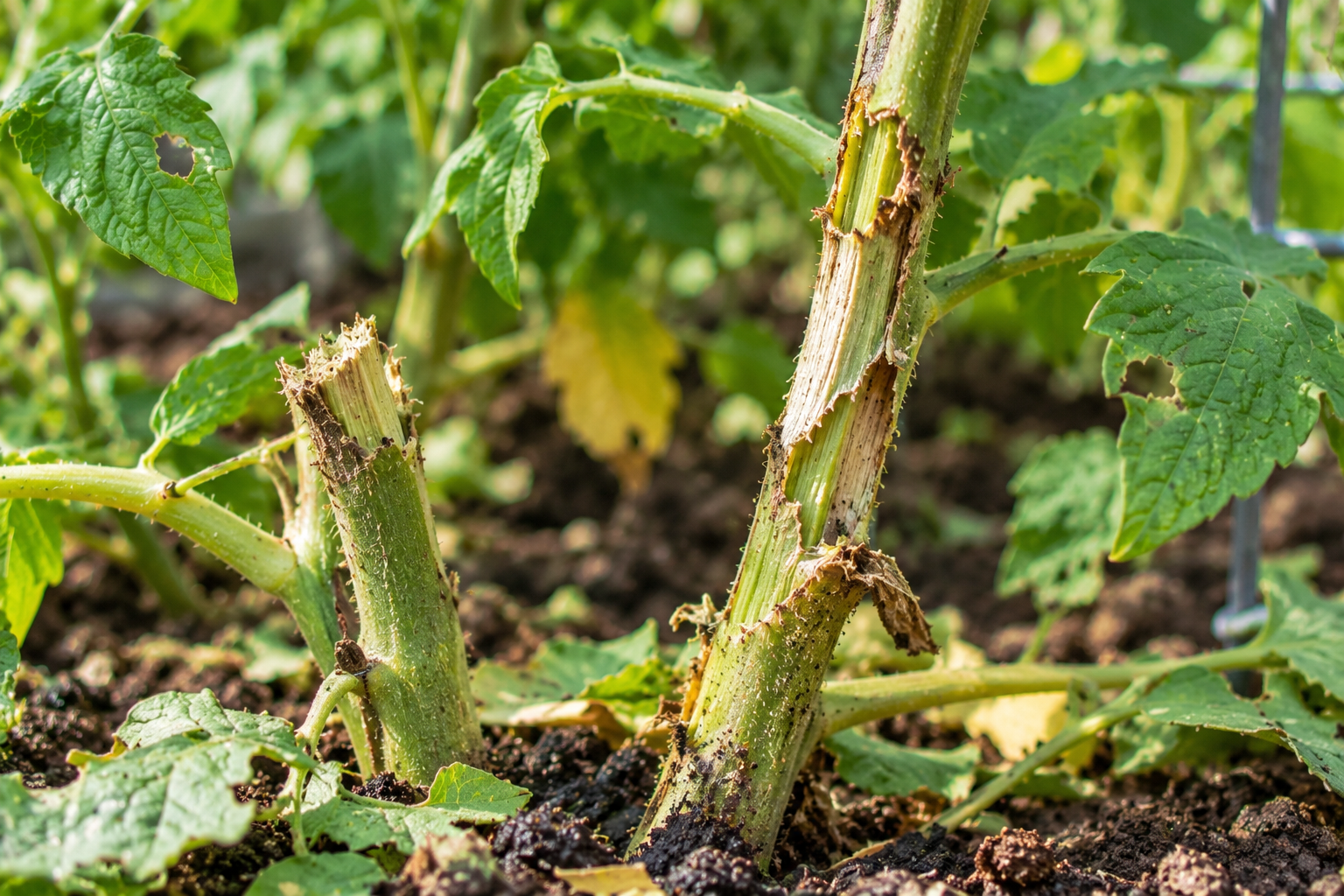
Most garden pests are hard to catch in the act. Many feed at night, hide on the undersides of leaves, tunnel inside stems, or live in the soil where nobody looks until a plant collapses. By the time an insect is easy to spot, the population is often large. The plant, meanwhile, has been leaving clues for days or weeks: a ragged edge here, a sticky film there, a pile of something that looks like coarse sawdust at the base of a squash vine.
The skill worth building is reading that damage. Each type of injury narrows down which pest is responsible, and that matters because the fix for aphids is different from the fix for a borer, and neither helps if the real culprit is a watering problem or a plant disease. This guide covers fifteen signs, what usually causes each one, how to confirm it, and what a sensible response looks like.
Read the Damage First, Then Decide What to Do
Before matching a symptom to a pest, it helps to ask three questions. Where on the plant is the damage? Is it on new growth or old? And is it spreading, or sitting still?
Pests tend to follow patterns. Sap-feeders such as aphids and whiteflies concentrate on tender new growth and leaf undersides. Chewing insects leave physical material missing: holes, notches, shredded tissue. Borers work inside stems and trunks, so the evidence shows up on the outside as exit holes and debris. Root feeders produce symptoms that look like drought even when the soil is damp.
Damage that is spreading from one leaf to the next, or from one plant to its neighbours, points toward something living and mobile. Damage that appears evenly across a whole bed at once usually points toward weather, watering, nutrients, or a chemical issue instead. That distinction is worth remembering, and a comparison table later in this article lays out the most common lookalikes.
One caution applies throughout: a symptom is a clue, not a diagnosis. Several pests can cause the same sign, and some signs have non-pest causes. When the stakes are high, such as a valuable tree or a whole vegetable crop, a local cooperative extension office or a garden diagnostic service can confirm the cause from a photo or sample.
Signs on the Leaves
Leaves are the easiest place to start because they are visible, numerous, and expressive. Seven of the fifteen signs show up here.
1. Holes in the Leaves
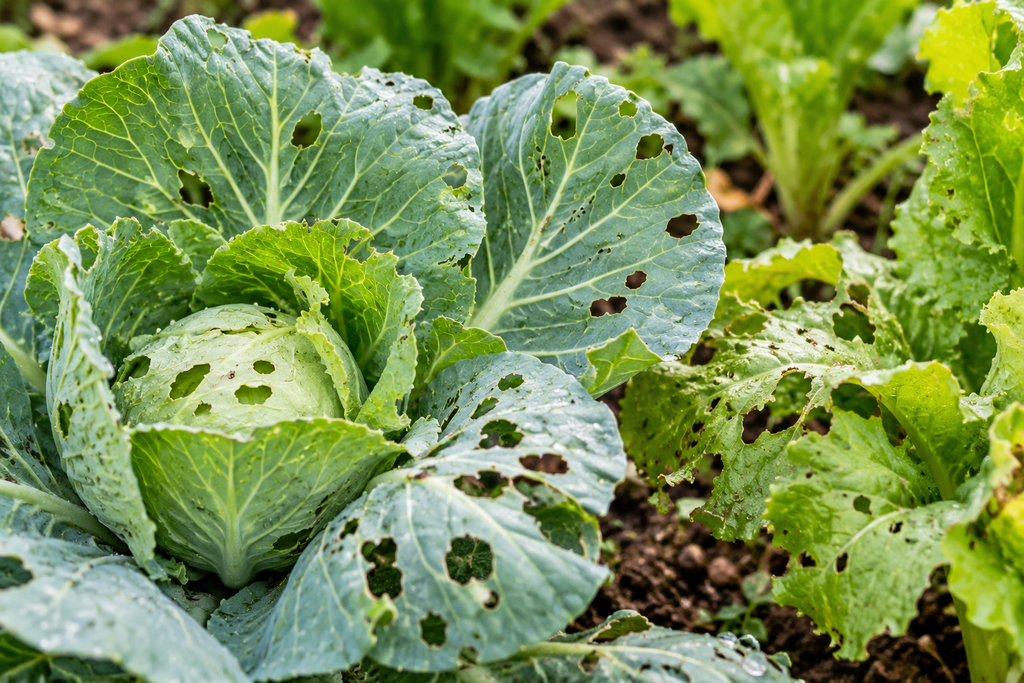
Irregular holes with solid edges are the classic mark of a chewing insect. Caterpillars, beetles, grasshoppers, earwigs, slugs, and snails can all do it, and the shape of the hole offers hints. Slugs and snails tend to leave smooth-edged, rounded holes in the middle of the leaf, often on low-growing plants like hostas and lettuce. Caterpillars more often start at the leaf edge and work inward, sometimes consuming most of the blade. Flea beetles produce a spray of tiny, pinprick holes, sometimes described as a shotgun pattern, and are common on eggplant, radish, and brassicas.
Timing offers another clue. Fresh holes with no browning at the edges mean the feeding is recent. Old, dried edges suggest the pest has moved on or is feeding elsewhere.
To confirm the culprit, go out at dusk or after dark with a flashlight. Slugs, cutworms, and many caterpillars feed at night and are almost impossible to find at noon. If the damage stops appearing on a given plant, the pest may be gone or may have been eaten, so keep checking for a few evenings before concluding anything.
A small amount of leaf damage rarely hurts an established plant. Healthy vegetables and perennials can lose a modest share of their foliage without a noticeable drop in yield. The worry starts when seedlings are being eaten, when damage is climbing quickly, or when the leaves being lost belong to a crop where the leaf is the harvest.
2. Skeletonized Leaves
Skeletonizing means the soft tissue between the veins has been eaten away while the veins themselves remain, leaving a lace-like pattern. It is a very specific feeding style, and it narrows the field considerably.
Japanese beetles are the best-known cause on roses, grapes, linden, and many ornamentals. Sawfly larvae, which look like small caterpillars but are not, skeletonize leaves on roses and some trees. Certain leaf beetle larvae, including those on elm and viburnum, do the same. Some small caterpillars scrape the leaf surface and leave a translucent patch rather than a hole.
Because these insects often feed in groups, skeletonized damage tends to spread across a plant quickly. Check the leaf surface and underside in the morning, when beetles are sluggish and easier to knock into a bucket of soapy water. Whether damage warrants more than hand removal depends on the plant and the scale of the infestation. A few skeletonized rose leaves are cosmetic. A fruit-bearing vine losing most of its canopy is a bigger deal.
3. Sticky Leaves
A shiny, tacky residue on leaves, on the patio below a tree, or on the car parked beneath it is usually honeydew. Honeydew is the sugary waste produced by sap-feeding insects, mainly aphids, whiteflies, soft scales, and mealybugs. The insects are often tiny or hidden, which makes the stickiness the first obvious sign.
Honeydew causes secondary trouble. Black sooty mold grows on it, turning leaves dark and gritty. Sooty mold itself does not infect the plant, but a heavy coating can block light and reduce photosynthesis. Wiping or rinsing a leaf removes it, though the mold returns if the insects do.
To track down the source, look on the undersides of leaves and along stems directly above the sticky area. Honeydew drips down, so the insects are usually higher than the residue. Tap a branch over a sheet of white paper and watch for movement. White flies lift off in a small cloud when disturbed, which is a quick way to tell them from other sap-feeders.
Treating the sooty mold without addressing the insects is a common mistake. The mold is a symptom. Fixing the insect problem is what stops it from coming back.
4. Curling Leaves
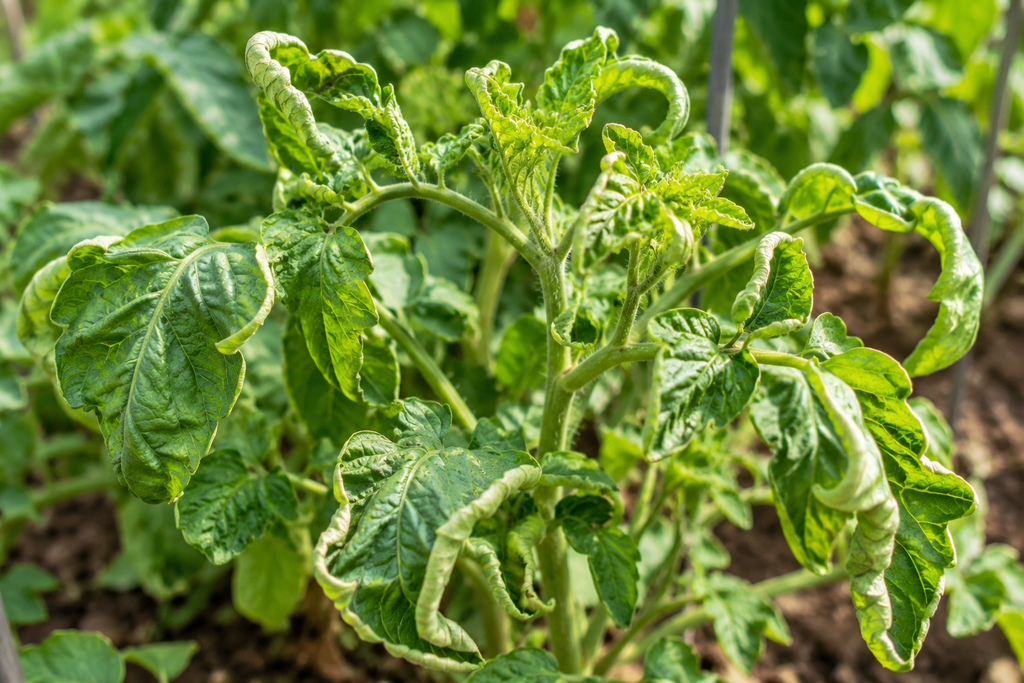
Leaf curl has more possible causes than almost any other symptom, which makes it useful to approach carefully. Aphids feeding on the undersides can cause leaves to curl downward or inward, often with a cluster of the insects tucked inside the curl, where they are protected from sprays and predators. Thrips and mites can also contribute.
But curling is also a standard response to heat stress, drought, overwatering, and certain diseases, and it is the most characteristic sign of herbicide drift, particularly from growth-regulator weed killers. In that case, curling and twisting often appear on many unrelated plants at once, and especially on broadleaf plants such as tomatoes, roses, and grapes.
A quick test helps sort the possibilities. Uncurl a few leaves and look inside. If there are insects, honeydew, or shed white skins, a pest is the likely cause. If the leaves are clean and the curling is on only the tallest or sunniest side of the plant, heat or water stress deserves a closer look. If neighbouring plants of different species all show the same twisted growth after a spraying event nearby, drift is possible.
5. Yellow Stippling
Stippling is a fine pattern of tiny pale or yellow dots across the leaf surface, often so dense that the whole leaf looks bleached or dusty. It comes from insects that puncture individual cells and drink the contents. Spider mites are the leading cause, with lace bugs, leafhoppers, and thrips also responsible on certain plants.
Spider mites favour hot, dry weather and dusty conditions, which is why infestations often explode in midsummer or in sheltered spots like the base of a south-facing wall. Lace bugs leave stippling on the upper leaf surface while their dark, varnish-like droppings accumulate on the underside, a combination that is distinctive on azaleas, lantana, and many shrubs.
To confirm, hold a sheet of white paper under a stippled leaf and tap sharply. Mites show up as tiny specks that move when watched closely. A hand lens makes this much easier, because individual spider mites are very small. Do not mistake stippling for nutrient deficiency, since the dotted pattern that spreads from the leaf surface is the telling difference.
6. Webbing
Webbing means different things at different scales. Very fine silk across the underside of leaves or between leaf and stem, often with stippled leaves above it, indicates spider mites, and it usually appears when a population is already large. Dense webbing on a plant that has not been stippled is more likely ordinary spiders, which are beneficial predators and not a concern.
Larger silken tents in tree branches are a different problem. Eastern tent caterpillars build tents in the crotch of branches in spring. Fall webworms enclose the tips of branches in late summer and autumn. Both can defoliate patches of a tree, but healthy, established trees generally survive a season of this.
What should the reader do with this information? Check the scale first. Fine webbing and stippling together on a vegetable or houseplant call for prompt attention. Large nests on tree branches in autumn rarely threaten the tree’s life, and pruning off a reachable nest is often enough. Burning nests or spraying near flammable material is unsafe and unnecessary.
7. Distorted New Growth
New shoots that are twisted, stunted, puckered, or oddly shaped are a signal worth taking seriously. Aphids, thrips, and certain plant bugs feed on tender growing tips, and the damage becomes visible as the leaves unfold. Eggplant and tomato leaves may pucker. Rose buds may open lopsided or fail to open. Fruit can develop corky scars or deformities.
The pest is often gone, or too small to see, by the time the distortion appears. This is why the sign is so misleading: the damage you are looking at happened days earlier. Check the very newest growth for insects, because damage on older leaves is history while the pest may still be at work at the tip.
As with curling, herbicide drift can cause nearly identical symptoms. A useful rule is that insect damage is usually patchy and unevenly distributed, while chemical injury tends to affect many plants, often uniformly and across species.
Signs on Stems, Trunks, and Debris
Some of the most damaging pests never show themselves, because they live inside the plant. Four signs live here.
8. Chewed Stems
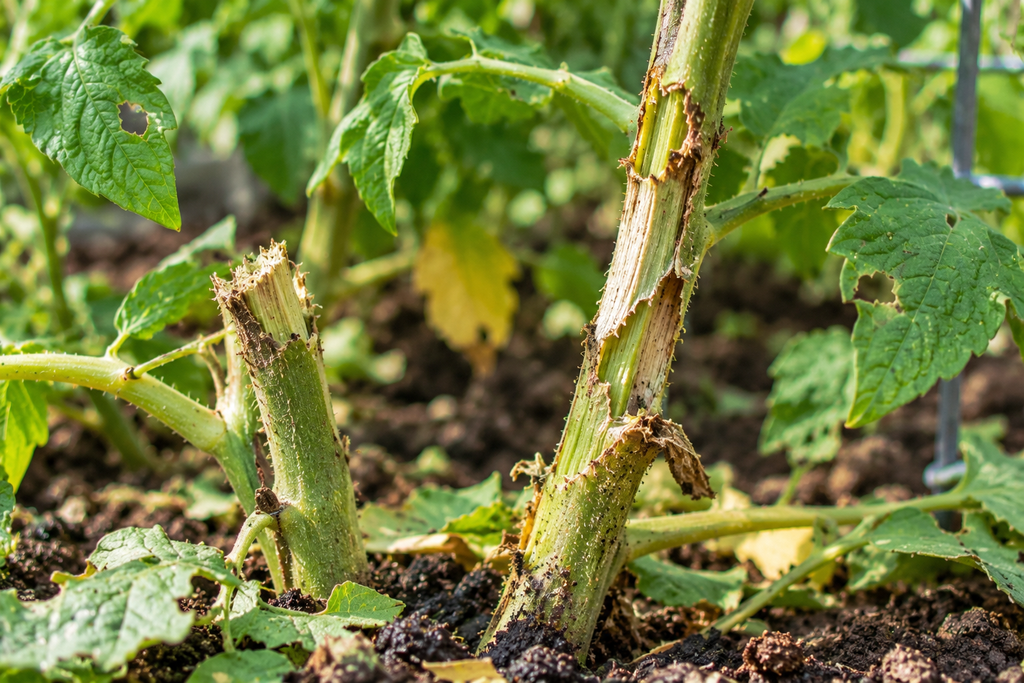
Chewed or severed stems are most obvious on seedlings and young transplants. Cutworms are classic culprits: they live in the soil, emerge at night, and cut young stems off at or just above ground level. The seedling lies on its side, apparently intact except for the clean cut.
On slightly larger plants, the shape of the cut helps. Rabbits typically leave a clean, angled cut, almost as if made with pruning shears. Deer, which lack upper front teeth, leave a ragged, torn edge. Voles gnaw bark at the base of woody plants, especially under snow cover. Slugs scrape and shred rather than cut cleanly.
If cutworms are suspected, dig gently in the top inch or two of soil around a damaged plant in the daytime. They curl into a C shape when disturbed. A collar made from a cardboard tube or a section of a plastic cup, pushed an inch or so into the soil, protects new transplants from this problem. Whether collars are worth the effort depends on how many plants are at risk and how persistent the problem has been in a given bed.
9. Sawdust-Like Material
A small pile of coarse, sawdust-like powder at the base of a stem or trunk, or caught in a crotch of a branch, is one of the clearest signs of a boring insect. The insect has tunnelled into the plant and is pushing waste out through the entry hole.
Squash vine borers are a well-known example in vegetable gardens. The larvae tunnel into the base of squash and pumpkin stems, and the first sign is often a sudden wilt of the vine on a hot afternoon, together with a sawdust-like, yellow-orange frass near the base. On trees and shrubs, borers such as peach tree borers produce a mix of gummy sap and frass near the soil line. Other wood-boring beetles leave small round or D-shaped exit holes.
This is a sign that deserves quick action, because borers are difficult to control once inside the plant. Prevention is more effective than rescue, and timing is everything. Controls aimed at the adult moths or beetles, or at newly hatched larvae, need to be applied during the right window for the insect in your region. Because those windows vary, local extension guidance is the best source for timing.
With squash vine borers, some gardeners carefully slit the stem lengthwise, remove the larva, and mound soil over the wound so the vine can re-root. Whether this saves the plant depends on how early the damage is caught. For woody trees, a borer problem is often a sign of underlying stress, so addressing watering, mulching, and wounds matters alongside any direct treatment. A tree with extensive trunk damage, or one that is large and close to a structure, is a case for a certified arborist.
10. Frass
Frass is the polite name for insect droppings, and it is one of the most reliable signs of caterpillars and other chewing insects. On the ground or on lower leaves, caterpillar frass looks like tiny dark or green pellets, roughly the size of poppy seeds in small species and noticeably bigger in large ones. Tomato hornworms, for example, produce large, chunky pellets that are easy to spot beneath a plant even when the green caterpillars blend in perfectly with the foliage.
Frass is often easier to find than the insect itself. If pellets collect on a lower leaf, look directly above. The culprit is usually feeding within a foot or two of the droppings.
Frass also helps distinguish between pests. Wet, sticky sap-feeder waste is honeydew. Dry pellets point to chewers. Fine, sawdust-like frass points to borers. That makes frass a valuable diagnostic tool, and it costs nothing to check.
11. Egg Clusters
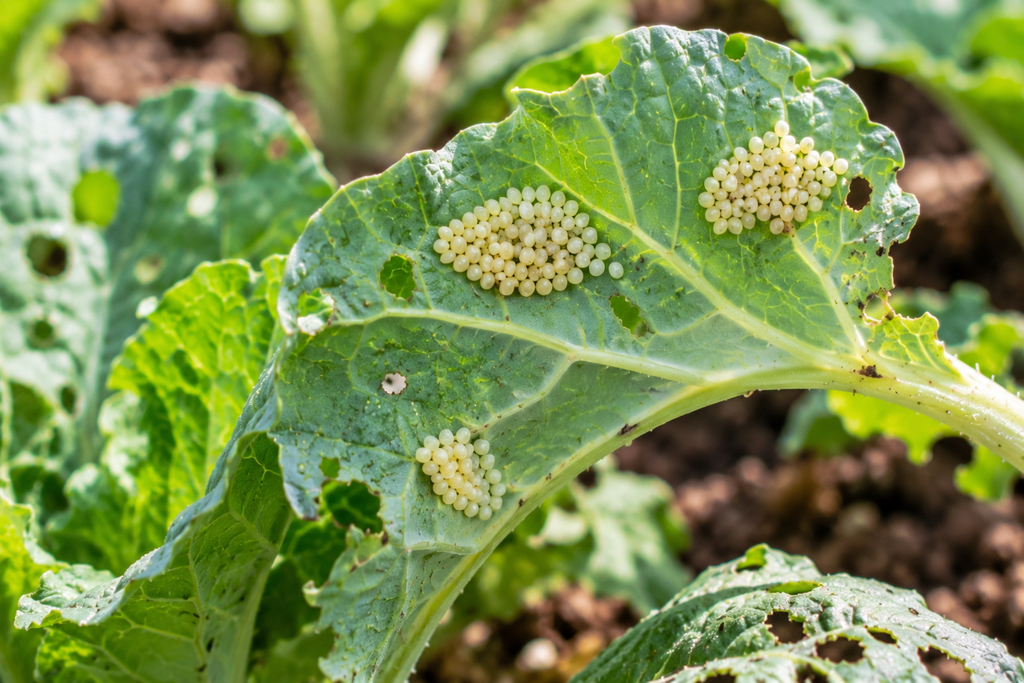
Finding eggs is the earliest warning of all, because it gives you a chance to act before the damage starts. Eggs are usually laid on the undersides of leaves, near veins, or on stems, and they are often grouped in clusters or neat rows.
Examples include the orange-yellow egg clusters of Colorado potato beetles on potato and tomato leaves, the bronze, metallic-looking clusters of squash bugs on squash and pumpkin leaves, and the small yellow eggs of Mexican bean beetles on bean undersides. Many moths lay clusters covered in scales or fuzz.
Crushing or scraping egg clusters off leaves is quick and effective if done early. A strip of tape pressed against the cluster lifts them cleanly. Make it a habit to turn leaves over when watering or harvesting, especially in the first weeks after plants start growing vigorously, when many insects begin laying.
Not every cluster of small oval objects is a pest. Lady beetle eggs are yellow and laid in groups, and ladybugs are valuable predators. If you are unsure, take a clear photo and compare it with an extension service guide before destroying anything.
Signs in the Soil, at Ground Level, and Around the Plant
The last group of signs involves things that happen below or beside the plant, where damage is often misread.
12. Trails and Slime
Shiny, silvery trails across leaves, soil, pots, or paving mark the passage of slugs and snails. The mucus dries to a visible film, which stays long after the animal has gone. It is a useful sign because slugs are nocturnal and hide under boards, pots, mulch, and dense foliage during the day.
The trails confirm the cause of ragged leaf holes in hostas, lettuce, strawberries, and seedlings, and they show where the animals travel. If the trail leads along a particular path, it often ends at a hiding place. Checking under a flat board or an overturned pot placed in the bed in the evening, then looking underneath in the morning, can reveal how many are present.
These pests thrive in cool, damp conditions, so they are worst in wet springs and during rainy autumn weather. Reducing hiding places, watering in the morning so the surface dries before night, and removing debris can all help. Iron phosphate baits are used against slugs and snails, but always follow the label, and keep pets and wildlife in mind when choosing any product.
13. Wilting
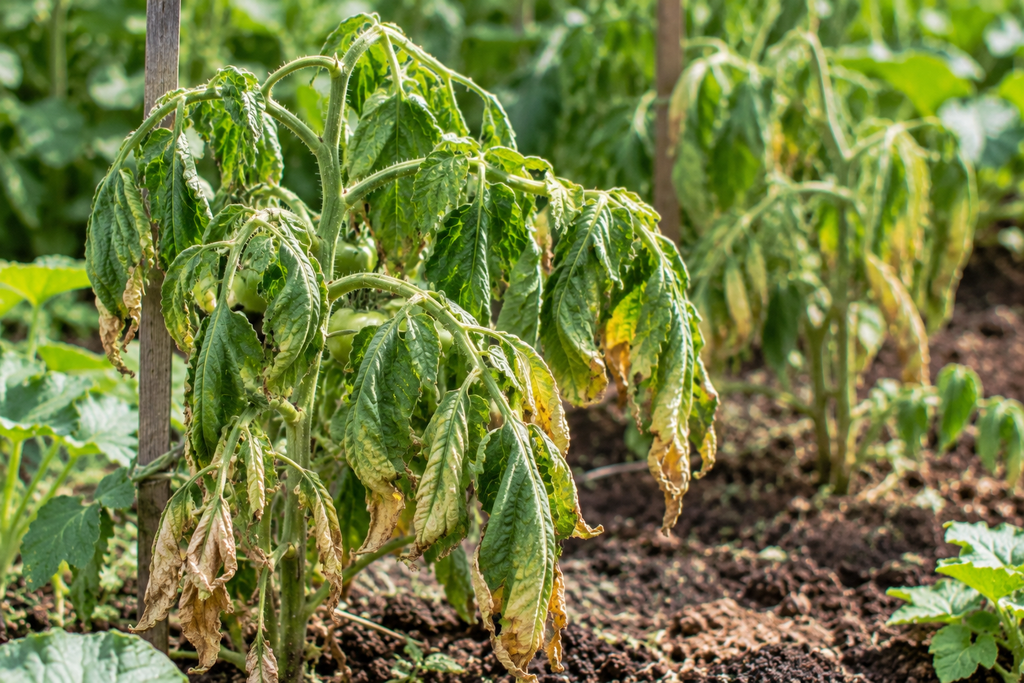
Wilting is the most ambiguous sign on the list. A plant that droops in midday heat and recovers by evening is simply losing water faster than the roots can supply it, and that is normal. A plant that wilts in the morning, wilts even when the soil is moist, or fails to recover is telling a different story.
Persistent wilting with moist soil suggests the roots or stems are damaged and cannot move water. Possible pest causes include squash vine borers inside the stem, root maggots on brassicas and onions, cutworms at the base, wireworms or grubs feeding on roots, and voles chewing underground. Disease causes include fusarium and verticillium wilts, which are fungal problems and not insect issues.
Here is a practical check. Test the soil moisture by hand to a depth of a few inches. Then look at the base of the stem for holes, frass, or a mushy, damaged area. Gently tug the plant. Grub or vole damage often leaves a plant that lifts out with little resistance because the roots have been eaten away. If the stem is intact and the soil is dry, water is the likely answer.
One mistake is to keep adding water to a wilting plant whose problem is in the roots. This can make waterlogged conditions worse and make a root disease more likely.
14. Sudden Plant Decline
A plant that was fine last week and is collapsing now deserves quick investigation, because several of the most serious problems act fast. Stem borers, root-feeding larvae, girdling damage, and soil pests all produce this pattern.
In lawns, a section that peels back like a loose carpet is a classic sign of white grubs feeding on roots. In shrubs and trees, sudden dieback of a single branch while the rest appears healthy can point to borers or to girdling at the base. In vegetable beds, a plant that fails after looking vigorous may have lost its roots to maggots or wireworms.
Because many non-pest causes, including disease, drought, flooding, and herbicide damage, can produce the same collapse, the response is to investigate in order: soil moisture, stem base, roots, and then the canopy. Digging up a failed plant and examining the roots is unpleasant but informative. Healthy roots are generally pale and firm. Brown, mushy, or chewed roots tell their own story.
If the loss involves a tree or a significant shrub, bring in a certified arborist or ask the extension service. Guessing and spraying can waste a season.
15. Ants Marching Up Stems
This one is not on every pest checklist, but it is worth adding. Ants do not harm most plants directly. They are drawn to honeydew, and some species actively defend aphids and scale insects from predators in exchange for it. A steady line of ants climbing a stem or trunk is therefore a strong hint that sap-feeding insects are present, even if you have not yet found them.
Follow the line upward. Look at the growing tips and the undersides of leaves for aphids, soft scale, or mealybugs. Dealing with the ants alone, for example with a sticky barrier band around a tree trunk, can help break the partnership, but the underlying insects will remain unless they are also addressed.
Is It a Pest, a Disease, or Something Else?
Several problems mimic pest damage. The table below gives a quick way to separate the most common lookalikes. It is a starting point, not a substitute for a proper diagnosis.
| Symptom | Likely pest cause | Common non-pest lookalike | Quick check |
| Holes in leaves | Caterpillars, beetles, slugs | Hail damage, mechanical injury | Fresh holes plus frass or slime suggest a pest; uniform holes after a storm suggest hail |
| Leaf curl | Aphids, thrips | Heat stress, herbicide drift | Uncurl leaves and look for insects or honeydew |
| Yellow dots | Spider mites, lace bugs | Nutrient deficiency, sun scorch | Tap a leaf over white paper; look for moving specks or dark droppings |
| Wilting | Borers, root feeders | Underwatering, vascular wilt disease | Check soil moisture, then the stem base and roots |
| Sticky leaves | Aphids, whiteflies, scale | Tree sap drip, sprinkler residue | Look above the sticky area for insects |
| Distorted growth | Aphids, thrips, plant bugs | Herbicide drift, nutrient imbalance | Check whether many species are affected at once |
One pattern separates pests from most other causes: pests usually leave physical evidence. Insects, eggs, droppings, trails, webbing, or exit holes will appear somewhere if you look long enough. If no evidence turns up after several careful inspections, a cultural or environmental cause becomes more likely.
A Short Inspection Routine That Catches Problems Early
A few minutes of regular checking is more useful than any single treatment. The following routine fits into ordinary garden chores.
Walk the garden twice a week during the growing season, and more often when plants are young or the weather has been warm and humid. Turn over several leaves on each plant, particularly the newest growth and the undersides of older leaves. Check the base of stems, especially on squash, brassicas, and young transplants. Look for eggs, frass, trails, webbing, and fresh holes.
Go out once after dark with a flashlight early in the season, or if damage keeps appearing without an obvious cause. Slugs, cutworms, and many caterpillars are active then, and you may find the culprit in a few minutes.
Keep a simple note of where and when damage appears. Patterns across seasons, such as the same bed suffering the same problem each year, are valuable information, and they help you plan crop rotation, timing, and protection. Photographs are useful for this, and they are also what an extension office will ask for.
A hand lens with around ten times magnification is inexpensive and makes mites, thrips, and eggs far easier to identify.
Responding Without Making Things Worse
The first response to damage should almost never be a broad-spectrum spray. Insecticides that kill many insects also kill pollinators, predatory beetles, lacewings, and parasitic wasps, which are the plant’s allies. Removing them can allow pest numbers to rebound faster than before.
Low-impact responses work for many problems and are worth trying first:
- Hand-picking works for larger insects such as beetles, hornworms, and squash bugs. Drop them into soapy water.
- A firm spray of water knocks aphids and spider mites off leaves. Repeat every few days, and spray early in the day so foliage dries.
- Row covers keep egg-laying adults off crops like brassicas and squash. They must be sealed at the edges and removed when plants need pollination.
- Removing debris and hiding places reduces slugs, earwigs, and overwintering insects.
- Pruning infested tips removes concentrated aphid or scale populations.
When a product is justified, match it to the pest. Insecticidal soap and horticultural oil work on contact against soft-bodied insects such as aphids, mites, and whiteflies, and they only work if they reach the insect, so thorough coverage of leaf undersides matters. They can damage some plants, especially in hot weather, so read the label and test a small area first. Products based on the bacterium Bacillus thuringiensis (Bt) are used against certain caterpillars and do not target most other insects. Neem-based products have their own labelled uses and limits.
Whatever the product, the label is the legal and practical guide. It lists the plants and pests it is approved for, application rates, waiting periods before harvest, and protective equipment. Wear gloves and eye protection when handling concentrates, keep children and pets away until sprays have dried, avoid spraying flowers that bees are visiting, and apply in the evening when pollinators are less active. Never mix products unless the label says it is safe, and never store garden chemicals in food or drink containers.
For trees, large infestations, or any situation where the cause is unclear, professional help is the better investment. A mistaken diagnosis followed by repeated spraying costs more than a single consultation.
Questions Gardeners Ask About Hidden Pests
How can I tell if the problem is a pest or a disease?
Look for physical evidence. Pests leave insects, eggs, droppings, trails, webbing, or exit holes. Diseases tend to produce spots with defined margins, fuzzy growth, powdery or rusty coatings, or wilting with no sign of feeding. Both can occur together, and a pest-damaged plant is often more vulnerable to disease. If you cannot tell, a photo sent to a local extension office is a reliable way to get an answer.
Is it safe to wait and see?
Sometimes. A few chewed leaves on a mature plant seldom matter. But borer sawdust, sudden wilting, or damage on seedlings should not be ignored, because these can kill a plant within days. A reasonable rule is to wait on cosmetic damage and act on anything that threatens the plant’s structure or survival.
Why do pests seem to appear overnight?
They usually did not. Populations build out of sight, and eggs, larvae, and sap-feeders are easy to overlook. Damage becomes visible when numbers cross a threshold. That is why checking leaf undersides and stem bases regularly matters more than looking at the plant from a distance.
Can pests be present even if the plant looks healthy?
Yes. Healthy plants can tolerate low numbers of pests with no visible symptoms. Seeing one or two insects is not necessarily a reason to act, but it is a reason to look again in a few days.
Key Takeaways
Plants announce pest problems before the insects are obvious, and the sign usually narrows the cause: holes and frass point to chewers, stickiness and ants to sap-feeders, stippling and fine webbing to mites, sawdust to borers, and trails to slugs and snails. Wilting and sudden decline deserve the quickest investigation because they often involve the stem base or roots.
The practical next step is a regular inspection habit: turn leaves over, check stem bases, look for eggs, and go out after dark if the damage has no obvious source. Confirm the cause before treating, start with the gentlest effective method, and read the product label closely if a spray is needed. When a valuable tree or a stubborn, unexplained problem is involved, ask a local extension service or a certified arborist before spending money on guesses.

About Syprose Kiche
Syprose Kiche is the creator and writer behind My Besuited Home, a practical home and garden website covering DIY projects, gardening, lawn care, landscaping, home improvement, and outdoor living. She focuses on turning everyday homeowner questions into clear, practical guides backed by careful research and useful real-world considerations.