
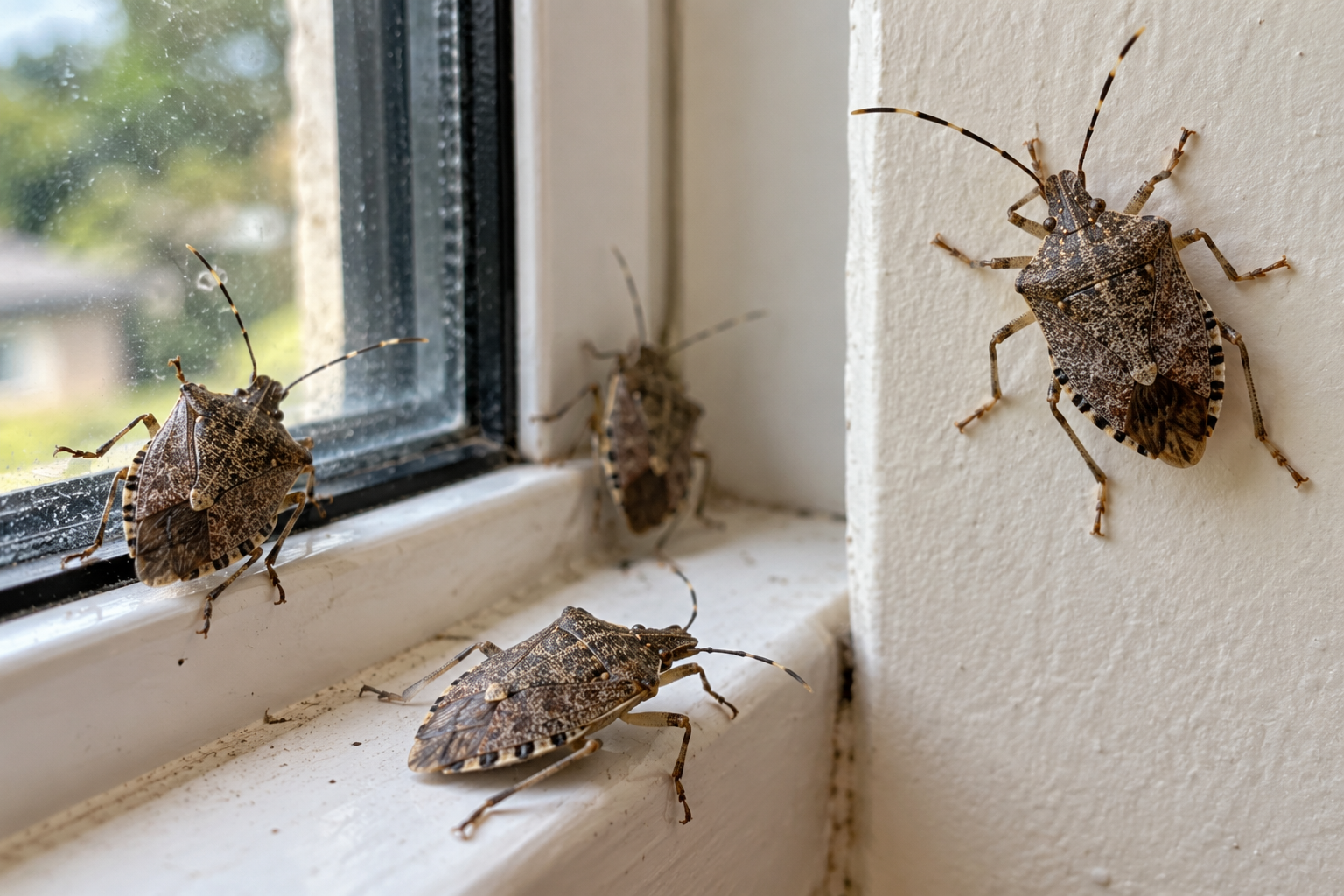
A stink bug on the living room wall in October is rarely a one-off. Brown marmorated stink bugs (Halyomorpha halys) spend summer feeding on fruit, vegetables, and ornamental plants. When days shorten and nights cool, adults look for a sheltered place to wait out winter, and a house with warm south- and west-facing walls and plenty of small gaps is exactly that. They gather on sun-warmed siding, squeeze into narrow openings, and settle into wall voids, attics, and the tracks of window frames. The ones you see inside in midwinter are mostly bugs that were already in the walls and woke up when a heated room fooled them into thinking spring had arrived.
That timing matters, because it shapes everything about prevention. Once stink bugs are inside the wall cavity, you cannot easily get them out. The useful window is late summer to early fall, before they arrive in numbers, and the work is mostly mechanical: closing the openings they use. Smells and sprays play a smaller role than most online advice suggests. This guide is organized around that reality, starting with the physical barriers that do most of the work, then the outdoor conditions that draw bugs toward your house, then the things to do about the ones that get in anyway.
Why They Pick Your House, and When
Stink bugs are not drawn to a house the way ants are drawn to a spilled drink. They aggregate in response to cues: shortening day length, cooler temperatures, and, according to research from university entomologists, an aggregation pheromone that the bugs themselves release once a few have found a good spot. Dark, vertical surfaces that absorb heat, such as siding in sunlight, are where they tend to land first. From there they crawl upward and sideways looking for a crack that feels sheltered.
Two practical points follow from this:
- Timing: In much of the northern and mid-Atlantic United States, the fall movement toward buildings generally starts in September and runs into October, depending on the local climate. Warmer regions may see it later. Sealing and screen repair should be finished before the first big wave, not after you see the first bug.
- Which side of the house: Walls that face south and west get the most afternoon sun and usually collect the most bugs. If your time is limited, put your effort there first.
One caution on identification before spending effort. Several other bugs resemble the brown marmorated stink bug, including native stink bugs, boxelder bugs, and western conifer seed bugs. The brown marmorated version has a shield-shaped, mottled brown body, light-banded antennae, and alternating light and dark bands along the edge of its abdomen. Control approaches overlap, but knowing what you have helps if you later look up local extension advice.
Trick 1: Close the Gaps Around Windows
Windows are the most common entry point, and the problem is rarely the glass. It is the perimeter. Look at the following:
- The gap between the window frame and the siding or trim. If you can slide a thin card or a coin into it, a stink bug can usually follow. Adults are roughly 17 millimeters (about two-thirds of an inch) long but quite flat, and they can compress into surprisingly narrow slits.
- The caulk line itself. Old caulk shrinks, cracks, and pulls away from the frame, especially on sun-exposed walls where it cycles through heat and cold. A bead that looked fine five years ago may have a hairline split along its whole length.
- Weep holes at the bottom of some vinyl and aluminum window frames. These are there for drainage and should not be sealed shut, but they can be covered with small pieces of fine mesh so water still escapes and bugs cannot enter.
What to use. A paintable, exterior-grade sealant labeled for the materials you are joining works for most gaps up to roughly a quarter inch. Silicone-based and polyurethane sealants are common choices; whichever you pick, follow the label on surface preparation, temperature range, and cure time. Caulk does not bond well to dirty or damp surfaces, so scrape out loose old material and let the area dry first. For gaps wider than about a quarter inch, push in a foam backer rod first so the sealant has something to bridge, otherwise it sags and cracks.
Where it will not work. Caulk is not the answer for movement joints that are designed to flex, or for gaps behind siding where you cannot see the opening. If a window is leaking air badly or the trim is rotted, the fix is repair, not another layer of caulk.
Trick 2: Weatherstrip and Seal the Doors
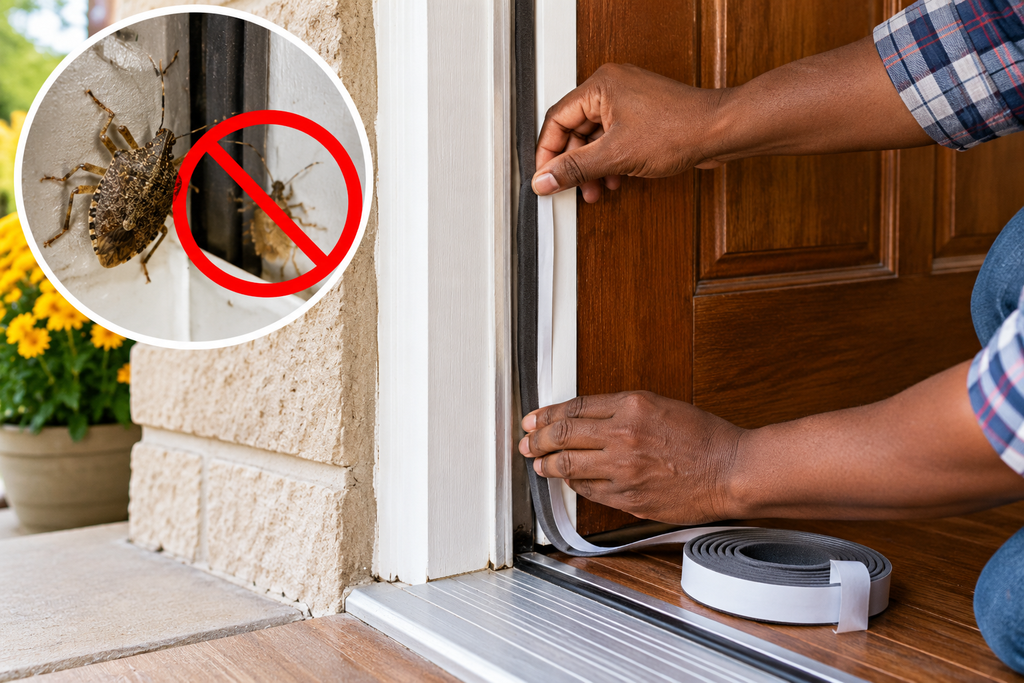
Doors have two weak points: the threshold and the edges of the frame. Stand inside on a bright day with the door closed and look for light along the bottom and sides. If light gets in, so can a bug.
- Door sweeps: A worn sweep on the bottom edge is a common pathway. Replacing a brittle or compressed one is inexpensive and takes a few minutes with a screwdriver. Pick a sweep that makes continuous contact with the threshold across the full width.
- Weatherstripping around the frame: Foam or rubber strips that have flattened or torn should be replaced. Press the door shut on a dollar bill; if you can pull the bill out easily at any point, the seal is weak there.
- Garage doors: These are often forgotten. The rubber seal along the bottom of a garage door gets rigid and cracked with age, and the gaps at the side of the door are usually wider than people expect. Because garages connect to the house through interior doors, stink bugs that settle in the garage frequently find their way into living space.
- Sliding glass doors: Check the pile weatherstripping along the track and the stile where the two panels meet.
A tight door also improves heating and cooling efficiency, so this is one of the few tasks where the extra benefit is real rather than a sales line.
Trick 3: Check Soffits, Fascia, and Roofline Joints
Insects commonly climb walls toward the roofline because it is the highest, warmest, and most protected edge of a house. Examine where the soffit meets the wall, where the fascia board meets the roof edge, and the corners where trim boards join.
Small gaps at these points are easy to overlook from the ground. A pair of binoculars helps you scout before you drag out a ladder. Gaps in trim can be sealed with caulk when small. If you find rotted or separated soffit panels, replace or repair them, because these damaged areas also admit wasps, squirrels, and other pests.
Safety note: Ladder work is a leading cause of home-improvement injuries. Set the ladder on firm, level ground, keep three points of contact, and avoid working at roofline height alone or in wind. If the area you need to reach is above one story or involves steep roof access, hiring a handyman or pest-control professional is reasonable.
Trick 4: Cover Vents Without Blocking Airflow
Vents are deliberate holes, so the goal is to screen them, not seal them. Common ones include:
- Attic gable vents and ridge vents
- Soffit vents
- Dryer, bathroom fan, and kitchen range exhaust terminations
- Crawlspace vents
- Chimney caps (a cap with mesh keeps out bugs and small animals)
For passive vents, fine metal mesh, typically a hardware cloth or an insect screen mesh, can be fitted over the opening. The mesh must be fine enough to stop an insect of that size but not so fine that it clogs with lint or dust, and it should not significantly restrict airflow, particularly for attic ventilation, which protects the roof and reduces moisture buildup.
Exhaust vents for dryers and fans need care. Most have flaps or louvers that open when the appliance runs. If those flaps are broken or stuck open, replace them. Do not stuff rags or foam into a dryer vent: a blocked dryer exhaust is a fire hazard and a ventilation problem.
Trick 5: Seal Foundation Cracks and Utility Penetrations
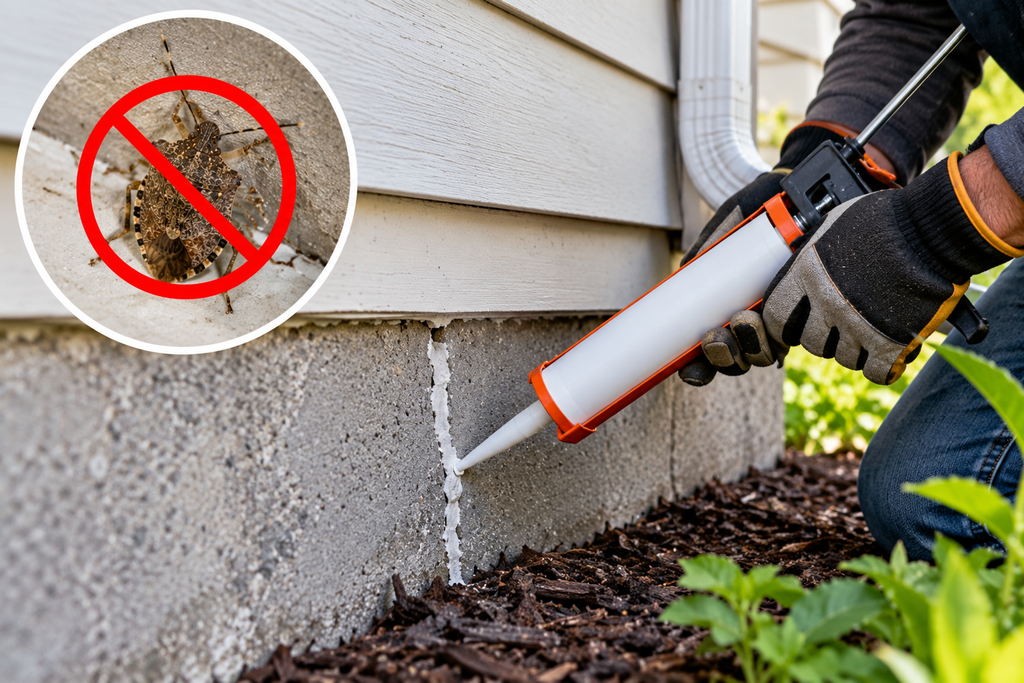
Stink bugs do not tunnel, but they crawl, and a foundation crack that continues into a wall space gives them a route up. Walk the base of the house and look for:
- Hairline cracks in masonry or concrete where the foundation meets the siding
- Gaps around cables, gas lines, hose bibs, and air-conditioner line sets where they enter the house
- The sill plate area, where wood framing sits on the foundation
Small gaps around pipes and cables can be filled with caulk or with a foam sealant labeled for exterior use. Larger openings around utility lines may call for copper mesh or stainless steel wool packed in first, then sealed over; do not use plain steel wool, which rusts. Check the product label for any compatibility limits.
Be realistic about the limits here. Structural cracks, those that are wide, growing, or accompanied by displacement, are not a caulking job. They are an engineering and moisture-management question, and a foundation specialist or structural engineer is the appropriate call. Cosmetic sealing of a moving crack will fail within a season.
Trick 6: Repair Screens Before Fall
A torn screen is an open window. Examine every screen for tears, loose corners, and gaps between the screen frame and the window opening. Small holes can be patched with adhesive screen repair patches, and a damaged section of mesh can be re-spined in the frame using a spline roller and new mesh from a hardware store.
Screens do something else that people miss. Many homeowners remove window screens in fall to wash or store them, or leave windows cracked for ventilation on warm days. In stink bug season that habit works against you. If you want fresh air on a warm October afternoon, make sure the screen is intact and seated tightly, and close the window by evening as the temperature drops.
Do not forget:
- Screens on porch doors and patio doors
- Attic window screens
- Basement window wells, where leaves and debris can pile against the glass
Trick 7: Look at Attic Openings From the Inside
Attics are common overwintering spots because they are quiet and insulated from sharp temperature swings. The openings to check include:
- Gaps around the attic hatch or pull-down stair, where the frame meets the ceiling
- Penetrations for wiring and plumbing vent stacks
- Gaps around recessed light housings and the chimney chase (follow fire-safety clearances; never pack combustible material around chimney flues or heat-producing fixtures)
- Cracks where the attic floor meets exterior walls
Do this work on a day when you can ventilate the space, wear a dust mask, and use a headlamp. Walk only on joists or solid platforms; stepping between joists can mean putting a foot through the ceiling below. Insulation can irritate skin and lungs, so gloves, long sleeves, and eye protection are sensible. If the attic is cramped, dark, or full of old insulation, consider leaving this to a professional.
Sealing from the inside has a limit: if bugs are already in the wall or attic, closing the openings in fall may trap them there. Most will remain dormant until spring, but some may crawl toward interior spaces through light fixtures or gaps. That is not a reason to skip sealing; it is a reason to start earlier in the season.
Trick 8: Rethink Outdoor Lighting
Stink bugs, like many insects, are drawn to light at night, and that includes porch lights, patio fixtures, and bright lights near doors. A fixture right beside the front door can pull bugs into the zone where they are most likely to slip inside when someone opens it.
Options that reduce the attraction:
- Switch to yellow or warm-toned “bug” bulbs on doors and porches. These emit light in wavelengths that insects see less well. They do not eliminate attraction, but they reduce it for many species. Results vary and are not guaranteed.
- Move the light. A fixture placed a few feet away from the door, aimed at the area rather than the entry, gives insects a different place to gather.
- Use motion sensors where constant lighting is not needed for safety.
- Close curtains or blinds in rooms that are lit at night during peak season, since light leaking through windows draws bugs to the glass and the gaps around it.
The effect of lighting is modest compared with sealing. Think of it as a supporting measure.
Trick 9: Cut Back Vegetation That Touches the House
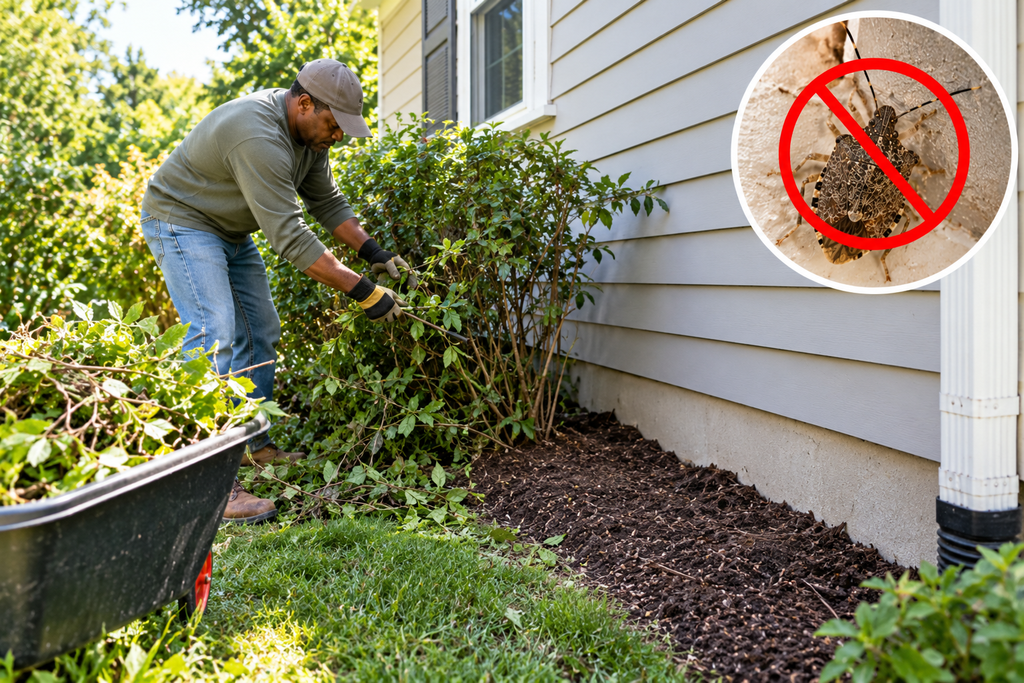
Shrubs, vines, and tree branches against the siding give bugs a bridge to the walls, roofline, and upper windows. They also hold moisture against the wall and provide shelter.
A reasonable rule is to keep plants roughly a foot or more away from the foundation and siding, and to trim tree limbs so they do not overhang or touch the roof. Climbing vines like ivy are a particular problem because their holdfasts work into trim and mortar and create hiding places in the folds of the plant.
The timing matters. Pruning in late summer can interact with your plants’ seasonal needs; some shrubs set flower buds in late summer or early fall and would lose next year’s blooms with a heavy cut. Check the pruning window for the specific plant, or limit yourself to removing the parts actually touching the house.
Consider what is planted nearby, too. Stink bugs feed on a broad range of plants, including fruit trees, tomatoes, peppers, beans, and many ornamental species. A heavily infested vegetable bed or fruit tree next to the house raises local numbers going into fall. Clean up fallen fruit and spent garden plants, which also removes feeding and sheltering sites.
Trick 10: Use Peppermint as a Helper, Not a Barrier
Peppermint comes up in almost every list of natural stink bug repellents, so it deserves a straight assessment. Essential oils with strong scents, including peppermint, are widely reported to deter many insects, and homeowners often use them. But reliable, controlled evidence that peppermint keeps stink bugs out of houses is thin. Extension services generally prioritize exclusion (sealing) over repellents and note that most home remedies lack strong testing for this pest.
If you want to try it anyway, treat it as a low-cost add-on:
- Mix a modest amount of peppermint essential oil with water and a small amount of mild dish soap in a spray bottle. A common home recipe is around 10 to 20 drops per cup of water, but there is no standardized or tested concentration, so start low.
- Spray it along window frames, door thresholds, and other entry areas, not on foliage you value, since oil and soap can burn leaves.
- Reapply frequently, especially after rain. The scent fades within days.
Safety: Essential oils are concentrated. They can irritate skin and eyes, and some are harmful to pets. Peppermint oil, in particular, is a concern for cats and dogs if ingested or applied to fur, and it can be an irritant to small children. Keep sprays away from pet bowls and bedding, ventilate treated areas, test on a small hidden spot first because it may stain or damage some finishes, and do not use it as a substitute for sealing. If you have pets that groom surfaces they walk across, ask a vet before using oils around the home.
Peppermint will not stop a determined bug from entering through a gap. It might make a given spot slightly less appealing for a short period. That is the honest limit.
Trick 11: Remove the Ones Inside With a Vacuum, Carefully
A bug on the wall will release its odor if squashed or sharply disturbed, which is how the species earned its name. The compounds can linger and stain light surfaces. Vacuuming avoids that, but it has its own problem: the vacuum can hold the smell afterward.
A cleaner approach:
- Use a vacuum with a hose attachment and, if possible, a disposable bag or a dedicated canister you can empty outdoors.
- Vacuum the bug up from the wall or window without pressing it.
- Empty the bag or canister soon, outside, and seal it. If you leave stink bugs alive in the vacuum, you may get a lingering odor.
- Some people put a knee-high stocking or a mesh sleeve over the end of the hose to trap bugs without drawing them into the machine. This works but requires a gentle touch.
Alternative: soapy water. Brush or knock the bug into a jar or bucket of soapy water. Soap breaks the surface tension so the bug sinks and drowns. It is cheap, requires no equipment, and works well for the occasional bug. Do not flush live bugs; it is not harmful, but they can sometimes crawl back out.
Removing individual bugs does not solve an infestation in the walls. It deals with the ones you can see.
Trick 12: Use Simple Traps Where Bugs Gather
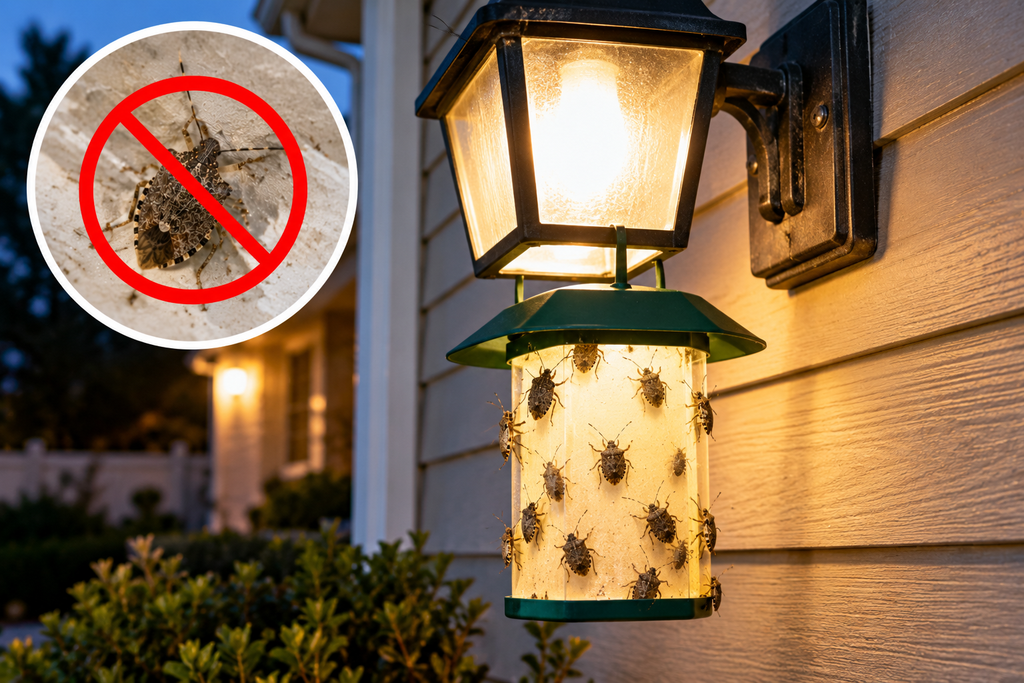
Stink bugs are attracted to light, and a simple trap exploits that. A shallow pan of soapy water placed under a lamp in a dark room can catch bugs that fly toward the light and fall in. Place the lamp so the pan is directly below it, and empty the pan regularly.
Commercial pheromone traps exist, but many are designed for agricultural settings or for use outdoors, and extension guidance often cautions against placing aggregation-pheromone traps near the house because they can draw more bugs toward it. If you try one, place it well away from the building, away from your doors and windows, and follow label directions. Evidence for backyard use is mixed.
Trick 13: Handle the Spring Exit Properly
Not every prevention tip concerns fall. In spring, overwintering stink bugs that survived in the walls become active and head toward light, which is often a window inside your house. This is the second moment of annoyance.
- Do not spray inside walls with household insecticides in response. Applications into wall voids are a job for licensed pest-management professionals, and indoor use of the wrong product creates exposure risk for your family and pets.
- Capture them as they appear, using the vacuum or soapy-water methods above.
- Seal the gaps they used once they are gone, so you are not repeating the cycle next fall. Spring and early summer, when the bugs are active and heading outside, is a good time for caulking.
If you find large numbers of bugs repeatedly indoors, or you suspect an infestation in the structure, it is reasonable to call a pest-control company. A professional can identify the species, locate entry points you may have missed, and apply products legally and safely. If you ask about exterior perimeter treatments, ask which products they use, what the label allows around pets and children, and what their timing is.
What Doesn’t Work as Well as People Say
A few popular suggestions deserve a skeptical look:
- Dryer sheets. Often recommended for wiping on screens or placing in windows. Evidence that they repel stink bugs is weak and mostly anecdotal.
- Garlic and other strong-smelling plants. Some gardeners plant them as deterrents. Controlled trials for stink bug protection of a house are lacking.
- Mothballs or naphthalene. Not appropriate. They contain pesticides that are not labeled for this use, they are toxic to people and pets, and some uses are illegal.
- Bug bombs and foggers indoors. These generally do not reach bugs hiding in wall voids and add chemical exposure to living spaces. Extension services typically discourage them for this problem.
- Squashing every bug. Satisfying, perhaps, but it releases odor and stains.
Genuine Questions Readers Ask
Do stink bugs bite or damage the house?
They do not bite people and do not chew wood or structure. The nuisance is the odor when they are crushed and the number that can gather. In gardens and orchards, however, they cause real damage by piercing fruit and vegetables to feed.
Are they harmful to pets?
Eating one may cause drooling or stomach upset in a pet because of the defensive compounds. Serious reactions are uncommon, but if your pet shows persistent vomiting or distress, contact a veterinarian.
Will I find them in the same places every year?
Often yes, since sheltered, warm spots with entry gaps stay attractive year after year. Sealing those spots is what changes the pattern.
Is it too late to seal if they are already in the walls?
Not entirely. Sealing prevents new bugs from entering and cuts off routes into living areas. But it will not remove those already inside, and some may continue to emerge. The best timing is before they arrive; the second best is spring after they leave.
Do I need a professional?
Not necessarily for a few bugs a week. Consider one if you see dozens inside, if the entry points are in places you cannot safely reach, or if you find structural damage.
Key Takeaways
Stink bug prevention comes down to physical exclusion done at the right time. Seal window and door perimeters, screen vents and repair screens, and close gaps at the roofline, foundation, and attic before early fall, starting with the sun-facing walls. Treat lighting changes, trimmed vegetation, and peppermint as supporting measures, not substitutes. When bugs do get in, vacuum or drown them rather than crushing them, and do your final sealing in spring after they have left. Where the problem involves heights, wall voids, or structural cracks, a qualified professional is the safer route.

About Syprose Kiche
Syprose Kiche is the creator and writer behind My Besuited Home, a practical home and garden website covering DIY projects, gardening, lawn care, landscaping, home improvement, and outdoor living. She focuses on turning everyday homeowner questions into clear, practical guides backed by careful research and useful real-world considerations.