
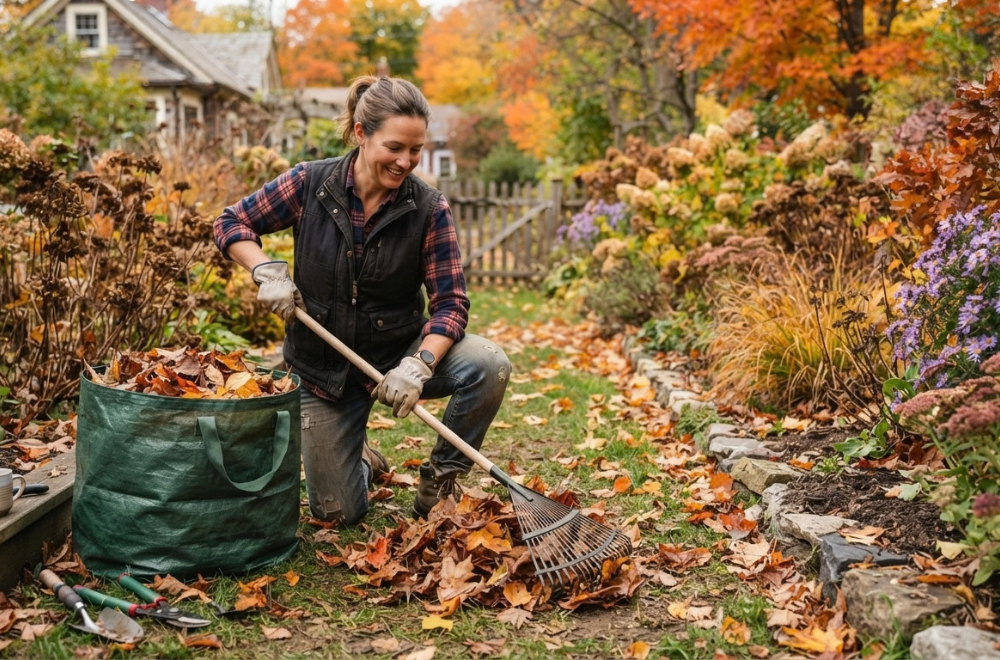
By the time the first hard frost is on the forecast, most gardens are already sending signals. Tomato leaves go from green to black overnight. Hosta foliage collapses into a wet, yellow puddle. Perennial beds that looked tidy in August start to look like they need attention, and it’s easy to either panic and clear-cut everything in a weekend, or ignore the whole mess until spring. Neither approach serves the garden well. Fall cleanup isn’t about making a bed look neat for the neighbors — it’s about deciding, plant by plant, what protects the garden through winter and what invites problems into next spring.
This guide walks through that decision-making process: what to remove now, what to leave standing, and why the timing of each task matters more than most people assume.
Timing Cleanup Around the First Frost
Frost date is the anchor for almost every decision in this guide, but it doesn’t work the way many gardeners assume. A light frost — one that dips just below freezing for an hour or two — will damage tender annuals and vegetable foliage, but it won’t necessarily kill root systems or fully dormant perennials. A hard, killing frost, typically several degrees colder and longer-lasting, is what actually signals that a plant has finished its growing season.
This matters because pulling a plant too early wastes whatever growth or bloom it still had left. Cutting back too late, especially after repeated freeze-thaw cycles have already knocked foliage down into a wet mat, makes the job harder and increases the chance of disease surviving through winter in that decaying material.
A practical approach: wait for the first light frost to knock back tender annuals and vegetable plants, since they’re done for the season either way. For perennials, many can wait until after several hard frosts, once the plant has fully gone dormant and pulled its remaining energy back into the roots. Cutting a perennial back too early, while it still has green leaves photosynthesizing, can weaken the plant’s stored reserves for the following year.
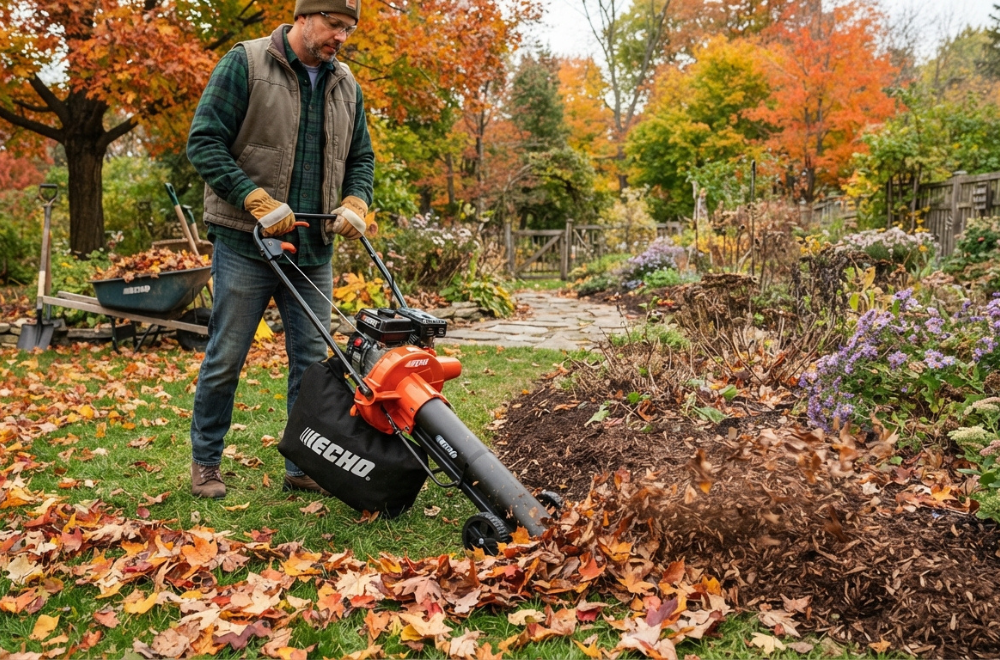
What to Cut Back Now
Some plants genuinely benefit from being cut back in fall rather than left for spring. The general categories worth cutting now:
Diseased or pest-infested foliage. This is the most important exception to almost every “leave it standing” recommendation later in this guide. If a plant showed powdery mildew, black spot, rust, or any fungal or bacterial issue during the growing season, that foliage should come out now rather than overwinter in the bed. More on this below.
Peony foliage. Peonies are particularly prone to botrytis blight, a fungal disease that overwinters in dead foliage and reinfects new growth in spring. Cut peony stems down to a couple of inches above the soil line after the first hard frost, and remove the cut material from the garden rather than composting it in a home pile that may not reach a high enough temperature to kill fungal spores.
Hosta leaves. Once hostas collapse from frost, the wet foliage becomes an attractive overwintering site for slug eggs. Removing it reduces (though doesn’t eliminate) slug pressure the following spring.
Iris foliage, particularly if borer damage or leaf spot was present during the season. Iris borers overwinter as eggs on old foliage near the soil surface, so cutting and removing the leaves in fall is one of the more effective non-chemical controls available.
Daylily foliage in regions where it doesn’t die back naturally, since old, mushy leaves can harbor rot organisms that spread to the crown.
For plants without disease pressure, cutting back is more of an aesthetic choice than a horticultural necessity, which brings up the more commonly misunderstood half of fall cleanup.
What NOT to Cut Back
This is where a lot of fall cleanup advice oversimplifies things. Cutting every perennial down to bare soil in October isn’t neutral — it removes several things the garden and its wildlife rely on over winter.
Ornamental grasses should generally be left standing until late winter or early spring. Their foliage provides some insulation to the crown, and the seed heads feed birds through the coldest months. Cutting grasses in fall, especially before the ground has frozen, can also expose the crown to more freeze-thaw stress.
Seed-head perennials like coneflower, black-eyed Susan, and coreopsis are a genuine food source for finches and other seed-eating birds well into winter. Leaving the spent flower heads standing costs nothing in plant health and provides real habitat value.
Hollow-stemmed perennials, including coneflower, bee balm, and many native asters, are used by solitary bees and other beneficial insects as overwintering sites. Many native bee species lay eggs or shelter inside these hollow or pithy stems, and cutting them down in fall removes that habitat before the insects have completed their life cycle. Where this matters, the better practice is to cut these stems back in spring, ideally leaving 8 to 15 inches of stubble even then, since some species need a full season inside the stem before emerging.
Marginally hardy perennials — anything rated at the edge of the local hardiness zone — often survive winter better with their old growth left in place as insulation, removed only once new growth appears in spring.
Groundcover and low evergreen perennials, like heuchera, hellebores, and evergreen sedges, shouldn’t be cut back at all; their foliage is doing active, if slow, work through the cooler months.
The general rule that holds up under most conditions: if a plant was healthy, its old growth offers more benefit left standing than removed. If it was diseased, that benefit disappears and removal becomes the priority.
Recognizing and Removing Diseased Plant Material
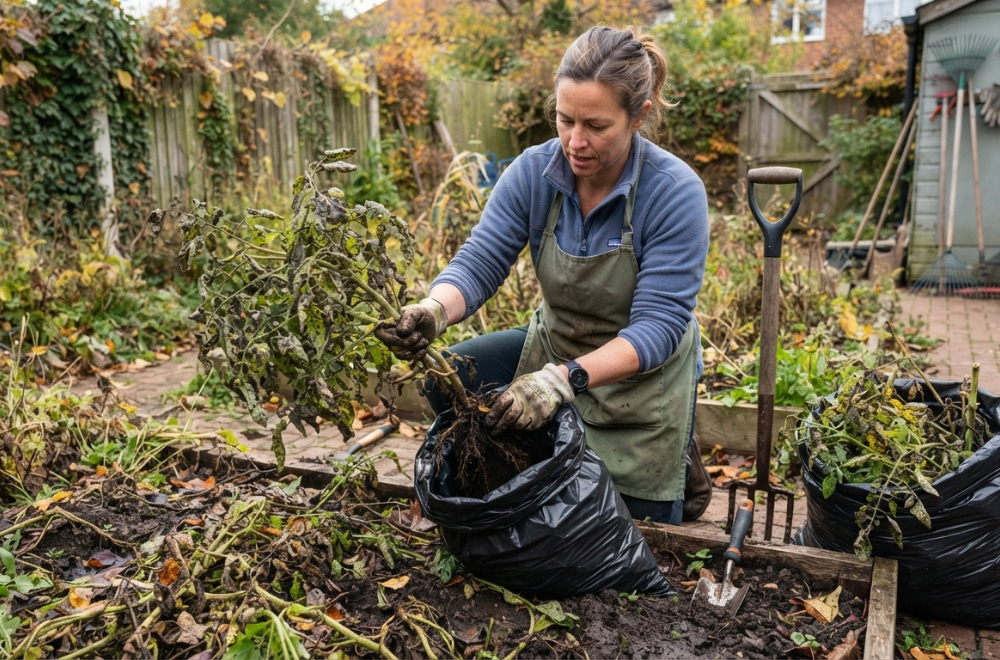
Fungal spores, bacterial pathogens, and some viruses can survive winter in fallen leaves, dead stems, and the top layer of soil, ready to reinfect new growth once conditions warm up. This is the single clearest case where “clean up now” beats “leave it for wildlife.”
Signs worth watching for as you move through the garden: powdery white coating on leaves (powdery mildew), black or brown spots with yellow halos (various leaf spot fungi), orange-red pustules on the undersides of leaves (rust), and stems with sunken, discolored lesions (various cankers and blights). Roses, phlox, bee balm, lilacs, and crabapples are frequent hosts for these issues in home gardens.
Once identified, the material needs to be bagged or burned where permitted, not added to a standard backyard compost pile. Most home compost setups don’t reliably reach the sustained 140°F+ temperatures needed to kill fungal spores and bacterial pathogens, so diseased material added to the pile can simply reintroduce the problem when that compost is spread the following year. If curbside yard waste pickup is available, that’s usually the better destination for anything visibly diseased.
Tools used to cut diseased material should be wiped down with rubbing alcohol or a diluted bleach solution between plants, particularly when moving between roses or other disease-prone species, to avoid spreading the pathogen through the pruners themselves.
Removing Annuals
Annuals complete their entire life cycle in one season, so once frost kills the foliage, there’s nothing left to protect or preserve. Pull them once they’ve been knocked back, roots and all, rather than leaving the dead top growth in place.
A few exceptions worth knowing about. Some plants sold and grown as annuals in colder climates are actually tender perennials in their native range — geraniums (pelargoniums), coleus, and some begonias among them. If overwintering indoors is something you want to try, healthy stem cuttings taken before the first frost typically root better than attempting to dig and pot the entire root system of a mature plant. This isn’t necessary, but it’s an option for anyone who’s attached to a specific plant.
Self-seeding annuals like cosmos, calendula, and larkspur present a genuine trade-off: pulling them removes the seed source for next year’s volunteers, while leaving the spent flower heads in place lets them reseed naturally but looks messier through winter. If self-seeding is the goal, leave the seed heads standing until they’ve clearly dropped their seed, then remove the rest of the plant.
Dealing With Vegetable Plants
The vegetable garden needs a slightly different approach than ornamental beds, mostly because of the disease and pest pressure that builds up in soil where the same crops are grown repeatedly.
Tomato, potato, and pepper plants are worth removing entirely once they’re done, rather than leaving them to break down in place. These are all in the nightshade family and are commonly affected by soil-borne diseases like early blight, late blight, and various wilts that survive in plant debris and reinfect next year’s crop. Pull the entire plant, including the root system where practical, and dispose of it away from the compost pile if there was any sign of disease during the season — yellowing leaves with dark concentric spots, wilting despite adequate water, or blackened stems.
Squash, cucumber, and melon vines should also be cleared out, particularly if powdery mildew showed up late in the season, which is extremely common on cucurbits by late summer in most regions.
Corn stalks can attract overwintering corn borers if left standing, so removing and chopping them (or disposing of them) rather than leaving them in the row reduces next year’s pest pressure.
Cover crops are worth considering for any vegetable bed that will sit empty over winter. Crimson clover, winter rye, and field peas are commonly used options that protect bare soil from erosion, suppress weeds, and add organic matter when turned under in spring. They need to be planted several weeks before the ground freezes to establish, so this is a decision that has to be made earlier in fall rather than in the final cleanup push.
If a cover crop isn’t planted, bare vegetable beds benefit from a layer of shredded leaves or straw mulch over winter rather than being left as exposed soil, which erodes and compacts under rain and snow.
Fallen Leaves: Remove, Mulch, or Leave
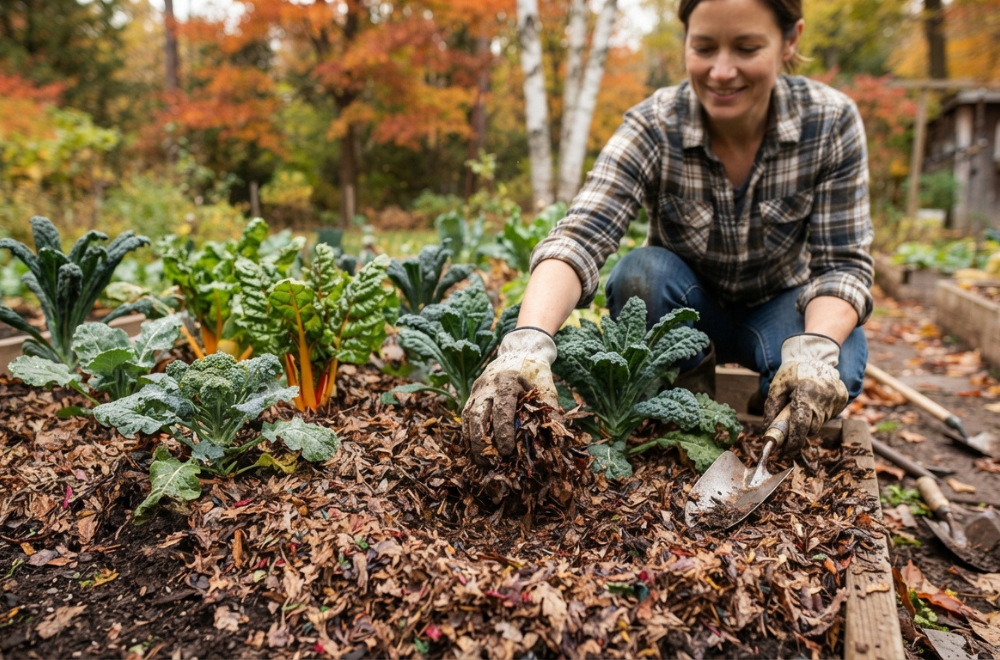
Leaves get treated as garden waste by default in a lot of neighborhoods, but a thin layer left in place, or a layer that’s been shredded first, is genuinely useful mulch and habitat rather than a problem to solve.
On lawn areas, a thick layer of whole leaves can smother grass if left over winter, blocking light and trapping moisture against the blades. The practical fix isn’t necessarily removal — running a mulching mower over the lawn to shred leaves into dime-sized pieces lets them break down into the turf without smothering it, as long as the layer isn’t more than an inch or so deep after mowing. Two or three passes may be needed for a heavy leaf drop.
In garden beds, whole or shredded leaves make an effective, free winter mulch. A 2 to 3 inch layer over perennial beds insulates roots, moderates soil temperature swings, and breaks down over winter to add organic matter. The main caution is keeping leaves off the crowns of plants prone to crown rot, and pulling them a few inches back from tree trunks and shrub stems to avoid trapping moisture against the bark.
Leaves from trees known to harbor disease — black walnut (due to juglone, which is toxic to many other plants), and any tree that showed fungal leaf disease during the season — are better bagged and removed than left to decompose in place, for similar reasons to diseased perennial foliage.
Composting: What Belongs in the Fall Pile
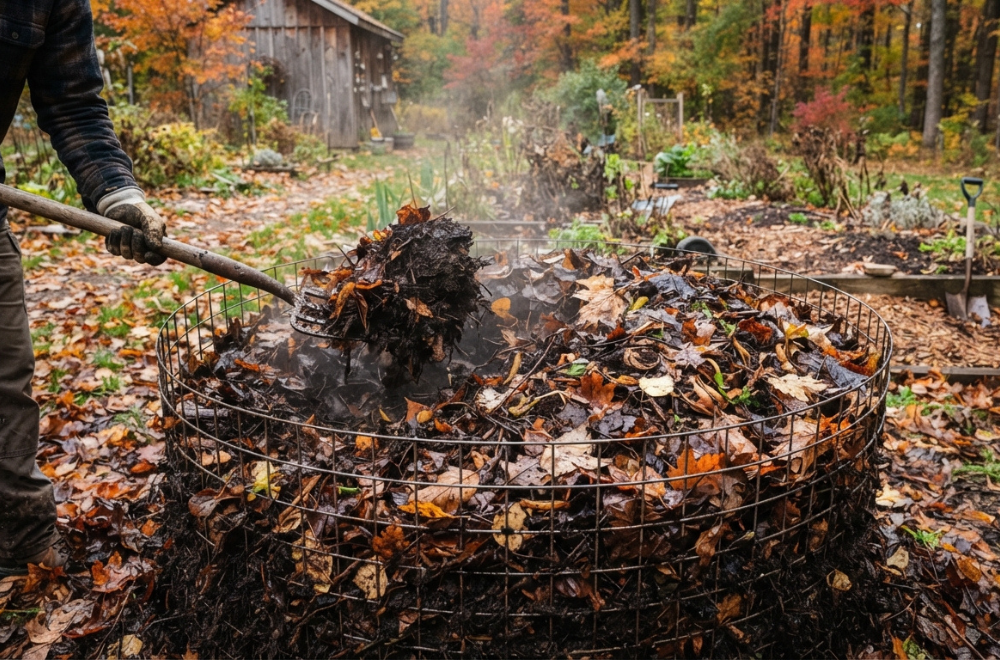
Fall is a good time to build up compost volume, since there’s suddenly a lot of “brown” material (dried leaves, spent annual stems, dead grass clippings) available alongside whatever “green” material is still coming from the kitchen. A working pile generally wants roughly two to three parts brown material to one part green by volume, though this doesn’t need to be measured precisely to work.
Good additions: healthy fallen leaves, spent annual and vegetable plants that showed no disease, grass clippings, and chopped-up stems from healthy perennials.
What to leave out: diseased plant material, weeds that have already gone to seed (most home piles don’t get hot enough to kill weed seeds, which means adding them just spreads the weeds when the finished compost is used), and anything treated with herbicide, since some persistent herbicides survive the composting process and can damage whatever the finished compost is later used on.
A pile built in fall with a good mix of materials, kept slightly moist and turned occasionally, can be partly broken down by spring, though full maturity for a passive pile usually takes closer to six months to a year.
Applying Mulch Before the Ground Freezes
Fall mulching serves a different purpose than summer mulching, and the timing matters more than people usually realize. Summer mulch is mostly about conserving moisture and suppressing weeds. Winter mulch is primarily about stabilizing soil temperature, not keeping the ground warm — its job is to prevent the freeze-thaw cycles that heave plant crowns and roots out of the soil as the ground repeatedly freezes and thaws through the transition seasons.
This means winter mulch is best applied after the ground has had its first hard freeze, not before. Mulch applied too early, while soil is still warm, can trap heat and moisture in a way that delays dormancy or encourages rot and pest activity around the crown. Waiting until after a hard freeze, when the plant is fully dormant, avoids that problem while still getting the mulch down before the worst of winter’s freeze-thaw cycles begin.
A 3 to 4 inch layer of shredded bark, straw, or shredded leaves over perennial beds is typical. For newly planted or marginally hardy perennials, mulch can be pulled up slightly higher around the crown, though it should never be mounded directly against the stems or trunks of woody plants, where it can trap moisture against the bark and invite rot or rodent damage over winter.
Cleaning and Storing Garden Tools
Tools left dirty and wet over winter rust, and pruners left uncleaned after cutting diseased material can spread that disease the following season. A basic fall routine: wash off caked soil with water, dry tools completely, and wipe metal parts with a lightly oiled rag to prevent rust over the winter months. Pruners and loppers benefit from a wipe with rubbing alcohol, particularly if they were used on anything diseased during the season.
Wooden handles do better stored somewhere dry rather than in an unheated, damp shed or left outside, since repeated moisture exposure is what causes handles to crack and loosen over time. A light coat of linseed oil on wooden handles once or twice a season helps prevent this.
Any tools with moving parts — pruners, loppers, hedge shears — benefit from a drop of general-purpose oil at the pivot point before storage, which keeps them moving smoothly and helps prevent the joint from seizing up over winter.
Fall Weeding: Why It Matters More Than It Seems
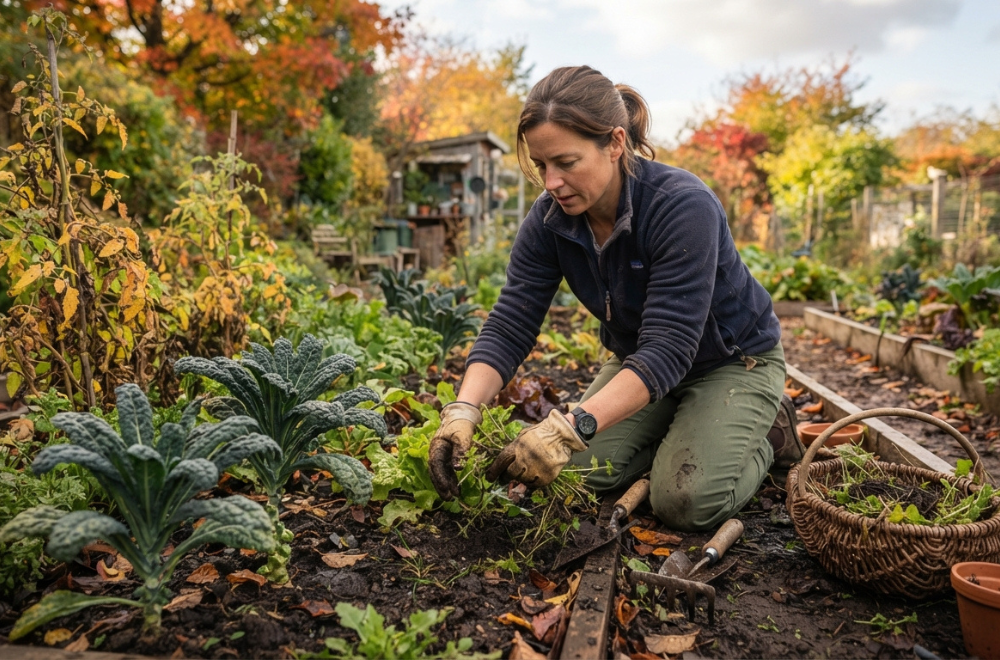
Weeding in October can feel like a low priority compared to everything else on a fall checklist, but it’s one of the more consequential tasks for reducing next year’s workload. Many common weeds — chickweed, henbit, dandelion, and various winter annuals — either continue growing through cool fall weather or germinate specifically in fall, overwintering as small rosettes that take off the moment soil warms in spring.
Pulling these now, while the soil is still workable and the weeds are small, is considerably easier than dealing with established plants in spring. It also prevents fall-germinating weeds from setting seed before winter, which directly reduces the weed seed bank in that bed for the following year.
Perennial weeds with taproots, like dandelion, are often easier to remove completely in fall than in spring, since cooler, typically wetter fall soil holds together better around the root, and the plant isn’t putting out the same volume of top growth to work around.
Where Pests Hide Over Winter
A lot of what looks like tidiness in fall cleanup is really pest management, whether or not it’s framed that way. Several common garden pests overwinter directly in the debris a fall cleanup would normally remove:
Squash bugs and squash vine borers overwinter as adults or pupae in garden debris and nearby leaf litter, which is part of why clearing out old cucurbit vines matters beyond disease control.
Slugs and their eggs shelter under fallen leaves, dense mulch, and collapsed foliage — the same hosta leaves mentioned earlier are a classic overwintering site.
Japanese beetle grubs overwinter in turf and garden soil rather than plant debris specifically, so cleanup has less direct effect on them, though healthy, well-drained soil is generally less hospitable to large grub populations.
Earwigs and pillbugs favor damp, undisturbed debris piles and the undersides of boards or pots left in the garden over winter.
This is also the point where the “leave stems standing for pollinators” advice and the “clean up debris to reduce pests” advice can seem to contradict each other. They don’t, once the distinction is clear: hollow perennial stems left standing for beneficial insects are a different category from matted, diseased, or collapsed foliage on the ground, which mostly benefits pest species rather than beneficial ones. The goal isn’t maximum cleanliness or maximum mess — it’s removing what harbors problems while leaving what supports the garden’s beneficial insects and birds.
Protecting Perennials Through Winter
Beyond mulch, a few other factors affect how well perennials come through winter.
Watering before the ground freezes matters more than most gardeners account for, particularly after a dry fall. Plants that go into winter drought-stressed are more vulnerable to winter injury, since dehydrated roots and tissue handle freezing temperatures worse than well-hydrated ones. A deep watering in late fall, before the ground freezes solid, is worth doing if rainfall has been light.
Marginally hardy plants — anything near the edge of the local hardiness zone — benefit from extra winter protection: a thicker mulch layer, a burlap wrap for exposed shrubs in windy sites, or, for container perennials, moving the pot against a sheltered wall or into an unheated garage where root temperatures won’t swing as dramatically as they would in an exposed pot above ground.
Newly planted perennials and shrubs, regardless of their listed hardiness, are more vulnerable their first winter simply because their root systems haven’t fully established. Extra mulch and, in exposed sites, a windbreak of burlap or evergreen boughs reduce the stress on a plant that hasn’t had a full season to settle in.
Evergreens, particularly broadleaf types like rhododendron and holly, can suffer winter burn from a combination of sun, wind, and frozen ground that prevents roots from replacing moisture lost through the leaves. An anti-desiccant spray in late fall, or simple wind protection on the exposed side, reduces this risk in harsher climates.
Putting It Together: A Practical Order of Operations
Given everything above, a reasonable sequence through fall looks something like this: remove diseased material and spent vegetable and annual plants as they finish, ideally soon after the first light frost. Continue mowing and shredding fallen leaves onto the lawn through the leaf drop, and start layering shredded leaves onto garden beds as mulch. Do a final weeding pass while the soil is still workable. Once the ground has gone through its first hard freeze, apply the heavier winter mulch layer to perennial beds and give everything a deep watering if the season has been dry. Clean and oil tools before putting them away for the season, and leave seed heads, ornamental grasses, and hollow-stemmed perennials standing until spring unless they showed disease.
None of this needs to happen in a single weekend, and trying to force it into one usually means rushing the parts — like waiting for a proper hard freeze before cutting back perennials — that actually benefit from patience.
Frequently Asked Questions
Is it better to cut back perennials in fall or spring? It depends on the plant’s health and type. Diseased perennials should be cut back and removed in fall. Healthy perennials, especially those with hollow stems or seed heads that support wildlife, generally do better left standing until early spring.
Can I put fall leaves directly on garden beds without shredding them first? Whole leaves work as mulch but tend to mat down and can smother low-growing plants or trap excess moisture against crowns. Shredding them first, even roughly with a mower, helps them settle into a looser layer that breaks down more evenly.
Should I remove mulch in spring, or leave it in place? Winter mulch generally doesn’t need to be removed; it can be left to break down naturally, with fresh mulch added on top as needed. The exception is mulch piled against stems or trunks, which should be pulled back once the risk of hard freezes has passed, to reduce rot and pest issues at the base of the plant.
A Final Note
The instinct to clear a garden down to bare soil in fall comes from a reasonable place — it looks finished, and it feels like the responsible thing to do before winter sets in. But a garden that’s been thoughtfully, selectively cleaned up, with diseased material removed and healthy structure left standing, tends to come through winter in better shape than one that’s been stripped bare. The work that matters most is the sorting: knowing which plant material is protecting the garden and which is putting it at risk, and treating each one accordingly.

About Syprose Kiche
Syprose Kiche is the creator and writer behind My Besuited Home, a practical home and garden website covering DIY projects, gardening, lawn care, landscaping, home improvement, and outdoor living. She focuses on turning everyday homeowner questions into clear, practical guides backed by careful research and useful real-world considerations.